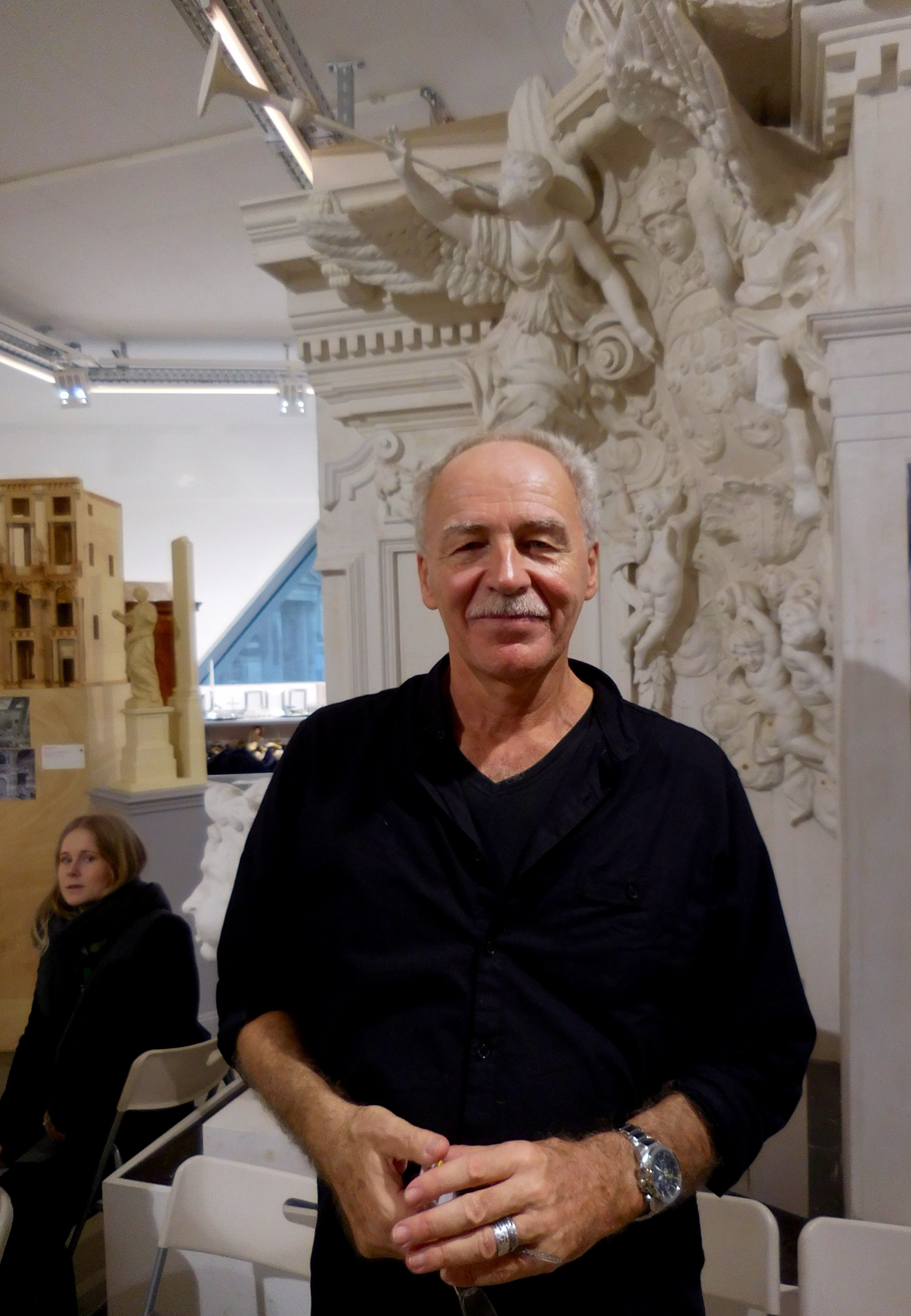
Ah, BOO-dah-pesht….

Yes, it’s true. I’ve gone and flown across the pond yet again, wreaking havoc on my otherwise pristine carbon footprint. But since job timing and clever budgeting have managed to conspire in my favor for once, I’ve prevailed upon J to cat-mind for me and off I have gone. This trip, still in faint nodding servitude to The Bob Book, will include some repeat visits (Budapest and Prague) and will add some new sites for their own value (Cesky Krumlov, Karlovy Vary) and one to see friends (Munich or Saltzburg). This trip I flew my old favorite carrier, Turkish Airlines, and was delighted to see that their warm hospitality and outstanding economy class cuisine was very much in evidence.

Today I mustered myself out for the First Day Orienting/Jet Lag Suppression Hike. It is early early spring here, mild temps in the high 50’s and chirping birds on bald branches. My first stop was the Central Market Hall, one of my favorites from my first trip here in 1992. I was pleased that the place, the largest and oldest indoor market in town since its construction in 1896 and reconstruction in the 1990s, is continuing to thrive. It’s a good thing I headed there straight after breakfast or I would still be working my way through bags of goodies…Wiki tells us:

“Most of the stalls on the ground floor offer produce, meats, pastries, candies, spices, and spirits such as paprika, tokaii, turo rudi and caviar. The second floor has mainly eateries and souvenirs. The lángos stand, which Rick Steves considers to be the best at the market, is located on this floor, serving the deep-fried snack lángos. The basement contains butcher shops, fish market, and pickles. Not only do they have traditional cucumber pickles, but they also offer pickled cauliflower, cabbage, beets, tomatoes, and garlic.”

Not having a clue what lángos are, I managed to dodge that bullet. (It’s a Serbian deep fried bread.) Anyway, here’s a shot of the market at the beginning of a busy Saturday morning:
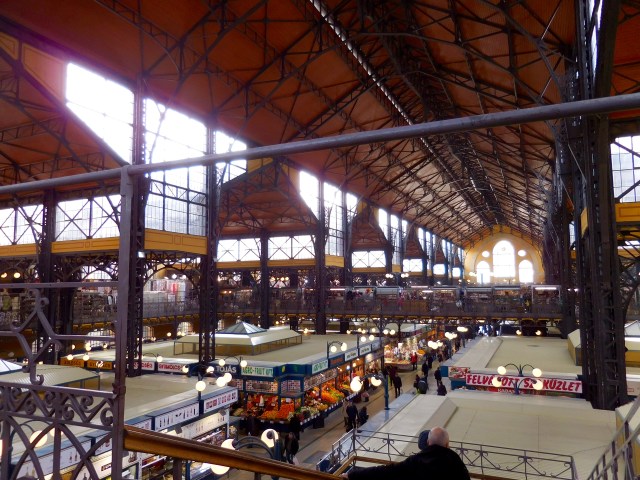
Grand Central Market.jpg

Now where’d I put those langos?

Coming out of this edifice, one almost immediately hits the blue Danube and, turning a hard right, finds oneself on the beautiful long promenade that stretches through town along the river heading north toward the Parliament Building, famous for its prominent role in Viking Cruise ads accompanying “MAH-steh-piece.” But before one gets quite that far, the enchanting profile of Castle Hill and the Buda Castle comes into view:
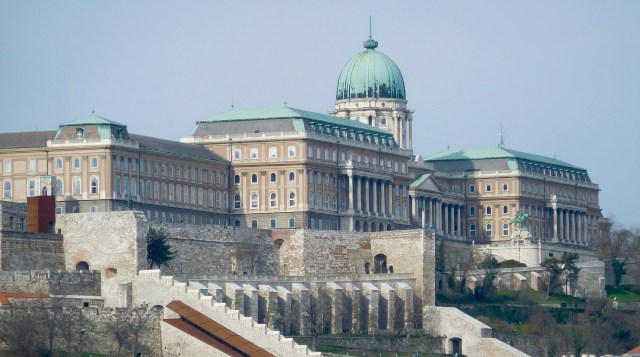
Buda view

Fit for nearly a millennium of kings and emperors

I’ll head over to Castle Hill in a day or two, so more about this later. But it is a beautiful site, even more so illuminated at night across the water, IMHO.

Further along the promenade, just directly down the bluff and west from the Parliament building, is a new sculptural installation that I made it a point to see today. Called Shoes on the Danube Bank, it is a tribute to the last remaining Jews of the city who literally were asked by the Arrow Militiamen to remove their shoes prior to execution in 1944-45. (What is particularly poignant is that they were taken from buildings that had been declared extraterritorially Swedish in the hopes of saving their lives). Their bodies fell into the river and were carried downstream. Like so many aspects of history in Eastern Europe, this piece of remembrance sends a frisson of horror into even the loveliest morning scene:
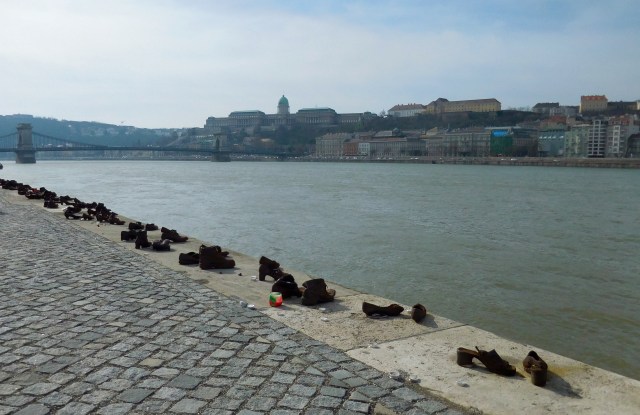
Shoes on the Danube

The shoes found their way to the river in 2005 as a joint collaboration of the film director Can Togay and and sculpture Gyula Pauer. People have tied ribbons to some of the shoes and made small alters with candles and flowers. Lest we forget.
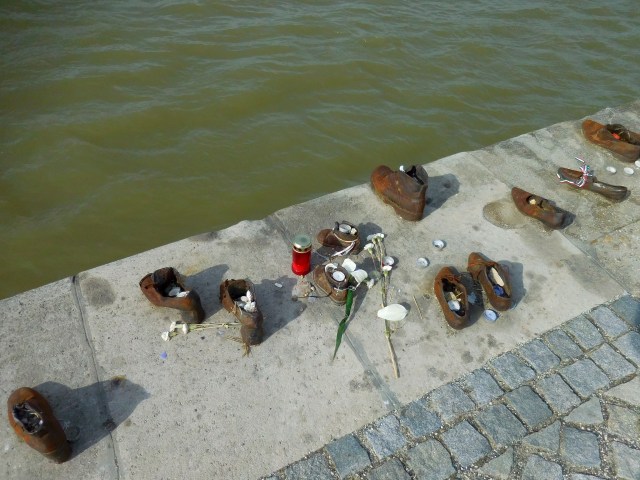
shoes detail

Moving right along, here’s a detailed shot of the Parliament building itself, from the non-river side:
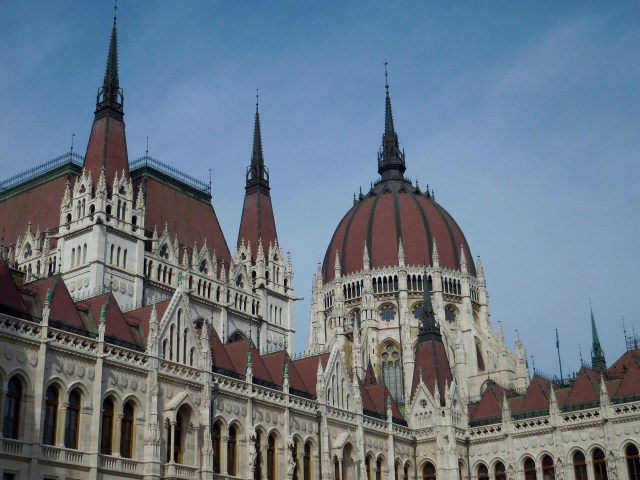
Parliament

I’m told it’s equally amazing inside; someone today said there are specially marked bronze cigar racks for the Members to use since smoking in the voting chambers was forbidden. Put down those smoking Stogies, cast your vote, and barely miss a puff.

Nearby is one of those “HUH?” moments that I manage to find on my walkabouts. The odd surprise in my 24 hours of boots on the ground here is the pervasive presence of China. China Airways had planes at the airport; Chinese people were busily trying to figure out the ticket machines with me last night; Chinese posters are plastered all over town advertising that 2016 is the year of Silk Road Tourism. (Did the Silk Road start in Budapest? Must investigate.) In the meantime, here’s a little well-placed eye candy to get you in the mood not for goulash but for moo goo gai pan:
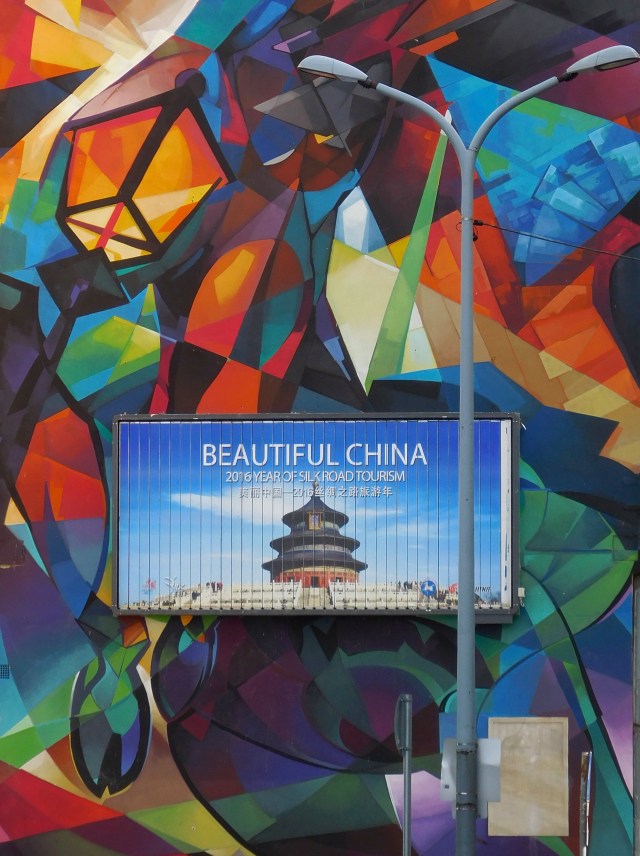
Beautiful China

Global advertising

But I came for Budapest, not Beijing. Back to our regularly scheduled programming.

I’ve learned my lesson by now that I should just give museums of ethnography a wide berth. I know they mean well and the stuff is just as historic as the stuff in other museums, but c’mon, how many plows and ceramic bottles and church crosses and folk art and scythes does anyone really need to see? I was going to take a pass on this museum, but then I saw that entrance fee was waived today because they were celebrating their birthday. Happy 140th, Néprajzi Múzeum! But boy was I ever glad I went inside because the Renaissance Revival architecture was simply show-stopping – kind of like the Boston Public Library, but on steroids. I simply could not put it all in one frame, but here’s some detail to give you an idea:
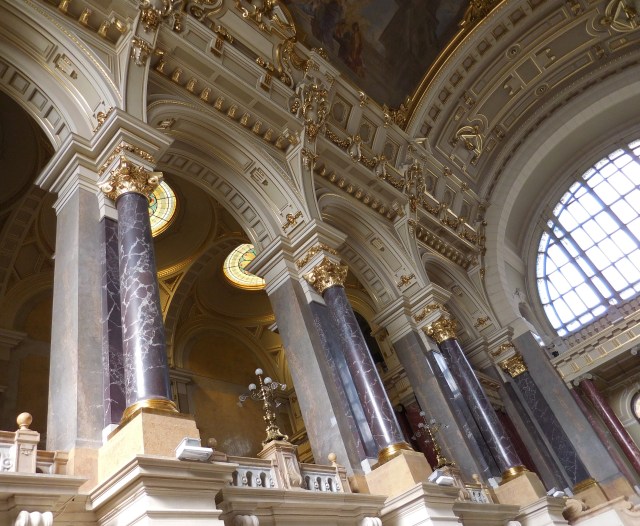
Ethno interior

Forget the contents; go for the pillars

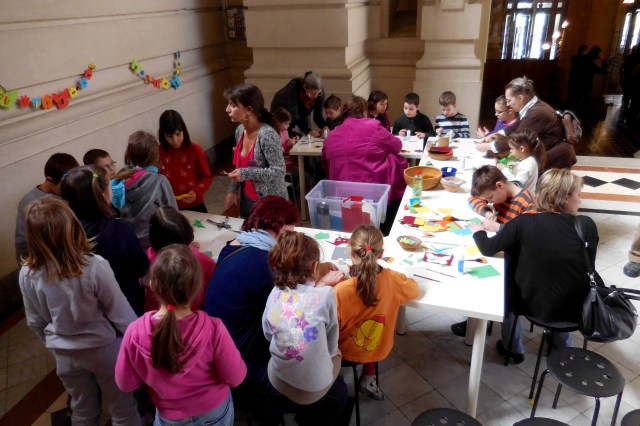
I was charmed and enchanted that the museum had set up tables on the main central atrium, immediately below where the photo was taken, for kids to design and create the birthday greetings themselves:
Ethno kids

How do you spell “Sub-Carpathian Basin?”

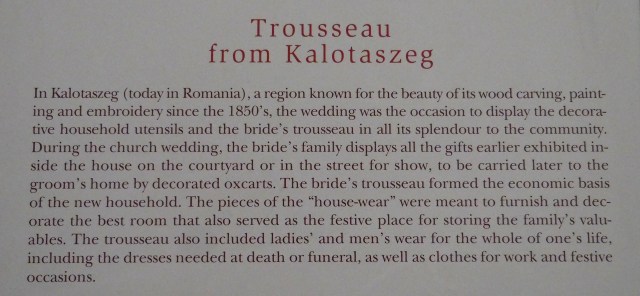
But there was one feature among the dusty cases of scythes and baskets that did catch my attention. There was a room that held the contents of one woman’s trousseau from a mid-19th century wedding, this one clearly from a family of relative substance. Check out the accompanying explanation, paying particularly close attention to the last sentence:
Ethno trousseau

Imagine your trousseau…made for a wedding in your mid-to-late-adolescence…providing your clothes *for the rest of your life.* Either lives have gotten a lot longer (which they have) or people have developed a greater need for variety in dressing (which they have), but to have produced, by yourself or with a little help, your entire wardrobe (and perhaps that of your husband-to-be as well) by the age of 16 or so. Those girls didn’t have much time for soccer or selfies.

After the culture chapter came the antiques crawl. There is a several-block-long stretch of street near the museum and Parliament where there are a couple dozen small antique stores, and with the excuse of looking for fountain pens, I checked some of them out. I’ve done this in other cities, but by now it’s just starting to make me wistful and sad. So much beautiful craft, obviously separated from the family it started with – victims of war? economic hardship? who knows. The pieces are beautifully maintained but priced for Russian oligarchs. So I glanced around  a few shops – Art Deco buffets, crystal goblets, menorahs, framed oils of winter sunsets – and then decided it was time for a little refreshment.

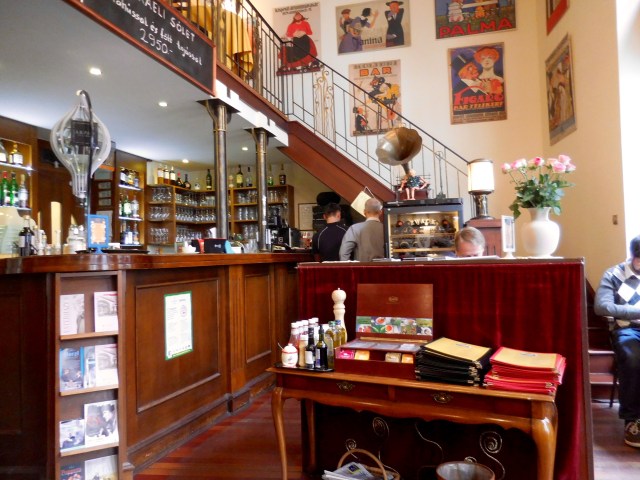
Near the Great Synagogue downtown (I’ll go later; closed today for the Sabbath) and in the heart of the Jewish Quarter near the flea market I also wanted to check out, I stumbled on Spinoza’s Kavehus for a little nosh. While Spinoza himself was never anywhere near Budapest, the name and the place just work perfectly, and the rash of Trip Advisor posters on the door show I’m not alone in my estimation. It’s a cozy, charming and welcoming little coffeehouse/cafe, filled with people and live music and 1920’s booze posters. I had a big bowl of soup, some hearty bread, and a local brew and was a happy camper. I could have had the Israeli Solet (see photo), but beans with hard boiled egg just didn’t appeal.
Spinoza Kavehau

Music to philosophize by

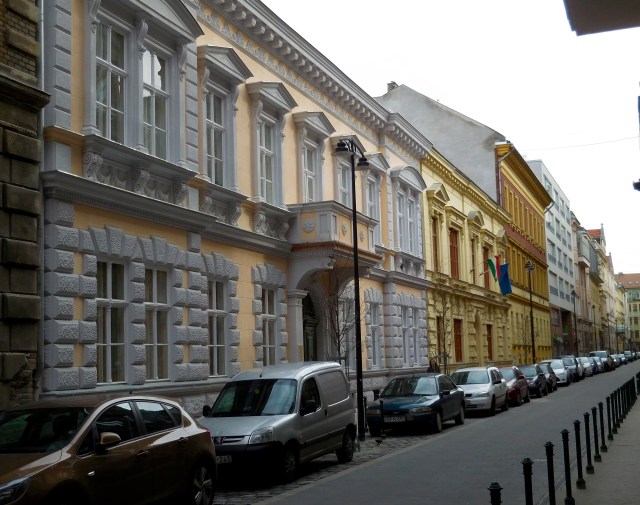
Spinoza’s always been a personal favorite of mine – anyone who looks to replace the Bible with a scientifically-based ethical system is good in my book. Now I see his culinary descendants have some decent chops of their own. I’ll be back, I hope. So as I headed back to my hotel for a the day, replete with striking images and local fare, I took a quick shot of a neighborhood side street that exemplifies, for me, part of why walking in  cities like this so warms my heart and inspires my feet:
Budapest street view

Budapest’s Hapsburg palette

So Day One is a wrap and it’s time to put my addled head and jet-lagged bod to bed. More soon from Mittel Europa.

Posted in Travel - Budapest, Uncategorized | Tagged , , | 3 Comments

A great day in SoCal

As you may know, I spent many of my formative years in the southern regions of the Left Coast and have not been back much in the last 30 years or so as I acclimatized myself to cooler (weather-wise) and less cool (pop culture-wise) places like Boston and Washington DC and Copenhagen and most recently, Portland, Maine. But since I became involved in the fountain pen community I have made regular jaunts out to Manhattan Beach to attend the LA Pen Show, as chronicled below. This year, I extended my western exposure by just a bit to spend some really special time with my wonderful sister Dee.

Dee joined me in the waning hours of the pen show last night and enjoyed with me a lovely final supper with members of the Montblanc posse, a *most* eclectic group of collectors from eight (at last count) countries who enjoyed the hospitality of one of their number at the aforementioned Bristol Farms, four tables hastily thrown together and covered with everyone’s grab from the take-away bins, enhanced by the addition of a few bottles of wine and a sinfully good chocolate cake.

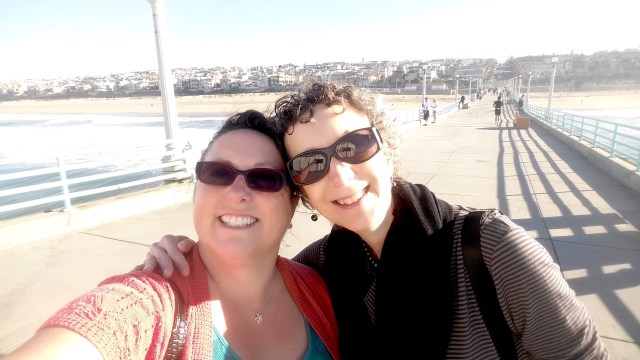
Today we got up early and headed out to drive our way down from Los Angeles to San Diego via the scenic route, SoCal’s iconic Pacific Coast Highway. Our first stop was the actual original downtown of Manhattan Beach, on this holiday Monday crawling with photogenic locals sporting long hair and short shorts. Here’s a shot of the reconstructed pier stretching out into the blue Pacific on an abnormally warm February day:

MB Pier

By the sea, by the sea, by the beautiful sea…

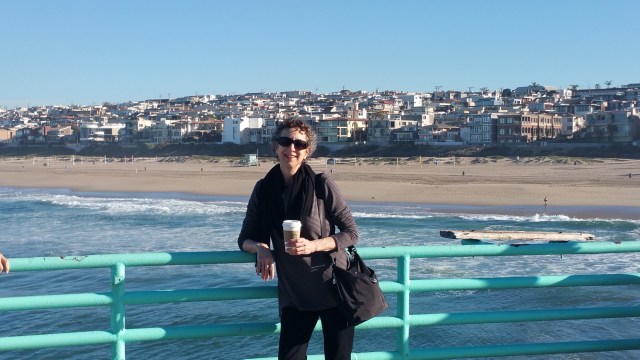
Many years ago before he passed away, my cousin Michael (Bob Sellmer’s son) and I used to walk through these streets and along this very pier and beach. It was grand to see the place again, as vibrant as ever if not more so. Dee indulged me in strolling clear out to the end of the pier (it’s longer than it looks in the photo above), and then she lined me up and shot me with one of the backdrops SoCal is famous for:

Carla MB

Overdressed for the occasion

One of the best parts of road trips, as we know, is the chance for all kinds of conversations – quick funny stories, tender reminiscences, shared health concerns, unanticipated navigational challenges, serendipidious pit stops, loads of cute dogs, and mostly just long sunny hours to reconnect and rebond. Today provided all of that and more.

We ended our day by dropping by a big beautiful mega-mall in the hopes of indulging in one of our favorite activities, “Sistah Shopping.” No one can talk you out of a silly purchase faster than a sister with a long face, rolling her eyes. And no one can support you in buying something that either you really want or really look fantastic in…more than that self-same sister. We had Macy gift certs burning a hole a Dee’s pocket but alas today we came up empty-handed. (We drowned our sorrows with some really great Mexican chow.) But here’s a shot of Shopping Nirvana, San Diego-style:

Fashion island

Even the palms are manicured

It’s about time to pack it in for the day, but Dee had another surprise in her back pocket. She booked us into another hotel, this one in the Mission Bay area of San Diego, so we could get up at a reasonable hour and have a lovely leisurely breakfast before I have to be dumped on the mercies of JetBlue and a flight back to the Deep Freeze. We’re cozy on our queens, watching the lights sparkling off the bay and getting ready to settle in for the night. But I just have to share what a great day it’s been. Thanks, sis. Love you 4-ever.

Sistahs

Sistah Selfie


Posted in Uncategorized | 2 Comments

The LA Pen Show 2016

Dear Blog Friends,

This actually isn’t a blog post. What it is is a report of the LA Pen Show for my friends on the Pentrace. Since I can’t figure out how to post photos on Pentrace, I’m writing my show report here. You are, of course, welcome to read it, but if you aren’t a pen collector, it might be not your cup of tea.

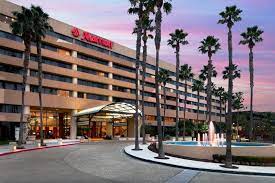
Okay, to the show report. First and foremost, if you live (as I currently do) on the East Coast, it’s deepest, darkest chilliest winter. This long Presidential and Valentines weekend, the Polar Vortex has New England (and most of Canada) in its grip, but I have flown away to the Left Coast. Here in SoCal, the lowest temps we see are in the 60’s. It’s a beautiful thing. Here’s a shot of the front of the show hotel, the venerable Manhattan Beach Marriott:

MB Marriott

The LA Show has been held here for nearly 20 years, and amazingly enough, many of the hotel staff are still the same and greet us each year with warm smiles and amazing service. It truly is one of the delights of the weekend. The hotel is well situated near a lot of great restaurants, but the true salvation for the show is Bristol Farms, an upscale deli/grocery store nearby that sees a steady stream of pen folks all day long, happier for not having to deal with the overpriced hotel restaurant.

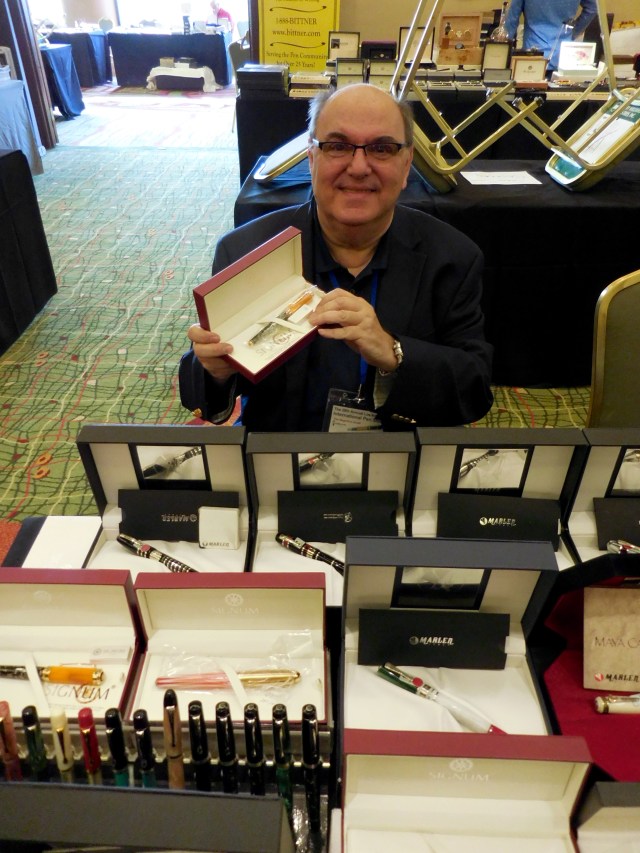
Before I get into show details, I want to post a picture of our genial Pentrace host, Giovanni Abrate. If you haven’t had a chance to meet him in person, you are in for a treat when you finally do. Giovanni, in addition to being a great support of the hobby, has been in the field since Hector was a pup and shares his passion and his knowledge with one and all:

DSCN1136

Ciao, bello!

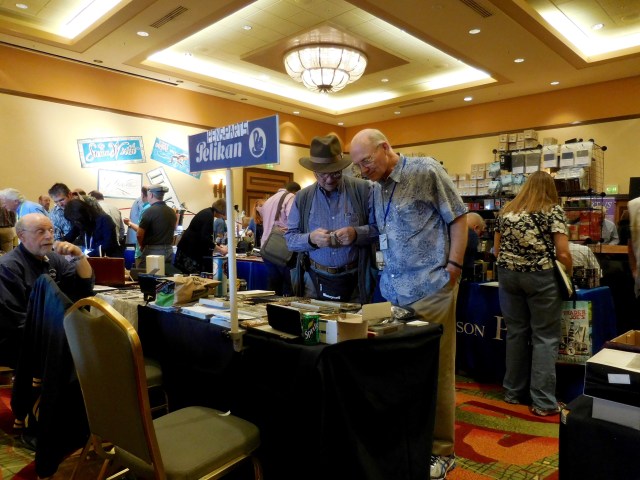
The show normally fills a large ballroom and then spills into a long hallway that surrounds the ballroom. This year there was a bit of a kerfuffle on Friday because an Accenture conference took up part of our space for half the day, creating some cozy conditions that made most of us a little grouchy. But we bore it well, and here’s a shot of pen business going on regardless:

DSCN1127

“Have you ever seen one like this?”

LA is a big show, and many of the exhibitors and traders have been coming for many years. Among the regulars are John Mottishaw and his Classic Fountain Pen crew (aka nibs.com), Susan Wirth, Sam and Frank Fiorella of Pendemonium, Pen World Magazine, Brian Gray of Edison Pens, Jimmy Dolive of Total Office Products, Joel Hamilton and Sherrell Tyree of Inkpen,  Stuart Hamilton, Jim Leonard, and David Hood from my former club in Portland, Oregon, Lisa and Brian Anderson of Anderson Pens, Fred Krinke of the Fountain Pen Shop in Monrovia, local legend John King Tarkanian, Carmer Rivera, Bay Area stalwarts John Stother, Danny Aarons, and Phil Moss, Detlef Bittner from Bittner Pens in Carmel, local nibmeister Greg Minuskin and Georgia nibwonder Mike “Mike It Work” Matsuyama, the Franklin Christoph team from North Carolina, Montblanc Jedi Knight Osman Sumer, Croatian pen wizard Miroslav Tischler, and many, many more.

I am fortunate this year to work with Rick Propas, the PENguin, helping him show and sell his amazing collection of Pelikans and other makes and models of writing instruments. Here’s a shot of some of Rick’s prime offerings:

DSCN1133

Pretty birds

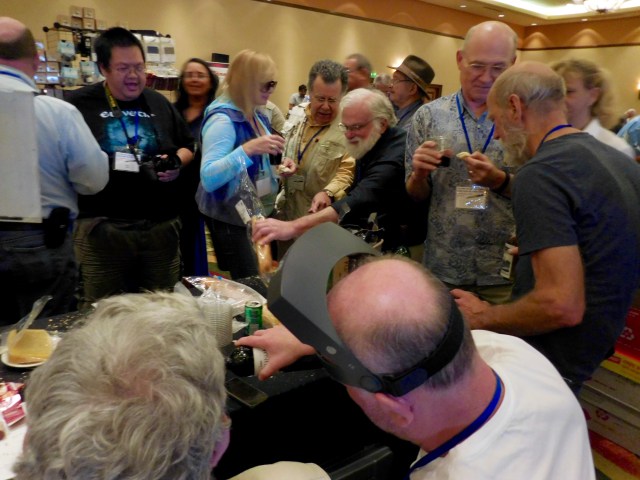
But perhaps what makes pen shows the most amazing is the sheer serendipity and coincidence that happens under your nose and all around you. On Friday afternoon group of Portuguese wine geeks brought in a bunch of bread and cheese a couple tables away from me and cracked open a case of wine. The resulting feeding frenzy was a sight to behold:

DSCN1131

Buying pens is hard work

So there’s a little taste of our time in LA this year. All I can say is – if you haven’t been to a show, do try to go. There’s probably one within driving distance of wherever you are in the US (okay, aside from Alaska and Hawaii). And if you have gone, go again. This is a wonderful group of folks and a wonderful opportunity to feel like you’re at summer camp again, this time with credit cards. Thanks to everyone who is here this weekend with me.

Posted in Pens, Uncategorized | Tagged | 2 Comments

Throwback Thursday: Caribbean Idyll

[From time to time I might excavate and post something I wrote eons ago. This one comes from the glory days of the late 1980s when I lived in Cambridge, Massachusetts. I found it last week and since it comes from my relatively small “humor” file I thought it might be a nice antidote to some of the recent “gloom and doom” posts about the horrors of World War II. Plus, I myself am currently transiting through yet another frigid New England winter and this is a story about one year when I actually did something about it.]

D and I had just finished dinner at a little Greek place in Waltham and were walking back to his trusty Hyundai on a cold night in January. We rounded a corner which had been blocking the air flow and suddenly felt the full force of the wind chill squarely in our faces.

“God, this climate is unbearable!,” D exploded, as he dodged a seemingly endless series of slick ice patches super-glued to the sidewalk. “I can’t stand it another minute. Can you get off work for a week or something? Let’s get the hell out of there and go someplace warm.”

Armed with D’s credit card number and a list of locations in order of our personal preferences (low on casinos, high on beaches and scenery), I found myself sitting across from a travel agent in Harvard Square (“Just Go Away”) during my lunch hour the following day. “Here’s the deal,” I told her. “We can only go the week of January 27th or February 2nd. We can only spend XX amount of money. We’re not much on night life and we love to hike. Now, whatcha got?” Since payment was required at the time of booking, I was a bit anxious when I got back to the office and gave D a call. “Sit down and take a deep breath,” I began nervously. “We’re going to St. Lucia and we have to be at the airport at 5:15 this Saturday morning.”

map st

Before we were really anywhere near awake that day, we were airborne on Gulf Air to the southern climes. Changing planes in Barbados, our group of pasty-faced newcomers walked past the out-bound group of boiled-lobster returnees, glowering at us with envy and resignation as we headed to the next leg of our trip. A few short minutes later, we touched down in St. Lucia.

The Caribbean never fails to enchant from the skies. The aquamarine waters surrounding the island, the white beaches, the pastel-colored houses interspersed with palms. But the culture shock begins in earnest once one wends ones way through Customs and is shuttled into the appropriate vans for the destination resorts. The interior of our minivan was completed lined top to bottom with kitchen shelving paper featuring the wildly improbably color combinations of the late 1960s. The air conditioner was clearly a decorative accent rather than a functioning appliance. D and I collapsed our lanky frames into the second row of seats, just behind one of the remarkably obese (and, as we were to learn, remarkably obtuse) Catholic priests who were, improbably, headed as a group to the same resort as we were.

It’s a good thing the scenery in a place like St. Lucia is so distracting, because something has to take the traveler’s mind off the kamikaze driving techniques of the local drivers. For starters, we were on the ‘wrong’ (i.e., British) side of the road, which is always disorienting. Then it appeared that it was a badge of honor among the locals to keep to the middle of the road (avoiding potholes?), thereby facing oncoming drivers squarely in the face for as long as possible before swerving to their respective sides and passing one another with a friendly ‘beep-beep’ and wave of the hand. Finally, let’s not forget the island is ringed with sheer volcanic cliffs, dropping straight down hundreds of feet along the road directly to crashing surf below, unspoiled by any warning signs or railings. D kept a determined sickly smile on his face, as if to reassure me about the terror I was feeling having dragged us both into this surreal situation. I tried to cultivate the Buddha consciousness, paying close attention to my breathing.

images

“Do the children on St. Lucia go to school?,” asked the priest riding alongside the driver.

“Yes,” the driver replied.

“Why aren’t they in school today?”

“Because it’s Saturday.”

Beat.

“Do you drive American cars on this island?”

“No, our cars come from Japan. We buy them in Trinidad.”

“Where?”

“Trinidad.”

“Where?”

“Trinidad!”

“I’m sorry, I can’t understand you.”

TRINIDAD!, screamed all nine passengers.

A moment of silence while this piece of useful information was digested. We stared out of the window at what seemed like acres and acres of banana trees, cows ruminating on banana trees, volcanic hillsides covered with banana trees. We were to learn later in the week that these amazing plants grow 12 feet in roughly nine months. I began to ruminate on the perils of a single-crop economy.

We crested another hill and caught a glimpse of a large town spread before us. It had been an hour or so of hard driving since the airport and I knew our hotel lay at the northernmost point of the island. I idly wondered if we were halfway there or whether we were being driven in circles in order to convince us of the need to hire vans and taxis rather than to try and drive ourselves.

“What’s that city?,” asked the priest in the front seat.

“Castries,” replied the driver.

“What?”

“Castries the capital of St. Lucia.”

“What?”

“CASTRIES, ST. LUCIA!,” shouted the impatient nine.

Whether it was that the information finally got through or whether it was the sheer humiliation of the situation, the priest settled down for the remainder of the trip. It was with great thanksgiving that we entered the gates of our resort and unfolded ourselves from the back of the minivan.


Posted in Travel - Caribbean, Uncategorized | Tagged | 1 Comment

Feelin’ the Bern: an ode to K.


It’s no exaggeration to say that some of the candidates on the elephant side of the aisle have me fearing for the fate of the free world. Doubtless I will support whomever becomes the donkey nominee and there are a lot of good things to say about Hillary Clinton. That being said, I believe Bernie Sanders brings a level of truth-telling to the current political discourse that appears to be seriously lacking in other quarters and has earned my sincere admiration. In addition, his ground game in my area has been building steadily for some months and now includes a downtown Portland office. As a result of all of these factors, this past chilly Sunday of a three-day weekend found me out going door-to-door canvassing in the wilds of New Hampshire to see what I could do to encourage primary voting in the Granite State, all while wearing my Bernie Sanders swag.

What made this day bearable, and indeed wholly enjoyable, was my canvassing partner, K. Small in stature but supersize in energy, enthusiasm, and downright 150-wattage can-d0 charm, K. simply left me in awe. There is hope for the world, or at least her part of it.

K. has spent two or three summers as a field worker for one of the PIRGs, going door-to-door ten to twelve hours a day for months on end and organizing teams of others to do the same thing. She worked a full-time job her last two years at university plus going to school, graduating just recently with a degree in social work. She plans to work in community development and has a particular and focused passion for voter registration and getting young people to participate in the political process. All this and she just voted herself, this past November, for the very first time. She thinks everything to do with convincing people to get more involved is “exciting!” God love her.

We drove down to NH yesterday morning (K. thankfully has a vehicle with heated seats) and stopped at a  Dunkin’ Donuts *in a Walmart* for a bite to eat. Those who know me at all know this in and of itself is nothing short of show-stopping, but it was literally the only option we could find. Once equipped with our simple repasts, we took turns practicing our scripted speeches (the campaign is obsessively thorough in providing its volunteers answers to any imaginable question) becoming increasing creative and hilarious in our efforts to trip each other up. Upon departing the premises, I rediscovered why I dislike big box stores anew when, in my trip to the restroom I was repeatedly exhorted not to shoplift (and given many many reasons how it would ruin my life) AND treated to a wall of missing children’s pictures as I stopped at the drinking fountain. It’s a jungle out there, folks.

Next stop was trying to locate our canvassing territory. Although not always a fan of GPS  software out of fear that our brain functions will wither and die, I have to confess that in this case it was a godsend. We drove to slightly west of Nowhere and parked on a sidewalk-less street in a modest ‘burb where the home siding and satellite salespeople had made a killing 20 years back but never returned. Lots of barking dogs scratching on Lucite windows, lots of pickups in the driveways. Thankfully we only knocked on the doors of known Democrats – not sure what the reception would have been anywhere else.

I don’t envy New Hampshire residents their unintended role in the nation’s politics. It must be simply annoying at some points (like now) to be on multiple politicos to-do lists, targeted routinely and repeatedly to have your voting preferences checked and rechecked like bowel movements in the ER. We quickly found how these good people deal with their unwanted place in the spotlight – they either pretend not to be home, or, if they are considerate enough to come to the door on a chilly afternoon, they claim to have No Preference. I don’t blame them. The only problem is that a No Preference check-off merely condemns them to a repeat visit by another pair of sincerely committed volunteers on another chilly January Sunday afternoon.

K., still upbeat, still smiling, still cracking jokes, let us call it quits after a couple hours. I was tired of slipping on the ice up and down to the front doors, uncomfortable with making the tired residents uncomfortable, ready to let my dogs thaw in her cozy car on the drive back up to Maine. But she had had a great day, and was ready to take on her five-hour night shift at the busy restaurant where she currently works. She was eager to do it again next weekend, delighted to be my introduction to canvassing, appreciative of my career counseling comments, looking forward to working with me again. Wow. I have another hero. Bernie, keep an eye out for  this one. I hope you make a place for her in your White House. She’ll keep you fully charged for four years at least.


Posted in Politics, Uncategorized | Tagged | 2 Comments

RAS: A beating in Memel (2: Election night)

Note: Key background information about this story can be found in the post immediately below this one. This entry documents the beating received by my uncle, Robert Sellmer, at the hands of Nazi sympathizers in Klaipeda, Lithuania on the night of December 11, 1938.

In August of 1938, Bob wrote a letter to his family from Tallinn, Estonia, describing his idyllic summer in Finland. In December, he was covering a parliamentary election in Memel (Klaipeda), Lithuania, where the following event took place. It’s not at all clear where he had been during those intervening months, but the ominous beat of the war drums must have been clearly evident wherever he had been. It was the season of attempted appeasement of Germany by Great Britain; the expulsion of Polish Jews from Germany, the terror of Kristallnacht across the territories sympathetic to the Reich, and the announcement of the Franco-German “peace declaration” on the 6th of December.

Less than a week later, the New York Daily Sun reported: “The 150,000 or so inhabitants of the autonomous Memel Territory in Lithuania went to the polls to-day to elect a new Landtag. As when they last voted, three years ago, the result of the election is not in doubt. The German party can rely on obtaining at least 24 of the 29 seats, the same number as they had in the last Landtag. They may even win one or two more, but what is more important, perhaps, is that this time the German members will enter the Landtag as National-Socialists, with far-reaching demands to press on the Lithuanian government.” In short, a vote for the German party was a vote for the Nazis AND a vote to leave Lithuania and rejoin Germany politically, not surprising considering the centuries of cultural and even linguistic ties between the coastal city which had been the northern most outpost of the Prussia and the German Hanseatic League. The Lithuanians, needless to say, were not amused.

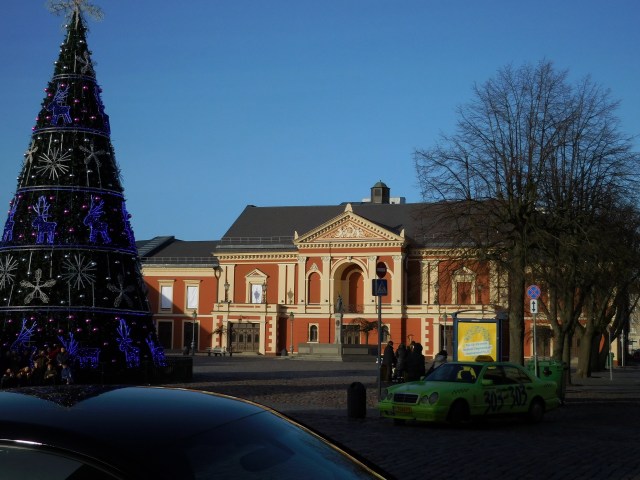
DSCN1046

Klaipedos dramos teatas – Hitler stood on the recessed balcony and addressed his supporters on March 23, 1939 when he declared Memel ‘judenfrei.’ Other important political gatherings took place here as well.

Bob was apparently in town to cover some aspect of this election in his role as a free-lancer “for several American magazines.” Versions of the events of that evening and the following day were chronicled by several stories in the Milwaukee Journal and the Milwaukee Sentinel on December 12th and 13th, 1938. They reported that he had been attending a press party following the election and was headed back to his hotel in the wee hours. Bob was reported to say:

“I was walking on the street about 2:00 am when I passed three Memel German order preservation men belonging to the Member kultur (Kultur-Verband: a group of Lithuanians who were Nazi sympathizers, down to the black shirts.) They raised their arms and shouted “Heil!

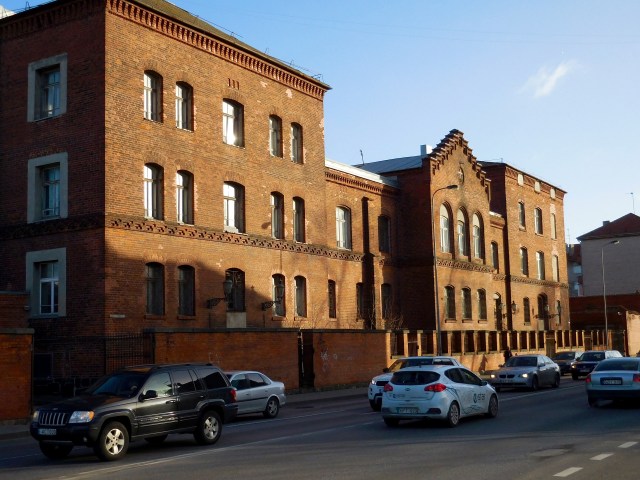
DSCN1050

Klaipeda police commisariat, now closed

“When I did not reply, they seized my arms. I tried to pull loose and they called the police. Two ‘landespolitzei,’ or territorial police, immediately hurried me to the police station (note: only two short blocks from the theater) where I showed my American passport. They asked me questions in German and I was only able to answer in English, which seemed to make them angry, so they clubbed me to the floor about six times. One policeman, who knew a little English, used it to call me ‘an American Jew’ and abused me with unprintable words.

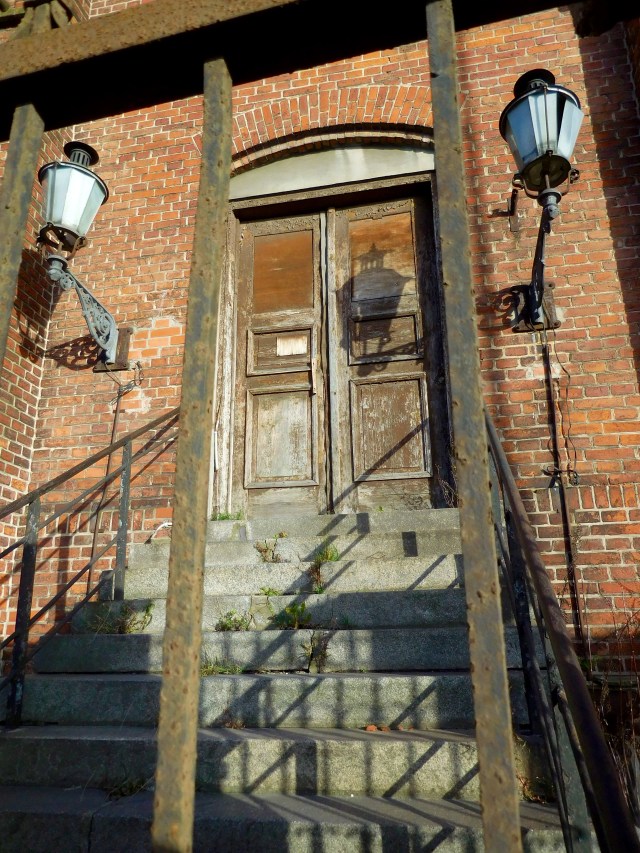
DSCN1049

Front steps of the police station, no longer in use in 2015

“After an hour I was literally thrown into the street.”

Sellmer Nazi

The German press, understandably, had a different perspective on the events. The Journal wrote “The newspaper Angrieff (Attack) Monday carried a headline saying “Impertinent Insults by American at Memel Election.” (It) “alleged that Sellmer insulted German police. It asserted that his treatment by police was beyond reproach. The incident assumed more importance, the newspaper said, because Lithuanians broadcast a ‘tendecious’ (biased) report of the affair.

“The attitude of the Lithuanian broadcast bespeaks great naivete,” the newspaper added. “Let the Kaunas government (note: Vilnius was at that time in Polish territory; Kaunas was the capital of the country), while there is still time, be aware of the consequences which may result from such provocations.”

News spread quickly. By the following day, the Associated Press had disseminated some version of this story across the country and in various European outlets. Bob’s mother, my grandmother Violet, as well as her daughters, my mother and aunt, were apparently “sitting peacefully in (their) parlor, listening to the radio and…having the staccato voice of a news broadcaster announce that your only son, or your only brother, had been beaten by the Nazis in far off Lithuania.”

‘I can’t understand it at all,’ Mrs. Sellmer said.’It doesn’t seem possible that they would dare attack an American just because he didn’t return a salute. And it doesn’t seem that they could have been laying in wait for Robert, even if he did write several magazine pieces that were anti-Nazi.’

‘I only hope,’ she went on plaintively, ‘that Robert will let me know how he is. I know the stories say he just got bruised, but I’d like to hear it from him. But I suppose he doesn’t even know that the story got back to his country, so he doesn’t know we’re worrying.’

The Sun ended their article by saying “reports that epithets hurled at Mr. Sellmer included ‘American Jew’ puzzled his Germanic family, ‘good Congregationalists.’

Bob himself finally did drop his mother a line from Kaunas where he filed a report concerning the incident with the American Legation:

“Just a short note to tell you that I’m perfectly all right in case you’ve been alarmed by any reports in the newspapers. I was in bed for a day, but I’m O.K. now and have almost regained my pristine beauty. Nothing is broken or bent, and the Sellmer nose still stands forth in all its former glory. It was the Sellmer nose, in fact, that caused most of the trouble, because the police thought I was an American Jew, and the Germans are sore as the devil at American Jews for defending the Jews in Germany, so when they got me in their hands through an argument I had with some storm troopers they couldn’t resist the chance of getting in a little revenge.”

“I was terribly sore about it at first, of course, but I am not going to make any official protests and I am discouraging all other people from making protests, because if too much publicity was given to my complaints I’d be barred today from half the countries of Europe, and that’s something I can’t afford. And as long as I can’t get even with the police personally, I don’t see any sense in trying for second-hand revenge through the government, especially as the Germans will naturally deny everything and only make the protester look foolish because he can do nothing about it. I’m going to drop the whole thing as soon as possible and prevent the Lithuanians from making a martyr out of me – as they want to do to further their own cause — and just chalk the whole thing up as an interesting journalistic experience.”

From Kaunas Bob headed to Warsaw, where he spent the holidays with family members posted there with Palmolive. In a borrowed tuxedo with sleeves too short, he attended the Grand New Year’s Even Ball at the home of the American Ambassador, one Anthony J. Drexel Biddle, Jr.”who bowled me over by remembering my name and condoling me upon my recent misfortune.”

Shortly thereafter Bob departed for Prague and points south.


Posted in Robert Sellmer, Uncategorized | Tagged | 1 Comment

RAS: A Beating in Memel (1: A City of Tears)

On the 55th north latitude in Klaipeda, Lithuania, the sun shines for about seven hours a day in early December. Even at noon on a brisk sunny Monday, the slanting rays suggest that one should do one’s business with alacrity before hunkering down for a long winter’s nap. I myself had risen long before dawn that morning in Vilnius to ride the nearly four-hour “express” train to the Klaipeda’s (“CLAY-pah-duh”) location on the Baltic Sea in order to document a significant moment in the life of Robert “Bob” Sellmer.  That was the day he was arrested and beaten for failing to return a Nazi salute while covering a legislative election on December 11, 1938 when the town was then named Memel.

As you might expect, there is a fair bit of back story that is necessary to understand this event in both actual world history and Bob’s personal journey. I don’t think I can keep it brief, but it deserves a respectful hearing.

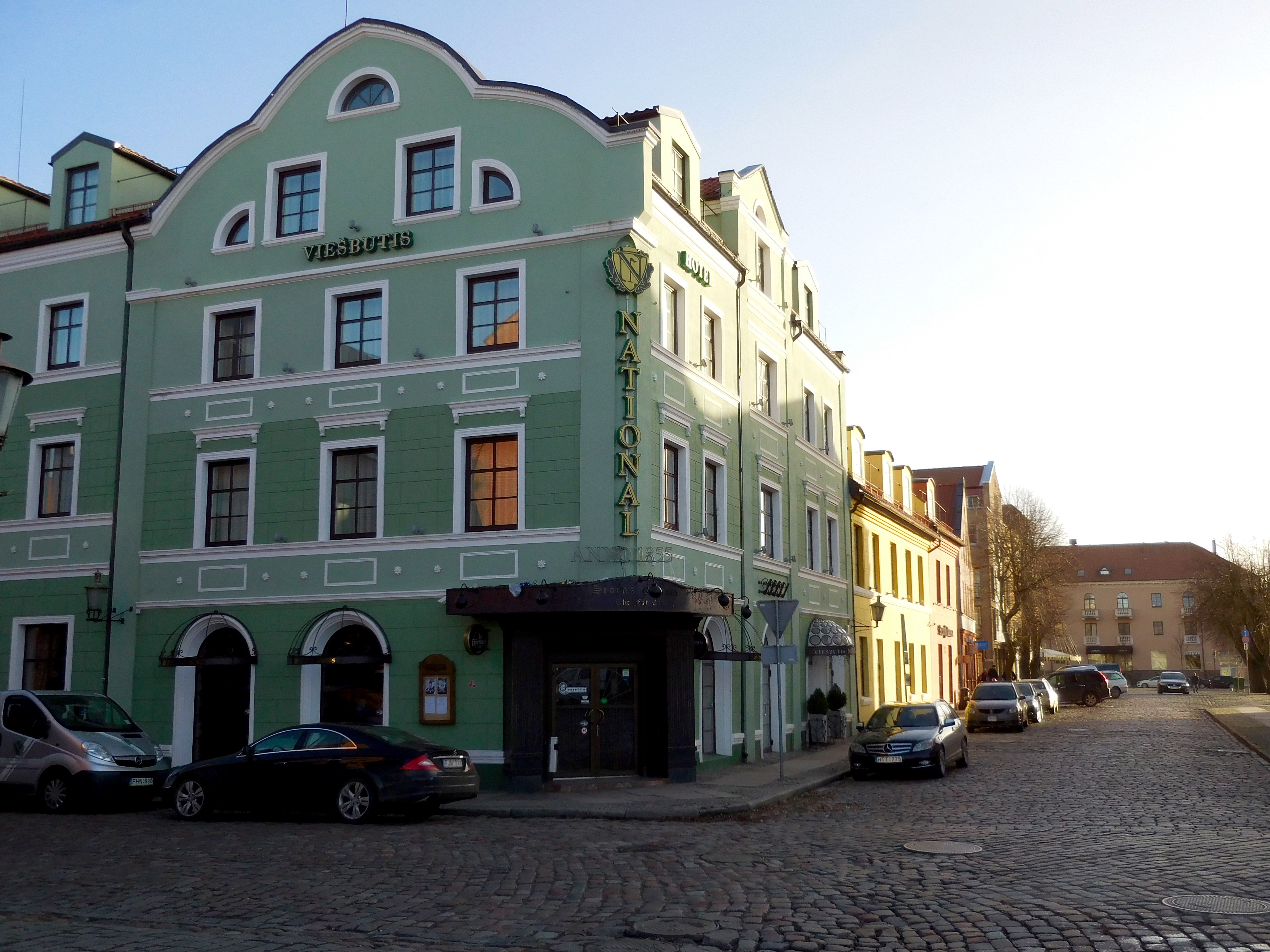
Due to Klaipeda’s strategic placement as a (normally) ice-free port at the mouth of a major river on the Baltic Sea, it has had a long and colorful history in the region. At various times it has been controlled by the medieval Teutonic Knights, later the Kingdom of Prussia, the German Empire (and Reich), Lithuania itself for brief periods until recently, and of course, the Soviet Union for much of the 20th century. It was the most northern outpost of the German sphere for most of its lifetime, hence the dual names themselves and much of the architectural,  historical, and cultural links with its more southerly German relations.

Downtown "Old Town" Klaipeda

Downtown “Old Town” Klaipeda

The city itself, now Lithuania’s third largest and boasting a population of around 150,000, is in the process of “rebranding” itself as a summer playground as well as a busy Baltic port. Nearby is located Curonian Spit, a World Heritage site consisting of a 60+mile sandy peninsula and national park with the largest drifting sand dunes in Europe and one of the biggest motherlodes of amber in the entire world. The downtown region, easily walkable from the train station, features a number of charming buildings, galleries, and museums dating from the centuries under German influence as well as a collection of fascinating and occasionally heart-wrenching statues commemorating various facets of the city’s turbulent past.

Because, frankly, heart-wrenching is a lot of what happened here in the first half  of the 20th century. For me, even subtracting Bob’s little episode from the equation, there was a lot of suffering visited on the site of this maritime burg. Even before I reached the main drag of the Old Town, I began to feel the jitters that usually signal to me that I’m entering unsettled psychic territory.

Leaving aside various political machinations, the first wave of actual violence was against the Jewish population in the 1930s, similar to actions all over Europe at the time.  The source of my material about the saga of Jewish Memel comes from jewishgen.org. A more complete reference will be found at the end of the chapter.

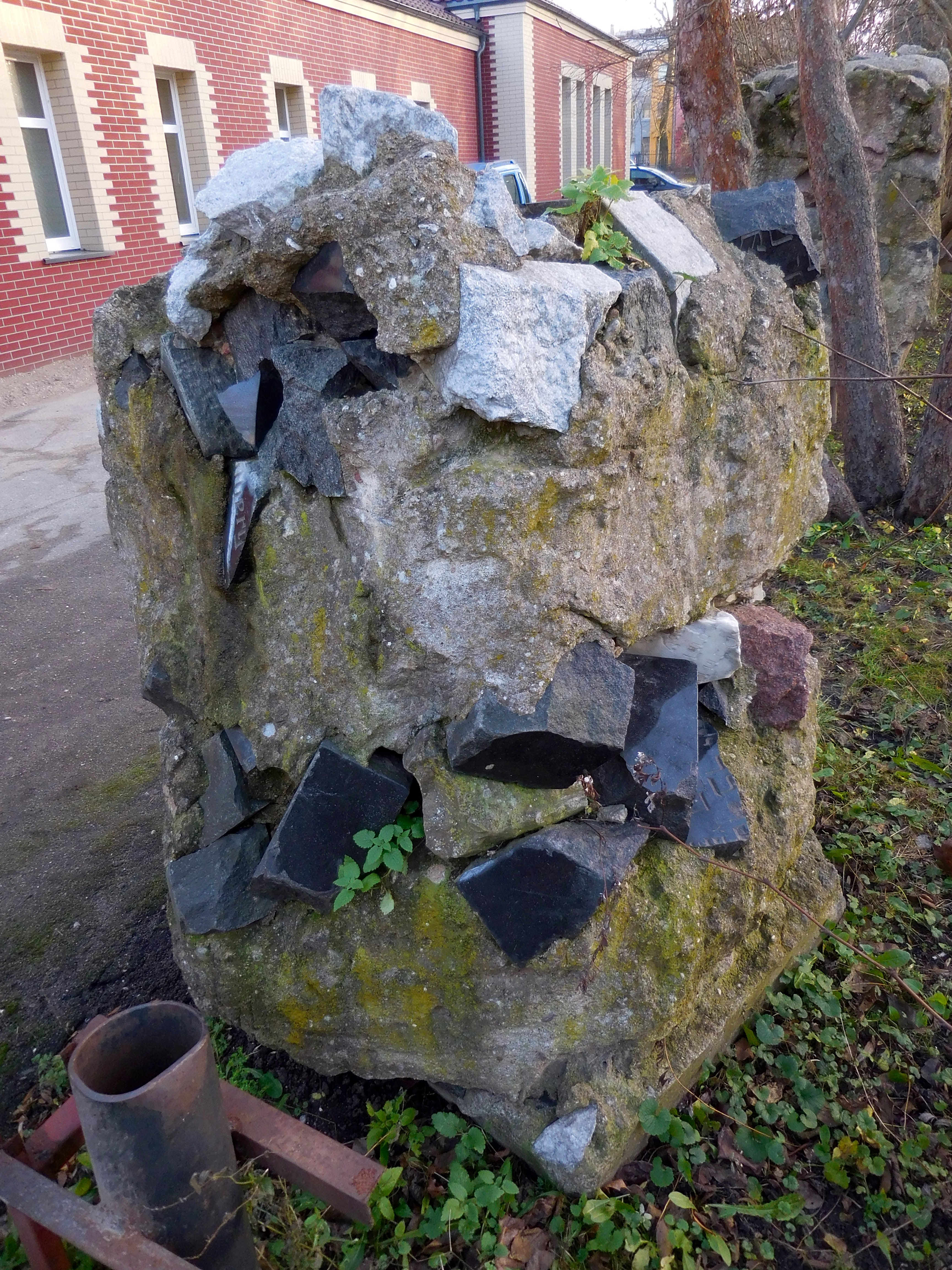
Jews had lived in Memel off and on since 1567 and were a vital part of the mercantile establishment. By 1938, there were nearly 8000 Jews living in the region, nearly 15 percent of the total population. One source reports “When Hitler took Austria (March 1938), the Memel Jews understood that heavy clouds were gathering over them and that a fateful time was coming.” Kristallnacht, November 9, 1938, saw the destruction of the main synagogue in town along with related violence against people and property. I was particularly struck by this bollard I saw near the cemetery, made from shards of Jewish tombstones that probably dated from that moment:

desecreated Jewish tombstones

(Bob was in town a month later than Kristallnacht, on December 11, 1938. His notes, which will be featured later, do not take any particular note of actions against Jews. He was there to cover an election, and then became a bit of a celebrity himself.)

The source continues, “On March 20, 1939 Hitler gave Lithuania an ultimatum, requiring its departure from Memel within 24 hours.

“The same day Lithuania bowed to the ultimatum. The entire city was covered with Hitler flags and Hitler’s photograph. 40,000 Memel Germans went out into the streets and with wild enthusiasm celebrated the world murderer. In one night, 7,000 Jews escaped from the area. The rest had left earlier or would leave later.

“In all of Memel, 7 Jews remained, mostly old people who owned houses in Koenigsburg or Berlin and hoped to live from [the income from] the houses. The departure of the Jews from Memel was horrible. The streets were filled with Germans from sidewalk to sidewalk. The buses did not take Jews. Jews dragged themselves on foot to the railway. The masses on the streets shadowed them with abuse. Along the sidewalks stood Germans. Choruses shouted: “Jews out!” “Go to Palestine!” “I never want to see you again!” “Hands behind the head!”

“On the 22nd of March 1939, Adolf Hitler himself arrived in Memel on a battleship. Memel was Yudn rein [free of Jews]. The Germans with discipline legally looted Jewish personal effects (estimates range to nearly 20 million dollars in the currency of the day), and the Memel Jews were scattered and spread over the cities and shtetlekh (small Jewish country villages) of Lithuania. The largest number went to Kovno, a smaller number to Shavli, Kretingen, Plunge, Tverech, Telz and Drobyany…The Soviet Army arrived in Lithuania on the 15th of June 1940. They frowned upon the Memel Jews. On the 22nd of June 1941, the Memel Jews with the rest of the Lithuanian Jews perished as martyrs. (Note: they were killed by the Einsatzgruppen, the German killing squads, not the Soviets.)  http://www.jewishgen.org/yizkor/lita/Lit1427.html

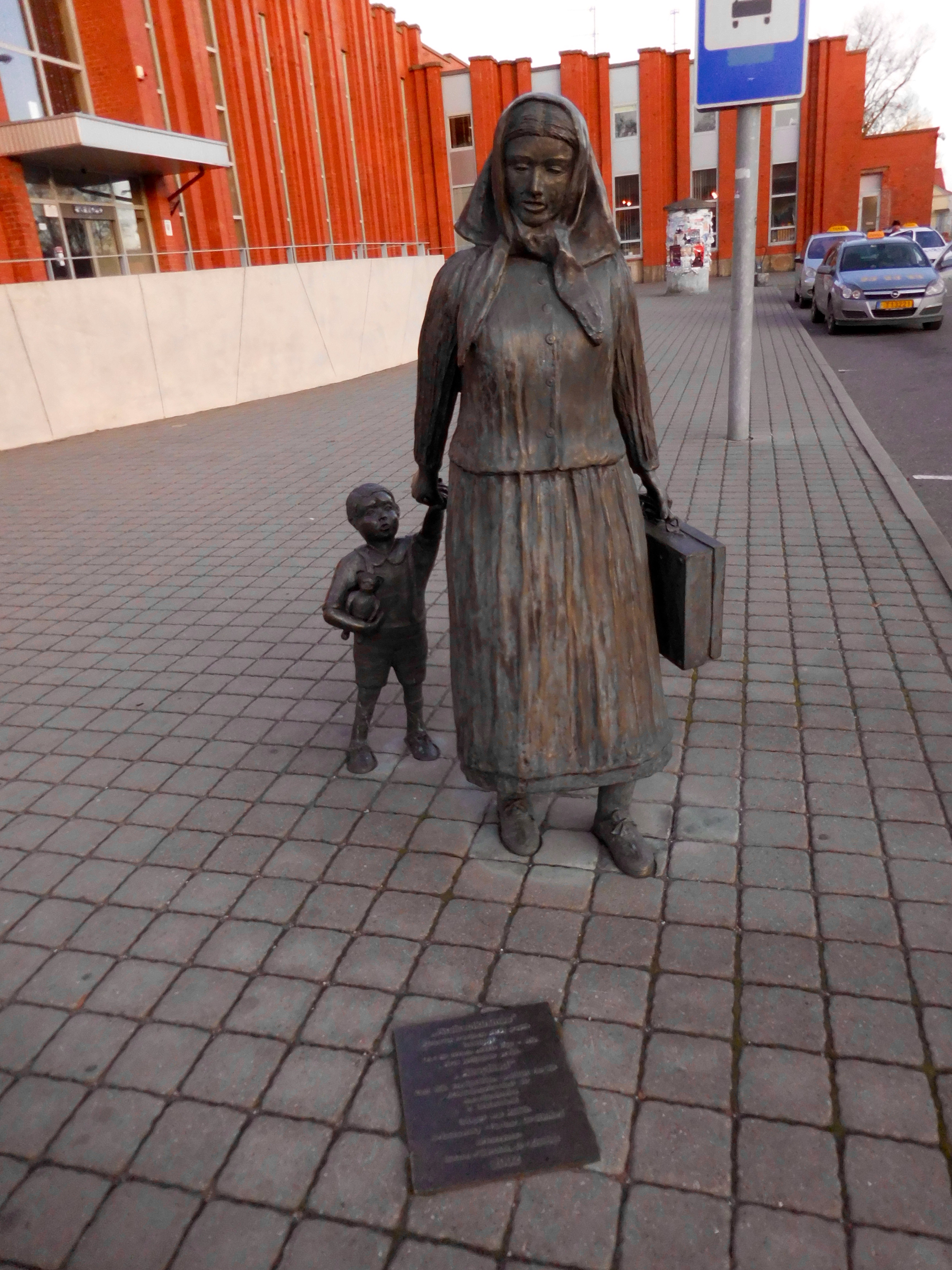
Sigh. But even more sadly, this was not the end of the suffering of the citizens of the city, but here the details get sketchier. As I made my way to the train station to return to Vilnius, I saw the following statue:

In honor of those who left

In honor of those who left

The inscription, even with the help of translation, was vague. Abschield in German, Atsisveikinimas in Lithuanian…here’s Google Translate’s best guess:

“Farewell (to Motherland). The 750th anniversary of the city founded by the Association of Memel counties in Deutschland. Designed and modeled 2002.” A little research discovered the following from an online tourist brochure describing various statues around town:

“In 1941, the population of Klaipėda was about 41,188. In January, 1945, the Red Army soldiers found only six people: two elder Prussian Lithuanians, two Belarussian prisoners of war and two Polish architects, brought here for work. The rest of the population fled; some together with the retreating German army via the Curonian spit, others moved to Germany a year earlier. The statue marks a truly black period in the history of Klaipėda city. (Authors L. and R. Janišovskiai.)” Another account reads “the advancing Soviet armies found only some 20 local human beings when they captured the city in 1945,” but whatever way you slice it, Memel as it had once been known was gone forever.

As it seems to have turned out, the jubilation of the German Memellanders over the elimination of the local Jewish population was ironically short-lived. Before the end of the war, it appears that taunting citizenry itself would face a similar fate. And who was to take their place in the town by the sea? My ears told me that since I heard more Russian spoken in Klaipeda than in Vilnius, the Soviets might have taken advantage of the existing infrastructure to relocate some folks there. In fact, truelithuania.com tells us “Klaipėda was swiftly repopulated by Russians, (22%), Russophones, (5%) and Lithuanians from elsewhere (72%).” And so it was those Slavic accents I heard in the mid-afternoon gathering dusk, from pairs of well-appointed matrons arm-in-arm and young mothers with perambulators, walking slowly down the charming residential streets, all dressed up and with no clear destination in mind.

In the next installment, I’ll tell you more about Bob’s adventures on the evening of December 11, 1938.


Posted in Robert Sellmer, Uncategorized | Tagged , , | 1 Comment

The Search for Uncle Bob

“Spoiler alert” – since I won’t be traveling for a while (and since the muse goes a little dark when I don’t), the next few blog entries will probably be chapters in progress for the book/memoir I’ve been chewing on for a while.

As you may know, the work deals with my mother’s adored older brother, Robert Anthony “Bob” Sellmer, who at the tender age of 24 set off on a one-way mail boat ticket to Rotterdam and thence to Oslo, assuming a round-the world jaunt typical of many  adventurous and idealist young people. The difference was the year was 1937 and he was sailing, as it were, straight into the maelstrom that quickly became World War II.

For seven years he Bob bounced around Europe, visiting or living in at least 18 countries in various professional guises. He initially fancied himself as a free-lance writer and was actually on contract to The Times of London for a spell, but when the going got rougher, that “behind the typewriter” perspective morphed into a more active role – initially with the French Foreign Legion, later the Royal Air Force, and finally the American Army Air Force following Pearl Harbor. He only returned to the States in 1944 when he received a compound fracture of the left arm due to a jeep accident – he had been moving the company’s liquor supply and the unbalanced nature of the heavy load of glass bottles tipped the vehicle into a ditch just outside Naples.

True confession. I always wanted either to be this man or to marry him, and of course I could do neither. I never even met him in real life – he and his family had lived in Madrid where he had ended up as a consultant to the U.S. Air Force, building European bases in the 1950s and 1960s. He died in the summer of 1963 when I was nine and he was but 50. It was one of the only times in my life when I ever saw my mother cry.

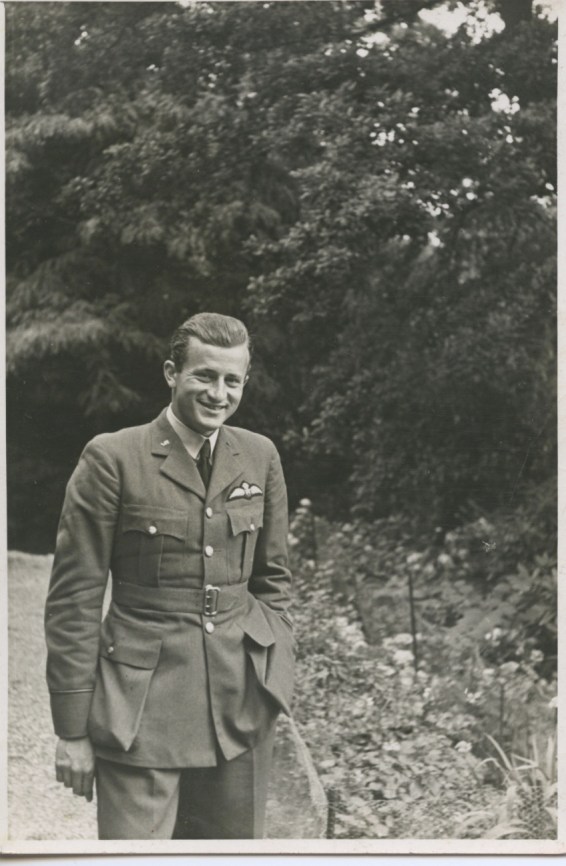
What we had left in his absence were a set of his letters home during those years abroad, carefully retyped by my Aunt Jane and preserved in multiple copies. I always figured I would write a series of short stories about him: “Uncle Bob in Prague,” “Uncle Bob in Budapest,” and so on. But just recently I finally tumbled to the fact that the real story of Bob’s peregrinations was probably going to be much more interesting than anything fictional I could devise. And so I decided to research and recount everything I could learn about his seven years in wartime Europe. Was he a spy? Was he crazy? Or was he just doggone lucky to have survived multiple interactions with the Nazis, Spitfire raids across the English Channel, dangerous border crossings and recrossings, to say nothing of his own idiosyncratic medical ailments, carefully detailed in his letters. In addition, of course, he had financial challenges, professional challenges, and even social challenges, including a shot0gun wedding and a resulting baby daughter, part of a family living in Denmark I only just discovered a year or so ago. Here’s the picture of Bob in his new RAF splendor that I sent to the woman in her mid-70’s, the first she had ever seen of her biological father:

Sellmer RAF

P/O R Sellmer, circa summer 1941

So there you have it. If I’m taking a break from traveling in real life, I’m going to go traveling in my mind, and I’m looking forward to taking you with me. I find my writing is more interesting and vibrant when I write *in the WordPress template instead of just on the cyber page,* so I’ll just own that little piece of pride in publication and use it to my advantage. Stay tuned for some hair-raising adventures! These may not go in chronological order, which could be confusing, but I’ll always try to keep you straight on the time period being discussed. The first one will take place in Memel (now Klaipeda), Lithuania, and deals with an unpleasant skirmish with some Nazi-wannabes.

Posted in Robert Sellmer, Uncategorized | Tagged , | 4 Comments

“I’ll be home for Christmas…if only in my dreams…”

One of the reasons I love traveling in Europe during the first two weeks of December is that the holiday decorations have recently gone up, the Christmas markets have just opened, and people tend to have a generally positive air about them. This year was a little odd since the weather was warmer than usual, but both cities I visited, Vilnius and Berlin in particular, were well decked out in festive finery.

Oddly, though, to my American ears, was the almost complete and total uniformity of Christmas music. From my cozy hotel breakfast room in Lithuania to the five airports I transited to every Christmas market I perused in Germany, the music was nearly identical.

Bing Crosby.

bing 2

Bing recorded a lot of holiday music during his heyday – there must be eight or ten albums. And surely there were others of his generation who recorded holiday music, and dozens since then. But the world, it seems, has decided that Bing is the “go-to” guy for backgrounding the holiday. The three songs I heard the most were “It’s beginning to look a lot like Christmas,” “White Christmas,” and “I’ll be home for Christmas,” and the latter was the clear winner in terms of sheer repetition.

The song in question was written, not surprisingly, during World War II in honor of the troops serving overseas. At first considered too melancholy for widespread dissemination, it actually became the most requested song by military personnel. While intended for those absent from friends and family for reasons outside their control, it’s become, I think, a touchstone for many of us for whom the holiday is a struggle between the real and the ideal.

But the “all-Bing, all-the-time” musical experience I’m having this year seems to point to a deeper issue, one J and I have been chewing on and consulting about with some of our more spiritually insightful friends. There is, I think, a trend this year to consciously separate the holiday from the Holy Day, as it were. Whether because of increasing cultural and religious pluralism, fear over the next terrorist attack, fewer of the faithful in the pews, I’m not certain, but I perceive a much less CHRIST-massy Christmas.

And while on one hand I applaud this (not much of a Nativity-Santa person myself; more of a Yule Log-mistletoe gal), it doesn’t feel organic as much as it feels imposed by forces operating outside our control. Even a Grinch like myself thinks the removal of the pink tree with the Miss Kitty ornaments from a California classroom a bit over the “politically correctness” top – there is a place, after all, for flags, food, and festivals in the maintenance of culture and identity. No, this feels to me like this a year to try not to offend; to try not to be particularly noticed; to try to slink under the radar and get through the religiously and emotionally loaded season with as few scars as possible.

And so, for some reason, Bing has become the man of the hour in 2015. The lyrics allude to traditional weather and decorations, but do not burden with specific faith references. The music is gentle and poignant, and the focus is on connection and caring.

I’ll be home for Christmas
You can plan on me
Please have snow and mistletoe
And presents on the tree
Christmas Eve will find me
Where the love light gleams
I’ll be home for Christmas
If only in my dreams
So for all of us, home or not, may the season provide some measure of whatever it is that is meaningful. Glædelig jul, as we say in Danish.


Posted in Uncategorized | 2 Comments

Like a phoenix, Das Berliner Schloss rises again…

I told my dear friend Rachel that I wouldn’t be blogging much from Berlin, that I had been here twice before, that I would be too busy stuffing my face with strudel, walking endlessly though Berlin’s charming neighborhoods, and (of course) sharing the spirit and spirits of the season with my lieben deutschen freunde. But it turns out there is a story that demands to be told, and so I’ve fired up the blog machine on this misty Sunday evening.

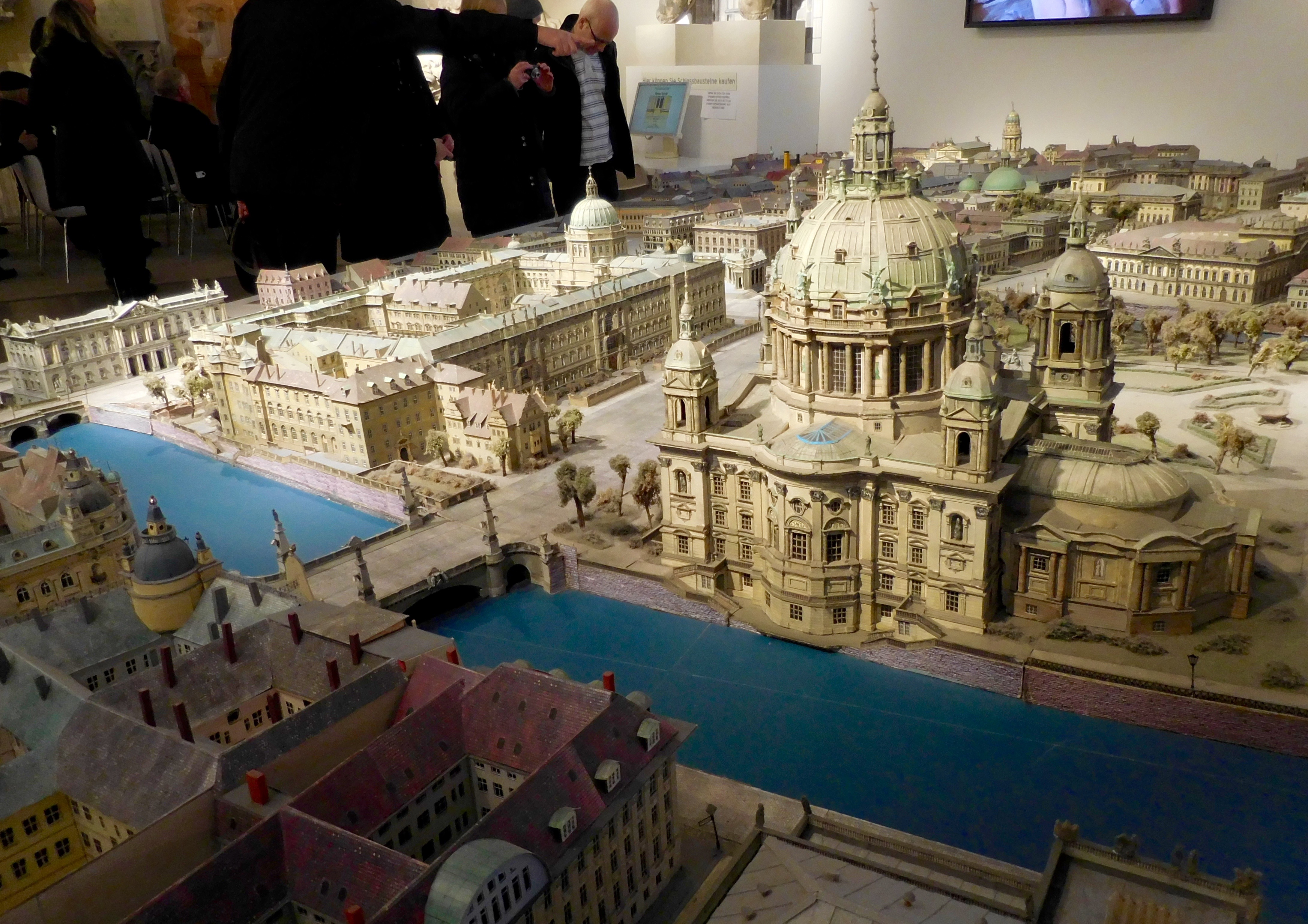
The obligatory background: Das Berliner Schloss, known in English as the Berlin City Palace, stood for 500 years in the heart of the oldest part of the city along the River Spree. Home and/or winter residence to generations of kings and kaisers, after a fairly modest start it became a true Baroque showpiece in the early 18th century under the renovating hands of sculptor and architect Andreas Schlüter. Here’s a model of the area circa 1900 showing the palace on the left and the Berliner Dom (cathedral) on the right, giving you a sense of the place and proportions. If you know the area, the Altes Museum is just to the right of the photograph.

DSCN1108

Seat of empire

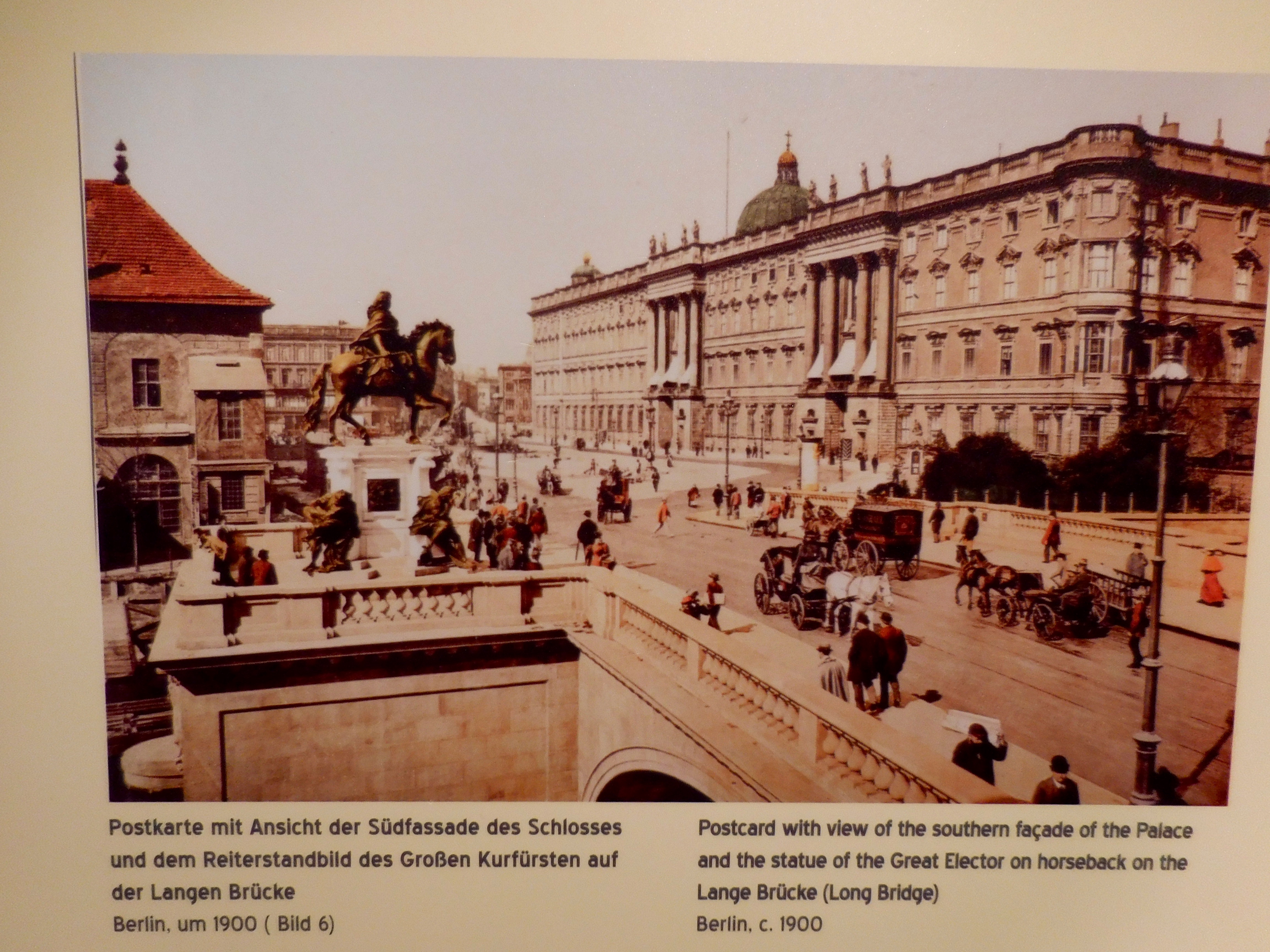
Shot from a different angle, here’s the palace set among the glory of turn-of-the-century imperial Germany:

DSCN1114

Kaiser Wilhelm is in

When Germany was defeated in the First World War, the emperor abdicated his position and his residence and the building was turned into a museum.  It was then heavily damaged by the Allies in World War II, but was still officially in restorable condition.

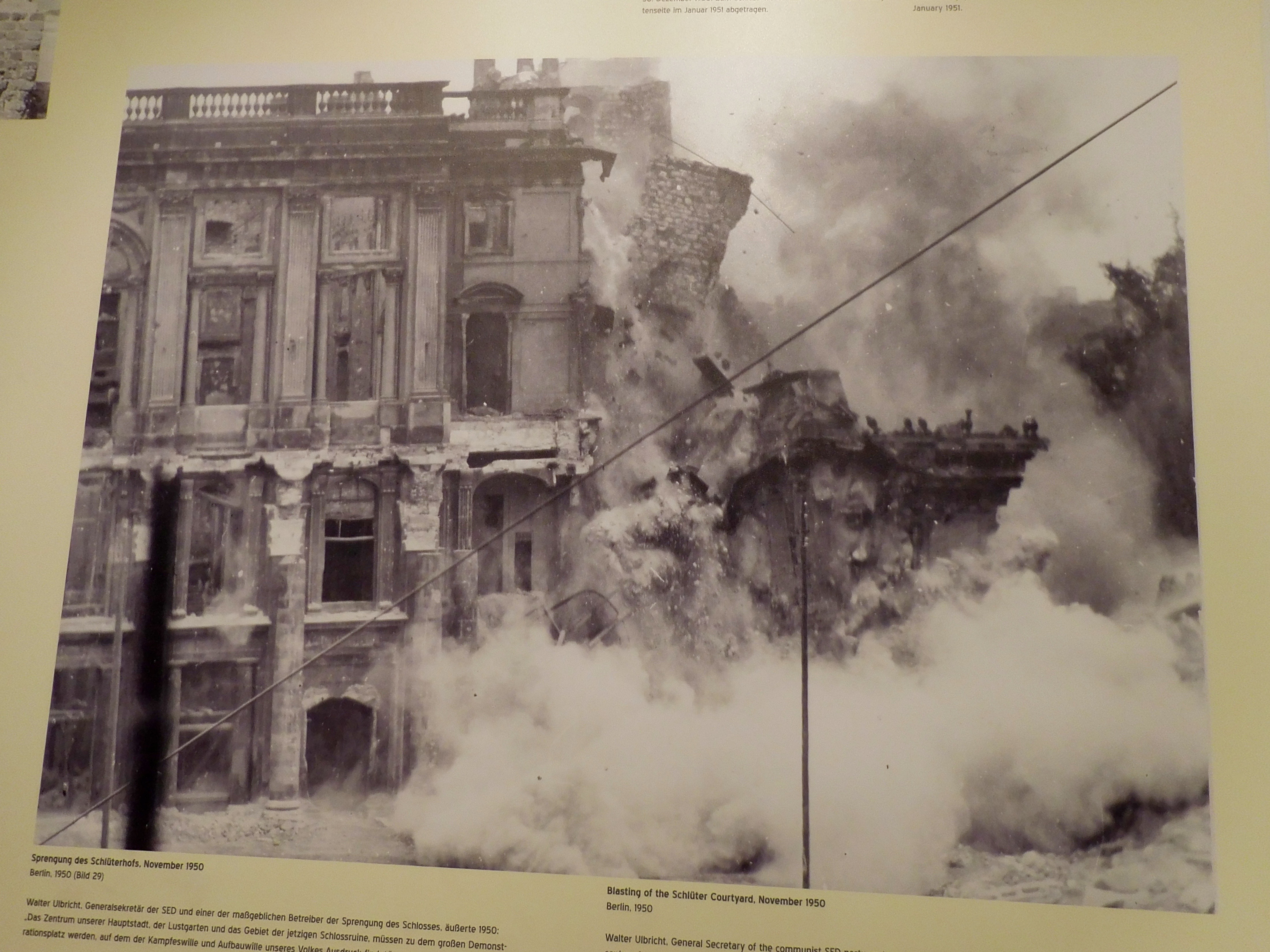
Enter the Germany Democratic Republic commies. As with many buildings in countries I’ve visited, this memorial to old empire and ways of thinking was not to be tolerated, (plus they probably didn’t have much of a budget for major monuments to begin with). It was blasted to oblivion in 1950 over heavy protests by the West German government and many others. Here’s a painful shot of that process, reminding me in part of the heart-rending demolitions currently being carried out by the Taliban and ISIS:

DSCN1115

Ouch

The site sat empty for nearly 25 years, used mostly as a parade ground, when finally the East German government planned and built the Palast der Republic (Palace of the Republic), a huge multi-purpose building which included, among other things, the seat of the Parliament, the People’s Chamber, “two large auditoria, art galleries, a theatre, 13 restaurants, a bowling alley, a post office, and a discotheque.” German privacy and copyright law will not allow me to cut and paste an image of this, ahem, modernist monstrocity, but just search for yourself. Wiki tells us “having bronze-mirrored windows (was its) defining architectural feature.” It didn’t do much for the neighborhood, artistically speaking, IMHO.

That being said, it was not without its supporters and proponents. Only 14 years after it opened in 1976 and shortly before German reunification in 1990, the structure was found to be heavily contaminated with aesbestos and closed to the public. It sat empty for over 25 years until, over the screams of yet a different set of protesters, the building was also demolished between 2006-08. In a fascinating bit of international recycling, Wiki tells us that “about 35,000 tonnes of steel which once held this building together were shipped to the United Arab Emirates to be used for the construction of the Burj Khalifa,” currently the tallest building in the world.

The German government, inspired by a small group of visionary investors in the early 1990s, had actually begun discussing the rebuilding the original palace; replacing the actual physical shell, but also to filling it with something called “The Humbolt Forum,” a national and international center for art and learning. This is where it gets really interesting.

An international competition was conducted to find the architect who would guide the process. That award went to Italian Franco Stella whose design so impressed the committee that it won not only the first place award, but also the second and third, making it clear that no other submission could ever even hint that they had been close. Stella’s concept is brilliant: much the restoration will completely resemble the original building (down to the plaster moldings on the facades) but it will also add a couple very simple Bauhaus-inspired wings that will tie the building to elements of architecturally more modern buildings nearby. Here’s a model of Stella’s building:

DSCN1107

Just enough new to set off the old

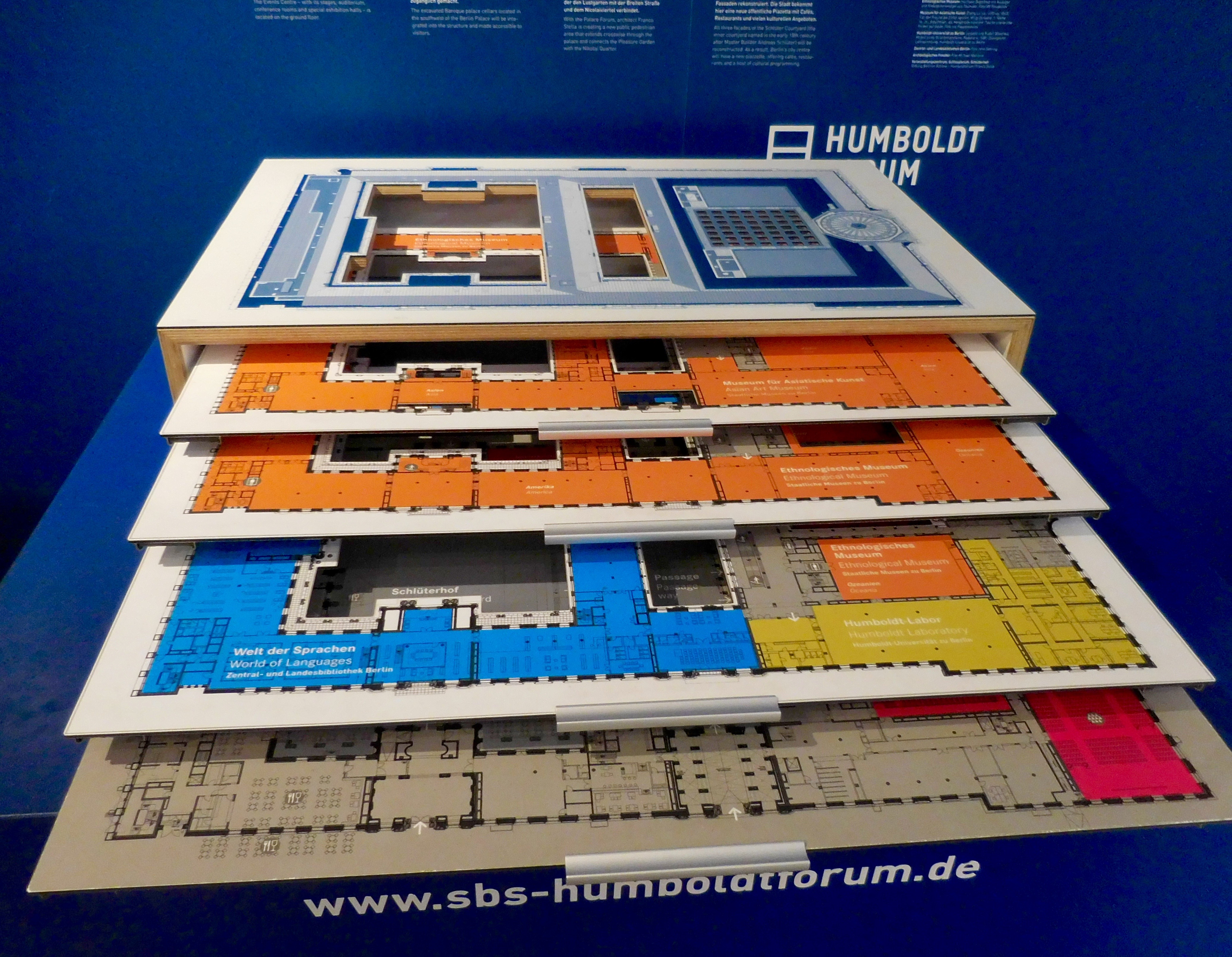
…and here’s a pull-out representation that shows what will be where:

DSCN1109

Don’t get lost

If you’re interested, that address at the bottom of the page leads to an English website that will tell you much more.

I was fortunate to learn about this building and its colorful history due to my friend F.P. who is among those who has made this project part of his life’s legacy and who also serves as a part-time docent at the site. At the moment, his particular interest is the restoration of the facade, meaning the over 3000 (yes, three thousand) sandstone ornamentations that will grace the building in its completed form. This one managed to survive the bombing and the demolition; most of the rest did not:

DSCN1121

Gargoyles be us

In order to build each one of these, artisans are using an extensive collection of photographs  that were taken in the early 1940s by worried Berliners, concerned that city buildings would be destroyed and there were no paper plans to replace them. From these photographs, several increasing larger plaster models are made until the final perfect 1:1 representation has been created. Only then is it committed to final form.

Wooden models are also used to ensure that the building’s proportions are exactly correct and to aid in the placement of the ornamentations. Here’s a six-foot model of one small section of the facade. (Boxmaker Jay, this one’s for you)

DSCN1118

Wouldn’t that be lovely?

The building will finally and permanently reopen on September 14, 2019, the 250th birthday of famous German geographer, naturalist, and explorer Alexander von Humbolt, whose name, along with that of of his older brother Wilhelm, a linguist and educator, grace the overall enterprise. I’ll be there, inshallah, to honor and support this visionary effort to not only restore a civic landmark but to create a resource that will showcase global art and artifacts and will inspire innovation and learning.

A deep and heartfelt “danke sehr” to my friend F.P for sharing this amazing project with me. I look forward to seeing the results of your labor in three years, ten months, and six days. (This is a bit of an inside joke, but it’s not a joke. Many of the supporters of this project are survivors of a long and difficult century in Berlin, and they would like to see this project to completion.) But I have confidence.

DSCN1122

Inspired by a love of history and beauty

Posted in Travel - sites, Uncategorized | Tagged , , | 1 Comment