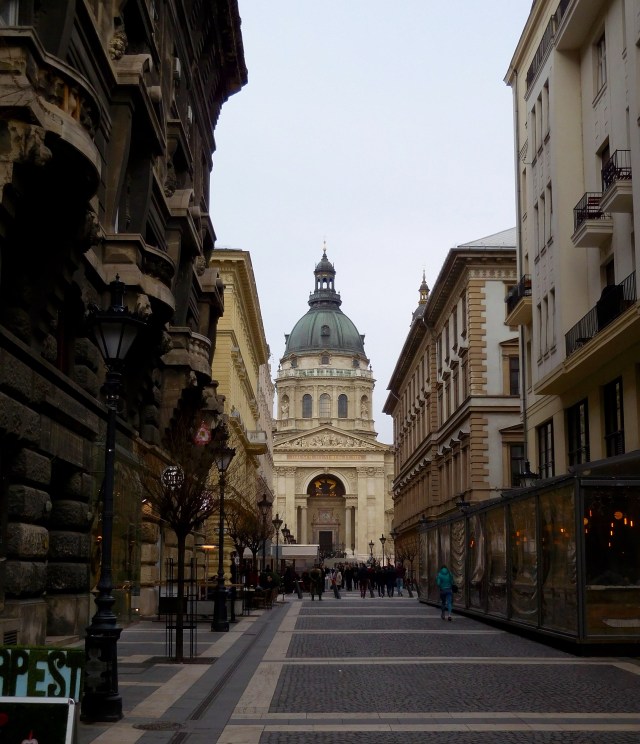
Back to school – zurück zur Schule…

One of the most amazing aspects of my current life is my ability to do, well, just about anything my fevered brain can dream up. This surfeit of freedom occasionally gives me a whiff of existential vertigo, but most of the time I try to balance this good fortune with some minor paid employment and sincere efforts to do good in the world in ways large and small.

Travel has been an enormous part of this freedom over the past two years, as evidenced by the vast majority of this blog’s postings, but this time the travel comes with an added twist. Starting May 2nd and lasting until the end of the month, I will be studying in an intensive German language program back in Berlin, a city that has clearly rocketed to celebrity status in my urban pantheon.

In truth, the main reason for this adventure is a chance to spend more time in Berlin outside the charmingly cocooned tourist environments of cozy hotels and stunning museums. This is not to say that a student’s life bears any resemblance to the realities under which most of the world labors, but only that I will have a fixed schedule, some actual deliverables, moderately uncomfortable pressure, and a more “day-to-day” life than I have had during my visits in the past.

Using every ounce of rationalization still left to me, I will also argue that being back in the classroom from the student side offers two pedagogic opportunities. One is the chance to watch other people do what I do, and that is teach a second language. I hope to pick up some new techniques and perhaps correct some current habits or patterns that are less that helpful. The other is to have the often humbling experience of being a beginner again, remembering for myself the frustrating “deer in headlights” sense of not understanding what is going on around me coupled with having the oral prowess of a two-year-old on a good day.

In addition to blogging during my school daze, I hope to start writing a more focused piece comparing my intensive language program experiences from Germany to Japan and back to the USA from my PSU days. I’ll keep you in the loop if I manage that achievement.

So fasten your seat belts and get ready for a month in the life of a language learner, Berlin style. Along the way I’m sure there will be some interesting tales to tell. Auf Wiedersehen für jetzt! (Goodbye for now!)

Posted in Uncategorized | 5 Comments

Imperial Vienna

I was going to write this post while I actually was in Vienna, last Tuesday the 22nd to be precise, but then writing an entry about my indulgent meanderings amid glorious historical civic monuments seemed horribly misplaced in the aftermath of the Brussels (and Istanbul and Lahore and…and…) bombings, so I took a bit of a break. I’m back home in Maine now so the intensity of the writing may not be what it could have been, but I still want to share and record some of my time in that remarkable city.

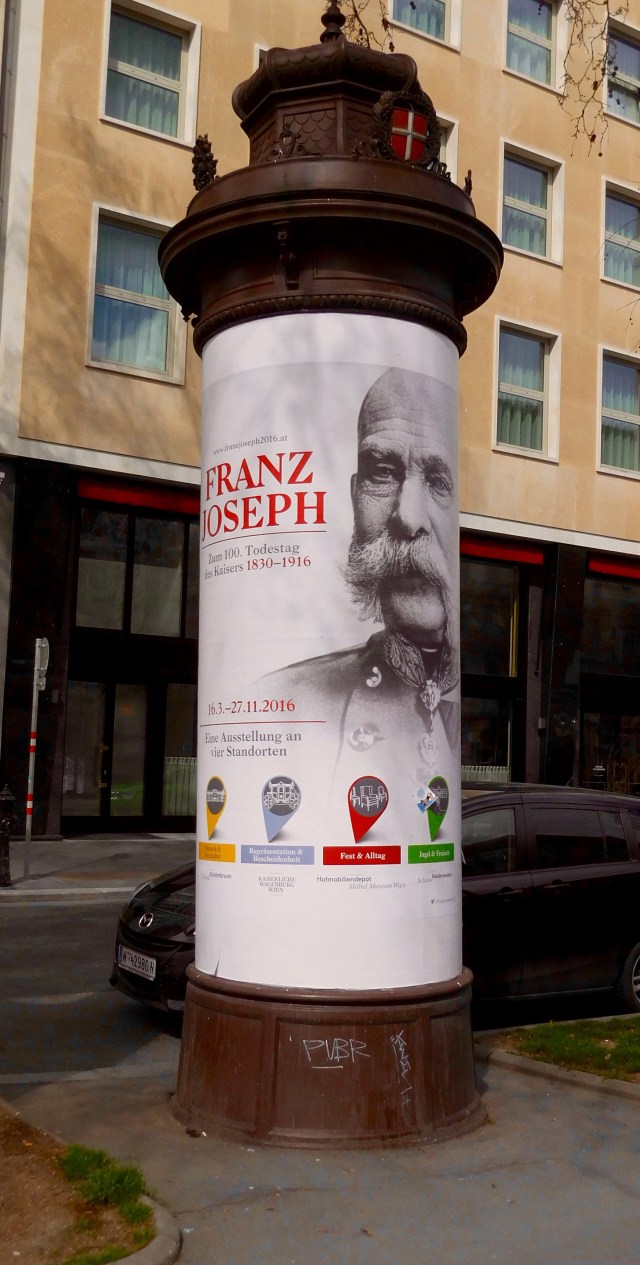
It’s embarrassing to say, but I actually don’t LIKE Vienna. As with a formidable personage, I respect the city, admire it, am in awe at the history and culture, but as a physical space to inhabit, it’s not my cup of tea, even though it wins all sorts of “Quality of Life” awards. That’s part of what I find so fascinating about travel – how one place can “feel” comfortable and right and others not so much. My discomfort comes a bit from its proportions – during the 19th century, under the reign of the Emperor Franz Joseph, Vienna was consciously manipulated to look and feel like the center of empire that it actually was at that time. Ironically, FJ died in 1916 and shortly thereafter much of his empire was stripped away in the aftermath of World War I. There is now a very large and imposing civic head, as it were, on a rather small political body, a fact I’m sure not lost on one of Austria’s most infamous sons, Adolph Hitler.

Franz Joseph

Ruled much of Europe for 67 years

Vienna, with about 2.5 million folks (a third of Austria’s population), was at one point the largest German-speaking city in the world. From Celtic and Roman origins, the city truly began flowering in the Baroque period and blossomed during the second half of the 19th century with the destruction of the old town walls and the construction of major boulevards and entire neighborhood blocks to house its citizenry, from the wealthiest to the most indigent. It regained a lot of glory after the first World War and maintained its position as a cultural magnet, but the Second World War dealt the city and its inhabitants stronger blows that took decades to heal.

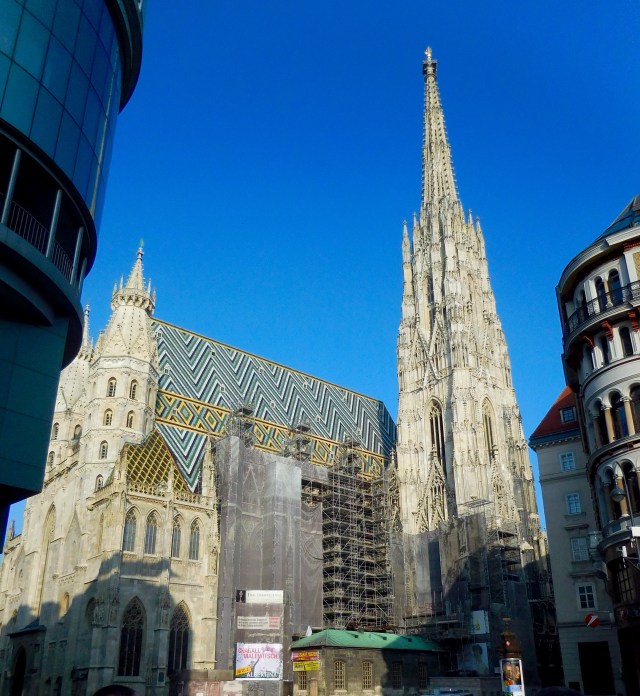
That being said, no trip to Vienna is complete without paying homage to St. Stephens Cathedral, the Roman Catholic 12th century Gothic masterpiece that dominates the Viennese skyline. It is literally and figuratively the center of the city, and has been now for nearly a thousand years:

Vienna Dom

Always under repair

Located on a (now) pedestrian-only street, St. Stephens is now surrounded by the parade of international consumer brands and outlets that I have now seen in many European cities. One must leave this section of town to 1.) see anything at all remotely Austrian and 2.) to escape the armies of selfie zombies.

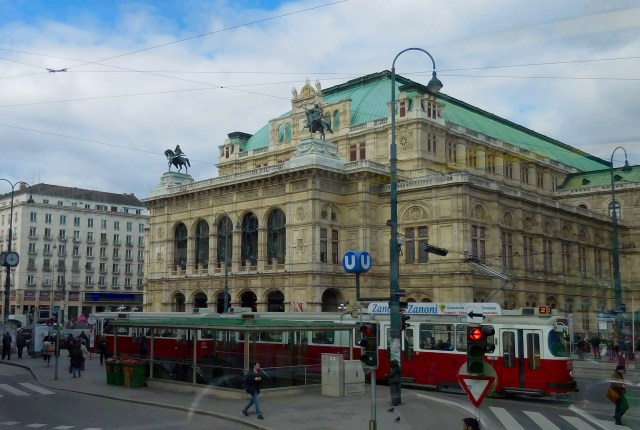
A secondary site of homage in town is the Weiner Staatsoper – the Vienna State Opera, where on my first trip there in 1974 I enjoyed my very first live opera for $1.50 in the SRO stratosphere. But little did I mind. The beauty of the music, the shimmering interiors, and the stately dress of the more prosperous attendees more than made up for a couple of slightly sore feet.

Vienna opera house

All roads lead to music

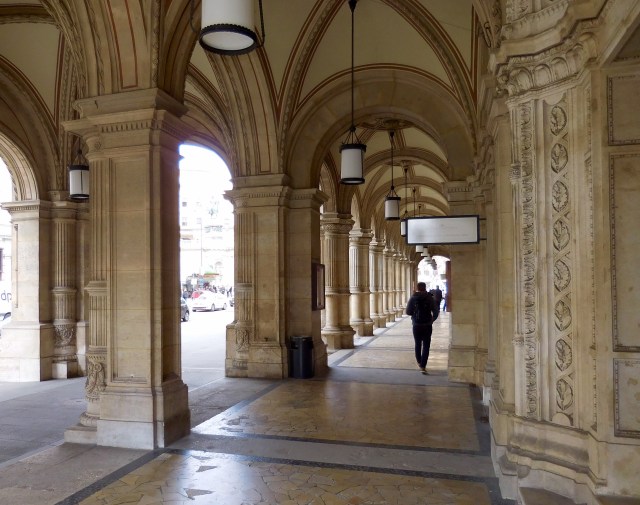
One of the things that’s hard to do is to give a sense of the size and glory of these buildings. It’s a little easier to sneak up on some of the details, as in the columns that cover the pedestrian walkway on the left side of the picture above:

Vienna opera columns

Stage door?

Naturally, not everything in town can be huge and magnificent – as you know, I’m always on the outlook for the quirky twist. Not as easy in Vienna as in other places, I found it here in the Opera House metro stop:

Vienna opera toilet

Tunes to tinkle by

While the Schonbrunn Palace is considered the gold standard for tourists, I frankly was more taken with the Belvedere complex and gardens, built in the 18th century and now an art museum and other venues. The setting is lovely and the views of the city, including the cathedral, a sight to behold:

Belvedere

Mistress of all she surveys – also, apparently, a bit of a good luck charm.

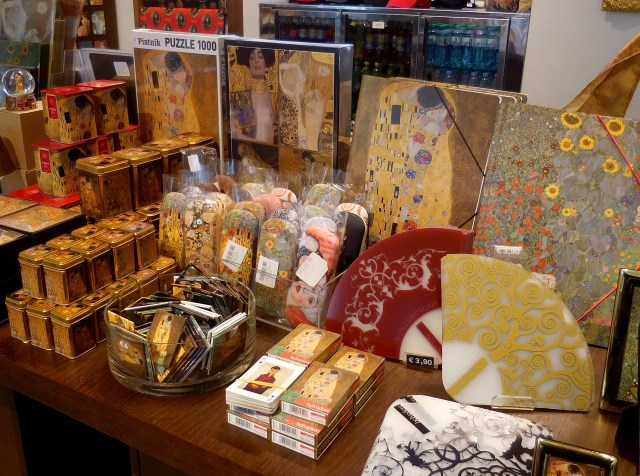
By this time in my travels, I am ashamed to confess I was pretty much palace- and museumed-out, so this day I skipped the tours and galleries and (head hanging in shame) *just went to the gift shop.* Just as Antoni Gaudi is to Barcelona, Gustav Klimt is to Vienna, and of course there is a massive marketing effort to ensure that you can and will buy just about anything you want with a Kiss on it:

Klimt kitch

Klimt Kitsch

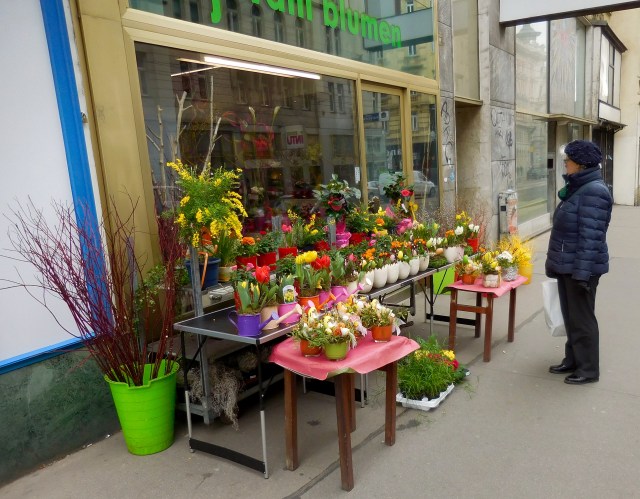
Since I seemed to be failing Tourism 101 that day, I devolved to my favorite city activity – just walking somewhat aimlessly in a somewhat large ovoid path which would eventually lead back to my hotel. Along the way I saw some delightful small snippets which left me feeling a bit more positively about the town:

Vienna flower shop

Signs of spring

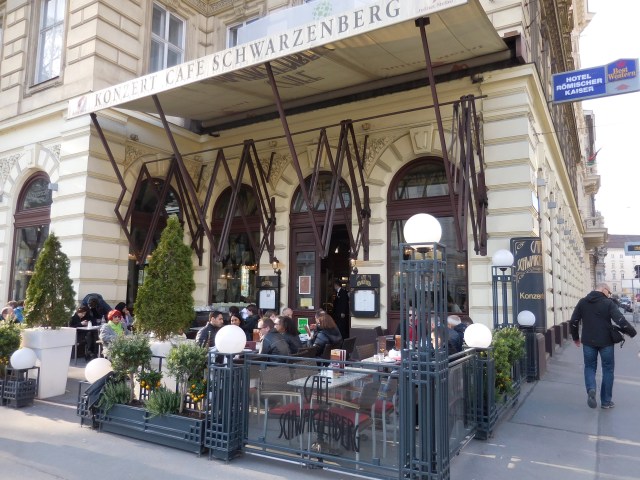
and of course one of the many archetypal Viennese cafe, bustling outdoors even on a coolish day:

Vienna cafe

Latte with your Facebook?

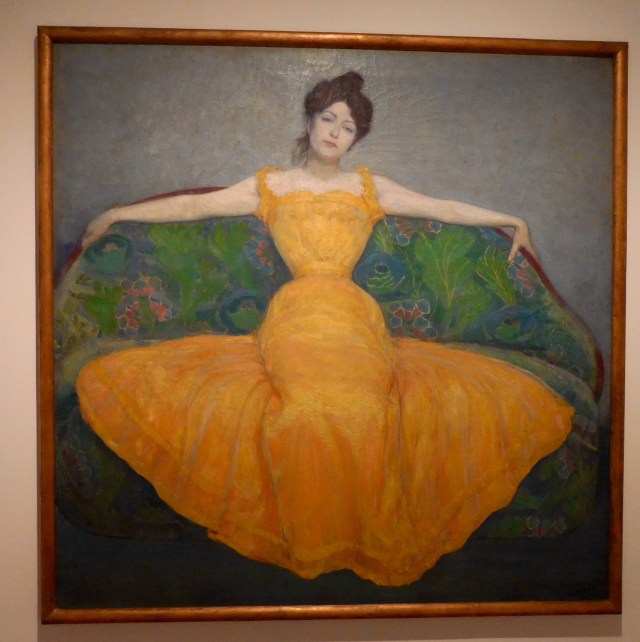
But even though my museum chops had deserted me, I did manage to go to one during my time there – the city museum of Vienna. As I have mentioned below, I have started making these a staple of my city visits because they help ground me in the day-to-day of these old and complex urban landscapes. I was struck by one particular picture and here it is, as a kind of artistic finale to my all-too-short and all-too-superficial brush with Vienna:

Vienna golden lady

Woman in a Yellow Dress, Max Kurzweil, 1899

Not Klimt’s more famous gilded lady, “Portrait of Adele Bloch-Bauer” (1907), this art nouveau piece speaks to me of the complexity of the city and the age. Yes, she’s beautiful and yes she definitely fills her space with confidence and elegance. But a closer look at her face and the tightness of her waistline suggests some repression, some resignation, definitely some sadness. And so I felt with Vienna – so much beauty, so much resignation. Empire interruptus.

My name is Ozymandias, King of Kings;
Look on my Works, ye Mighty, and despair!
Nothing beside remains. Round the decay
Of that colossal Wreck, boundless and bare
The lone and level sands stretch far away.”
Vienna of course lives and breathes today, an important player in the European landscape. But the dreams of empire – they are long gone.
Posted in Austria, Uncategorized | Tagged , | 2 Comments

Bucolic Bavaria

I’m in the home stretch of this most recent jaunt, and in order to meet my outbound plane in Budapest on this coming Thursday, I needed to cover some serious ground. So yesterday I spent nearly ten hours on four trains (including one missed connection – not my fault), maneuvering myself from Dresden in the north-eastern part of Germany around the bulge of the Czech Republic and down to Munich in the southern part of the country. This is only around 285 miles, which in the US would be an easy four-hour ride, but when one is bound by the whims of public transportation, it’s a different story. But c’mon – what’s not to like about train travel? It’s soothing, easy, relatively comfortable, and you get a lot of time to watch the farms go by and think deep thoughts.

Munich, or actually a little town half-way between Munich and Salzburg was my destination because it is now home to two friends of mine, T & M, whom I knew from Portland, Oregon. I hadn’t seen them in too long and it was a great excuse to push me through much of the long leg back to Vienna (where I am today) and Budapest (where I am headed on Tuesday). They indeed turned themselves inside out to help me enjoy my brief weekend with them, and grateful indeed I am for their generous hospitality.

What this train trip didn’t have going for it was much in the way of dramatic scenery. After one leaves Dresden, a part of the former East Germany that has had a lot of economic support, you’re kind of out in the “West Virginia” of Germany. Twenty-five years after unification, a lot of towns that saw massive emigration following the fall of the Wall are still struggling to determine their futures, and that’s pretty evident.

Down and out

Waiting for the good new days

One place that is making some progress is Chemnitz (KEM-nitz), a city of about a quarter of a million people that was a huge industrial center before World War II and was targeted the same day that Dresden was bombed, suffering much the same fate then or in following raids. The company that evolved into Audi had originated in Chemnitz but used the relocation to build a new factory which probably led to some serious process improvement, the only silver lining I can find to that sad chapter.

During the process of its rebuilding under the former GDR, Chemnitz also had the dubious distinction of having been renamed Karl-Marx-Stadt in 1953 by the forward-thinking East German prime minister Otto Grotewohl whose rationalization went something like this:

“The people who live here, do not look back, but look forward to a new and better future. They look at socialism. They look with love and devotion to the founder of the socialist doctrine, the greatest son of the German people, to Karl Marx. I hereby fulfill about the government’s decision. I carry out the solemn act of renaming the city and declare: From now on, this city bears the proud name and mandatory Karl-Marx-Stadt.”

It’s a tribute to their ‘love and devotion’ that just prior to reunification, 76 percent of the population voted to get its old name back (a proto-Slavic word meaning “stony brook”), firmly shutting at least one door closed on Grotewohl’s legacy.

Chemnitz Hbf

Now just joining the pack of German train stations

So the route was: Dresden to Hof (change trains), Hof to Nuremburg (change trains – miss ICE connection by 30 seconds), Nuremburg to Munich (change trains) and Munich to Rosenheim. I was really ready to sink into a cozy booth at the Gramaphone Abend-Bistro with T& M to chill out and catch up on what’s new.

The next day T was kind enough to take me on a long drive on a mild Saturday afternoon through the soon-to-be blooming Bavarian countryside. Because of a fairly sturdy haze in the air, I didn’t get any good shots of the Alps (blue and beautiful in the near distance) nor was I very successful in capturing much of the local ambiance, being pretty engaged in our chewy and delightfully wide-ranging six-hour conversation. Here’s a shot of a popular pastry shop with typical detailing:

Outdoor cafe 1

All she needs is a dirndl…

In the nearby parking lot, a sign reads:

so is da Brauch

“This is the parking lot of Mullner Stuberl, Cafe-Restaurant. Those who park so, so is the legend, (something like) you must you bring your belly in to eat with us.”

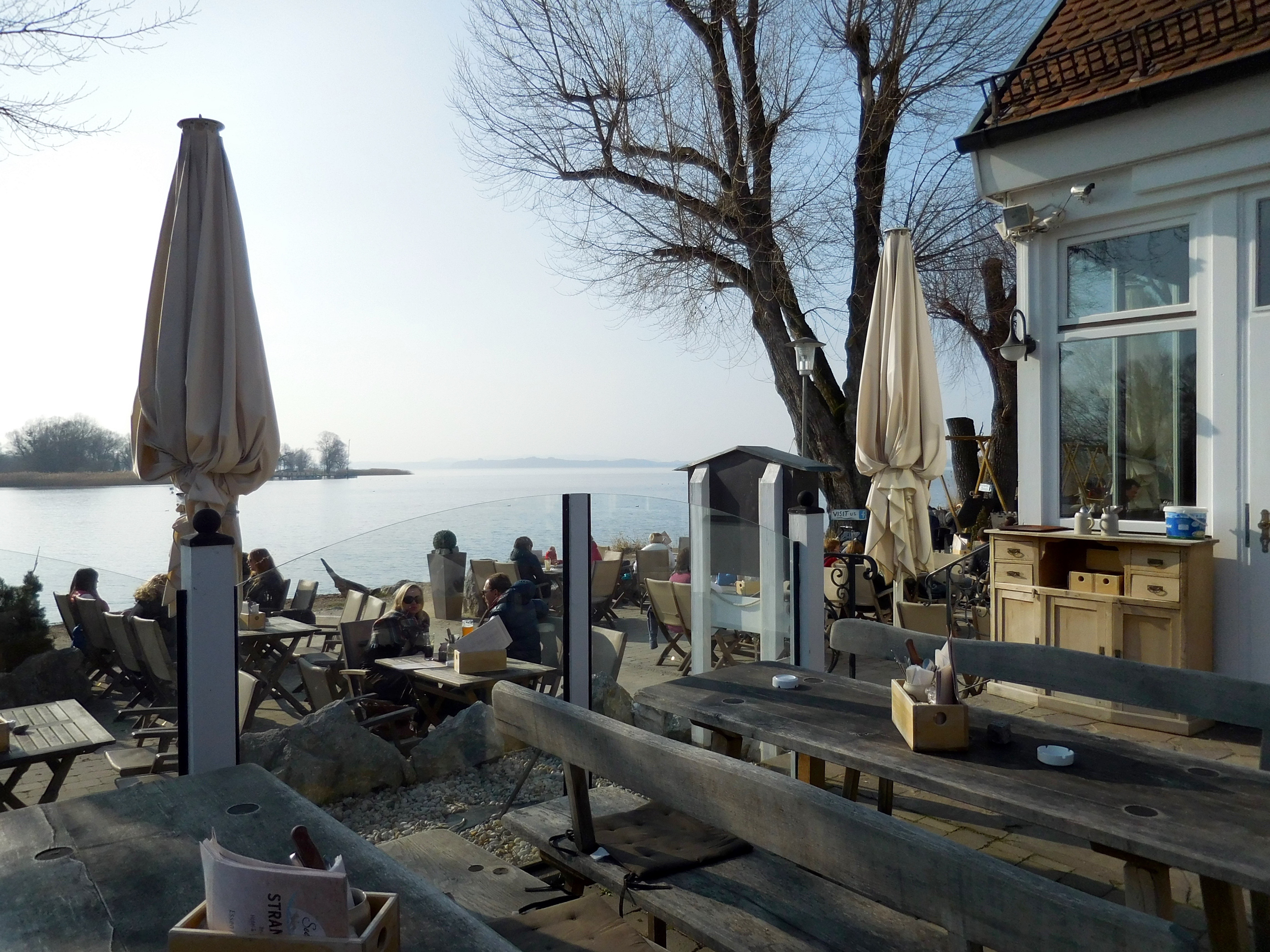
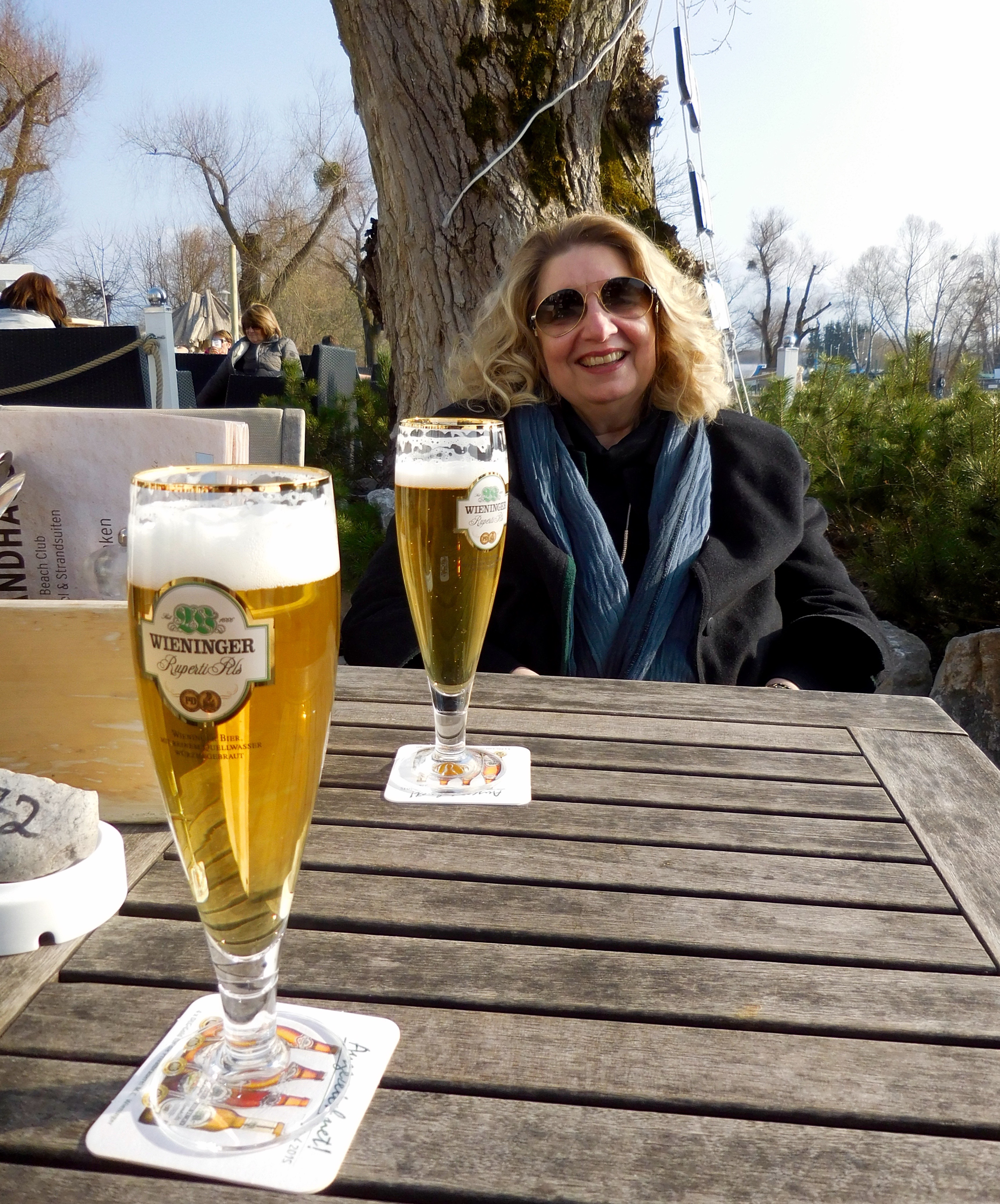
While T and I managed to resist the apricot strudel, we did start to get a tad thirsty, what with all that talk and all.  T knew about a great spot, the Strandhaus,  just beside the Chiemsee (sometimes known as the Bavarian Sea) a big beautiful freshwater lake in the Chiemgau recreational region. Well, I didn’t know where the heck I was, except that it was simply lovely and most unexpected temperate for an afternoon in March:

Outdoor cafe 2

Sun bunnies in March

(I bet this place is just hoppin’ in the summer.) We settled in and ordered ourselves a couple Flammkuchen, kind of a Alsatian-cum-German pizza with a thin crust, creme fraiche, and little bits of bacon, onion, and tomato. Pair that with .31 liters of a local pils, and you have two happy campers:

T and me

Prost!

So thanks to you both, T&M, for a most enjoyable weekend. Let’s do it again asap.

Posted in Germany, Uncategorized | Tagged , | 3 Comments

Like a phoenix, Dresden rises…but with baggage…

Dresden was a last-minute addition to my trip itinerary based on the unavailability of friends in Munich during this time period. But there were and are many reasons why I’ve wanted to visit, starting with having read Vonnegut’s Slaughterhouse Five in college (he was a POW here) to its having been a Bob spot (and I’m bagging those one by one) to its rebuilding both under the GDR regime as well as post-unification to….well, its current unenviable reputation as a center for rightist protests in Germany. I saw a little of all these things during my few days here, but feel, as I so often do, that more questions were raised than answered; that this is a place of many stories and perspectives.

The post-it background is that this city is the capital of Saxony, one of current Germany’s sixteen states, but it is not to be confused with Old Saxony, the part of the world where the Saxons (as in Anglo-Saxons) come from, further to the northeast near Denmark. Dresden and environs have, however, played an important role in German history as well as that of the Holy Roman Empire since its founding around 1200 CE and was known for centuries as a “Jewel Box” for its beautiful Baroque and Rococo architecture. Industrially it was famous for camera and cigarette factories, although Dresden china is a relatively new invention. The true glory of German porcelain comes from Meissen, some ten or twelve kilometers away down the Elbe River.

Dresden was also the site of a major Allied bombing raid on the nights of February 13th and 14th in 1945, as Vonnegut writes and history shows. First British and then American bombers dropped an astonishing amount of explosive and incendiary material on the city center, creating a firestorm that destroyed just about any standing object in the target area which included most if not all of those Baroque jewels mentioned above. For many years following the war, the main squares remained cleared of rubble but undeveloped. My tour guide said yesterday that “there was no Marshall Plan for the GDR, and we had to pay reparations to the Soviet Union.” Life went on, but mostly in newly constructed residential and commercial blocks.

So here’s the view I’m staring from the 8th floor of the Pullman Hotel at as I write these words:

Dresden - Pullman night view.jpg

Multi-colored strolling zone

This is the newly reconstructed Praeger Strasse, the main shopping street in town. Before the war the buildings were much older, of course, and set much more closely together. There is a sepia print of those early days in the hotel elevator, used as advertising for the restaurant here, nostalgically named “Le Boulevard.” But that’s all that’s left. Past the red lights in the upper center of the picture, Praeger Strasse heads up into the historic part of town, the Old and New Squares. Here’s a shot from near the Tourist Office, giving you an idea of how the old and new of Dresden are often in one shot:
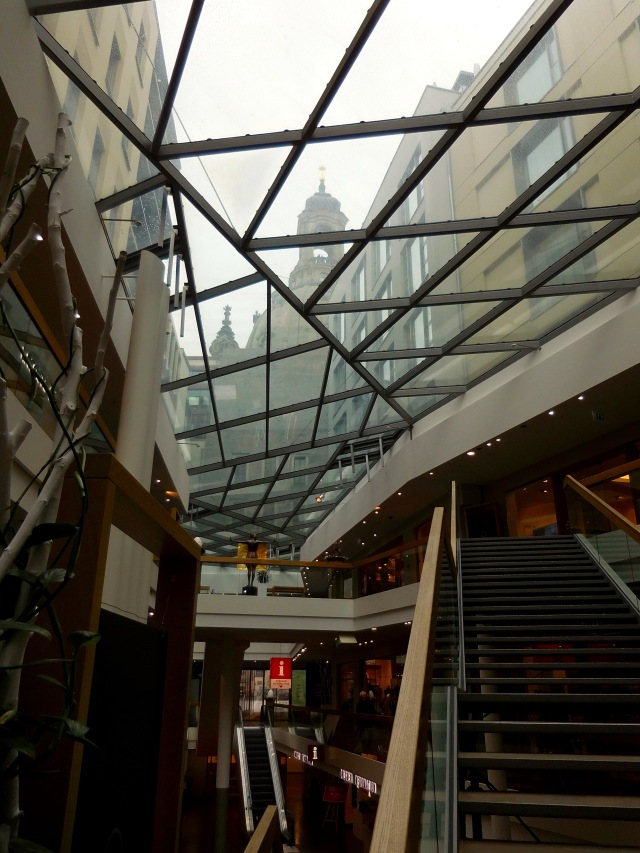
Tourist office

Praying first to God and then to Commerce

Central to both the original and current urban planning as well as the soul of the city is the Frauenkirche Dresden – the Lutheran Church of Our Lady. While it wasn’t specifically bombed in 1945, the combined heat of the blast basically drove the temperature of the building up to a point where it imploded upon itself. The rubble lay untouched for 50 years as a stern anti-war reminder by the GDR; only after reunification in 1994 did rebuilding begin, using as many original stones as possible, painstakingly placed back into order. The work was finally completed in 2005.

Our Lada

Black stones are back home again; white are replacement pieces

Nearby the Frauenkirche, new blocks of buildings *created to look nearly identical to those destroyed* are going up near newer Soviet-style pieces from the former regime. It must be very odd for long-term residents to see not only building happening on formerly deserted fields but then to see a “Baroque Disneyland” take place, as my tour guide said, attempting to regain former glory. It’s a discussion any destroyed city must have to have – what is meaningful to a sense of civic identity? How does one create space that respects the past but acknowledges the future?

Interestingly enough, in the middle of these redevelopment discussions, archeological ruins turned up that no one had suspected at all – buried under the rubble – so now efforts are afoot to uncover and document as much as possible before building whatever is planned to go in its place.  The Frauenkirche is in the background:

Dresden archeology

Ye want your NEW old town or your really old OLD town?

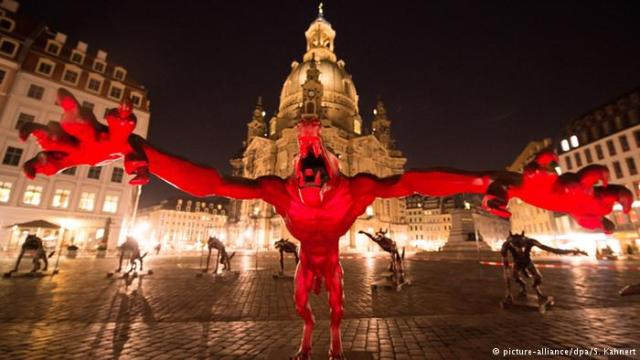
The Frauenkirche comes into view yet again this week for hosting the first installation of “The Wolves Are Back” by the artist Rainer Opolka, civic art protesting, well, protesters:
Wolves

Reading in dw.com, we learn “Opolka says the 66 metal statues of wolves that he’s created serve as a symbol for the “hate, arsons, neo-Nazis, angry Pegida followers and members of the AfD, who want to shoot refugees.”

“Measuring nearly two meters each, the statues were installed on Dresden’s central Neumarkt square, just in front of the city’s historical Church of Our Lady, earlier this week. Dresden is the capital of the German state of Saxony, a region which has increasingly seen racially motivated violence.”

In the light of day, the wolves, while still ominous, appear in my picture to be engendering the kind of reflection and conversation the artist intended:
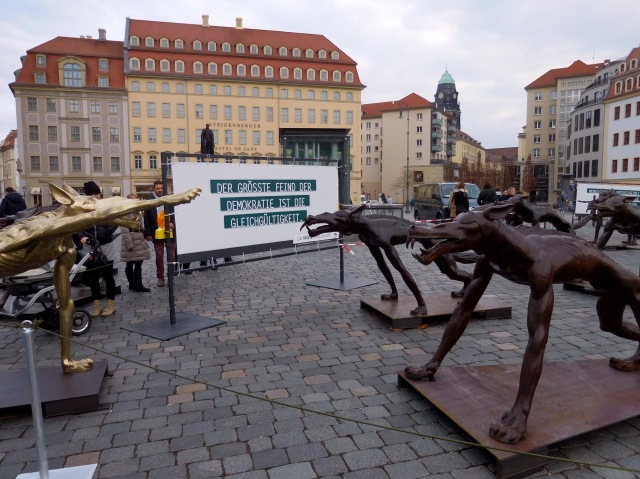
Indifference

“The biggest enemy of democracy is indifference”

“Asked in a YouTube interview by independent reporter @streetcoverage whether he was concerned that the statues could be vandalized, Opolka replied, “Perhaps they can be damaged. But the idea cannot be damaged.”

“The 66 wolves and an information panel encouraging “discussion about racism and violence” will remain at Neumarkt in Dresden until March 23. Opolka then intends to take the installation to the capital cities of other states, like Potsdam and Berlin.”

I was thrilled to be able to see this installation, a bold statement by a progressive artist. But there were other green shoots around town, signs to me that many parts and peoples of the city are taking a stand against the weekly rightist protests that fill the Theaterplatz with hate every Monday night. The Royal Castle, or Dresdner Residenzschloss, home to the State Art Collections –  many of the exhibits I have just seen – proudly posts this banner:

Dresden museum pledge

“Dresden State Art Collections – 14 museums with work from all the continents – a big house full of foreigners. Diversity is our strength.”

And I certainly enjoyed that diversity, visiting loads of museums and art galleries during my two days here, from the porcelain hall to the Old and New Galleries (Vermeer! Rembrandt!) to Saxon folk art to armory to sculpture to coins to carpets and more, even the Hygiene Museum, which deserves a post all of its own. One last detail captured my imagination and suggested that the gute Menschen of Dresden are using art in many ways to proclaim their stance against bigotry and hate. In the middle of one of the sculpture halls in the Albertinum, Dresden’s “modern” art museum, I saw a set of these little guys on the floor of the hall and a lot of post-it notes fulling a side wall:

Dresden - Chinese student

You might not remember him from this angle

The Spanish artist Fernando Sanchez Castillo created a three-inch high, 3-D template of the young person known only as “Tank Man” when he faced down the Chinese military in the iconic photograph taken in Tiananmen Square in 1989. The fate of this man who was able to stop the tanks for a singular moment that day is unknown and the publication of this photograph is prohibited and censored in China. (My Chinese students had never seen it and did not know the story behind it.) Castillo had thousands of these little figures produced (in a Chinese factory, no less) and has created an army of pacifist resistance on the second floor of the Albertinium.

The exhibit, “Made in China,” will circulate around the museum after its initial installment in the atrium, but we are all encouraged to take one Tank Man from the installation. We are to leave in exchange a note about democracy and human rights, posted on the east wall.  We are to send a photo from the place where we put our tank man as a private monument. (He even has a Facebook page.)

So, clearly a city and a visit that feels as thought there is a big “Work in Progress” sign hanging around the neck of nearly everything and everyone I saw and met. As a result, I will follow the developments here with care. After years of struggle and stagnation, I hope this brave city can find secure and united footing in Germany’s bold social experiment.

 

Posted in Germany, Uncategorized | Tagged , | 2 Comments

What would Kafka say?

First off, I’m back in business, camera-wise at least. Seems I have a bad charger and in addition with a little laying-on of hands with the memory card, we’re up and running for the moment.
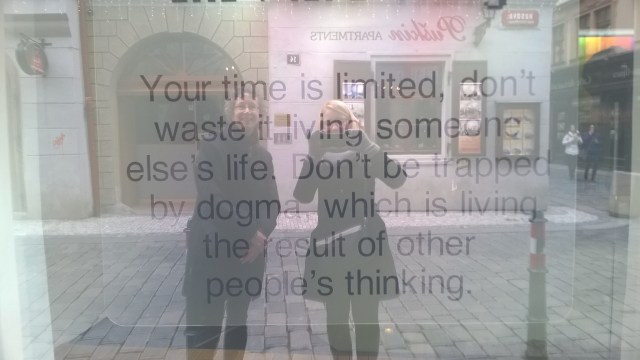
Second, I’m just finishing up several days in Prague, the highlight of which was a chance to meet up with my dear friend Magda from my time in Batumi where she was a visiting student from Poland at the university where I was teaching. We have stayed in touch over the miles (I saw her in Warsaw last year, for example). This photo, taken from the Apple Museum in Prague and quoting Steve Jobs of all people, pretty much sums up our friendship and our life philosophies:

Words to live by

Words to live by…

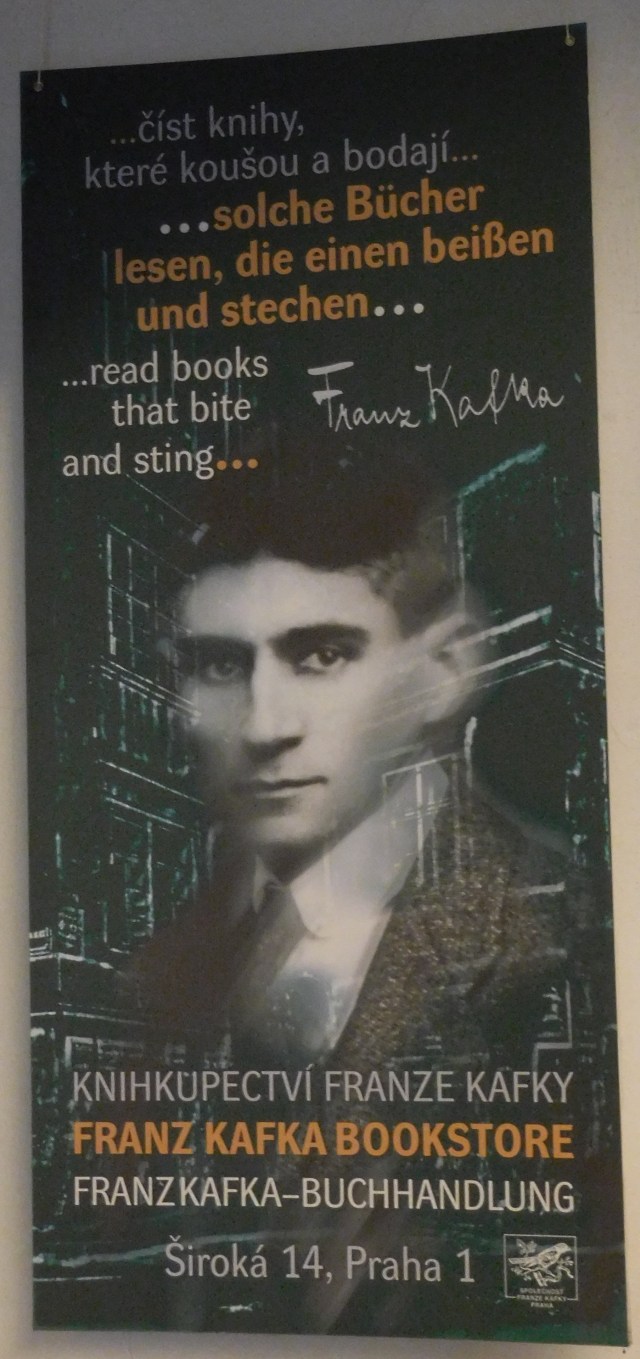
But as I elude to in my post title, I am really struggling with my reaction to Prague, similar to my reaction to Cesky Krumlov. In short, I feel as though this country has made a difficult pact with the Devil. In exchange for capitalizing (as it were) on  their stunning cultural history and developing economically through various facets of tourism, they have become a kind of “faux” fairy tale European amusement park destination. The core historical sections of Prague which everyone wants to see – for the reasons that are clearly evident – are now completely devoid of, well, anything and anyone actually Czech. Kafka, whose work s known for fusing the real and the fantastic, might have had something to say about what his city has become.

Kafka

Very little bite in the Old Town Square these days

One critic suggested that Kafka wrote about the  “irrationality at the roots of a supposedly rational world,” and perhaps that is my existential dilemma about what has become of this gem of a city. Is this what members of the underground fought for during the Second World War? What the brave protesting students hoped for during the Prague Spring of 1968? What Vaclav Havel, the first freely elected President in 1989, anticipated? That the Old Town Square and Wencelas Square would become just long strings of international fast-food franchises, repetitious clothing store chains and souvenir shops, run by Chinese and Africans and overrun by teeming hordes of tourists of every national stripe, giggling over selfies and checking their Facebook pages at a Subway or Starbucks? It’s hard to say.

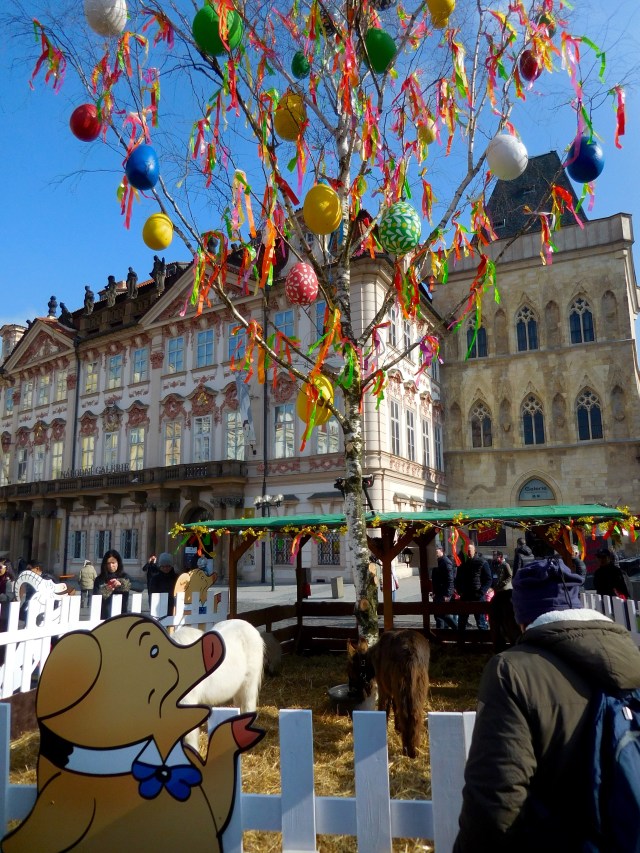
So my way to combat this cultural malaise is to pay quick tribute to the marvels of the city and then look for the interesting side stories. To that end, we start with Old Town Square, Staroměstské Namesti, virtually unchanged since the Middle Ages. Instead of showing you clock towers and churches, I’ll focus on the Easter Market, an unexpected treat on these cool-ish March days:

Easter tree

Pet the pony

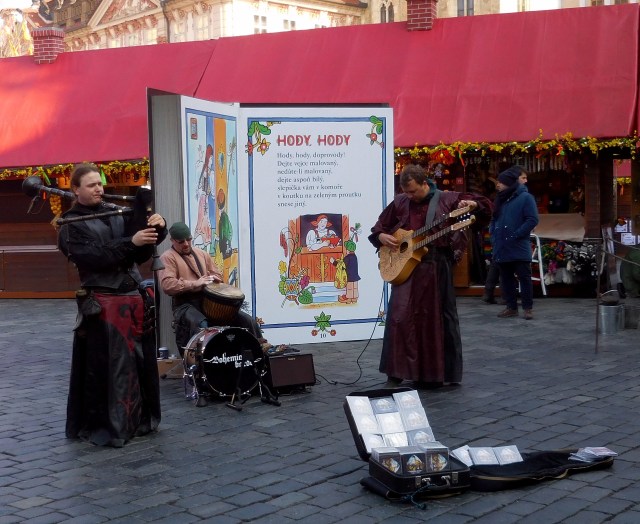
I never knew about Easter Markets – similar to Christmas markets, but with eggs and flowers – but it is a cheery sight, if rather commercial.  One day there was a band playing Louis Armstrong jazz; the next day this group of Celtic crooners had taken their place:

Vague authenticityOld Square musicians

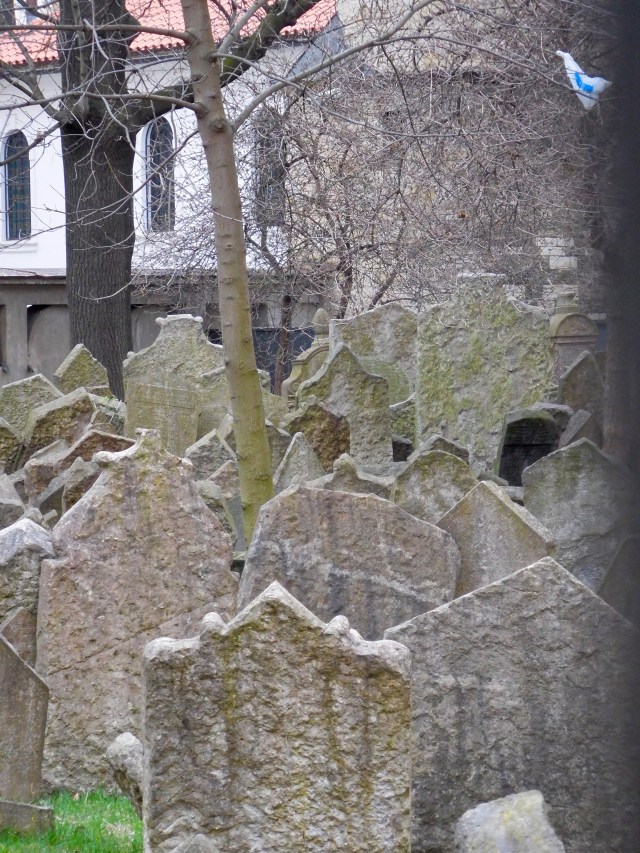
Wandering a few short blocks from this site finds one in the historic Jewish quarter, again completely mobbed, all the attractions pretty highly priced, large groups waiting in long lines. Since I have paid a good deal of homage to the Jewish populations in several of the countries I have travel through in the past couple years, I though I would take a pass this time around. I did manage to squeeze my camera lens through the only opening to the Jewish cemetery that did not have a price tag on it to take this quick shot of that hallowed spot:

Jewish cemetery

At least they’re still standing

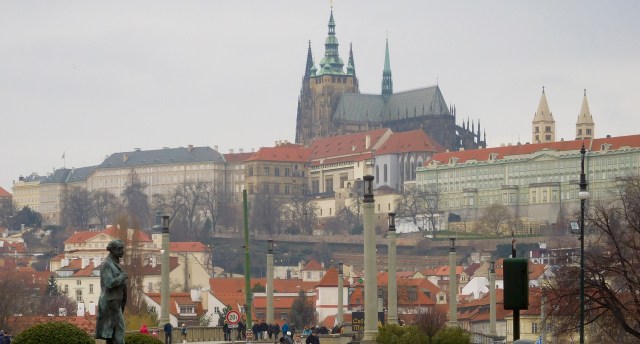
Crossing one of the several bridges that spans the Vlatava river (Moldau in English; same one that runs through CK), one cannot help to be continually amazed by the view of the Castle Hill. It was built to impress starting back in the 9th century and those boys knew what they were doing:

Prague castle

Pity the poor window washers

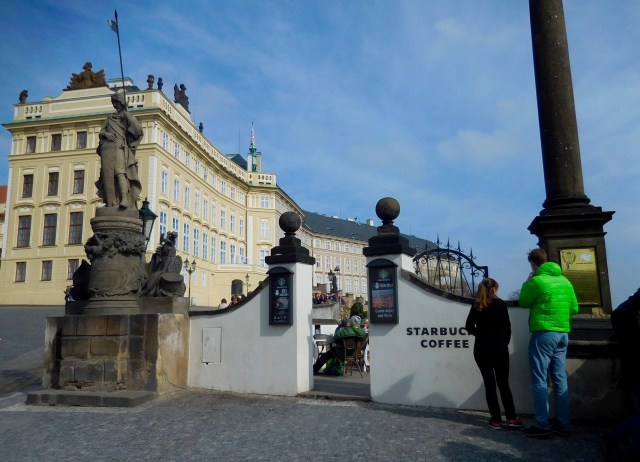
I walked my way up to the castle complex today, but the crush of humanity was so great (and this is March, remember) that I couldn’t even face going through the main attractions. BUT, confirming my opinion that Starbucks has the single best real estate agents in the whole damn world, I did came across this and just had to share:

Latte with your World Heritage site?Bucks at the Castle

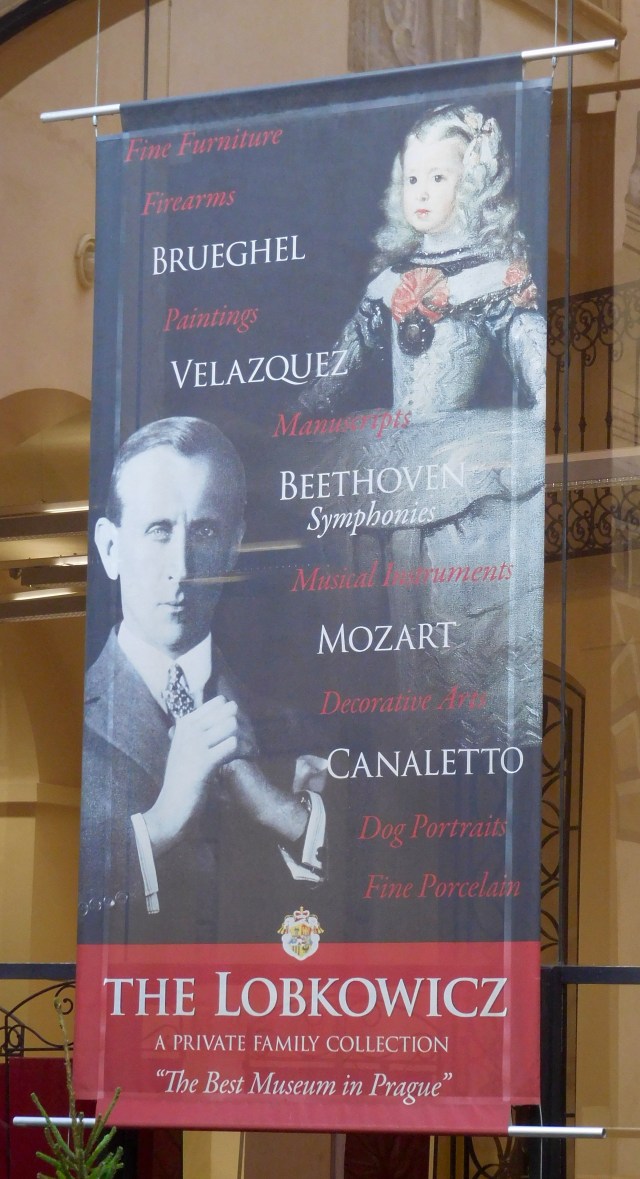
Happily, nearby, I stumbled onto the Lobkowciz Palace, the only privately owned building in the castle complex. In brief, this ancient family lived in this property for hundreds of years, only to lose their titles after World War I and then their properties after World War II. All was regained in 1945, only to be lost again to the Commies in 1948. It was actually President Havel that made it possible for this family to once again inhabit their ancestral homes (note the plural). But with ownership came conservatorship of the properties and their contents – to say nothing of some whopping huge tax burdens as well. That being said, understanding the history of this region through the lens of a single family, learning about their intermarriages, their patronage of the arts, and their enduring love of dogs was illuminating, humanizing, and downright fun.

Enlightened despotsLobkowicz poster

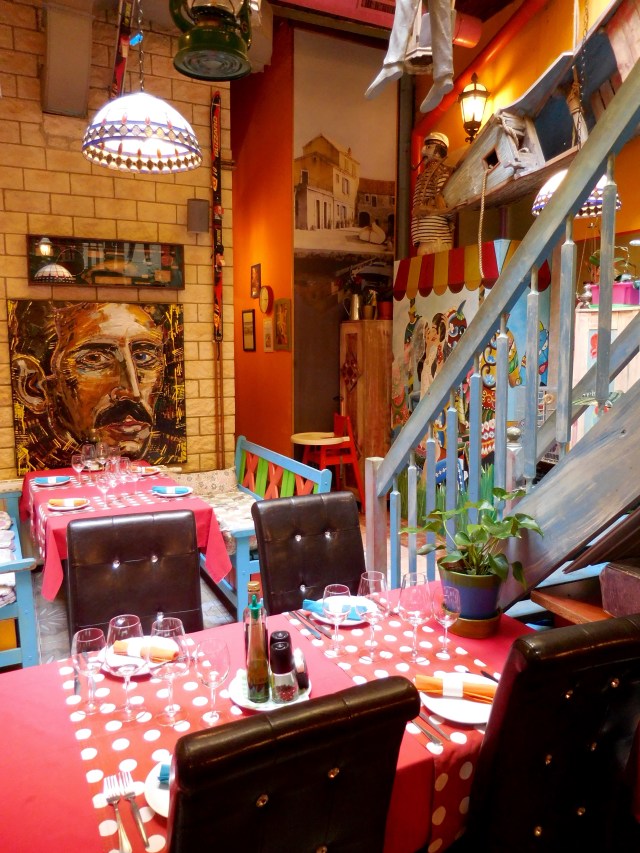
Following this cheering cultural interlude, I headed down from the hill to stroll the curving streets of Mala Strana along the river, the “Little Quarter,” formerly occupied by ethnic German citizens of the city and now home to a many of the embassies in town. The American Embassy is further up toward the castle, but I saw the Japanese, Danish, Finish, Norwegian, and most dramatic and largest of all, the Maltese (?).  About then I was ready for some chow, and since Czech food has already overwhelmed me with its dependence on meal and fowl, I was delighted to stumble on a Yugoslavian restaurant featuring some of the delicious (somewhat lighter) cuisine and wines of that region. Welcome to Luka Lu:

Luka Lu

Zivjeli! Cheers!

After lunch, I wandered back through the city to my hotel, noting that the neighborhoods on the outskirts of the tourist areas didn’t look a whole lot different than they had when I first visited in 1996, begging the question of how much the financial impact of the tsunami of tourism was actually trickling down to the rank and file. Buildings were run-down; shops were lit with dim fluorescent bulbs illuminating drab contents; people looked, as in Hungary, weary and wary. I would love to talk to someone who actually lives here about how they are experiencing the globalization of their country and what they see as the costs and benefits are. One shopkeeper in CK had said plaintively, “We feel like we are surrounded.” Surrounded indeed, in so many ways.

But I can see now, a little, perhaps why these Central European countries were so quick to slam the doors on the waves of migrants who have been trying to flood into Europe. As countries who are still struggling to find their place and way in this brave new world, as peoples who perhaps are still not benefiting substantially from European integration, the thought of trying to accommodate thousands of even more needy and less stable mouths to feed may be rather daunting. A crisis of confidence in their future, perhaps, rather than a question of their humanity. Interesting to consider.

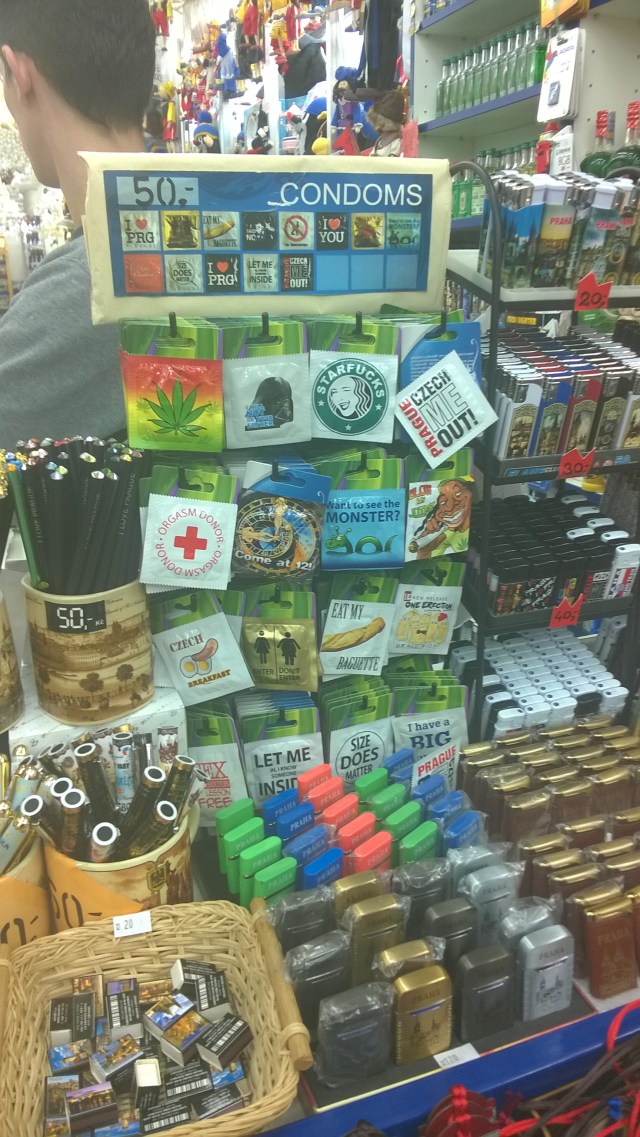
But I can’t leave you on such a downer – let me share a sign that love and life, of some variety, is still very much alive and well in Prague:

Make ’em laughCzech me out

Poor Kafka, that these should all come so long after his time. They might have helped him get lucky and dispel some of those dark moods. No room in those for a ‘roach.

Posted in Czech Republic, Uncategorized | Tagged | Leave a comment

(Cough, sputter) unexpected technical difficulties

Mortensen’s first rule of travel is that one should never take anything on a trip that one is not willing to either lose or have broken in some way. Yesterday this rule was invoked over my poor little camera, which decided at about 4:00 pm that it had had enough and called a sit-down strike. Basically the lens is refusing to open and close, which could be caused (a quick Google search tells me) by any manner of things: dead batteries (even with recharging), or even gunk from the camera case getting into the lens and making it stick. So the first order of business today is to head to FotoSkoda, a short walk away, and either fix the little guy or buy my third camera in just over a year.

Because yes, folks, a similar thing happened last year, and I think on exactly the same day, March 11th, when I was touring Torun, Poland with my friend Magda. That time the problem was really clear – I dropped the damn thing lens down on the  flagstones of Torun’s charming but unforgiving streets. But since I am only just over a week into a three-week trip and since I just love taking pictures and nattering on about them, I guess some of my unexpected tax refund is going to go to Nikon or Canon or Fuji. Stay tuned. Oddly, Magda is showing up – today – to spend the weekend with me. I’ve decided she is the Camera Curser.

Yesterday I bid farewell to Cesky Krumlov (from here on after, CK) and traveled by bus to Ceske Budejovice (Buddha-yo-VEE-che), where I spent a pleasant hour touring this interesting little burg while waiting for the next leg of my journey. Not really on anyone’s tourist agenda, it has a lovely large main square and some very interesting sculptures and shops. Next time I’ll stay here and make the 30-minute trip to CK by bus for the day. Then onto the train for the 2 1/2 hour ride to Prague, and thence to my hotel, which is fabulous. It’s a stunning Art Nouveau classic that has been updated but keeping/incorporating a number of the features of the period.

So, keep your fingers crossed that I’m back in photographic action soon.

Posted in Uncategorized | 2 Comments

Cesky Krumlov

I thought I was going to love this place, really I did. The efforts of the Czechs, after the Velvet Revolution, to restore this amazing place (a majority German town until World War II) to its historic and architectural glories were truly astonishing. The UNESCO folks say, “Situated on the banks of the Vltava river, the town was built around a 13th-century castle with Gothic, Renaissance and Baroque elements. It is an outstanding example of a small central European medieval town whose architectural heritage has remained intact thanks to its peaceful evolution over more than five centuries.”

True, absolutely true, and I have the photos (see below) to prove it. So why aren’t I happy?
Because somehow, sadly, this place isn’t real anymore. It’s a Czech version of Disneyland, or maybe Freeport, Maine. The town itself is not longer alive in an organic way – it’s inhabited solely by tourists and those who are kind and patient enough to serve us. No ‘there there,’ as they say. The souvenir shops close up sharply at 18:00 and then we mostly sit, as I am sitting, in hotel bars and cunningly rustic restaurants, accompanied by the obligatory staff, patiently checking their smart phones as they wait for us to ask for the check. Alternatively, those in couples stroll slowly about the lit streets, one more turn before turning in.

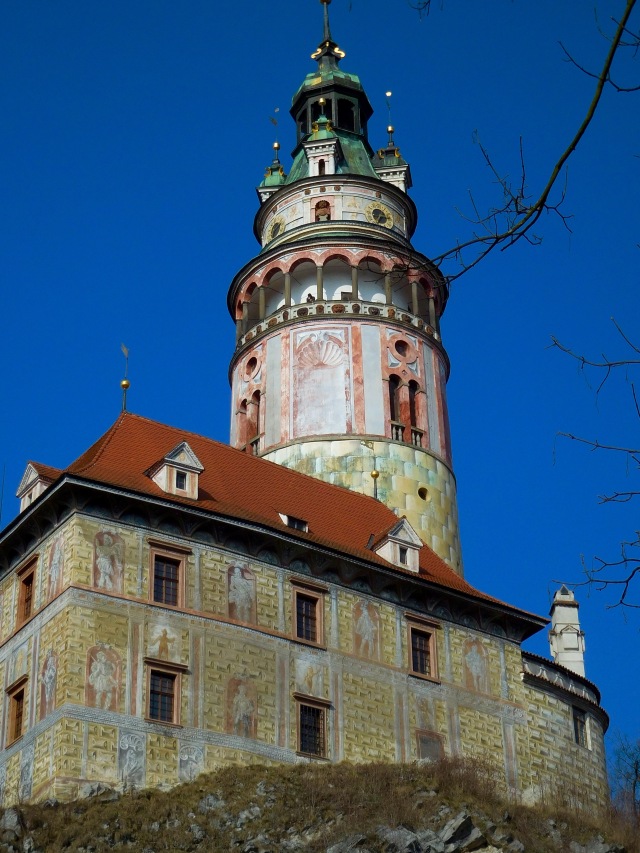
So not many words tonight, perhaps, but some great shots. First is the castle tower in daylight:

Castle tower

Truly spectacular

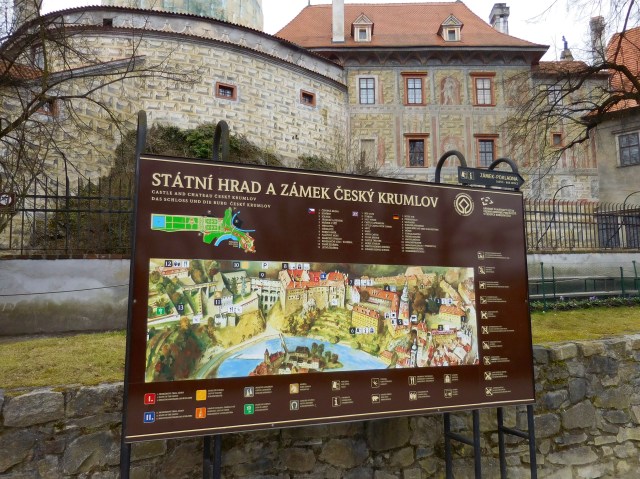
One always needs an orienting graphic for a castle district, so here you go:

Castle map

We’re at 1

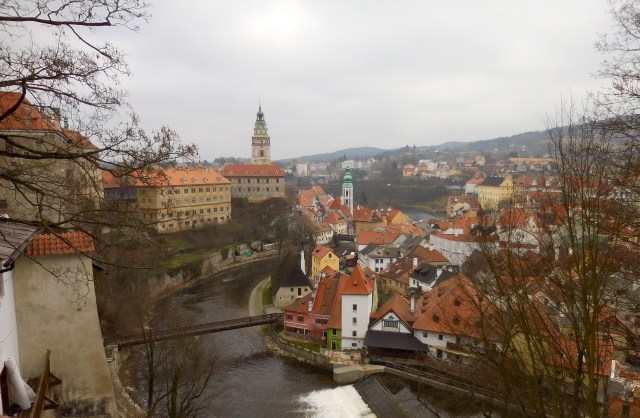
A few more steps through a few more gates and we get the incredible view:

CK view from castle

How do you know it’s NOT 1471?

I didn’t do the museum castle thing today – partly just the need to stretch my legs after all the transport yesterday, and party just because…I was grumpy. So I wandered back down to the little center you see on the right, and here’s the now predictable Carla shot of a gorgeous square:

CK courtyard

Ready for the hordes

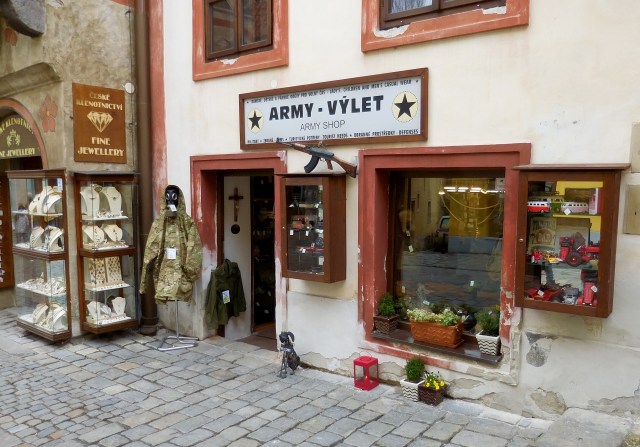
Today was a day for window shopping and checking out the places that DIDN’T sell amber and moldavite (more about that in a moment). I was trying to find the fun and the funk in this town, and that was harder that usual. I did manage to find the Army store (?) and here’s proof:

CK army store

Not very trusting

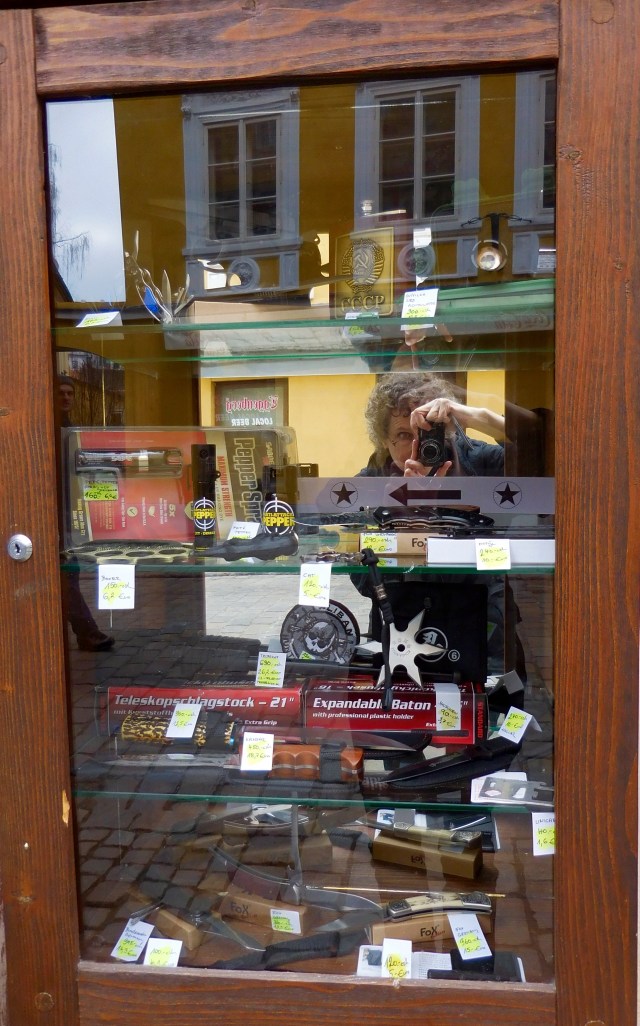
…and just to prove I’m alive and that this blog is not being written by a bot, here’s the obligatory photog selfie, trying to figure out what the heck this dude has in his window (and it ain’t pretty):

CK Army selfie

Semper paratus

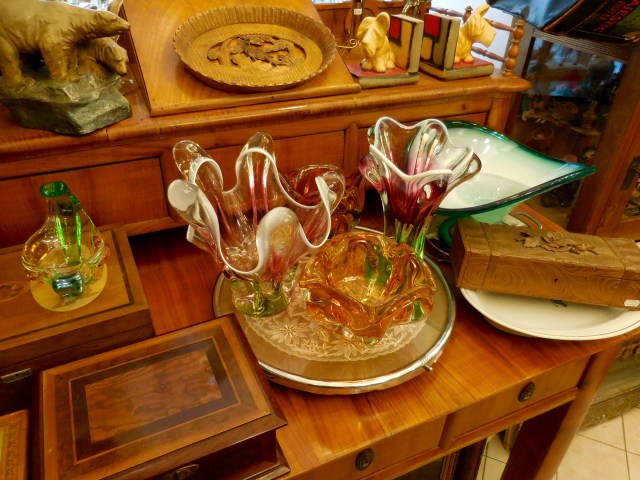
I continued my tradition of looking in antique stores – I’m always trolling for fountain pens — but all I found today was a real beater, no nib even, that my friends at pen shows would sell for parts at five bucks. These guys wanted nearly a hundred, so I tried not to giggle. They did have some beautiful examples of Czech glass:

CK Glass

Prettier than the flowers they held

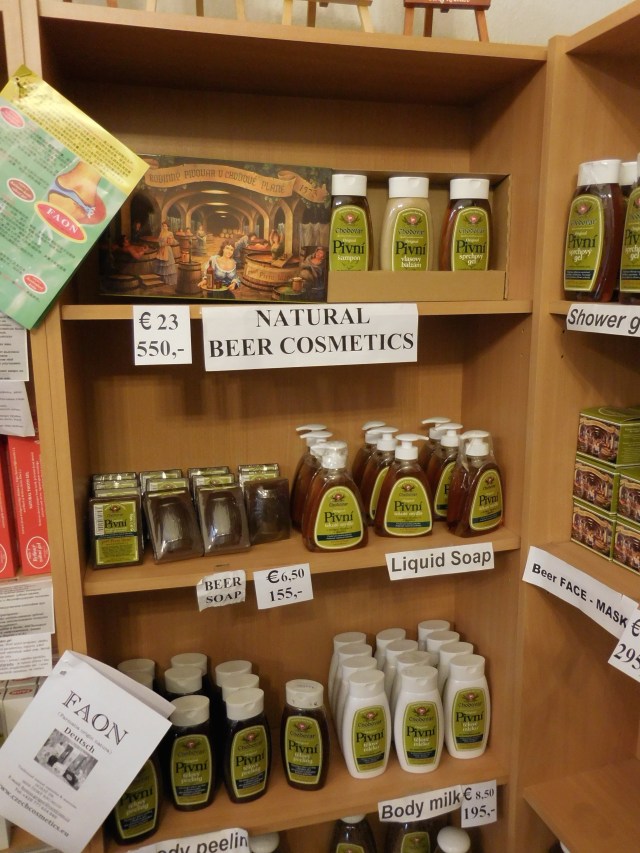
Since this area of the world is known for its cosmetics, I thought I might try to find me some magic goop to keep the wrinkles at bay. I was unsuccessful at that specific goal but did dig up the following regional specialty:

CK beer cosmetics

Try not to chug your night cream

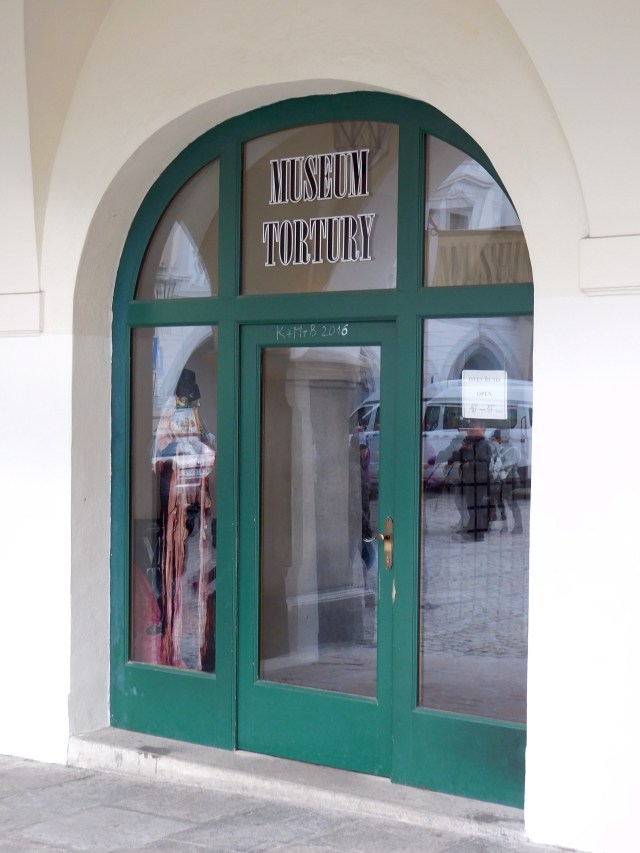
About then I encountered the Torture Museum and since I had been baptized in the fire of the Buda Castle Labyrinth, I thought I would give it a go. Maybe I’ll subtitle this trip “The Subterranean Tour of Central Europe.”

CK Torture door

Looks innocent enough, but just you wait

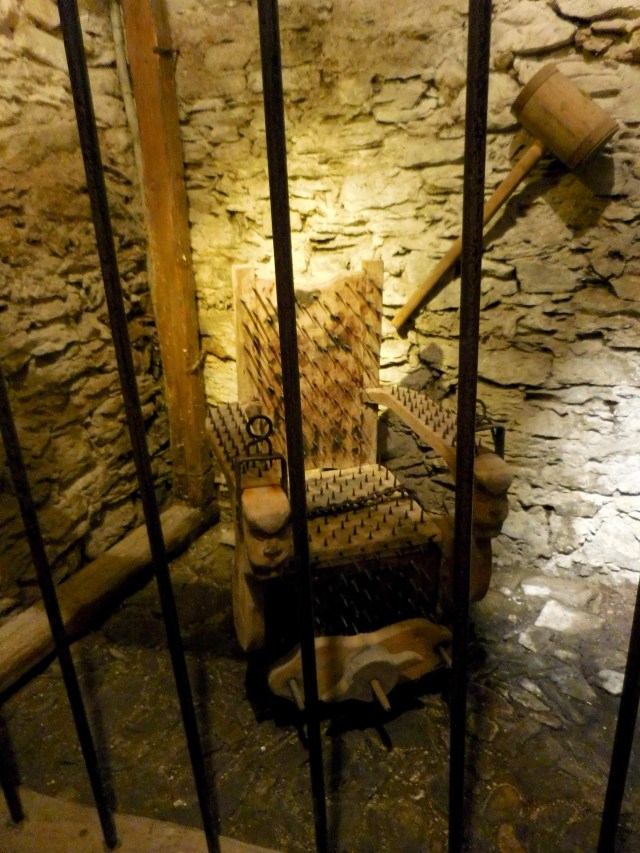
Accompanied by truly creepy music and appropriate sound effects (I’ll let you figure out what those might be), I walked through a series of chambers with life-size dioramas of witches being burned at the stake; the executioner watching the victim in his final prayers; a priest overseeing the use of a rack, and lots of grisly instruments. Here’s just one small example of something used to motivate appropriate behavior:

CK Torture chair

Yikes

…and eventually, a reminder of what happened to those who managed to find themselves on the wrong side of the civil or ecclesiastical authorities:

CK Torture cage

Waiting long?

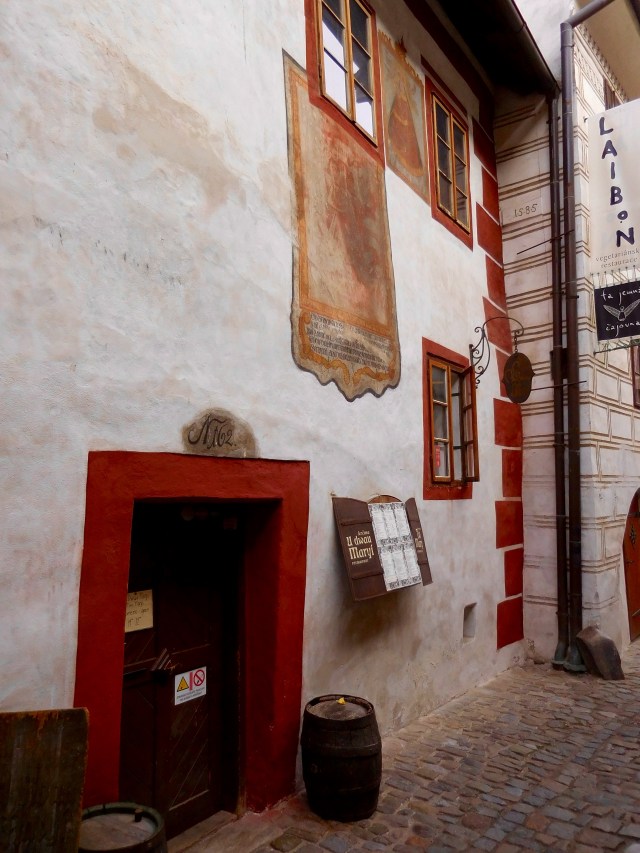
So enough already with the creepy. Back up into the bright light of day. By this time I was ready for a little nosh (wouldn’t you guess?) and I had been directed to a little spot called U dwau Maryi

CK restaurant exterior

A house between two city walls

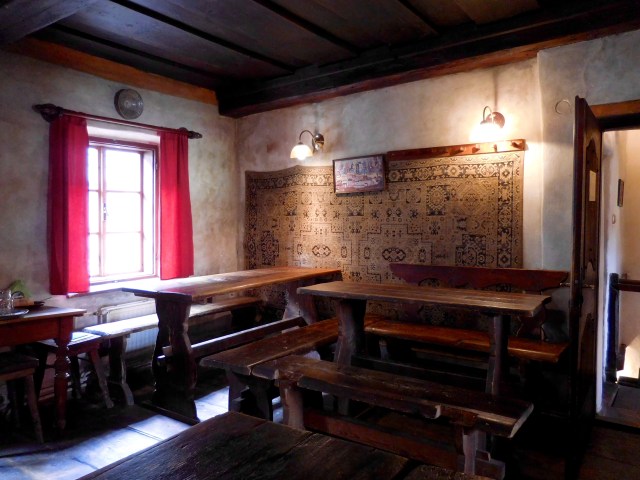
The concept here is actually pretty interesting. The founders of this restaurant in 1990 decided to try to revive the culinary traditions of Old Bohemia. They restored this site using recycled materials from other buildings being renovated at the same time. So, for example, the tables and benches are made from a Baroque ceiling that was removed from another building – they are old and thick and smooth and just wonderful. The food tries to use ingredients that have fallen out of favor in the 19th and 20th century, things like buckwheat and millet. Their idea is to give diners an idea of what it must have been like to eat in a place like Cesky Krumlov three or four or five hundred years ago. Here’s a shot of the interior:

CK restaurant interior

Eating like it’s 1791

I chose the Bohemian platter, which included chicken in a sauce, ham, a dumpling, potatoes, and then some interesting millet and buckwheat things that I can’t really describe but which were rather tasty, all garnished with some yummy sour cream thing. Both of those grains mentioned, apparently, are really really healthy, but they’ve been pushed aside in recent centuries in favor of wheat and barley. I also learned that herbs traditionally were used in peasant homes, since they were easily growable and also used for medicinal purposes, and spices were only in the kitchens of the wealthy, since there were, for the most part, expensive and came from great distances.

One last shot – moldavite – who knew? I learned at the museum that it was formed from the impact of meteors slamming into the earth and randomly striking and melting glass-type material, thus shooting it up into the air where it re-formed before hitting the ground and then usually being washed over by water and pushed down into the earth again (I’m really condensing a lot here). Anyhoo, it’s the local gem and its dark and green and beautiful and I almost (almost) was inspired to buy a pair of overpriced earrings, but I didn’t. Dearest EBD, this shot’s for you:

CK Moldavite

The local gem

So that’s it – your meteoric (as it were) fly-by of Cesky Krumlov. I’ll hit a couple more spots tomorrow before heading up to Prague on the bus and train and back to the land of smooth sidewalks and large coffees. It has indeed been a great experience to see this place first-hand, even with my reservations – now I know where Cinderella and the Prince made their home.

Posted in Cesky Krumlov, Czech Republic, Uncategorized | Tagged | 3 Comments

Trains and buses

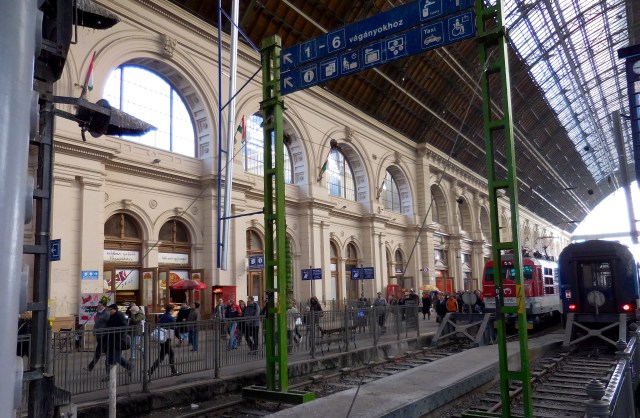
Although there’s more to write about Budapest (and I certainly hope to do so), today I said “Farewell” to the city of paprika and langos and started my journey up into the Czech Republic. The train station from which I left, Budapest Keleti pályaudva, looked much the same when I first traveled through in 1992:

Budapest railroad.jpg

Comings and goings

What’s changed, though, is the ease of ticketing. Make a reservation and pay online; bring a ten-digit code to the station, go to the yellow machine, punch in the number, and presto! Out pops the ticket with the train number, the car number, and the seat number. Easy-peasy. Hop on, and off you go.

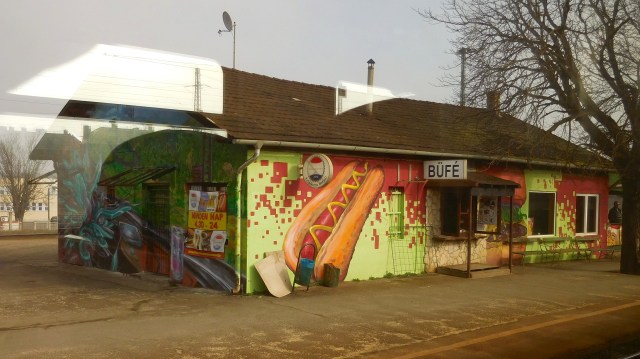
Bufe

Hungry?

As one leaves Budapest on a train, one travels through some sad and tired districts, a fairly wide-spread post-EU hangover being something I haven’t mentioned yet. Much as I love it, Hungary feels to me… resigned, weary, cautious, but with an eerie underlying tension that is palpable. Even the graffiti, it seems, is half-hearted. People’s faces are tight and closed; aside from the professionally hospitable hotel employees, no one smiles.  Piles of trash are strewn along the railroad line; one can see people living in makeshift tarp tents, standing by small fires. And these aren’t refugees – in fact, I didn’t see a single refugee in Hungary (those borders are tightly sealed). No, these were local down-and-outers, refugees from a life which so far, at least, has  failed to deliver.

Railroad nap

His train hasn’t arrived

Thankfully, for me, at least, as we crossed into Slovakia (no passport control) and thence to Bratislava, things looked to be improving. Farms were larger and neater; buildings were more consistently painted; signs were illuminated and more often translated into English. I visited Slovakia’s capital Bratislava twice in the early 1990s with my good friend and colleague JM, spending two weeks each time. Although I didn’t get off to check the progress in person, it was fun to speed through on the train and see the hustle-bustle. Brat is a happening place, it seems – cranes everywhere, lots of nice cars, people walking briskly. Well done.

After another seamless border crossing – I at least expected a sign, but didn’t see one – I arrived in Brno (Ber-NO), the capital of Moravia, where I switched from the train to the bus. Europe, for the most part, is so damn well organized. I was anxious about how managed this switch – duh – you simply * walk across the street* from the train station to the bus station. Didn’t really need that hour and a half I had programmed in, but spent it sitting in the lobby of the Hotel Grand, admiring the view:

BRNO Train station

Well-planned transport hub

Brno is the Czech Republic’s second largest city and a big commercial and educational center. I saw scads of college-aged people walking around the not-so-attractive but still lively streets. When it was time to find my bus, it was well-organized yet again: lots of monitors with times and destinations; everyone queuing up politely, and, showing only another ten-digit code written on a piece of paper (which thankfully corresponded to one on their list), I was ushered onto a Student Agency Bus. If you remember last year’s Polsibus adventures, this is much the same:

Yellow bus

Follow the yellow brick…bus

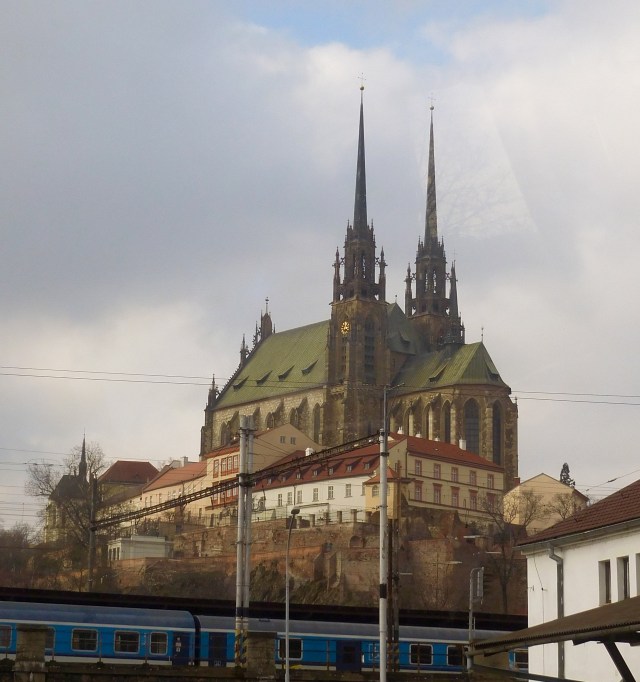
Not much in the way of sights to mention in town, but I did mange to catch a glimpse of the Cathedral of Saints Peter and Paul as we rolled towards the highway, one of the “must-sees” in the region for its amazing Baroque interior (which clearly I missed). Still, those spires, reaching roughly 250 feet into the sky, are pretty impressive:

Brno cathedral

Reach for the sky

The bus trip was peaceful and easy. We traveled through the rolling countryside of southern Moravia, past pastures covered in late winter snow and through little villages with tidy stucco houses. I amused myself by trying to finished the ‘hard’ Suduku puzzles I had stolen from my Turkish in-flight magazine. But then the bus movie changed and up popped Ocean’s Eleven! In English, no less! Let me tell you, I felt some serious cultural schizophrenia watching George, Brad & Co. in Vegas trying to bust the vault in the Belagio while looking out the window at muddy Czech cows.  (That George Clooney, though. My, isn’t he fine.)

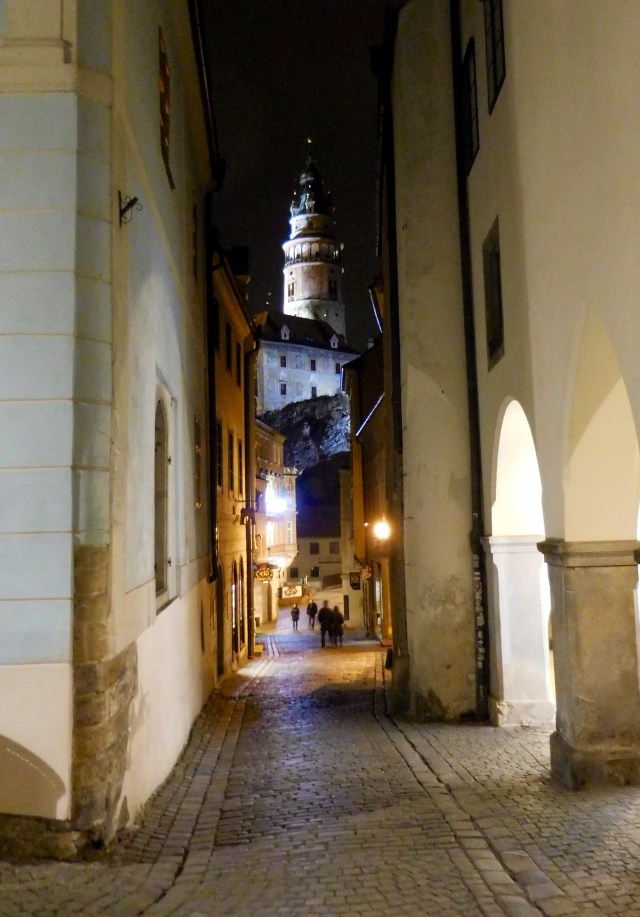
Another change of transport, this one in Ceske Budejovice, yes, the home of Budweiser. Alas, I wasn’t there long enough for the brewery tour, more’s the pity, just hopped on yet another yellow bus for the half hour drive to Cesky Krumlov, my intended destination. Walked up from the bus station, over a rise, down into the town to the main square, turned right to my hotel, and BAM! saw this:

Cesky Krumlov

Pinch me yet again

Holy crap, it appears my inner princess has found her castle. This is the fairy tale town we all wanted to live in when we were eight. I’m looking forward to heading out to do some serious exploring and shooting, and I’ll be sure to share my findings with you asap. More soon.

Posted in Travel - train | 1 Comment

Budapest Day 3

Today I headed up to Budapest’s Castle Hill, one of the city’s “must do’s.” The Hungarians themselves say:

“The UNESCO World Heritage Committee has listed the view of the Danube embankments and the Buda Castle District – which is one of the most beautiful and romantic parts of the city of Budapest – as a World Heritage site on the 11th of December, 1987. The latter is an ancient town district, giving home to some of the most important historical monuments in Hungary. While nearly 800 years passed since it has been originally founded, its beauty still stands unparalleled, despite earthquakes, fires, sieges and world wars. The buildings themselves in Budapest bear tell-tale signs of recent and ancient history.”

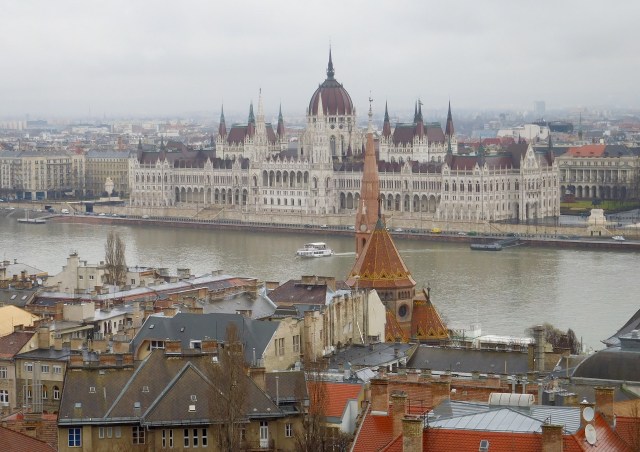
All true.  A small but delightful (and overpriced) funicular can carry you up and back, but cheapskates like me just take the bus. The view is, needless to say, spectacular:

Parliament

Pinch me

Here’s a romantic graphical overview of the area:

Map of Castle Hill

You are here

Now, in previous visits to Budapest, I’ve taken a look a several of the usual tourist stops, so in this post I’m going to focus on some things I hadn’t seen before, so this isn’t really a comprehensive overview of the area. Be that as it may, as you enter the district from the pink dot on the right of the map above, you see:

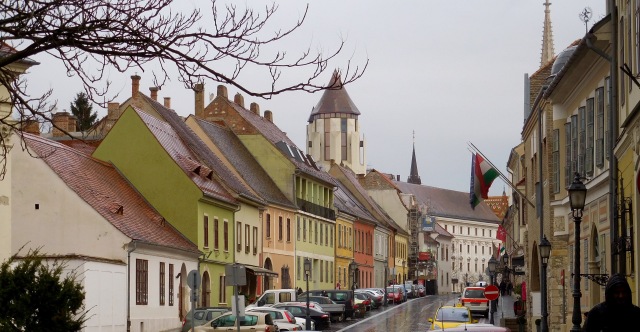
Street scene CH

More Hapsburg palette

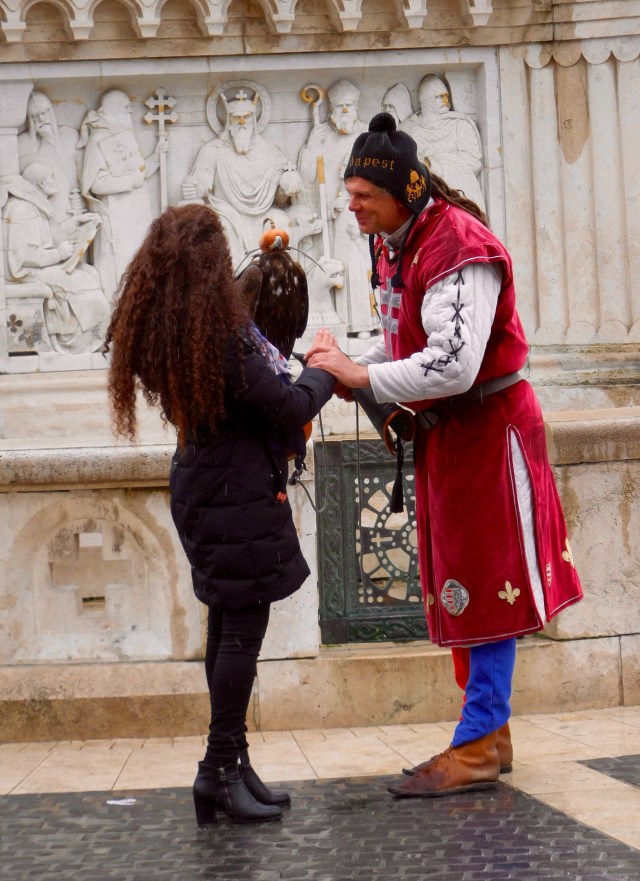
These gently curving streets are the equivalent of meth brownies for me – I could stroll them forever. Fortunately, sooner or later something catches my eye and makes me pause a bit, for instance, the falconer:

Falconeering

Watch the birdie

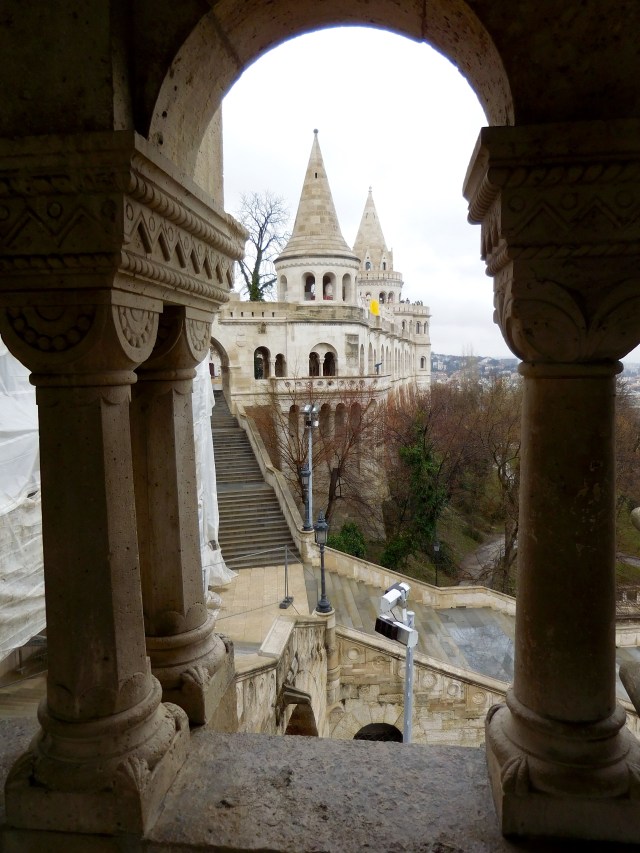
I resisted the efforts of the charming ornithologist to be wristed with a large raptor, no matter how safely hooded, and instead turned once again to admire the view of the Fisherman’s Bastion:

Fisherman's Bastion

What fish?

This section is so named because there was indeed a “guild of fishermen that was responsible for defending this stretch of the city walls in the Middle Ages. It is a viewing terrace, with many stairs and walking paths.”

Nearby, I stepped into a lovely little bookstore featured a beautiful blue ceramic stove – working gently away on this cool March day – for a big of a thaw-out:

Bookshop stove

Just needs a cat

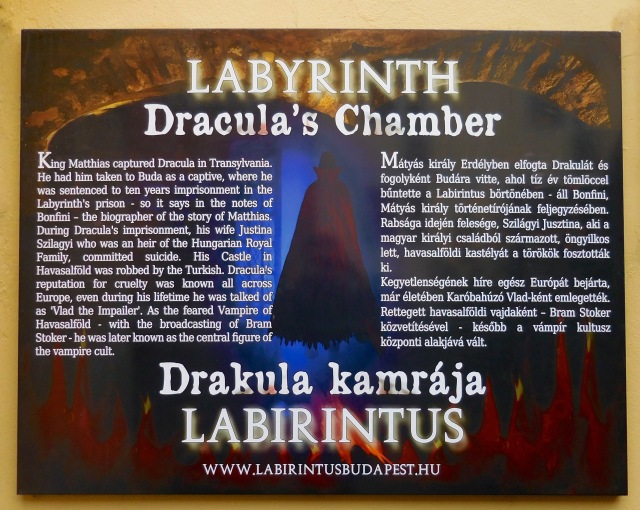
Tempting as it was to settle in with a 900-page book entitled “A Short History of Hungary” (joke), instead I decided to challenge myself with one of the more off-beat of Castle Hills’ attractions, the Labyrinth in the Buda Castle. The tourist magazine in my hotel room had promoted it thusly:

“Europe’s 8th most popular tourist attraction: The half-a-million-year-old tufa (limestone) isolated cave cabins have started to be linked with each other in the mediaeval (sic) ages. The cave which was made permeable this way has started to fulfil (sic) various roles after this – wine vaults, torturing chambers, prisons and hideaways during the war all harmonized perfectly next to each other. Dracula was imprisoned here too. Visit the amazing Dracula’s Chamber and Panopticum (a prison in which one can be watched) in the Labyrinth open 10-19 every day.”

Labyrinth sign

Not very harmonic, if you ask me

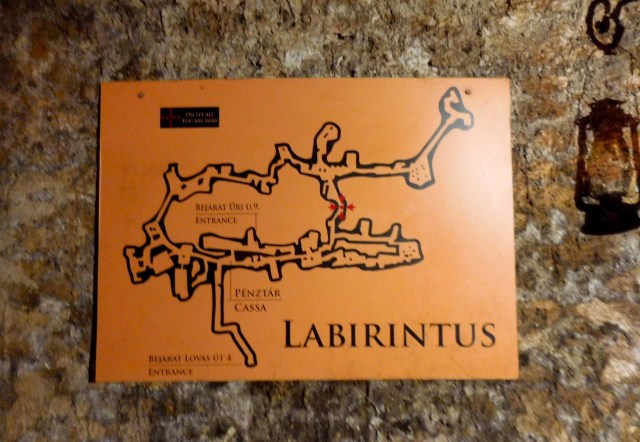
When in Rome…I resolutely turned left off one of those lovely hued lanes above and walked carefully down several stories of slippery stone steps into the gloom and dank. My glasses immediately fogged over, making the ticket-buying process more protracted than usual and requiring the staff to stop me from heading off towards the exit. Soon after I caught of glimpse of what I was embarking upon:

Labyrinth map

No exit

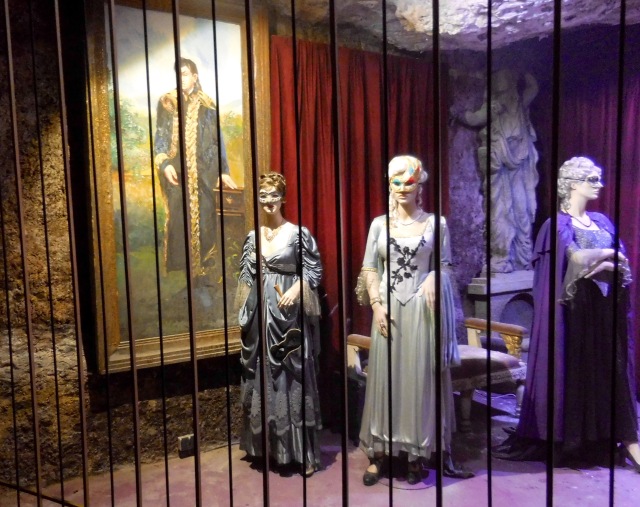
Okay, I said. This is an attraction. It is lit. It is maintained. There is air pumped in. Hundreds of people throng through here every day. And that opera music is a little hokey anyway…

Labyrinth figurines

Singing for their supper….or are they singing AS a supper?

But then I kept walking….and walking….and walking….and the curving, misty, dim corridors did start to get to me.

Here’s the short version of the Dracula story. We’re told “Vlad Dracula, nicknamed Vlad Tepes (Vlad the Impaler), who was the ruler of Walachia (historic Romania) at various times from 1456-1462. Born in 1431 in Sighisoara, he resided all his adult life in Walachia, except for periods of imprisonment at Pest and Visegrad (in Hungary).”

Hmmm. That’s interesting. The Buda Castle is in, well, Buda, which is across the river from Pest. Anyhoo, according to the information available in the Labyrinth, he fell in love with his cousin, Jusztine Szilagyi and eloped with her back to Poienari, Vlad’s castle in Romania At some point during this period, Poienari was captured by Vlad’s brother, Radu Bey, who somehow was a Turk. Jusztina threw herself out of the castle to her death, saying she did not want to be a captive of said Turks, and to add insult to injury, King Matthias of Hungary arrested Vlad because he had failed to keep his borders safe against the Ottoman invaders. (And you think you have problems.) Vlad was as a result allegedly imprisoned for ten years or so, starting in 1462. Released in the early 1470s, he was a vewry vewry angry man and did some dirty dirty deeds before being assassinated by the Turks, his head being sent to the Sultan as proof.

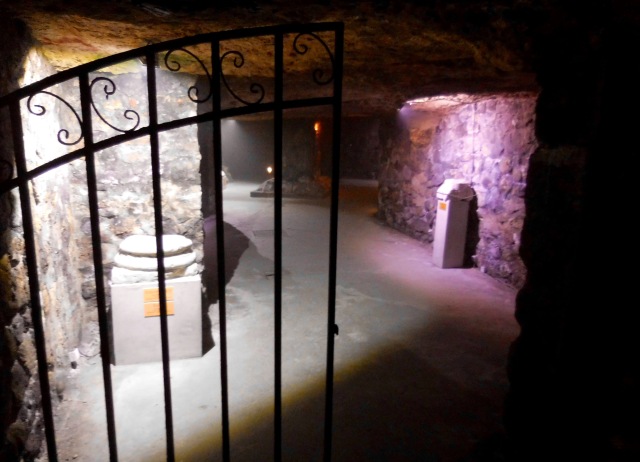
Okay then. I’m still wandering the Labyrinth, starting to feel creepier and creepier. It did help that roving bands of giggling college-aged students kept running past me in the mist, but when I lost their cheerful voices, I steadied my right hand against the damp wall and reassured myself I would indeed someday see my beloved Macbook Air again. Just about the point when I thought I was turning into a nervous old biddy, I turned down a hall that had monastic chant playing softly in the background.  I decided I might take refuge a moment in the bosom of Christianity:

Labyrinth spooky

Doesn’t look scary, but…

Entering the space above, drawn by the chant, I experience what my good friend J will attest to as a strong reaction to unseen forces. Just near the piece of masonry shown on your right above, directly under that light, every hair on my head and body suddenly stood on end. No shit. I stopped, walked back away from the spot about 20 feet (back to where this picture was shot), waited, and walked towards it again, same spot. ZAP! Happened again. Hair on end. Not kidding. Don’t know what it means, but there you have it.

By this time, I decided I had had enough of challenging myself with deep dark dank places, to say nothing of unexpected extrasensory stimulation. I continued my way out to the exit (total trip about a mile or so) and with great relief, stepped through the turnstile and walked back up the many stone steps to the Outside World. Deep breath. Sigh. Just to prove to you I did make it out, here’s a lovely shot of Gellert Hill from the Castle District, not far from the entrance to the Labyrinth:

View of Gellert

Fresh air and dry stones

From there I bused back to my hotel, bought a bag of pistachios and a draft, and have settled in for the evening. Sweet dreams, y’all! More to come.

Posted in Budapest, Uncategorized | Tagged , | 2 Comments

Budapest, Day 2

I really don’t know how I manage to pack so much into a day when I’m traveling. It must somehow be related to one of Einstein’s theories of relativity and the relationship of space and time. Normal days back home I can barely manage to drink my coffee, answer a few emails, and take the dog for a walk before it’s time to drop onto the couch for dinner and the evening news. On the road, I pack in multiple sites, multiple miles, and a heck of a lot of window shopping. Go figure.

The docket was so full today it’s going to take me two entries to cover it all. The first one (chronologically; the blog format will make it look like the second one) will deal with everything I did today EXCEPT the Dohany Street Synagogue; the second will be all about that and nothing else (warning: it’s another one of those heavy Jewish stories). But first things first.

After a wonderful European breakfast buffet in my hotel, I headed out for the National Museum. Even though I only remember about .0005 of all the stuff I see in places like that, I really enjoy the visits and they give me a helpful overview of the cities and countries I am visiting. First, the building is gorgeous, similar like the other museum – this one in the classical revival style, not the Renaissance. I won’t bore you with the interior or the exterior, but just imagine a big beautiful museum with lots and lots of marble columns and rooms and rooms with shiny wooden parquet floors. Okay, you got it.

There are two sections of the museum. On the first floor, and this is the part I liked best, there is an archaeological exhibit that covers 600,000 BCE to 804 CE in the Area Now Known as Hungary. (Well, they skip over 600,000 BCE to 6000 BCE pretty damn quickly, so that’s a good thing.) I love this stuff, and let me count the ages. I looked at fascinating physical remains from the Paleolithic, the Neolithic, the Copper, the Bronze, and the Iron Ages. I visited (albeit briefly) with the Romans, the Scythians, the Celts, the Huns, the Germanics, and the Avars, among others. (In 804, Charlemagne and the French brought Christianity to the region at the end of a sword and since then the country has looked a lot more like the rest of them there Europeans.) But before we leave that particular rocket trajectory of history, let me share a very special picture of cicada brooches with inlaid garnets that was used by the good Avars to keep their clothes strategically positioned. (J, this one is DEFINITELY for you):

Cicada brooches.jpg

Absolutely no buzzing allowed

On the second floor, riches ran wild with specifically Hungarian history, and while of course it is specific to them, it does tend to look and sound a good bit like Polish history and Lithuanian history, the museums of which I have visited in the past year. Count So-and-so, Archbishop Paternal the XIII, swords, crowns, and enormous oil paintings with tons of gory detail celebrating the defeat of the Turks in Budapest, the defeat of the Turks in Vienna, and the defeat of the Turks in Belgrade. But I was indeed fascinated by this particular representation of the Virgin Mary – it seems remarkably avant-garde and/or contemporary by anyone’s standards, but particularly those of the 15th or 16th century, which is from whence it dates:

Virgin Mary

Be still my beating heart

After the museum and a quick bite at The Hummus Bar where I watched the international finals of the women’s 10k biathlon competition in Oslo (man, that looks hard), t was on to St. Stephen’s Basilica. This Roman Catholic gem commemorates first King of Hungary (c. 975–1038), whose supposed “incorruptible” right hand is housed in a reliquary at the back of the building. (Eeewww.) Here’s a shot of the exterior from a short distance away:

St. Stephens exterior

Wiki tells us “it was completed in 1905 after 54 years of construction, according to the plans of Miklos Ybl and was completed by József Kauser. Much of this delay can be attributed to the collapse of the dome in 1868 which required complete demolition of the completed works and rebuilding from the ground up.” Is that an architectural mistake or an engineering disaster? I guess second time’s a charm, as it were. So, not an old-old church, but from that glorious Neoclassical tradition. A quick shot of the interior:

St. Stephens interior

Light my fire

I did indeed dutifully head to the chapel at the back to see the reliquary with the alleged hand….frankly, it just looks like a large glass box with gold trim mounted just high enough and far enough from view that one can’t check the particulars of the sacred assumption. (Let sleeping dogs lie, as it were. Faith is a mystery, and all that.)

One thing I love as I move about a city is to watch the actions of other visitors seeing this place for the first time. We tourists are a highly predictable lot – we walk down the streets staring off into space with maps in our hands; we take pictures of anything and everything regardless of common sense or personal safety; we giggle and gaggle about like geese on holiday. Here’s a group of Chinese tourists posting on the steps of the Basilica:

Chinese tourists - St. Stephens

Say  “qeizhe!” (which actually means eggplant)

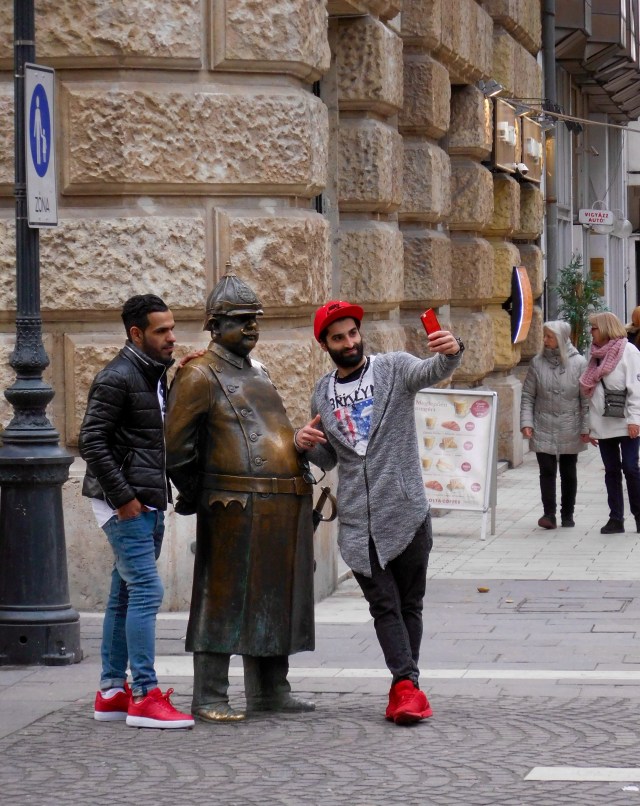
Nearby, a couple younger visitors took advantage of some public art to mug for Instagram:

Arabic selfie with cop

We are not amused

As I have mentioned before, and as you can see above, the Chinese are here in a big way. I espied this particular bank on my walk back to the hotel – as I recall, this had been a Lloyds of London on my last visit:

China on the march

Step right up and get your fresh hot tasty yuans here

But the final surprise was a new eatery in town….I’ve seen them in Tbilisi, I’ve seen them in Krakow, I’ve seen them in Portland, I’ve even heard heard they’ve set up shop in Brooklyn. But now they’ve made their way to Budapest – it’s the Georgians!

Georgian restaurant

Gaumarjos, Sakhartvelo! “Vaime” means something like “OMG!”

Yes, it’s true – if you tire of goulash and langos, it’s time to try Khingali and Ajaruli khachapuri…not a bad price, either:

Khingali and Khachapuri

Show your aorta who’s boss

So then at last I headed back to my lovely hotel in the twilight, replete with the sights and sounds of Budapest on a sweet Sunday evening and safe in the knowledge that the cuisine of the Caucasus will truly follow me everywhere. More to come.


Posted in Budapest, Travel - Budapest, Uncategorized | Tagged , | 2 Comments