A day at the mall

Last weekend, a group of us were seized with a desire for that most popular “lowest common denomination” activity, a stroll at the mall. Not surprisingly, options are somewhat limited in this neck of the woods, but an obliging member of the faculty and his most delightful wife took pity on us and arranged a trip to Niigata City, about 70 miles away, for that express purpose. There was some added benefit for them as well; a chance to visit a computer store and a chance to stop at the only frozen yogurt stand anyone has been able to find in all of Japan. But best of all, it was an opportunity to get off campus, to stop listening to the drone of cicadas for a spell, and to spend some time with colleagues outside the academic realm.
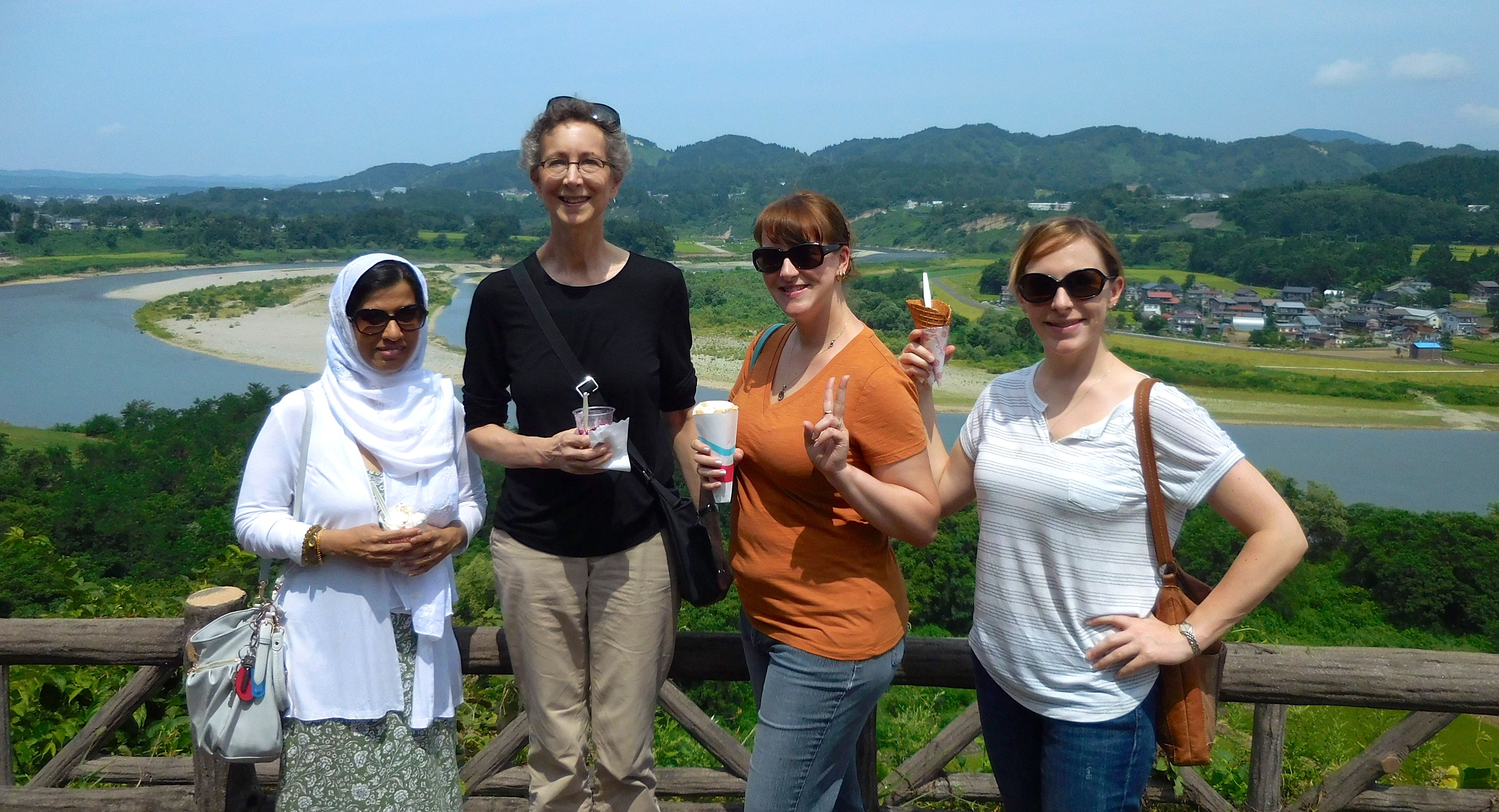
Mall rats carbo-loading fro-yo in preparation for the adventure

Mall rats carbo-loading fro-yo in preparation for the adventure

Well, in my scientific study of Japanese malls (one), the conclusion is: they look a heck of a lot like American malls (and Polish malls, etc. etc.). There are of course singularities, hence this post, but the overall experience is the same – gigantic temples to consumerism, one store more inviting than the next; a virtual army of motivated sales people and clever adverts all designed to separate you from your yen. I managed to resist the sirens more than some of my fellow shoppers, but that was due, in all candor, to the fact that I don’t fit most Japanese clothing or shoes, and that made it all the easier.

My first surprising observation is that….nearly all of the signs are in English! This is particularly interesting to me because so very few Japanese seem to speak or even to understand English, with the exception of a few words. But here’s an entire gynormous mall, all signed in (mostly correct) English, with the addition, of course, of some funky made-up brand names.

Here’s an example of a typical women’s clothing store. This one has a slightly Gallic motif, but you’ll note the color palette is quite subdued compared to the US. These colors, navy, gray, camel, white, or their close relations, are repeated in nearly all the competing establishments:
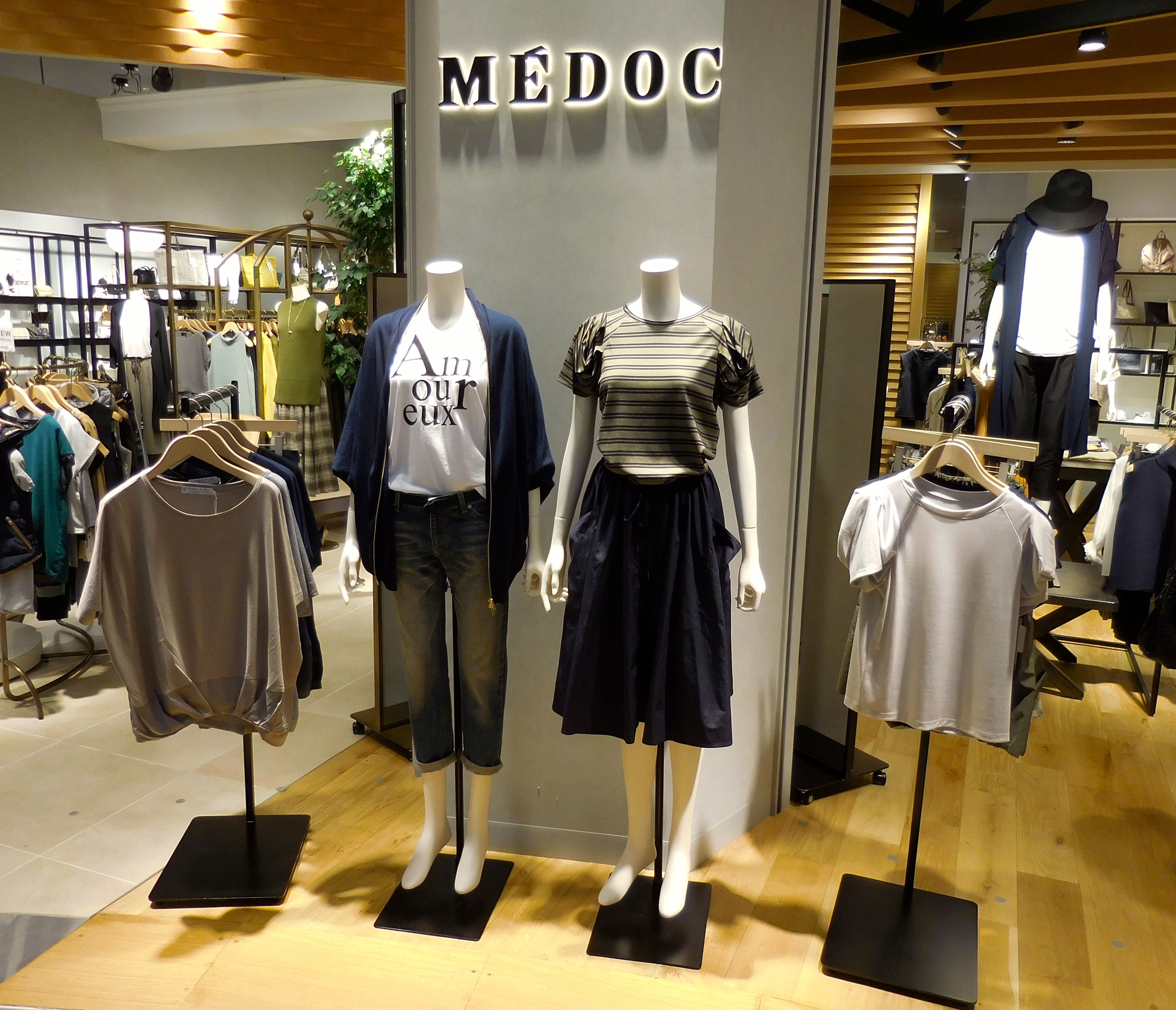
Oo la la.

Ooh la la

Some stores were trying harder than others to attract attention to merchandise and/or sales, but I didn’t see anyone more determined or enthusiastic than this team. I think they were thrilled to be photographed:
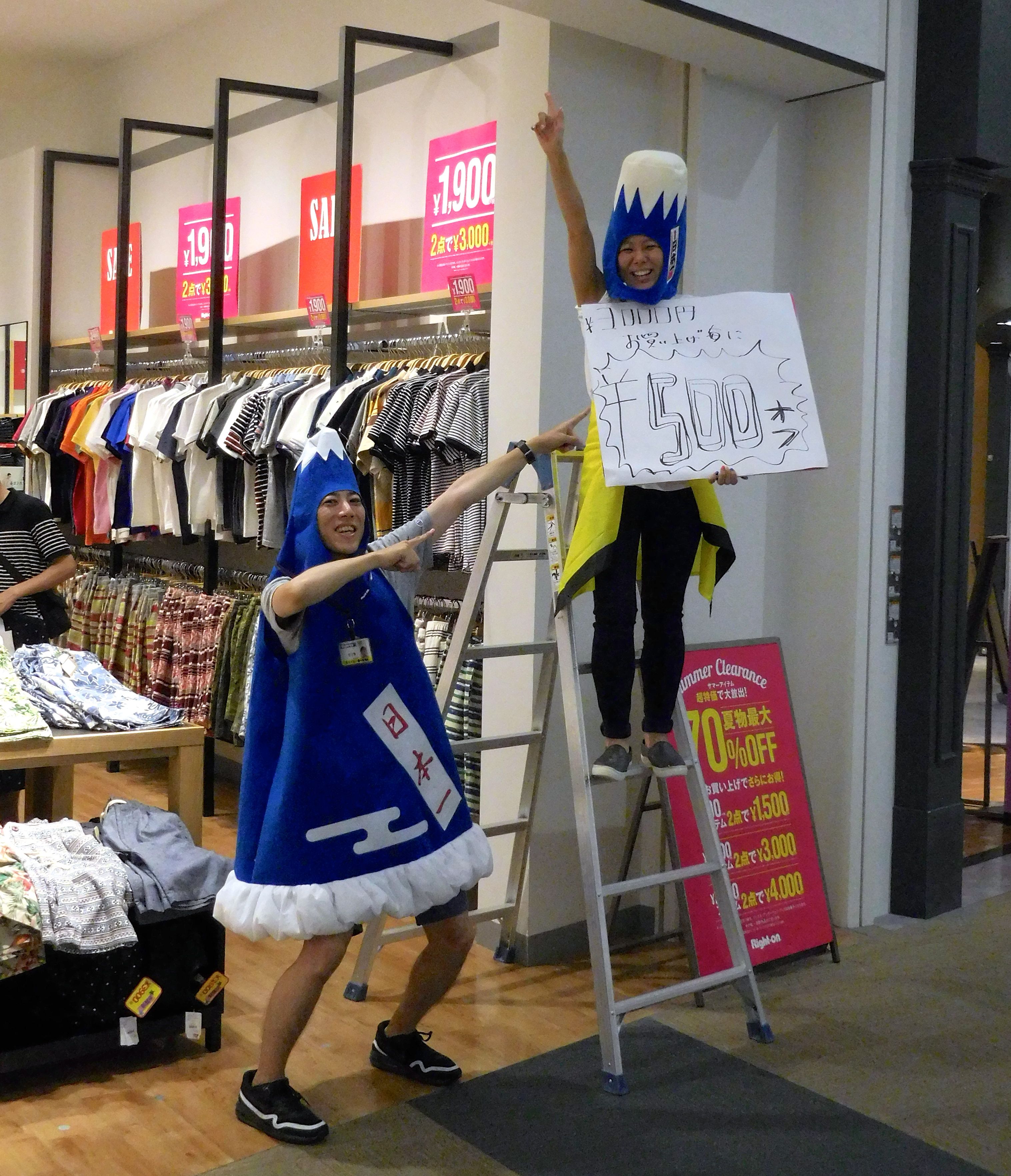
"We'll pay you to take it away."

“We’ll pay you to take it away!”

My colleagues all wanted to hit one particular department store, and I could quickly see why. Good quality merchandise, great selection of sizes and excellent prices, just not long/tall/big enough for me, although I did manage to find a scarf which fit perfectly. I had fun, though, giving feedback and racing back and forth to swap out sizes. Here’s a shot of the changing area – one is only allowed four garments in the room at one time:

No shoes allowed inside

“Off with their shoes!”

On a completely unrelated topic, one odd aspect of this summer, given that I live in a very rural area, is the absolute lack of any domesticated pets whatsoever in my ‘hood. I may have mentioned somewhere below that I saw one cat at the honor vegetable stand and one man walking a dog while I was on the train to Nagaoka, but that’s been it. Pet ownership is alive and well, however, as demonstrated by the photo below. I immediately thought “puppy mills” and “Go to the Humane Society,” but I wisely kept those remarks to myself. The puppies, adorable as can be, were wicked expensive, in some cases between 1500-2000 USD. No wonder everybody just looks.

Step right up

Step right up

I was delighted to see a couple familiar favorites among the other unknown chains, this on now virtually unknown on the North American continent:

It's alive!

It’s alive!

Seeing this store brought back a “whoosh” of memories from my college days, when on many a late Saturday night we would pile into someone’s car and drive from Eagle Rock (near Pasadena in Southern California) along Sunset Boulevard to somewhere in West LA or Beverly Hills where there was a Tower that stayed open 24/7, if memory serves. After hours of looking and listening, we’d head to a Denny’s for a little refreshment (the grand slam breakfast at 3:30 am was a particular favorite, accompanied by gallons of the kind of execrable percolator coffee that was in vogue at the time). Ah, sweet memories of youth.

Another old friend I was happy to see was Starbucks, my first since hitting these shores:

Ah, the pleasures of a consistent global brand!

The pleasures of a global brand

I didn’t actually HAVE any coffee (too late in the day), but I did sit there for a long spell just breathing the fumes. They even had Caffe Verona instant “coffee bags” to take home, but I was feeling too cheap to buy them. I did take a close-up of what was being offered that day, but it was a bit of a mystery, as most things are around here:

Pretzels?

Pretzels?

Nearby was a shop that was selling more traditional Japanese delicacies – the round things are called “mochi,” I think, and the weird green tied items are called “sasa dango.” They have rice and other goodies inside and were wrapped that way, I believe, because they were road food for samurai.

It's not easy being green.

It’s not easy being green.

I am, as you probably know, a huge fan of pen and stationery items, and Japan is a mecca for those types of products. The quality of the paper is excellent, and the amount and variety of writing instruments is hard to believe. While I am still mulling the purchase of a rather expensive Pilot fountain pen (the Custom 914 with an FA nib, to be precise), I really enjoyed this rainbow display, all in readiness for the beginning of the academic year next month:

Brightens up even the dullest assignment

Brightens up even the dullest assignment

While the gals were shopping, the lone male hied himself off to the cinema in the mall. We had checked the place out when he was deciding how he would amuse himself during our afternoon-long shop-a-thon. I was charmed that as decoration there was a huge mural with a chronology of many popular animated movies of the last few decades. How good is your knowledge of Japanese film?
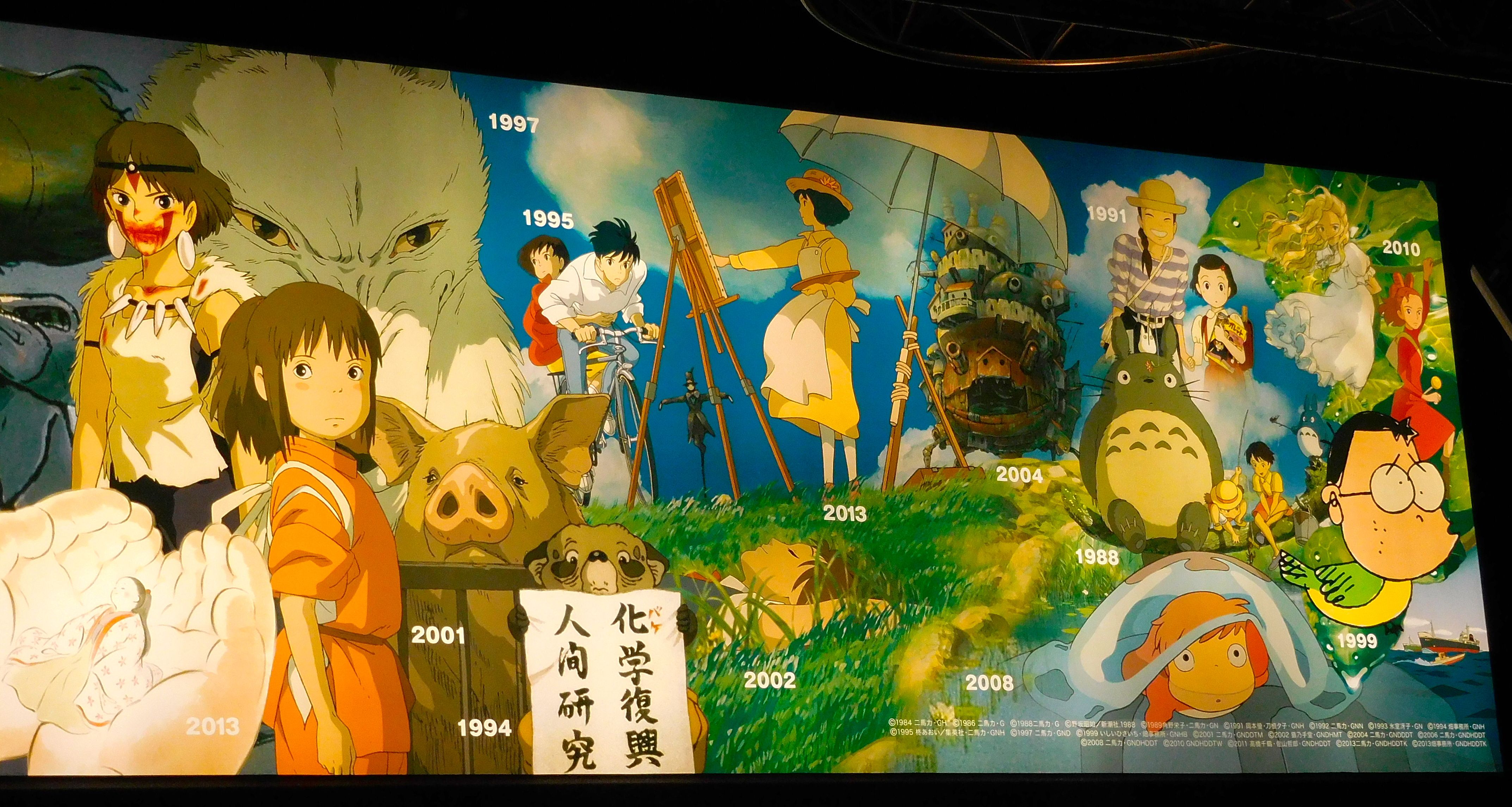
Animato

Animato

So finally, tired and shopped out, we piled ourselves and our treasures into the car for the journey back to Urasa. A great day and an enjoyable time with wonderful people.

Posted in Travel - shopping | Tagged | Leave a comment

“Edge Zone:” Ashley Madison…ignore if this topic isn’t of interest to you

You may know I am fascinated by places the famed cellist Yo-Yo Ma refers to as “edge zones,” those being physical spaces that by virtue of their location, history, and/or topology have found themselves at the mercy of many culture clashes over time. Think Bosnia, for example, torn for centuries between the Christian north and the Muslim south, or my dear Georgia, caught between everyone from the Greeks and Persians to the Russians and the Azeris. Even this past year when I visited Poland for the first time, I realized it was an edge zone as well; a pawn in the 18th and 19th century between the imperial powers of Prussia, Russia, and Austria as well as in the 20th between Germany and the Soviet Union. The effects of such star-crossed locations reverberate through time, through their complex histories, the development of their civic life and architecture, the politics, the music, and the food, just to name a few examples.

But just recently there has been a news event that for me seems to contain so many elements of social, political, and technological life that it deserves to be a “temporal” edge zone all by itself, and that is the hacking of the Ashley Madison website and then the release of much or all of its personal data to the world (albeit at this point the techno-savvy world).

If you haven’t been following this issue over the past few days as I have been (the pastoral landscape of my current location combined with a delightful but undemanding professional schedule leaves me, it appears, with way too much time on my hands or fingers), the facts seem to be these:

1.) There is/was a Canadian-based website, in existence since 2001, whose purpose was to assist people in the pursuit of extra-marital affairs;

2.) Some one or ones appeared to take offense at allegedly fraudulent business practice/s of said site and threatened to reveal users’ personal data if said practice/s were not addressed (this practice was the deletion of user profiles);

3.) Said practice/s were not addressed (or addressed to the satisfaction of the concerned party/ies) and so personal and financial data was stolen on or about July 15th of this year, and over the following month, most or all of this allegedly protected information on millions of users around the world was indeed released. This included names, addresses, emails, and a host of personal preferences regarding the intended purpose of the site.

Well, that was relatively straight-foward, but the more I read and thought, the greater and greater and greater the reverberations seemed to me, cascading through my mind in giddy waves. As someone who has herself used other dating sites, I can only begin to imagine the tectonic heart-stopping terror any one of those users might be experiencing at this very moment moment, waiting, as it were, for the shoes to start falling, and falling, and falling.

So what’s in play, here? Why my particular fascination? Well, let’s just look at the vectors and some of the deep ironies that result…

1.) The biological imperative, particularly but not exclusively for men, it seems  (given that the vast majority of AM users were men), to seek novelty in sexual life;
2.) The deep-seated and unforgiving nature of jealousy, the “lizard brain” of not wanting to share, the promises of fidelity;

3.) The social contract of marriage, designed in large part (IMHO) by religions to be a force of social control and political networking, not necessarily the happiness of individuals;

4.) Lifespans (and marriages) now continuing for much much longer than ever possible in the future;

5.) A technological world in which things that hitherto were fantastic and impossible have now become not only possible but even commercialized and accessible *from the comfort of your home and/or office*;

6.) A trust in the power of said technology that information put into that medium *will stay safe and not be revealed,* regardless of daily evidence to the contrary;

7.) A belief, on the part of the hacker/s that a website *built entirely on a model of deception* should otherwise be guided by fair and transparent business practices; and finally,

8.) A belief, again on the part of the hacker/s, that releasing this personal information will harm the company and its CEO more than it will harm the individuals involved (and individuals will be harmed; more about that in a moment).

There are probably more, many more, but that’s all I can manage at the moment.

Whew.

I don’t condone cheating. I don’t condone making money off cheating. I don’t condone unethical business practices. I don’t condone the stupidity of using your work email for such activities (15K emails alone for the military, 665 at last count from big financial institutions like Chase and Bank of America). I certainly don’t condone a (expletive deleted) person like Josh Duggar, reality TV “star” and “family values activist” barely squeaking by his molestation charges now being revealed as having been listed on this site *with two memberships.* Gack.

But. Many.many.people.will.be.terribly.terribly.hurt, most specifically spouses, families, men in homophobic countries where they could find themselves killed. Is this what the hackers intended? Was their actual intention greater than the business practices of the company, rather, did it extend to an attack of the “godless morality” of our times? I don’t know, don’t know yet, may never know. But in the meantime, like the physical edge zones I have visited and still hope to see, this temporal and technological event will continue to fascinate me.

Posted in Hacking and morality | Tagged , | 4 Comments

Bathroom Bafflement

I’m not the first and I certainly won’t be the last Westerner to remark on Japanese restrooms. Like my experience of most of Japan (well, most of the Japan I have seen, which is certainly limited), there are elements both endearing and confounding.

First, most public restrooms offer the user a choice of the traditional arrangement (no photo available, but basically a porcelain version of a wide trough in the floor) or the Western throne. Thankfully, most stalls are marked with a symbol representing the type of option within, easily identifiable as either traditional or modern. Needless to say, I avoid the former, invoking, if necessary, the camel-like musculature I honed to perfection in Georgia.

Once inside a Western model, however, there are still surprises. One unit I saw had a lever attached to the seat, as seen below:

Close at hand

Close at hand

While thoughtfully providing extensive instructions to the literate, for the rest of us, it’s only clear that it’s made by Panasonic. I just go with the little button on top of the entire unit, which functions as one might expect for the result one desires.

And if the seat model weren’t confusing enough, I just saw this one the other day. It didn’t make things any clearer, even if the instructions were thoughtfully provided in Braille. (Panasonic does, however, maintain its market dominance.)

No smoking

No smoking

What I’ve gleaned from a few conversations on the topic is that these units offer refreshment in various presentations of air and water that can be customized by quantity and temperature. There is also an interesting feature where the sound of flowing water is played in the background, almost loud enough to mask the sound…of one’s own flowing water. I’m not 100% clear on that concept either.

And the last item in the “confounding” column is the lack of towels in the restrooms. Some venues are provided with the Dyson-type hand dryers, but in the absence of those, you pretty well better have your own tissues or it’s drip-dry for you. Okay-dokee.

Now we turn to the bits that are actually practical and thoughtful. The first I don’t have a picture of, but it’s that many women’s stalls are equipped with special compartments hanging in the corner where you can put a baby – sort of like a snuggly-on-the-wall optin, allowing Mom to micturate without a wiggly one on her lap.

The second thoughtful item is the installation of a small sink, so Mom can demo good hygiene practices with Small:

Mommy and me

Mommy and me

And the third is the answer to the vexing question of what to do with a little boy when one is using the women’s loo. First of all one sees the ubiquitous instructions:

I really wish I knew what this said

You’re under arrest

…but at least one can be completely clear as to the intended purpose of this appliance:

Just like Dad's

Just like Dad’s

On the whole, with a little preparation and focus, one can navigate the shoals of Japanese restrooms without too much difficulty (and great appreciation for their cleanliness and frequency of presentation), but some day, some day, I hope to be able to decode the Rosetta Stones of the toilet spas. Stay tuned.

Posted in Travel - Japan | Tagged | 1 Comment

Acknowledging the anniversary of Hiroshima and Nagasaki

I just happen to be in  Japan for the 70th anniversary of the dropping of the atomic bombs. Since I signed up with the State Department’s STEP  (Smart Traveler Enrollment Program), I recently received an email from the embassy in Tokyo reminding me of that fact and telling me that this is often the occasion for protest gatherings, hence the “stay aware of your surroundings” and “avoid large crowds” reminders that are the mainstay of such correspondences. Here in the hinterlands, I saw no evidence that the days would be marked by any observances whatsoever, and so I went in search of any such history. I happened to find some very interesting possibilities in the nearby city of Nagaoka, so off I went on Saturday to see what I could see. (Just having sidewalks was an allure as well, as was the rumor that there was a German bar as well as an Irish one. “Riches run wild,” as my dear friend J would say.)

Nagaoka is a 45-minute ride on the local train (or 12 minutes on the Shinkansen, for nearly triple the price) from Urasa, a perfect day trip. It’s not known for anything in particular at the moment aside from being the second-largest city in Niigata Prefecture, a place with light industry and heavy snowfall, but a little digging taught me that the area had long been disputed in Japanese history, passing back and forth between various warlords and samurai over the centuries. What caught my eye were events that transpired in the 20th century, most notably a fire bombing by the Allies, a huge earthquake nearby,  and most significantly, the creation of the preserved birthplace and separate memorial hall for Marshall Admiral Isoroku Yamamoto, the architect of the bombing of Pearl Harbor.

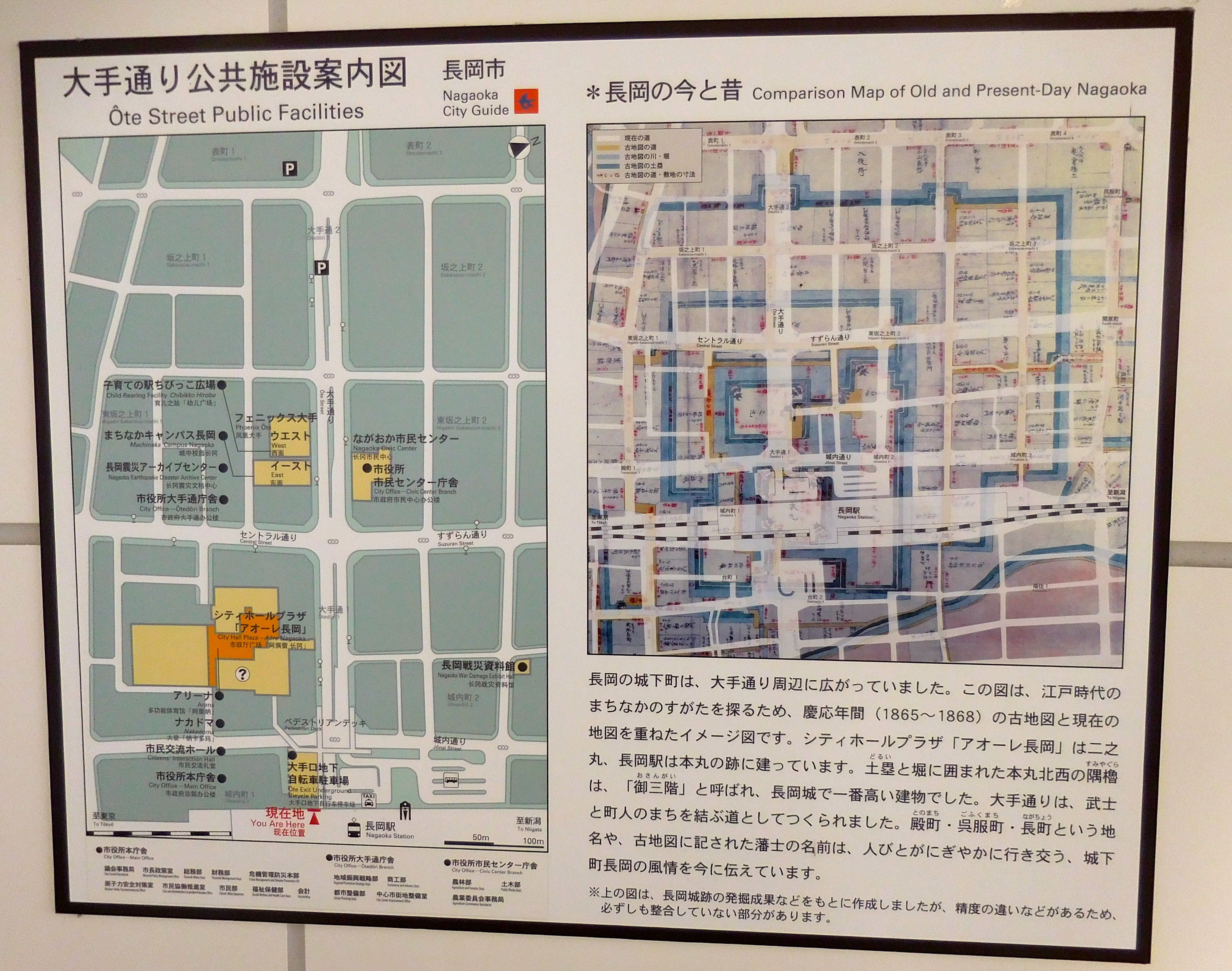
The city today is not the city it was. Here’s a map of the current downtown, superimposed (on the right-hand side) over the map of what the place looked like before August 1, 1945, when 125 B-29 bombers dropped incendiary bombs and turned 80% of the city to rubble:

Before and after

Before and after

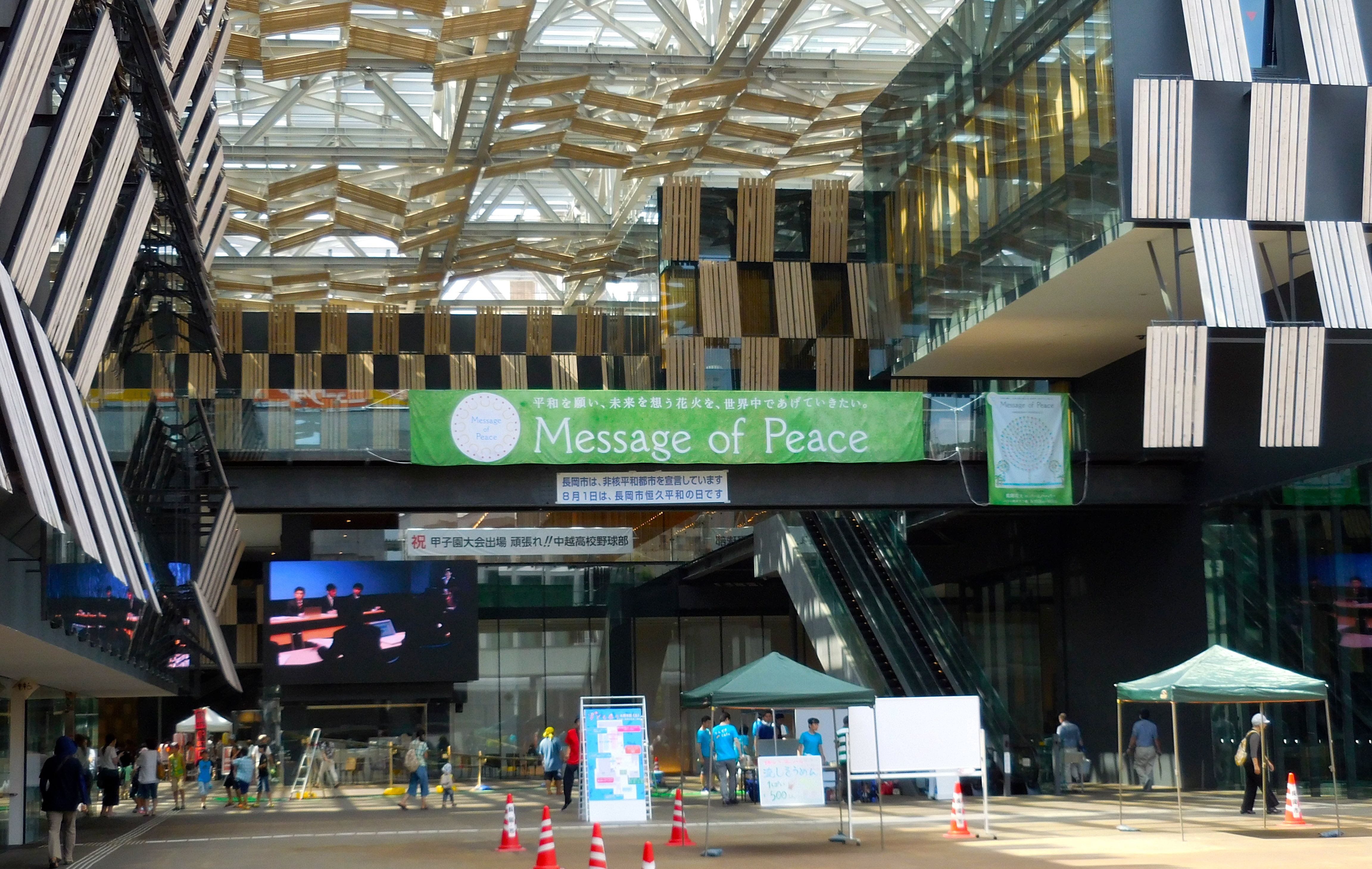
What is now the city hall plaza was before the inner courtyard of an ancient castle. While I love the symbolism of reusing the location, it currently doesn’t conjure up any images of imperial glory, and I was hard-pressed to find the ruins that were allegedly nearby:

Center of city life

Center of city life

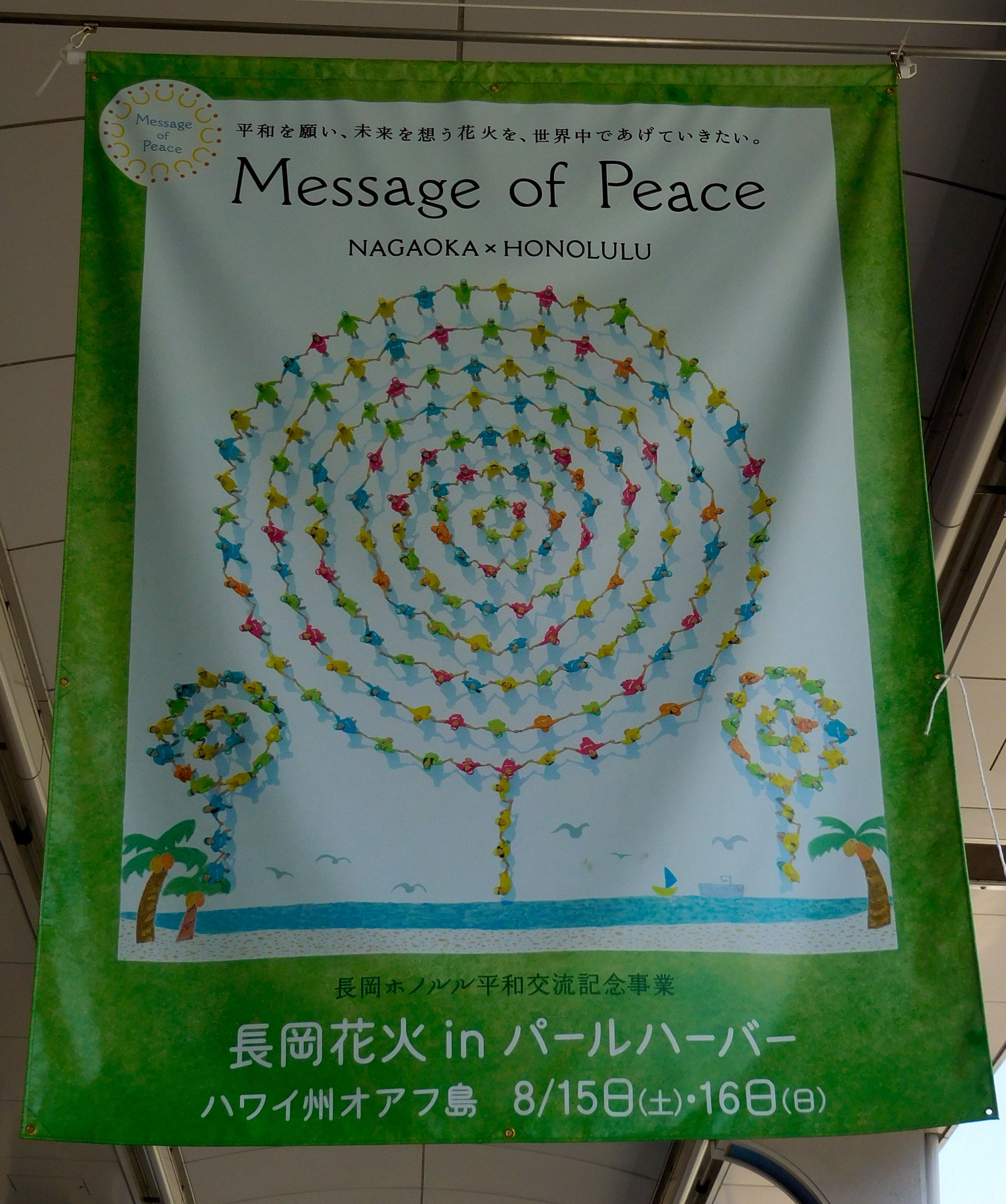
The good news is that the local citizenry live in the here and now, and they have a very active sister city relationship with Honolulu, Hawaii (as well as Fort Worth, Texas, and Trier, Germany). This year, the famous Nagaoka Fireworks, held locally on August 2nd and 3rd, will be seen in Pearl Harbor on August 15th and 16th. In addition, there is a beautiful artistic image of fireworks composed of 202 children and exhibit of nearly 6,000 cranes that will also be on display in Honolulu as well. Everyone here hopes and prays for a peaceful future, and I join them in that.

202 adorable Japanese children can't be wrong

202 adorable Japanese children can’t be wrong

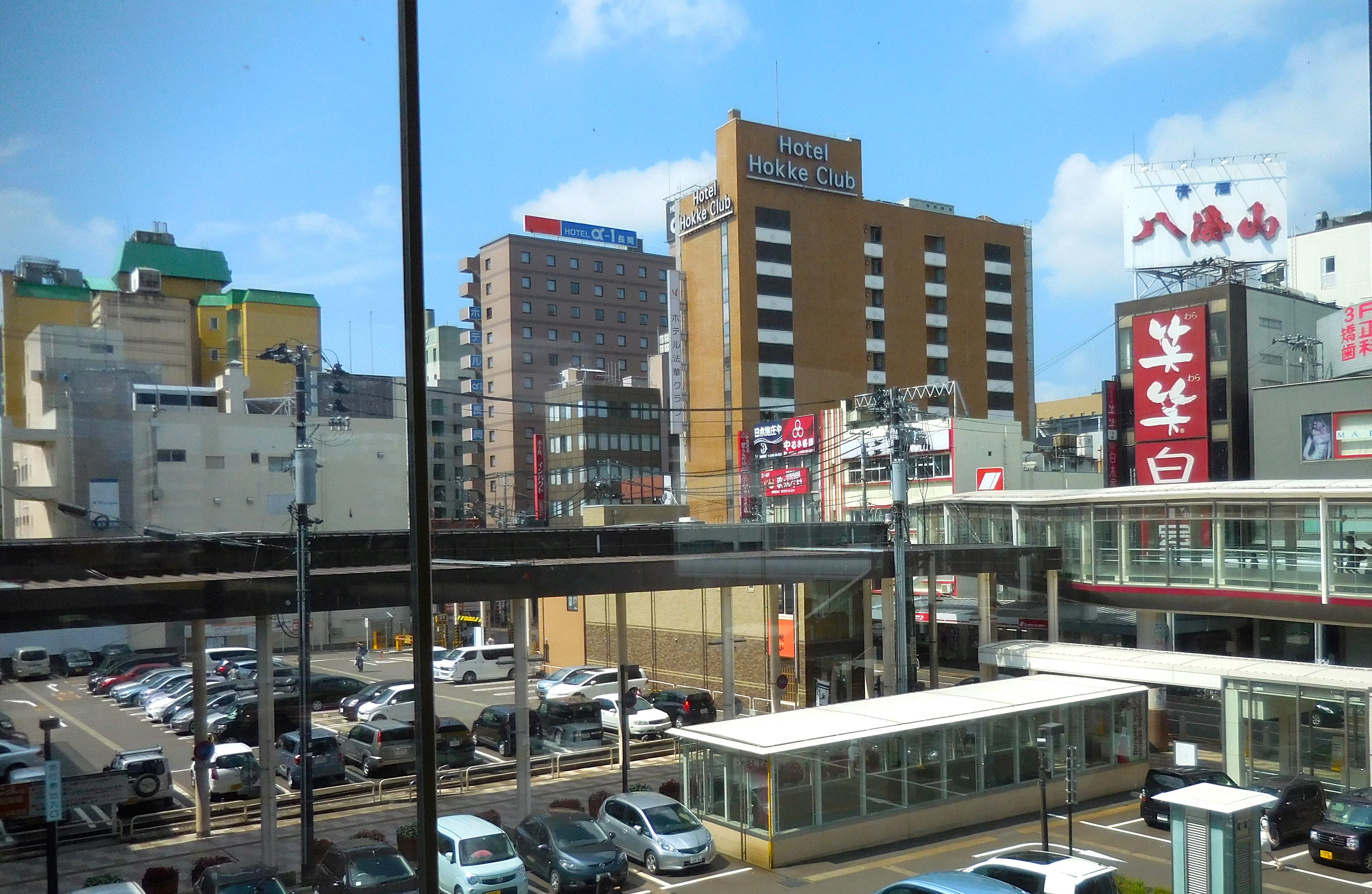
Here’s a shot of contemporary Nagaoka, looking back towards the train station where I arrived:

A bustling hub

A bustling hub

One very useful fact of life in urban Japan in this region, even when the towns are quite small, is covered sidewalks on the main roads in the city centers. They’re great for both snowy winters and, on 95-degree days, sunny summers as well. This is a shot of one such street:

Not pretty, but much cooler

Not pretty, but much cooler

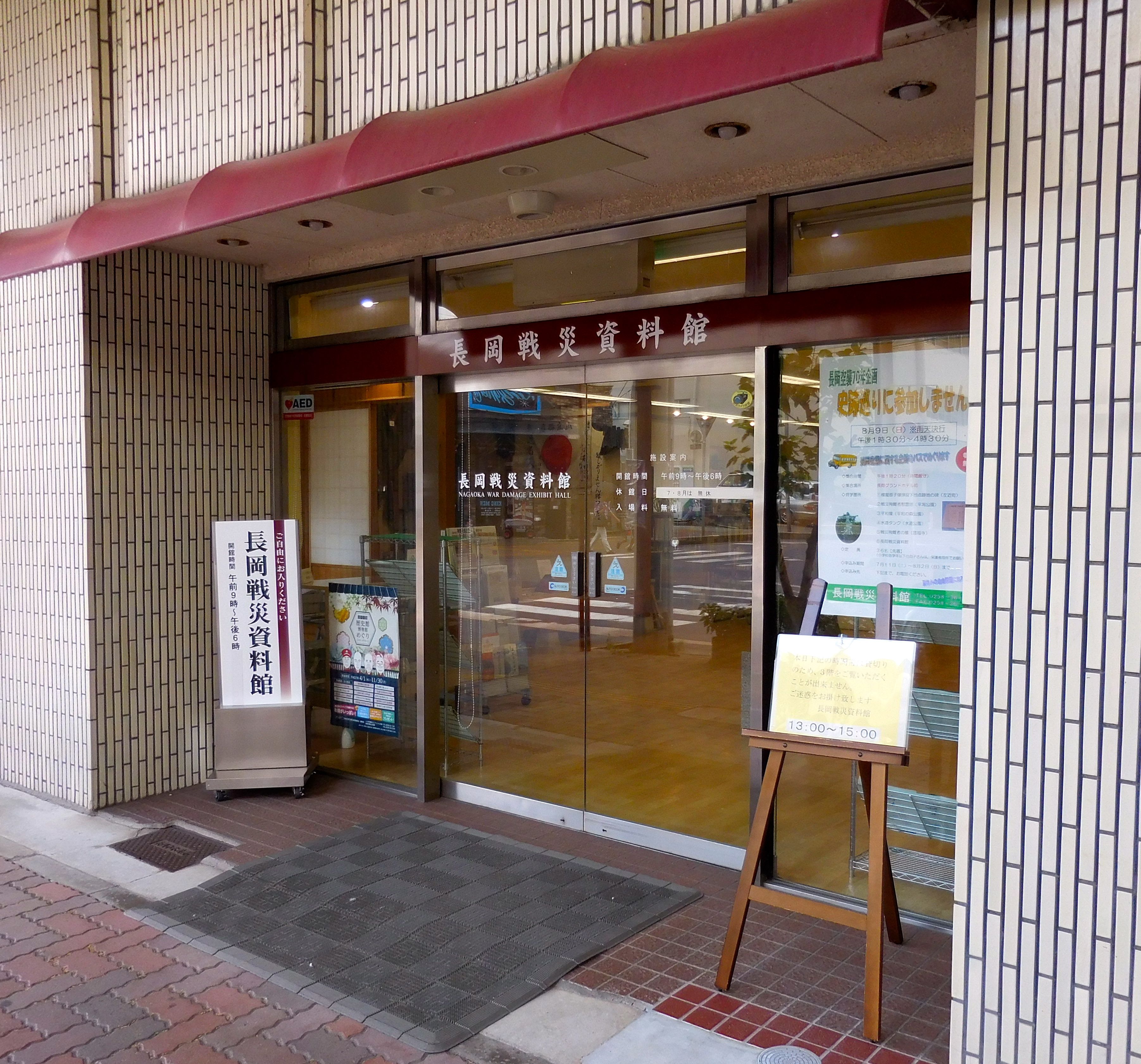
I wish I could show you more of the nearby Nagaoka War Damage Exhibit, because it is a well-designed small exhibit space that brings home, as these places so often do, the stark reality of what military campaigns due to the lives of ordinary civilians. Alas, the helpful and polite staff make it clear that photography is off limits. But at least I can share a picture of the front entrance:

Storefront to history

Storefront to history

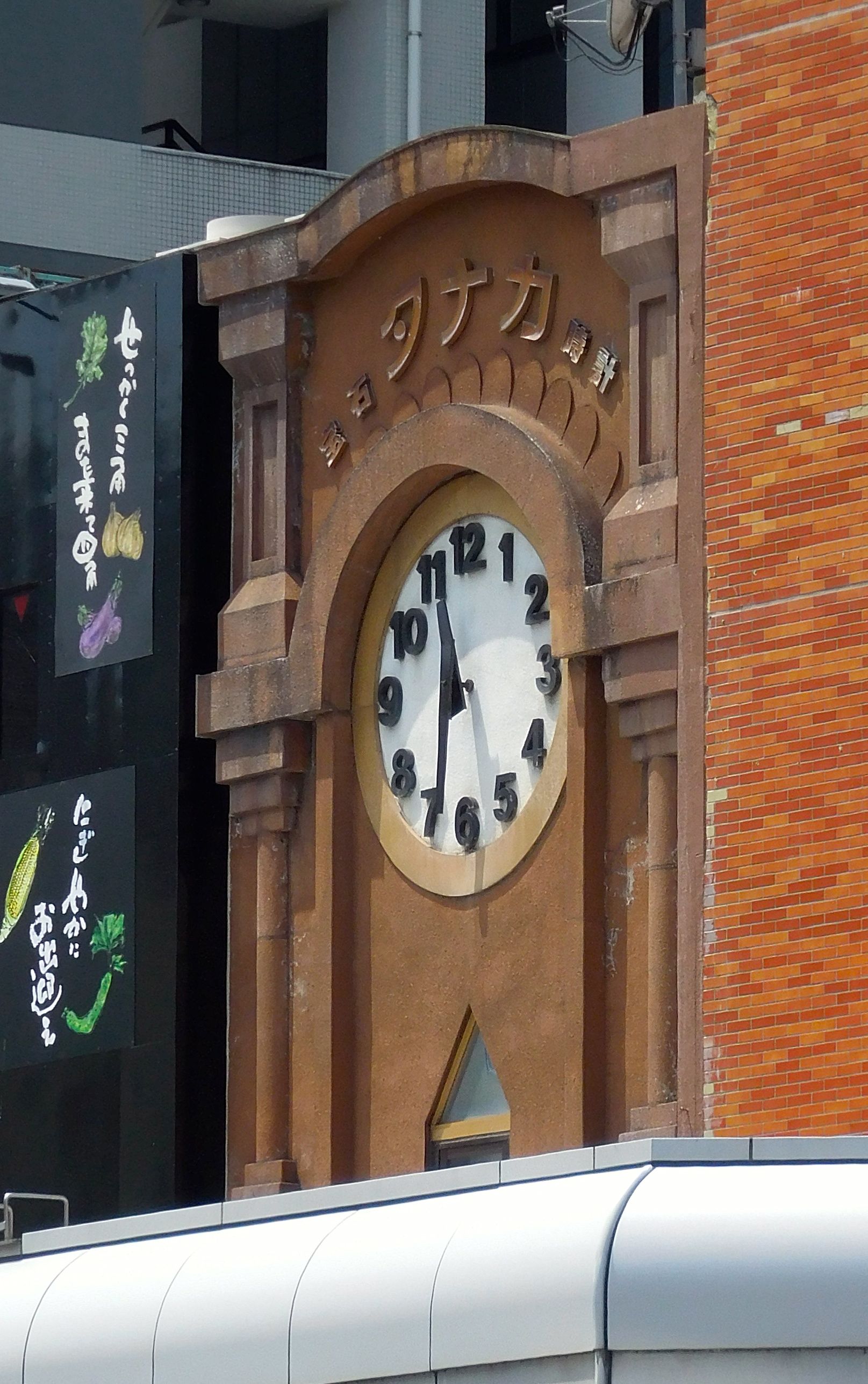
Inside, one can see a pictures of the political turmoil of the 1930s prior to World War II, a  reconstructed bomb shelter, and a replica of the “pumpkin bombs” (similar to the “Fat Man” bombs that carried the atomic bombs) that were dropped over the city, releasing a large number of independent incendiary devices that ignited on contact and wreaked havoc on the wooded and paper structures of much of the housing.  Upstairs, on a separate floor, there were pictures of many of the nearly 1500 people who died in the attack (many were never identified and were buried in a mass grave following cremation). As in the National Museum of Soviet Aggression in Georgia and the Jewish Museums of both Germany and Poland, it is always deeply sobering to glance at the faces of the innocent fallen – the mischievous schoolchildren, the elegant wedding couples, the babes in arms, wiggling and slightly out of focus. Back outside the exhibit, here’s a clock that reputedly survived the attack and still proudly tells the time, albeit now hemmed in by different neighbors than before:

Not grandfather's, clearly

Not grandfather’s, clearly

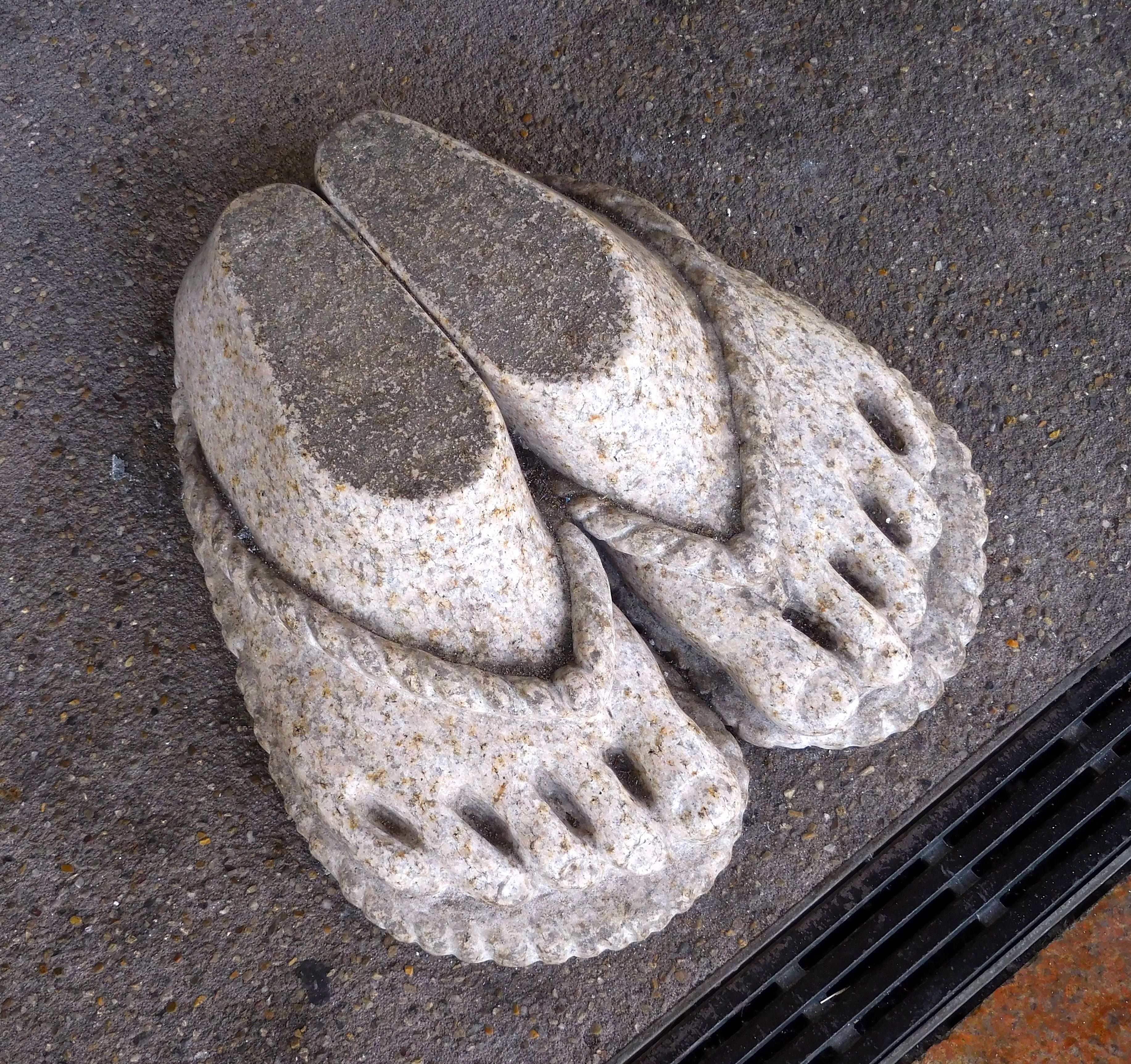
Just to cleanse the intellectual palette, I have to inject some of the whimsical and downright hilarious aspects of the day. I was charmed by the street art of different men’s feet – here are the zori slippers:

Not made for walking

Not made for walking

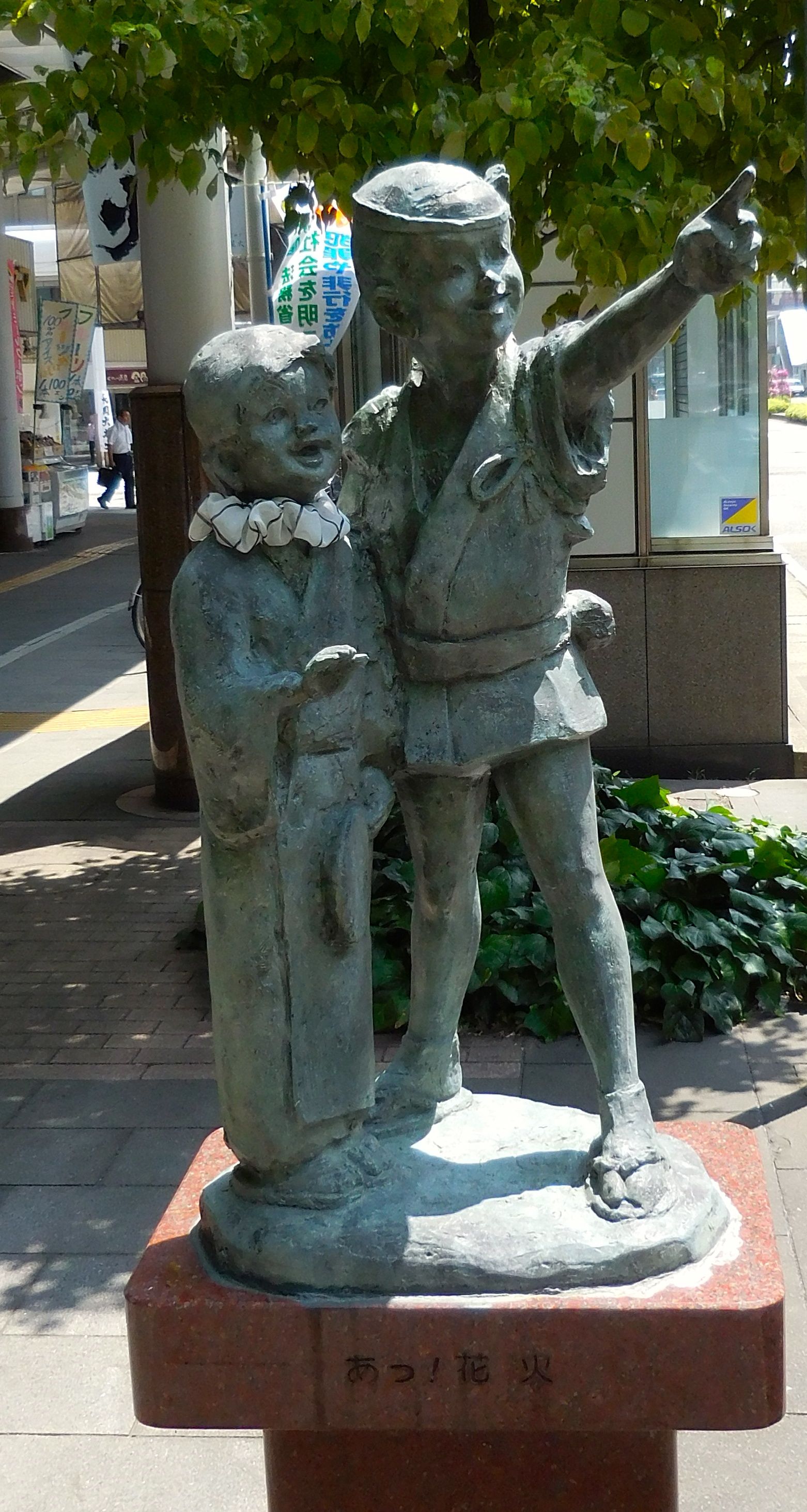
There are also lovely statues of children gracing the downtown thoroughfares, for reasons I could not ascertain. Here’s one jauntily graced by a scrunchy:

Brother leads the way

Big brother leads the way

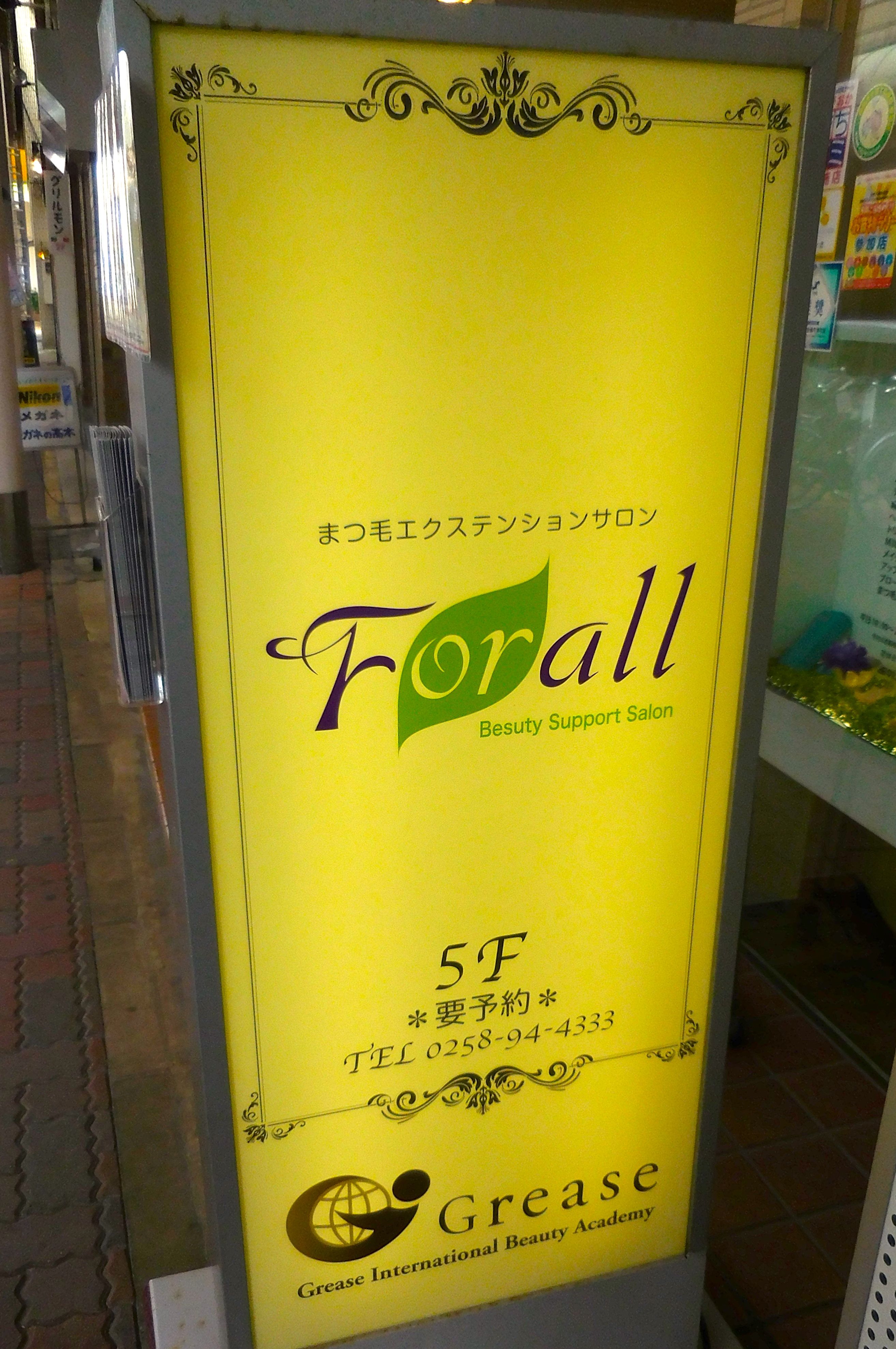
…and finally, the LOL sign for a local salon. Read very, very carefully all the way to the bottom:

Time for a rebranding exercise

Time for a rebranding exercise

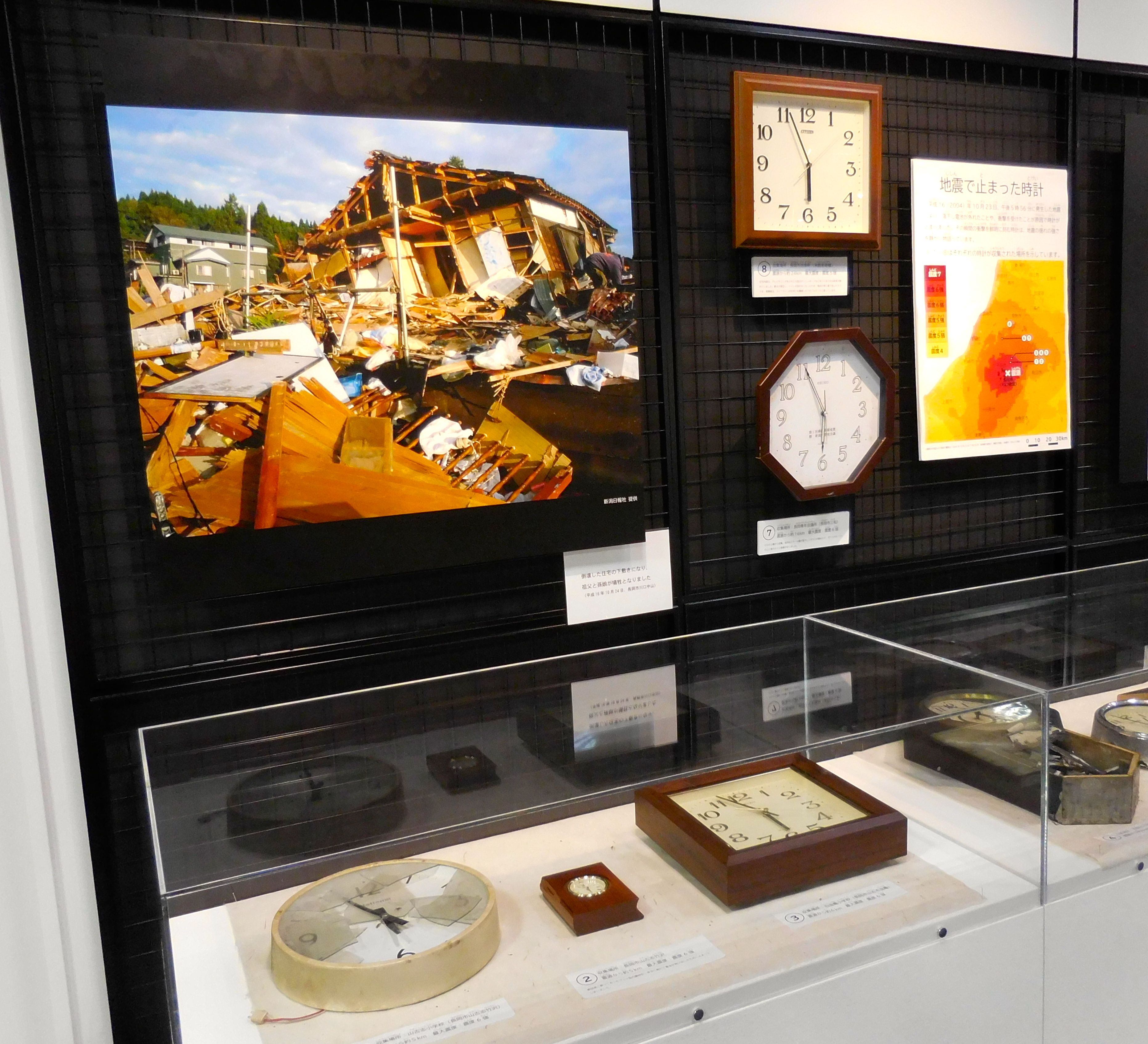
The next stop was the display commemorating the Chuetsu Earthquake of October 23, 2004. It was a magnitude 6.8 “event,” and there were many aftershocks, some in the 6 range. 68 people died and 4785 people were injured. Over 160,000 buildings, both residential and other, were damaged. This wasn’t small potatoes. Here’s a picture:

Time stood still

Time stood still

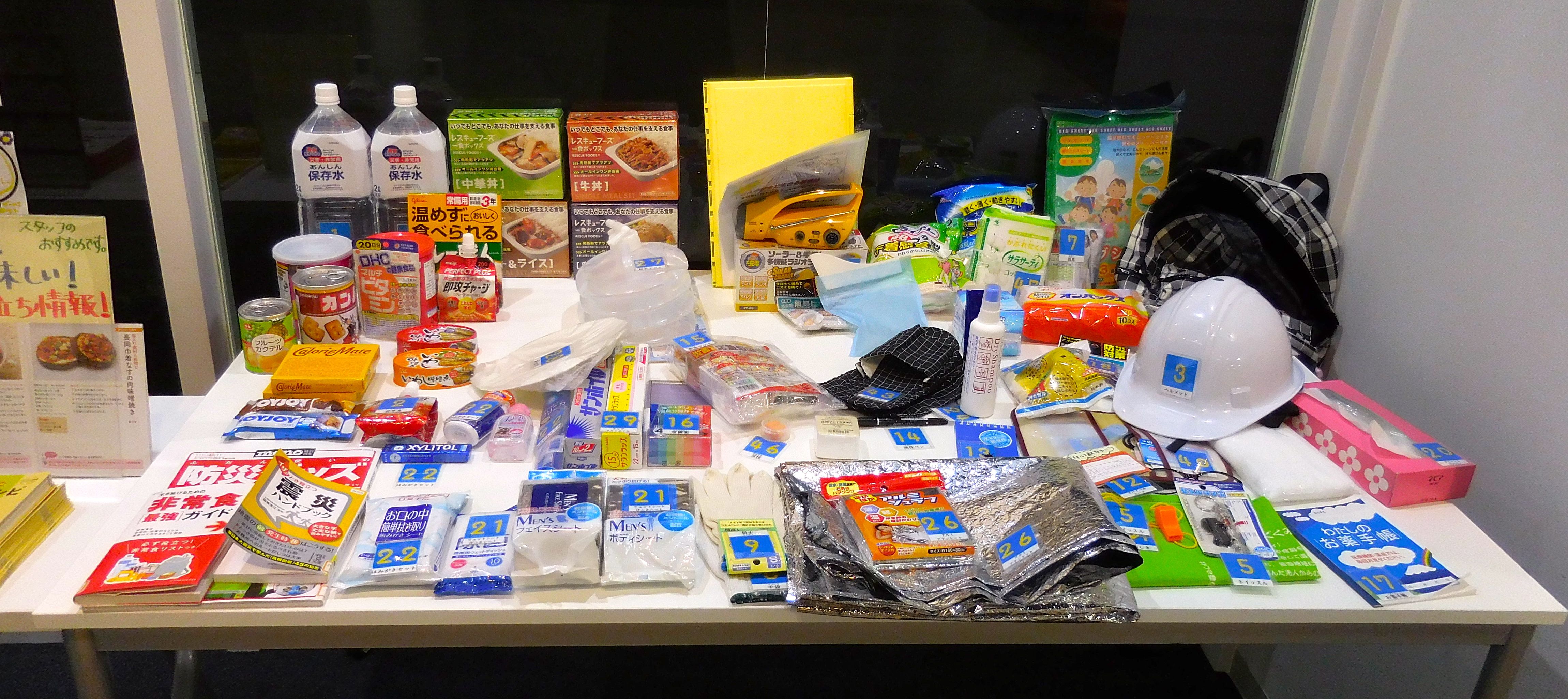
As part of the educational mission of the exhibit, there was a table filled with what every good (person or household, it’s not clear) should have to be prepared for the next time around. I only hope our friends on the West Coast are taking preparatory steps like this:

Be prepared

Be prepared

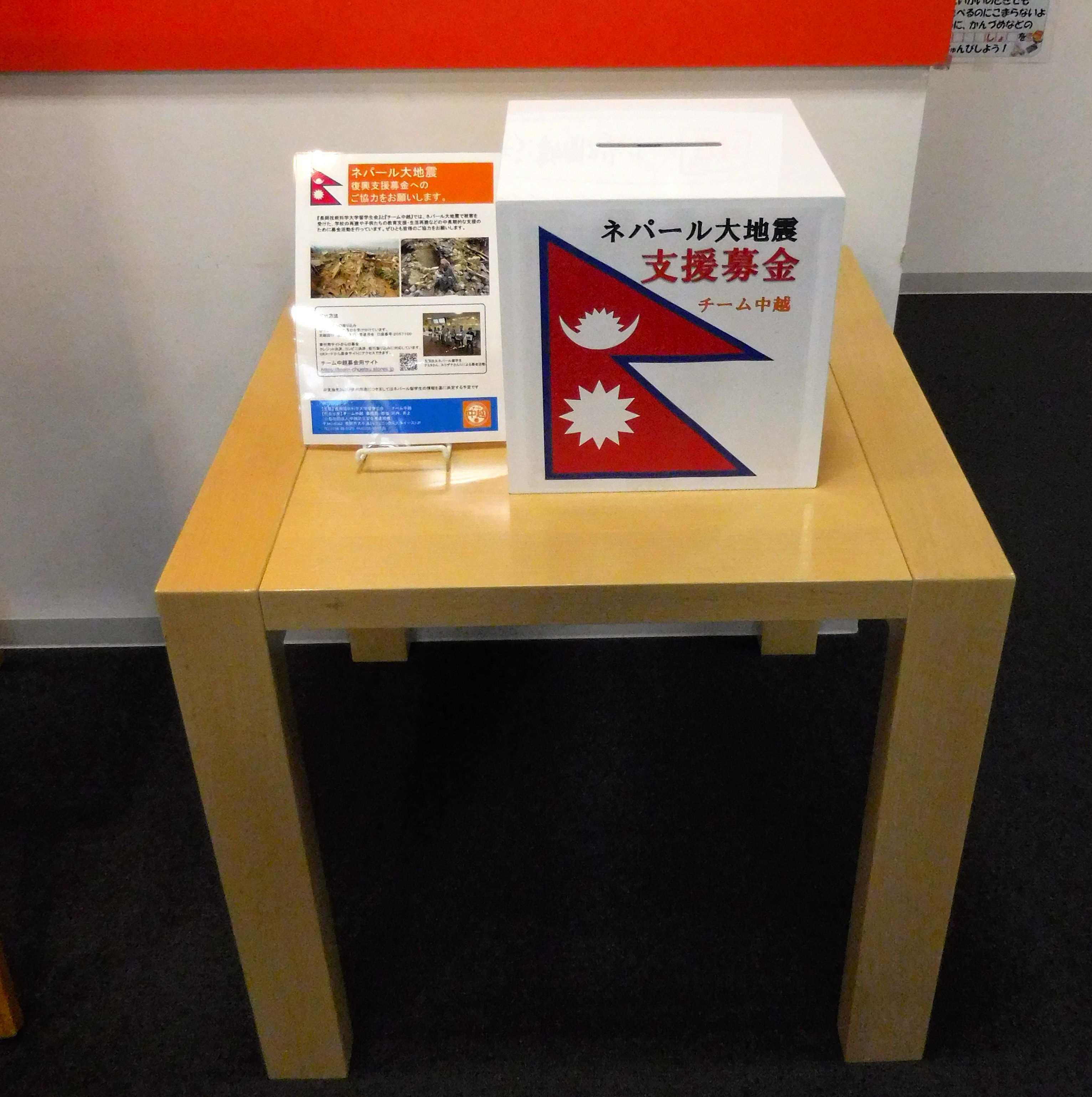
I was touched that amid this tribute, there was obvious concern for people who are still recovering from another terrible quake, this one in Nepal. The box depicts the Nepali flag:

We know all too well

We know all too well

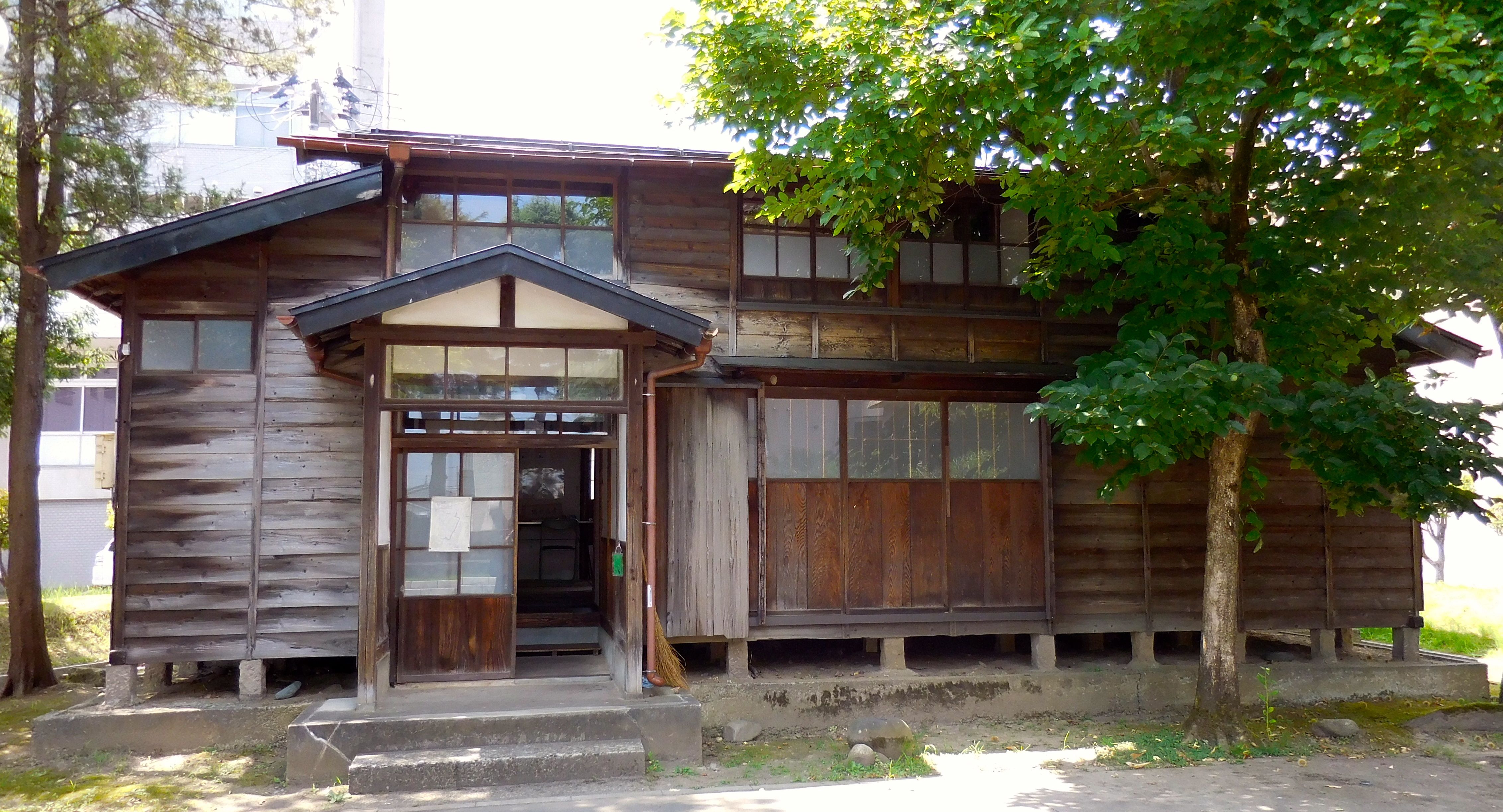
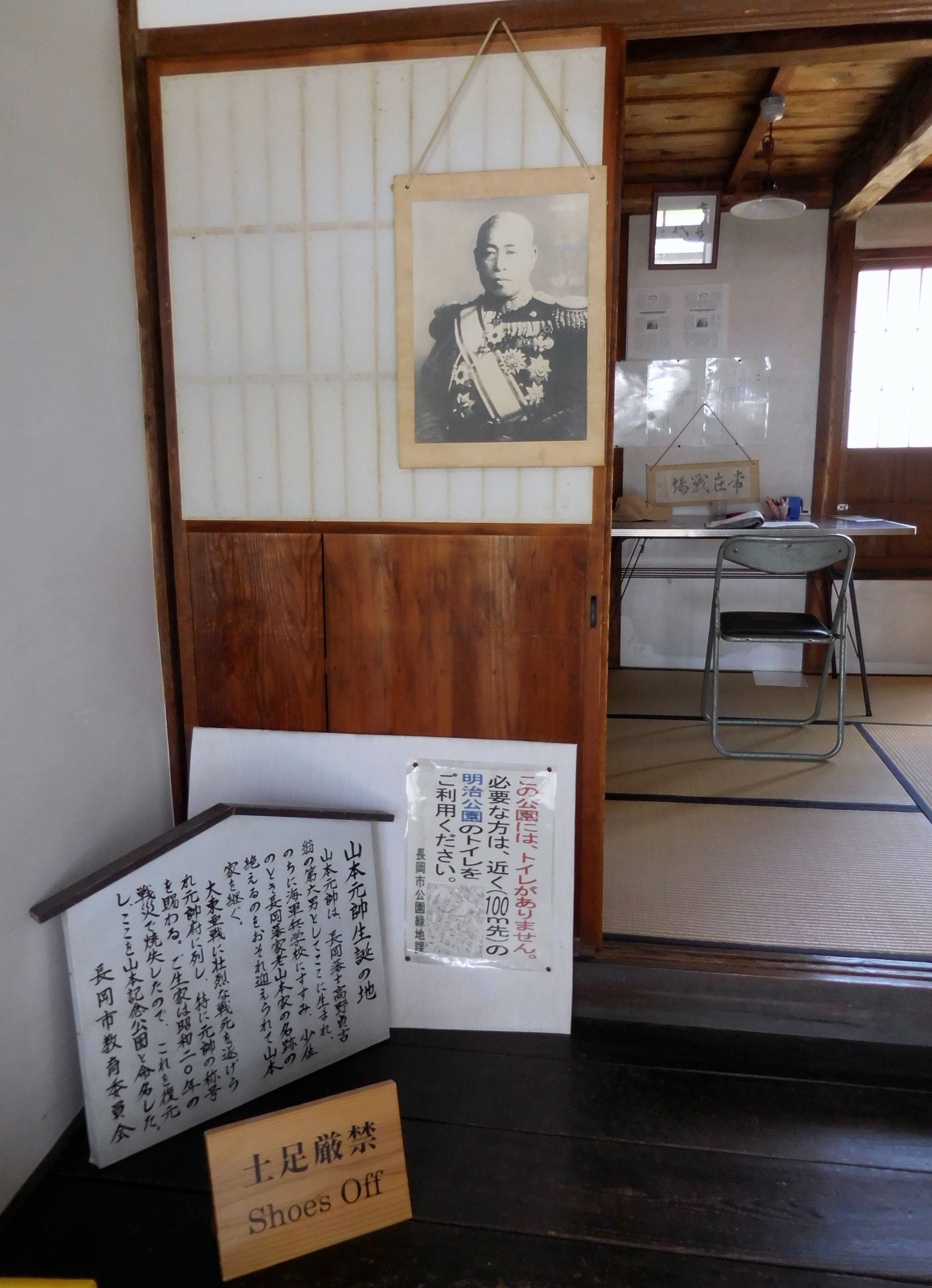
The last stops were those in honor of Isoroku Yamamoto, both his birthplace and a memorial hall with mementos and artifacts telling the story of his life. I was quite surprised by all I learned, and I am looking forward to sharing it with you. He was born in 1884 to a modest family of samurai lineage, one of six sons, and so was actually adopted by another samurai family, the Yamamotos, who didn’t have any male children. This was apparently quite common to keep family lines going when the gene pool let you down.

Kind of like Abe's log cabin

Kind of like Abe’s log cabin

An interior shot:

Watch your head

Left shortly for greener pastures

Yamamoto attended the Imperial Japanese naval academy, saw action in the Russo-Japanese war, and later became known for his strong anti-war sentiments. He studied for a couple years at Harvard (there was a shot of him in front of the Widener Library in 1919, only four years after it opened). and he also spent time as  a naval attache in the Japanese Embassy in Washington, DC. As a result he spoke fluent English and traveled extensively in the US. His postcard collection reflected stops in Vancouver, BC, Seattle, San Francisco, Los Angeles, and a number of other international cities. It is said he admired Benjamin Franklin and loved to play poker.

Which is why it is all the more ironic that it became his duty to plan and execute the attack at Pearl Harbor. There is speculation that he was in some political difficulty due to his pacific stance, and that this was a way to “redeem himself” in the eyes of his superiors. Wiki tells us that “two of the main reasons for Yamamoto’s political survival were his immense popularity within the fleet, where he commanded the respect of his men and officers, and his close relations with the imperial family.” It pays to have friends in high places when the going gets tough.

Whatever the reason, once the attack became his responsibility, he did his duty to the best of his ability. He believe that by delivering a crushing initial blow, the Japanese could convince the United States to negotiate an end to the conflict. As history tells us, though, the exact opposite was true. And in a final note of irony, it was an American Lockheed P-38 Lightning, the “Nip Clipper” flown by Ashland and Rohrer, that shot Yamamoto’s plane out of the sky over New Guinea and caused his death. Part of the wing of the plane and the remains of the metal seat he was strapped into were on display in the memorial hall, along with his sword, his glasses, his cane, a New Testament and Psalms, and his gambling cards and chips. He had just celebrated his 59th birthday two weeks before his death.

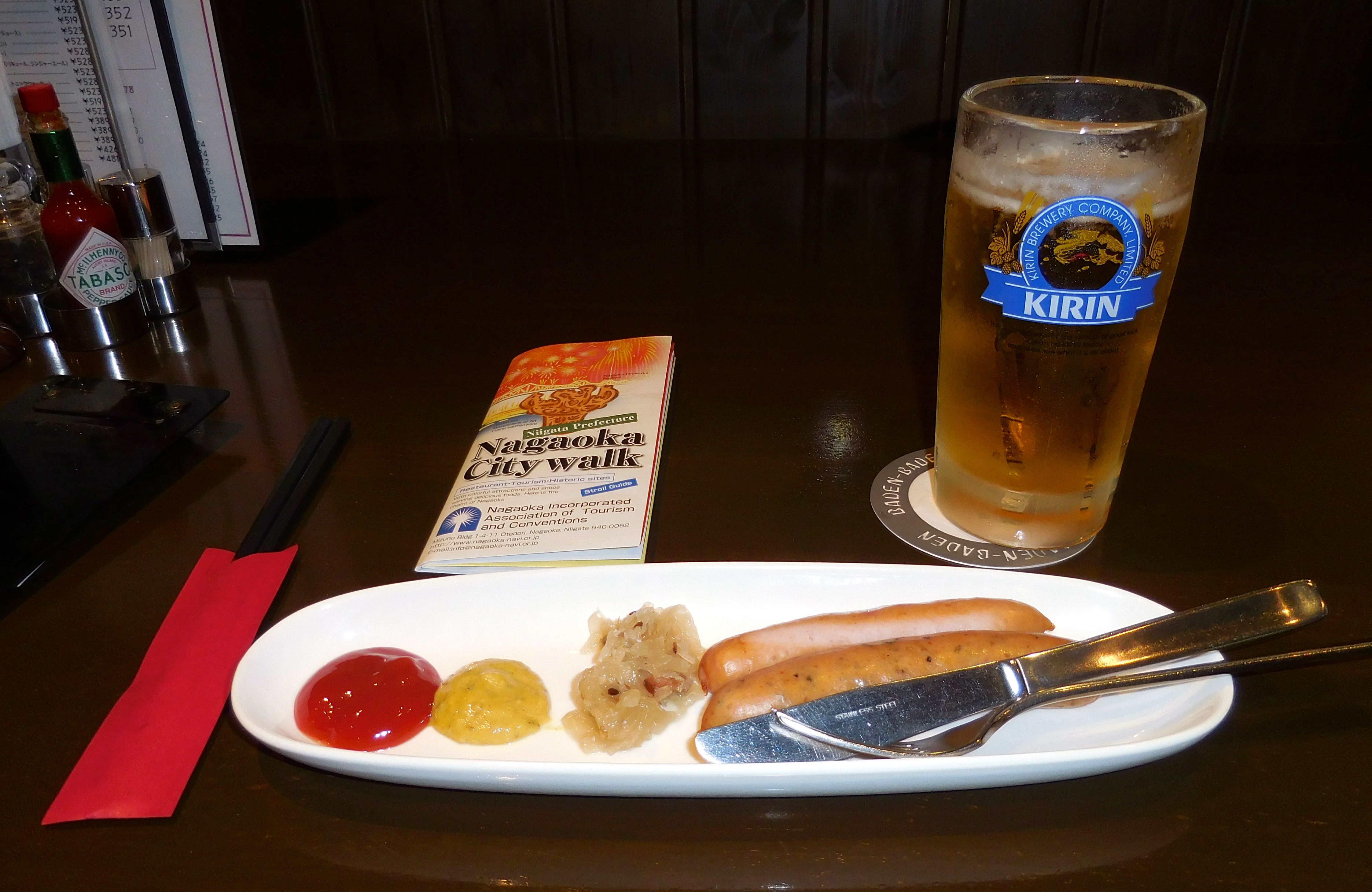
After that kind of emotional experience, a girl tends to get peckish. And since I was in a location where I could, allegedly, get German food, German food I tried to get. Well, there was German beer, but it was really really expensive and the Kirin on draft was really really cheap, so I compromised there, but I was determined to have as much Deutsch as I possibly could out here, so here’s a shot of lunch at Baden Baden:

Prost!

Prost!

So…in Japan, tendering my respects to warlords and admirals, and dining on cuisine from the other Axis power during the 70th celebration of the atomic bombs. Sometimes my head just swims with the astonishment of it all.

Posted in Travel - Japan | Tagged , | 1 Comment

A temple in Urasa and other mysteries

I keep threatening to write a blog post comparing my time in Japan with my time in Georgia, but so far that hasn’t managed to happen. Today, though, I’m going to focus on some of the elements that keeps making that post a possibility, and illustrate them with some pictures of what has to be one of the most beautiful and fascinating things I have seen since I arrived here, and that is the Fukoji Temple in Urasa, also known as a Bushamon-do, meaning it belongs to a particular sect of Buddhism.

Unprepossessing

Unprepossessing

But first, a little explanation is in order. “Urasa” is the name of the train station closest to my university. It USED to be the name of the village that surrounds the station (a separate post to follow about that), but between about 1999 and 2010, many of the little villages all over Japan were administratively “dissolved” and turned into larger municipalities. Urasa became part of greater Minamiuonuma (which itself used to be two places, Minami and Uonuma) but that doesn’t change the fact that physically the village ‘formerly known as Urasa’ still has only one sweet little main street that rolls up the sidewalks at about 5:00 pm and settles in for a quiet evening of soba noodles and old samurai movies. The picture above is taken from about the center of that thoroughfare.

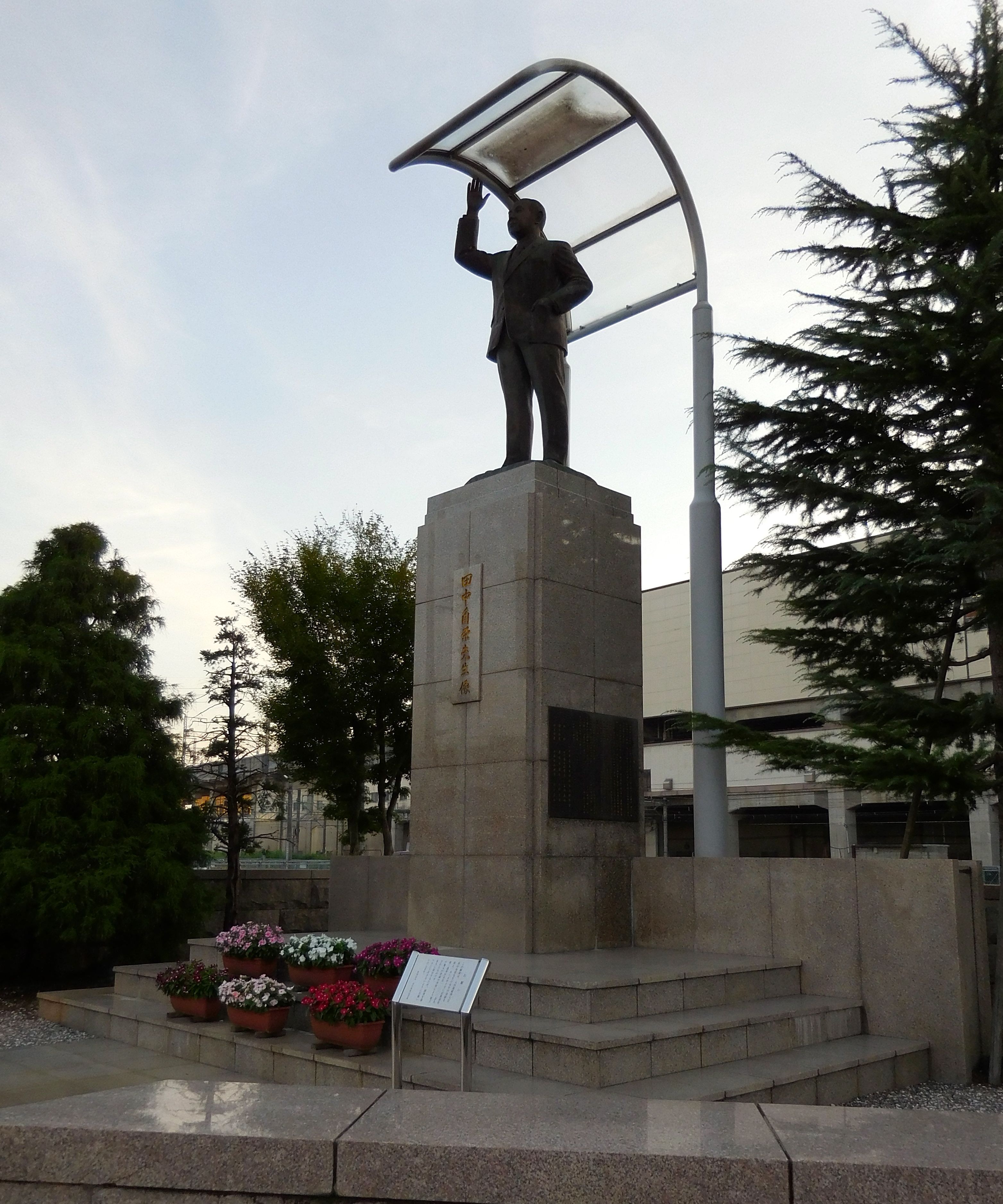
On a separate but slightly related note, what’s truly odd is that the bullet train, the Shinkansen from Tokyo to Niigata, one the most expensive train lines ever built in the entire world (six billion yen per kilometer, according to The Rough Guide to Japan), actually *stops* in sleepy little Urasa, instead of in either of the significantly larger also-former-villages on either side of us by a few kilometers. This is due to the fact that a former prime minister and long-time back-room deal maker and construction pork-barrel king named Kakuei Tanaka (nicknamed “The Shadow Shogun” for the amount of power he wielded in government) was from this area and wanted to “give back” to the community, if the signs at the base of his enormous statue next to the train station are any indication.

Sic transit public transit

Sic transit public transit

Okay, so we’ve got tiny non-village that contains very little besides a huge Shinkansen station (to the never-ending relief and delight of IUJ), an ancient and beautiful temple complex, and an “international university.” What’s next? Some weird cultural festival? You betcha, but I’m saving that bit for later. But what the heck does this all have to do with Georgia? The similarity is that I seem to keep finding myself in places that are filled with mysterious histories and places and buildings and people and festivals and *none of it is ever very clearly explained to me.* I have to crawl all over the internet, ask a million questions,  stumble around in the conceptual dark, all the while feeling like a deaf and dumb cultural anthropologist who can’t speak the language and can’t read the signs. (I always did love a puzzle.)

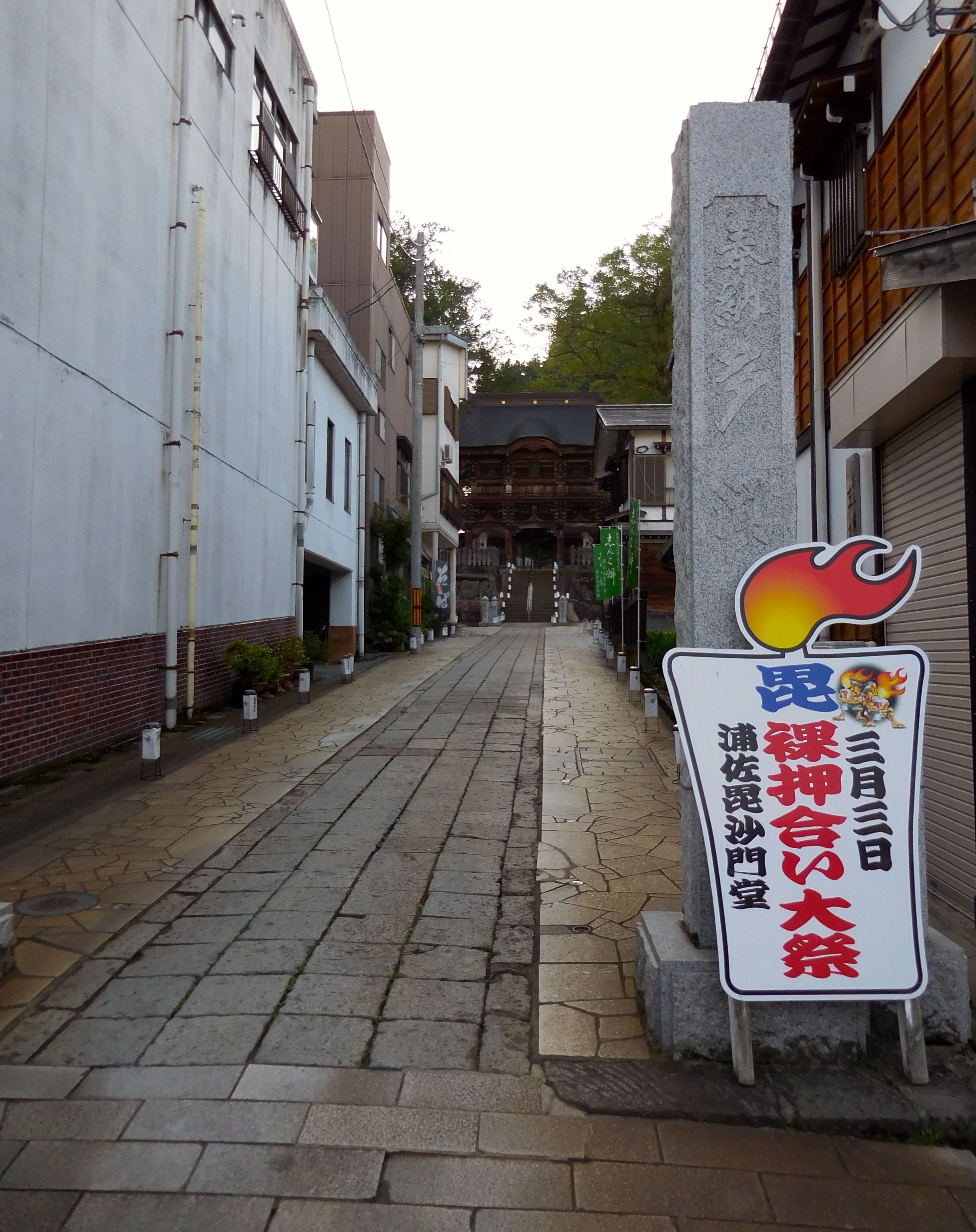
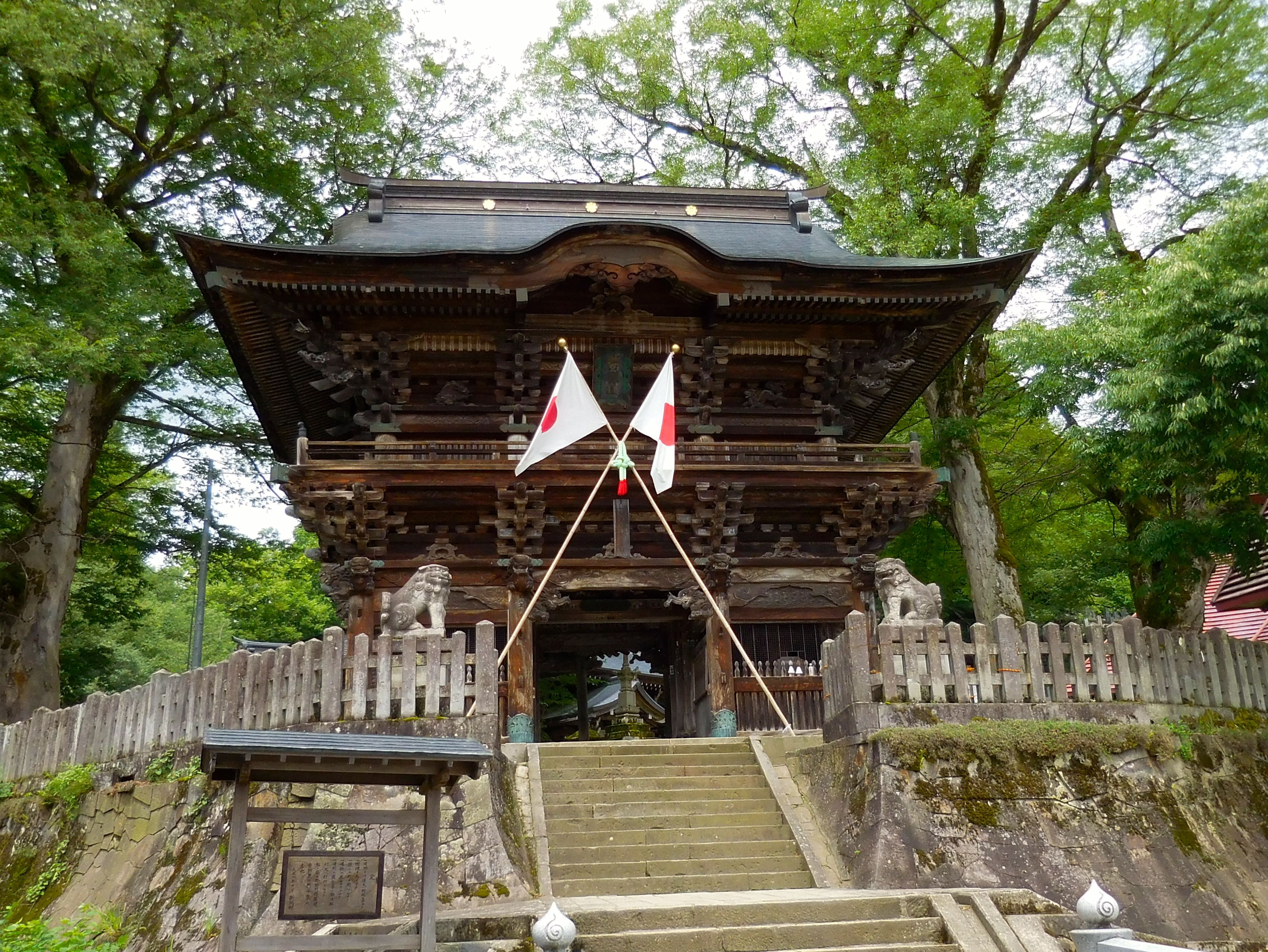
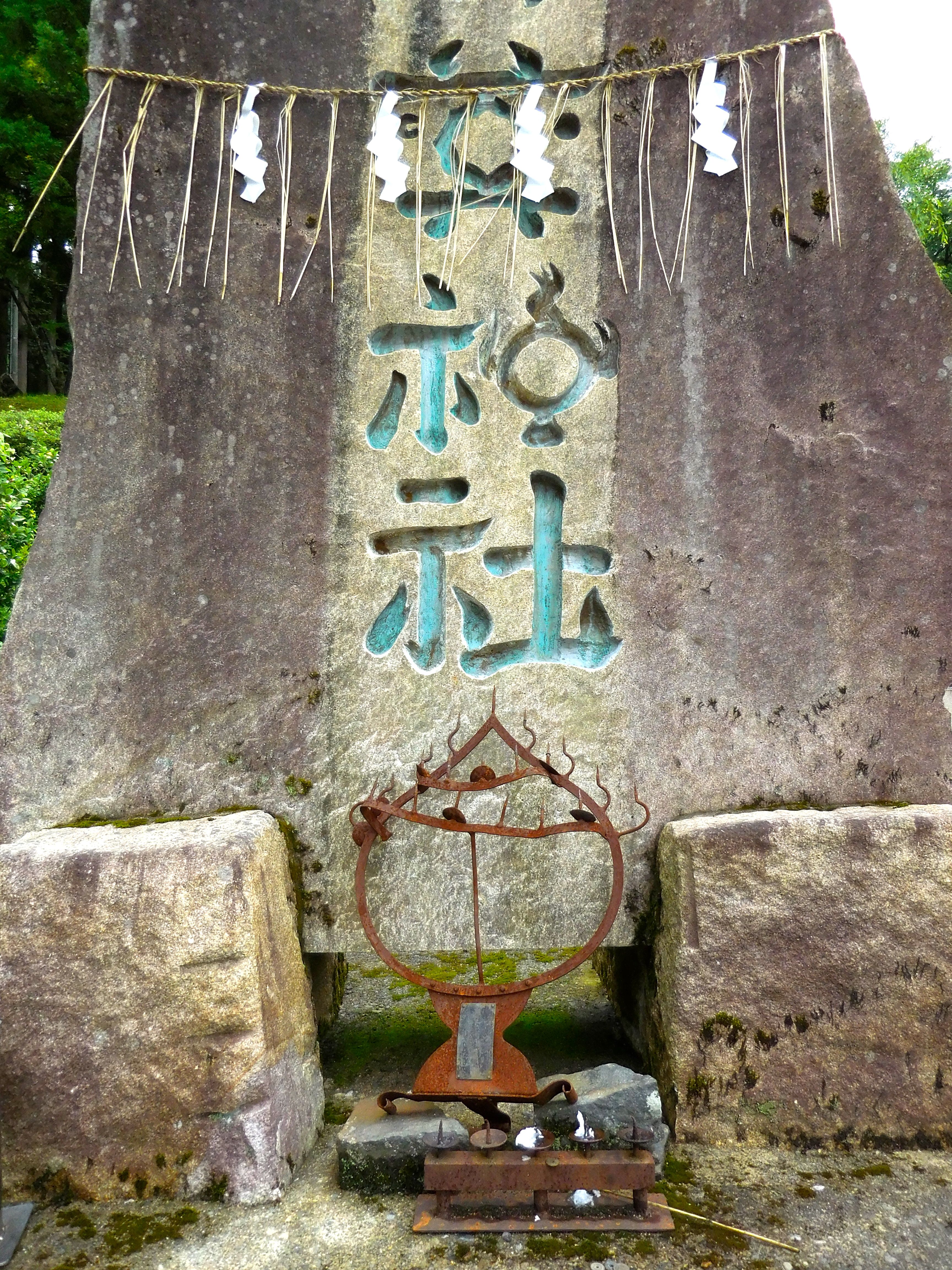
So, as you’re walking down the main drag in Urasa, if you’re not careful, you walk right by the entrance to the temple, the first picture above. If you do start to walk up the stone path, you are cautioned not to walk on the bricks in the center of the walkway, because *those are the ones used by the gods.* (Always good to know; don’t want to stir up trouble when you don’t have to.) The odd candle thing on the right is the symbol that this is the location of the most significant annual event in town, held every March, the Naked Man Festival. Ya just can’t make this stuff up.

Here’s a better shot of the temple entrance…

Proud to be Japanese

Proud to be Japanese

But even the origins of the temple are complicated and fascinating. “It is said that in 807 Sakanoue no Tamuramaro visited this land and for the sake of the peace of the country, he founded the temple of Fukoji.” Ah, the ‘peace of the country.’ A lovely Japanese euphemism, if ever there were one. A little web-crawling suggests that this occurred during the period when the presiding emperor and his minions were trying to consolidate their hold on the island of Honshu and were thereby in the process of pushing back and subduing (conquering? exterminating?) the other tribes that used to live on the desired property. So, a little historical transliteration and we have your basic garden variety Japanese territorial expansion and colonialism, and as we know from American history, a place of worship is often a sign that the invaders are in for the long haul.

Even more interesting is the that the warrior in question, General Sakonoue no Tamuramaro, is known as “The Black Shogun.” While still highly controversial among historians, there is some evidence to suggest that there were people of African heritage all over East Asia during this and earlier periods, and that this particular man is held up as being one of the most famous of them all in Japanese history. (To be clear, this wasn’t included in my tour; I had to find this bit out for myself. For more details see http://www.onyxtruth.com/2014/02/16/afro-samurai/)

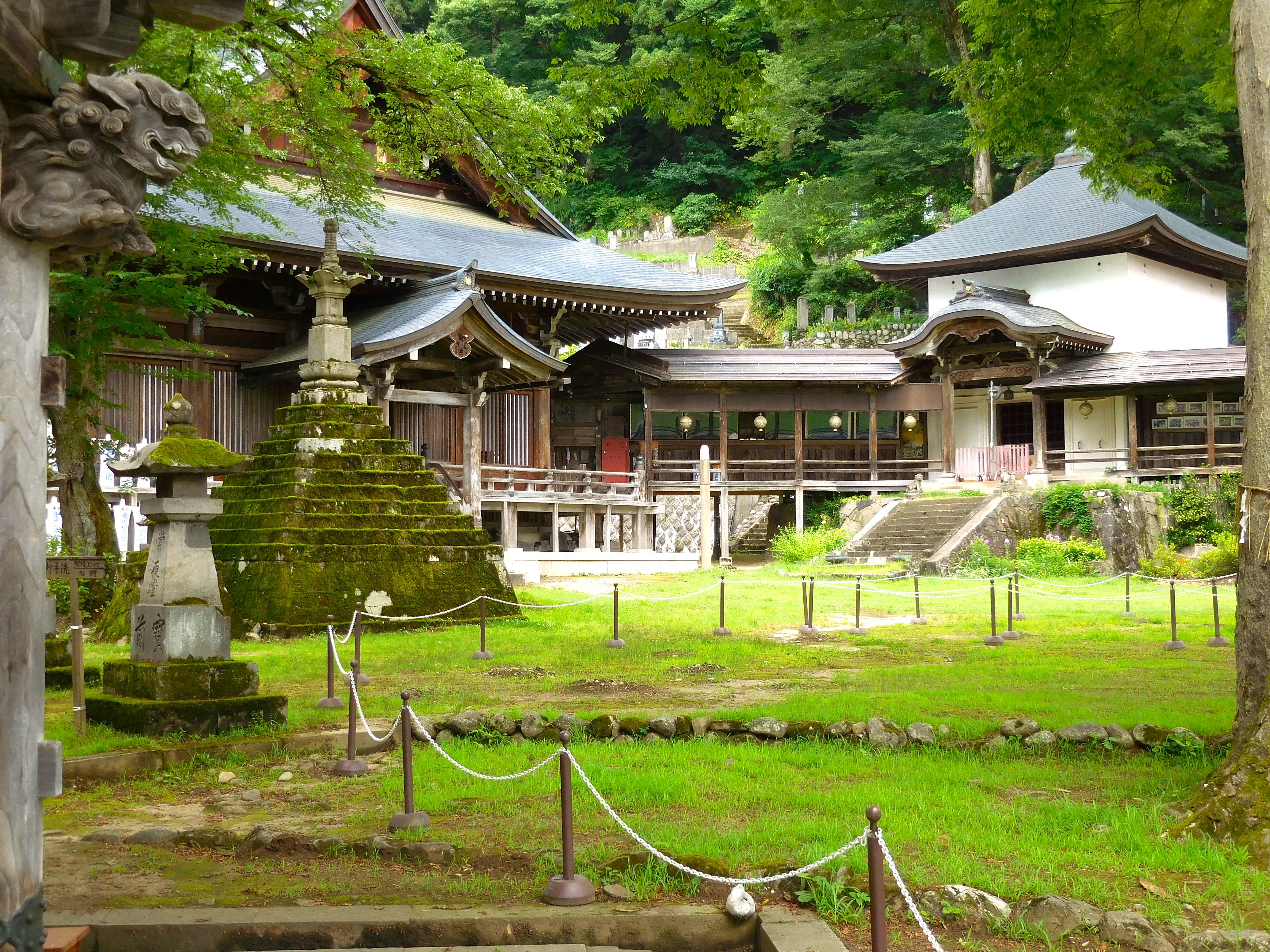
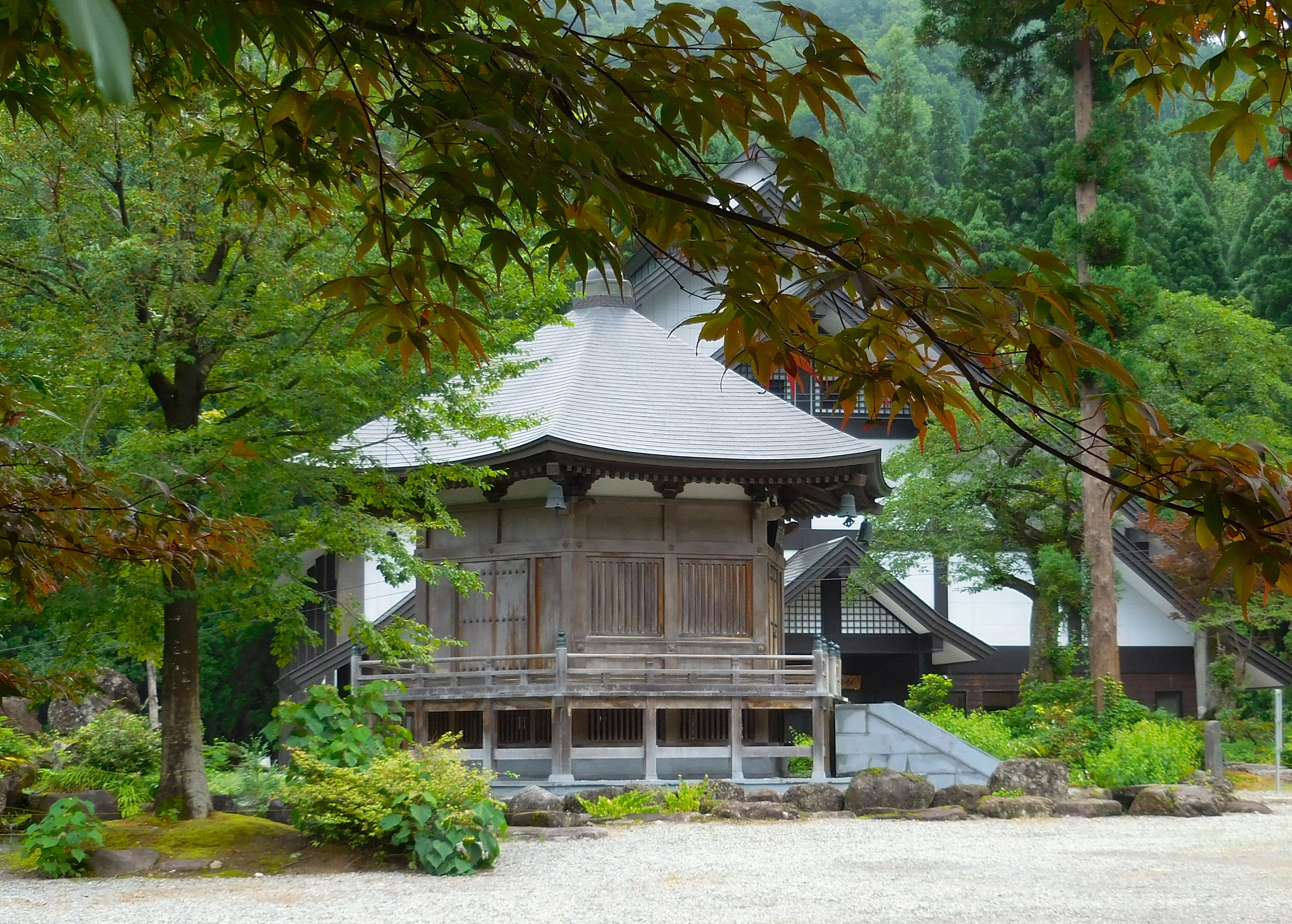
Entering the temple compound, one sees this…

Peace and serenity

Peace and serenity

I was pretty surprised when I laid eyes on this sight. Urasa is nothing much in particular in terms of visual appeal; this complex suggests that there may have been an older and more impressive community at some point in time. There are, a short ways from here which I have not yet seen, ruins of a castle which was in use as late as 1578. I don’t have more information about it, so add it to the mystery pile.

As you may recall from the earlier post that had pictures of the shrine, they are from the Shinto tradition and temples from the Buddhist. Shrines tend to be out in nature, have tori gates, reflect the regional gods, and prayers there tend to be fairly ritualized. Temples tend to be in more “metropolitan” areas and are the places that people tend to come for more day-to-day concerns. (Please don’t hold me to this; there’s probably a good you-tube that can explain it much better.) In any event, this is a temple, and there was even a small gift shop.

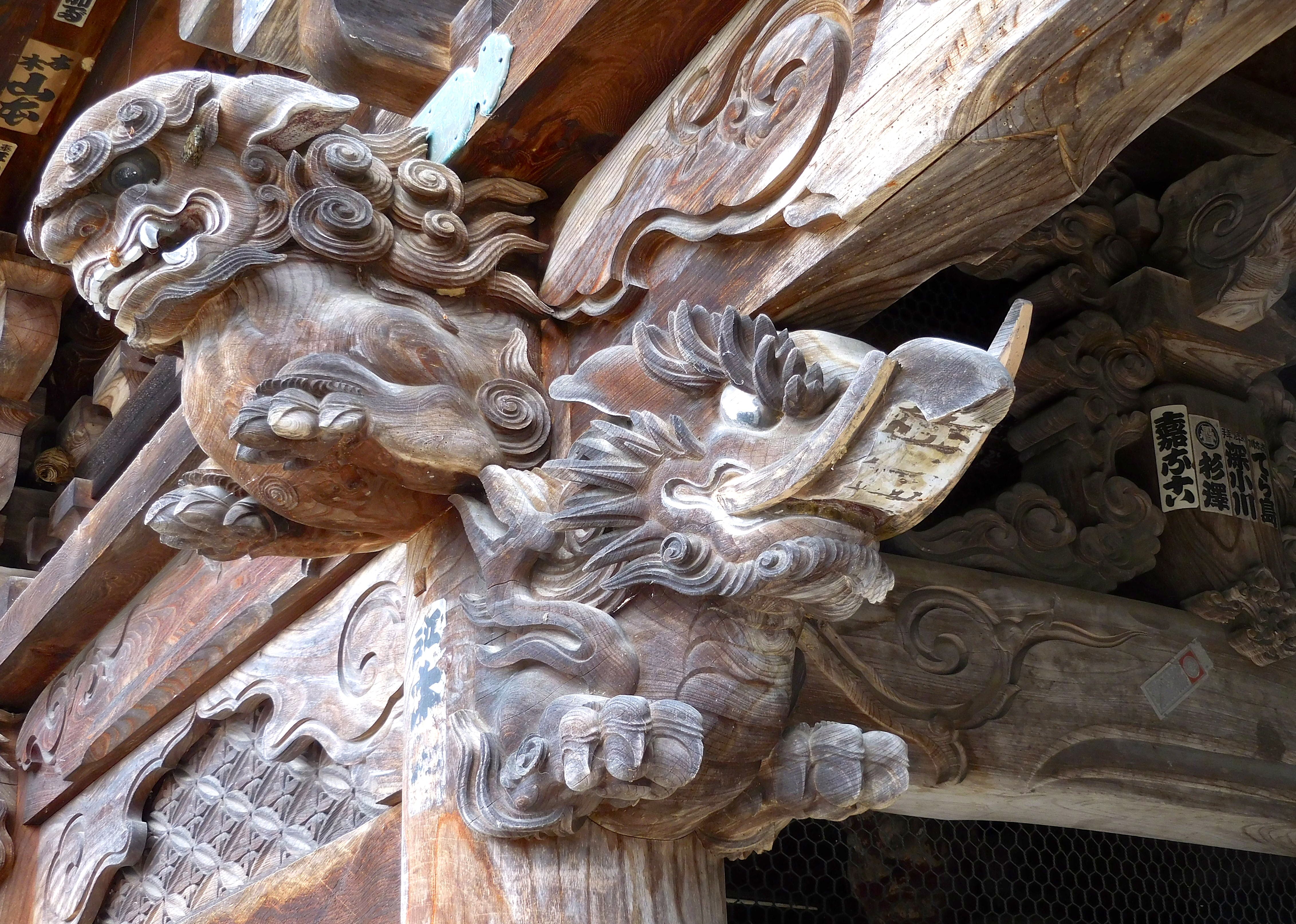
Here’s a close-up of one of the temple carvings, which deserve a day and a blog all to themselves. This looks very Chinese to me, maybe even Tibetan.

Devil be gone

Devil be gone

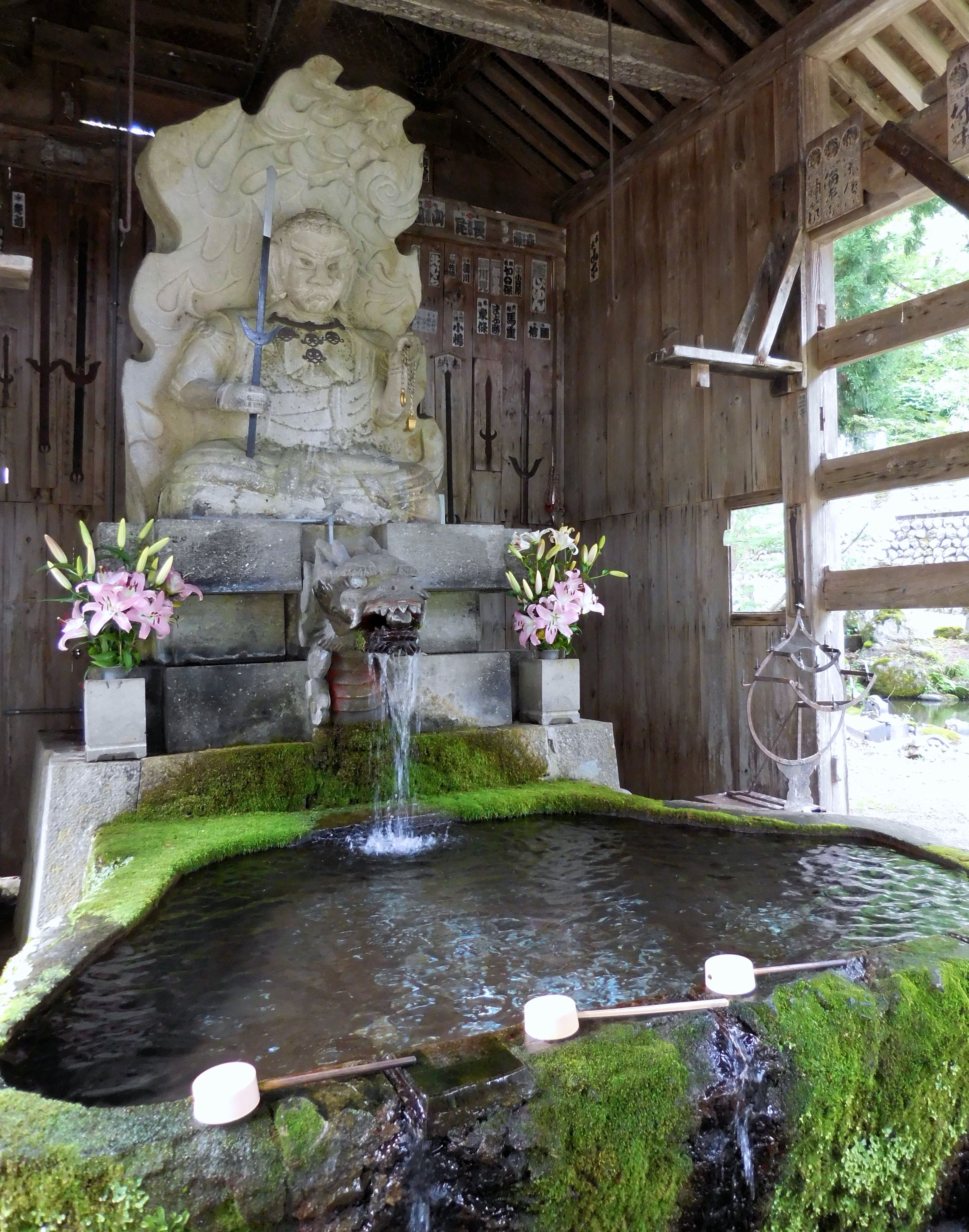
And here is an ancient spring on the temple grounds. This whole area is filled with outpourings of water, some cold for drinking, some hot for bathing. No wonder it’s one of the rice growing capitals of the country.

Cleanliness is next to godliness

Cleanliness is next to godliness

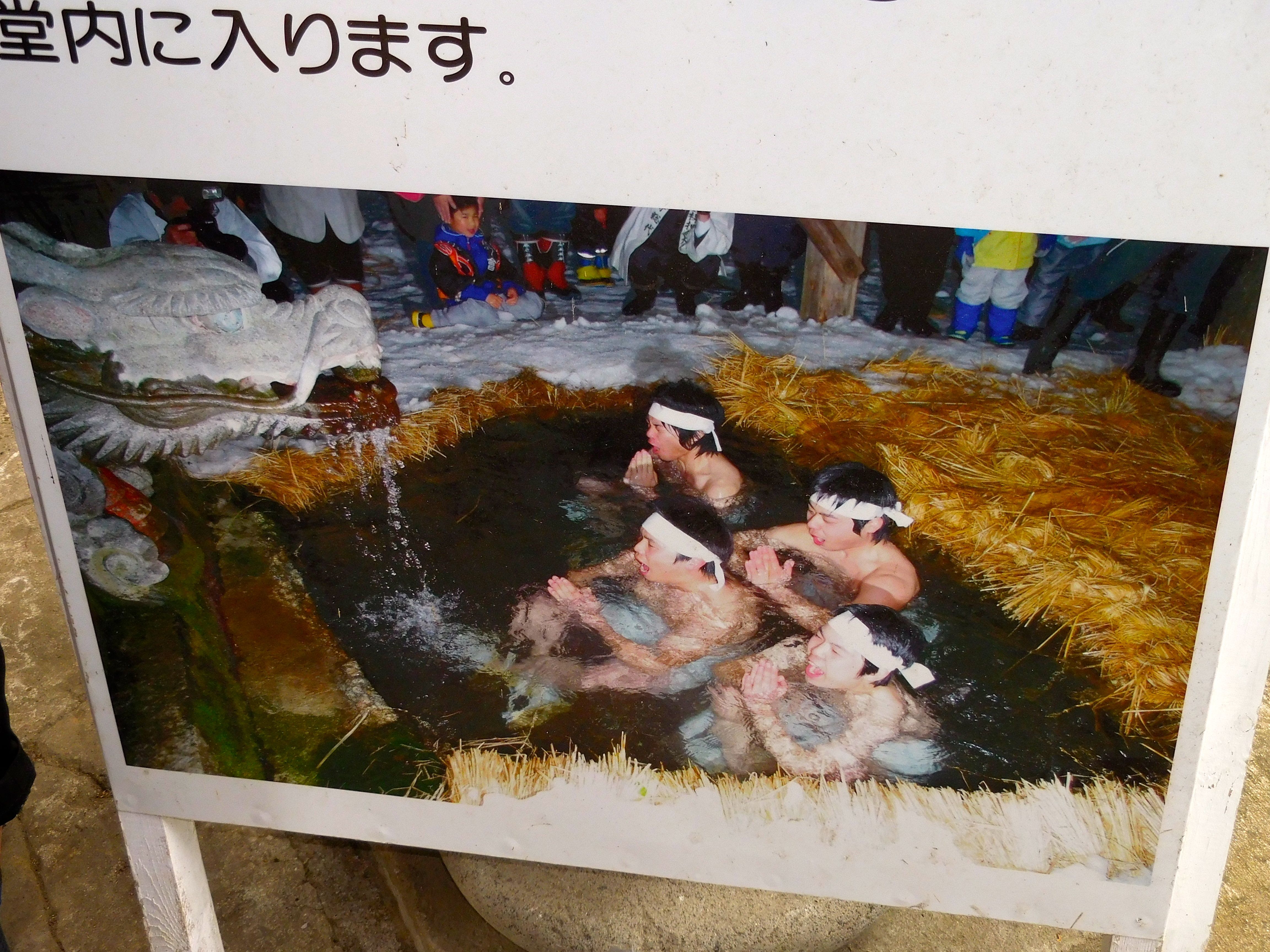
This very spring, transmuted by the chill of winter, becomes a immersion spot for the Urasa Naked Man Festival. Called in Japanese “Hadaka Matsuri,” these festivals, of which there are many, are always held in late February or early March and seek the blessings of a bountiful harvest in the coming year.

Feeling the love

Feeling the love

Here’s a picture of a picture of the self-same spring, this time in the dead of winter with some wild and crazy guys praying, apparently, for prosperity and fertility. This festival dates from about the time of the establishment of the temple, so is around 1200 years old.

In short, the gents,well fortified with sake, of course, dress up in not much other than loin cloths and straw zori slippers (keep in mind the temps are well below zero at this time of the year) and are led down the main street by torch bearers carrying huge candles:

Best and brightest

Best and brightest

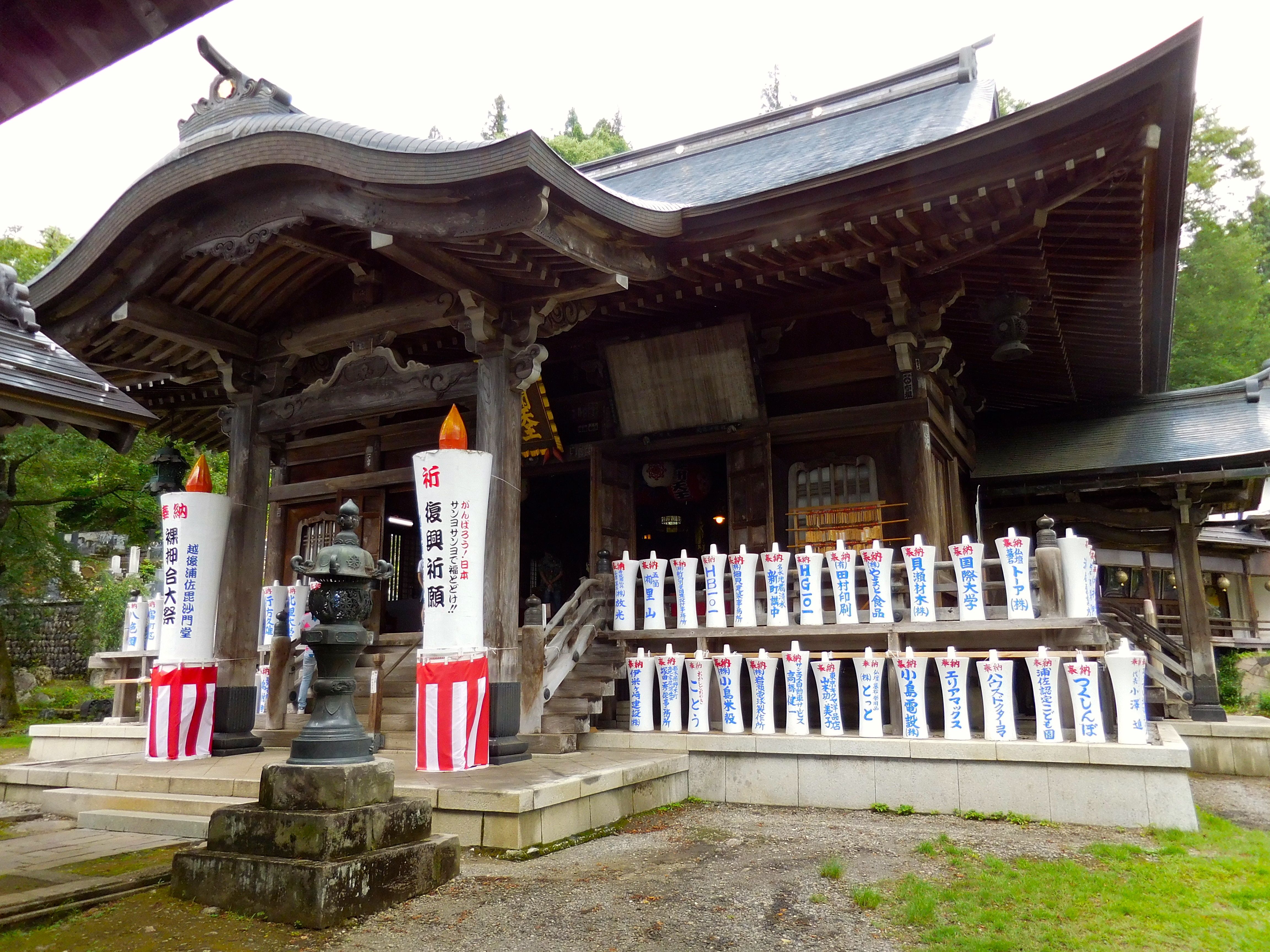
Once in the temple grounds, first they dip in the spring as seen in the shot above, and then they all gather in the main hall seen above to basically push each other around, fighting amongst themselves to get through to the inner sanctum and receive a special blessing from the “good luck keeper.” One of the full-time faculty at the IUJ, actually the man who interviewed me in Toronto, had gone through this ritual and it apparently was quite rough. (No wonder he had a nasty head cold when we met up.)

I must admit, it’s hard for me to picture this neck of the woods in nine feet of snow, freezing cold, and for one brief moment, filled with drunken nearly-naked Japanese men giving it their all under to ensure a good harvest. Almost enough to get me back back here in February. Almost.

So there you have it – my latest discoveries in my micro-travels around rural Japan. I hope to have another blog or two out over the coming long weekend, one on Urasa (it will be short) and a longer one about the nearby city of Nagaoka which I plan to visit tomorrow. Who knows what strange and wonderful things I might discover there? Stay tuned.

Posted in Travel - religious sites | Tagged , | Leave a comment

A day in the life

This post is going to take you through a normal day here at the International University of Japan. What’s actually kind of amazing is that “normal” consists of a bunch of young men and women from many cultures (Japanese, of course, but Chinese, Korean, Thai, Cambodian, Burmese, Lao, Vietnamese, Bangladeshi, Nepalese, Indonesian, Filipino, Kazakh, Krygyz, Uzbek, and various African nations) along with their teachers (from the US, UK, Australia, and Canada) all here in rural Japan working to prepare said young folks for graduate work at a handful of Japanese universities. Suffice it to say humans are sufficiently resilient and flexible to the degree that we have indeed reached a kind of normality here, due in large part to the culture of higher education that rolls itself out pretty uniformly across nations and cultures. But it is all quite remarkable, nonetheless.

So today I’m going to share what I do pretty much five days a week, with slight variations. We have just begun Week 4 out of 8, so midterm assessments are on the docket for this coming weekend and then I’ll start the countdown to departure. This whole adventure is made slightly less enjoyable by the consistent heat and humidity – we’re hovering around 96 degrees F all this week which, although not challenging compared to the Iranian inferno of 154 (with heat index included), is still warm enough to cause some accommodation.

So here’s a beautiful early morning on campus. I usually get up between 5:30 and 6:00 just to enjoy a short walk in the relative cool…

Raven's roost

Raven’s roost

…before returning for a light morning repast. This is the best I’ve been able to do for coffee – individual packets of drip roast. Not bad, but not Caffe Verona.

Java juice

Java juice

Shortly thereafter I head out the door. Here’s the beginning of the walk to my office…

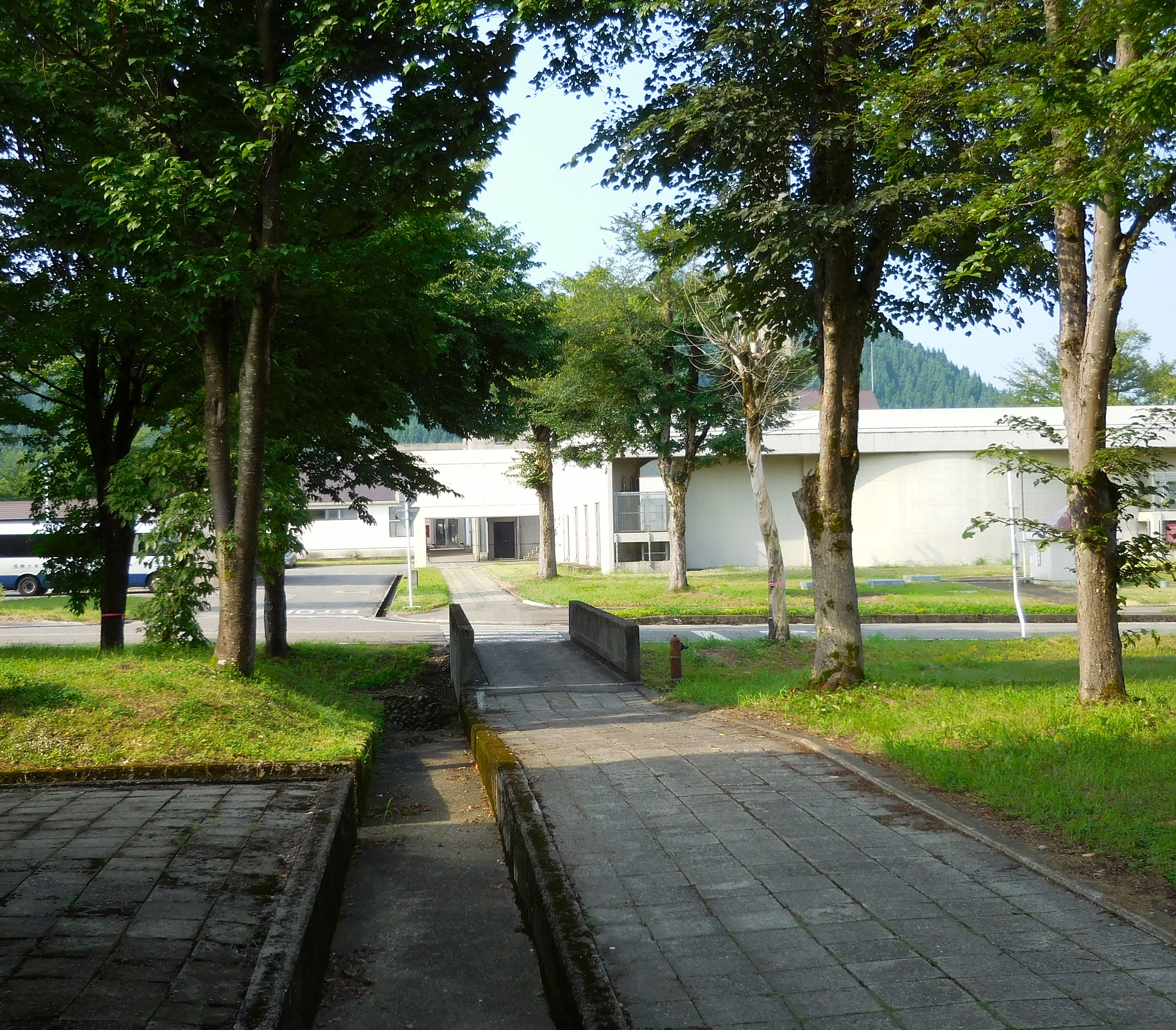
The not-so-yellow brick road

The not-so-yellow brick road

My path runs through as much covered and air-conditioned of a route as I can make it, but this stretch is out in the open and mercifully brief.

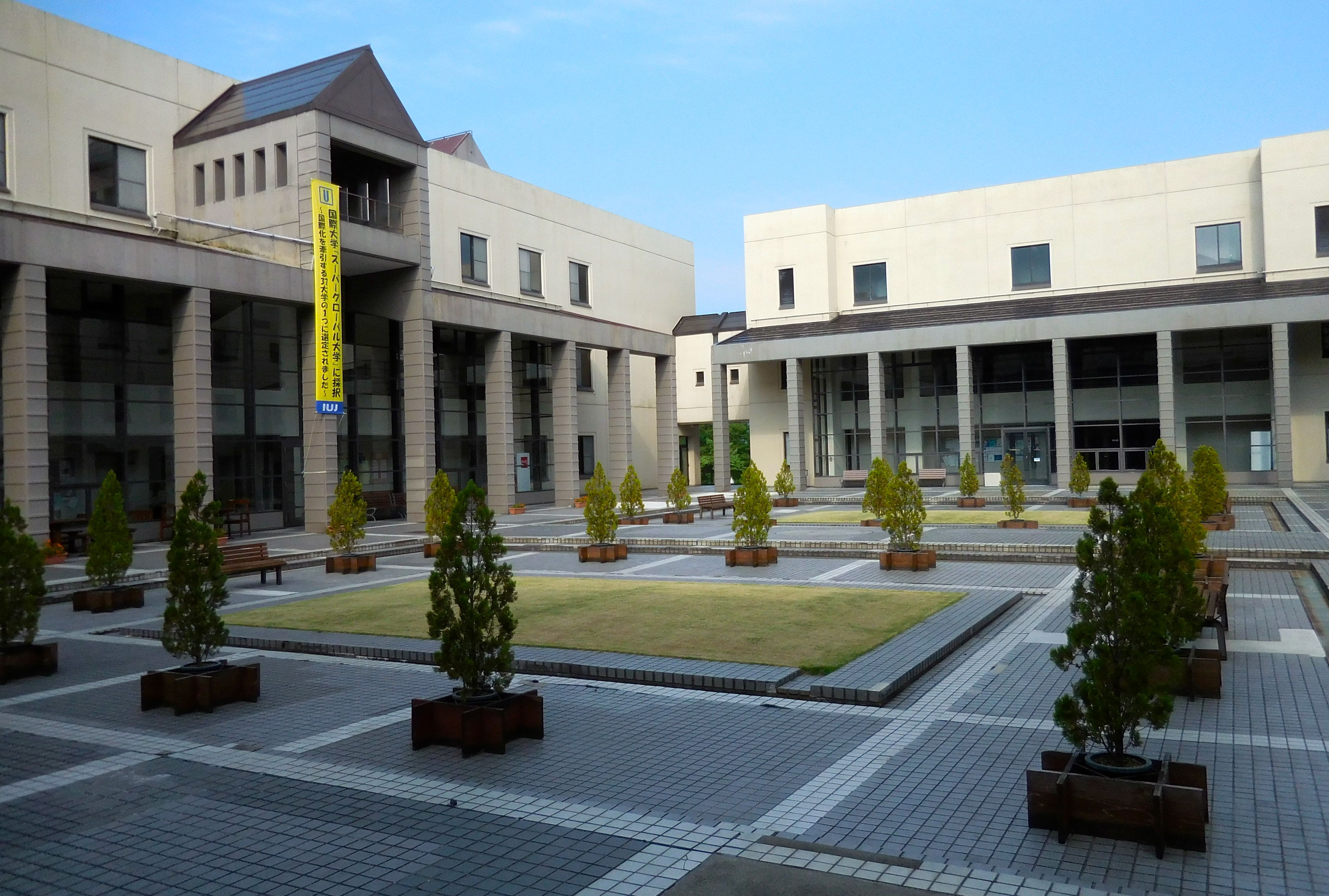
Here’s a inner shot of the main building complex. This buildings have classrooms, study rooms, administration offices, and most of the faculty offices. There are also some small open lounge spaces with vending machines for students.

"The Quad"

“The Quad”

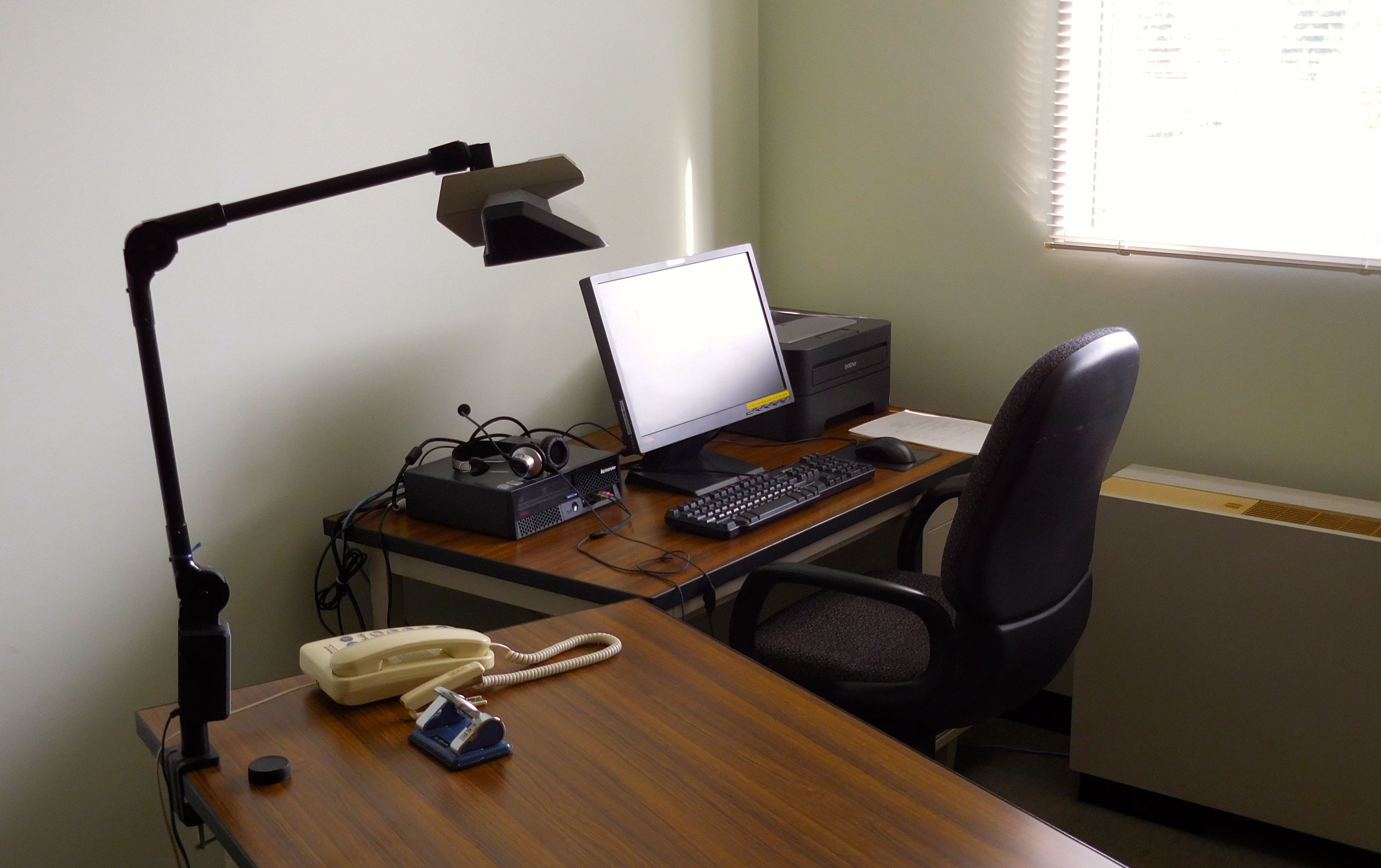
My office is in a smaller building (the “Research Institute”) through the bright green opening in the middle above. Below is a shot of my office, circa 1995, complete with metal desk, filing cabinets, a land line (!!), and a desktop computer, courtesy of Fuji-Xerox, who with a donation too large to be ignored turned the campus from an Apple environment to the Dark Side of Microsoft some years ago:

Windows lives...

Windows lives…

So I work here for about two or three hours every morning, reading the IUJ email, correcting homework, preparing my classes for the day, entering grades, and so forth. I also hold half-hour tutorials with eleven students in here every Thursday.

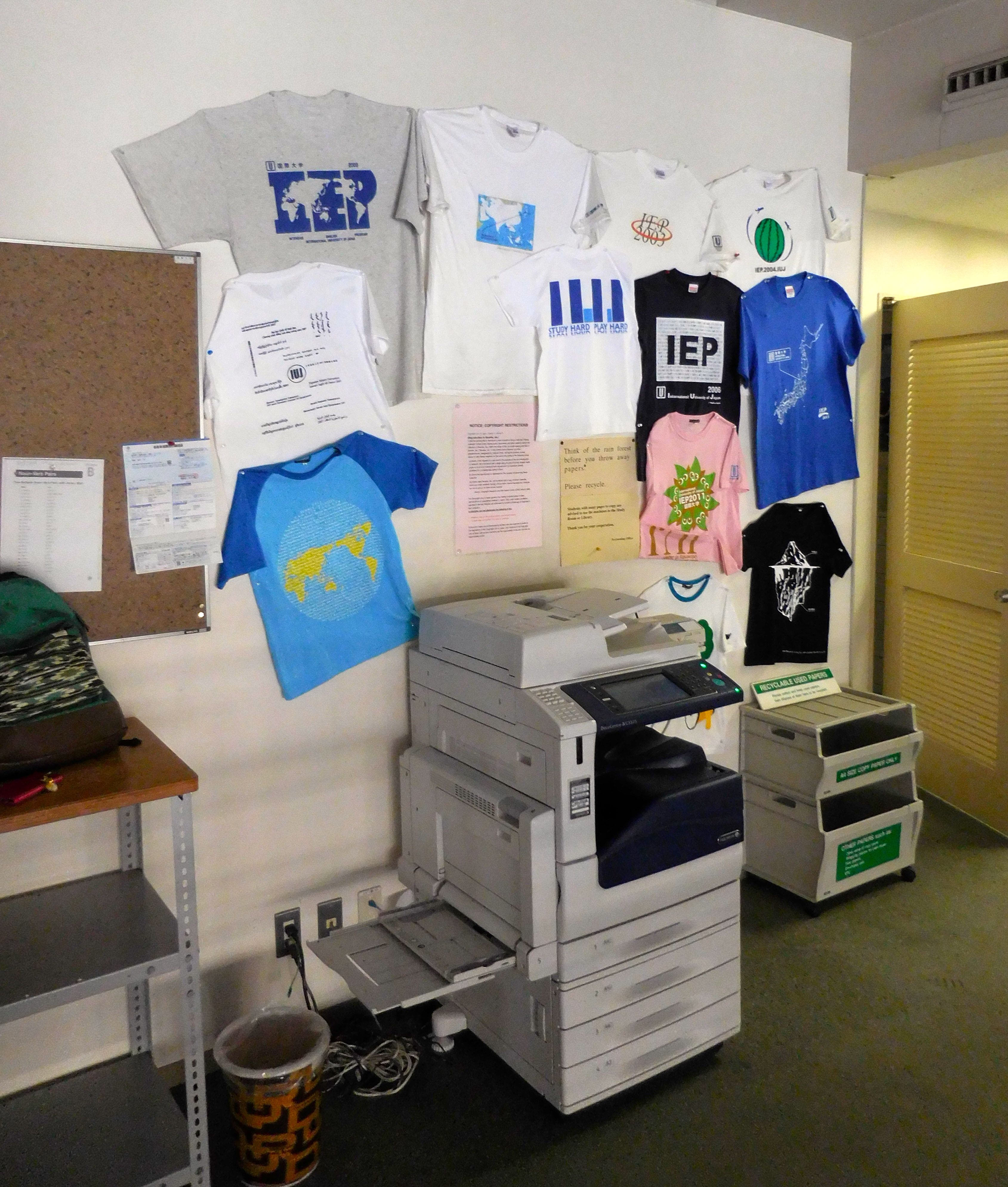
About noon, I go make my photocopies in preparation for classes after lunch. Here’s the gallant copier and the gallery of Recheche du Teeshirts Perdu:

Bet you can't pick just one

Bet you can’t pick just one

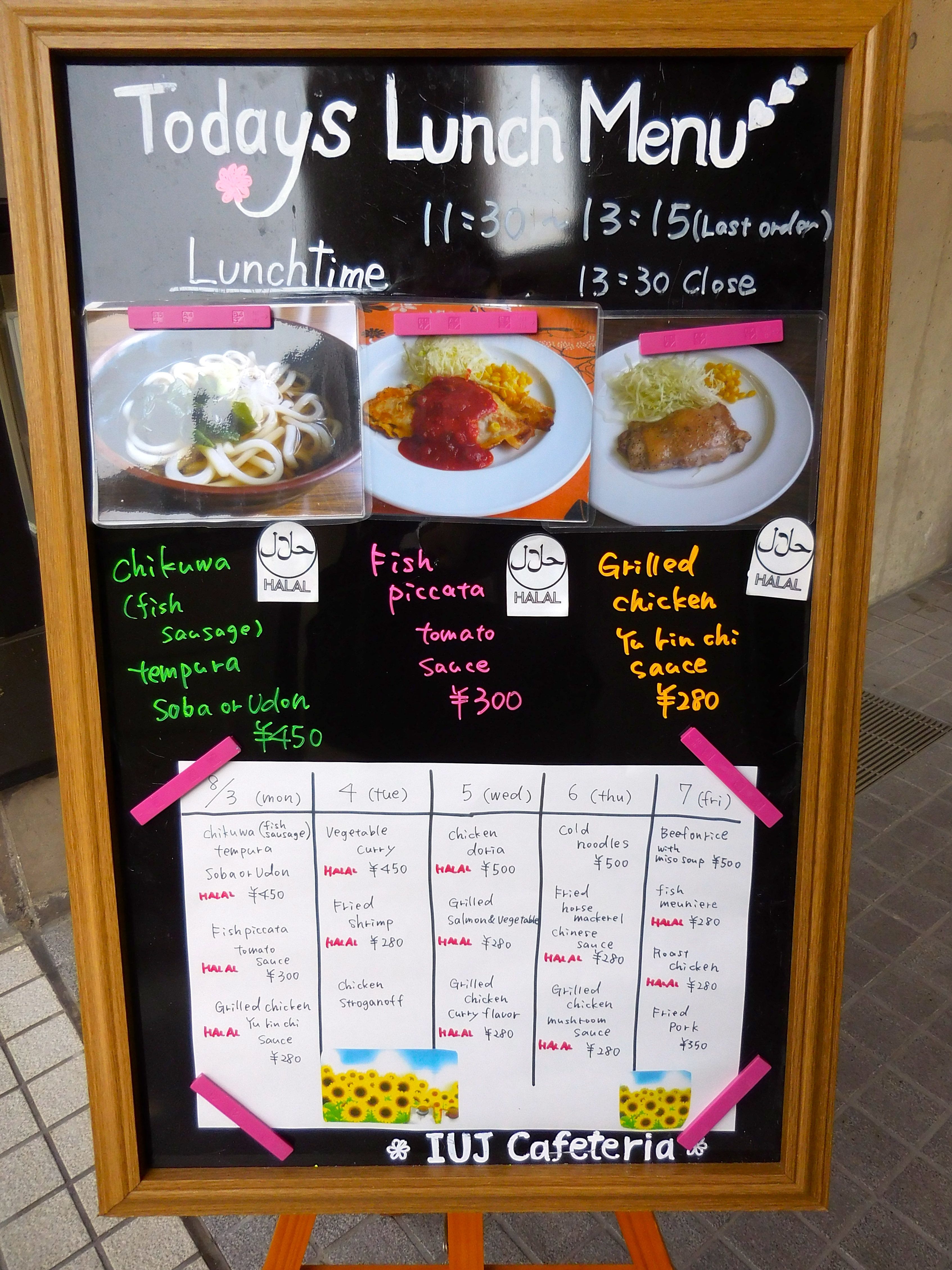
But by now, we’re getting a little peckish, so I head over to the cafe for the social highlight of my day. Here’s Monday’s selection:

Bet you can't pick just one

Bet you can’t pick just one

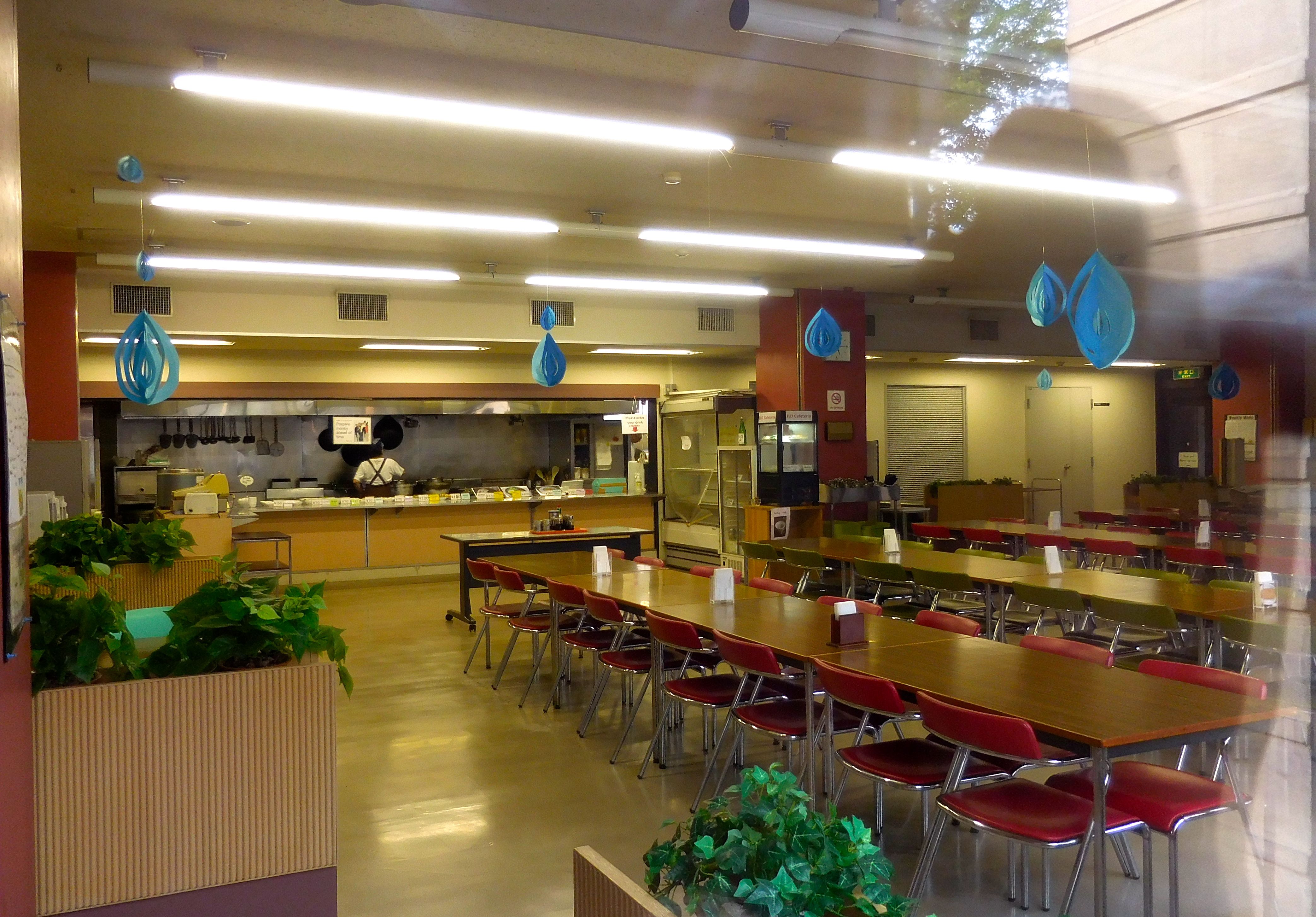
…and a shot of the interior. I was reluctant to shoot with a full house, but you have to imagine the below almost completely filled with 90 or so students, 14 or so faculty, and the occasional administrator or cleaning staff member.

Delights await

Delights await

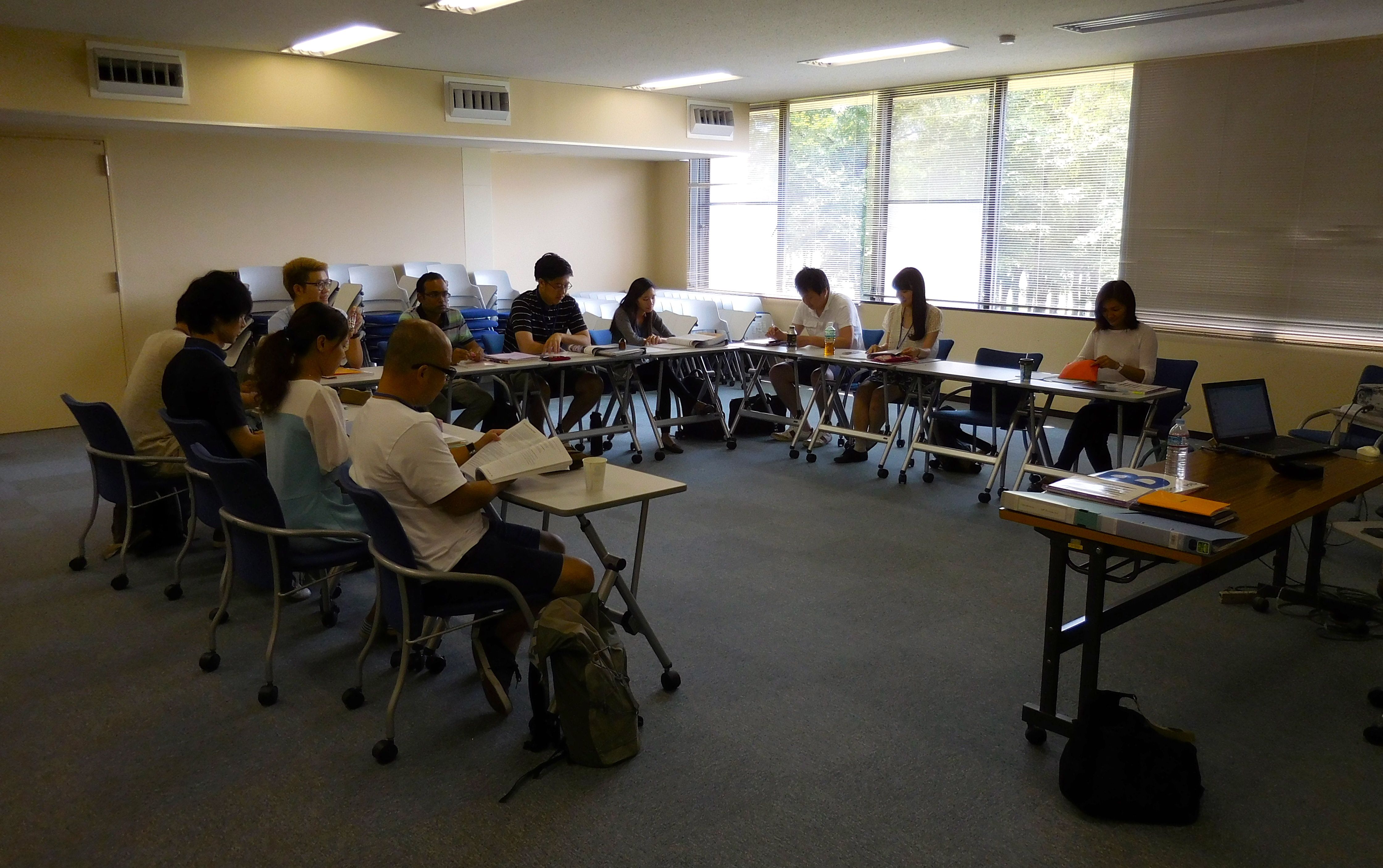
Starting at 1:30, I teach two classes, back to back. Below is a picture of my classroom with my first set of students trying hard to look casual:

Pay no attention to the teacher taking your picture

Pay no attention to the teacher taking your picture

It’s a nice room with a large blackboard and a small white board off camera to the right and a good computer set-up. Not a bad space, and the student tables and chairs move around for pairs and teams work.

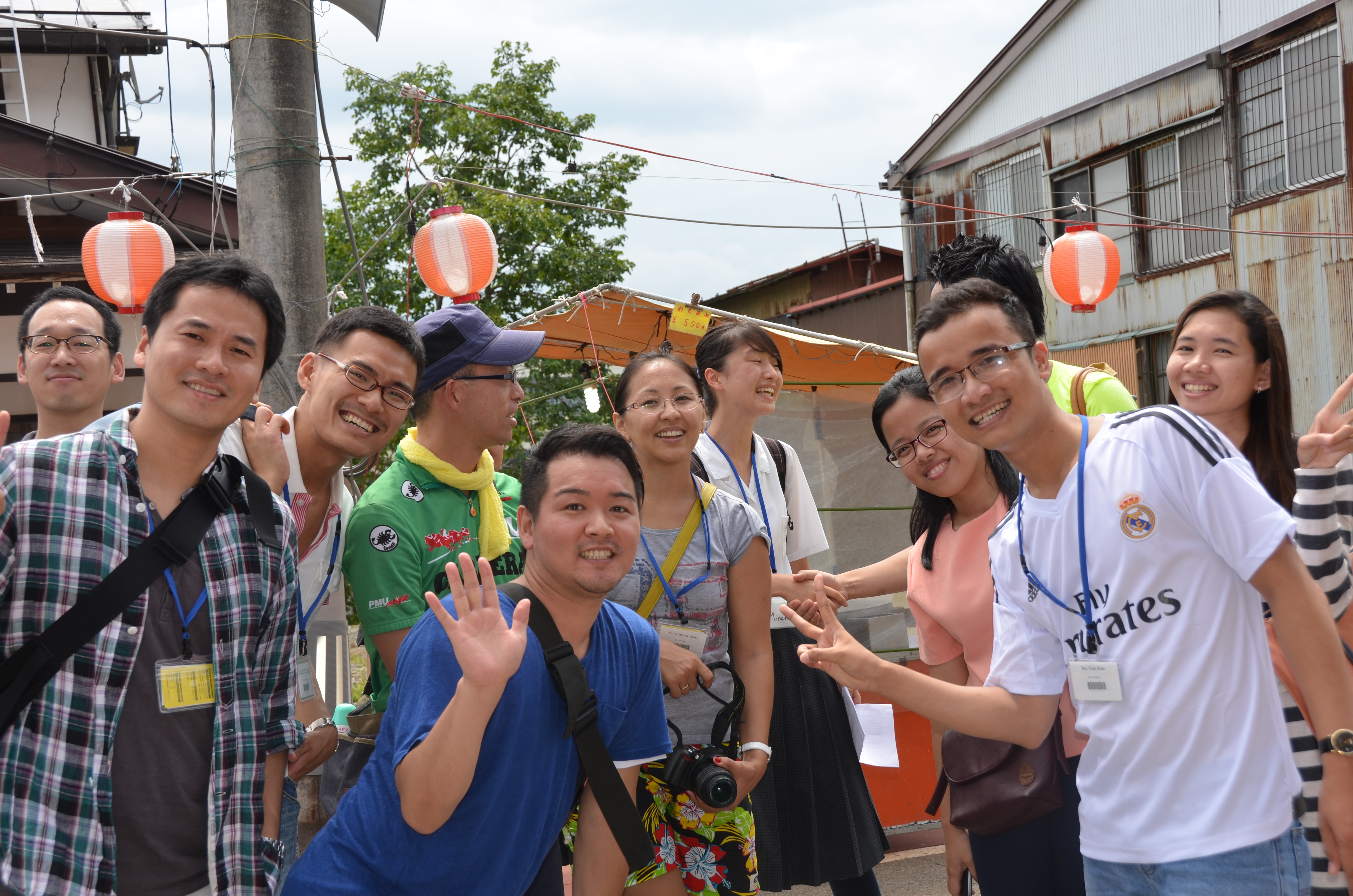
After my two classes are over, either there is some kind of teacher’s meeting, like there was today, or I just head home for a cooling beverage and a little dinner. But before I leave you today, I want to share a picture of a group of the students on one of our outings, the one to the temple I haven’t had a chance to write up. Here’s the real reason I’m here, the motivation for pushing through the heat, the culture shock, the odd food, life in the boonies. In short, it is a pleasure and a privilege to get to know and work with these enchanting young people, if only for the brief moment of this summer. I always fall in love with my students, and this crowd is no exception. If these faces don’t inspire you to stay on your game, nothing will. Cheers!

happy tourists

Posted in Teaching in Japan | Tagged | 1 Comment

Interesting details

There are so many stories to tell here, it’s just a matter of having the time to put them in print. Today I went out provisioning for the coming week, reminding me that I wanted to share a bit more about the shopping ‘experience’ in this part of the world.

While I hate to be critical of cultures not my own, the Japan I have seen so far seems to lurch between the stunningly beautiful (natural wonders, historic sites and artifacts; fine and applied arts), the nondescript (my campus, most of the residential and business buildings) and the truly garish and riveting. My post today will share some of the latter; I have another whole set of photos queued up about a temple visit which will return us to the former. And of course I haven’t lost sight of the fact that I do want to talk about my students here this summer; let me be clear that I have met some truly remarkable young men and women and it has been an honor to share time and thoughts with them.

But back to the show. The grocery store described below in a previous post is part of a large complex of Japanese franchaise stores, among them a electronics outlet, a clothing store, a drug store, a set of little shops, and the Daiso, or 100-yen store, similar to the Dollar Stores in the US. (100 yen equals 80 cents.) Unlike the Dollar Stores, many of the items in Daiso are quite high quality and useful; today however I’ll focus on some of the delightful oddities I have found.

First, a look at the interior itself. It’s a bit of an overload; one has to walk around for a bit to get oriented:

Bargains galore

Bargains galore

We’ll start with something not too out of the ordinary; I-phone covers. These are in traditional Japanese motifs, and frankly, if I had an I-phone, I would buy one, just because I really like these:

Smile and say

Smile and say “Sakura!”

Next we move on to an item that has interesting design features, but frankly I’m not sure what the utility is. Soap dish? Paperweight? Large doll house furniture? They stand about five inches in height.

Ready to receive...

Ready to receive…

Japan, as you’ve seen, is really good in the admonitions and instructions department. Here’s the DIY section, complete with warnings some of which I can’t quite puzzle out…

Verboten, verboten, verboten.

Verboten, verboten, verboten.

Now we start tip-toeing into the “okay, I’ve really never even imagined this before” department. I’m captivated by the idea of colored Q-tips…but black?

Industrial strength?

Industrial strength

I laughed out loud when I saw this following item, and yes, I had to buy one – for 100 yen you can’t go wrong and there might be a moment where this comes in very very handy:

When ya gotta go...

When ya gotta go…

Finally, standing in the check-out line, you might be suddenly very thirsty and reach for one of these refreshing beverages:

Belongs in the Corn Palace

Belong in the Corn Palace

Once loaded up with all the goodies you never knew you couldn’t live without, it’s time to explore the rest of the complex. The next stops are familiar favorites, just with a twist. First, a photo shop that demonstrates a kind of marketing overkill that I don’t quite understand:

Step right up

Step right up

Here’s a local restaurant, ready to serve you whatever you desire. The unfurled blue banners over the front entrance symbolize that the establishment is open and ready for business:

Hangry?

Hangry?

Next a couple American brands slightly reconfigured for the local market:

31 flavors here includes green tea

31 flavors here include green tea

…and I’m particularly charmed by how the Colonel displays his cross-culture sensitivities:

Samuri Sam

Still just as unhealthy

But every once in a while, there’s just a reminder that “you aren’t in Kansas anymore.” Most of us are familiar with how Asian material culture uses English as decoration, often incomprehensible for native speakers. It will take a while, however, for anything to meet and exceed this name for a set of second-hand shops:

Bet you can't stay away

You’re welcome

So just a peek at my weekly ritual. Let me know if you need me to pick up something you now know you can live without.

Posted in Travel - shopping | Tagged , | 3 Comments

Domestic details – especially for Sally

Apparently in my efforts to convey the relative remoteness of my location in Japan, I may have left the erroneous impression that I have traveled back in time to the 19th century, complete with outhouses and water pumped in the front yard. (No, that was Georgia.) Thankfully, this region in general and the university in particular have all the mod cons, although perhaps not to the level that we have grown used to in the States. One of my readers has asked for more details about my kitchen, and I am so charmed that she did that I am sitting right down to share my modest digs with her and you.

I am living in a faculty residence, designed to hold a small family. It has two floors. On the top floor is a large open room which has been configured for me with a small kitchen on the left (you’re about to see it all), a large space in the middle which holds a small table against the wall with two chairs, and on the right a single bed and TV on a stand as well as a bookcase. No sofa, reading chair/s, no place to sit were there ever to be a guest. On the same level is a bedroom which for some reason I cannot use for sleeping (no furniture) but which may be used, according to the sign, for “storage” and there is a closet with a raised floor where my clothes reside. Completing the layout on this level is a small toilet, just the toilet, nothing else.

Downstairs, where one enters, one finds in the entryway a large useful cabinet that stores the shoes of the household – one does not wear them inside – and some cleaning supplies in addition to blue plastic helmet and gardening gloves that is standard issue but never explained earthquake preparedness kit, apparently. There is also the “large” bathroom containing three little rooms. One holds the tub/shower, one the toilet, and one the sink and washer and dryer. It is very tight, but workable. There are also two additional rooms, one of which is locked summarily and the other has a sign on the door handle which reads that it is to be entered only in case of emergency. Of course I peeked in and it’s another empty small bedroom. Finally there is a steep narrow hairpin staircase with eleven steps that connects the two.

So here’s a look at my kitchen:

It's all small but it works

It’s all small but it works

The pots and pans are in the cupboards you see below the sink. Food stuffs are above the sink. A closeup of my gas stove, which works beautifully:

Not too hot to handle

Not too hot to handle

Turning just slightly to the right, one finds my refrigerator. The freezer section is small, and the ice maker consists of two small trays containing leetle blocks of ice. They’re turned manually into the small container below and then you can make two more. (Notice the whole operation in the upper left of the photo below.) Wilson would never approve.

No freezer burn here

No freezer burn here

Well, in for a penny, in for a pound. Here’s the rest of the ‘fridge:

Afternoon delights

Afternoon delights

Cold fruit, cold yogurt, cold water, cold salads. You may notice a theme.

Another quarter turn and you espy the remainder of the kitchen electronic machinery – a microwave and a toaster oven:

Lonely appliances

Lonely unused appliances

…and finally to the right of that the cabinet where plates, cups, glasses, and silverware have been thoughtfully provided:

Why settings for four when there are only two chairs?

Why settings for four when there are only two chairs?

You’ll notice some additional features about the place in these photos. The walls are white, there is nothing hung on them, the flooring is the identical wood-looking plastic covering that I had in Batumi, and the drapes are all a modest light green polyester that thankfully blocks the light fairly well since dawn comes just around 4:00 am here. Lighting is all fluorescent and overhead, with the sole exception of the fluorescent lamp beside my bed.

The final question from my reader was what food or seasonings do I miss. Great question. Real coffee with half-and-half; Maine blueberries; avocados; breakfast in general that’s not yogurt, fresh herbs, and, because Ted makes the best ones in the world and I had two this spring, BLTs with heirloom tomatoes on sourdough bread. Oh, and T&Ts.

Hope this helps – I’ll do a little more sharing about the physical environment where I’m teaching in a later post. Time to get back to correcting.

Posted in Travel - accommodations | Tagged | 3 Comments

A trip to Yuzawa

Well, things are going to get a little out of chronological sequence, but I hope you don’t mind. Yesterday two colleagues and I decided to go day-tripping to the nearby alpine village of Yuzawa, and we had a ball poking around town. Known for its tremendous snowfall in the winter, this hamlet and its neighbors throughout the mountains are seasonally packed with folks skiing and visiting the hot spring baths, known as onsen.

Skiing in Japan? How the heck did that come about? According to Wiki, “In 1902 the Norwegian consul in Kobe, Peter Ottesen, imported ski equipment and introduced skiing to the Japanese, motivated by the death of Japanese soldiers during snow storms.” Who knew? Like golf and baseball, skiing took off like a house afire in Japan, and is now a very widespread winter sport, hence the popularity of this village and other places like Nagano, site of the 1998 Winter Olympics, not far away.

This is also the location made famous by Nobel Prize short story and novelist Yasunari Kawabata’s magnum opus, “The Snow Country,” the love story of an urban dilettante writer from Tokyo and a local onsen geisha. (You just know these things aren’t going to end well.) It was Japan’s first Nobel Prize for literature (1968) and he is still widely regarded as one of the country’s best known authors.

But being that we were visiting in July, we were spared all the harsh winter weather to say nothing of the melancholy Japanese angst. Instead, the moment we left the train station (more about that in a moment) we were greeted with a helpful sign of all Yuzawa had to offer:

Lots to see and do

Lots to see and do

…so we turned right down the main drag to see what we could find…

Sort of like North Conway

Sort of like North Conway

You can see in the photo above one of my main beefs about Japan, and that is the narrowness of sidewalks. The ones shown here are actually relatively good size. On the plus side, the roads are narrow, the cars are narrow, and the speed limits are very low. Just be sure you remember it’s a right-hand drive country, so LOOK RIGHT (like in England) when you cross the street.

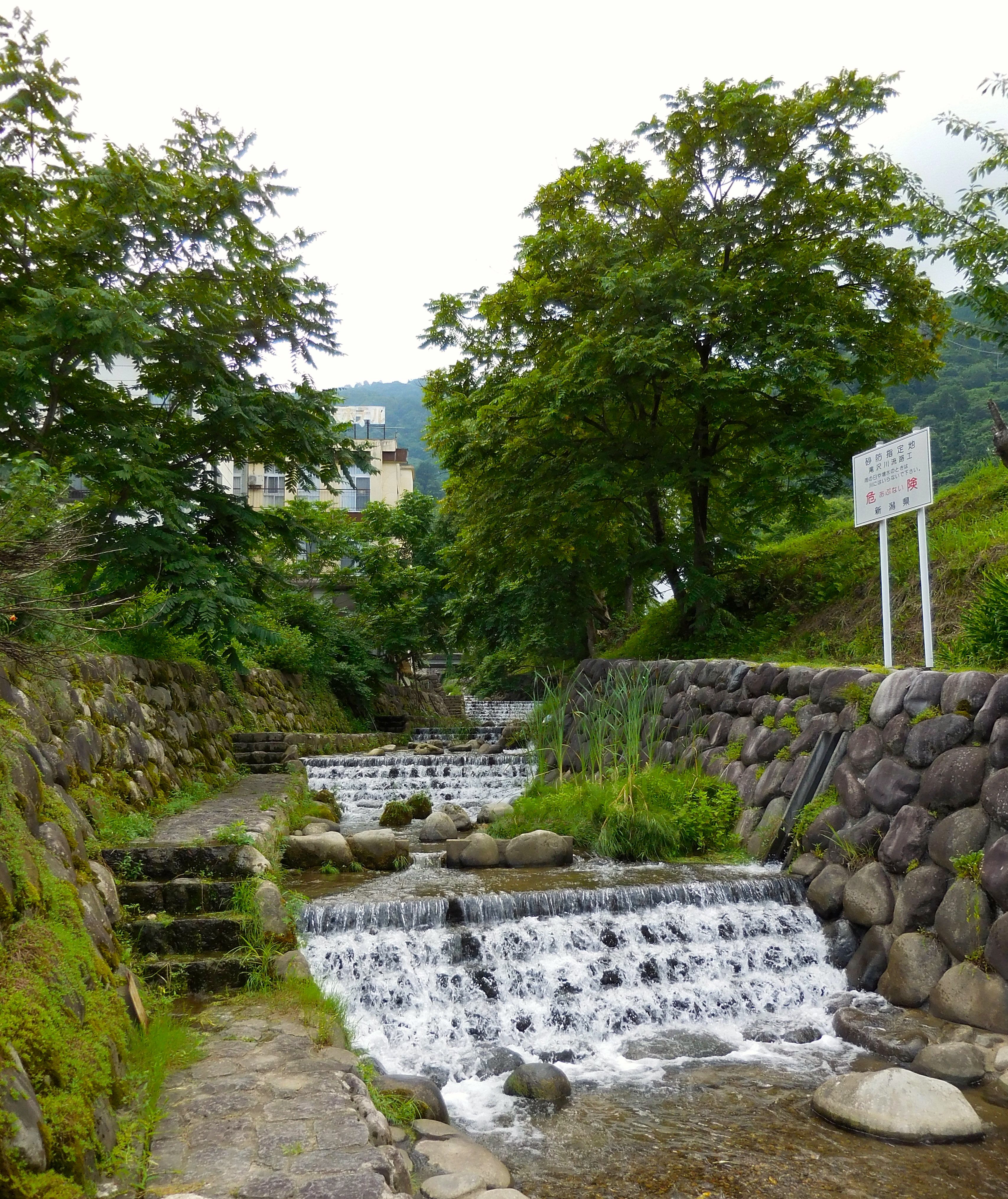
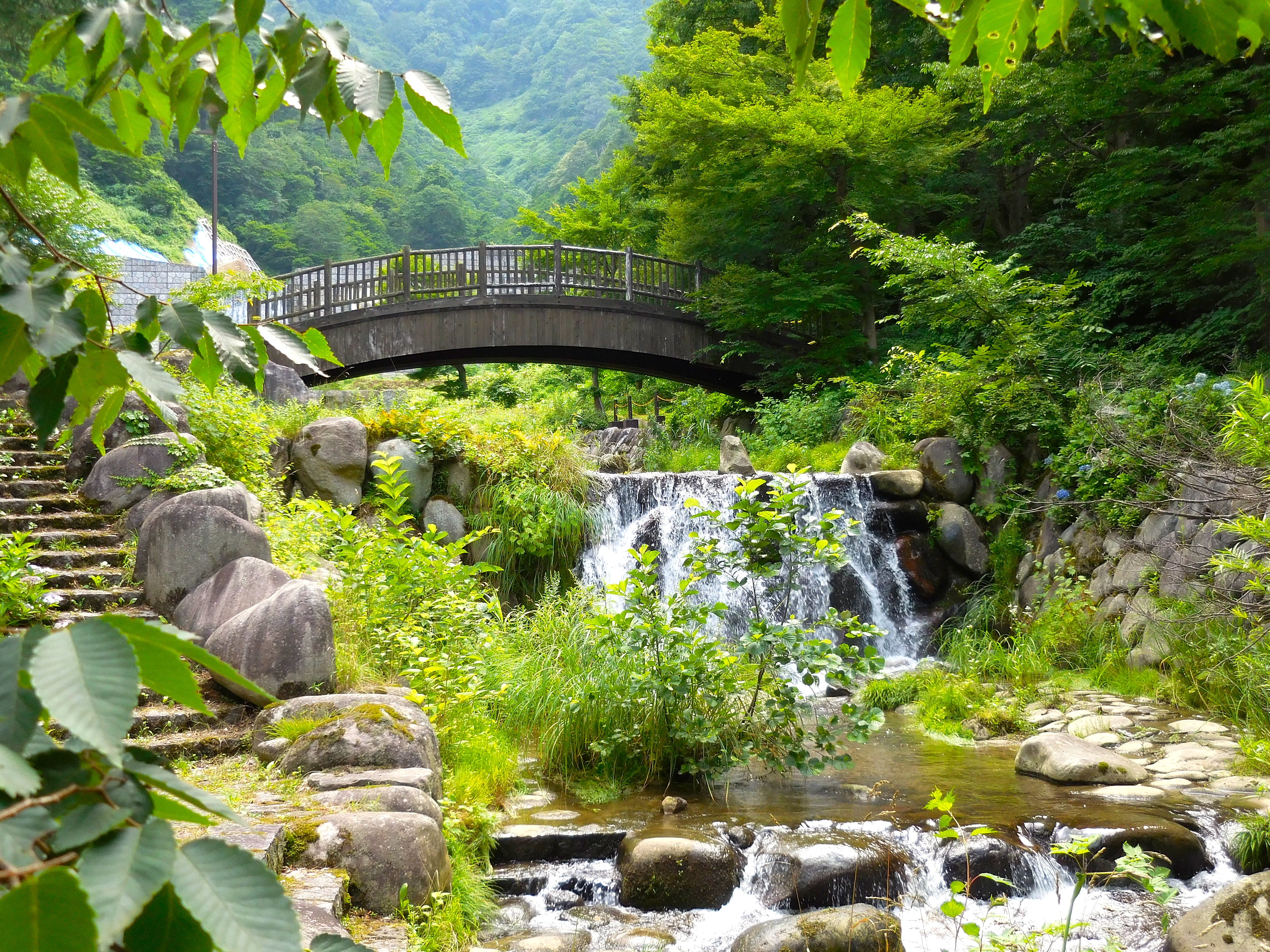
Not far along, we saw the turnoff for the waterfalls, and on the standard hot afternoon, that sounded like a seriously cool idea, so up we went.

Steps and stones didn't break my bones this day

Steps and stones didn’t break my bones this day

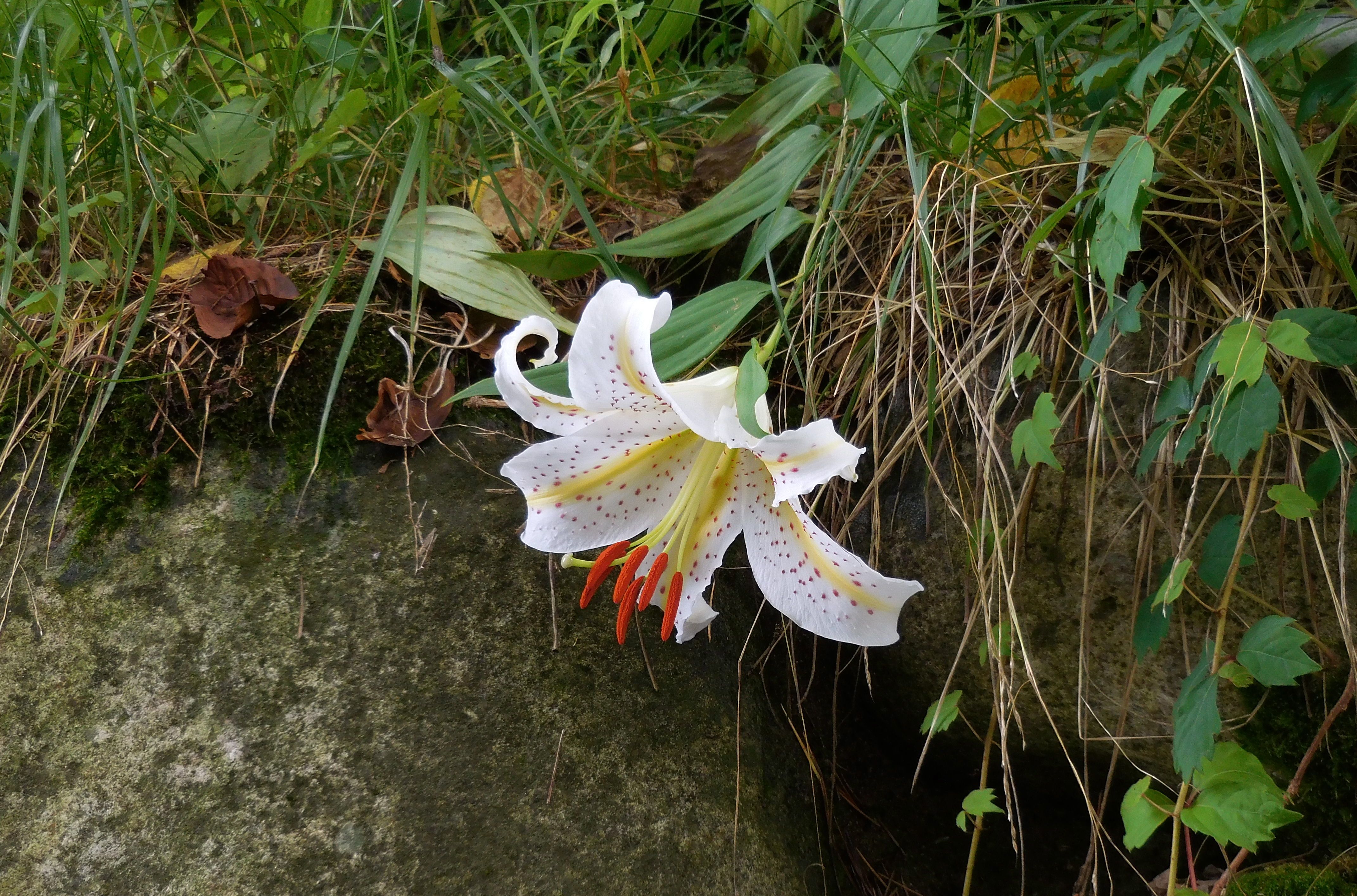
As in many hydro-environments, this mountain stream has been completed reconfigured in service of The Greater Good. Nonetheless, it was a lovely meandering path under shady trees that revealed a beautiful blue butterfly (wouldn’t stand still to be photographed) and this lovely wild mountain lily:

Sweet scents

Sweet scents

As in many cases, there was some construction near the top (see blue tarp on upper left below) so I don’t think we saw the actual waterfall, but here’s our apex:

waterfall 2

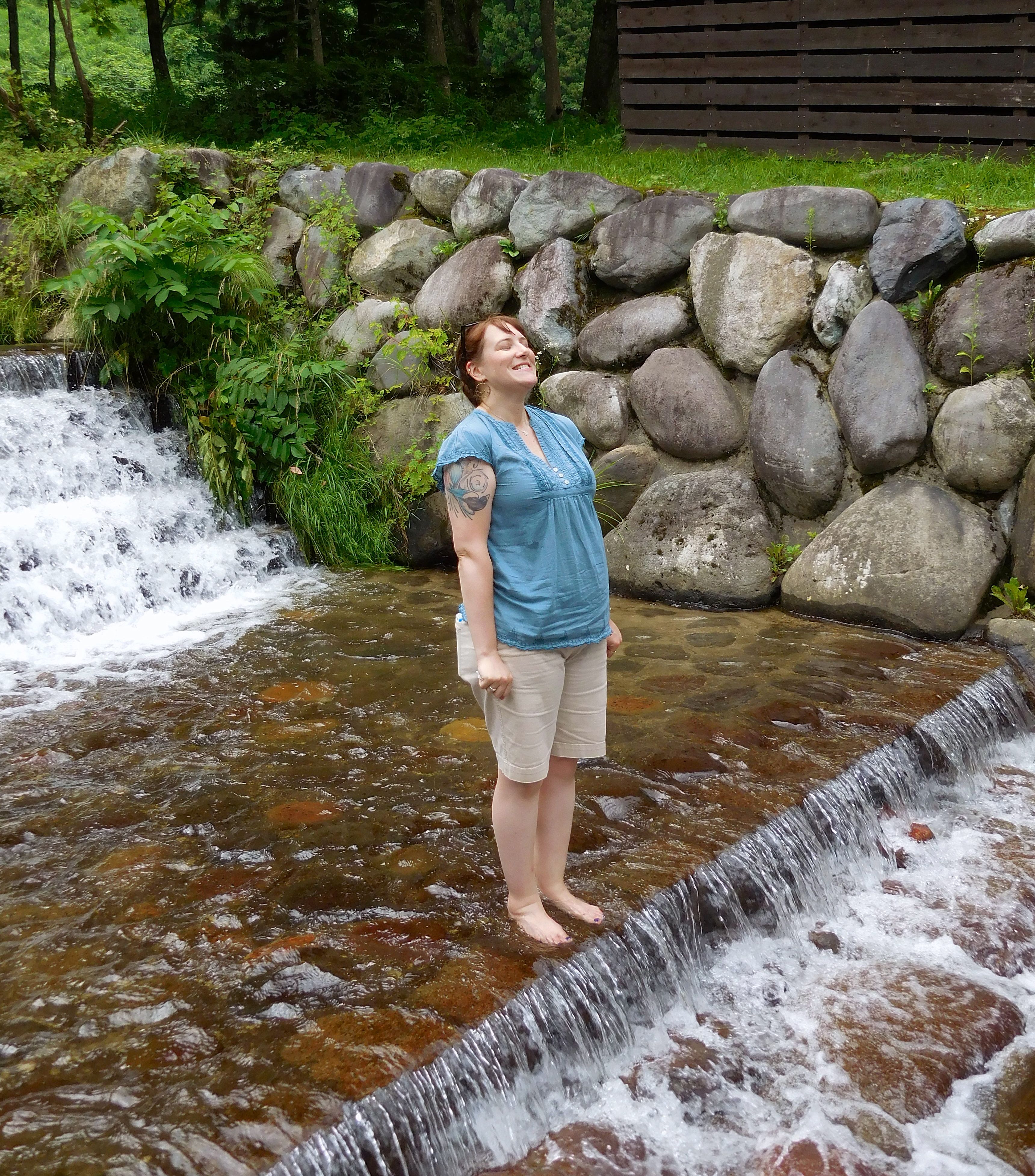
…so about this point we headed down. Near the bottom, my colleague K had the truly outstanding idea of using the stream to let off steam, as it were. Here’s a happy camper:

Ahhhhhhh!

Ahhhhhhh!

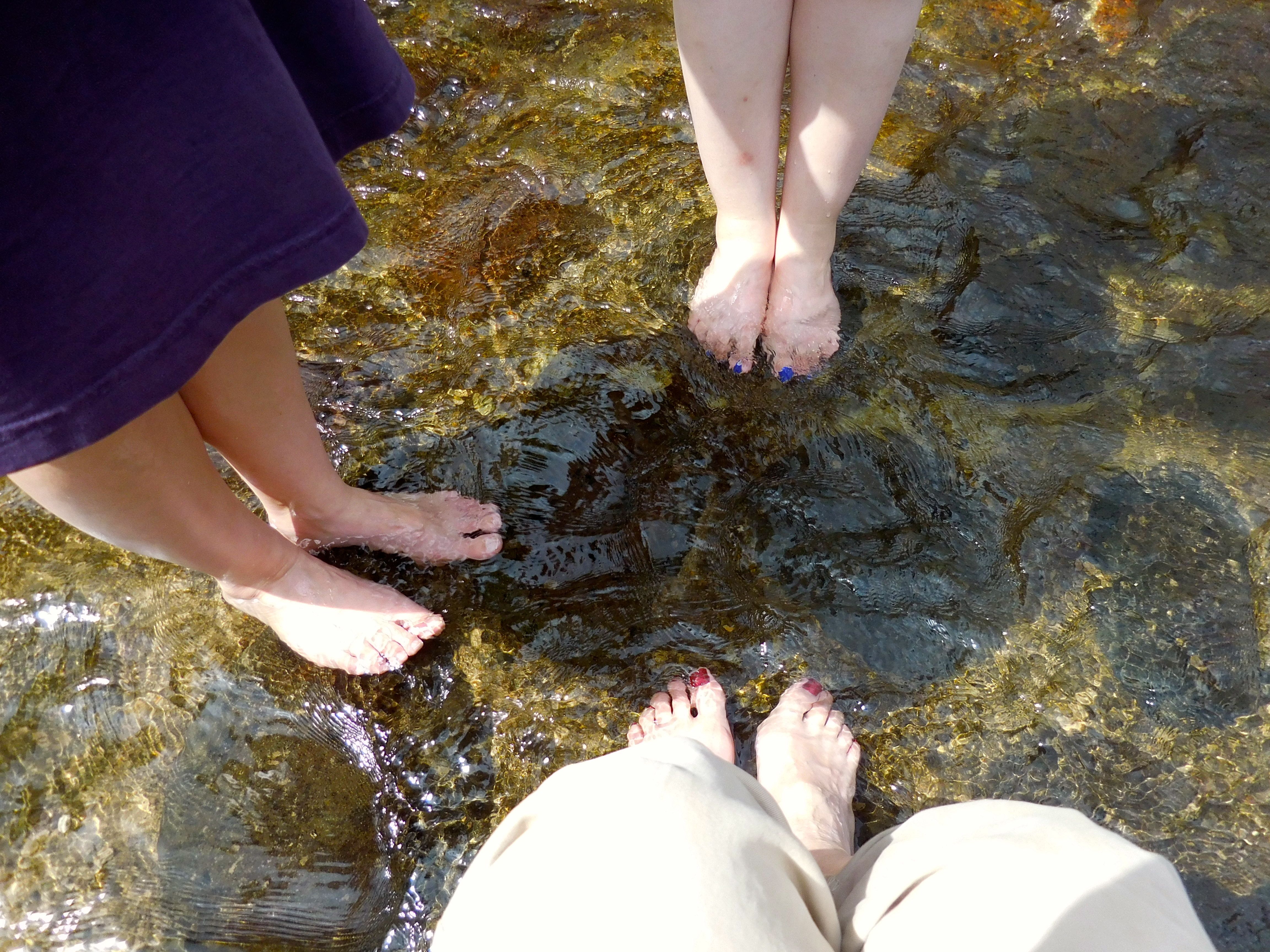
Inspired by her daring we soon all followed suit:

All toe-gether

All toe-gether

Tootsies recovered, we meandered nearby to the Yuzawa Town History Museum. Well worth the 500 yen entry fee (about four bucks), this building held a small but fascinating collection of archeological relics found in the vicinity (some pottery and arrowheads dating back millenia) as well as a some beautifully presented artifacts of how life was lived in the mountains before the advent of modernity, grouped by season and the tools used in each. There was also a small exhibit honoring the famous novel and its author, including the kimonos he wore, his Tiffany travel clock, the Chinese cups for his green tea, and most interesting to me, a photo of the actual pens he used while writing, several of which were my favorite Montblancs.

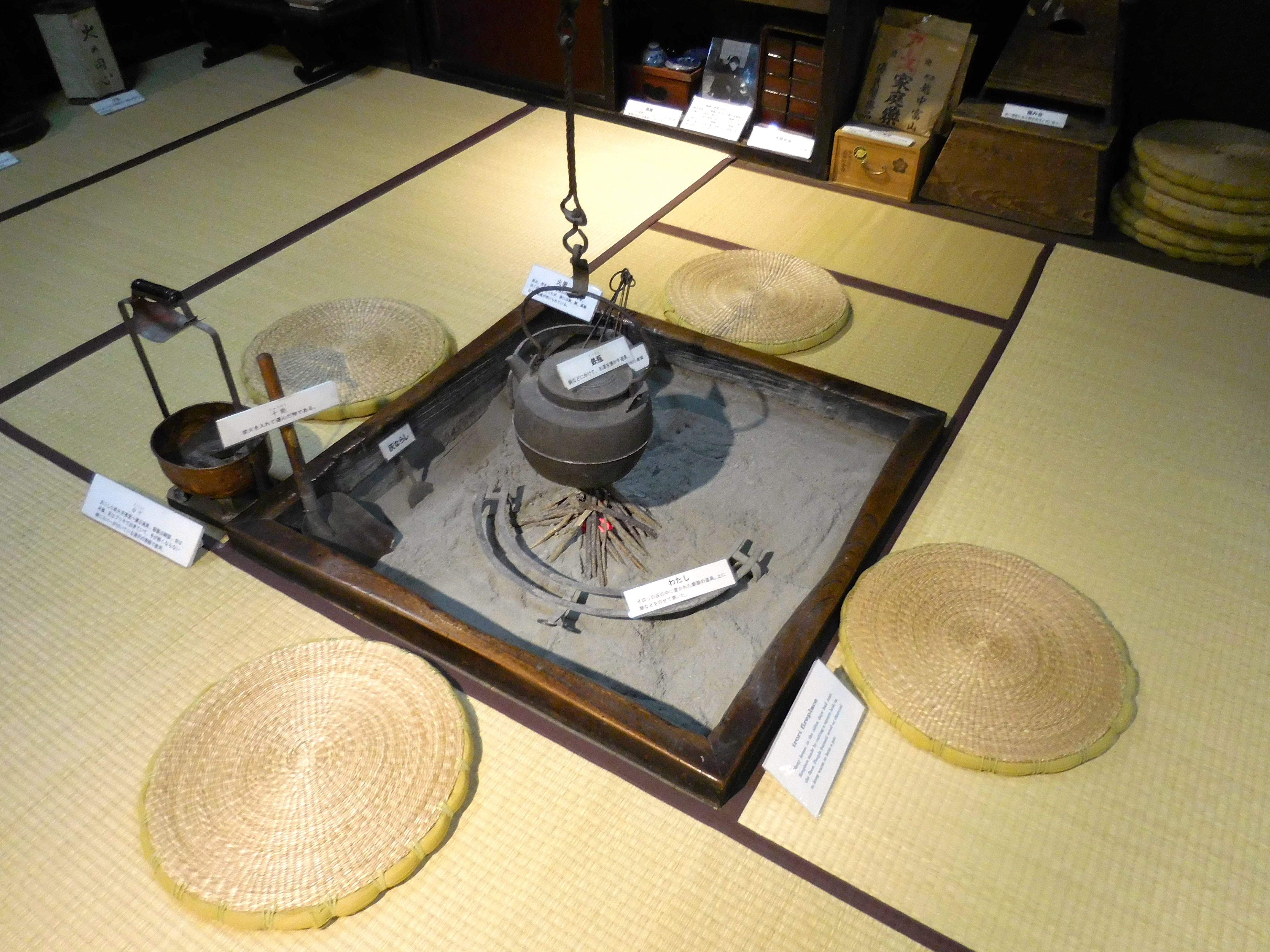
Here’s a reconstructed traditional “dining room…

Soup's on!

Soup’s on!

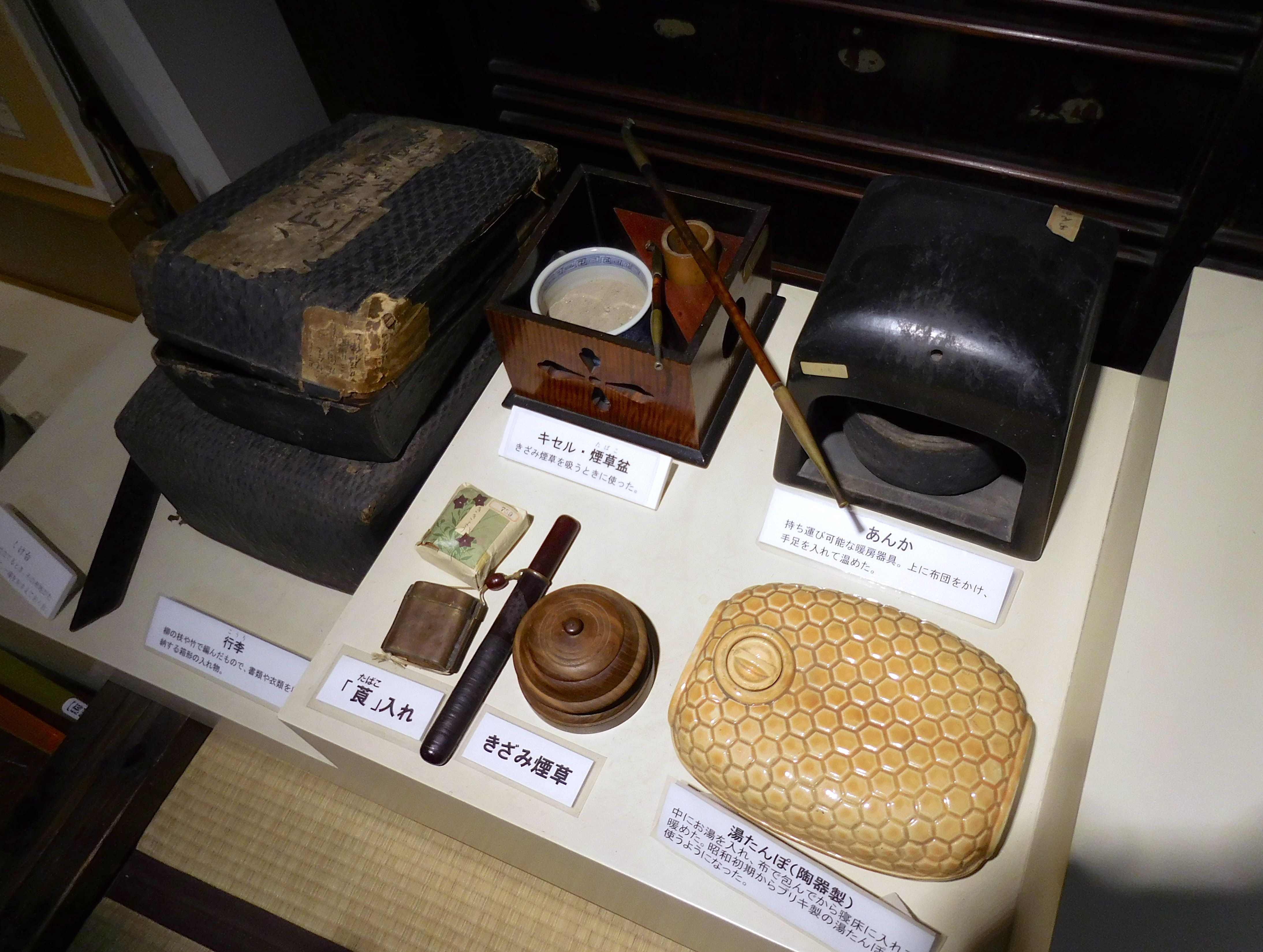
…some beautiful everyday objects, including a pen and ink…

Everyday objects

…the “second largest find of antique coins in Japan, excavated from the Ishishiro area…”

What's inflation done to these?

What’s inflation done to these?

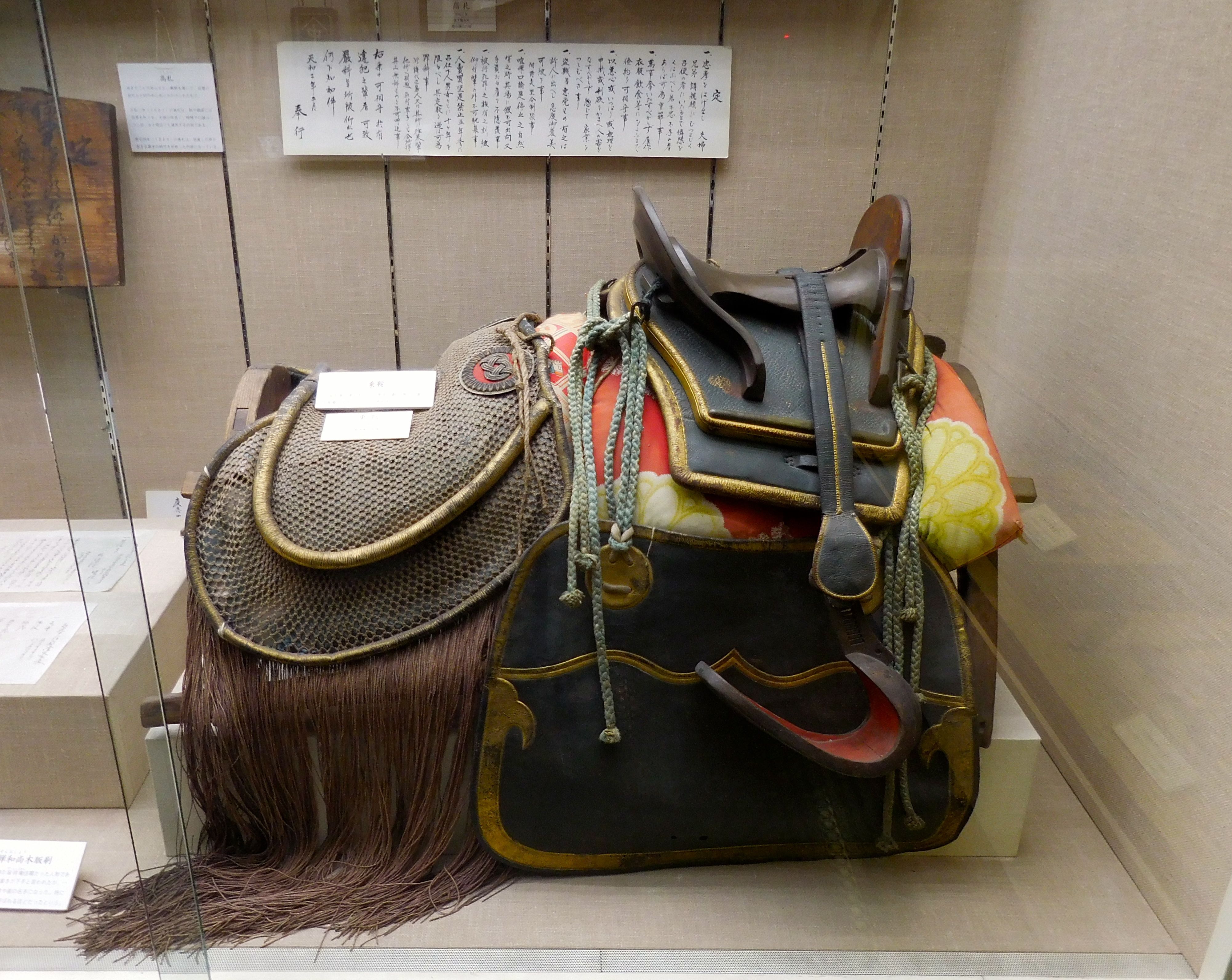
…and finally, a magnificent saddle, too large, it would appear, for a standard horse:

Perhaps fit for the samuri

Perhaps sized for the samuri

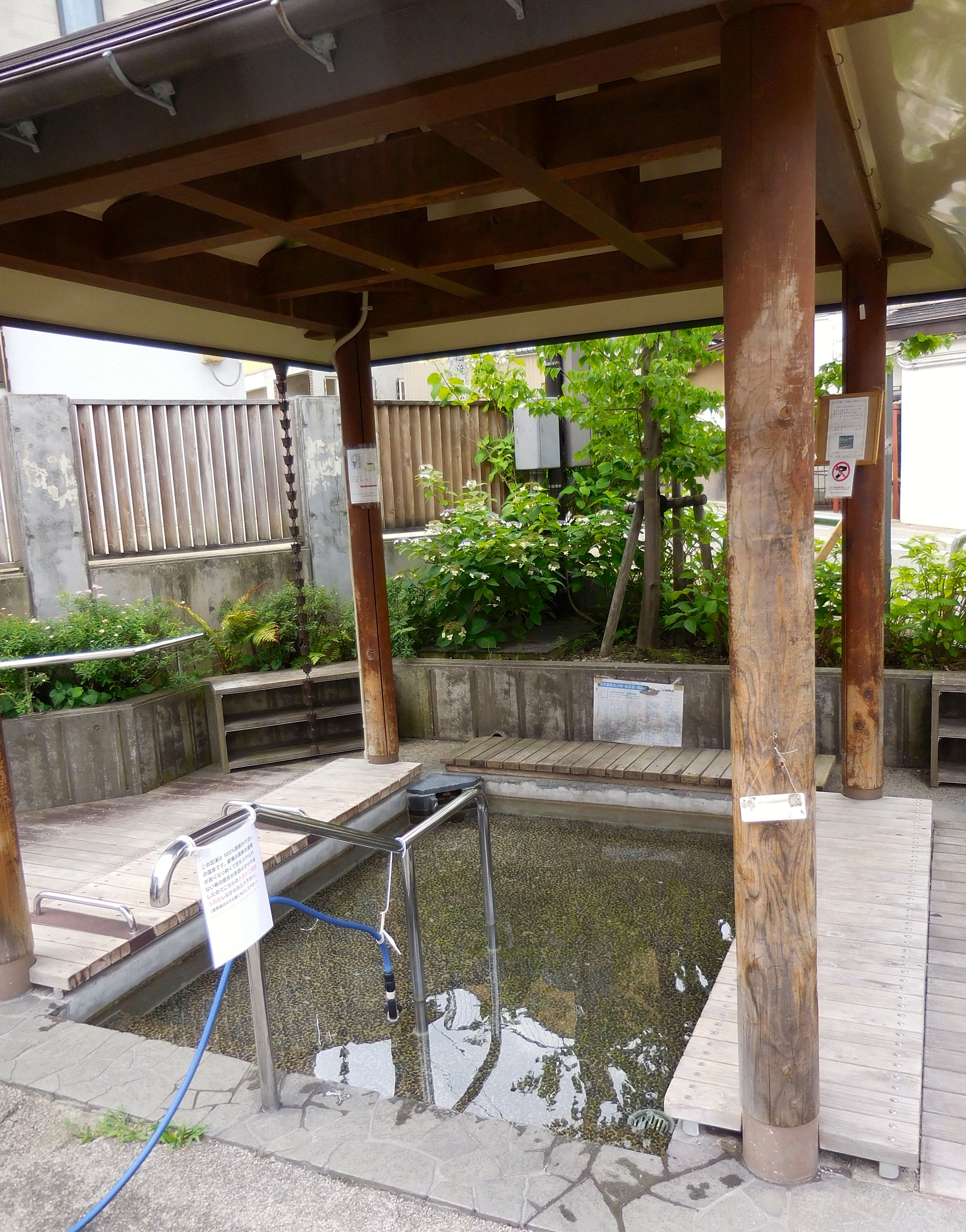
Sated, for the moment, with local culture, we decided to head back to the train station for some refreshment and, that favorite of all cultural activities, shopping. But before we made it there, we stopped to appreciate a civic offering which probably makes more sense in January than July, the outdoor public hot foot bath, of which there are several on this main street, complete with all the requisite warnings and guidance:

Dr. Scholls would approve

Dr. Scholls would approve

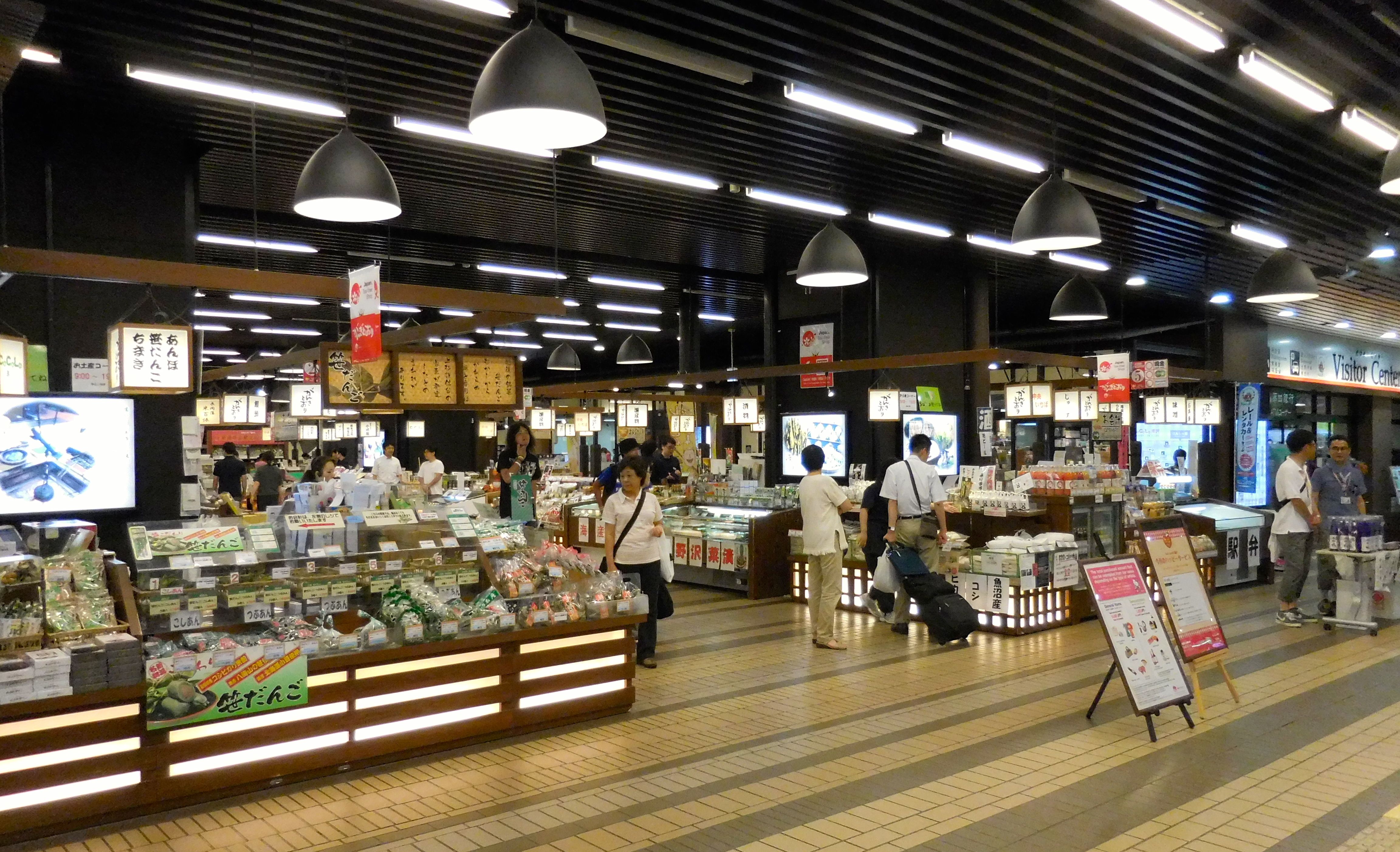
The Yuzawa train station (technically called the Echigo-Yuzawa station), due to the huge numbers of people who come in the winter, is huge and quite entertaining all by itself. Here’s a shot of the main browsing and shopping areas:

All the Snow Country kitsch you could possibly want

All the Snow Country kitsch you could possibly want

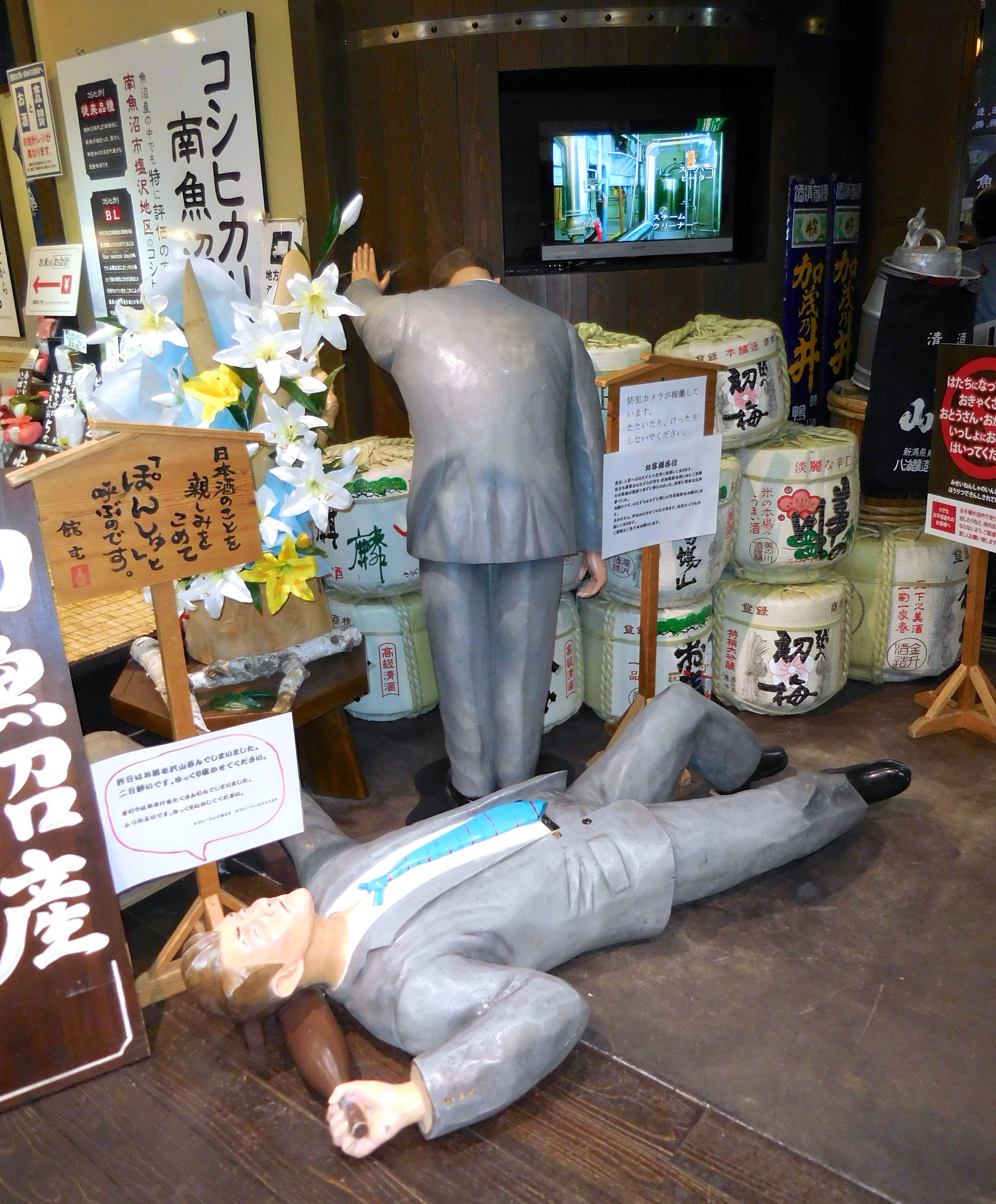
We were particularly enchanted by the liquor section of the mall, bursting with every known size, shape, and flavor of sake, featuring a sake bath, of all things, but humorously decorated with plaster casts of two who manage to overindulge with this most Japanese of refreshments:

Sayonara!

Sayonara!

Back we went on the local train to Urasa, satisfied culture vultures. Thanks, K&T, for a wonderful day.

Posted in Travel - Japan | Tagged , | 3 Comments

Trip to a Shinto shrine

This past Sunday, the program graciously offered us a tour of some of the local sites of note, and the excursion included a Shinto shine, a vineyard and winery, and a Buddhist temple. I was thrilled to get a chance to see some traditional Japanese cultural artifacts after the plethora of bright modern shiny places I’ve been and things I’ve seen, so I headed off with nearly 60 of our students and one of the other “newbie” faculty members for a delightful morning of site-seeing. I’m going to break the trip up into three bits so that I can focus on the details of each stop, and today I’ll showcase the Hakkaisan Shrine.
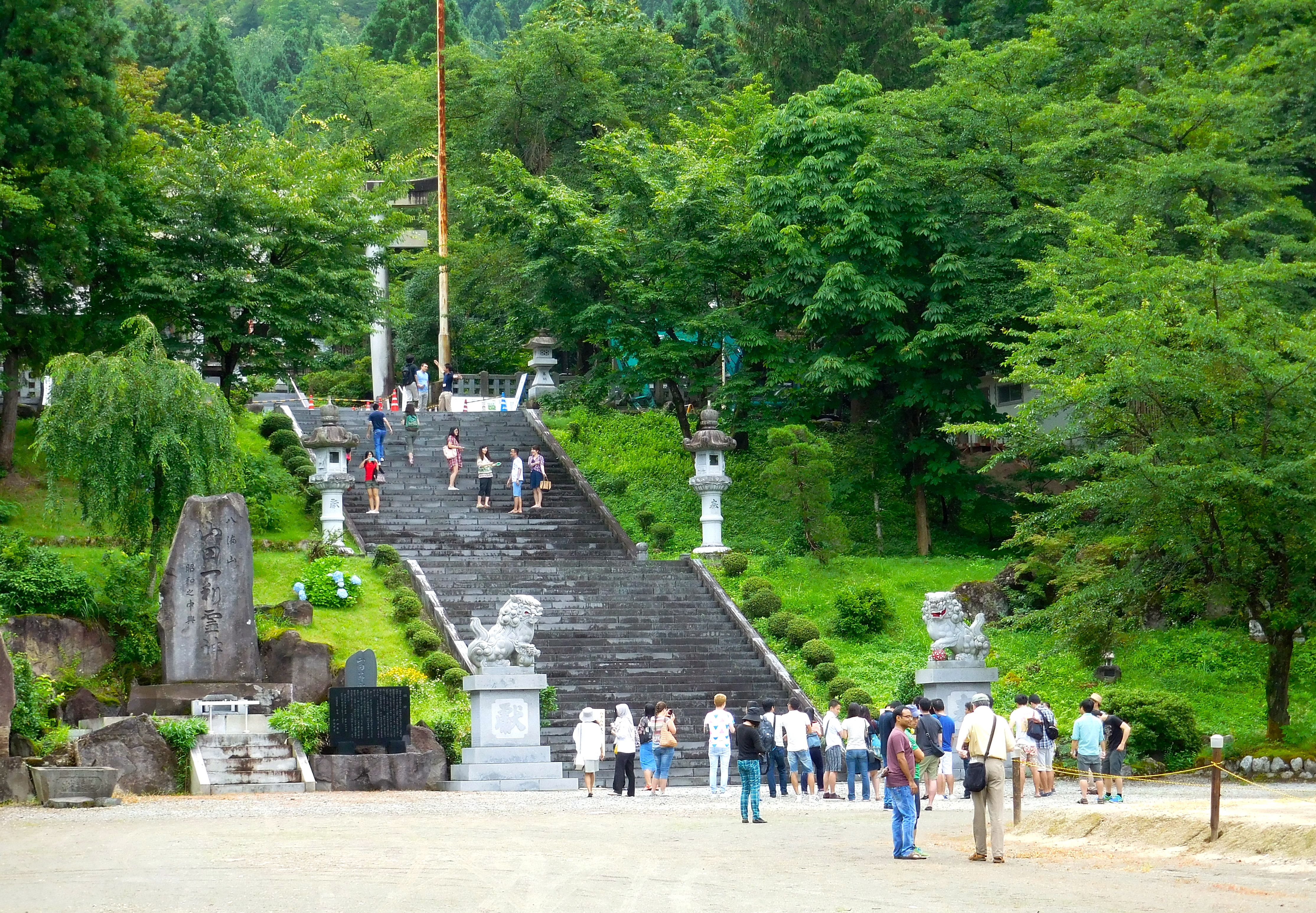
Ascending the heights

Ascending the heights

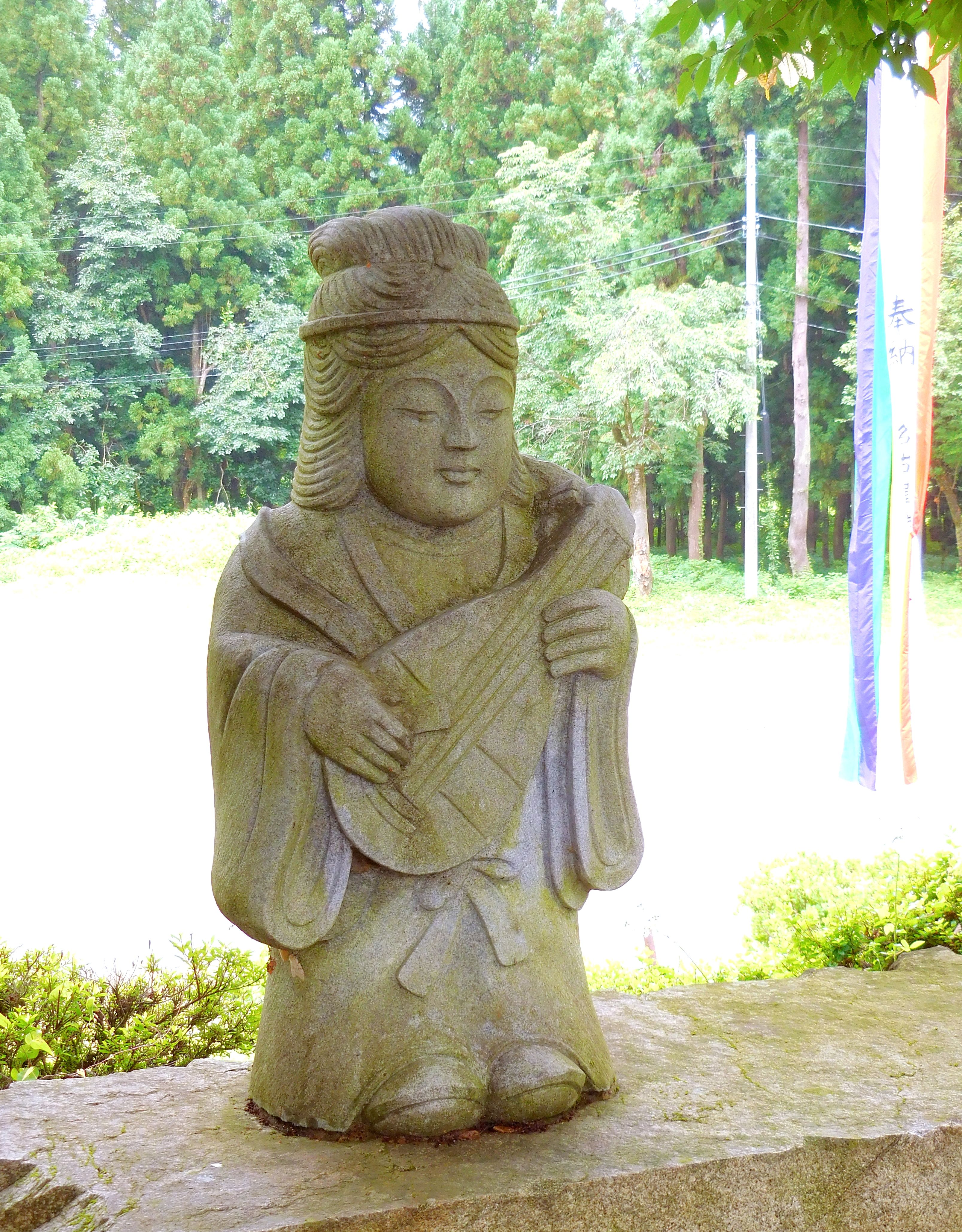
This is the second of three sets of stairs up to the main complex, but it gives you a sense of the scale. On this level, there are some smaller buildings and a set of seven carved lesser gods who protect the site:
My weapon is music

My weapon is music

By way of overview, Shinto is the ancient religion of Japan, evident some say extent as early as 600 years BCE. As far as scholars can tell, it has no founder, no sacred texts, and no official doctrine. Rather, emphasis is placed on traditions and rites. The gods of Shinto, called “Kami” (I assume that is one above) are sacred spirits that represent aspects of nature, such as the wind, the ocean, and the mountains.
Worship here

Worship here

There is indeed a lovely animistic feeling to this place, as well as the sense (ley lines?) that people have been worshiping here for a long long time. The buildings themselves are relatively new (the industrious Japanese replace and renew them on a regular basis), but they are built in the traditional style, perhaps as exact replicas, but I don’t know this for sure. In this shot below, the sign is apologizing that there is some construction work in progress. Note the respectful bow:

Apologies for spiritual inconvenience

Apologies for spiritual inconvenience

This particular Shinto shrine we were visiting is is specifically for the worship of mountain gods. The main annual event here is the Firewalking Festival, held in the latter part of October. Timber is piled up in front of the main altar and burned through. Devotees then apparently walk across the bed of embers as a way of trying to ensure health and prosperity for the coming year (not so sure about the health of their feet, though). This I’d like to see, but alas I’ll be long gone by then.

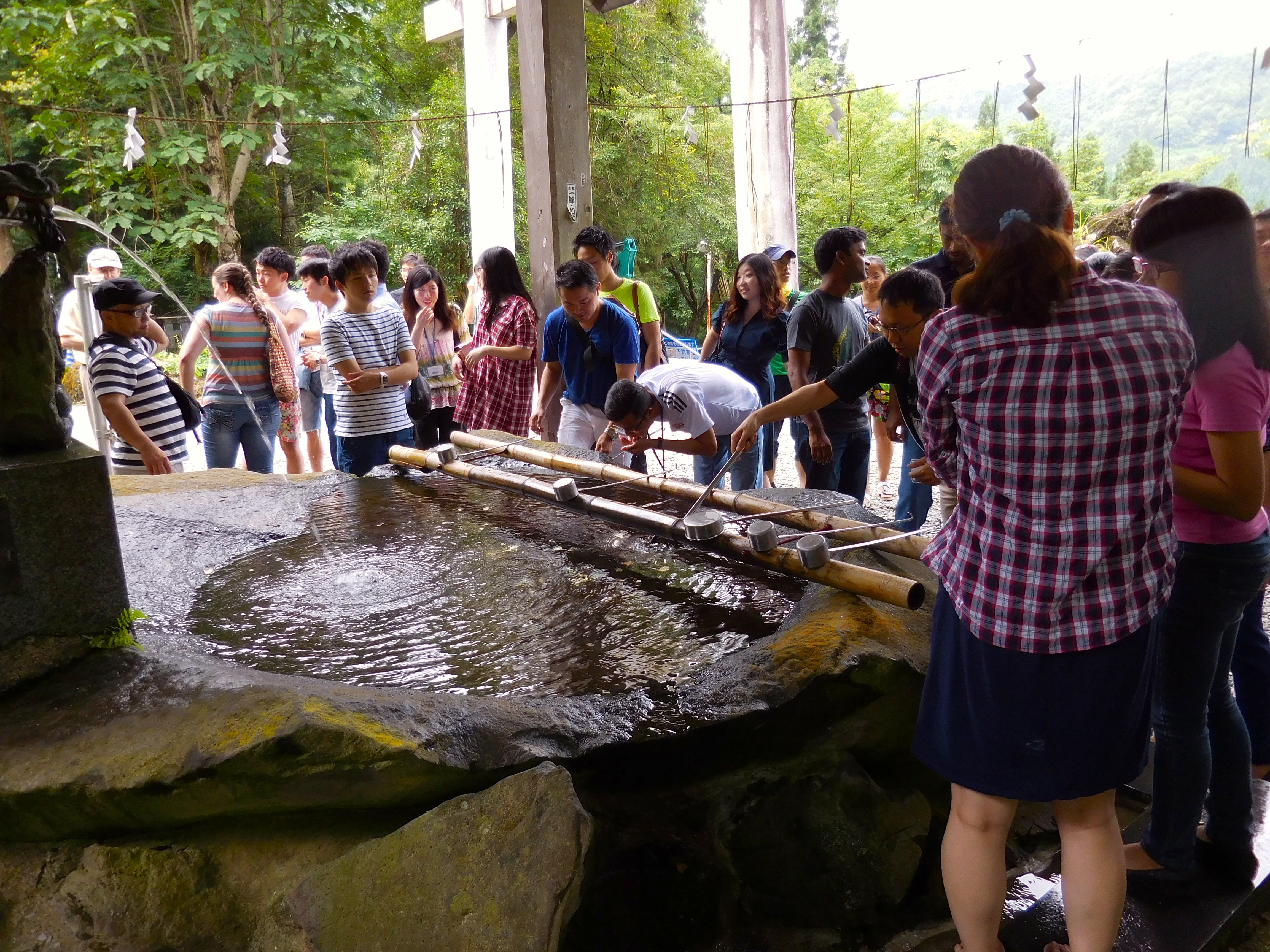
In preparation for worship apparently, one should have clean hands (this is a strong tradition here for many activities). Here’s the spring pool where ritual cleansing occurs, and you can see a number of our students participating as well as just to cool down a bit:

Clean hands, happy gods

Clean hands, happy gods

Here’s just another out building on the site, but I think this gives a nice sense of the peace and serenity found here:

Small shrine

At the top of yet another set of stairs, we reached the main building, perhaps where the fire is actually held:

No embers today

No embers today

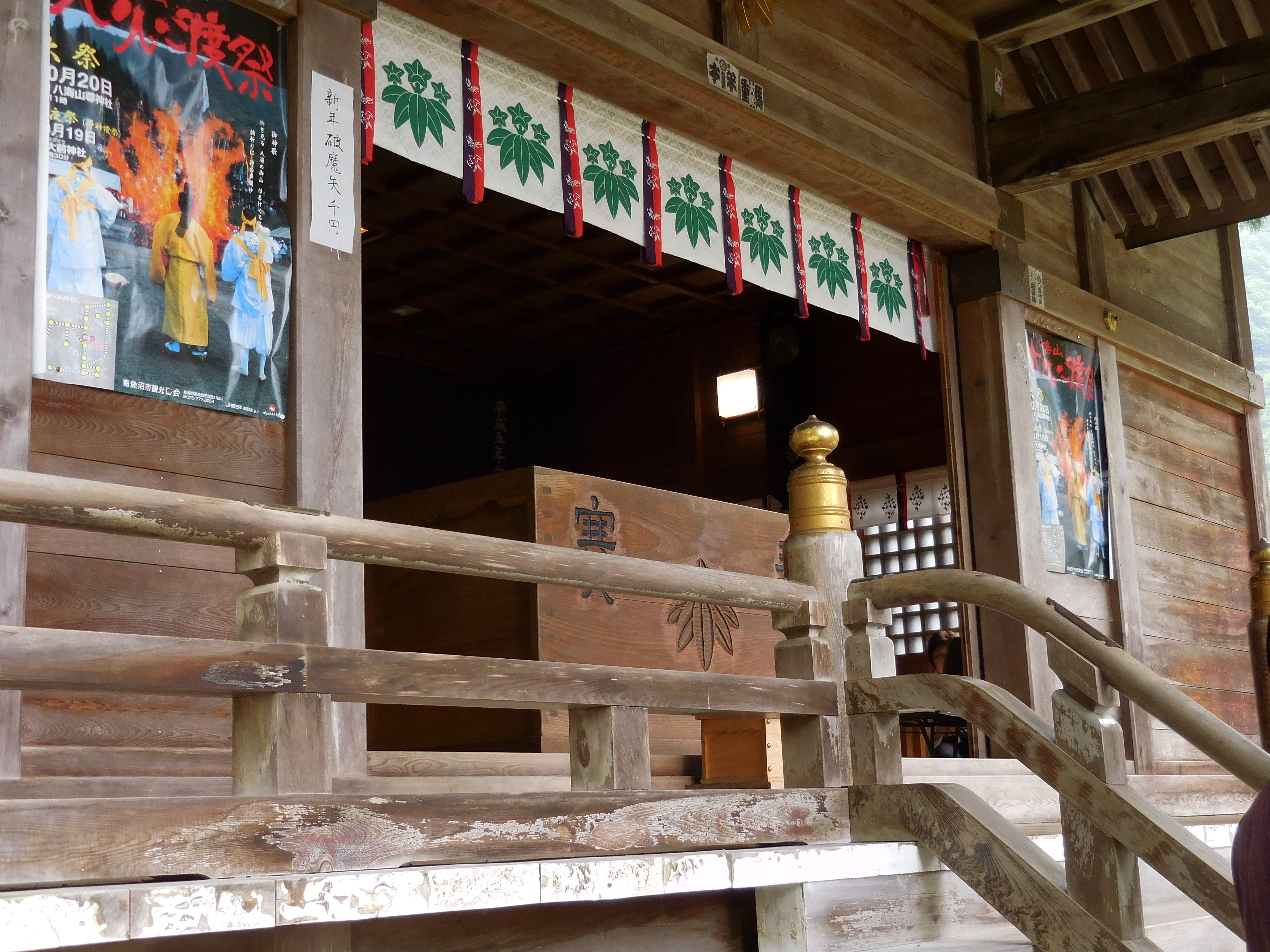
….and a close-up of the entrance. You can see, perhaps, through the railing, the face and fan of the priestess guarding the gate:

Shrine interior

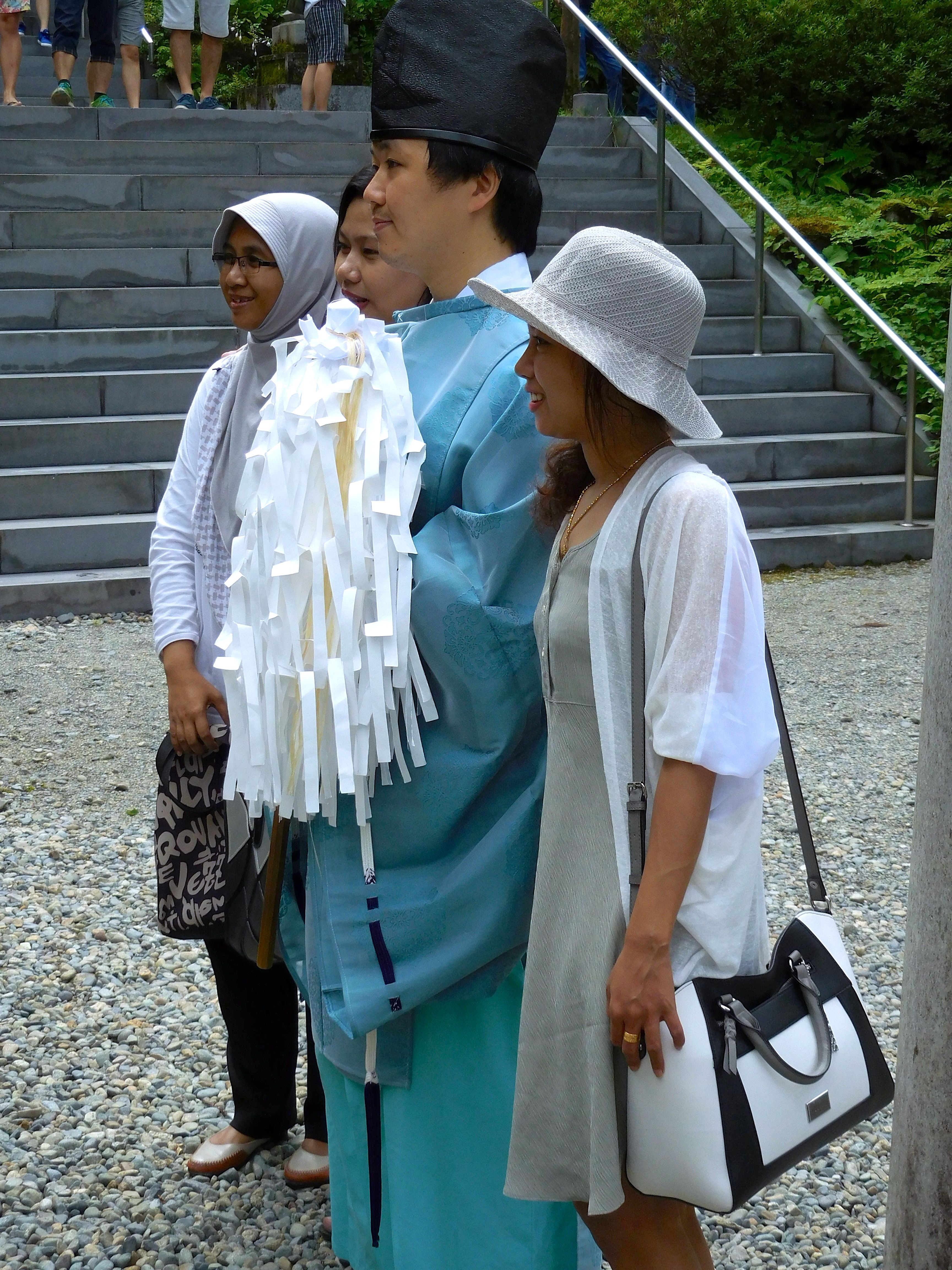
In truth, she and the other staff member in attendance were quite cordial and welcoming to the horde of us who descended on their quiet morning. The priest, decked in his ritual radiance, graciously allowed the inevitable photo ops that the students requested. Below are three of my students from Indonesia (a Muslim), Myanmar, and Cambodia:

Ecumenical moment

Ecumenical moment

…but I was far more charmed when I spotted the same fellow above soon after obliging a local resident by blessing his new set of wheels:

Bikes have spirits too, apparently

Bikes have spirits too, apparently

After seeing the shrine, we trooped nearby to a lake created by a dam and some hungry carp. Then back on the bus for our next stop, which I’ll share with you later.

Posted in Travel - religious sites | Tagged , | Leave a comment