The Crows of Majdanek (The Fifth Poland)

There is, of course, a fifth Poland, and that is Jewish Poland, past and present. The past saw Poland homing the largest number of Jews in Europe, some three million or so, roughly ten percent of the estimated pre-war population of 30+ million. The current sees a very different picture, for more reasons than simply the Holocaust, the count now being a dramatic fraction of first number, some 25,000 souls or 0.065% of the population. I have said nothing about the Jewish side of Poland so far, although I have visited a number of places that relate to them and their stories.

I did not go to Auschwitz-Birkenau when I was in Krakow for reasons I will describe later, but this morning I spent several hours at Majdanek, aka KL Lublin, which was both a concentration/work camp and an extermination camp on the outskirts of Lublin between 1941 and 1944. It has the dubious distinction of being the best preserved camp of its kind due to its hasty evacuation at the end of the war and apparently the incompetence of its commander. Lublin itself was home to a large percentage of Jews for much of its history, and it was an important center of Talmudic study as well.

So stay tuned for this particular installment, which will be its own blog or set of blogs not integrated into the rest of the tale. It deserves to stand alone. There were many crows in evidence during my visit this morning, and by their distinguished black garb, genial curiosity, and careful attention to our presence, seemed to be appropriate hosts and guardians of the stories literally buried there.

Posted in Poland, Uncategorized | Tagged , | Leave a comment

Time out of mind…

Okay, this is MY blog, I can do what I want, right? So I’m going to write a blog entry OUT OF CHRONOLOGICAL ORDER.  Now this really offends my personal sense of story and sequence, but viewed in the light of human history, this doesn’t even rate a bug’s fart. So here goes. This is what I’m chewing on today. Officially I should be showing you the amazing wonders of Krakow (and believe you me, there ARE amazing wonders of Krakow), but instead of feeling like a deputized member of the local Chamber of Commerce, I’m going to tell you about my day traveling from that faire city to Rzeszow (“SJAYS-shoof”) and then on to Lublin.

There are at least four distinct Polands that I have seen so far (keep in mind I am on Day 6 of my trip). First, of course, there’s the Poland I came nominally to see – the centers of culture, architecture, and history, the parts crawling with churches, palaces, museums, tourists, fancy hotels, restaurants with English menus, the easy stuff. Then second there is the Poland I travel through without much thought or regard – rural village countryside Poland, whose denizens still follow the cycles of the seasons like their relatives throughout time and who have seen, perhaps, slightly less change than the folks in the cities.

Third there is “Socialism Strikes Again” Poland – the blocks and blocks of dreary grey apartment buildings just outside the city centers with tiny little shops on the ground floor, low nondescript stucco buildings and factories, graffiti on the facades and missing tiles in the sidewalk. This Poland is populated with elderly men and women plodding slowly down the streets or waiting for the innumerable buses, usually carrying plastic or string bags filled with…stuff. The men have grey or beige fabric or black leather jackets to the hip and woolen golf caps, often smoking a cigarette or cigar and chatting with a compadre or two. The women are slightly more fashionable in long woolen or fur coats of various shades, lovingly preserved for some decades now, accessorized with cozy felt or fur caps of various shades, usually worn at a slightly jaunty angle. And finally there is modern-urbane-hip-glitzy-Eurotrash-mall-McDonalds-tight-jeans-and-boots Poland, filled with basically everyone else – the young, the middle-aged, the hopeful, the restless, the bleached, the moussed, the aspiring new EU Polish citizens wondering, it seems to me, how to buy and wear and be everything that Western Europe is currently holding out to them as their future and the Right Way To Be.

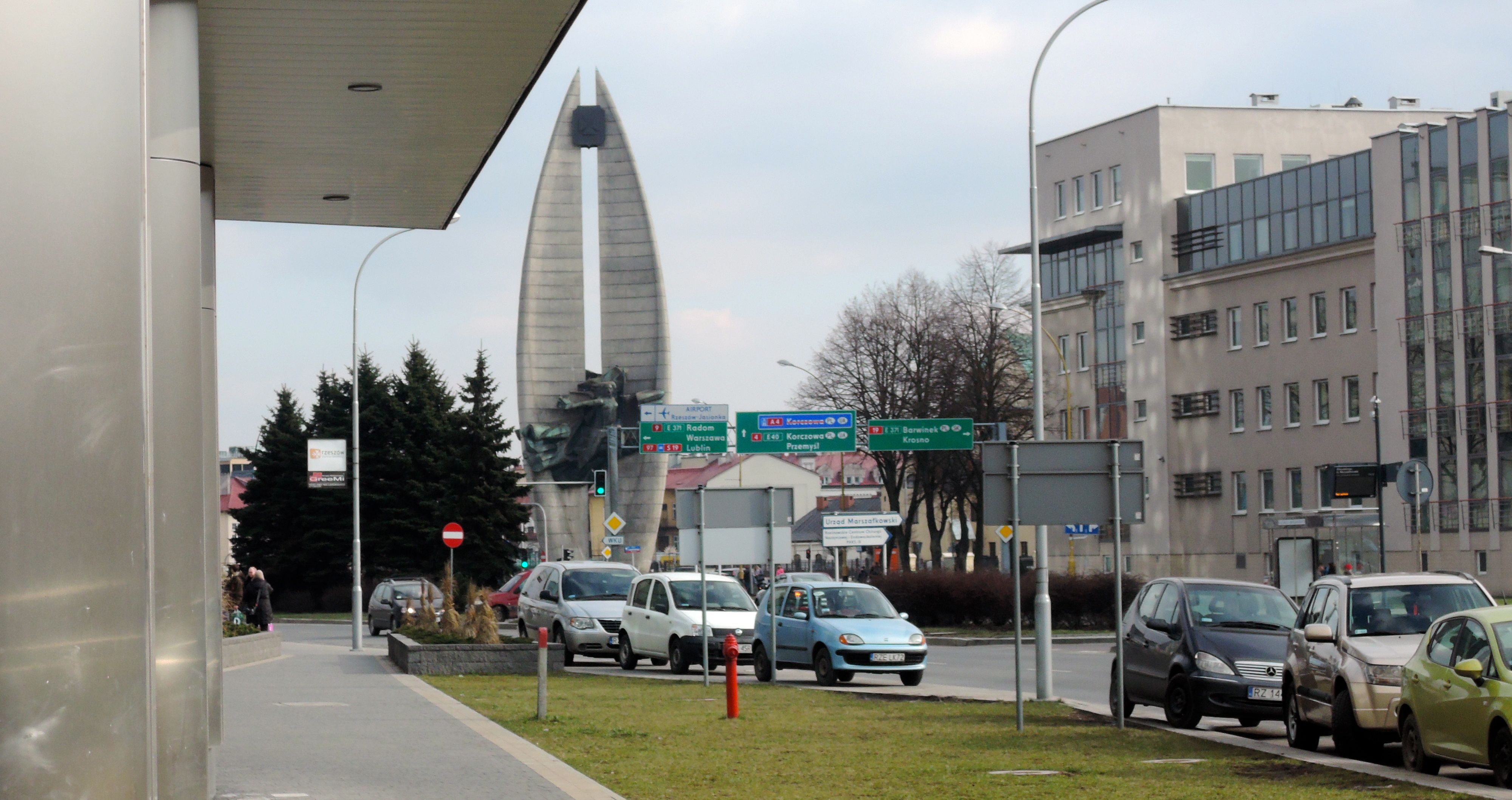
Appropo of which, my Polskibus trip today was composed of two parts: Krakow to Rzeszow and Rzeszow to Lublin, and those clever Poles have started to build glitzy Eurotrash malls right next to the train and bus stations. In this way, we ‘sitting duck’ budget travelers, facing a wait of some hours between connections, have a slightly more positive alternative than slowly pacing the concrete floor of the terminal and drinking lukewarm Nescafe out of the machine. Like the rest of the herd, during my 90-minute layover in Rzeszow I hoofed to the Galeria Rzeszow for a look-see:

A symbol of something

A symbol of something

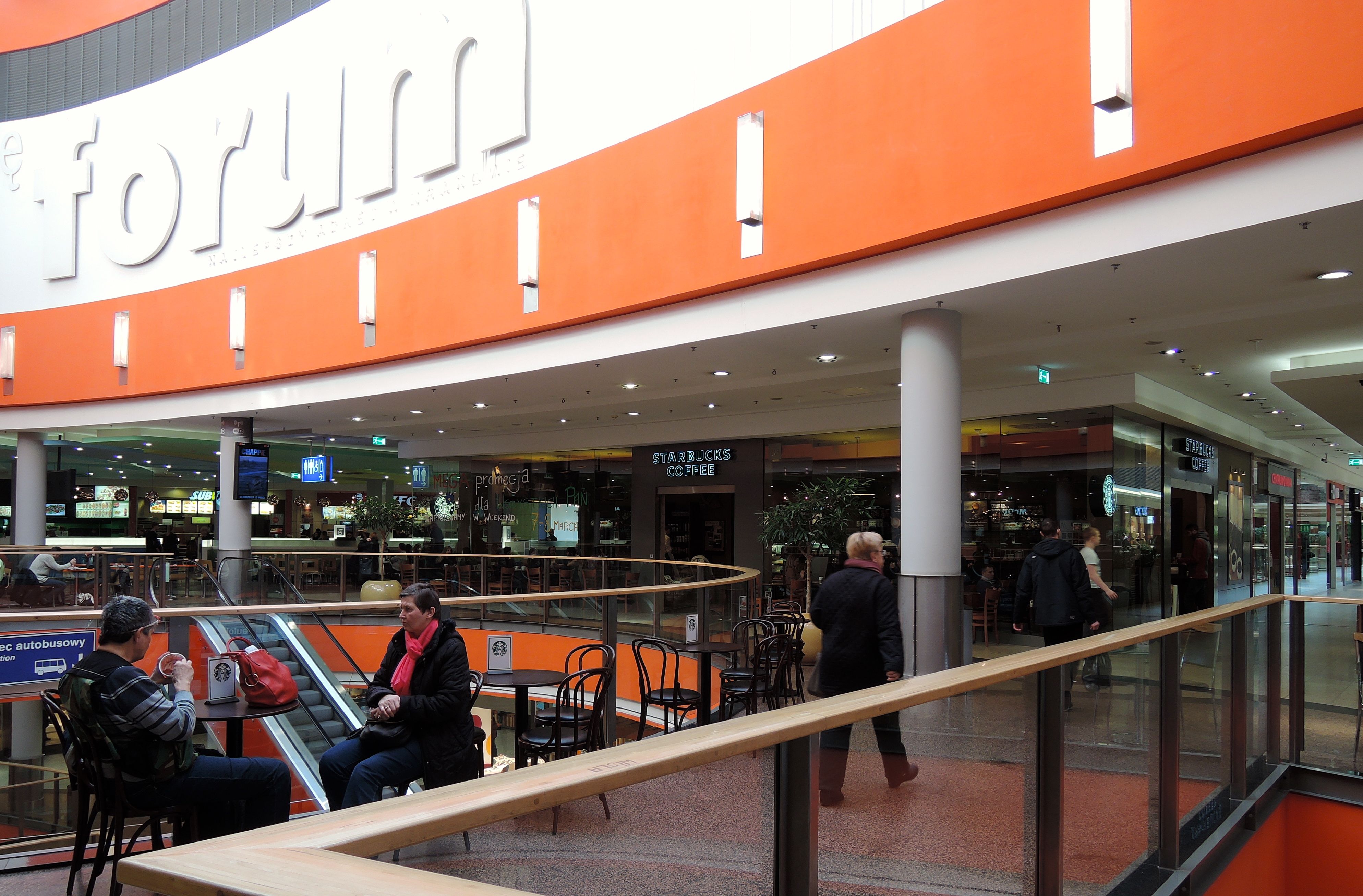
I quickly ducked into the building in hopes of something more colorful and I was not disappointed:

No grey at Starbucks

No grey at Starbucks

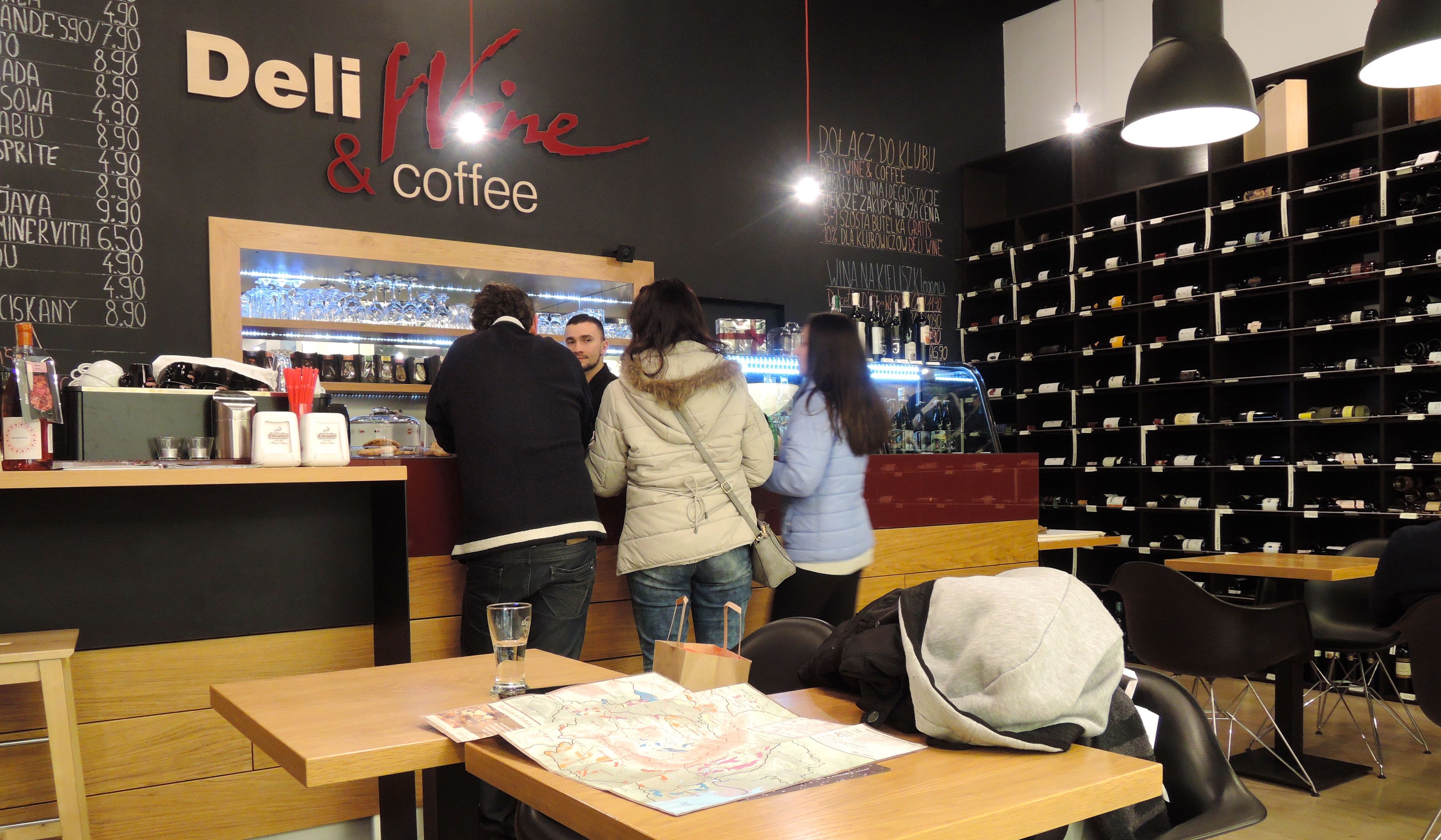
I can’t say there really are a heck of a lot of reasons to visit this particular burg – aside from: being a subject of the long complicated history typical of the region; being a center of Polish resistance during WWII, and being the home of the Rzeszow Institute of Technology, there’s not a lot to commend it in my mind, until now. But I am going to have to give you one honest reason to stop by for a bit, and that is the Deli Wine@Coffee bar located incongruous between two clothing stores on the ground floor on the mall.

Interested customers

Interested customers

Passion shows itself in many ways, but it is immediate and it is authentic, and the young man minding the store today (facing us above) was a wonder to behold. First and foremost, he greeted me warmly and in rapid if not altogether fluent English. Second, knew his wines, local wines, regional wines, international wines, even Oregon wines. I now possess a map of the Carpathian wine growing regions in seven countries (see table), and as a result of my visit have half a mind to rent a minivan next fall and go exploring. Third, he is a charming, well-spoken, thoughtful, and articulate representative of his country and his generation, integrating his educational background in tourism with his passion for oenology and viticulture. After our chat and before I had to scadaddle back to the bus, he gifted me with a generous pour of an Hungarian almond vermouth that was out.of.this.world. and sweetened the prospect of the remaining three hours of my ride to Lublin. Cheers to you, mate. Long may you prosper. Hey, do me a favor, willya? Go “like” his page on Facebook:

https://www.facebook.com/DeliWineCoffee


Posted in Poland, Uncategorized | Tagged , | 1 Comment

Wroclaw Part II

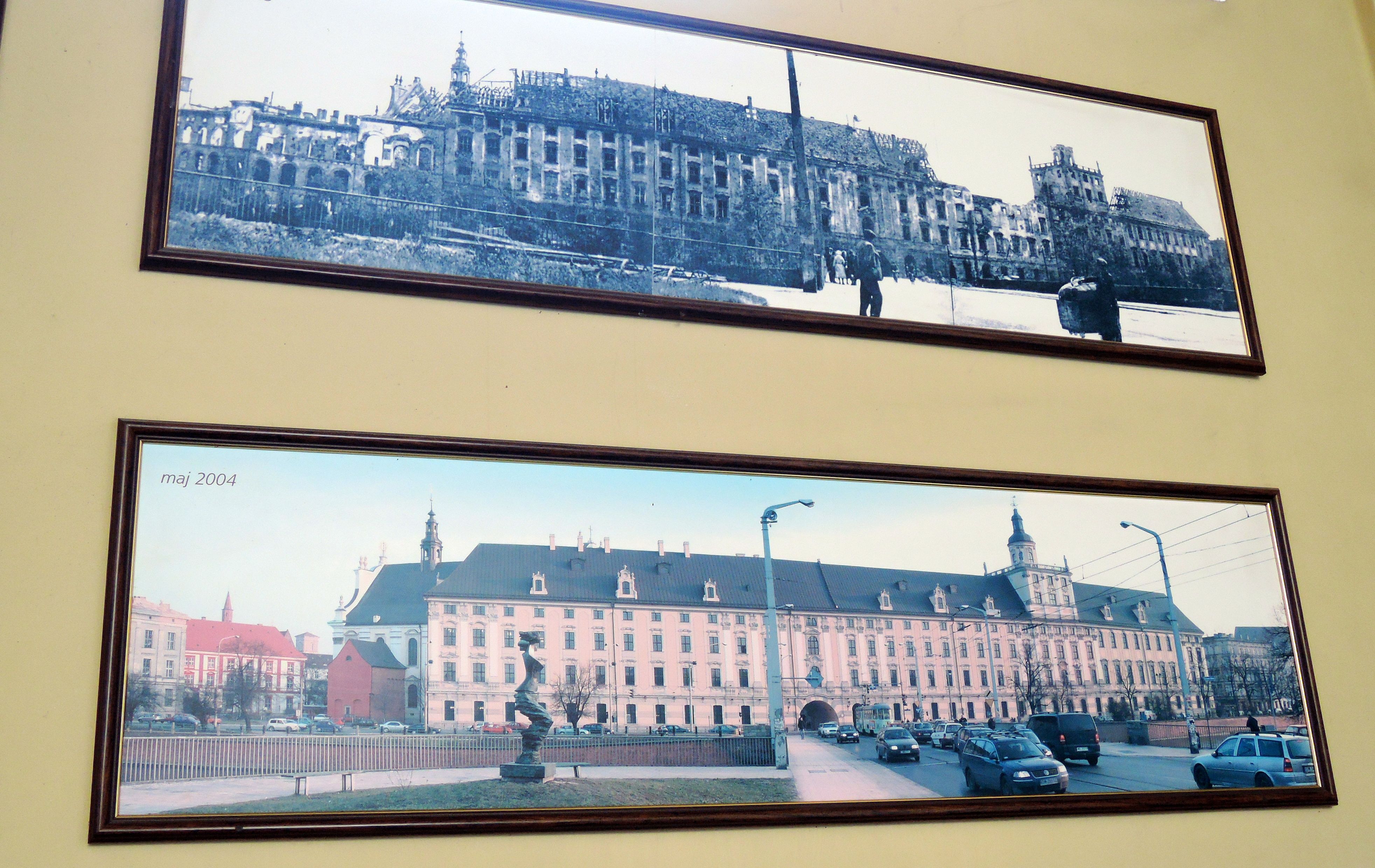
One of the things that is pretty mind-boggling in Wroclaw (and many, many other cities in Europe as well) is just how destroyed it was (and they were) after World War II. Poland was occupied by Germany, so it felt the full force and wrath of the Allied forces who did a damn fine job of spreading death and destruction in the region and thereby stopping the Nazis. But, like a great dinner party with a lot of people that goes long into the night, the clean-up was a b*tch. And so it was with Wroclaw. The locals help us visitors get an idea of the devastation with “before and after” photos all over town that show what you are looking at THEN and NOW. (I know Vienna does this as well.)  So here’s a THEN and NOW photo of the University, the next stop on our walking tour:

Facelift

Facelift

Now remember, class, from yesterday’s lesson that it was the folks who had been living in  Breslauu/Wroclaw who were expelled and the folks who had been living in  Lemberg/Lvov/Lviv who came to replace them. So it was the job of those new residents, those displaced and dislocated refugees battered by years of conflict, who ended up rebuilding their new city, brick by brick, building by building….the place that hadn’t even been theirs. It truly speaks to the commitment and determination of the Polish people.

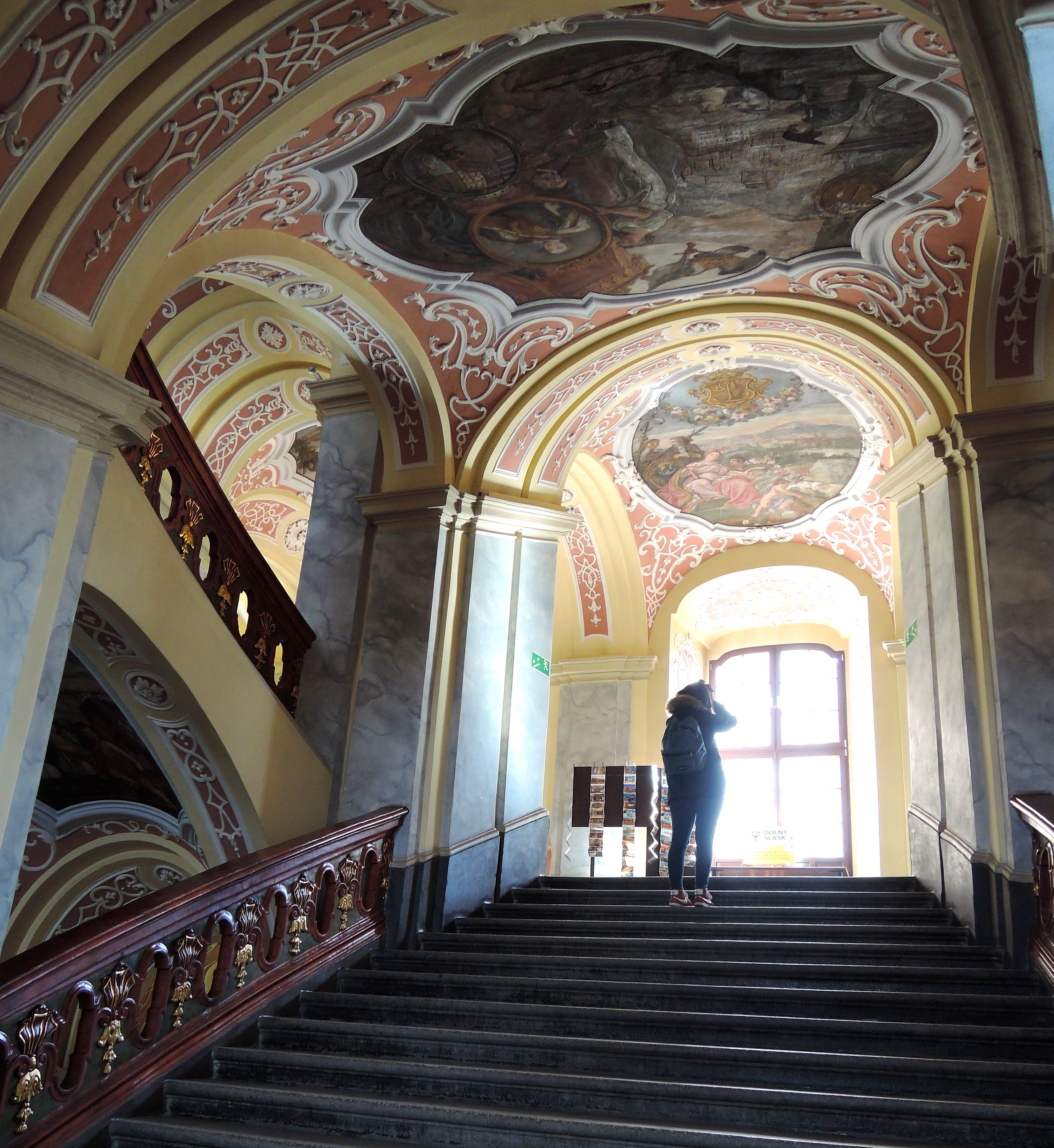
Matt drilled into us that this university “has the longest Baroque facade in Europe – 174 meters.” That’s nearly 600 feet, folks, and that’s a lot of stucco, as you can see from the above shot. But it’s the inside of the university, also lovingly rebuilt and restored over the past 50 years, that’s a real jaw-dropper. Here’s just the entrance staircase..it’s a wonder there aren’t more twisted ankles:

Stairway uni

At the top of those stairs, turn right, and you will find yourself in the interior of the Leopoldinum Auditorium, where convocations and other important functions have been taking place since 1702. The robes used by the faculty here are simply breathtaking – different colors for different disciplines, ermine (yes, ermine) collars, heavy sterling badges, scepters, the whole Harry Potter thing on steroids. Imagine a whole university of them marching somberly into this room:

Sit up straight

Sit up straight

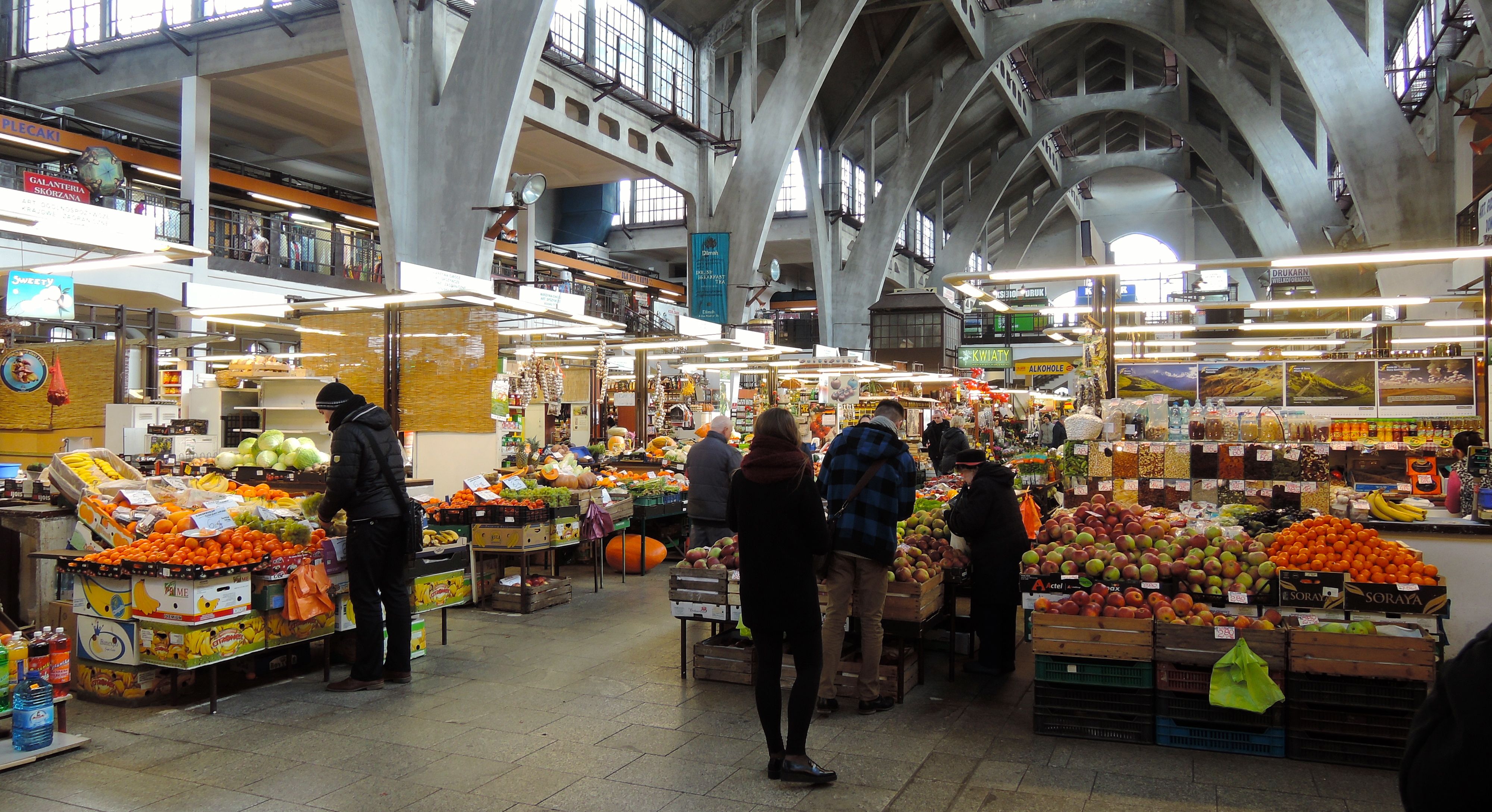
By this time, Matt knew that all the beauty, to say nothing of all the facts, had made us peckish. He thoughtfully gave us 15 minutes to recover at a local open market, the only one left in the city. I love these places and try to find them in every city I go. You can get produce, meats, cheeses, breads, and other comestibles as well as prepared foods (the cheapest pierogi in town, apparently), a well-brewed cappuccino, then change some money, go to the loo, buy a phone card, the whole meal deal.

Look out, Hannafords!

Look out, Hannafords!

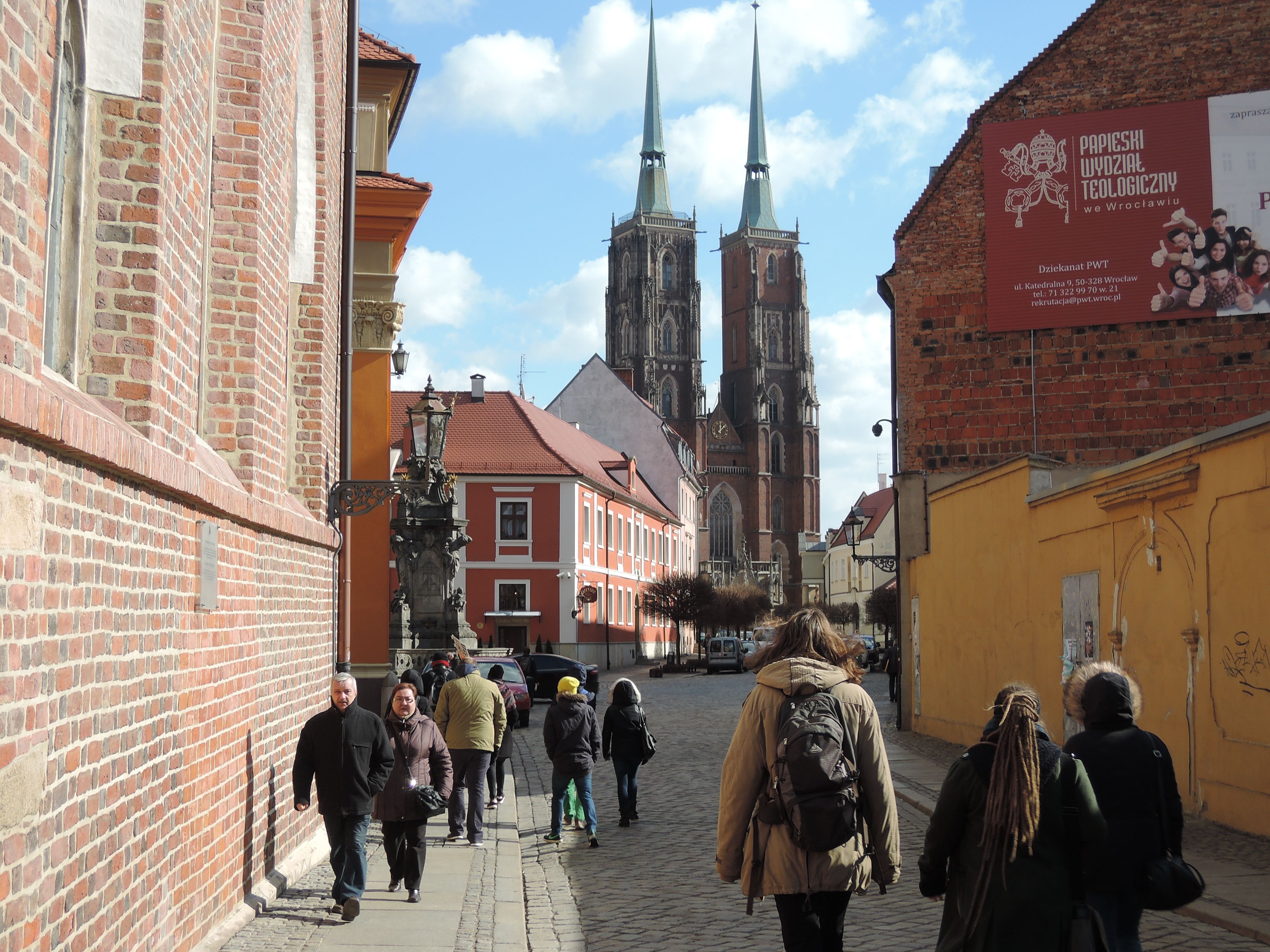
After that brief refresher, it was back to the culture trail. Our next top was Ostrow Tumski, Cathedral Island, which had been under the sole control of the bishop, his own little paradise free from kingly oversight, for a long time.  Before:

Island WW2

After:

Feel better?

Feel better?

Okay, so enough with the buildings for a while.  I really enjoyed the history and the churches and the palaces, but I also wanted to get away from all the pretty stuff and see a bit more of what the locals live with. And it’s a curious mix, to be sure. I always pause when taking pictures of things that aren’t really very picturesque, because everybody KNOWS they’re not very picturesque and they probably wander what the heck I’m doing taking pictures of them. So I’m very careful. But here’s a piece of street art on a non-beautiful, non-restored building that gives you a very different sense of Wroclaw and Poland in general:

Interesting...

Interesting…

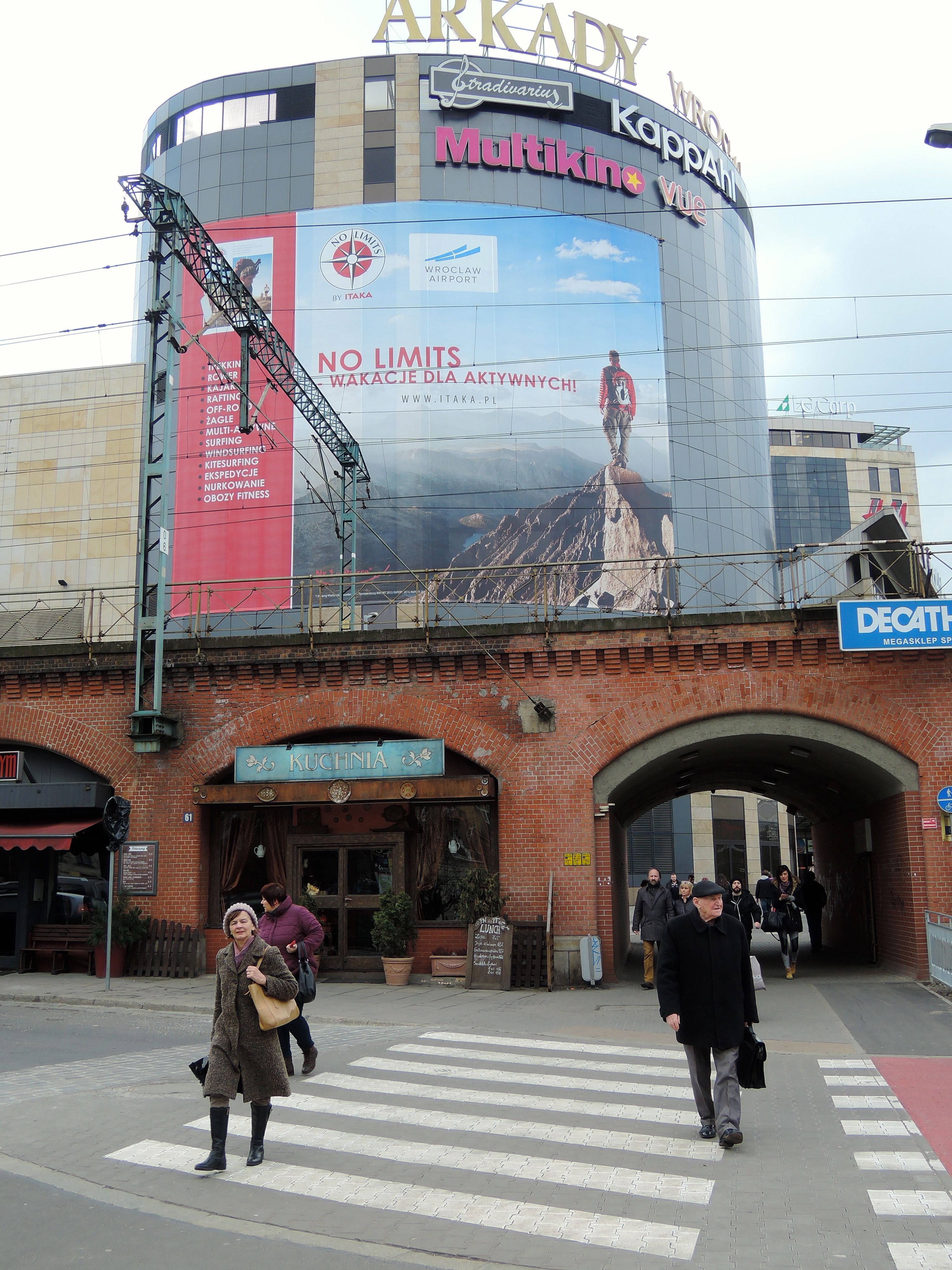
Nearby, a shot that gives me a sense of the layers of the culture, the clash of old and new:

Hmmm...

Hmmm…

So here you have, if you can see it, a cozy little traditional restaurant, Kuchinia, under the brick arch, and then, towering over it (“No limits!”) the young, hip, techno-enticing fantasy of the new age, a cinemaplex, reaching high above the street below, luring potential clients with its Alpine allure.  (I’m just not sure the two above are buying any of it.)

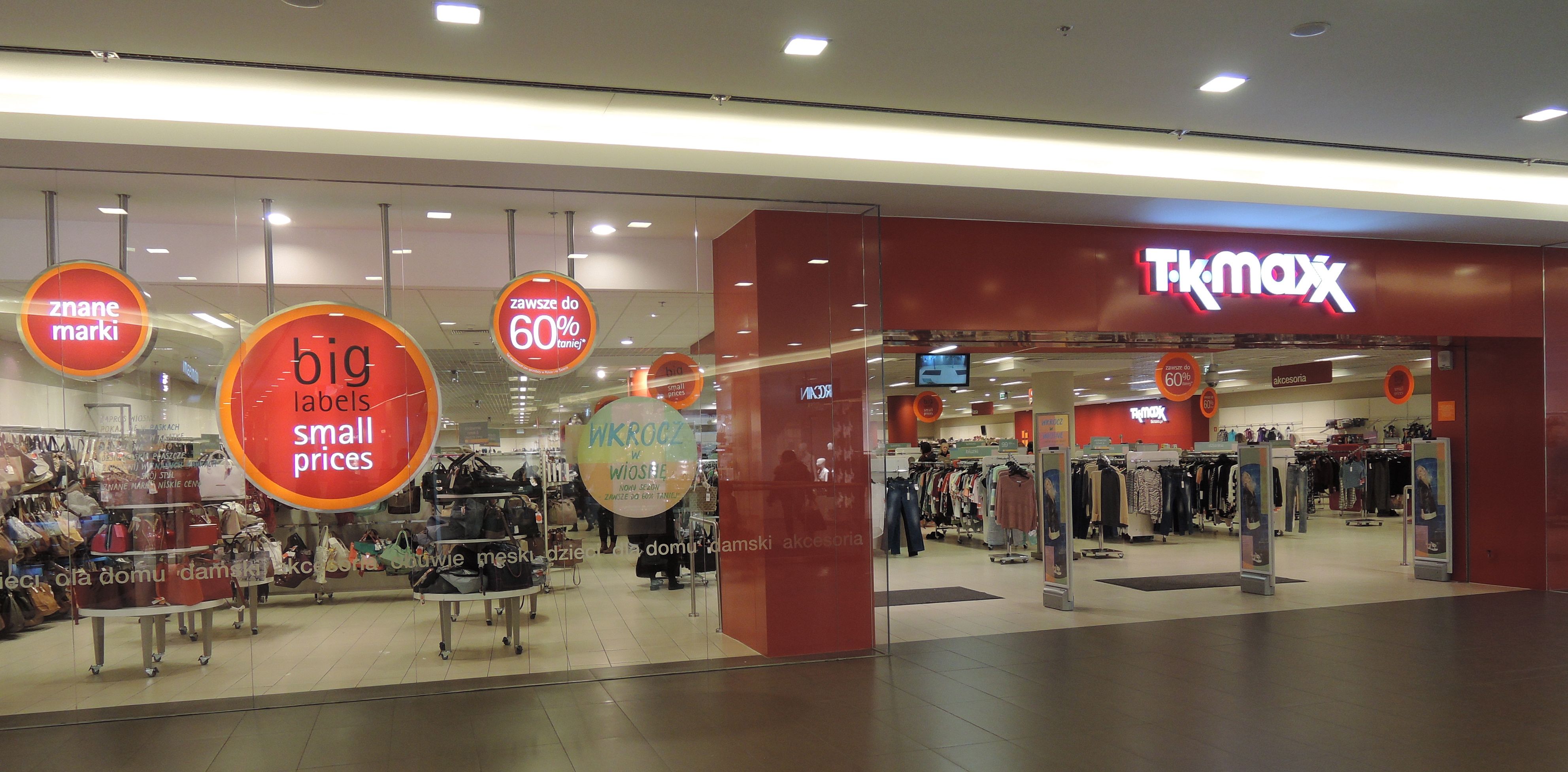
And finally, just when you think you’ve finally escaped the clutches of your old life, you go into what used to be the city’s finest department store (and which has sadly become a slick Euro-trash boutique mall) and what do you see?  Just look…

Curses, foiled again

Curses, foiled again

Sigh. There’s no escaping the dominance of American capitalism. And on that note, I climbed on my next Polskibus and headed to…Krakow. Stay tuned.

Posted in Poland, Uncategorized | Tagged | Leave a comment

One..two..three..say “VRAHTS-wahv!” (Wroclaw)

Polish is not yet among the language I count on for much at all. I’m doing a damn fine job of “Hello!” and “Thank you!” but little else. That did not deter my delightful tour guide in the slightest this past Tuesday morning in Wroclaw.  He coached his small intrepid band of travelers shivering in the light drizzle with great enthusiasm, humor, and panache. “Say “VRAH! Say TSWAHV! Say VRAHTS-WAHV!” and so we did, all British-Swedish-Dutch-Ukranian-Polish-and-American of us.

Wroclaw was the first stop on my Polish adventure for three reasons.  First, geographically, it’s one of the first cities you hit crossing the border from the eastern side of Germany, and that’s also what makes it very interesting.  For most of its 1000+ year history, Wroclaw was German (or Prussian), and in addition, it was called “Breslau.” At the end of World War II, both the eastern and the western borders of Poland shifted west, giving Breslau/Wroclaw to the Poles (and Lemberg/Lvov/Lviv to the Soviets). So…the former inhabitants of Breslau were sent, en masse, to Germany, and the former inhabitants of Lvov were sent, en masse, to Breslau. Just another example, as if you needed it, of the life-wrenching human fallout during that time.

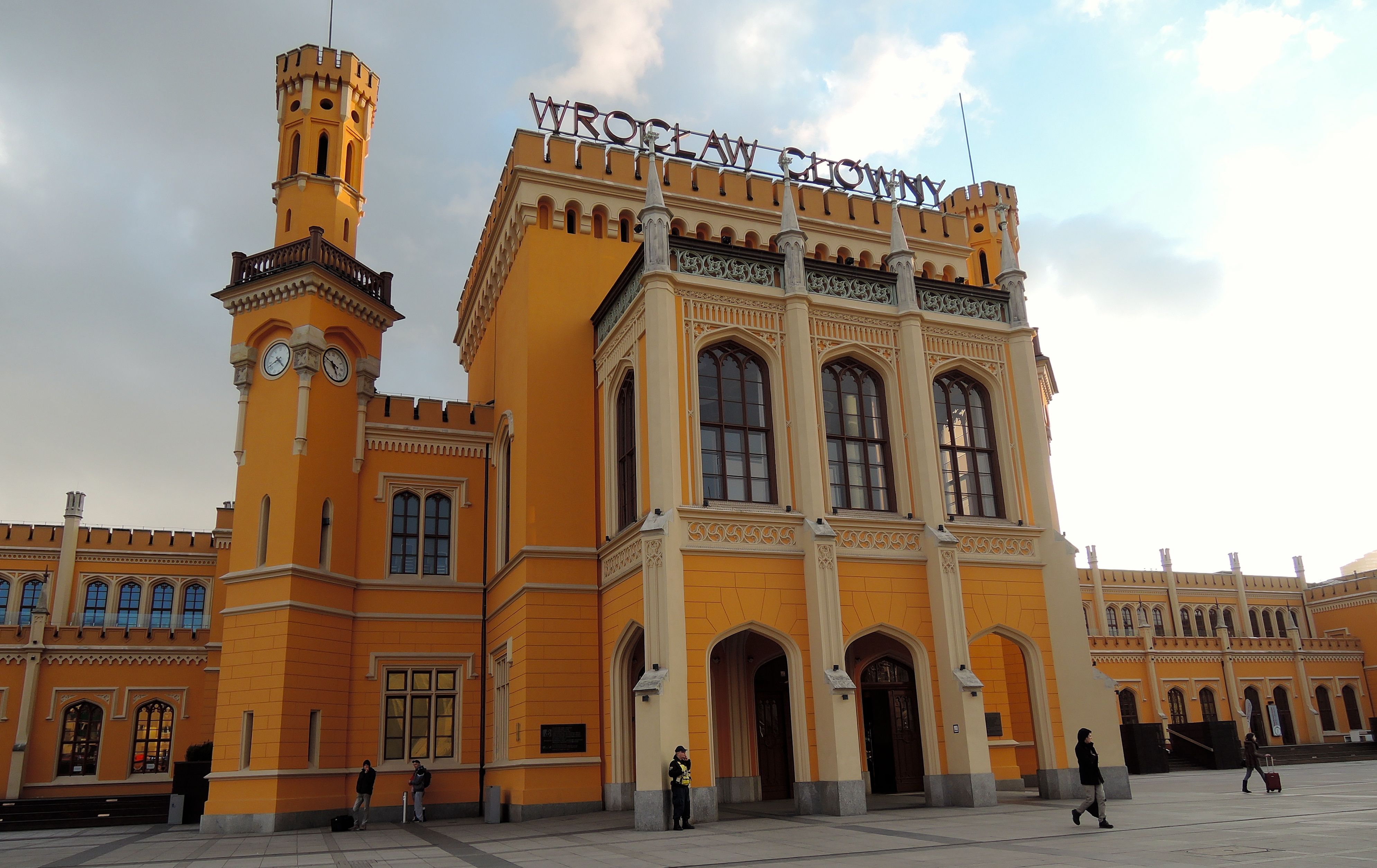
So what you have now is…a medieval German burgher city overlaid with 45 years or so of  Polish communism and most recently a new evolving consciousness as part of the EU. Wroclaw has been named one of the two 2016 European Capitals of Culture, my second reason for visiting, which is a clever way the EU has of attracting attention to some of the very interesting but lesser known cities that could use a bit of an economic boost.  And speaking of boosts, here’s the newly remodeled train station (I arrived at the dreary grey bus station nearby, but this one’s got the looks):

Cathedral of Transport

Cathedral of Transport

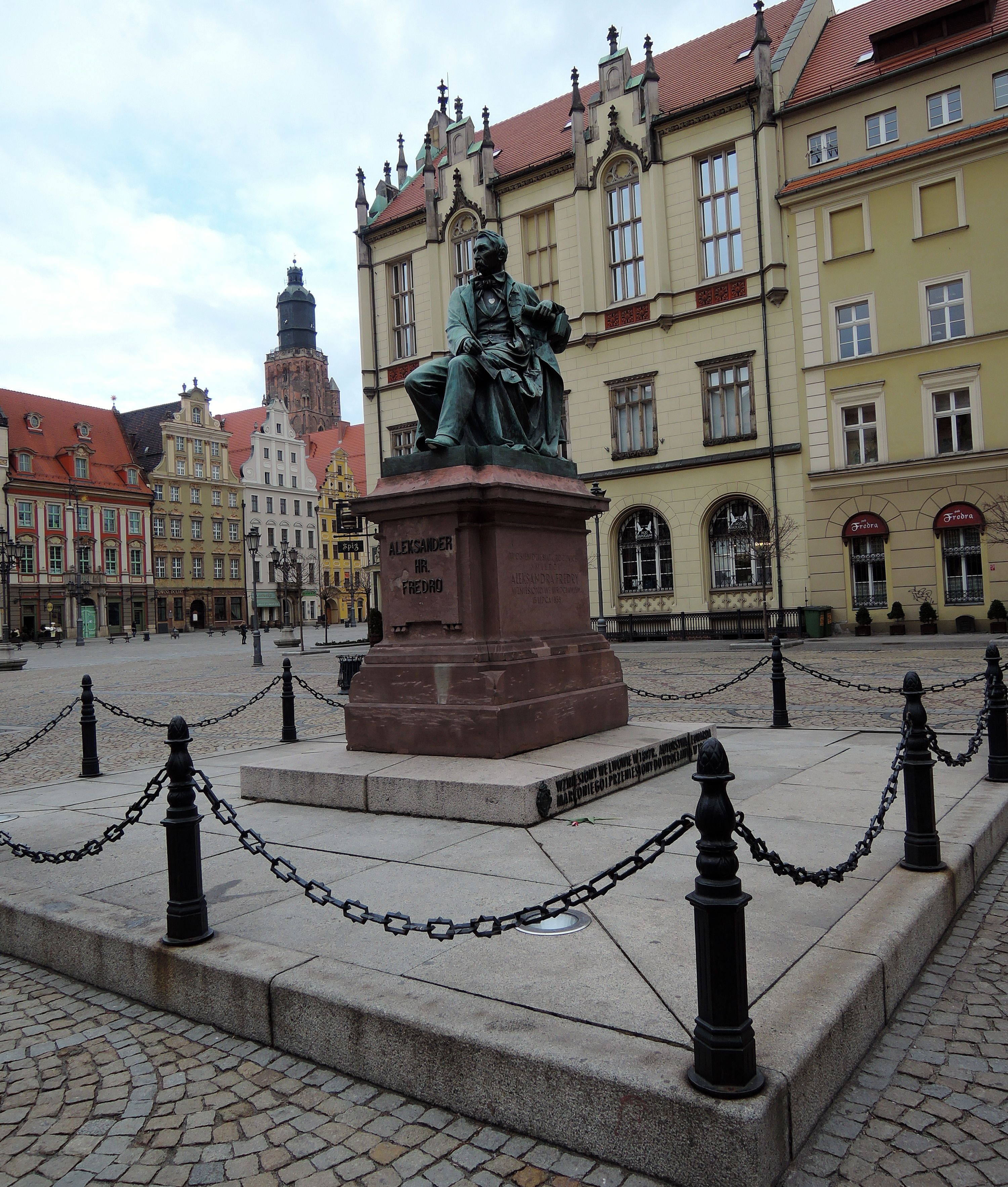
The third reason I came was because this is one of the cities my uncle had spent some time in during the years leading up to World War II, and since I’m trying to hit as many of “his” spots as I can, that sealed the deal. As the major city in Lower Silesia, the city boasts about  650,000 residents and an additional 100,000 students at the local universities.  But the true glory of the town, the reason to make your way over here, is its Market Square (Rynek) which is just lovely. Here’s a shot of Alexander Fredro, a Polish poet, author, and playwright, against some of the lovingly restored buildings around the square:

Moved from Lviv as well

Moved from Lviv as well

This was the starting point for our tour, so I had a chance to look around for a bit.  Let me  give a shout out to the good folks at Free Walking Tours (freewalkingtour.com) who are doing a fine job of introducing their Polish cities to the world.  Our guy Maciej (aka Matt) was master of rolling out Just Enough History to keep us interested without drowning us in a recitation of facts.

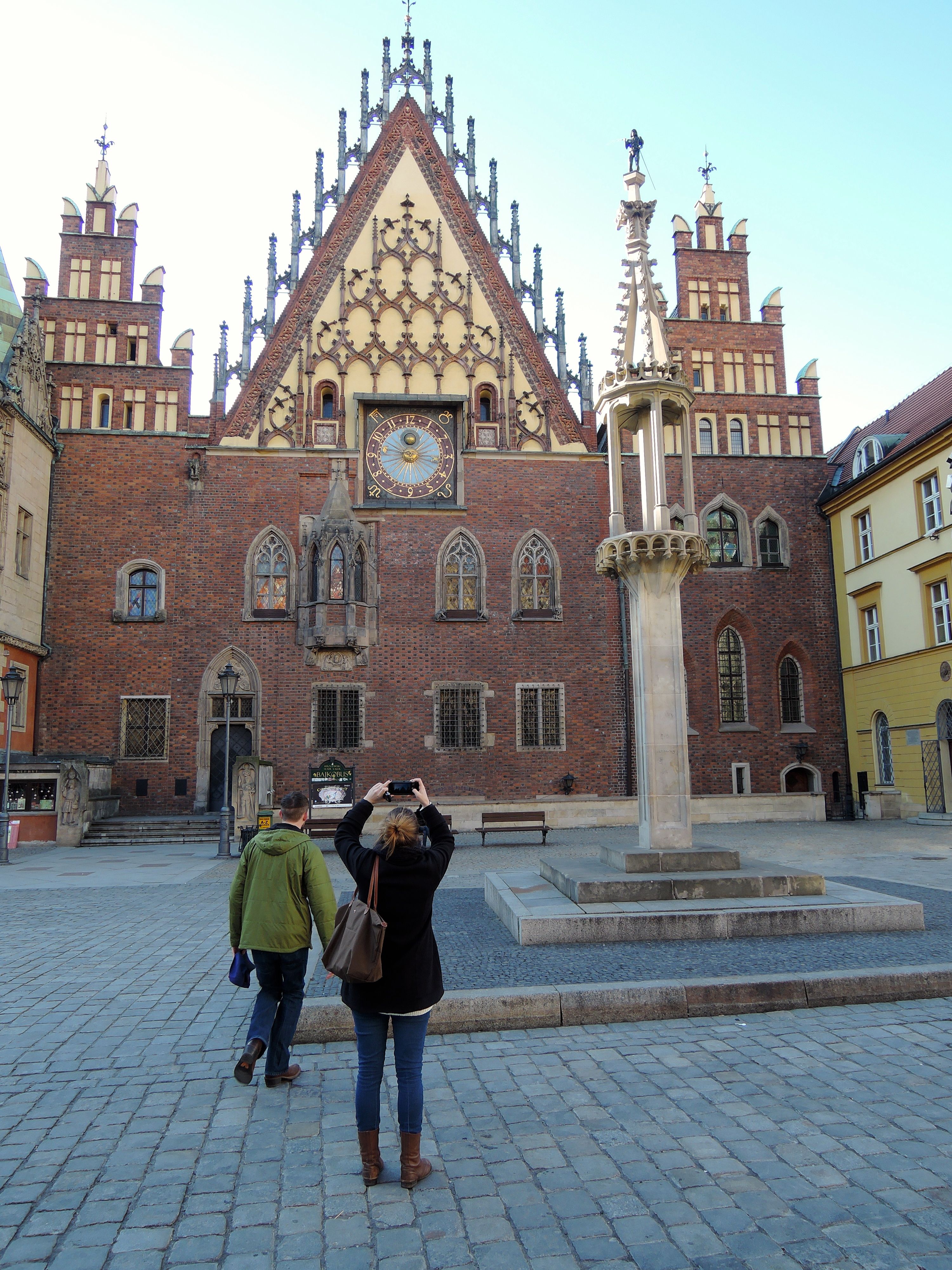
Here’s another shot of the Rynek, this time the east side of the City Hall complete with a life-sized replica of the original civic…pillory. Quoting from the sign, “This whipping post was used to dispense corporal punishments and publicly shame those convicted by the municipal court. The present pillory, placed here in 1985, is a replica of the neo-Gothic one from 1492, which was used until the 18th century and was finally removed following damage in 1945.”

Take thee care

Ouch

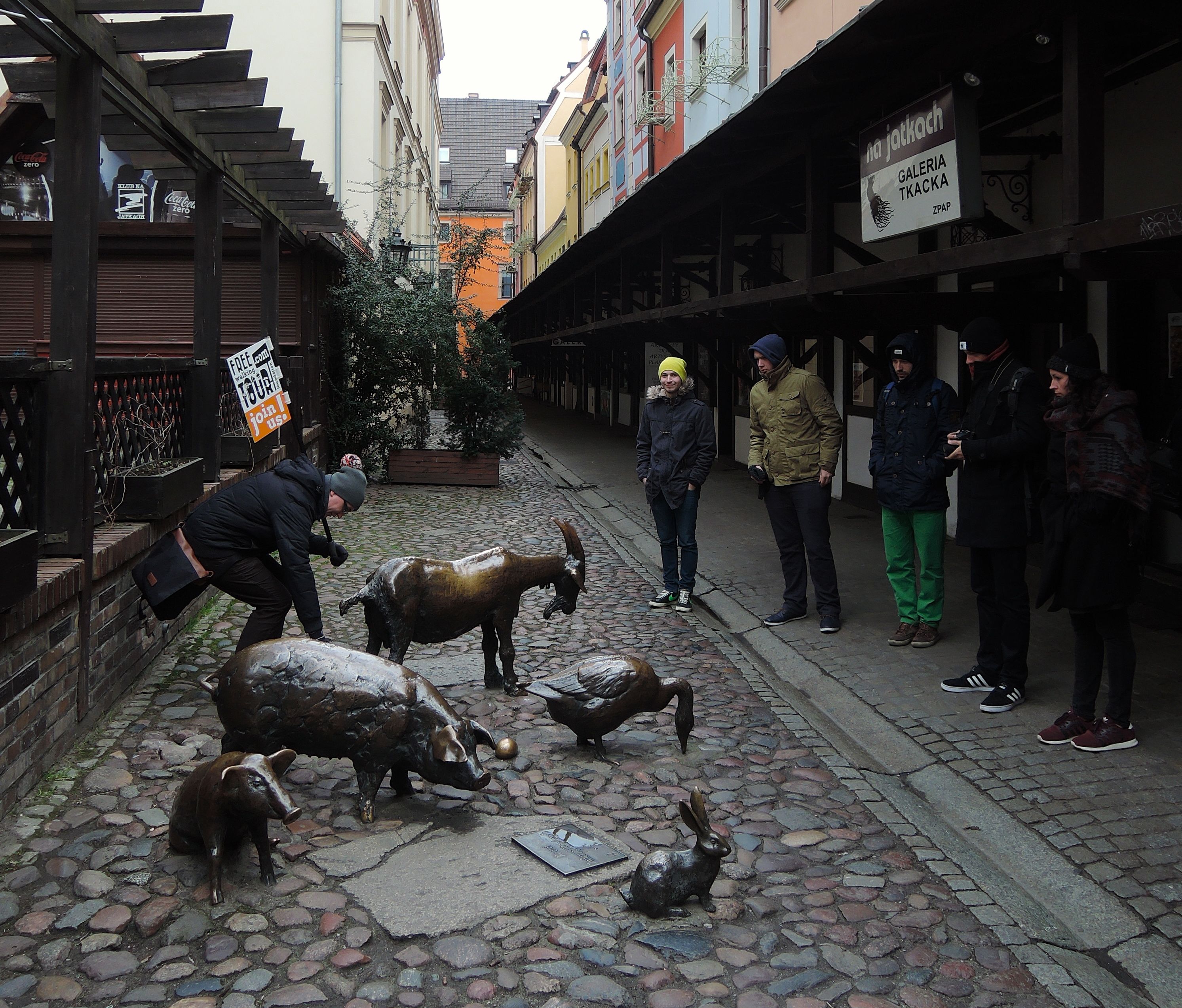
Our first stop outside the Rynek was the “Old Shambles,” formerly the slaughterhouse and open-air butcher shops for the city. Along with the actual 15th century stalls themselves (now chic boutiques selling jewelry and fine glass items), the alley features bronze statues of the variety of animals whose fate it was to feed the denizens of the city. Apparently it is good luck to rub parts of these sculptures, and Matt is demonstrating below that the most popular bit is the scat evidently deposited by the goat:

Literally shit or shinola

Literally shit or shinola

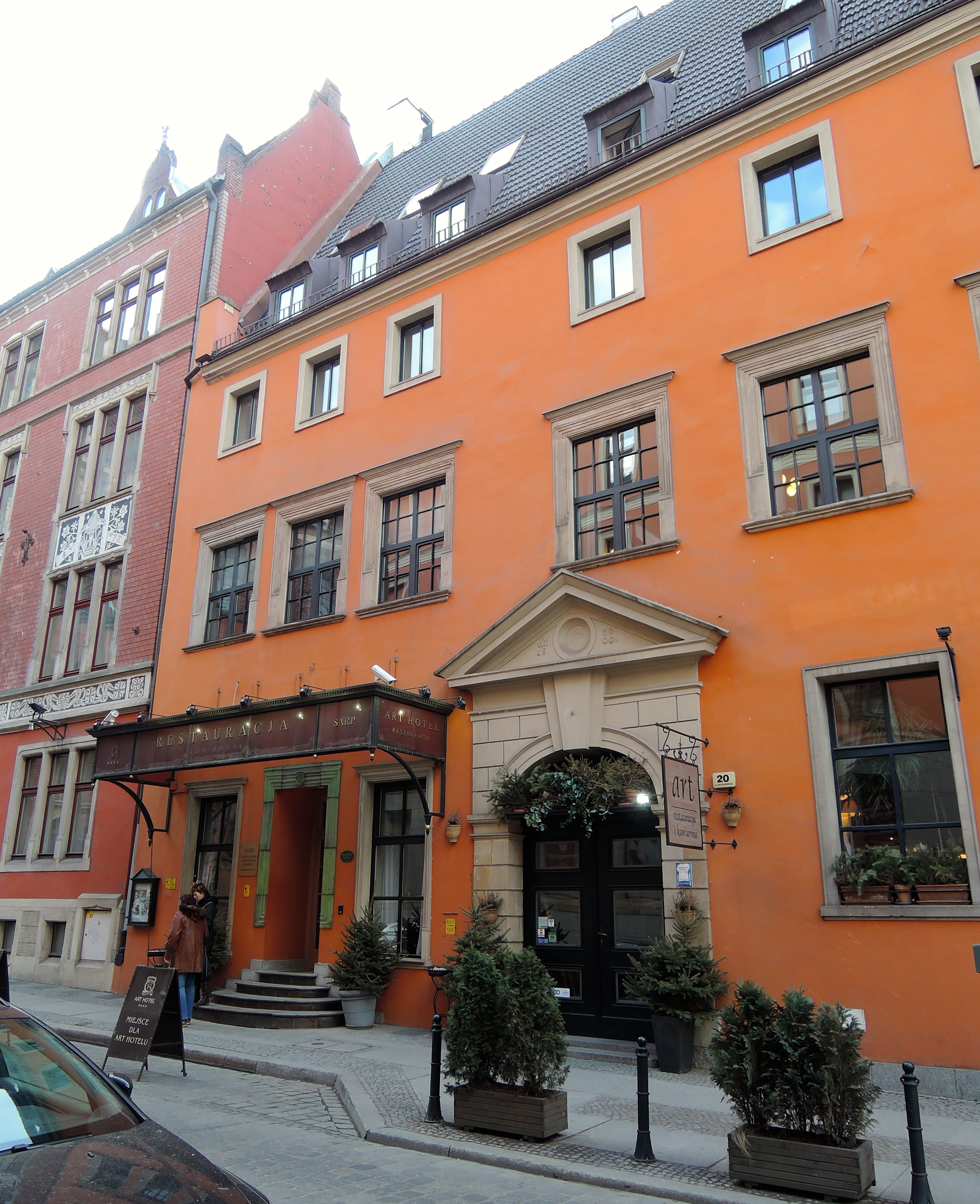
But before I go too far away from this very spot, see that lovely orange in the back of the picture above? That was the front wall my crib, the Art Hotel of Wroclaw. Lovely 15th century architecture, beautiful interiors, but I swear to God the place was haunted. I heard something like a door being opened and closed nearly every five minutes all night both nights I was there.  Hmmmm.

Not so sweet dreams

Not so sweet dreams

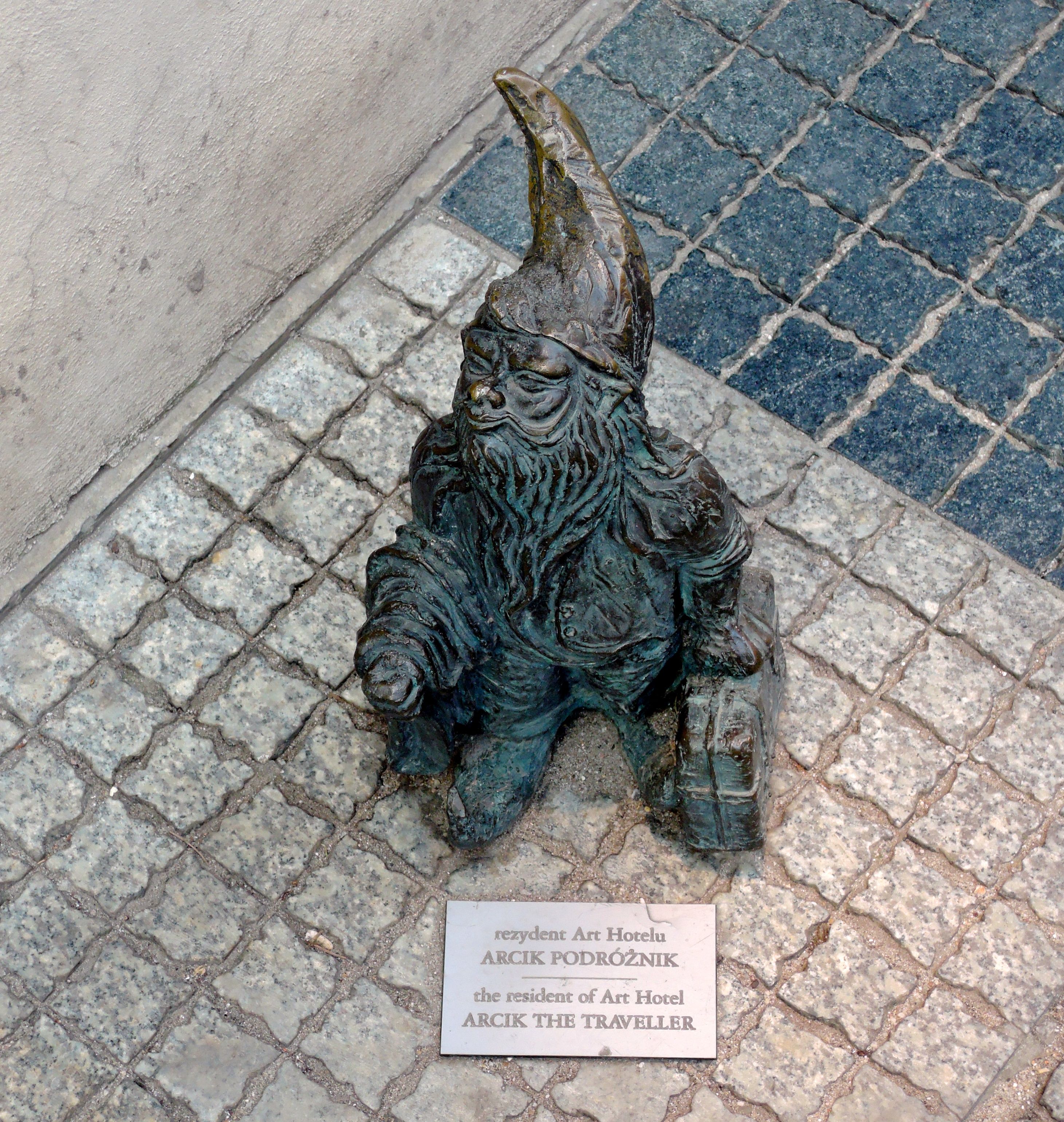
And no spot in town would be complete without…its own dwarf! Dwarves are a big thing in Wroclaw. They originated in the early 1980s as part of something called “The Orange Alternative” (red being the Soviet color, y’see) as an effort on the part of the Poles to combat the Soviet insanity with a little humor and absurdity of their own. Now there are some 300-400 dwarves scattered about the city (there’s even an app for that!), but the one outside my hotel was rather endearing:

Weary traveler

Don’t leave home without him

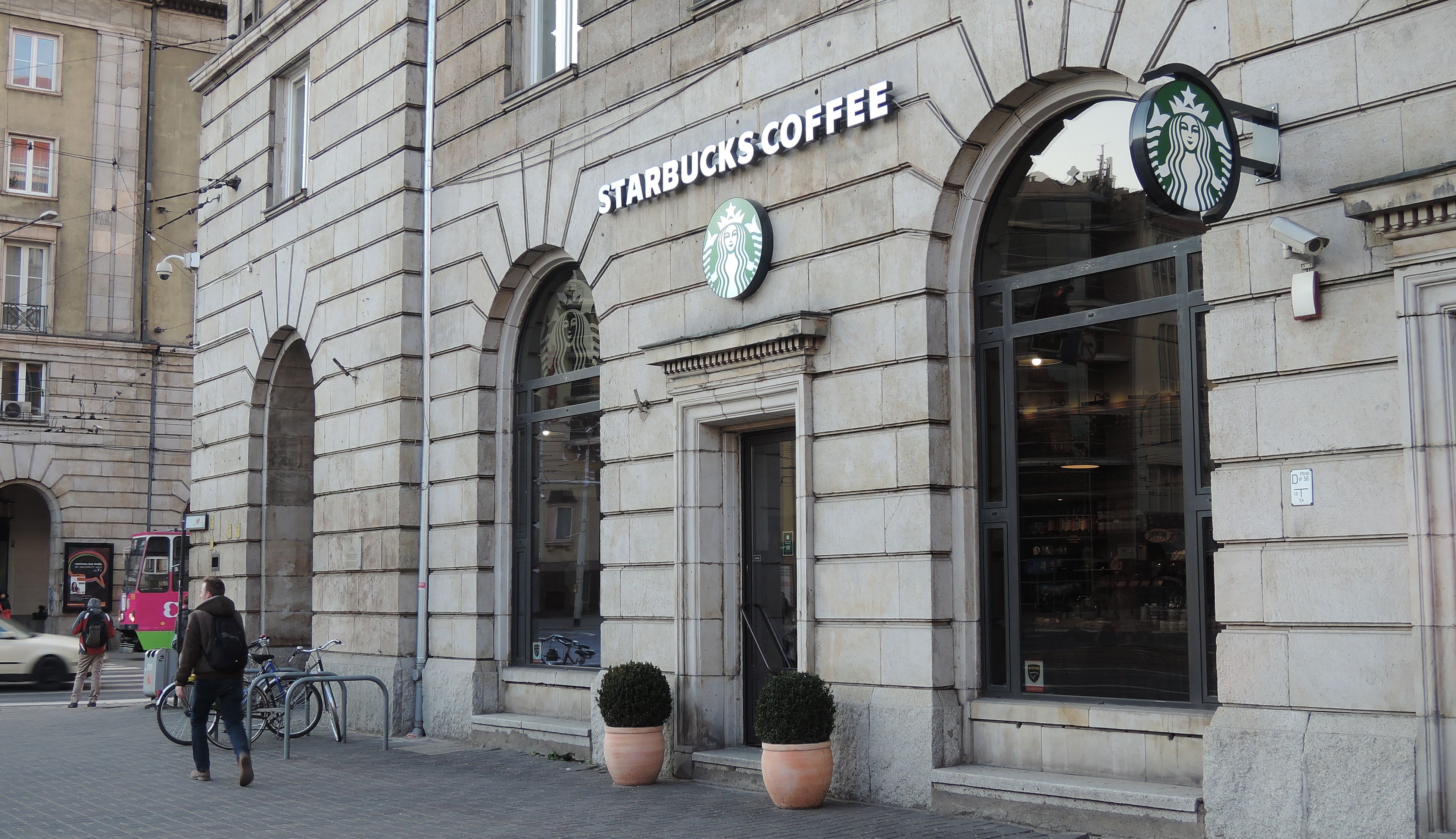
And let me finish this episode with a terrible confession. Do you remember when we used to travel as stripling youth, and after a couple weeks of (strange ethic cuisine), we would break down and go to McDonalds for a Big Mac and fries? Well, my need for stimulation is turning out to be unslakeable by the likes of cozy Art Noveau coffeehouses. I had to return to the Great Motherland of American Caffeine, yes, you guessed it…

I'm saved

I’m saved in Poland


Posted in Poland, Uncategorized | Tagged | 2 Comments

Planes, trains, and buses

One of the things I love about travel is, well, the travel, the actual getting on and off of a variety of transportation devices. There’s such a sense of excitement and anticipation in the build-up to the moment when it (the moving thing) begins to pull away from the gate. But I am getting ahead of myself.

Planes are probably my least favorite (and getting less so) mode due to the hassles of security and the intense compression of space combined with the seemingly endless duration of time. But I have to give a shout out to the good folks at Turkish Airlines, who make the process about as bearable as possible for those of us who chose to fly economy class. While I have flown them for both short (~ three hours) and long (~10 hours) hauls, their true hospitality shines through on the transatlantic flights.

Turkish has kept in play in economy class many of the amenities that we used to see on American carriers – pillows, blankets, slippers, toilet kits, free movies.  But just wait – the best part is the food. Hot, delicious, healthy, beautifully presented food, loads of it, served on real plates with real metal utensils, booze if you want it, and then times two. For.free. With choices of low salt/vegetarian/Hindu/and a bunch of others I don’t even remember.  Be still my beating heart.

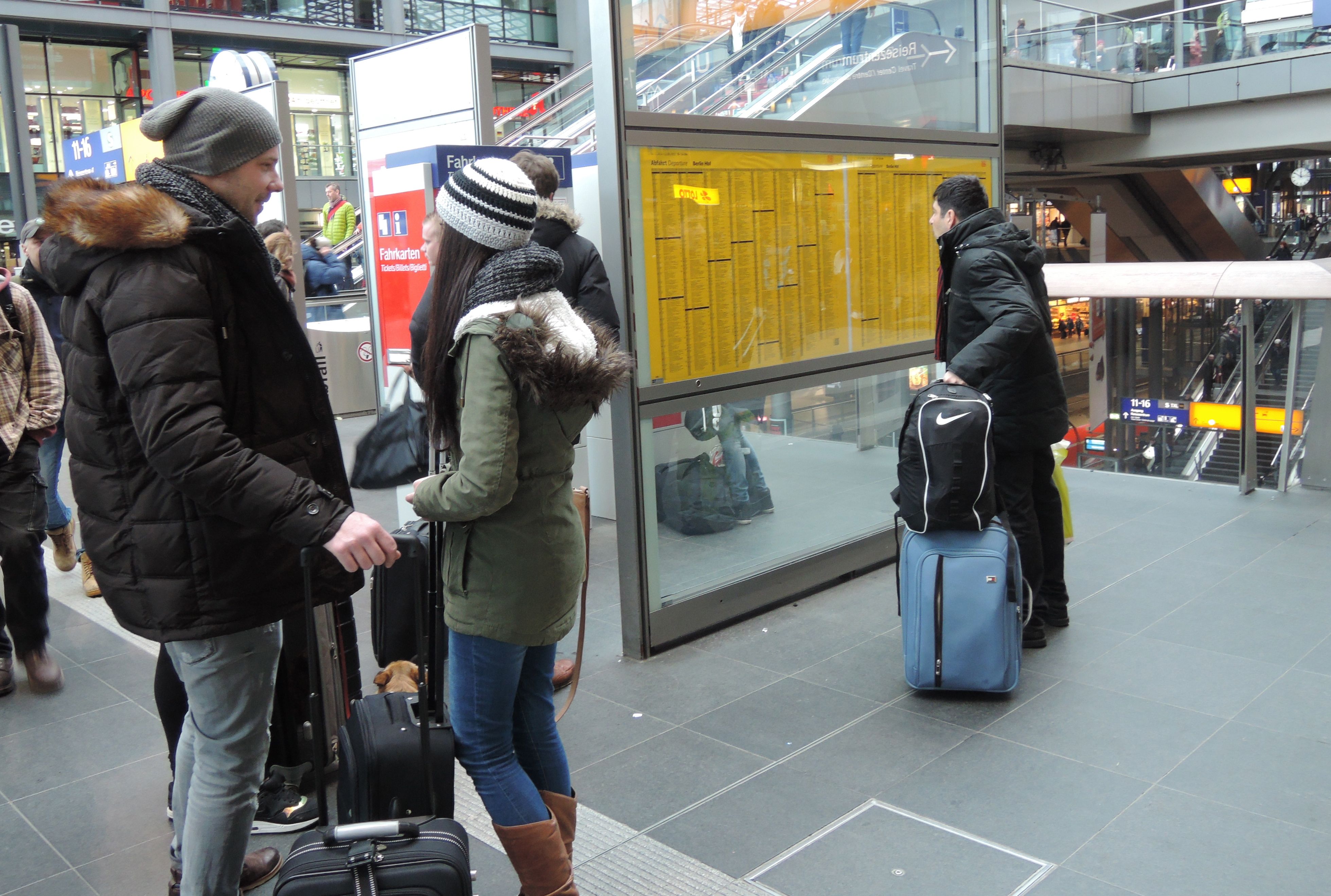
Next up are trains, which will always have a special place in my heart due to the association I have with my first European jaunt complete with Eurail pass and Youth Hostel card. (Remember those?) So, although most of my Polish trip is on Polskibus (more about that in a moment), I did plan one grand trip at the end on Deutsche Bundesbahn, and so I went to the Berlin Hofbahnhof to secure a ticket.

On the road again

Headed out

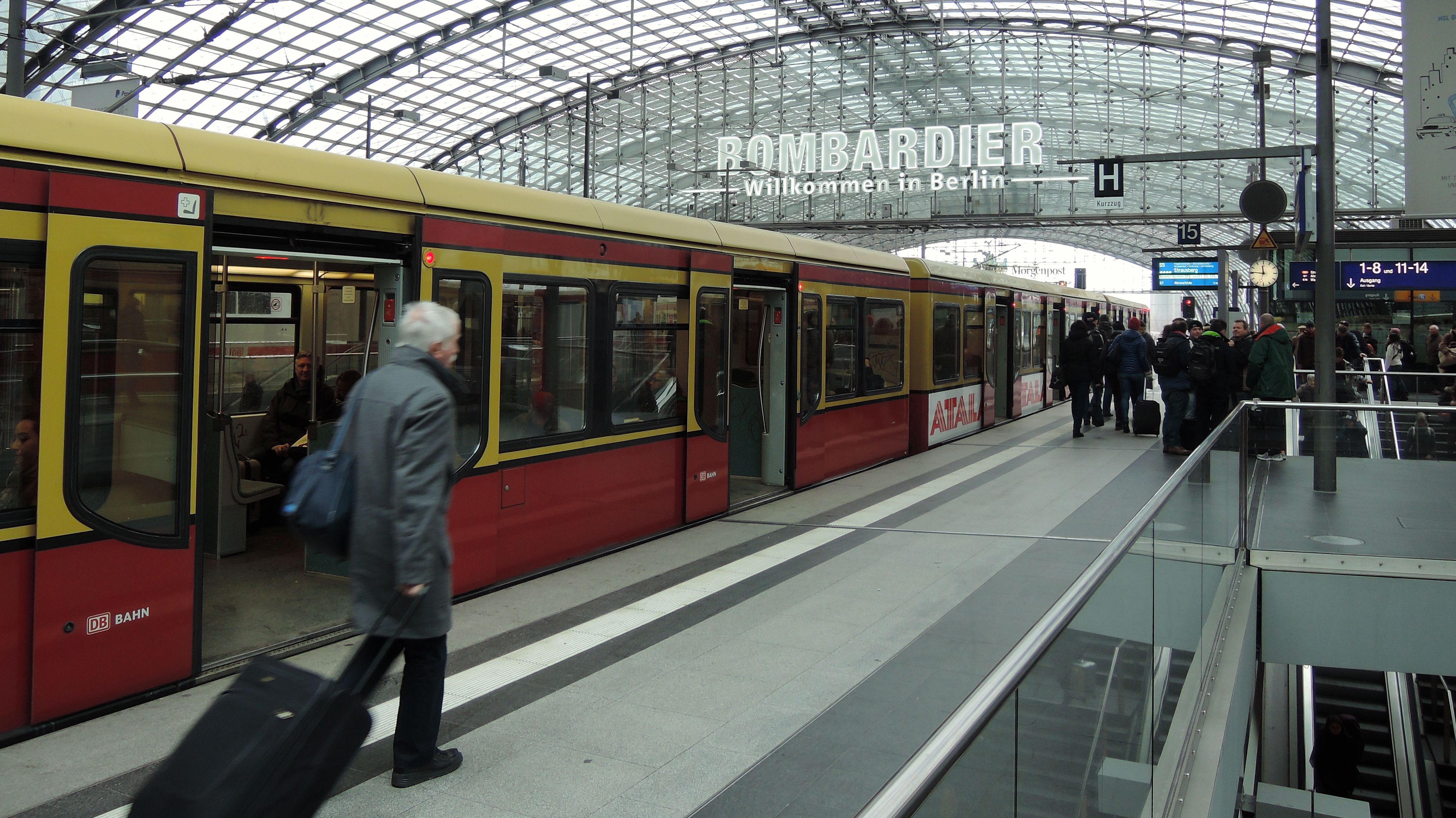
Okay, you purists, this is the S-bahn (light rail), not the real train itself.  But doesn’t it just get your blood pumping to see the high curved ceiling and the welcome sign? Can’t you just hear the three-toned bell piped throughout the edifice with the sonorous and unintelligible German voice announcing the arrival or departure or delay of some train or other? Isn’t the sense of adventure and romance palpable?  Well, it certainly is for me.

Did I miss my train to Mannheim?

Did I miss my train to Mannheim?

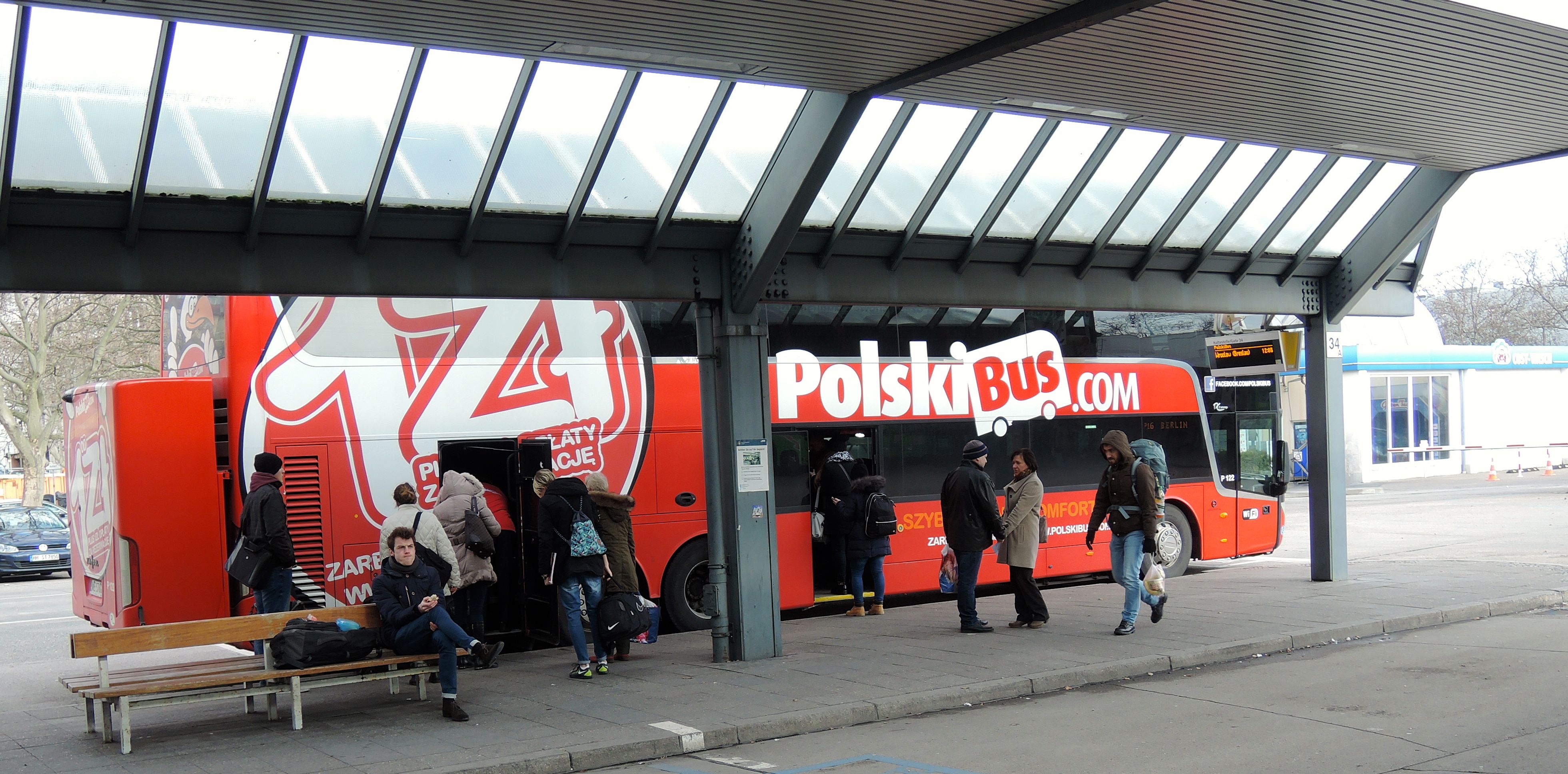
That being said, this trip I’m saving money on transport and spending it on hotels, which, as I get older, are more important due to the quality of the beds. So. I did a little research and learned about Polskibus, the new economy bus company in Poland which is similar to Bolt Bus in the Northeastern and Northwestern corridors of the US.  It’s really really cheap and really really handy. All you do is go online, book your itinerary, print out your ticket, and show up at the right time in the right place and go. Prices are based on how far in advance you plan and the popularity of the route.  My entire trip around Poland is costing me less than $25. Yup. The trip I took yesterday from Wroclaw to Krakow (and I’ll tell you about Wroclaw in the next post) cost 5 zloti, about $1.25. One dollar and twenty-five cents for a three-hour bus trip complete with cookies and apple juice.  It cost me three times that to take a taxi from the bus station to my hotel. It’s nothing short of a miracle. So here’s a shot of my first Polskibus leaving from Berlin to Wroclaw this past Monday:

Hard to miss

Hard to miss

Before you snort coffee out your nose, just remember that red and white are the national colors of Poland and, well, yes, the rest of it is just loud, but it makes it easy to spot in the dreary grey bus stations.

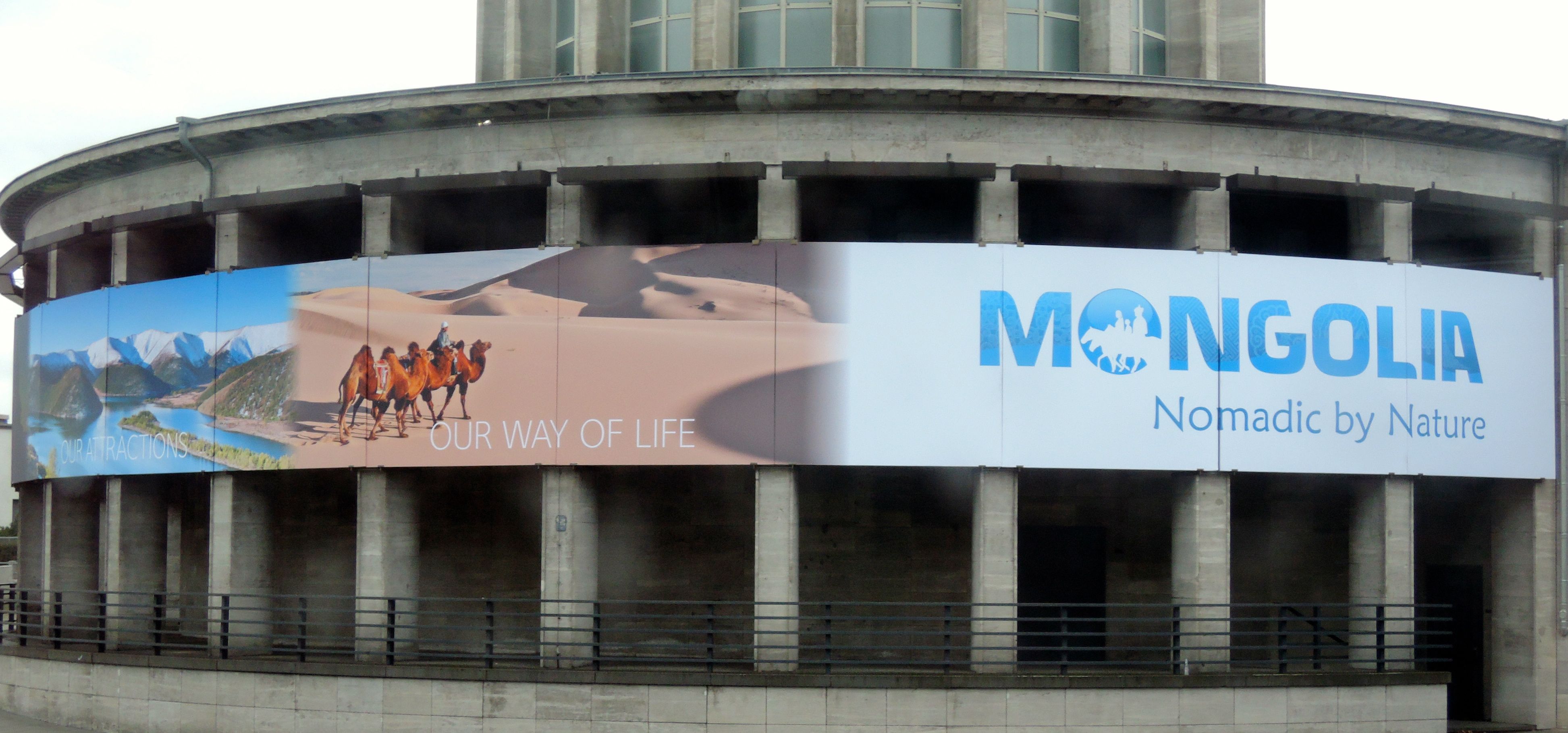
So, the first bus trip from Berlin to Wroclaw was about four and a half hours and took us through the countryside that was rather flat, so no great scenery to report (although quite a few windmill farms, which was good to see).  The only good shot of the trip was this ad that I spotted as we headed out of town. Who knew Mongolia had a marketing department? Certainly not I.  But here’s proof:

Y'all come, now

Y’all come, now

All right, I’ve played you long enough. Next post I’ll start telling you about my Polish adventures for real. It’s a fascinating place to be sure and I’m thrilled to have the chance to learn more about it. Stay tuned.

Posted in Travel - Airport | Tagged , | 1 Comment

Pretrip: an Ode to the Istanbul Airport

On the road again..

Where shall we go today?

Where shall we go today?

As you may know, my trip to Berlin last December ignited in me a desire to know more about some critical events of the 20th century, most specifically World War II and the era leading up to it. This has been made doubly compelling because I am planning to write a book about my uncle who spent seven years in Europe between 1937 and 1944, writing, traveling, carousing, sleeping around, and then getting finally serious and fighting under three flags, flying sorties across the Channel and sh*t like that.  His escapades ended when the jeep he was driving in Naples (overloaded with booze, no less) turned on it side, breaking his arm in several places. (Okay, ’nuff about him for the moment and more about me). Sometimes the passion tells you exactly what it wants, and right now, it wants to See The World, specifically more of Central Europe.  So off I have gone, yet again, the Dona Quixota of what’s on the other side of that there mountain, and that means I’m going to be blogging for a bit from one side or the other of the River Odra or the River Vistula, the complicated and conflicted land of Polanie.

But before we get there, the introduction.  This trip will start and stop with Turkish Airlines and its service to Berlin via the “İstanbul Atatürk Havalimanı,” its official name. Can I tell you how much I love this place? I’ve now passed through its sprawling corridors some nine or ten times, and I’ve enjoyed it, if not every time, nearly every time (let’s not count the visit that required 12 hours on the metal couch). And its a good thing I like it, because most layovers at IATA are substantial. The flagship airline Turkish now boasts that it flies to more cities than any other airline in the world, and that means, well, lots of layovers for lots and lots of passengers, 50+ million of them last year.

But that’s precisely what creates the wonderful floating polyglotistic/multi-cultural stew of humanity that throbs constantly through IATA’s long white hallways and busting retail thoroughfares. Order a latte or a Efes beer at one of the cheery-and-comfortable-but-overpriced eateries and watch the civilized world walk by, literally. Young French backpackers, headed for New Delhi, charging their laptops for the last time; observant Muslims wrapped in bath towels (and nothing else) rushing to their exit lounge on their way to Mecca; gaggles of well-tanked and slightly obnoxious British sports fans yucking it up on their way to a football match somewhere; Asian businessmen obviously showing frustration with the poor WIFI available; well-dressed young women covered from head to tow in abayas but showing their swag with their Vuitton and Prada and Michael Kors; you’ve got it all.

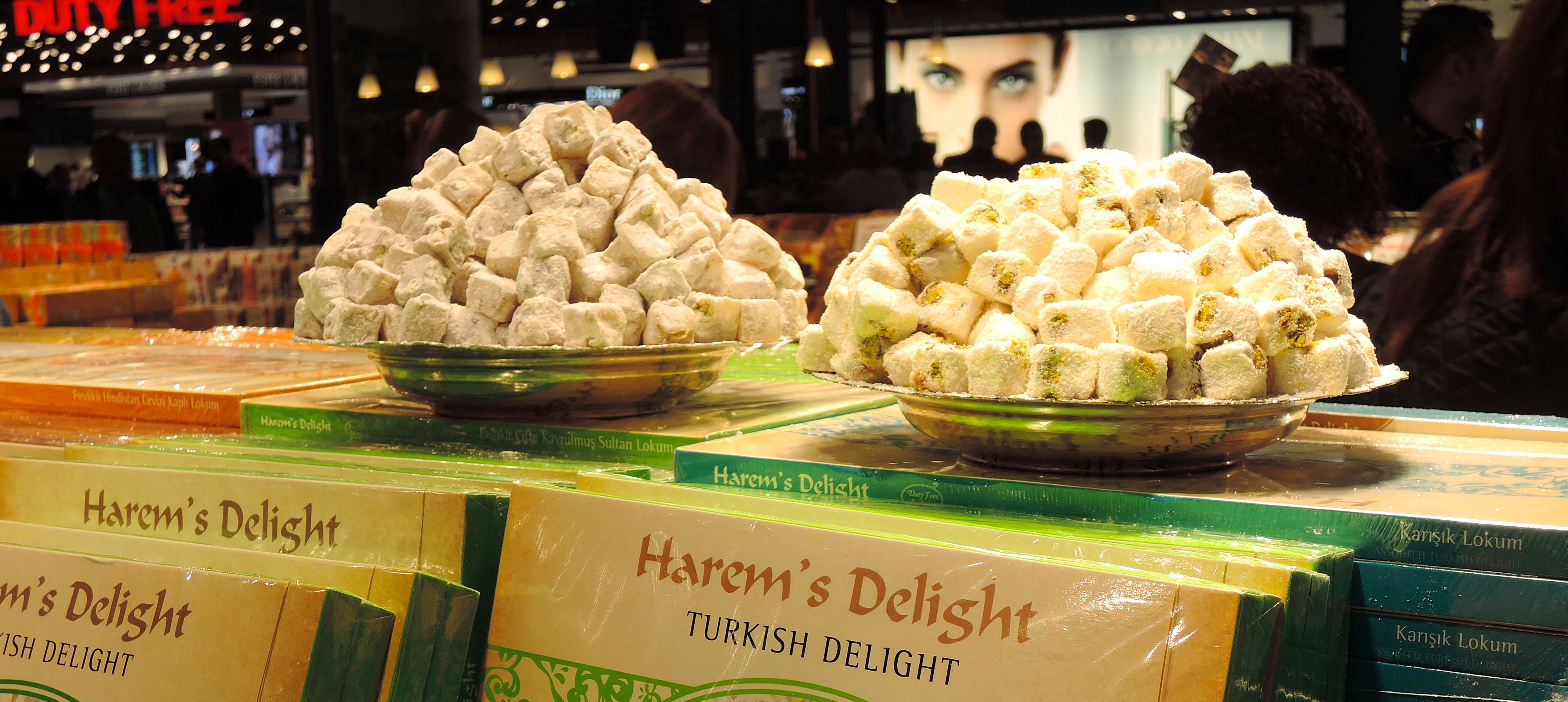
But the best part of all this is – it works. Flawlessly, or so it seems. Everyone is more or less calm, well-behaved, soft-spoken, respectful, perfectly pleasant.  Even the children seem to know they can’t throw manic tantrums around here. It is as if we all know we’re here together for this brief but important time, coming from HERE, trying to go THERE, and no one, really, is in the majority, no one, really, is in charge, and it simply behooves us to Just Get Along, and so we do. (Personally, I think it might have a lot to do with all the mouth-watering samples of Turkish delight that the hospitable locals keep on the ready in the gift shops and duty-free stores for the hungry hordes – my personal favorite is the double roasted pistachio….mmMMMmm…..

Mighty fine

Mighty fine


Posted in Uncategorized | Tagged | Leave a comment

All that glitters…is not Orogold…

This past weekend I was fortunate enough to spend some time in Boston, one of my beloved B-cities.  The occasion was J’s sister H’s 50th birthday, complete with two nights in a luxus hotel, a trip to the Museum of Fine Arts (a blog in and of itself), shopping ’till we dropped, dinners with friends, and all manner of girly fun.  The incident that spawns the reflection you are now reading comes from an odd incident in the Copley Place shopping center, which, according to its website, is “Boston’s most distinctive shopping destination…a dazzling mixed-use complex…unlike any other in the Boston area…with 75 fabulous stores including Neiman Marcus, Barneys New York, Tiffany & Co., Jimmy Choo….” and so on. You get the idea.  I just happened to find myself in this haven of glitz and glam because I was intent on finding a new pair of books at The Walking Company, which just happened to be located at the far end of the complex from whence I entered.

Okay, so a key element of the back story is critical here.  For many years, I have prided myself on creating and presenting to the world a very carefully crafted “genteelly nondescript” personal image, particularly when I travel overseas. During the winter season, for example, I sport a long black coat (French label from a high-end consignment store) of good cut and elegant fabric. A small fur scarf around the neck.  Black boots and a slightly worn but still serviceable Longchamps bag slung messenger-style. Earrings, understated makeup. Just the thing to make me completely invisible to the majority of the population but also just the thing to make me momentarily visible for prompt and polite attention when I need it (hotels, restaurants, airline check-in counters). I plan to be ignored.  I like to be ignored. I strive to be ignored. It serves my purpose.

The scene is set.  As I come to the end of Copley Place, I still had not sited The Walking Company.  I walked up to a pair of young men at the entrance of some brightly-lit cosmetic store and asked if they knew where The Walking Company was located.

Abandon Hope All Ye Who Enter Here...

Abandon Hope All Ye Who Enter Here…

And the well-oiled machine leaps into action. “No, we don’t know where it is, but here’s a free sample of our amazing product.  Let me ask (Name) if he knows.”

(Name) quickly shows up and says, “I don’t know where The Walking Company is, but do you know about Orogold? We have an amazing product that you might really like.  Do you need help with the lines around your eyes?” (Okay, honest show of hands here – how many of us don’t need help with the lines around their eyes?)

Before I knew it, I was cozy in the high chair in cosmetic land and (Name) was speaking rapidly and soothingly to me as he rubbed his prized elixir from the Fountain of Youth on the aging bags below my eyes. Skeptic that I am, I had to admit that the left eye (recipient of his kind ministrations) looked considerably better than the right eye (untreated).

Then the pitch begins.  He brings out the book.  A year’s supply of the eye serum costs retail, yes, $248.00.  And the collagen moisturizer (all organic!) that he also used, another $248.00.  But it’s too early for me to make any quick decisions.  He asks to see my wrists.  He rubs on the exfoliant gel and quickly rubs off a terrifying amount of greyish grunge, clearly the detritus of my deficient personal hygiene. And he follows up with a gloriously creamy substance that makes my forearm have the glowing and dewy appearance of a Botticelli angel.  Again, the prices for these substances hover in the range of car payments, albeit for a large supply.

We have now reached The Truly Awkward Stage, in which I really want to get the hell out of Dodge and he has invested the time and energy which should result in a significant sale.  Benjamin Netanyahu and Mahmoud Abbas have nothing on us.  He presses his suit; I demur. I complement his product knowledge and salesmanship; he offers significant discounts based on our personal relationship; he pushes, I push back; he pushes, I push back again, stronger this time. What I realize (after the fact, in the privacy of my hotel room as I peruse the marvel that is the Internet) is that I am not alone; the online complaints board sings many choruses of a similar tune about this particular retail establishment; this exact sales tactic:

http://www.complaintsboard.com/complaints/oro-gold-c382664.html

I might have expected this  tactic in some places overseas – in a Mediterranean or Middle Eastern culture perhaps, where trap-baiting and intense price negotiation are simply part of the deal, expected and perhaps relished on both sides.  Since I am pretty weak at this type of interaction, I would have had my game face firmly planted on and riveted tight – the way one needs to be to walk through the touristy area around the Hagia Sophia in Istanbul. But this was Boston, my Puritanical, uptight, “who do you think you arh?” Boston, where I was taken unawares.

So here’s the piece that is chewing on me.  Why me? How did I become a victim of high-pressure sales tactics, me, a person who prides herself on judgment and discernment? Did I look old?  Insecure? Vulnerable?  If so, how?  Was it that I just got too close to the Venus Fly Trap that passes as a retail establishment? Was it because I was alone?  Did I not want to appear rude and/or socially unacceptable? Did (Name) simply take advantage of my willingness to engage with him? Or, was it just that I was a woman. Any. Woman. Any woman seen as bait in the retail pool, someone whose personal lack of confidence (age, appearance) or perceived unwillingness to be bitchy can be exploited for commercial gain?

Beat.

As I reflected on this experience, I connected back through my life to a few other odd and uncomfortable experiences of this nature that I have had over the past few years.  One was fairly recent, here in the lovely city of Portland, Maine, where I now call home.  I was buying a camera and the nice man waiting on me (“JL”) simply didn’t seem to be able to hear me when I asked, over and over, for him to stop explaining the camera features to me.  “Stop,” I said. “Please stop, my head is full.”  “Please don’t tell me any more about this. I can’t understand what you are saying.”  “Let me spend some time with this camera and I will come back.” Now JL seemed pretty harmless and just excited that someone was actually buying a camera From Him in his brick-and-mortar store rather than picking his brain on a whole host of technical issues and finding and buying the product online for ten dollars less, but it felt….oppressive, awkward, uncomfortable.

And let me not forget the Georgians, as if I could ever forget the Georgians.  I had two very unsettling experiences with taxi cab drivers in Tbilisi.  The first time, I was going to the airport and I negotiated a price in advance (as advised) prior to entering the cab.  When we got to the airport, the driver asked for a significantly higher price and, when I balked, made a motion and several of his (large and menacing) buddies approached the cab, to “assist” him with the communication difficulty we seemed to be having.  Truth be told, I didn’t have the stones to stick around very long after that, paid his price, and sprinted for the relative safety of the airport terminal. The second experience, returning to the country after my time away, I managed to select a driver who told me the train was not running from Tbilisi to Batumi that day, but that he would be delighted to drive me there himself (a five- or six-hour run) for the mere price of 300 lari (about $180 bucks).  I made him stop at the Marriott Hotel, had the front desk clerk call the train station, learned that the train was indeed running on schedule, and had the selfsame front desk clerk tell the driver *to take me to the train station as requested.*  And, as in the first story in Boston, I am a tall nondescript woman of middle age dressed professionally. What was my hook?

WFT. Sorry. This gets my goat.  In Georgia, I rationalized my experiences that “foreigners were just cows to be milked.”  I could excuse some of this behavior in the sense that the disparity between visitors and the inhabitants was pretty great and that most of us in the country were there on someone else’s dime (usually a government or NGO) and that frankly, we could afford the disproportionate “new” price that was being offered. Georgia has been a little out of the cultural mainstream for a while, and I could see how the chance to squeeze a little bit more out of all of us was a short-term temptation.

But that just doesn’t hold in this country, particularly in a high-end store in a high-end mall in a high-end part of Boston.  If I take a step back, I see that I am a highly educated older white woman with well-developed critical thinking skills, considerable public speaking and debate experience, and an extremely large vocabulary.  Not everyone has the tools in the toolkit that I do.  *And yet I still felt awkward, shamed, embarrassed, and hard-pressed to worm my way out of the cozy chair in cosmetic land, to end the conversation on some note of civility, and go my originally-intentioned way to buy boots.* What does this mean for younger women? Women whose first language is not English? Woman with less confidence and security than I have?  Hey, it doesn’t even have to be about women (it’s just that’s what I am, so that’s what I see). People. That we are all targets, cows to be milked.  If we want to be civil and acknowledge humanity, in some contexts, perhaps this is the price. It’s not a pretty thought.


Posted in Uncategorized | 2 Comments

Einen letzten Blick (one last look)

I have a handful more photos of my wonderful week in Berlin, and before I completely forget all the interesting little details about my time there, I’d better finish up this chapter.

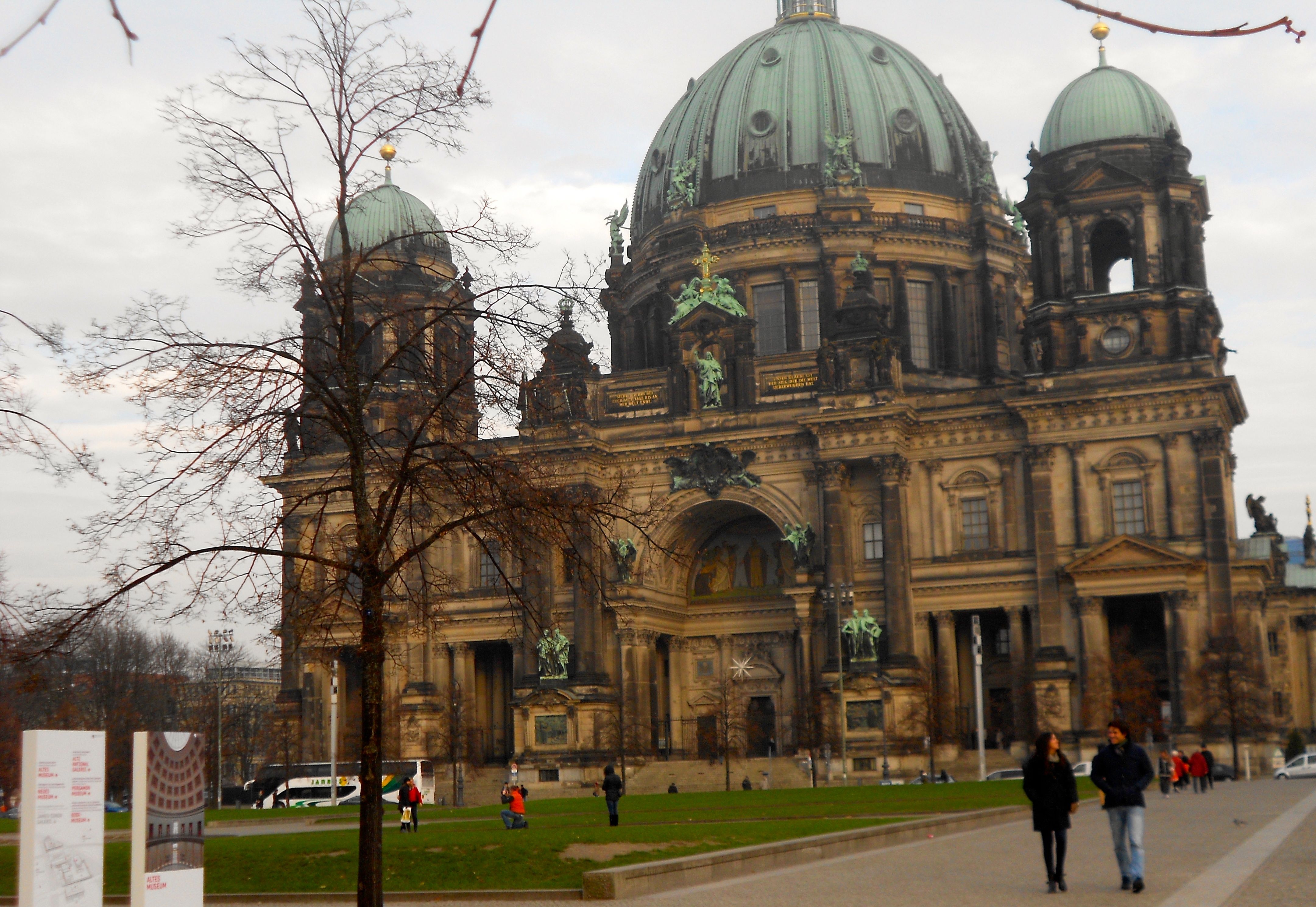
On my last two days in the city, I really pushed myself to try to touch the bases of the rest of the historical sections.  This is made a little easier these days by the fact that the Germans, in their traditionally well-organized way, have both created and recently enhanced Museum Island, historically the oldest part of the city and physically located near the heart of old East Berlin. According to Wikipedia, “it is so called for the complex of five internationally significant museums, all part of the Berlin State Museums, that occupy the island’s northern part.” Now a World Heritage site, these include art museums, historical museums, and archeological museums, as well as the Berliner Dom, the distinctive Protestant cathedral that is the largest church in the city and a significant profile on the civic skyline.

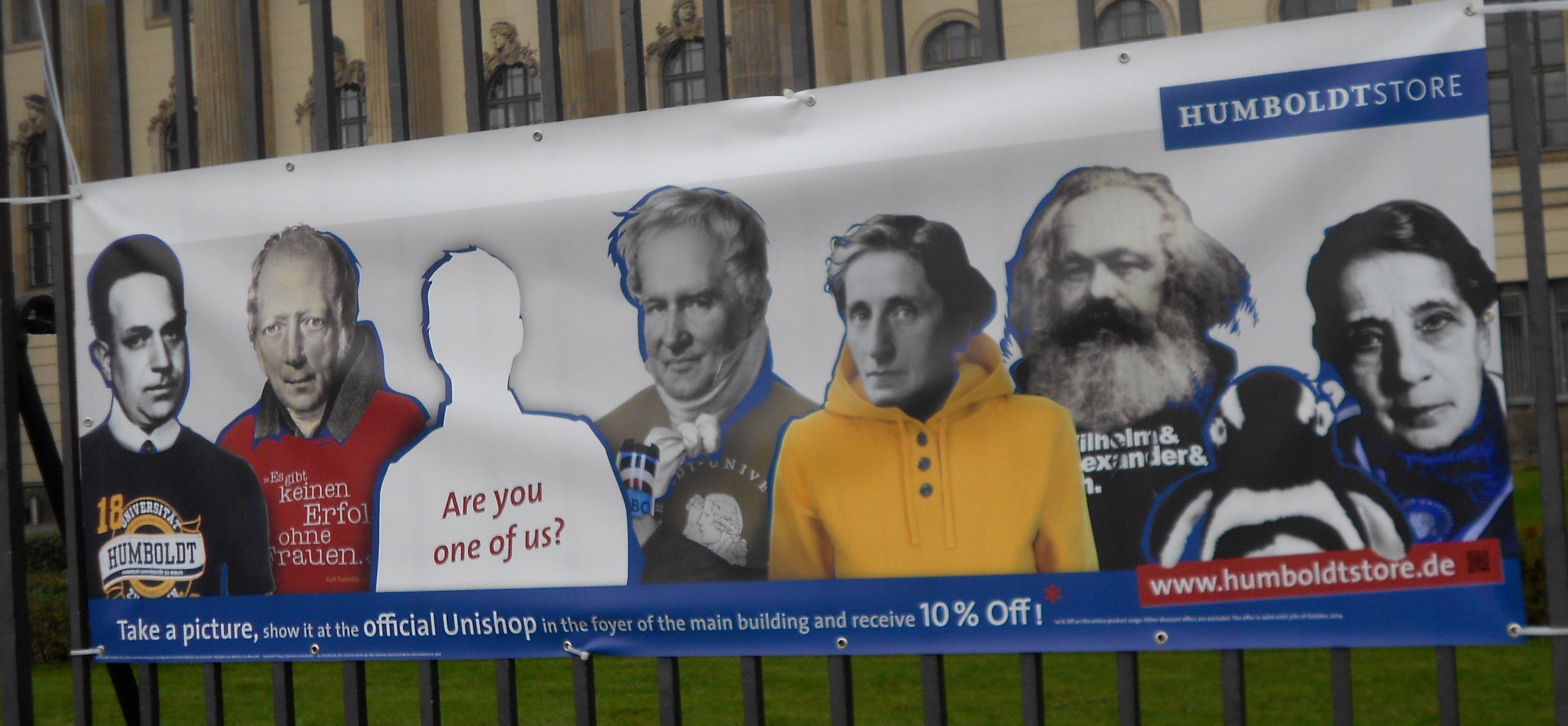
On my way down Unter den Linden to the Museum Island, I took in two key spots.  The first is Humboldt University of Berlin (established 1810; home of 29 Nobel Prize winners), where I encountered this friendly advert for shopping at the uni bookstore:
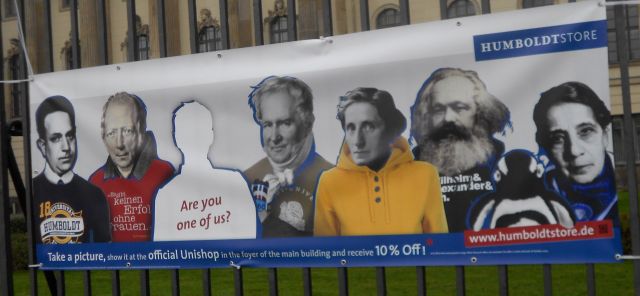
Humbolt

I’m ashamed to admit that, besides Karl Marx (second from right), I really don’t know who the rest of these folks are.  Guess it’s time for an academic refresher, and clearly I don’t qualify for the discount under any circumstances.

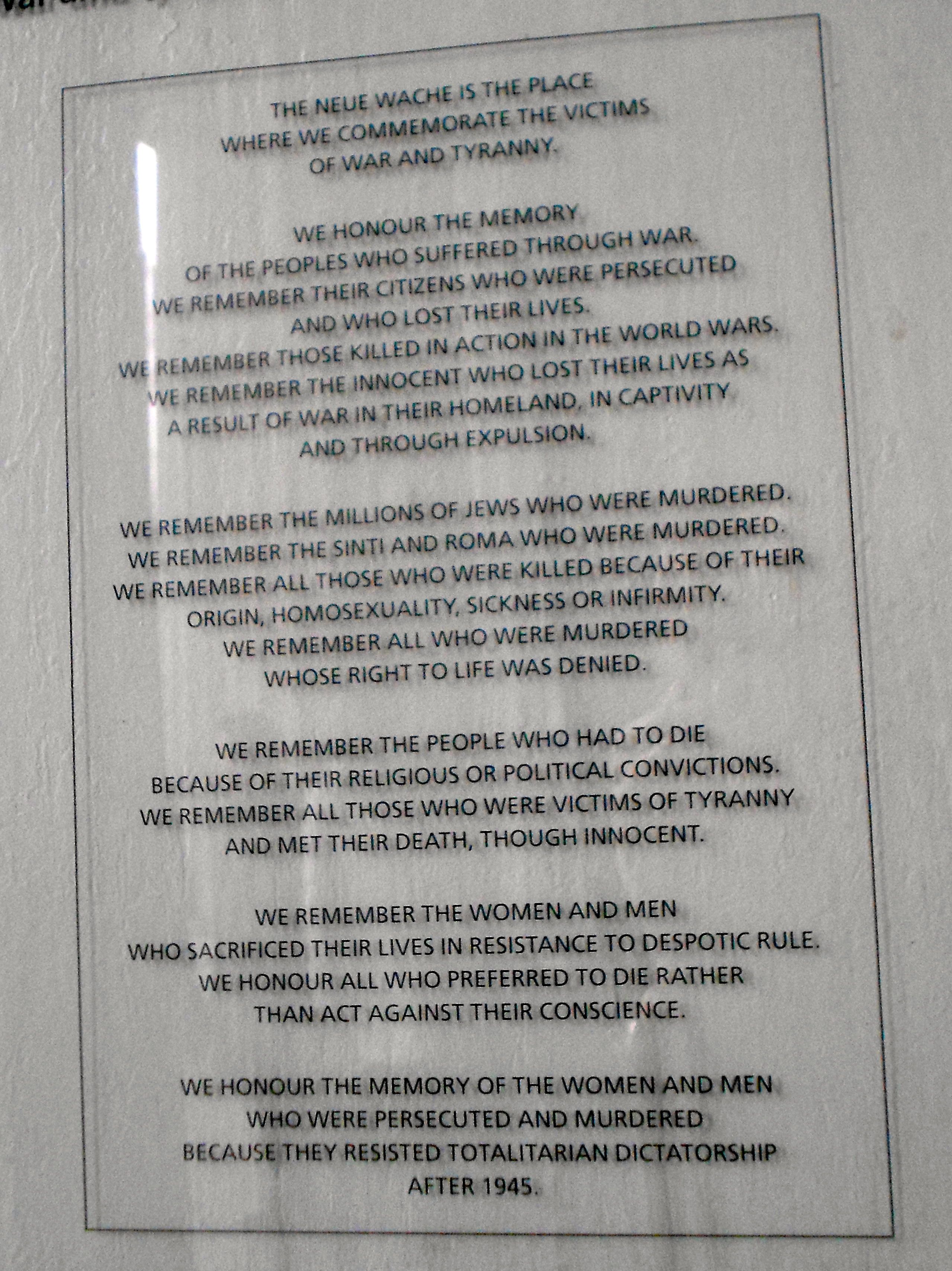
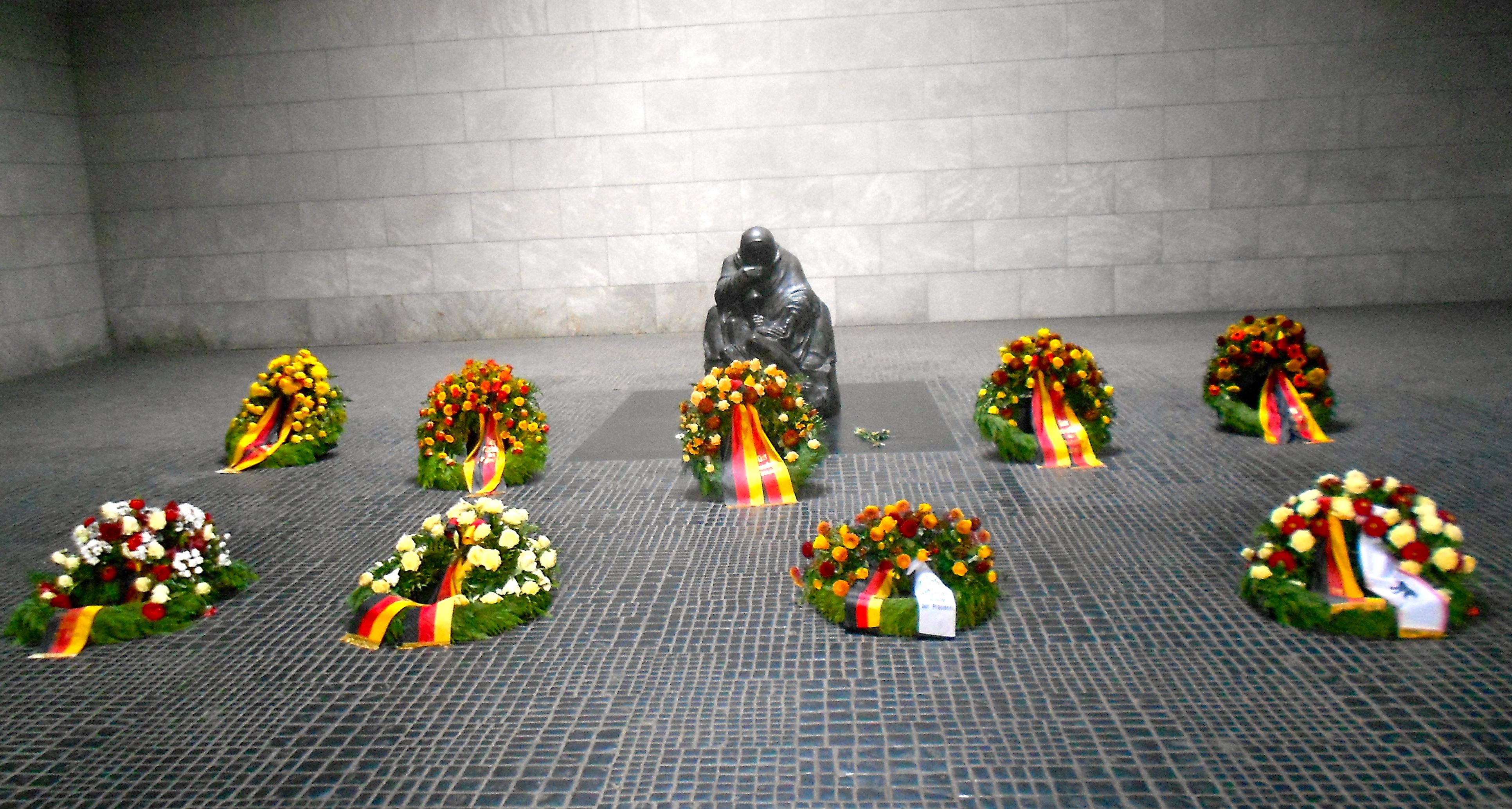
A little further eastward, one passes the Neue Wache, New Guardhouse, the building that since 1931 has served as the “Central Memorial of the Federal Republic of Germany for the Victims of War and Dictatorship.” This is a tall order for a small building, and one that has a lot to account for.  But it faces up to its historical challenge with gravitas.  I found myself extremely moved by the words placed in the foyer:
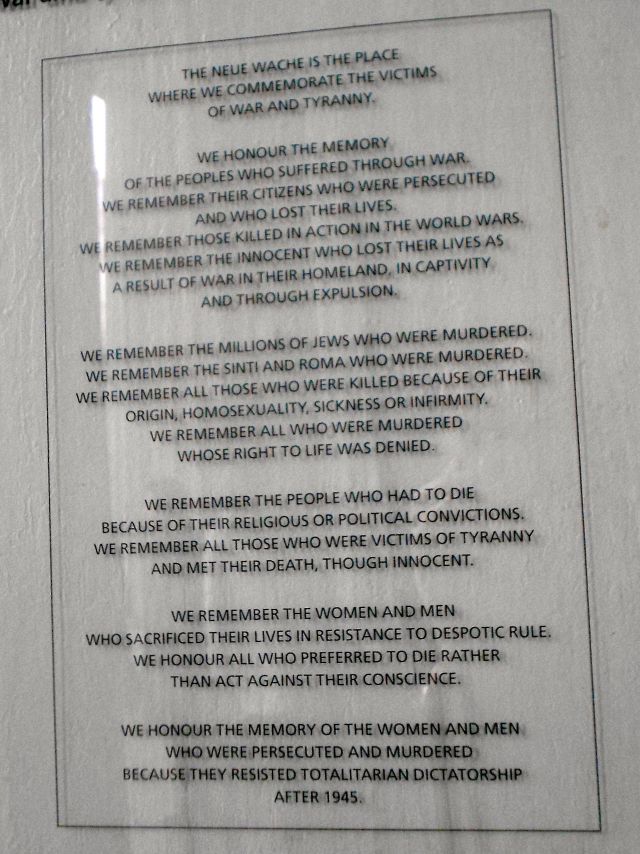
Neue Wache

Peering through the bars into the inner courtyard, one sees a large space graced with “an enlarged version of Kathe Kollewitz’s sculpture Mother with her Dead Son. The pieta-style sculpture is directly placed under the oculus, and so is exposed to the rain, snow and cold of the Berlin climate, symbolizing the suffering of civilians during World War II.”
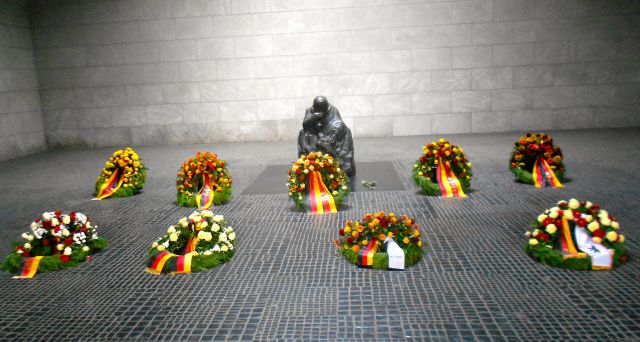
Memorial to Fallen

The next stop was the German Historical Museum (Deutsches Historisches Museum, or DHM). The museum “defines itself as a place of enlightenment and understanding of the shared history of Germans and Europeans. It is often viewed as one of the most important museums in Berlin and is one of the most frequented. The museum is located in the Zeughaus (armoury) on the avenue Unter den Linden as well as in the adjacent Exhibition Hall designed by I. M. Pei.” That short quote tells you a lot, and reflected my experience accurately – Germany as a part of Europe, AND the big division between old and new. The Pei building held the current changing exhibits and the Armory the permanent collection.

There was far more to see in the DHM that I could possibly take in during the time I was there.  Because I am working on a book about my uncle, I also focused my attention on the 1933-1945 time period, which the museum documented with both thoroughness and great compassion. The biggest takeaway for me of the visit, as well as of my entire time in Germany, is that the 20th century was far, far more devastating to Germany than I had thought, and that living in Germany today is far far more complex and nuanced than most of us may ever be able to comprehend.  (Okay, we had 9/11.  They had some version of 9/11 ….for a very long time.)

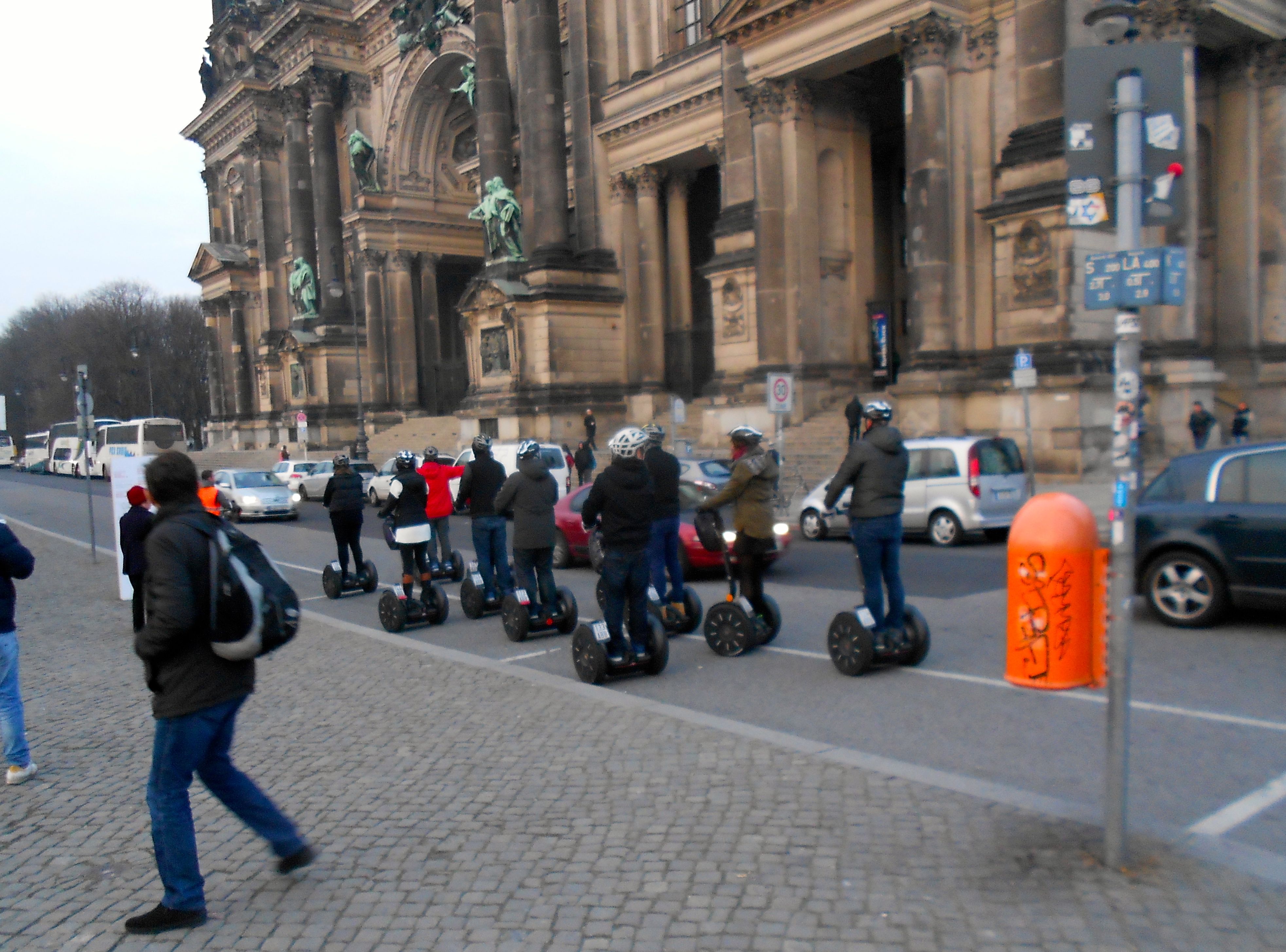
The cathedral was my next goal, figuring that the later the day became, the less likely I was to want to clamber my way to the top, as is my want with buildings of this nature.  Just ss I was heading in, I saw a group of hip tourists about to start their tour of the city on Segues.  Now THAT, I said to myself, is a damn fine idea.
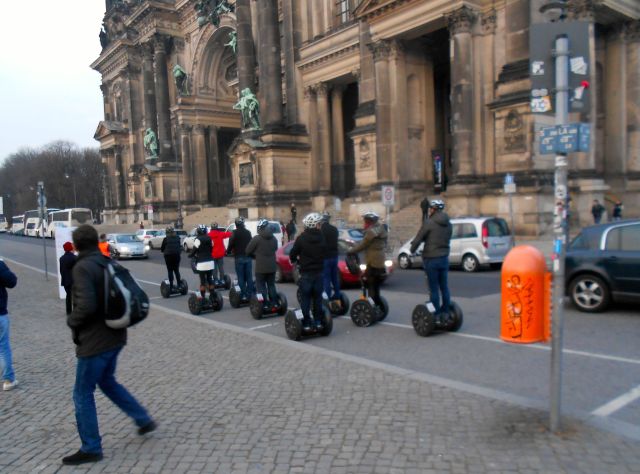
Museum bagging

Museum bagging

The Dom itself has been built and rebuilt many times during its nearly 550-year history, including of course significant restoration after the second World War.  It is large and beautiful and imposing, as are all cathedrals, but I found the Protestant stamp an effective way to keep most of the golden glitz and plump cherubim at bay.  It is a large, somber, dignified building, worthy of the center of empire.

Dom

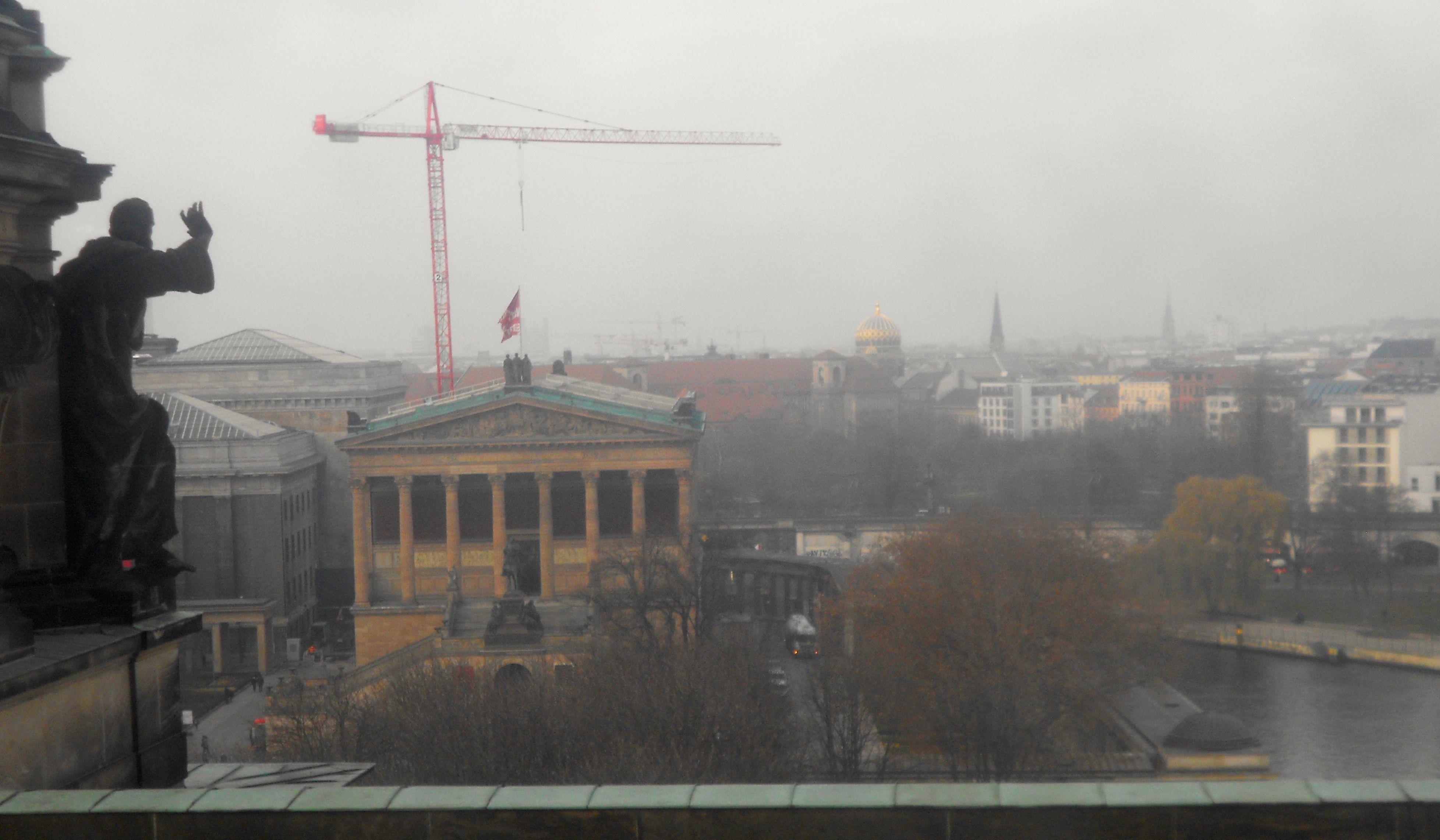
That being said, like some altitudinally-addicted homing pigeon, I couldn’t resist climbing as far up as I could go (pretty far, actually, out into the air) and snapping some shots of the city from the top:

Roof view

This view actually looks north, towards the museum I would visit later.  The crane is emblematic of those I saw all over the city as the inhabitants find themselves building, growing, moving boldly forward into the 21st century.  And the sculpture to the left signifies, to me, the sense of both surprise and empowerment that the church fathers must be feeling as they watch their city, phoenix-like, rise yet again from the ashes of history.

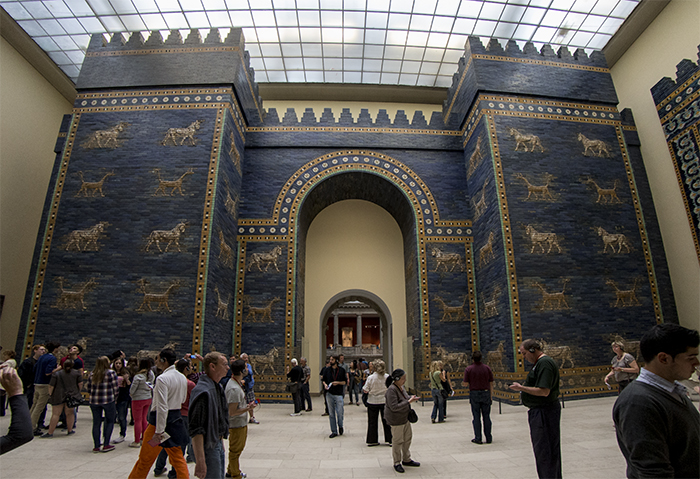
At that point, I headed to the second museum I had chosen to see,  the Pergamon Museum.  If you haven’t heard of it, and I hadn’t, it houses “original-sized, reconstructed monumental buildings such as the Pergamon Altar (currently unavailable) and the Market Gate of Miletus, all consisting of parts transported from Turkey…” (and available for colonial kidnapping since that area had been a British protectorate at that time) “…The museum is subdivided into the antiquity collection, the Middle East museum, and the museum of Islamic art. The museum is visited by approximately 1,135,000 people every year, making it the most visited art museum in Germany (2007).” I was literally blown away by the Gates of Ishtar (this is not my photo):
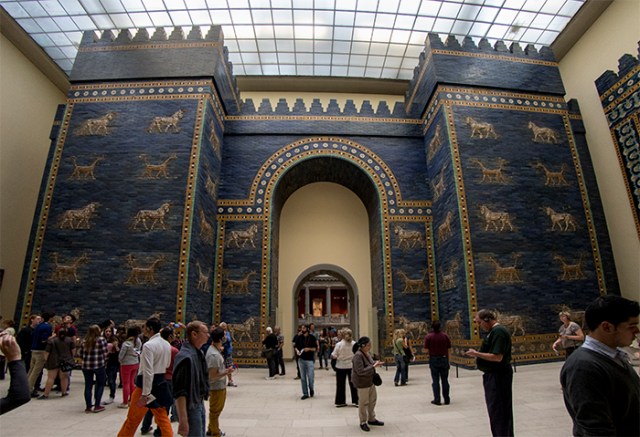
'My name is Ozymandias, king of kings: Look on my works, ye Mighty, and despair!'

‘My name is Ozymandias, king of kings:
Look on my works, ye Mighty, and despair!’

There is one remaining remarkable discovery I made during my time in Berlin, and that is stolpersteine, plural of stolperstein (stumbling block), something over which one might trip on a street or path.  Before the events of the second World War, it was the custom in Germany for the tripping person to say, “A Jew must be buried here.”  Beat. Today, that term has been transformed through the work of Gunter Demnig, a German artist who creates and installs cobblestone-sized memorials for individual victims of Nazism. While most commemorate Jewish people, there are stolpersteine for Roma peoples, gays, blacks, Christians, Communists, people with disabilities, basically everyone that the ruling regime felt they had to eliminate through either violent means, suicide, or immigration.  Now numbering nearly 50,000 across Europe, these stones and their story make for good reading and google is your friend if you are interested.  They are placed by Demnig and any remaining relations in front of the last official address of the person who died, and the stone, actually a metal plate, lists the name, date of birth, date of removal, and date of death, if known, for each person who was taken from that site.  It is a profoundly moving experience to see one of these in situ.
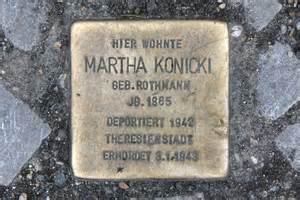
stolpersteine

Deep breath.

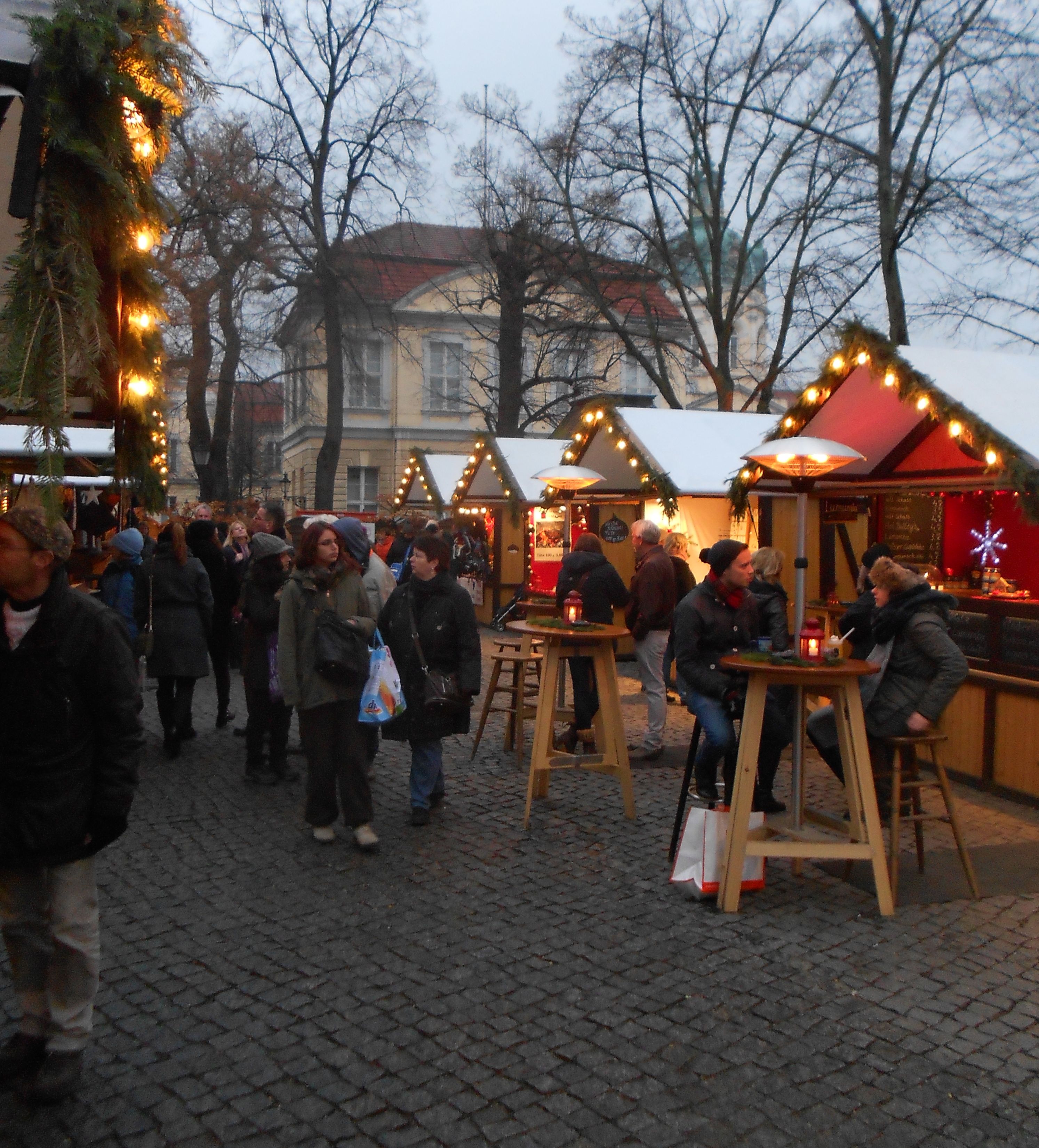
But at long last, weary of high art and culture and history and emotion, I began to long once again in the waning hours of my visit for the humble charm of the Christmas markets, so off I went to perhaps one of the most beautiful in the city,  located in the western section near the Charlottenburg Palace.  Situated in what normally serves as the site’s parking lot, this market just reeks Mittel-European charm (and gluhwein, naturlich!):

CharlottenburgCM1

Another shot showing some of the artisan and food stalls:
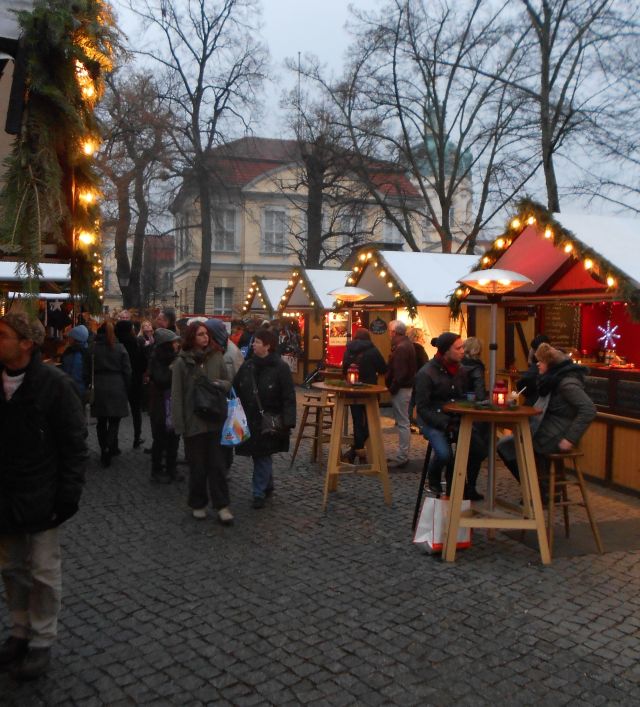
Deutsch cheer in spades

Deutsch cheer in spades

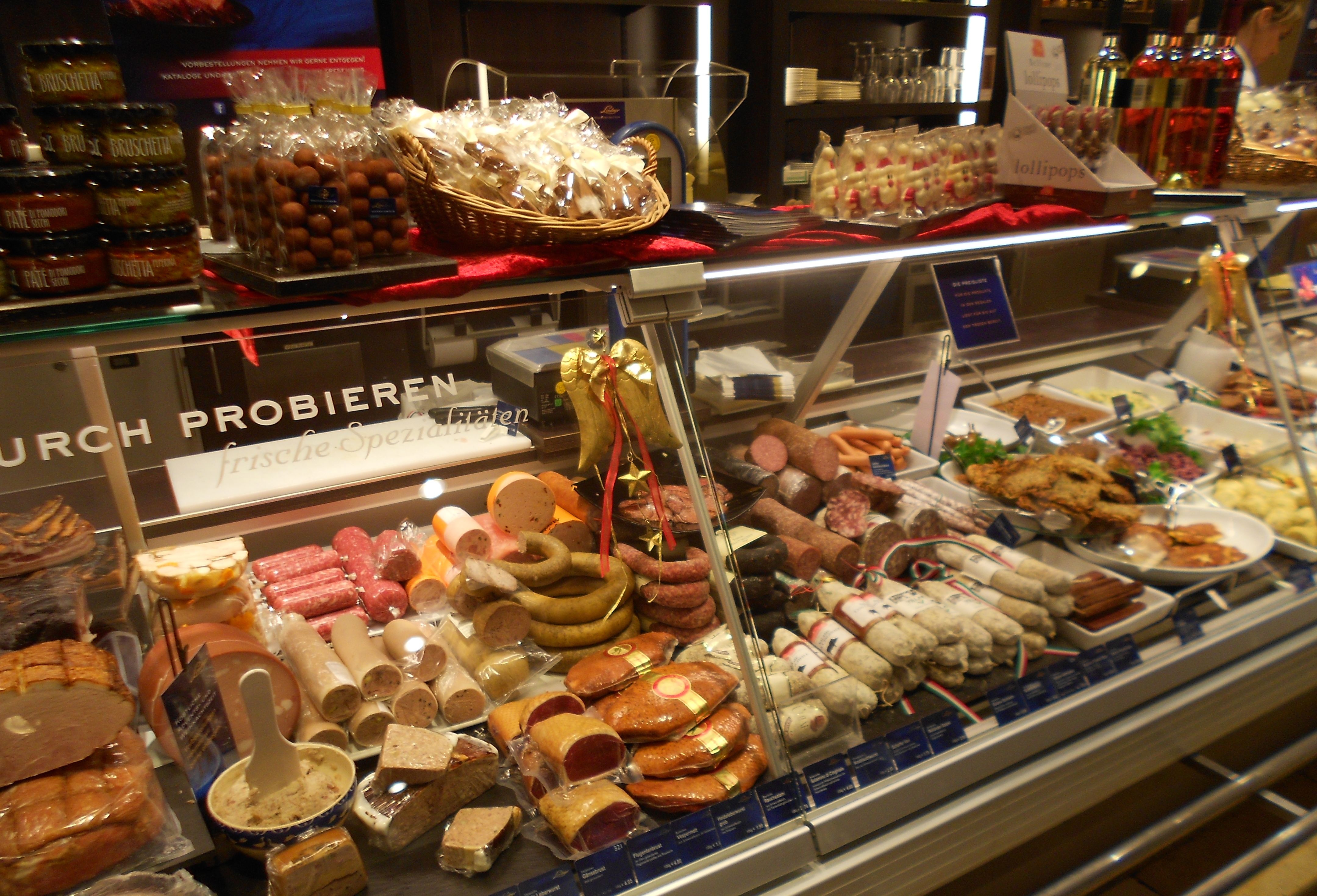
Of course, all this walking made me mighty hungry.  And if the restaurants weren’t enticement enough for gustatory enjoyment, the small markets and delicatessens were constant seductions.  A photo here of all the wonderful things I managed NOT to eat:
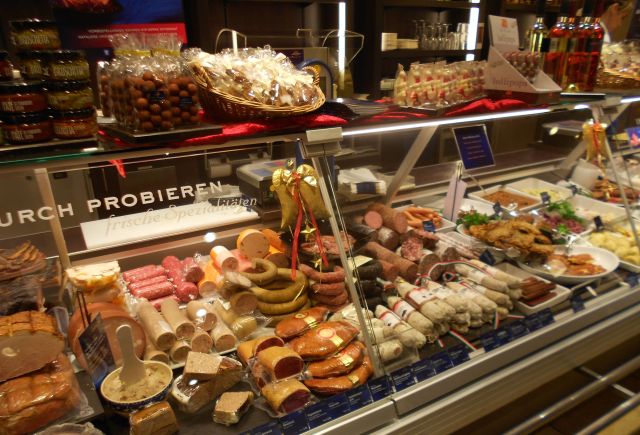
No dieting allowed

No dieting allowed

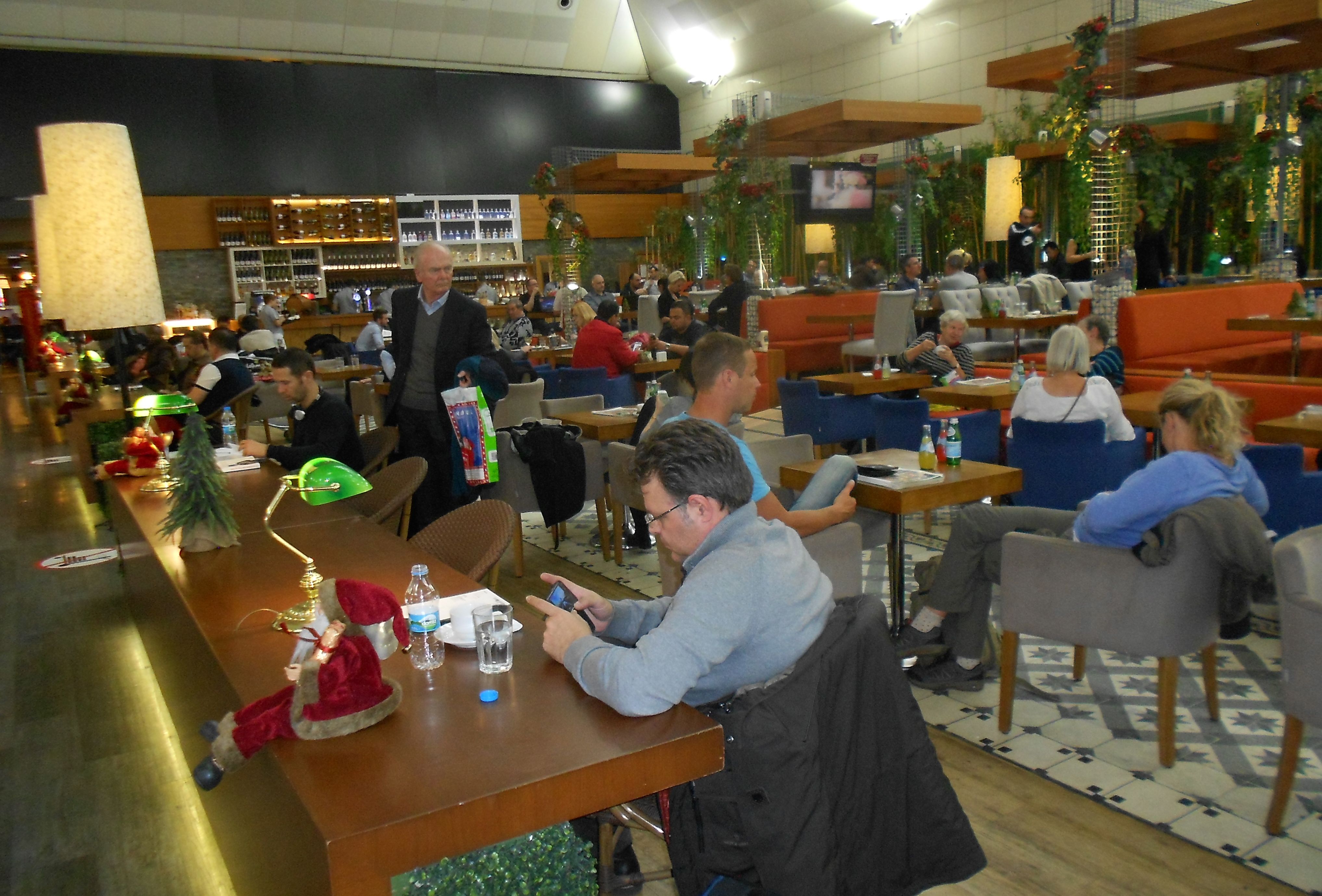
Oh, how I enjoyed these markets and shops and museums and stores and streets and all my time in Berlin.  Sadly, not long after this, I packed my bags and headed to the airport for the long journey home.  As part of that trek, to soften the blow, I was able to spend some time in my favorite Istanbul airport cafe, which often serves as a touchstone for me as I head from somewhere to yet somewhere else.  And so, after all these jumbled images and impressions, let me leave you with this last vision of my international transit perch – Greenspot – which will, as well, serve as a promise to me that it won’t be too too long before I head out once again.

Greenspot

Cheers – Prost – Şerefe – Merry Christmas, Happy New Year, and safe travels to us all.
 

Posted in Berlin, Germany, Uncategorized | Tagged | Leave a comment

Ein wenig mehr aus Berlin

N.B. I just noticed I am posting this entry on December 7th.  Life is full of little ironies, but that being said….

Well, after nearly wasting my first day in Berlin on the garden of earthly (retail) delights, I decided the next morning I Had To Get Serious about my pursuit of knowledge and wisdom. But where to start? From a tourist perspective, you can slice and dice the town in any number of ways – historical, political, cultural, geographic, commercial, und so weiter und so fort. Since I really enjoy the simple act of walking around a new city and seeing what presents itself to my magpie “shiny object” nature, I went for the geographic, meaning every day I picked a different section of town and tried to figure out what I could cram into a somewhat organized wanderlust until the light failed or my feet gave out or I ran out of money or all three.

Tuesday’s itinerary was somewhat decided by my host giving me a ride to his place of employ, a fitness gym in the Kreuzberg district. I strolled around the immediate neighborhood for a while – a gritty-but-interesting mix of restored buildings, Turkish markets, a 1950s-60’s vintage clothing store, hip cafes, and some serious graffiti. From there I took a fairly serious hike north to the Jewish Museum, one of the “must do’s” on my list.

One thing that I was specifically looking for on this trip was a sense of how Berlin handled, well, the whole Nazi-Jews-Holocaust thing. Since the topic had pretty well dominated the 1933-45 era there (as well as most everywhere else), I was curious to see how the issue was being framed today. This is a big subject I will speak to more when I write about the German Historical Museum, but my net impression is that the people here are being mindful, thoughtful, respectful, and inclusive on the subject. It’s good to see.

That being said, a Jewish Museum in Berlin is going to have a lot of unhappy news, since Jews have been documented in the area for about a thousand years and there were only a few epochs when things weren’t difficult for them one way or another. Murdered by the Crusaders as practice for the other infidels in Jerusalem? Check. Responsible for the Black Plague and killed by the thousands? Check. (They poisoned the wells, y’know, and that’s what did it.) But like the reliable Timex culture that they are, they took their lickings and kept on ticking. Jews made significant contributions to many areas of German development, too many to list here, and many countries around the world are now the richer for the unintended outmigration of thousands in the 1930’s. That Einstein guy, for one.

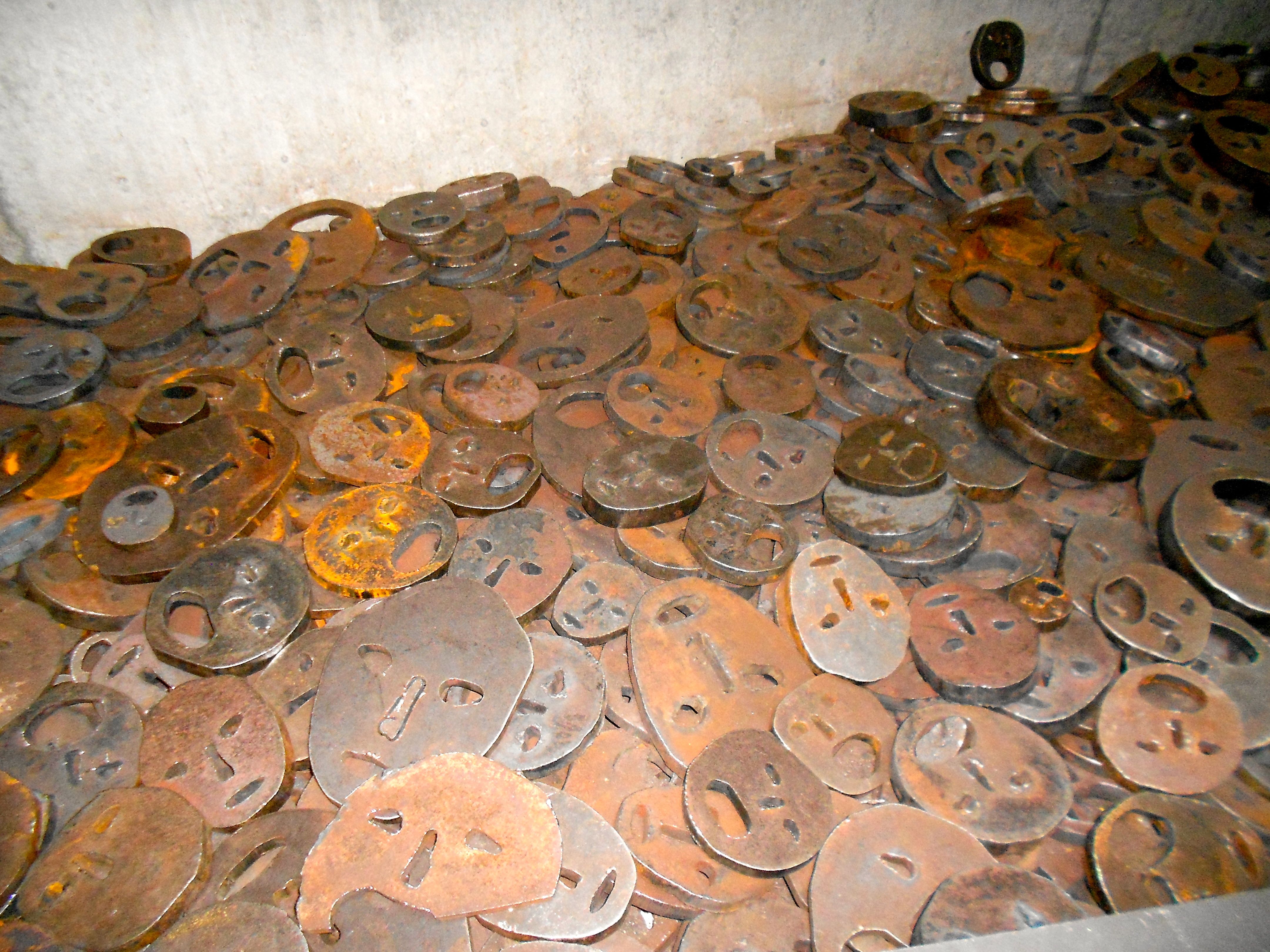
Equally important to the experience of the museum is its design, which is downright mind-boggling. The architect Daniel Libeskind distinctly intended the layout to create a significant emotional experience for the visitor, and so it does. The bottom floor has a series of dark hallways that convey the uncertainty and depression that accompanied both the exile of those fortunate enough to leave, and of course the tragedy of those who could not. There is a “Tower of Void” in which one stands, inside the building but unheated and exposed to the elements by high open windows, and senses the despair and hopelessness of what many experienced. Small spaces throughout the museum are left intentionally empty to signify the loss of that segment of the community in all our cities and societies. It is very very poignant. Here’s a picture of an installation by Menashe Kadishman, “Fallen Leaves,” that that reflects that idea as “over 10,000 open-mouthed faces coarsely cut from heavy, circular iron plates cover the floor.”

Faces - JM

And yet…in celebration of continuity, the upper floors are alive, buoyant, interactive, downright fun. Classes of children sit in circles with teachers, exploring one aspect of history or another. There’s a display of a robot rabbi that is writing a copy of the Torah under a video of a human rabbi doing the same thing with a quill and ink. People are encouraged to write their wishes on paper pomegranates and hang them on a tree, sharing our collective hopes for a better future. There are fascinating videos of the Berlin of 1929, people going about their summer activities without a care in the world.

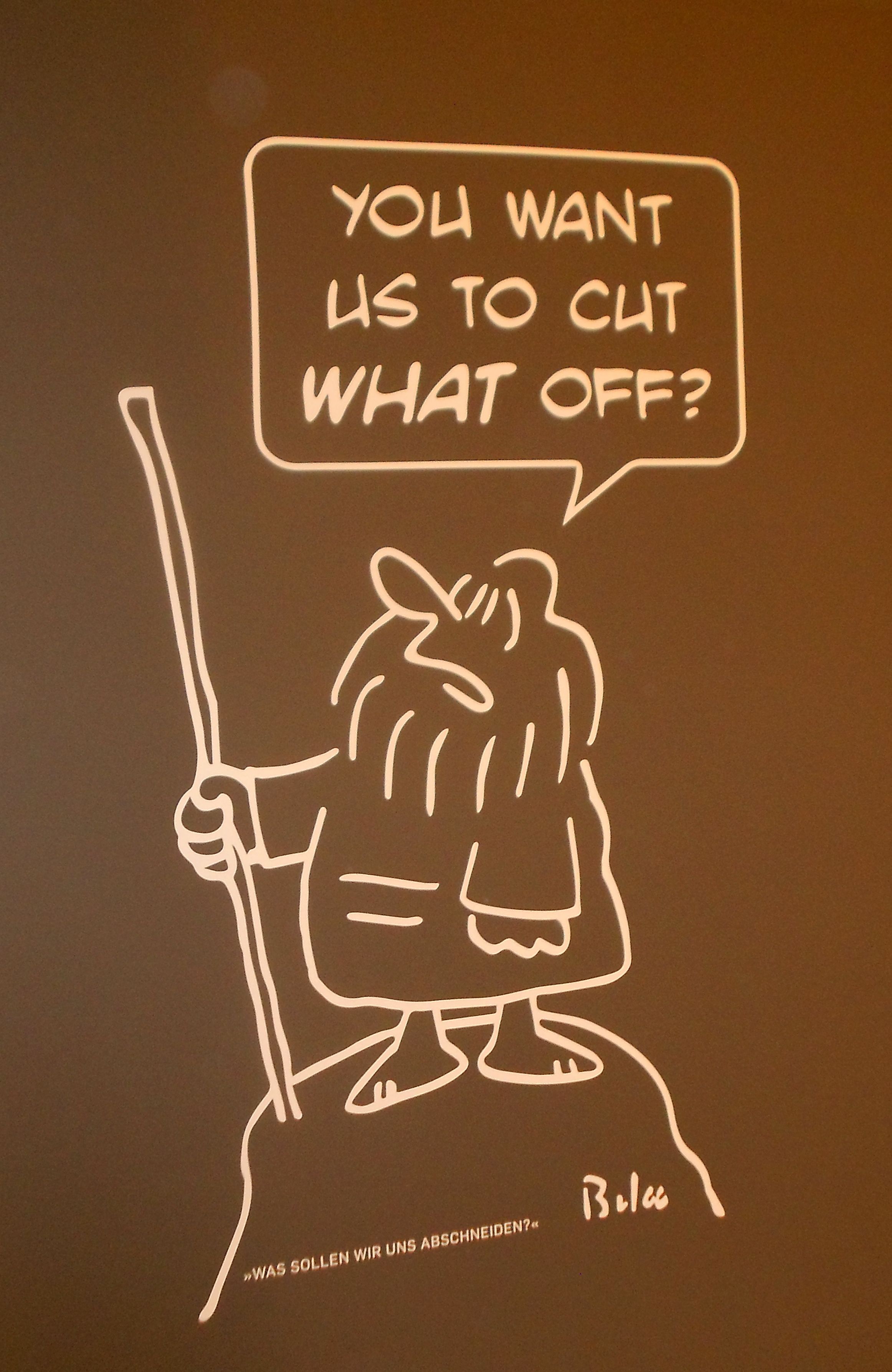
But then, in an absurdist motiv that is hidden all around the city, there’s the special exhibit about circumcision, called, appropriate enough, “Snip it.” I understand profound culture heritage and tradition, blah, blah, but even I could not bring myself to get too close, as it were, to this particular offering, and I took a pass on that wing. I’ll leave you with a pretty amusing advertisement:

Circumcision

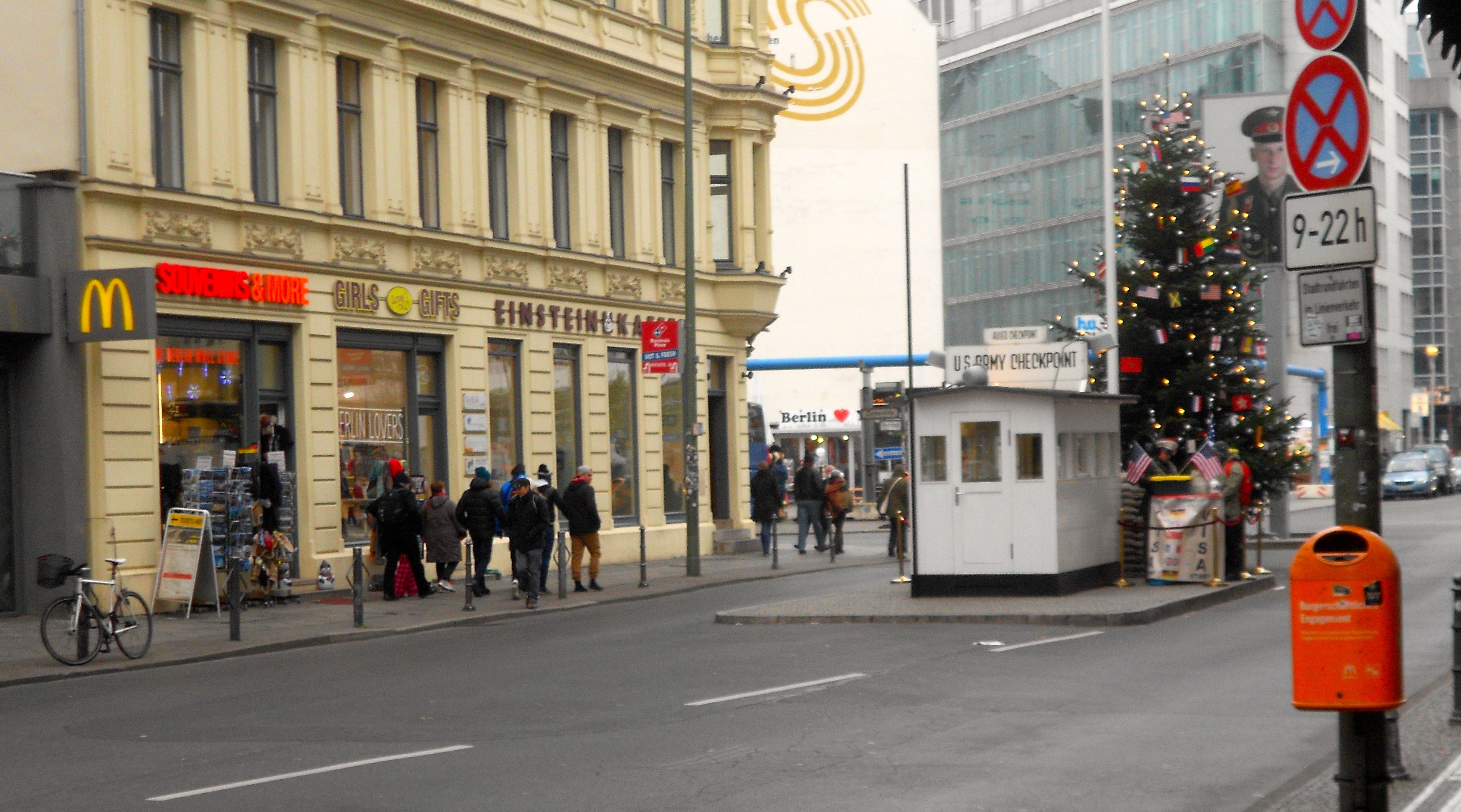
From the museum I walked north along Frederichstrasse, the fastest route for me to get to Checkpoint Charlie, a classic “must do,” particularly this year, the 25th anniversary of the demise of The Wall. If youve been there, or if you remember the pictures from the ugly days of division, you might have a picture in your mind of what it used to look like – wire, walls, soldiers, scary stuff.  Now, I have to say that that image has changed, for the better of course, but it’s a little anticlimactic, in a good way. Here you go:

Times change

Times change

Note the ironies, almost too many to count. The McDonalds sign – triumph of capitalism. The Einstein Coffee – triumph of a Jewish company over both the Nazis and the godless commies. The Christmas tree – triumph over the godless commies redux. And finally the indignity of the US Marines collecting Toys for Tots – the triumph of the nonprofit charitable world over the centrally planned economy. I just had a moment here, and had to take a deep breath.

Then I walked forward into what had been East Berlin, and I swear to goodness you can’t tell where the Wall was. It’s just a normal street, a normal sidewalk, a normal bustling day. I missed the celebratory balloons that had been here for the formal celebration, but in some ways, this is even better. You just can’t tell.  The Wall is still very much extant in other places around the city, and many museums even have bits and pieces available for sale, but in terms of this place, so significant for so long in the lives of so many, all that remains is a little white shack.
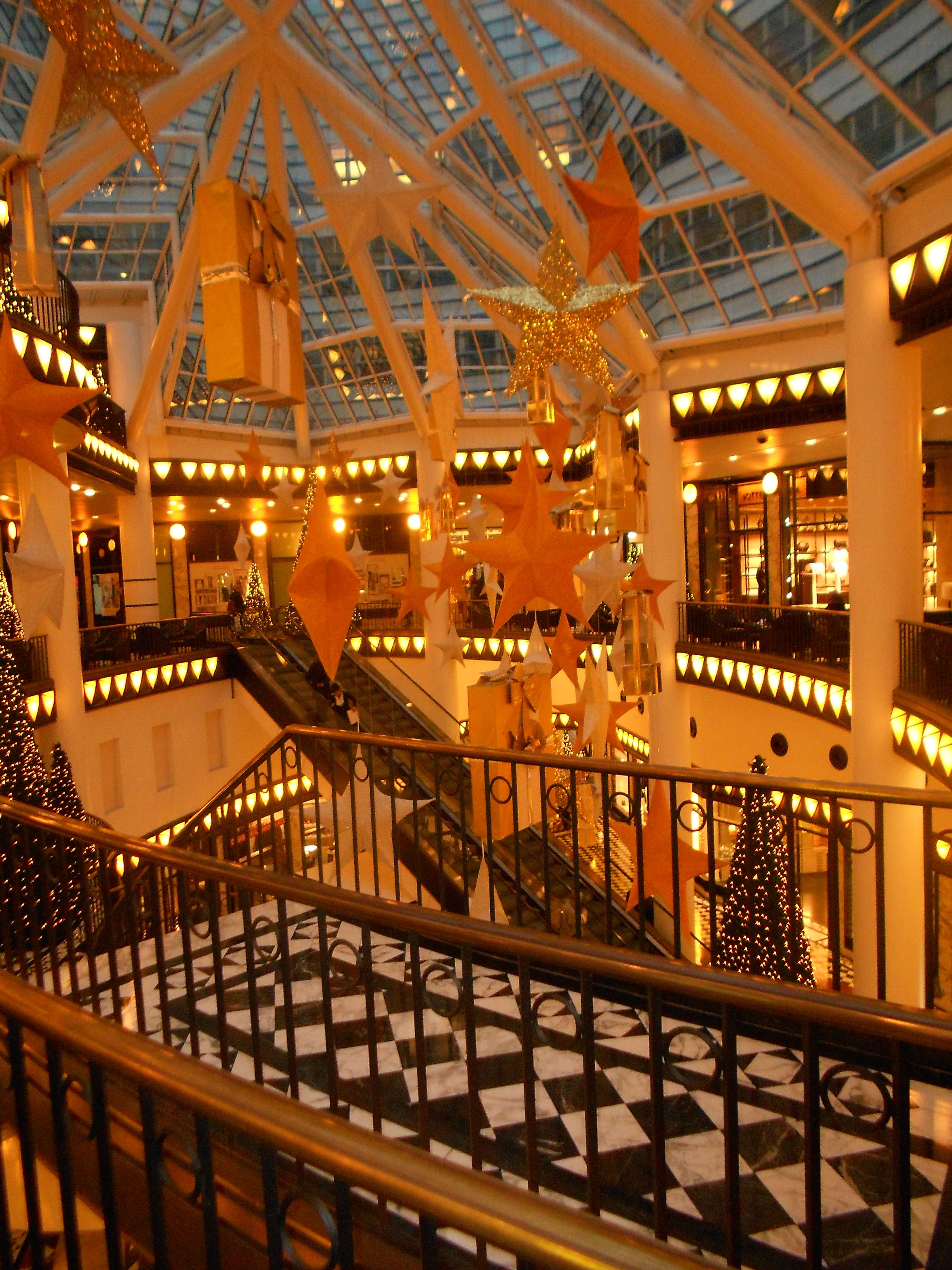
The checkpoint stands on Frederichstrasse, traditionally a famous commercial district in Berlin and now quickly regaining its mojo in that department.  Among the offerings is the French department store Gallerie Lafayette, doing its Gallic best to compete with KaDeWe and decked out in its best bib and tucker for the holidays:

Ooo la la

Ooo la la

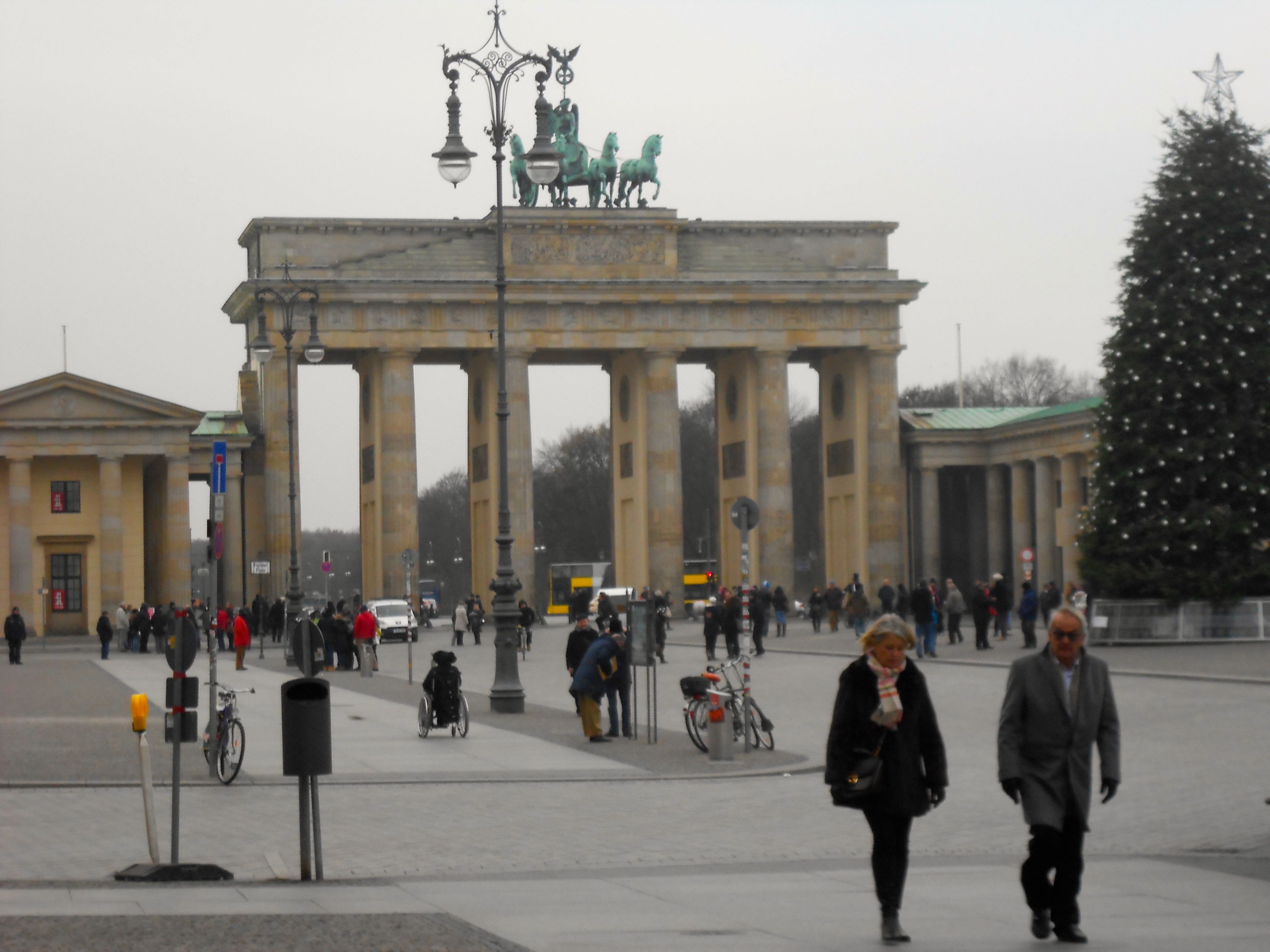
Onward to Unter den Linden, the classic boulevard that defines the center of the traditional capital, and a pilgrimage down that to the Brandenburg Gate, long a symbol of the city and now triumphantly displayed on walls and signs all over town. “It looks much smaller, now,” one lifelong Berliner confided to me. “When everything around it had been bombed, it looked much bigger.” It still looks pretty damn lovely to me.

Brandenburg Gate

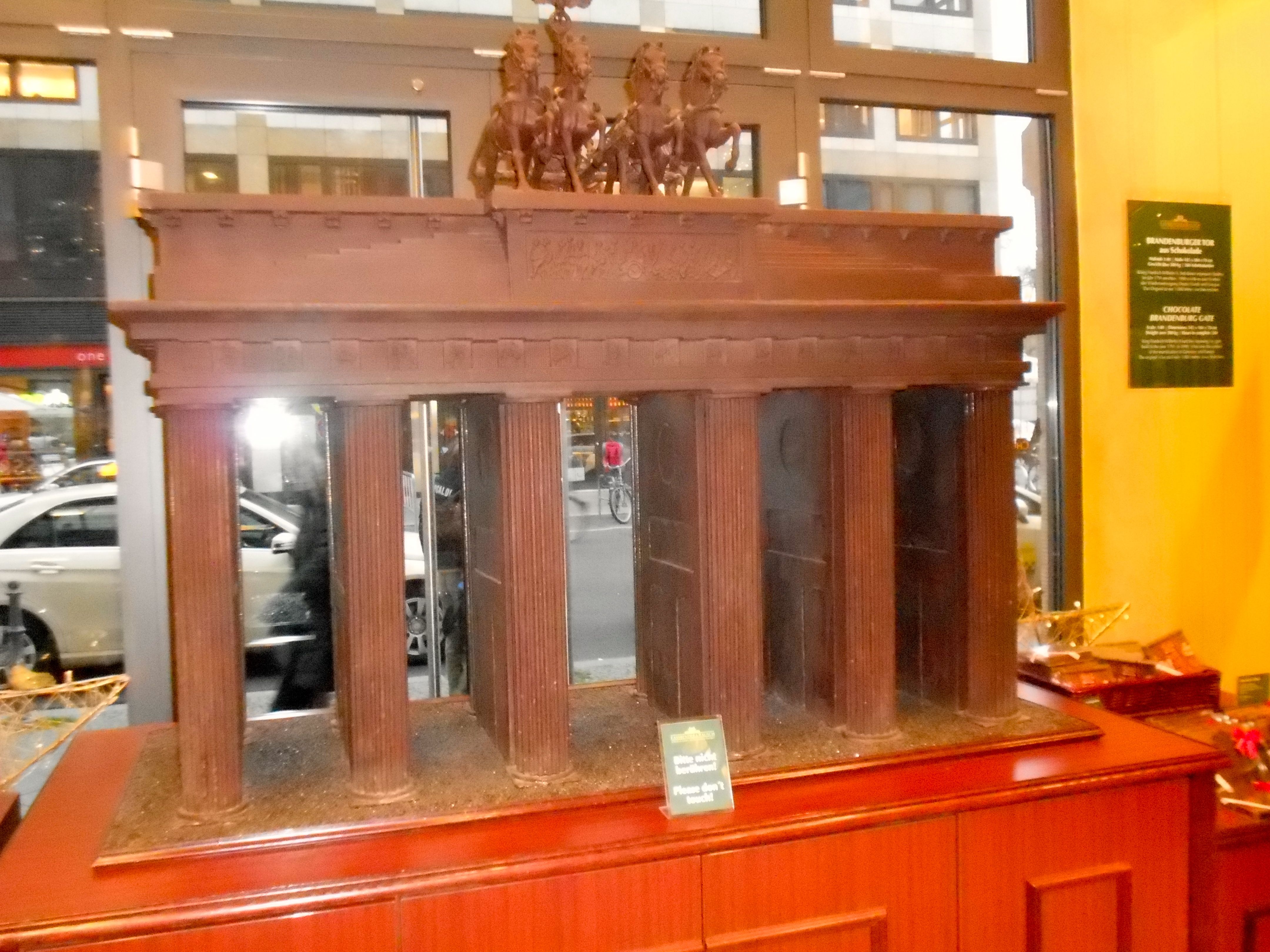
I was equally enchanted by the Fassbender& Rausch Chocolate version:

Toothsome

Toothsome

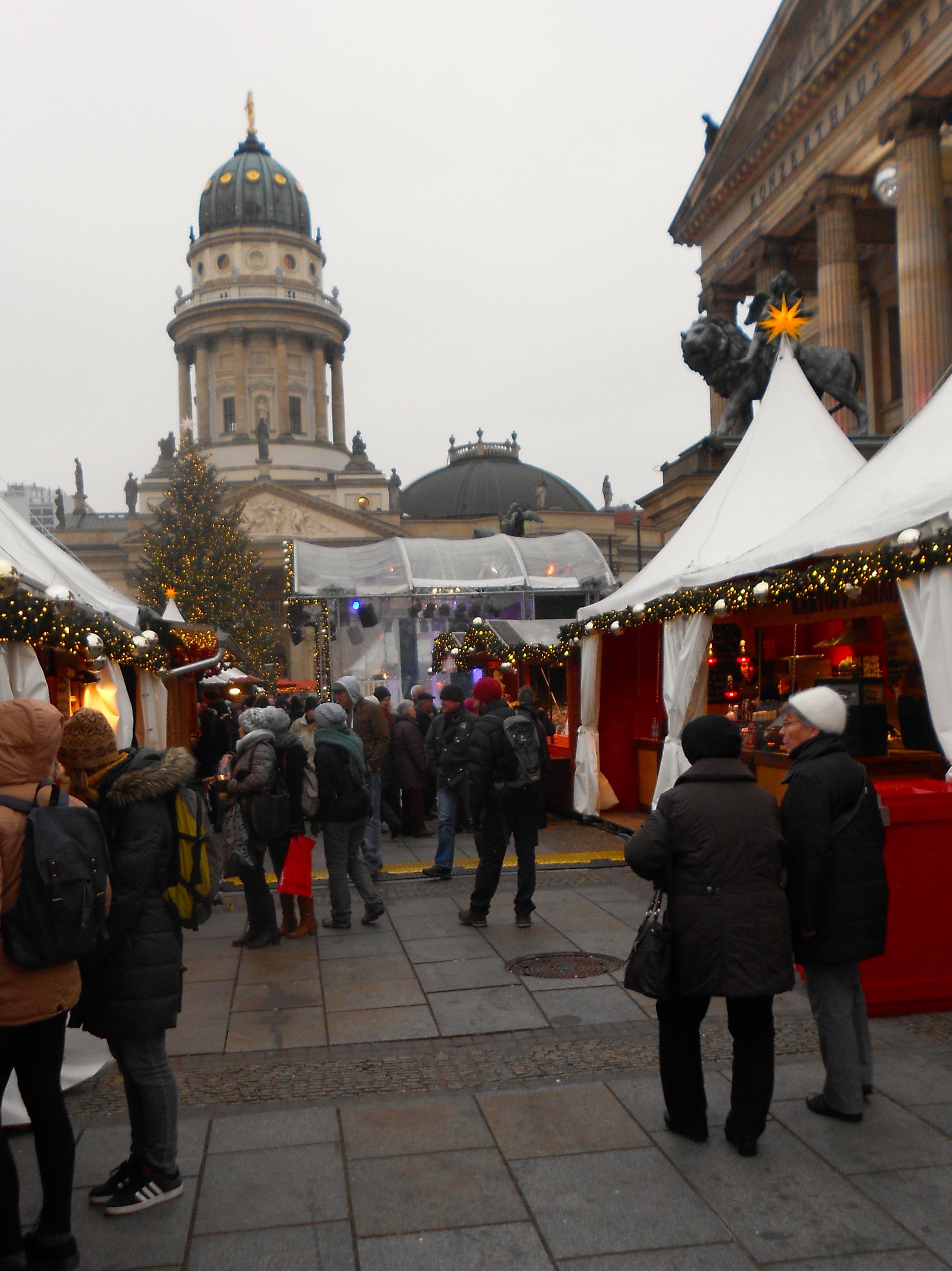
Well, at this point I took a little look at my guidebook and realized I had walked right by one of the places I had really wanted to see that day, and it required a bit of a walk-back, but there was still light and I hadn’t had my Christmas Market for the day. So off I headed to the Gendarmenmarkt.  Guidebooks call this “the most beautiful square in Berlin,” and that’s the God’s honest truth. On Tuesday last, bedecked for the holidays, it was truly a sight to behold. Let’s see – Baroque cathedrals, hot red wine and chocolate. Is there anything not to love?

"Tis the season..."

“Tis the season…”

On that note, I’ll leave you until the next time.  I have one more day to post, and I’ll try to have that up soon.


Posted in Berlin, Germany, Uncategorized | Tagged | Leave a comment

Ein bisschen from Berlin

It occurs to me that I really like a lot of cities that start with the letter “B.” Boston, Berkeley, and Baltimore in the US for starters, but then the list gets a little more interesting….Budapest, Brussels, Brugge, Belfast, Bergen, Barcelona, and Bern, to name a few.  But now I have to add a real winner, and that is Berlin.

Why the heck hasn’t this town been on my radar before?  Well, for starters, for a long time it was a challenging place to navigate – a divided city, the remnants of the Nazi empire.  During my professional career I became fascinated with Eastern and Southeastern Europe, cities and countries that had also landed on the wrong side of history for a while, and I somehow failed to add this town to my “Must See” list.  But now, thanks to a Batumi colleague who hails from Berlin, I have made the trip over and I am smitten.

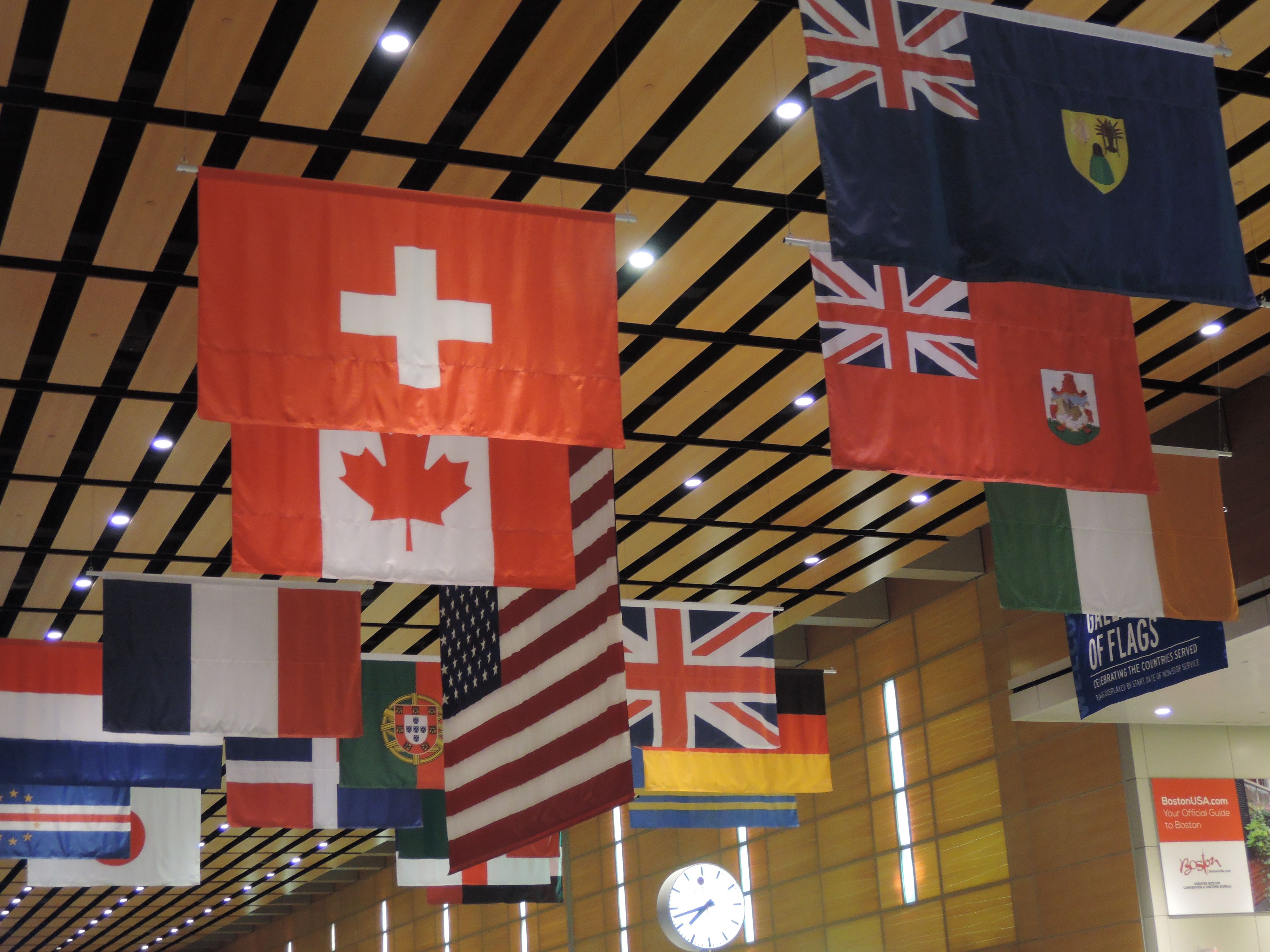
I’ve been here three days, I only have two more before I head back, but I feel as though I have lived half a lifetime already.  So in my typical way, I have to tell the tale in the approximate order that it has occurred. First, the wonderful moment in the Boston airport that reminded me in the best possible way I was about to head out into the unknown:

Departure Boston

My airline of choice this trip is Turkish Airlines, which has just won “Best Airline in Europe” award for the fourth consecutive year – no mean feat in a field that includes Swiss Air, Air France, British Air, and a few other heavy hitters.  Why you should travel with the flying Turks – pillows! blankets! socks! and Real Food, lots of it. One of my other options, Lufthansa, has just today announced *yet another* pilot strike, which means if I had chosen them, I might have inhabited my colleague’s guest bedroom for an indeterminate period.  (Probably best for our friendship that I go home as scheduled on Saturday, and inshallah I will.)

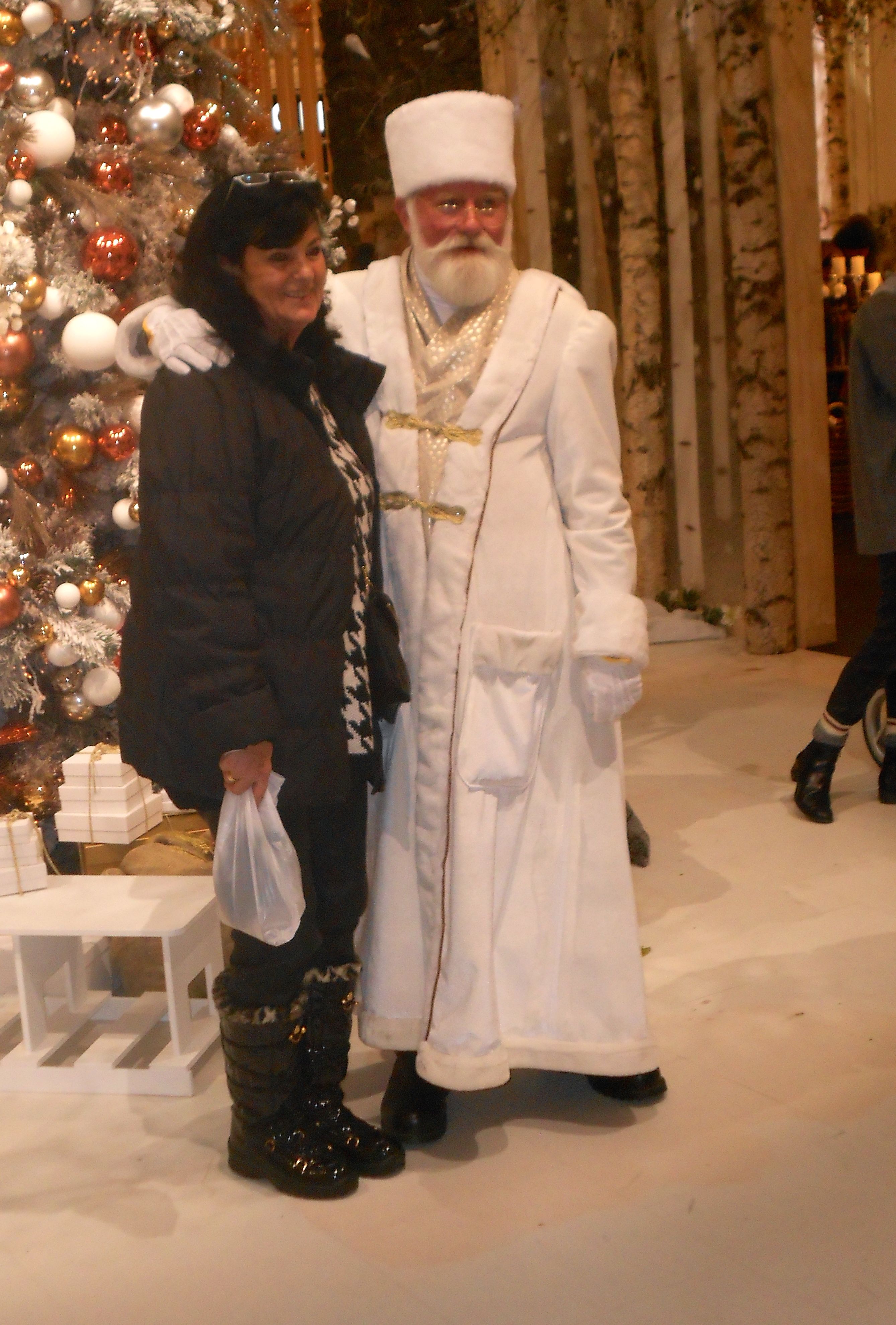
So, my first day in Berlin, doused with massive amounts of caffeine and armed with the Berlin edition of the DK Travel Guide, off I went for a reconnaissance sortee.  My colleague lives in the Kurfurstdamm neighborhood – the heart of old West Berlin and forever a Beverly Hills-style shopping mecca – so I headed first to visit KaDeWe, the Harrods of Berlin. Occupying a full city block like Macy’s in New York,  it’s a fabulous eight-story monstrosity of an upscale department store. The Christmas colors this year are a beautiful and slightly unusual combination of gold, silver, and bronze, reflected in the ornaments on the tree and all the decorations in the story.  I was particularly charmed by the figure of Father Christmas greeting the incoming shoppers:

Father Christmas KaDeWe

Upon reflection, this was an equally inspired choice of a first stop since it has been *really really* cold here (mid 20’s with a stiff breeze from the East, “courtesy of Putin,” as the locals say) and my first purchase with Euros was a set of Ugg sheering earmuffs which have allowed me to enjoy the frigid clime with impunity. Ears sufficiently thawed and debit card in hyperventilation from merely gazing at the price tags in KaDeWe, I went out to explore the environs.

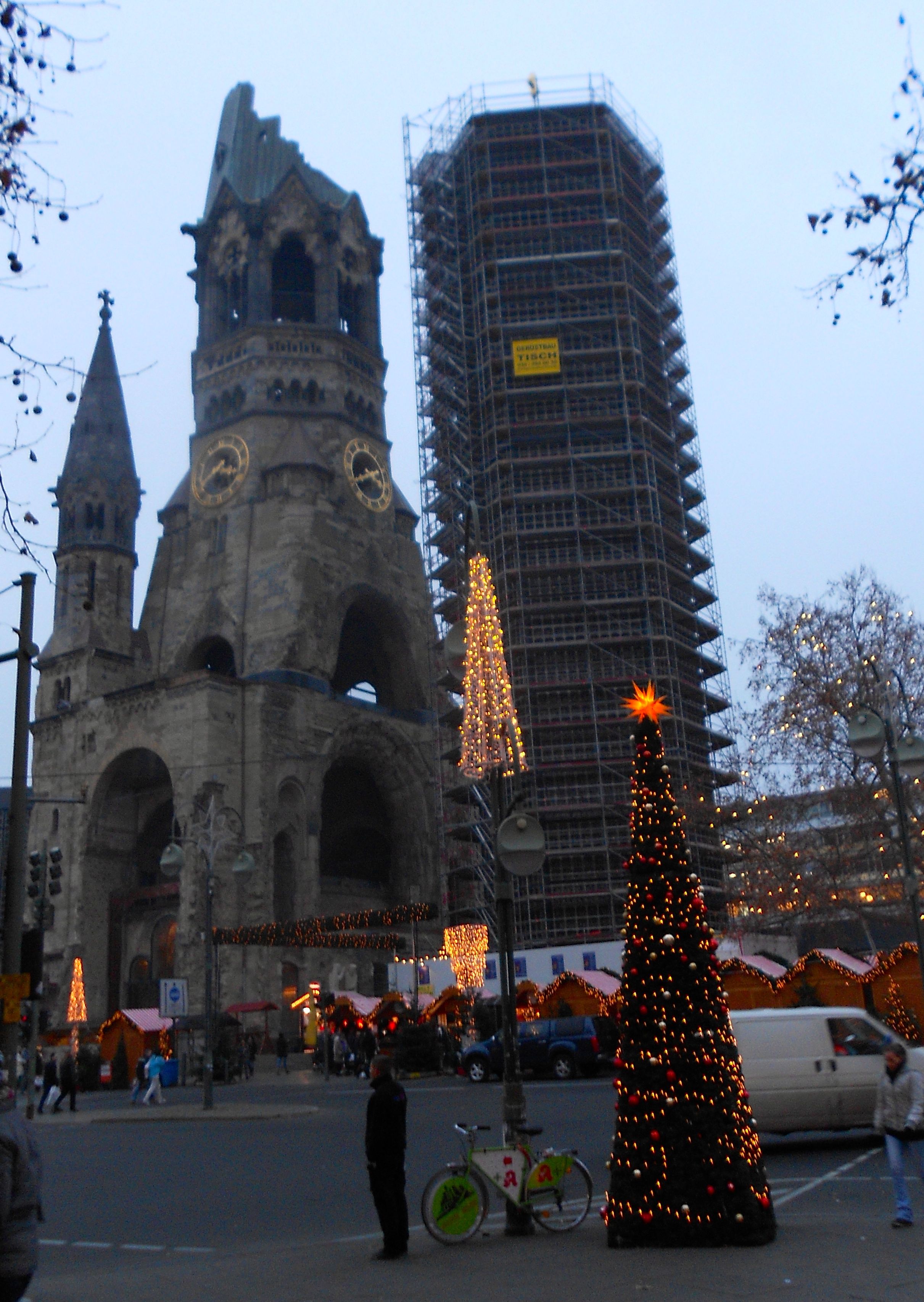
KaDeWe is located on the Ku’damm, a few short blocks from the Kaiser-Wilhelm-Gedachtniskirke, according to Kindersley “one of Berlin’s most famous landmarks, surrounded by a lively crowd of street traders, busters, and beggars,” augmented just at the moment by one of Berlin’s 40  Christmas markets. That being said, what’s impressive about this church-monument is not so much what is there, but what is not, which is most of the church, destroyed by Allied bombs in 1943. There is a Memorial Hall (at left below) extent with historical information (I found this incredibly moving, particularly the Coventry Crucifix from England and the Orthodox Cross from Russia, both given in a spirit of love and reconciliation by former enemies) and the new church sanctuary, very new, beautiful, different, to the left of the old church, not the tower under construction nearby.  I do recommend it if you come.

Kaiser Wilhelm Kirke

From there I continued around the immediate neighborhood, hoping that I could hold out against the twin demons of  jet lag and dehydration. After I had had my fill of all the Louis Vuitton, Armani, Hard Rock Cafe, Gucci, and Mephisto boutiques,  I was able to see some lovely street scenes on a nearby street named Fasanenstrasse:

Street scene Berlin

This photo shows in a simple way everything that I *love* about Western Europe, all in one picture.  The buildings, all approximately the same height, allow for a unified urban canvas. The retail establishments are found on the ground floor with the residential spaces located above, creating community and convenience of daily life.  The occasional small garden or park breaks up the street and provides views from windows.  The wide sidewalks encourage outdoor cafes and strolling and watering one’s dog, all contributing to a sense of human scale that supports and sustains civic spirit and sense of integration into the whole. (Sorry, America, you’ve really got this wrong in a lot of places, although thankfully not in Portland, Maine.)  I chose this street in particular to stroll because Kindersley told me that some of the few fin-de-siecle buildings that survived the war live here, and below is a detail of one of them:

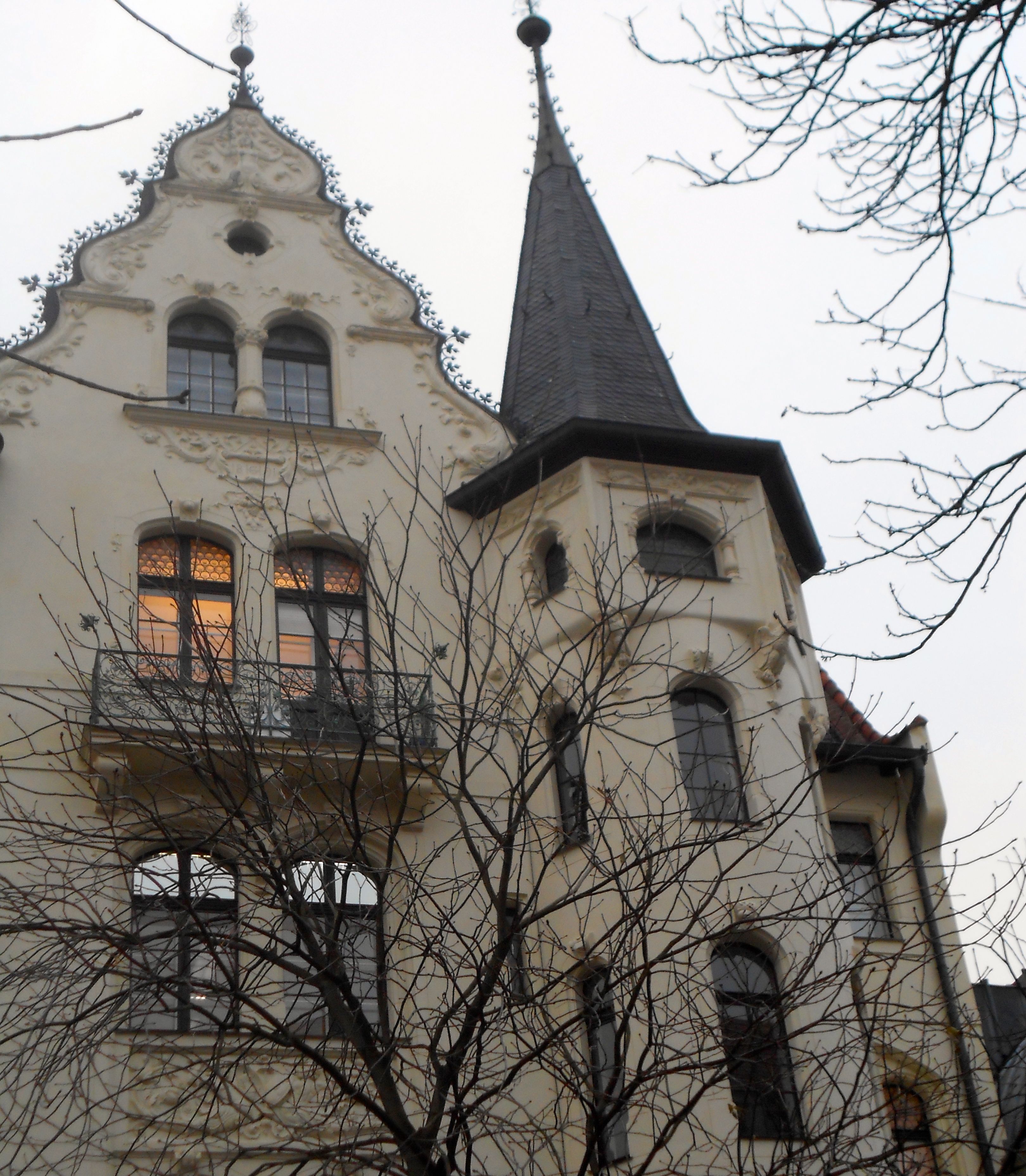
Building detail Berlin

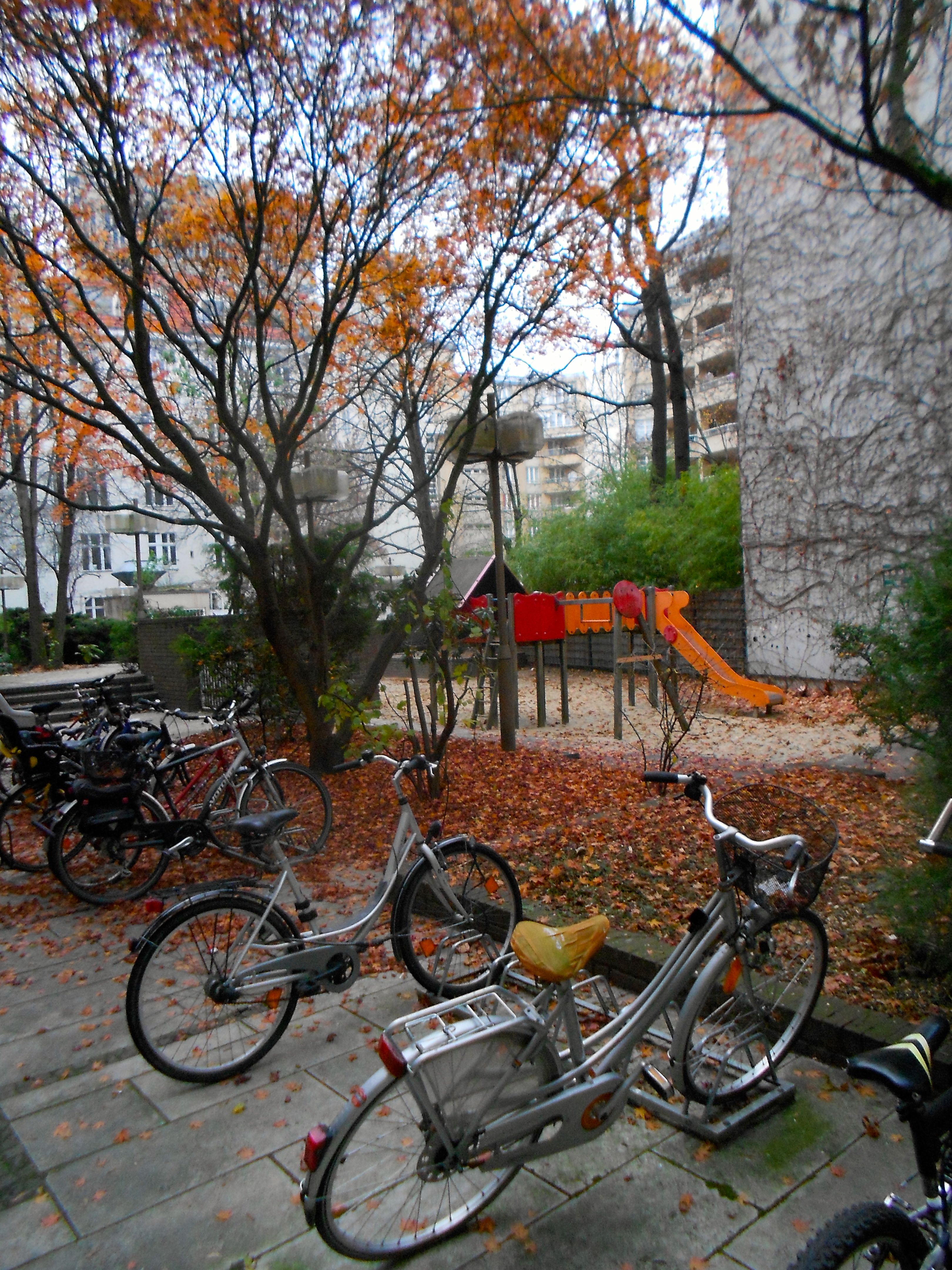
And later on this same walk, a look behind the buildings, newer ones this time, with a slightly different sense of how people live here, particularly with children:

Berlin courtyard

So there you have Day One, which ended with perhaps the nicest shots of all, that of my host after a multi-bottle dinner in which all manner of important life issues were discussed.  Cheers to you, K-HR!  And to you readers at home, more to come.

Happy Kurti

Posted in Berlin, Germany, Uncategorized | Tagged | Leave a comment