Provisioning in Japan

One of the guaranteed delights of international travel for me and probably most of us is visits to grocery stores that clearly cater to a different palate than the ones back home. No trip anywhere is ever complete without a ramble around at least one or two.  Of course if you live somewhere for any extended period of time, as opposed to sustaining yourself via hotels and restaurants, the interesting ramble morphs into the more protracted and somewhat bewildering effort to choose items that 1.) you need and want and 2.) won’t kill you or take some kind of preparation that is completely incomprehensible or impossible with the tools you have on hand. Then, of course, there’s the language barrier and usually, the kilos-and-liters thing to boot. All part of the fun.

So it was with a sense of high adventure and some trepidation that I made my first serious grocery run in Japan, courtesy of the minibus schedule described elsewhere. The Saturday shopping trips go to a mall some ~25 minutes from the university, and here is our first sight of the shopping mecca du jour:

Luring the masses

Luring the masses

Once inside, of course, we are greeted with traditional Japanese hospitality, and in this case, a flyer advertising “Curves” gym classes for women:

Wonders await

Wonders await

In Aeon, as in many supermarkets, the first section is produce. My mother always grumbled, “Why make us buy all the soft stuff and put it at the bottom of the cart where it will be smashed by the time we get it to the register?” Well, the marketing psychology, it turns out, is that if you buy fruits and veggies first, you will have a sense of healthy accomplishment right off the bat and will then go and buy more of all that UNhealthy stuff. Or so they think. But my first grab was indeed some of the soft stuff, the white peaches that are in season at the moment, and boy, are they great:

Packaged to survive the trip

Packaged to survive the trip

A little further on through the produce one finds a regional specialty, the bumpy cukes:

But why?

But why?

Another local delicacy is mushrooms, and in the shot below you can see a variety as well as a typical Japanese cautionary notice, hard copy and video:

Proceed with caution

Proceed with care

So far, so good. But not so far from here I started wading into the land of “I have no idea what I’m looking at.” My best guess is that this is the Wall of Tofu, but I can neither confirm nor deny:

Not a clue

Not a clue

Nearby I think I spotted the Wall of Pickles, redeemed in my mind by their colorful nature:
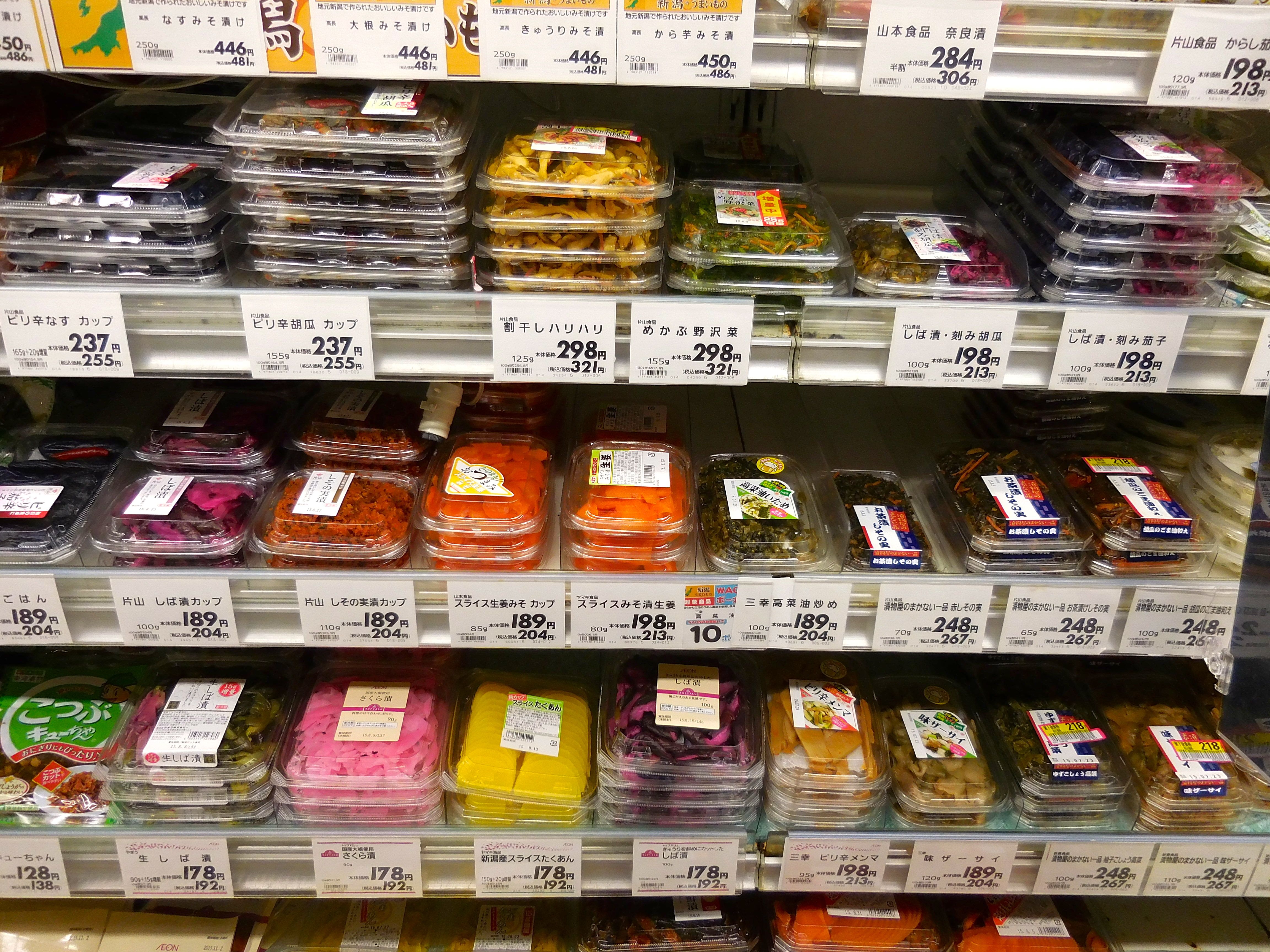
All the colors of the rainbow

All the colors of the rainbow

Okay, time to return to identifiable items. I followed the visual cue being hung by friendly employees to the Land of Finny and Scaly Things:
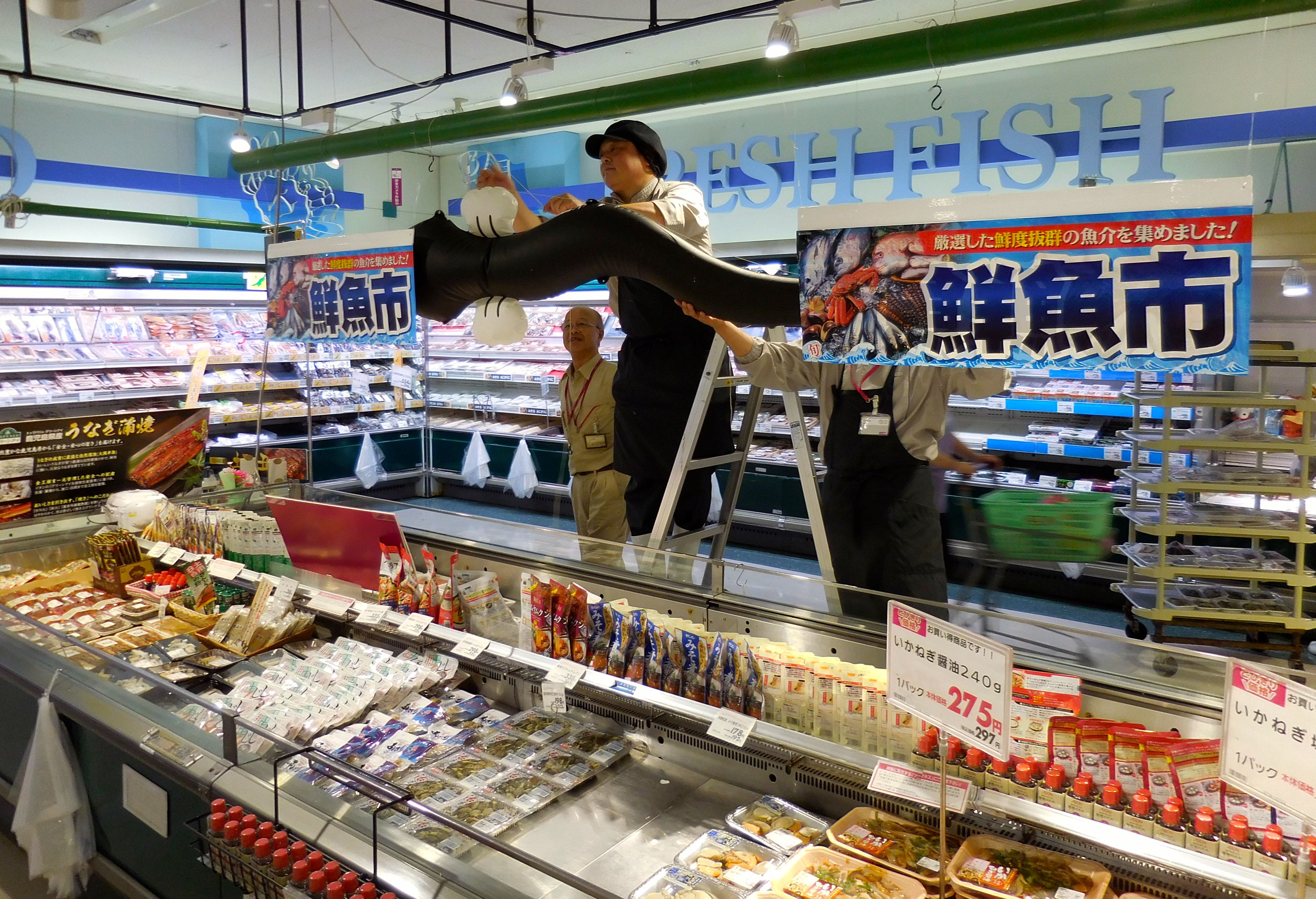
Creatures of the deep available here

Creatures of the deep available here

On closer inspection, all sorts of goodies inhabit these chilly chambers. I’ll confess here and now that I bought none of them, but it sure was fun to look. Here’s salmon (I think):
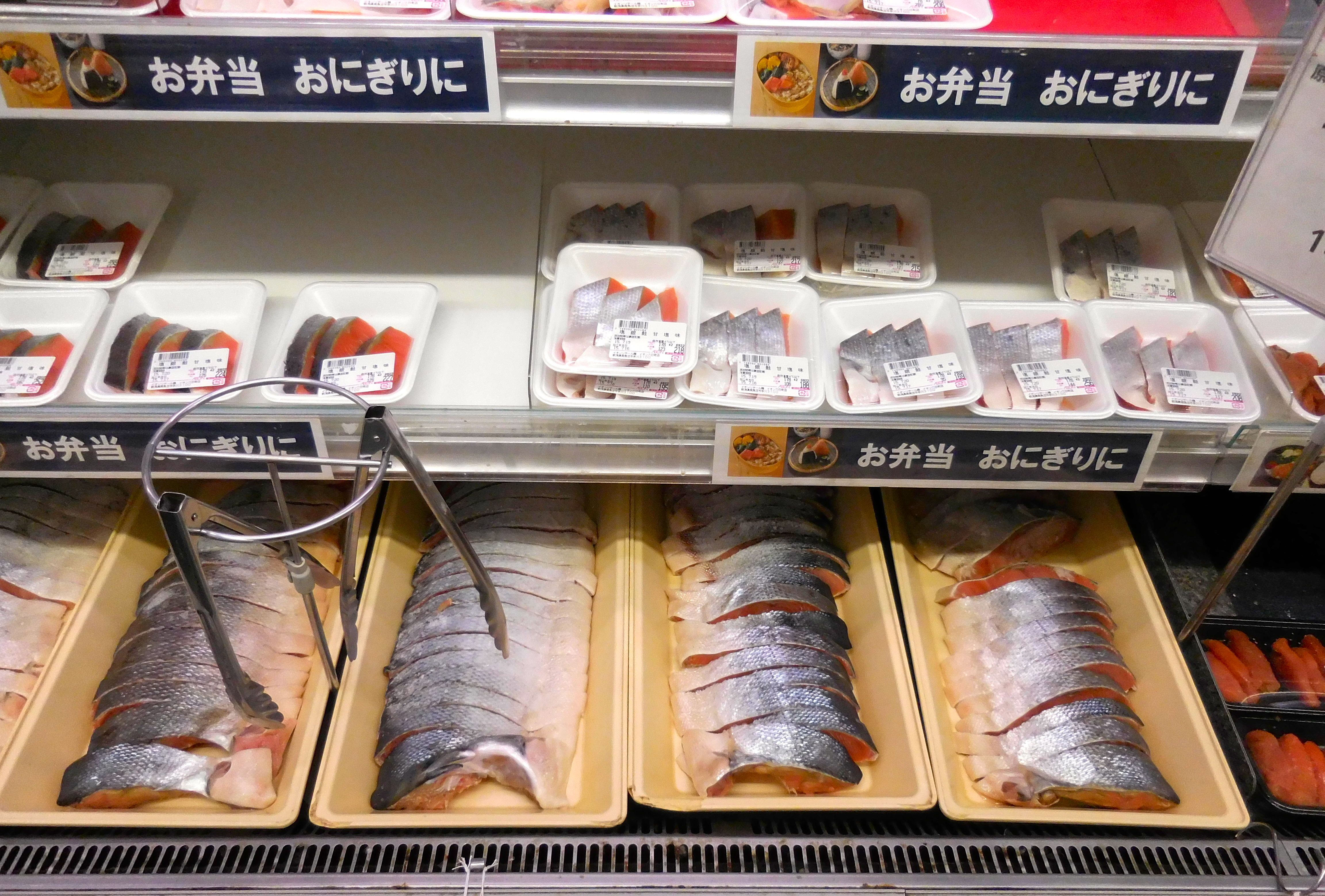
Take as much as you like

Take as much as you like

Nearby, some snails and sea urchins, again I think…

Squishy sea things

Squishy sea things

…some smoked (?) fish, I think:

Ready for you head to tail

Ready for you head to tail

…and finally in this section, some truly beautiful but rather spendy sushi ready-t0-go. J, this one’s for you:
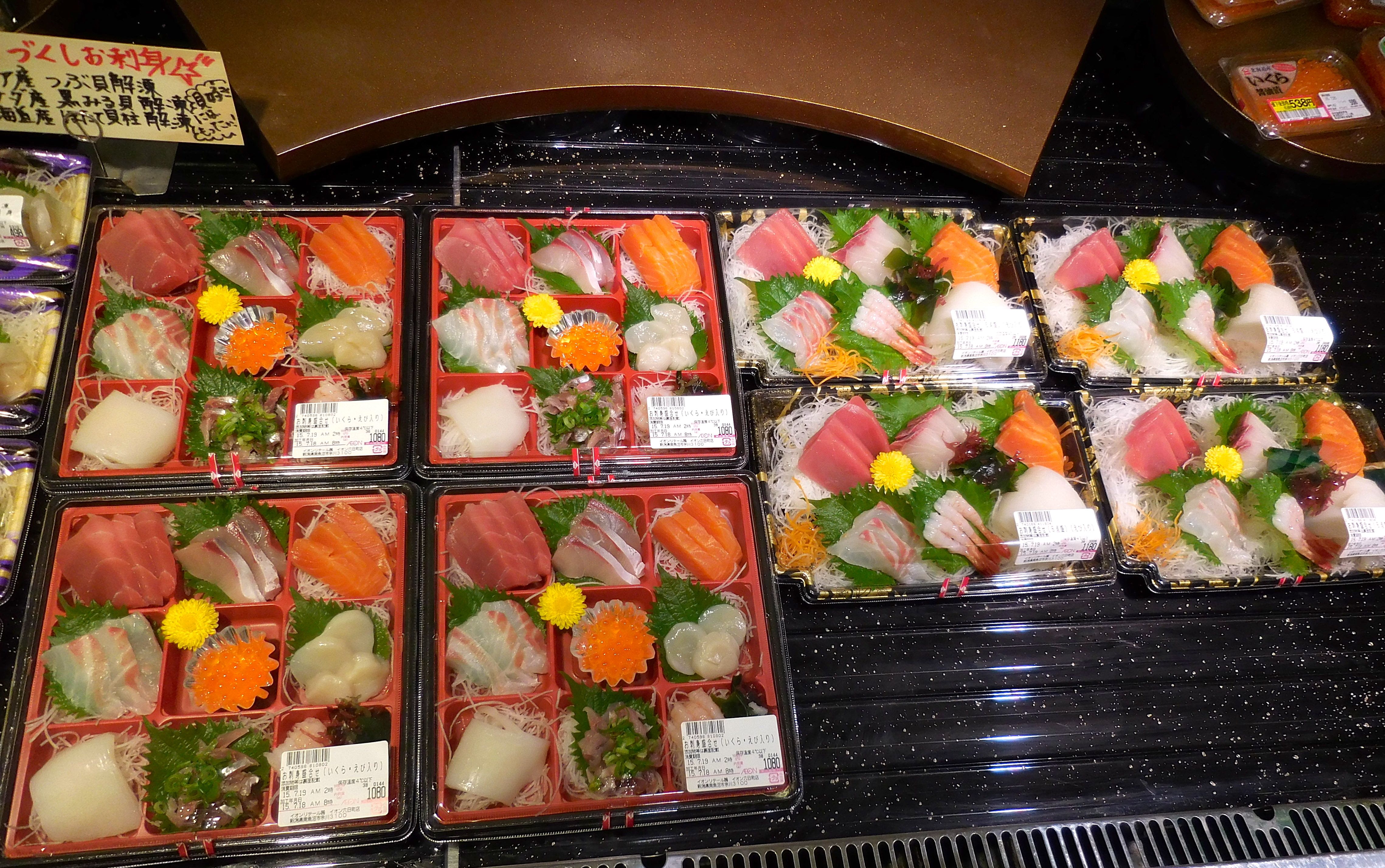
Grab your wasabi and go

Grab your wasabi and go

We bid a fond farewell to fresh things and enter cautiously into the long middle aisles, where bags, bottles, and boxes await. I could post about a hundred pictures here – it was hard to keep it this short – but I chose images that I think you just wouldn’t see anywhere in the US outside of an Uwajimaya Japanese supermarket, which I know are in Washington and Oregon states but not sure if they extend anywhere else.

Here, for example, is the soy sauce aisle. The bottles on the bottom, if you can’t tell, are actually really big:

Don't run out, now

Don’t run out, now

Somewhere in the maze I stumbled across this product, which is as far as I can tell is some kind of “instant breakfast-type” portable dry mix for busy people on the go. I gotta say the packaging could use some help:

Not my friend

Not my friend

I was also astonished to find an entire section of the store dedicated exclusively to green tea:

Good for you

Good for you

…but thankfully before too long I was back in familiar territory, but just with a Japanese twist:

Who's the designated driver?

Who’s the designated driver?

I was particularly charmed by brands I had never seen before, here some fruit beers from Guam:

Mango tango

Mango tango

So, cart as full as I could manage, I headed for the check-out. It’s a two-step process. The clerk takes your basket, scans the prices into the register, and then puts the food back into another basket with a plastic bag or two if you haven’t brought your own. Then you take the new basket with your items to a nearby table and bag them yourself. Here’s my colleague R demonstrating his technique:
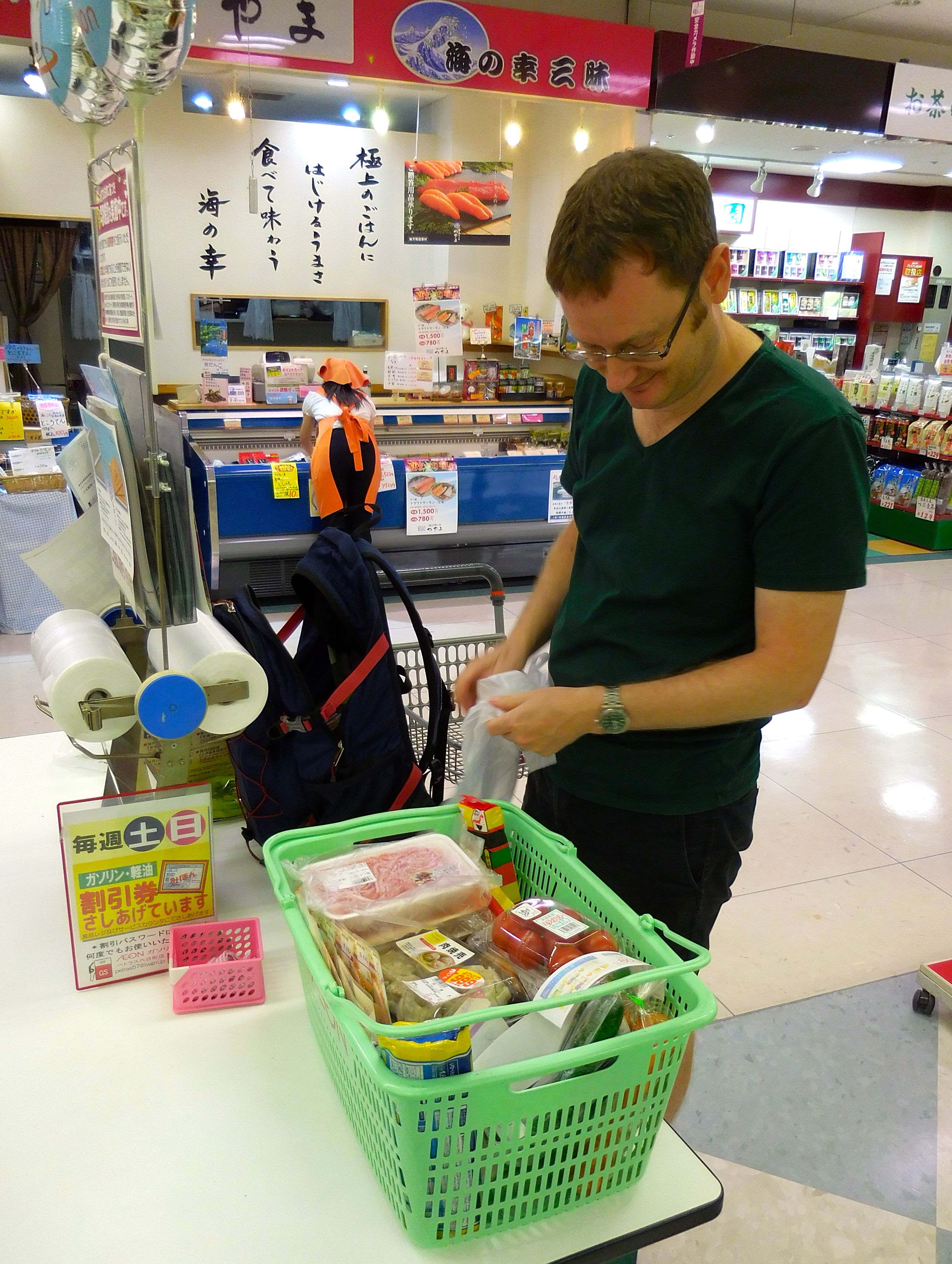
All in the wrist

All in the wrist

One last clever stage to go. Near the packing tables is a dry ice machine. For a few yen, you put your freezer goods into the machine and WHOOSH! they’re cold. Here’s R again showing you how it’s done:
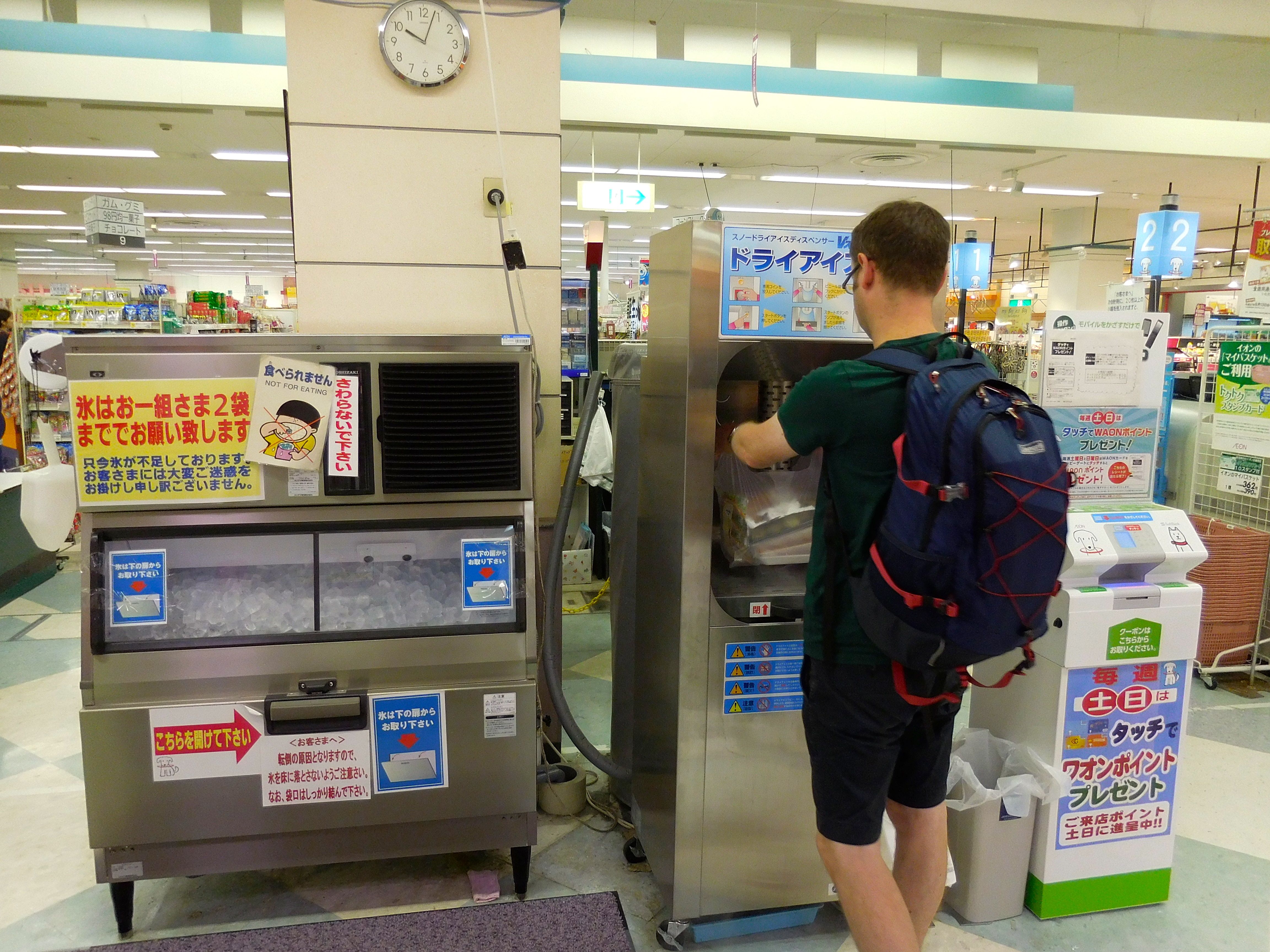
Who'd a thunk?

Who’d a thunk?

Second later, your perishables are ready for a long trek (in the melting heat and humidity) back home. J, you could use this for the island hauls:
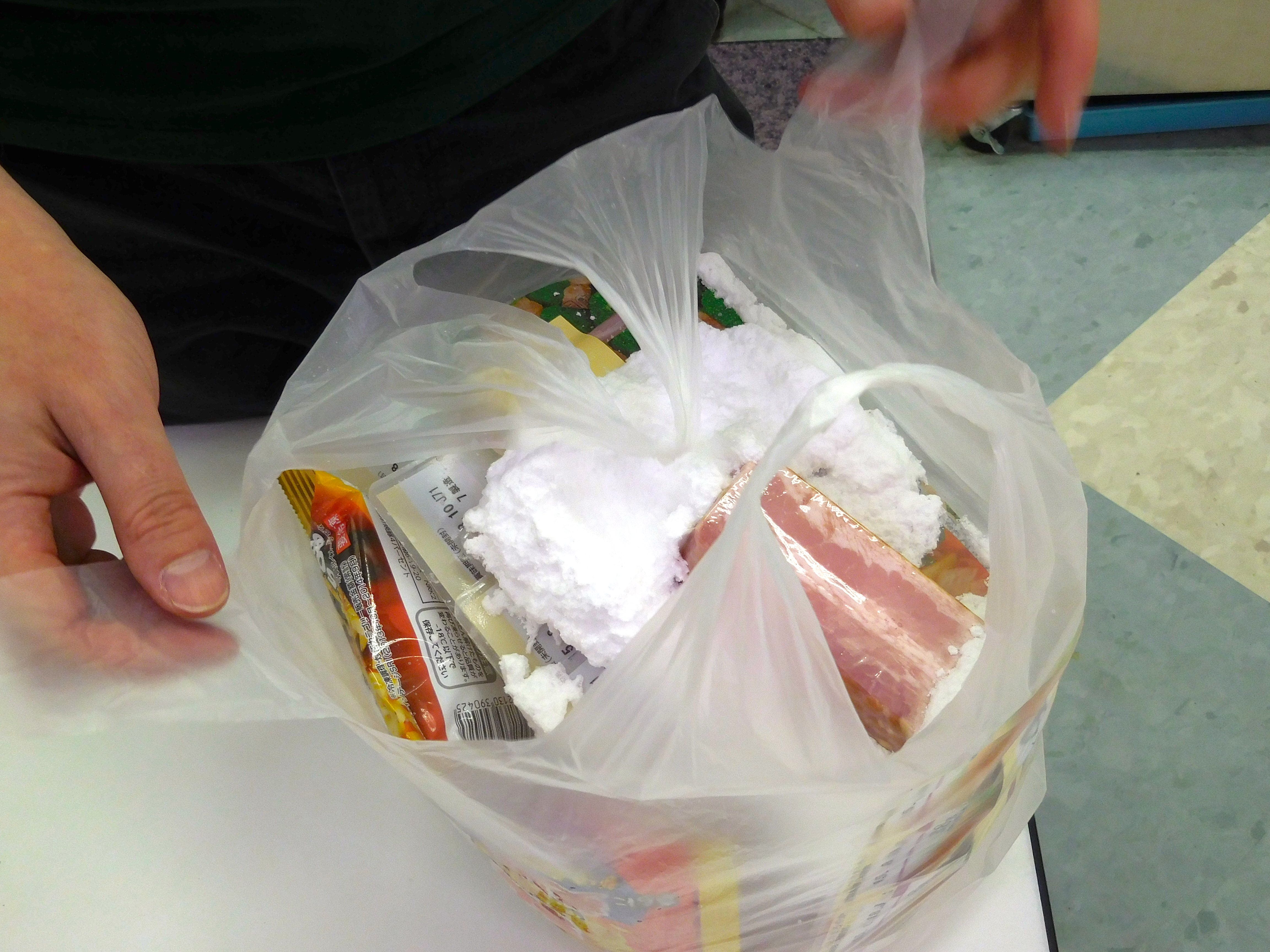
Stay cold, damnit

Stay cold, will ya?

So there you have it….my first serious foray into the mysteries of Japanese comestibles. I’ll have another blog soon on “The 100 Yen Store,” kind of like the Dollar Store in the US, but your eyes are probably glazing over by this point, so I’ll stop for now. Bon appetit!

Posted in Travel - shopping | Tagged | 4 Comments

Goldilocks and the two minibuses…

Now, in all honesty, this blog should be about the start of the summer term at IUJ – specifically about the delightful new students who are assembling here, getting oriented, and preparing to enter our classes on Wednesday. There’s been a lot of activity around here of late aimed at just that, including the fact that I’ll be spending much of my evening scoring placement exams, but what I really want to do is talk about minibuses, because in my limited experience, they can tell you a heck of a lot about the culture in which you find yourself.

But the particular reason this has caught my attention at the moment is because minibuses here are run in ways that are 180 degrees diametrically opposed to the way minibuses operated in my last long-term overseas assignment, Georgia. So let’s take a closer look. (Or, of course, you can also just turn the page if this particular musing doesn’t catch your fancy.)

Just wave your hand

Just wave your hand

In Georgia, as in much of the former Soviet Union, one of the most popular forms of public transport is the “marshrutka,” or, in Georgian pronunciation, “marshutka”. (One friend, who had to spend extended periods of time in them, coined the term “marshitka,” but fortunately I didn’t have his travel schedule.) The name basically means “routed taxi,” and they will run along a predetermined routes and (here’s the key point) will *stop any time anyone either inside or outside the vehicle wishes.* There is no fixed timetable, but since they run frequently along popular routes, there’s no worry of missing one, at least in town. Occasional diversions also occur in specific instances, but that’s just part of the fun.

On longer hauls, at least in Georgia, there are specific marshutka meeting points in town where buses have destination names in their windows and then sit and wait for passengers. Here’s another key point. The marshutka will wait *until the seats are filled* before it takes off on a long haul. This means if you want to go from Place A to Place B, you could leave at 8:00 a.m, 12:00 noon, or 8:00 p.m. You just don’t know. Once on the road, though, that’s when things get really interesting. I’m going to quote from my friend Chip’s recent blog entry from Ukraine, but this is extendable to most places:

“The two and a half hour ride to Kamyanets-Podilsky was spent watching the driver drive with one hand, talk on the cell phone with the other, and somehow make change for fares from the wads of cash jammed into the air conditioning vents on the dashboard.” This gets even more complicated in Georgia as Eurotrash music is usually blaring on the stereo, the men are chain-smoking to beat the band, and the ever-present wine bottle makes a welcome appearance at some point in the proceedings, often liberally shared with one and all, including the driver:

Gaumarjos! ( Cheers!)

Gaumarjos! ( Cheers!)

Okay. So you got the general drift.

Cut to Japan.

Noble steed

Noble steed

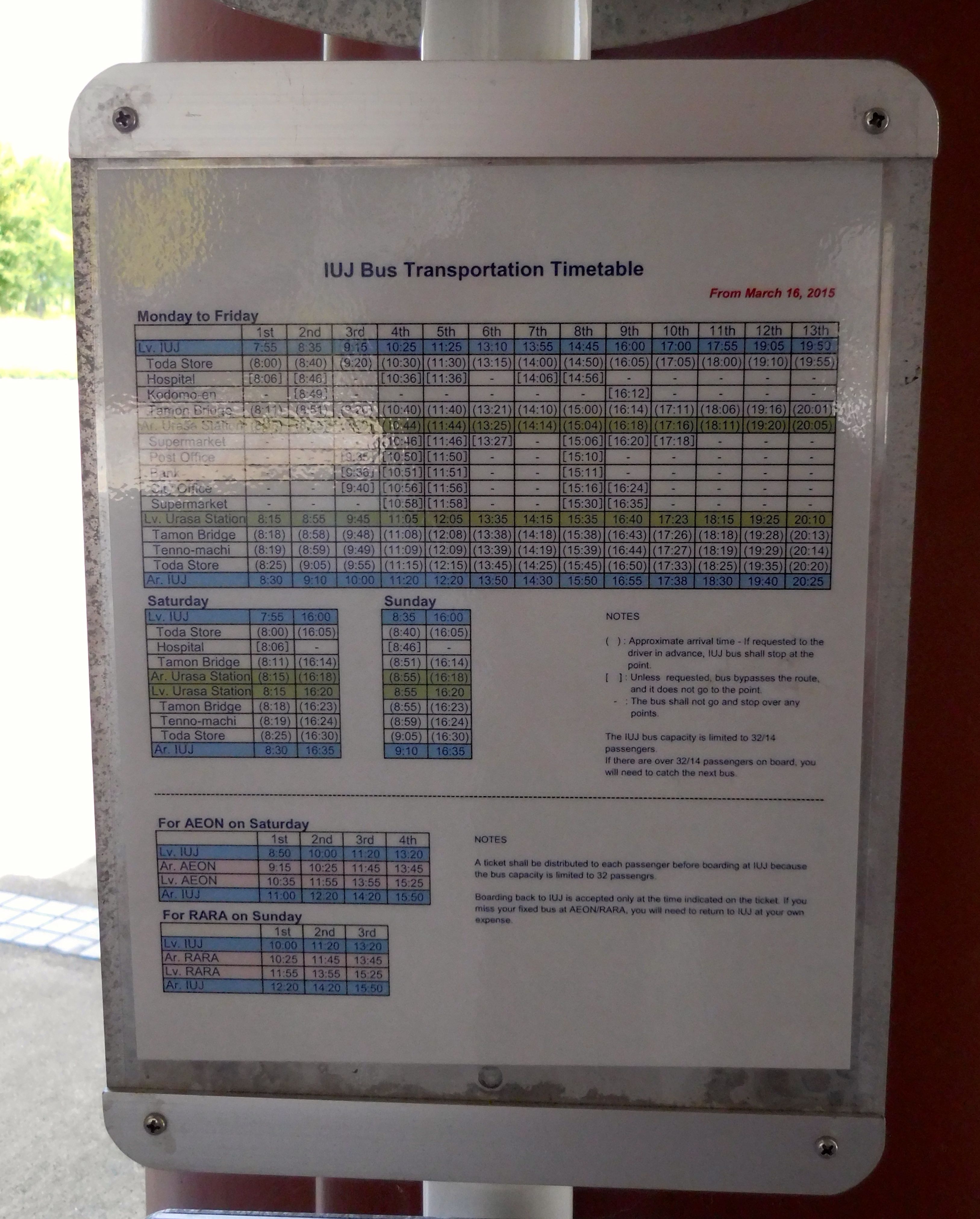
This is one of the IUJ minibuses which (thankfully) has several routes around the surrounding environs in order to connect us with the outside world, more specifically, the train station, the hospital, and the local supermarkets. Here is the weekly schedule:

Key information

Key information

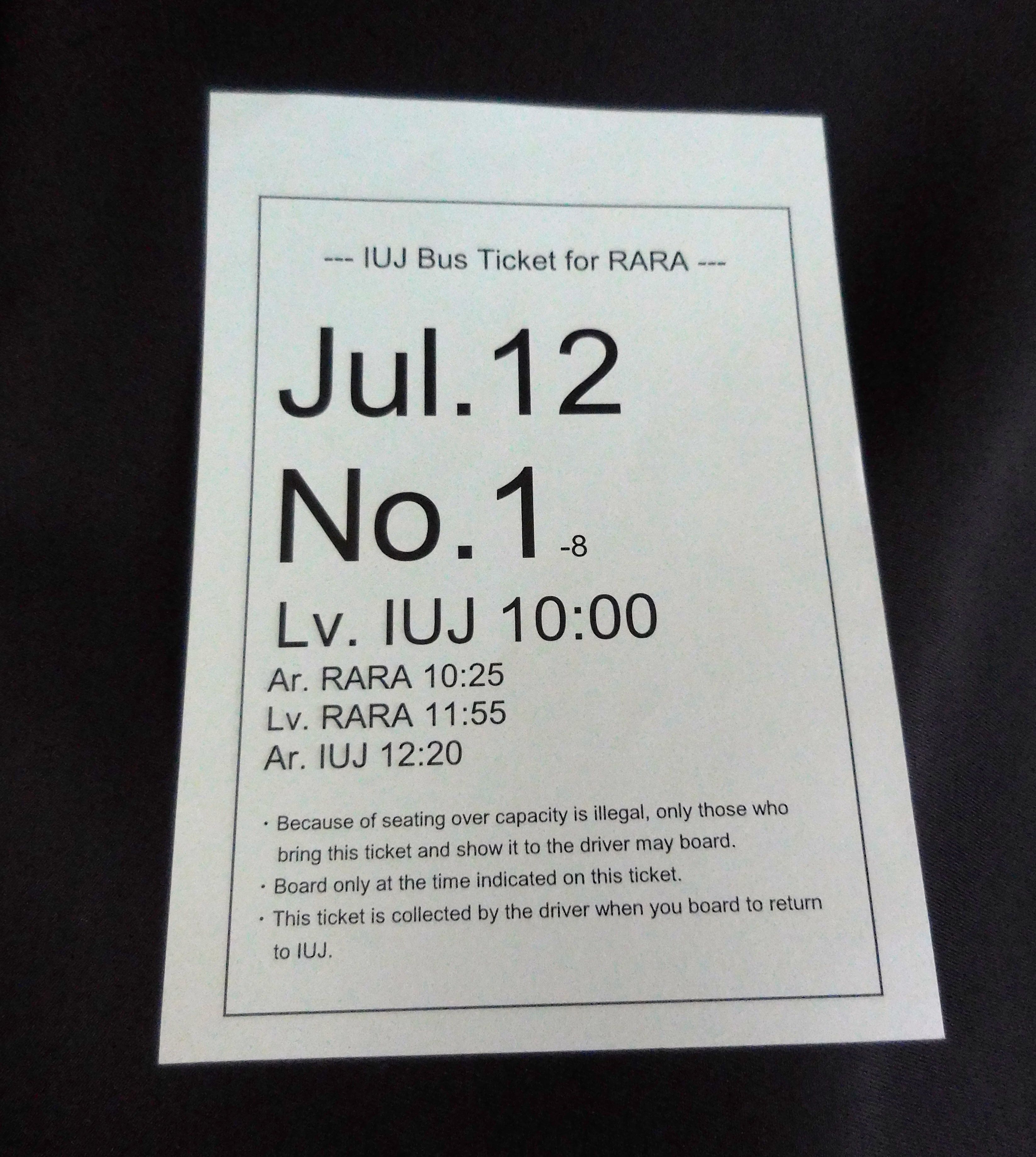
Pay particular attention to the time chart at the bottom of the page for RARA (pronounced LALA) on Sunday. (This is serious stuff.) If you can make out the times and the direction of travel, you can see that on Sunday, the bus leaves IUJ at 10:00 am, drops off the first crew at the store, returns, picks up the second crew, goes back to the store, drops crew #2, picks up crew #1, returns to school, drops off crew #1, picks up crew #3, goes to store, picks up crew #2, goes to school, drops off crew #2, and then goes back to the store for crew #3. This is all done *by one driver.* And in order to be any part of this carefully choreographed transport dance…you must have a ticket:

Don't be late

Don’t be late

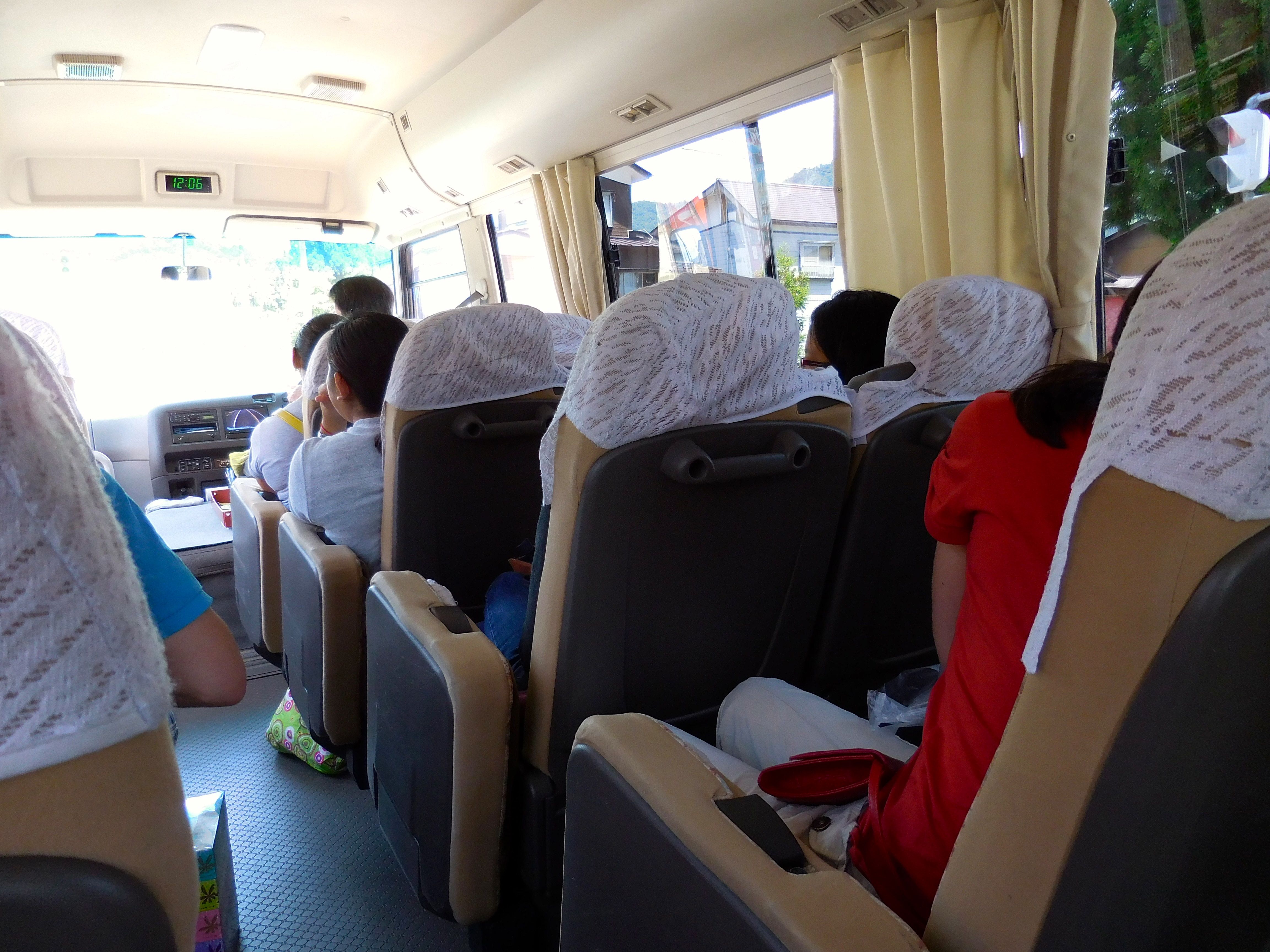
Being that I simply can’t get enough of Japanese grocery stores these days (more on that later, I hope, although taking pictures of food items in front of normal shoppers makes me a little uncomfortable), I was up for the drive to RARA and boarded the bus appropriately both ways.  If you miss it, even by a minute, the return is your nickel, and this is a 25-minute ride, serious business for the happy taxi who gets your call. Safely on board, I took a few shots of the countryside, chosen only for the fact that I could steady the camera at stop signs:

Rice paddy front yard

Rice paddy front yard

Intersection

Intersection with more ‘lice’

Lovely countryside

Lovely countryside complete with, you guessed it, “lice’

…and a shot of the happy shoppers who joined me on this trip…

Mission accomplished

Mission accomplished

So when we got back to campus, there were two stops, one at each of the student dorms. When I failed to get off at the second stop (foolishly assuming that I could return to base, the location closest to my residence), the repeated Japanese words and somewhat annoyed vocal tone of the driver suggested that a long walk with my groceries was probably the most diplomatic option at that time. So off I went and off I went. Lesson learned.

Posted in Japan, Uncategorized | Tagged | 1 Comment

Settling in to IUJ

I landed in Tokyo Tuesday evening after a 12-hour flight, added to a time difference of +13 hours from Portland, Maine. To my great delight and tremendous relief, former student and current friend Koji made the trek up from Osaka where he lives and works to meet my plane one night and see me safely to the shinkasen (bullet train) the next day for my final leg to IUJ.

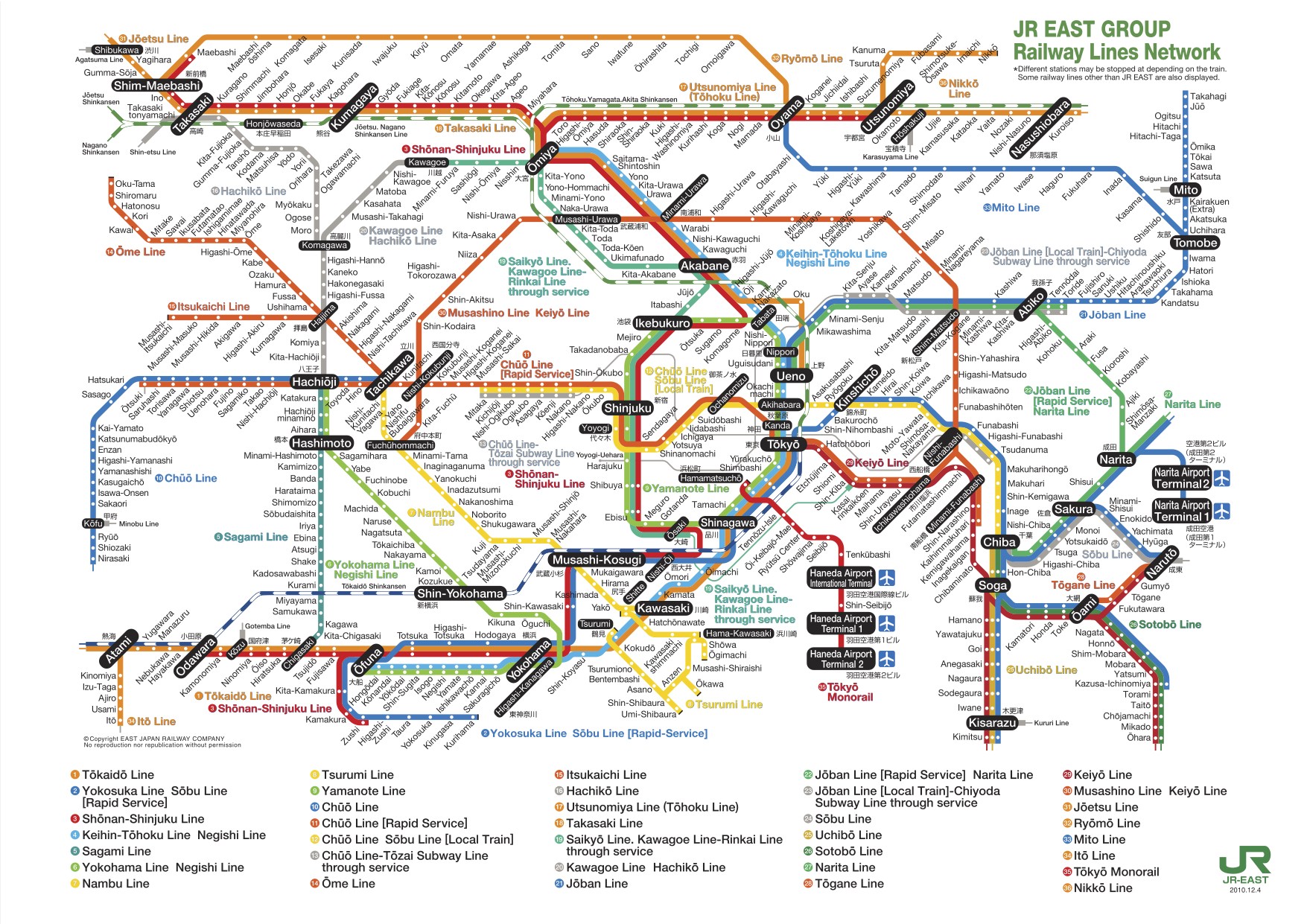
I could write a whole blog about my first impressions of Tokyo, but that must wait for another day. Suffice it to say it is, with its nearly 40 million inhabitants, the most overwhelming place I have ever seen, and this from a gal who usually eats big cities with a spoon. What keeps the place from being a dystopian nightmare from my point of view is that it is 1.) quiet (yes, quiet), 2.) safe (extremely safe; people can doze on the subway with open handbags) and 3.) obsessively well organized and full of directional information IF you can puzzle out maps and diagrams (to say nothing of the kanji). Thanks to Koji, we made our way to the hotel Tuesday night and back out and over to the correct shinkasen station Wednesday morning, no simple task either.

You are here

You are here

The shinkasen lived up to its reputation for being prompt (the record is 18 second late on departure) and fast. Unfortunately for me, once we left the sprawl of the city and suburbs and reached into the more scenic parts of the country, we entered a series of tunnels (through the mountains keeping the tracks level and smooth) and THEN is when we went really really fast. So just imagine a train ride in the middle night whooshing along at speeds up to 200 mph. Keep breathing.

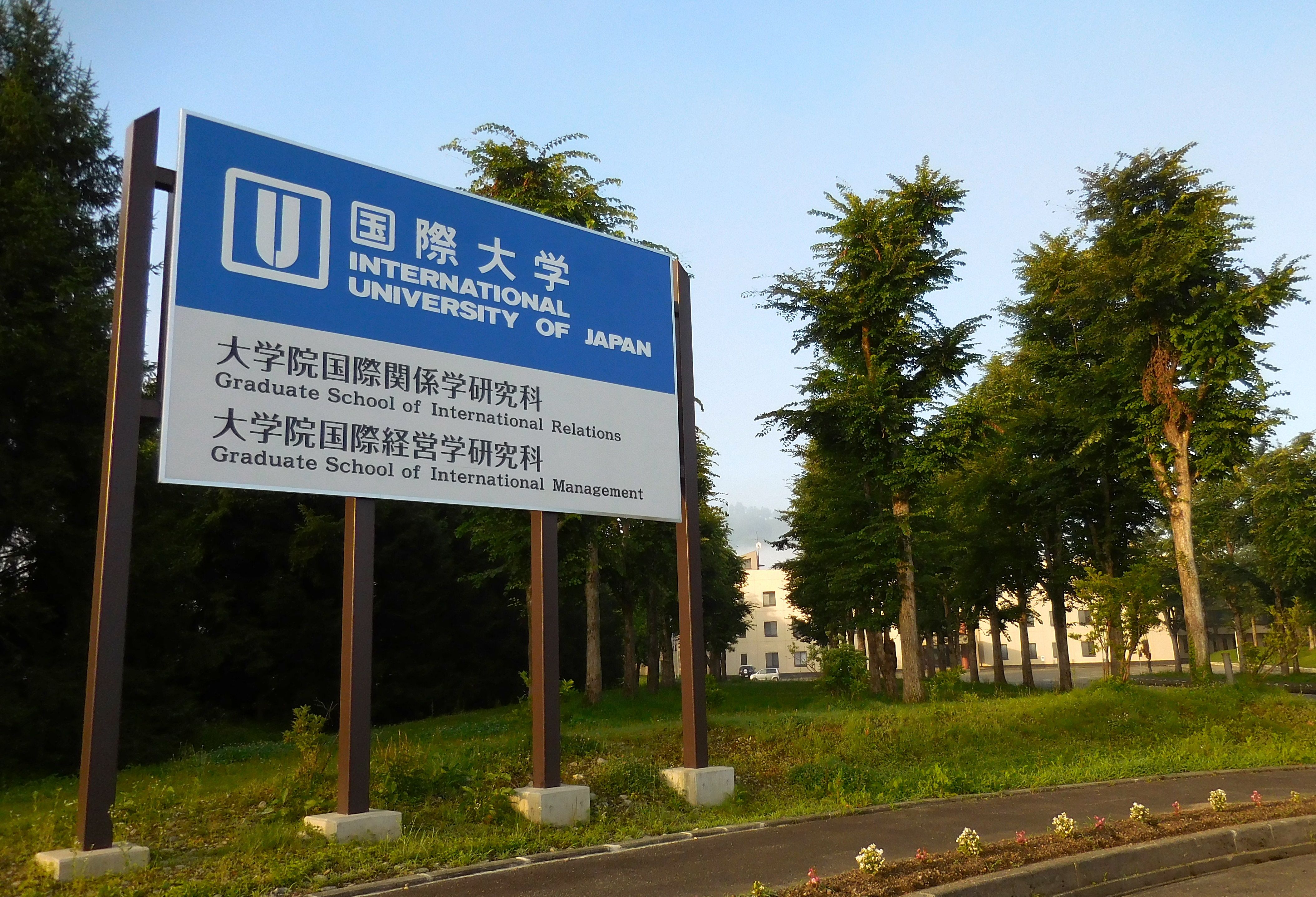
Fortunately, it wasn’t long before we stopped at the Urasa station near the university and I could reclaim my land-lubber status. One of my colleagues was there to collect me and transport me to school, bless his heart. So here’s the first view one gets of my new home:

You've arrived

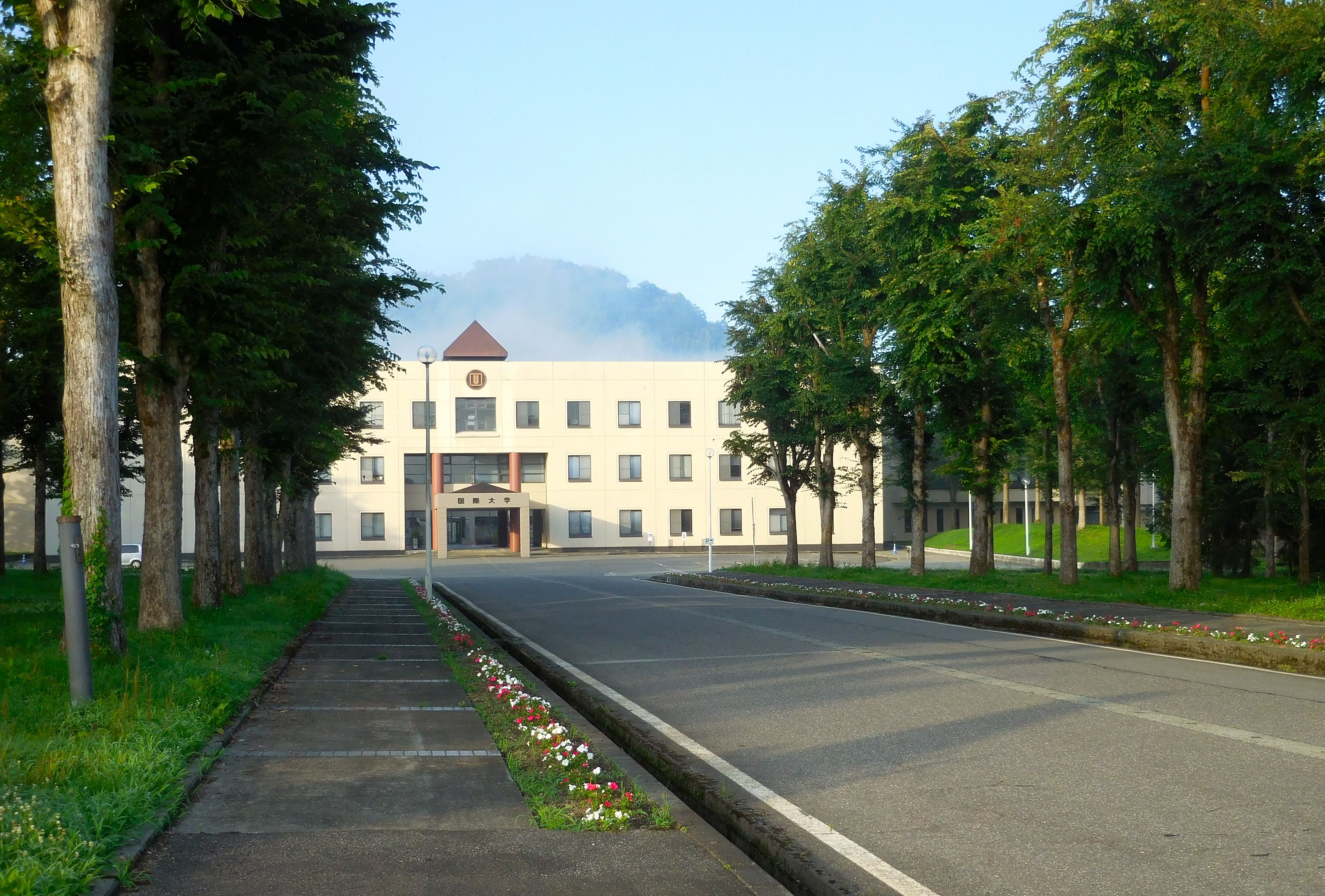
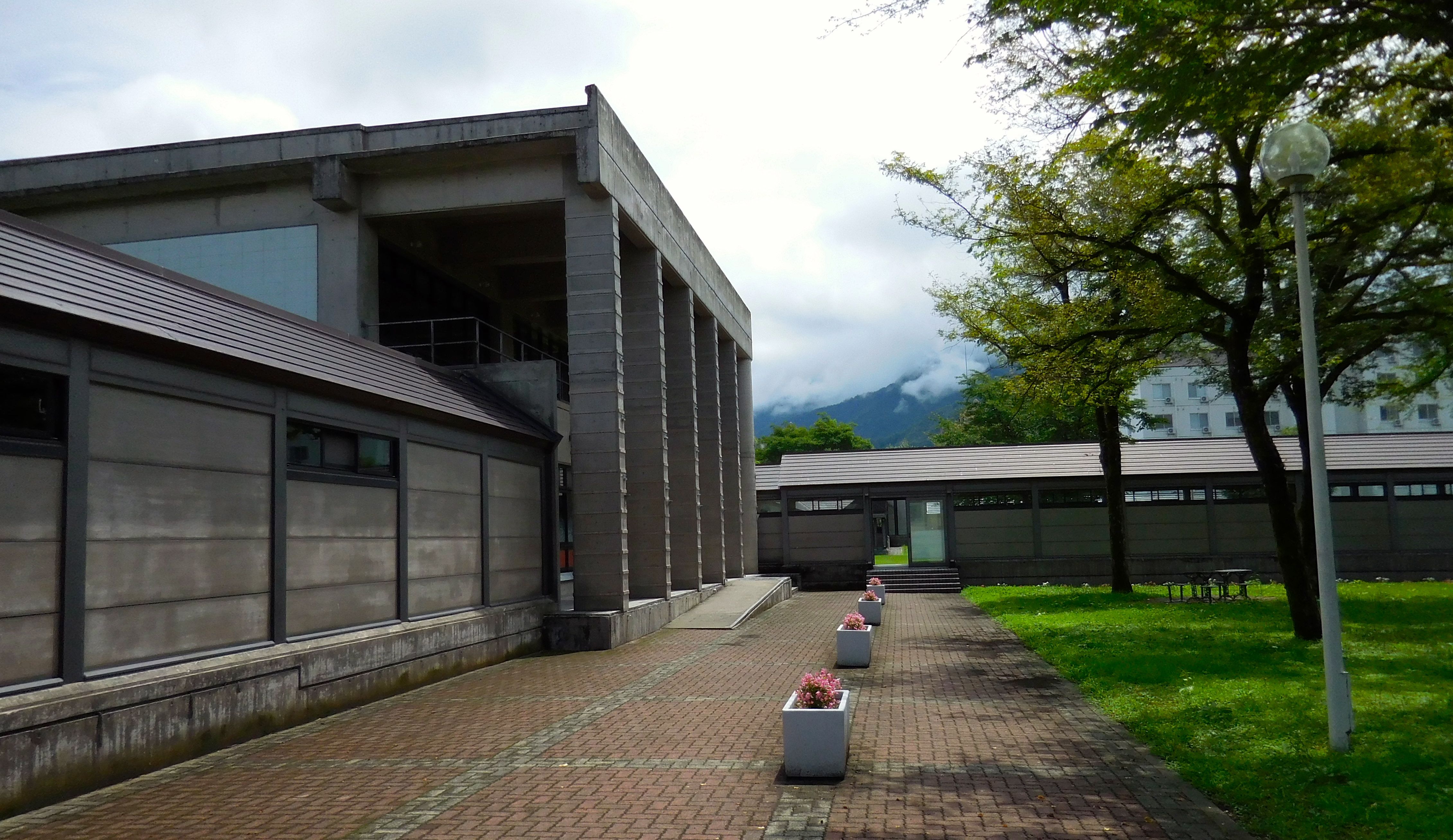
Just a little farther and the main building comes into view:

Main entrance

This is the front facade of a square edifice that contains all the administration and classroom buildings around a central courtyard. Functional rather than aesthetic, I’ll save those shots for another time. Continuing around the campus counter-clockwise, one sees…

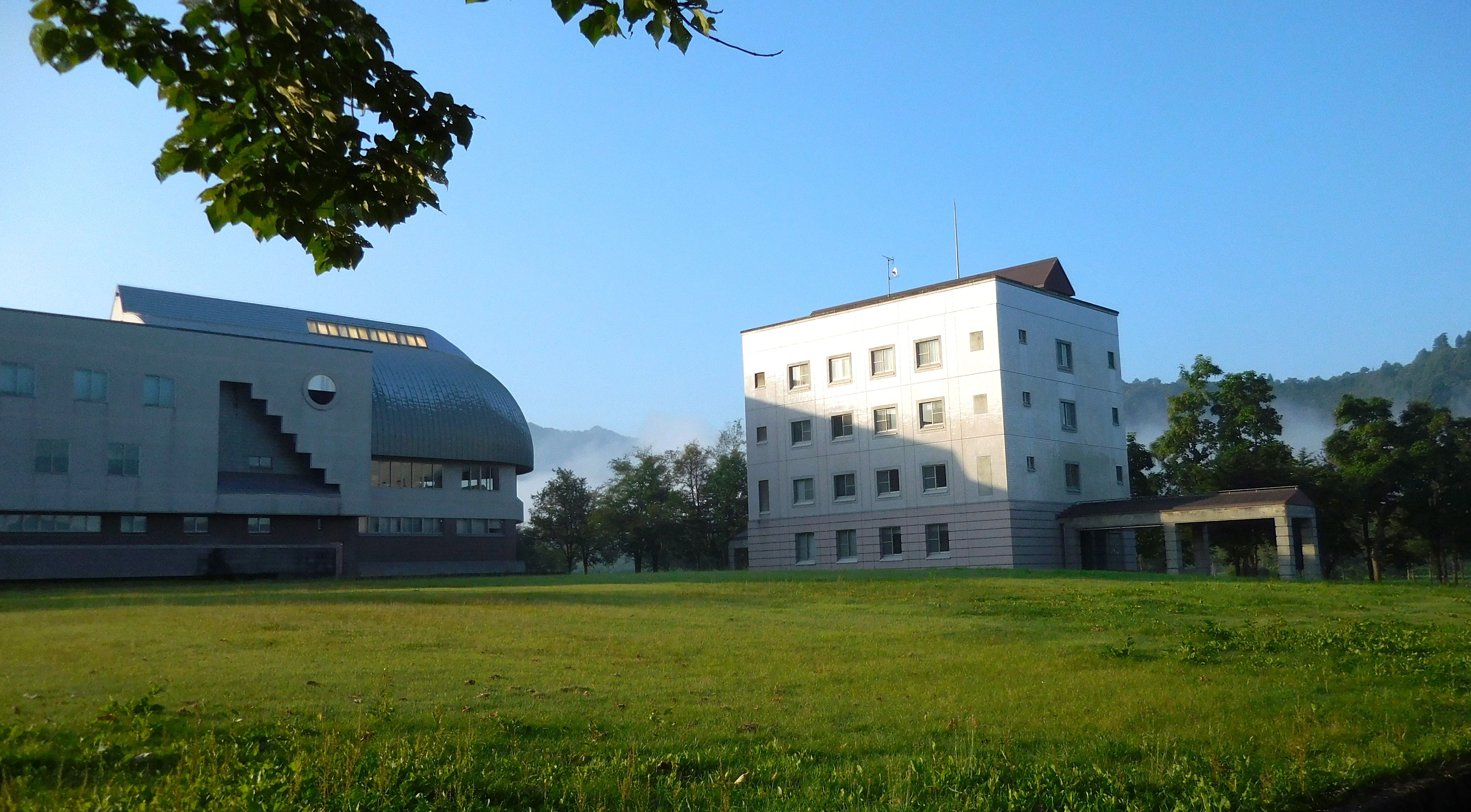
Lofty goals

…the back of the computer center and library (smaller than it looks) on the left and the Institute for Japan-US relations on the right (my office is located on the third floor, one of the windows you see there). Yes, an office, complete with a name on the door (correctly spelled), and a lot of empty file cabinets and bookshelves. The theory is that the Text Skills (writing and reading) faculty need individual offices for the weekly tutorials (30 minutes each for ~12 students ) we hold in addition to the daily classes. Ah, the power of the written word.

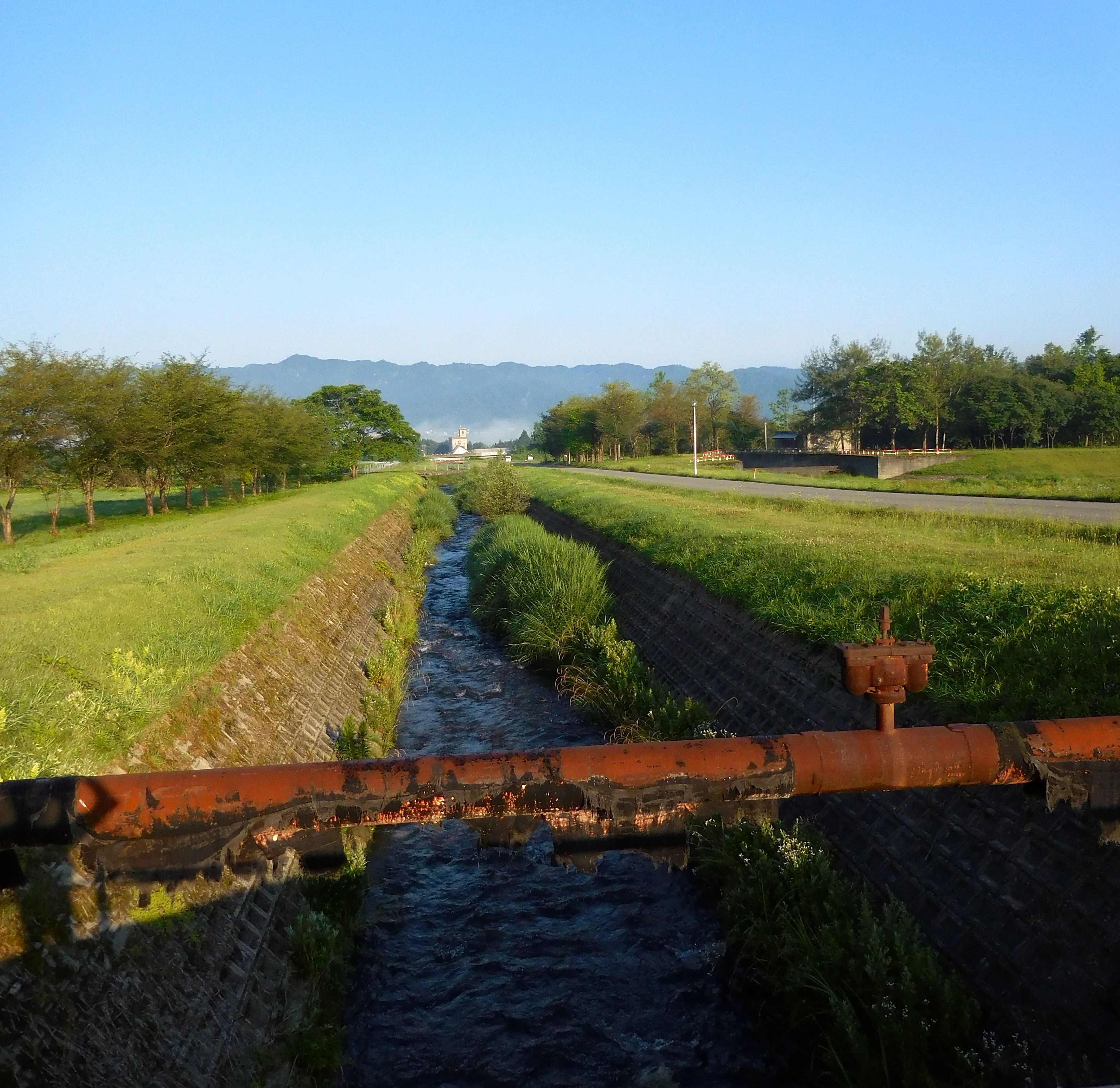
Moving right along, I turn slightly from here to show you a view of the countryside:

Long shot

Long shot

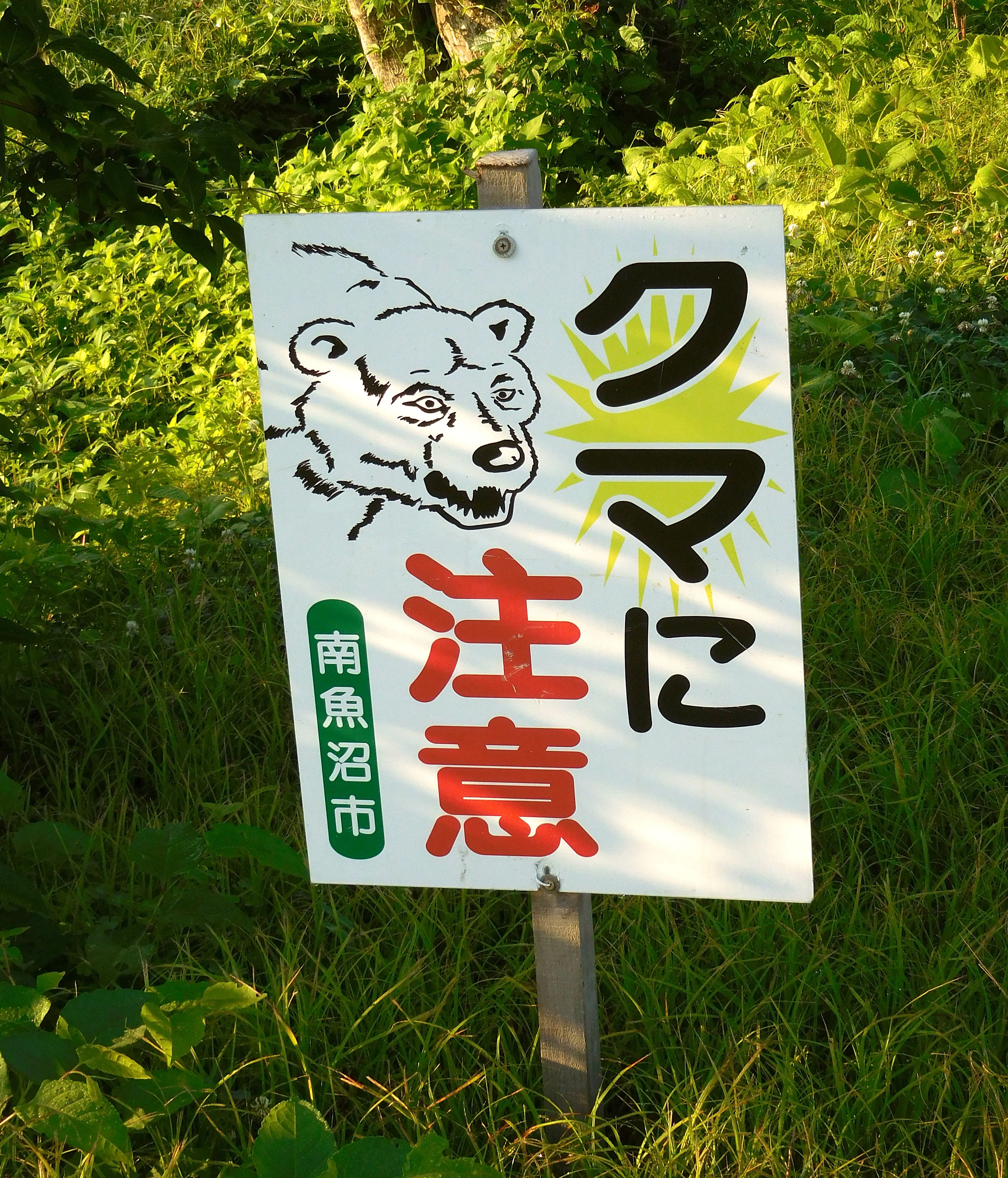
…before stumbling over a warning for the unwary who might think to walk carelessly too far into the nearby hills:

No translation required

No translation required

…so I’ll stick to the paved roads for the moment. Almost completing the circle around campus (I didn’t photograph the tennis courts or the student dorms), here’s the backside of my faculty housing building, but it’s the way I enter, so here you go. My unit is somewhere in the middle:

All the comforts of home

All the comforts of home

…and finally this is a view toward my residence from the main entrance. A 90-degree turn to the right would put you smack in front of the main building again.

Sylvan glades

Sylvan glades

Finally, a shot of the place where I am sitting at the moment – the building that contains the cafeteria on the bottom floor and the “Snack Lounge” on the second, seen on the left:

All roads lead here

All roads lead here

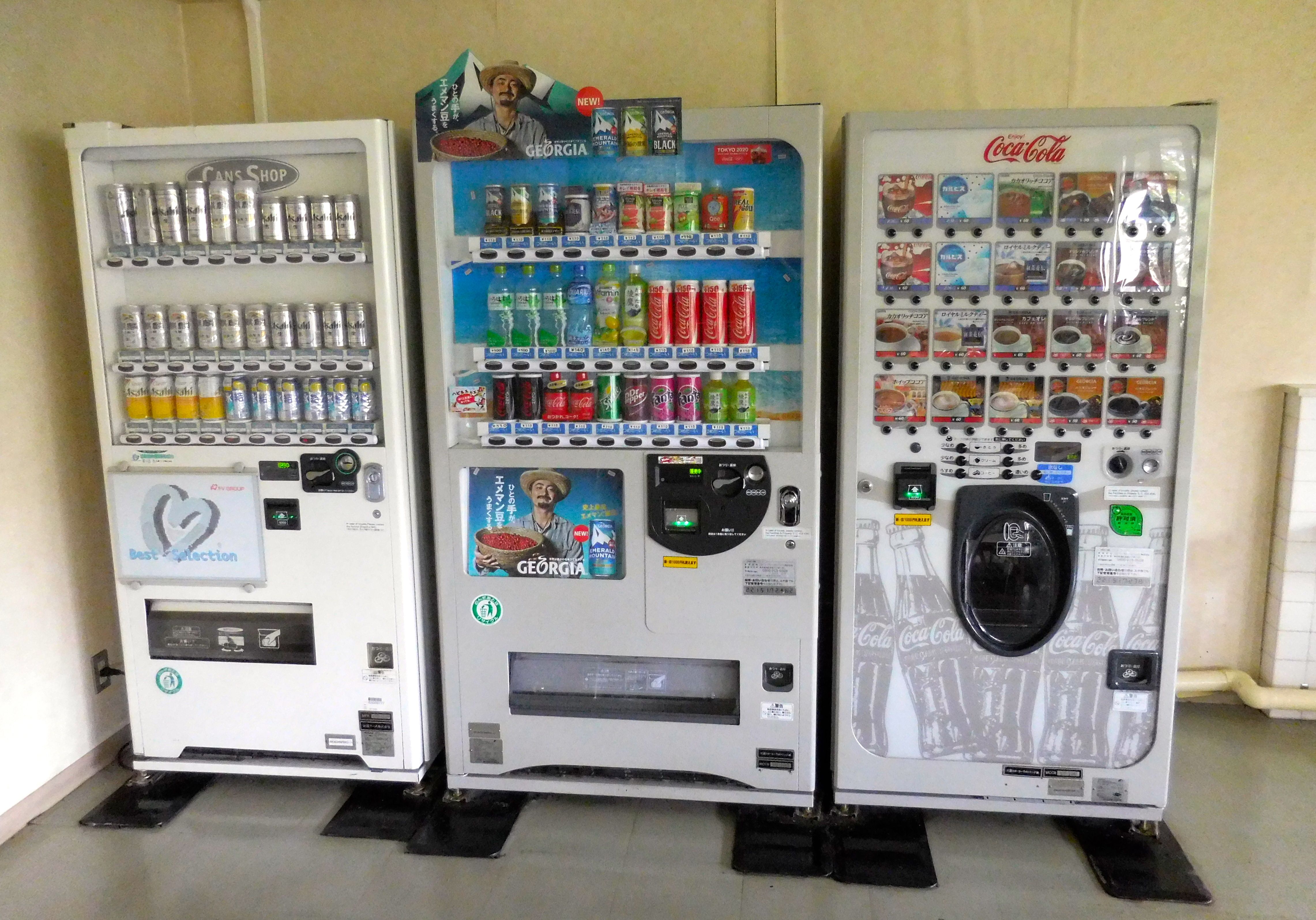
(You’ll notice the long low pathway to the left of the cafe and in the back – these and others cross campus to shield people from the massive snow in the winter and the heavy rains in the summer.) The lounge, a medium-sized room with seven round tables and chairs and a bar in the back with a TV, has two strong attractions for me. First is the availability of excellent wifi (all attempts to install it in my abode have been unsuccessful to date). But the second and most most important aspect for someone going through jet lag (OR hardworking faculty and students for that matter), the Snack Lounge features several of the ubiquitous Japanese vending machines chock-a-block full of all the various upper-and-downer beverages one could possibly want or need – coffee, juice/soft drinks, and beer:

The cappuccino isn't bad, and only 60 yen

The cappuccino isn’t bad, and it’s only 60 yen

Pay no heed to the fact that the ostensible coffee machine in the middle holds the juice and soda while the Coke machine on the right dispenses coffee. As long as you know what you want, it works. But wait! What if the midnight munchies attack and the cafeteria doesn’t open again until 11:30 am? Ever prepared, the Snack Lounge has your back. I haven’t yet given these offerings a go, but the summer is young:
Delight the palate

…which begs the question, what exactly  are formal frozen foods?

I’ll leave you one last shot of a local resident, a lot less terrifying than the alleged bears. He and his relatives create a lovely soothing nocturnal symphony that lulls me to sleep in the evenings. One must be cautious, though, during the day not to harm him with an unheeding step:

Rivet

Rivet

More soon, I hope. I don’t quite understand how I have so much to say about a country that I’ve only inhabited for less than a week but there’s a way in which new sights and impressions really get my imagination rolling. I hope to have another blog comparing and contrasting the IUJ with Batumi (you’d be amazed) and also one on the astonishing number of rules and regulations that seem to govern life here in Japan. Oh, and then there’s the job thing. We’ll work it out.  “Mata ne!” (See you!)

Posted in Japan, Travel - sites | Tagged | Leave a comment

Heros and good wishes in O’Hare

By now you are probably aware that I really like major transit hubs – airports and train stations in particular. They seem to me to be portals of adventure, worm holes leading to the next reality. While O’Hare in Chicago has its fair share of weather-related troubles – we were delayed 90 minutes due to lightening on the day in question – it is also an interesting and (for me at least) exhilarating place, one I never mind visiting.

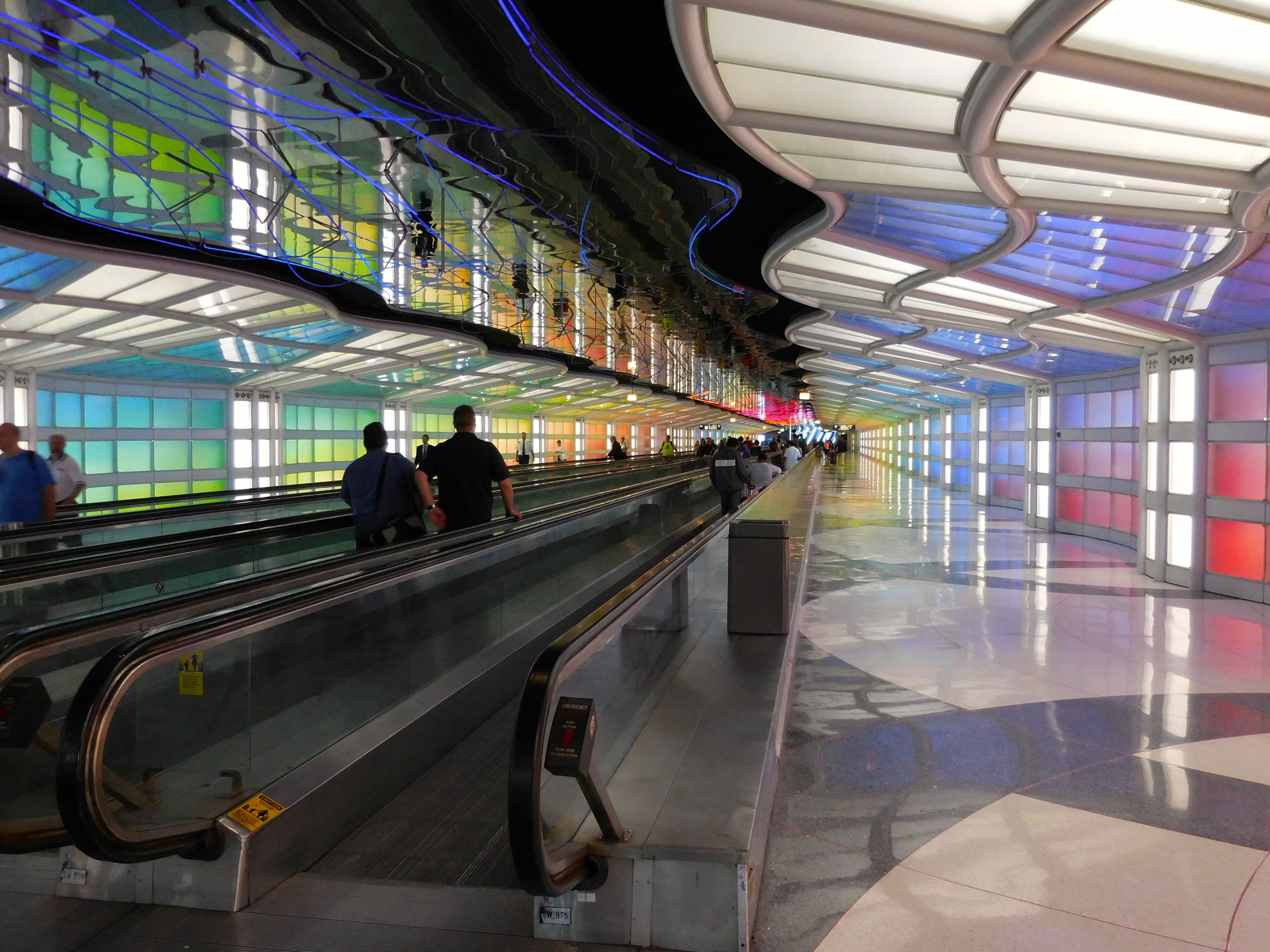
One of my favorite spots is the underground passageway between Terminal C and B:

“The walk light is on…”

This place plays eerie music and showcases a set of lights that go on and off across the ceiling in a gorgeous varying rainbow pattern (this must sound nuts unless you’ve been there). I just love it. The moving sidewalk adds to the mystical sense of it all.

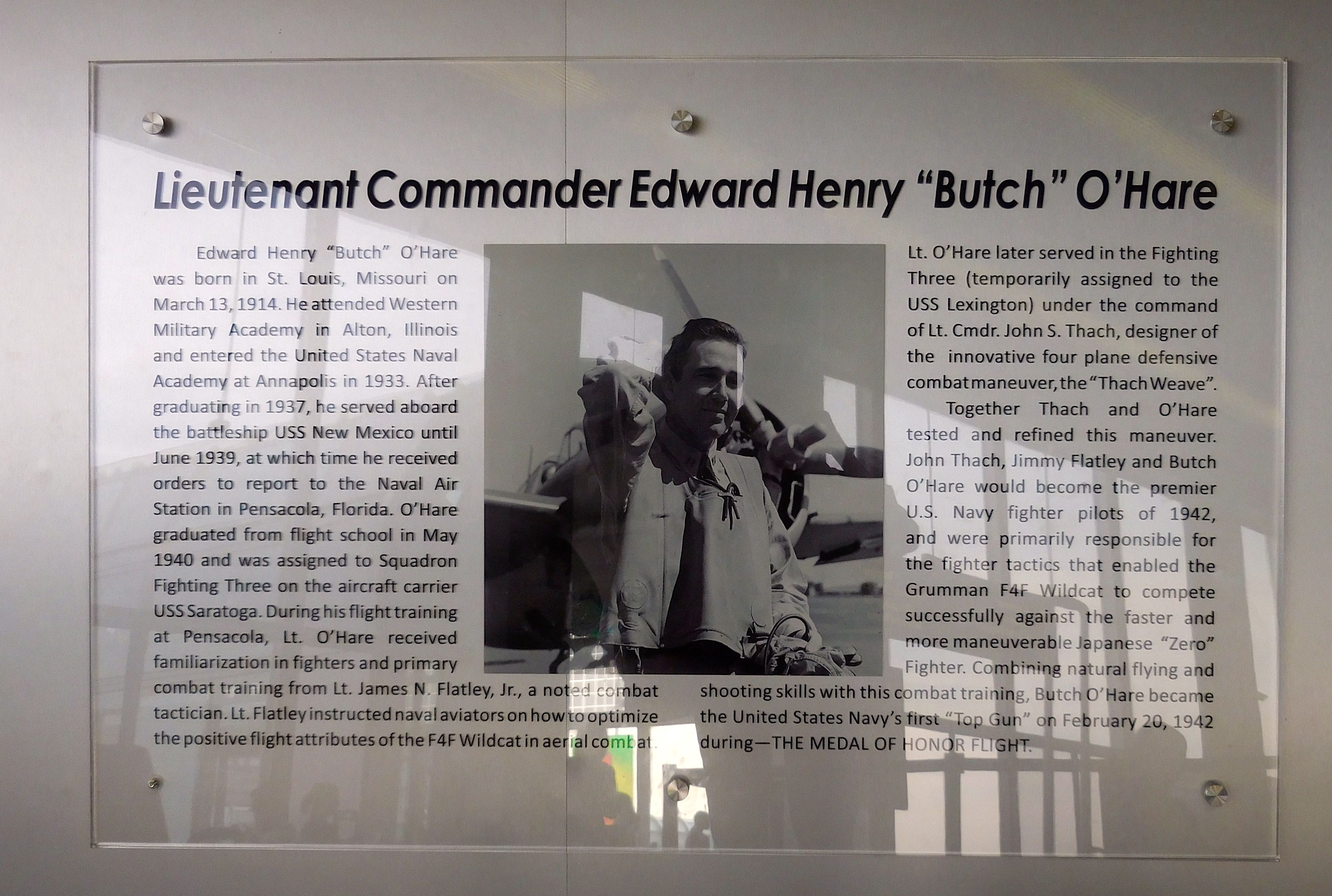
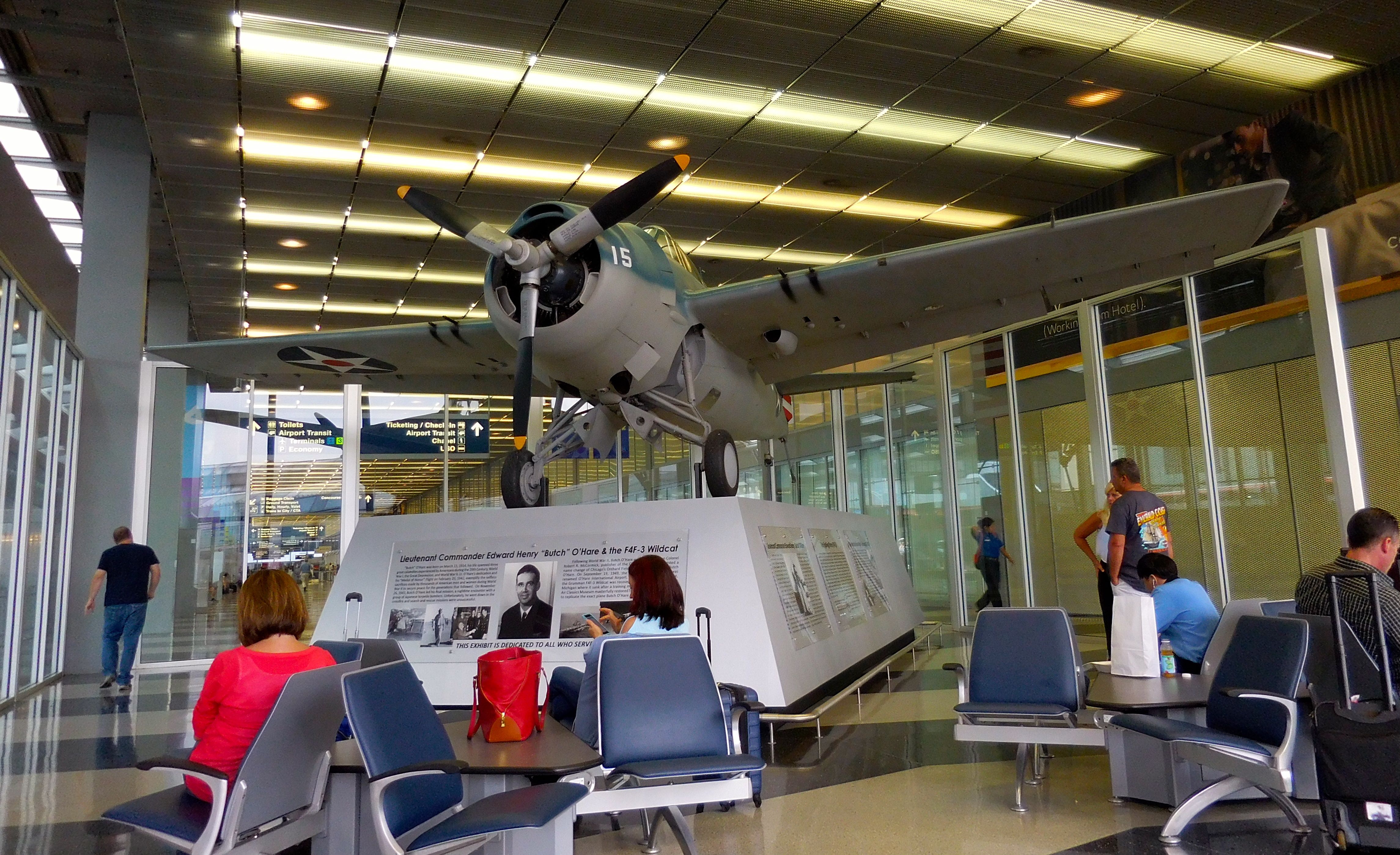
On this particular day in question, I was transiting from my inbound flight from Portland Maine to my outbound flight to Tokyo. I had a couple hours to kill, so in typical Mortensen fashion I spent it walking the dogs off to try and prepare for the next long haul. The first stop was a little corner I had discovered about a year ago, a memorial of sorts to the man the airport is actually named after, Navy pilot “Butch” O’Hare, one of the original “Top Guns”:

A true American hero

A true American hero

To get a major airport named after you, the story probably doesn’t end well for your corporeal form. But before we cut to the chase, here’s a replica of the Grumman F4F Wildcat, the workhorse of the Pacific Theater in World War II, that helped him and his colleagues design and execute the “Thach Weave,” a bold defensive tactic that could defeat the faster and more maneuverable Mitsubishi A6M Zero, its Japanese nemesis:

Not that big from here

Not that big from here

Butch earned the Navy’s first Medal in April of 1942 when he “single-handedly attacked a formation of 9 heavy bombers approaching his aircraft carrier. Even though he had a limited amount of ammunition, he managed to shoot down or damage several enemy bombers.” A year and a half later, his plane was shot down during an encounter with Japanese torpedo bombers. A destroyer was named after him in 1945 and then in 1949 the Chicago airport was renamed in his honor.

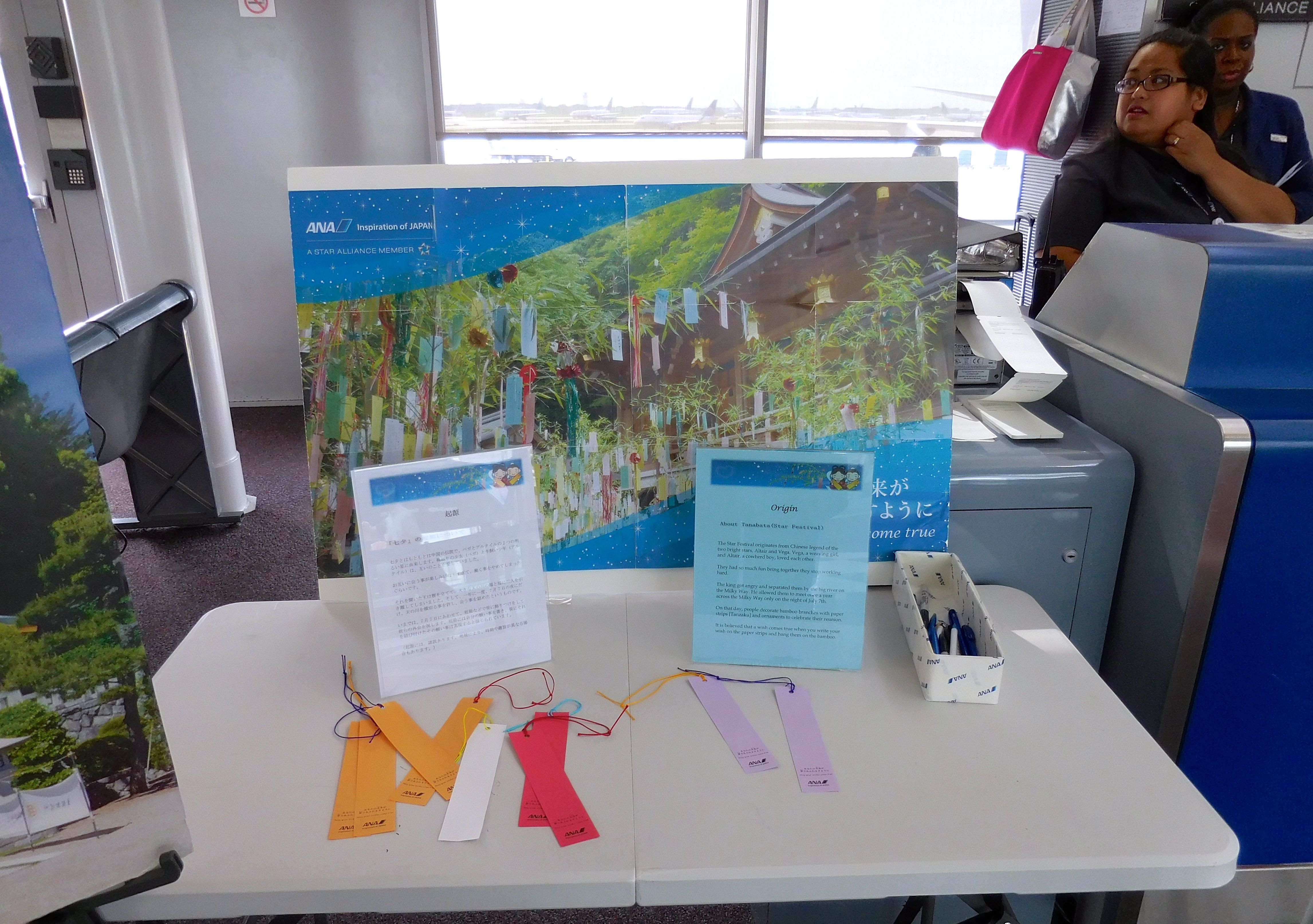
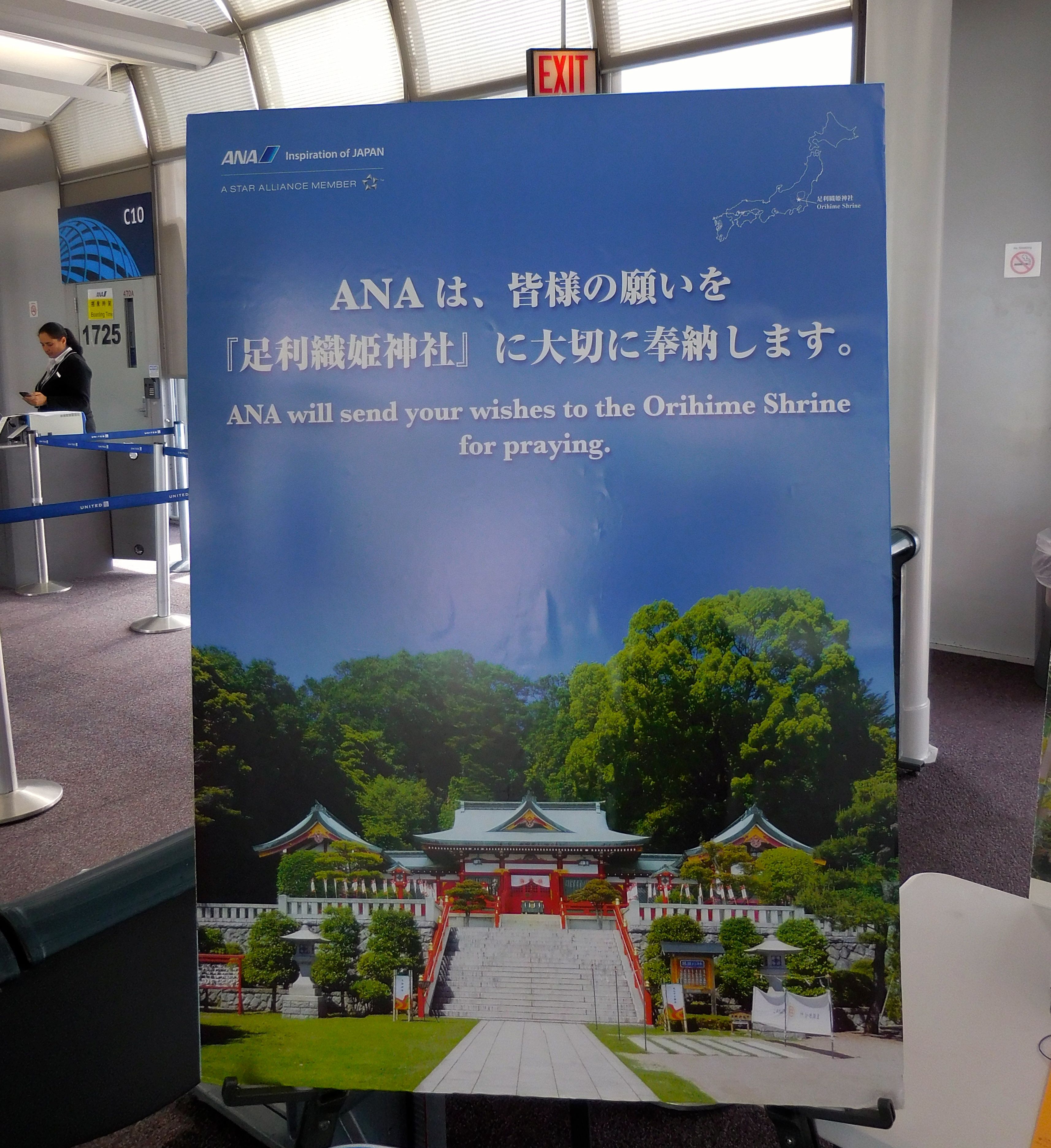
This seemed oddly juxtaposed against my upcoming departure to Japan, so to cheer myself up first I fortified myself with a little snack at a sushi bar (where the chef taught me the correct pronunciation of several key phrases) and then I headed over to my departure gate. Once there, I saw a table had been set up in honor of Tanabata:

Submit good wishes here...

Submit good wishes here…

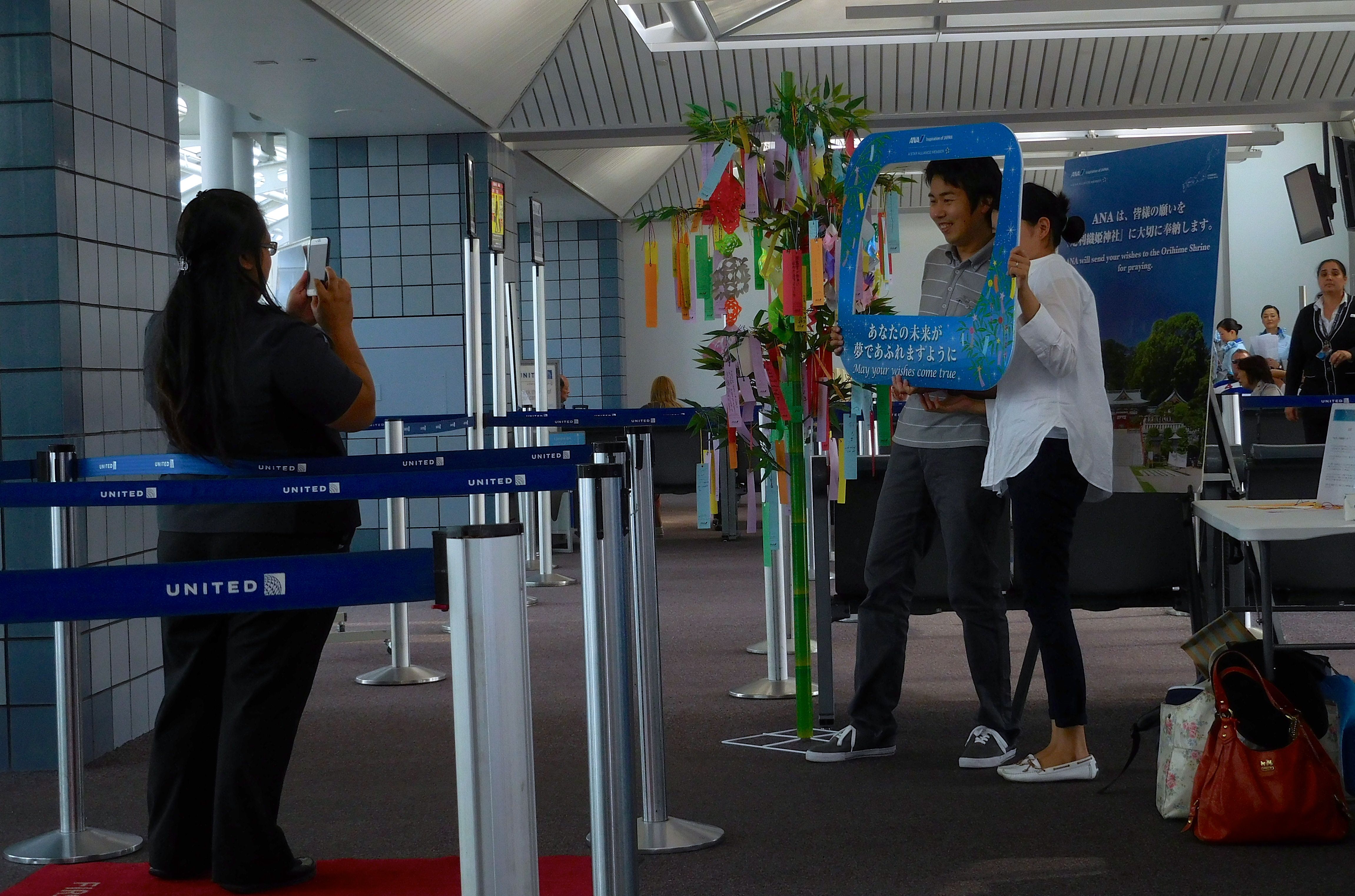
Hmmm. Turns out Tanabata, meaning “Evening of the Seventh” and known as the “Star Festival,” honors the annual meeting of the deities Orihime and Hikoboshi (represented by the stars Vega and Altair respectively). Old Chinese and Japanese legends tell us these lovers were separated by the Milky Way (puts most long-distance relationships to shame) and they are allowed to meet only once a year, on the seventh day of the seventh month. Today, people write wishes (or poems) and hang them on a bamboo “Wish Tree.” Sometimes the tree is set afloat or burned, but here at gate C-10, it was on display for all to see, and obliging ANA staff even took pictures of passengers in commemoration of the day:

World peace or a new I-phone?

World peace or a new I-phone?

I was pleased to know all our thoughts were not hung in vain:

Straight to the

Straight to the
“shrine for praying.”

I was modestly hoping for a safe flight, myself, and I watched out the window as last minute preparations were made for our departure:

That's a lot of luggage

That’s a lot of luggage

Thankfully, my wish came true and some hours later I tumbled out in Tokyo. Stayed tuned for more adventures.

Posted in Travel - Airport | Tagged | 1 Comment

A summer adventure in Japan

This summer I am honored to be serving as a Visiting Instructor at the International University of Japan (IUJ) in Minamiuonuma, Japan. IUJ is, to my knowledge, the only all-graduate, all-English-medium university in the country. There are two main types of master’s programs, international business and international relations. The intensive summer program in English supports both incoming graduate students as well as some employees from the International Monetary Fund (IMF). There will be 12 visiting faculty and roughly 90-100 students who will spend eight weeks together in the heart of rural Japan, a major rice-growing region near mountains that receive more snow that practically anywhere else in the world. Stay tuned for my adventures from “the land of the rising sun,” literally the translation of the words Nippon and Nihon.

A link that shows you a little about the region…

http://www.m-uonuma.jp/en/index.html

…and a little about the uni…

About IUJ

More once I manage the transport to Tokyo and then bullet-train (shinkasen) myself to campus next week. Until then, kampai!
Posted in Japan, Uncategorized | Tagged | Leave a comment

A Touch of Asheville

I’ve had some extra time on my hands this spring between the completion of one contract and the beginning of another. And since time, in my mind, most often equals “chance for a trip,” I’ve been taking a few little ones around to visit long-lost friends and rekindle important relationships before, well, you know, before the things that happen begin to happen.

Most recently, I flew down to North Carolina, where I checked in with a dear friend from my divinity school days and also a former State Department colleague. Since I managed to schedule my visit with a significant heat wave (over 100 degrees F with humidity off the charts), the latter suggested a day trip to Asheville, and I quickly agreed.

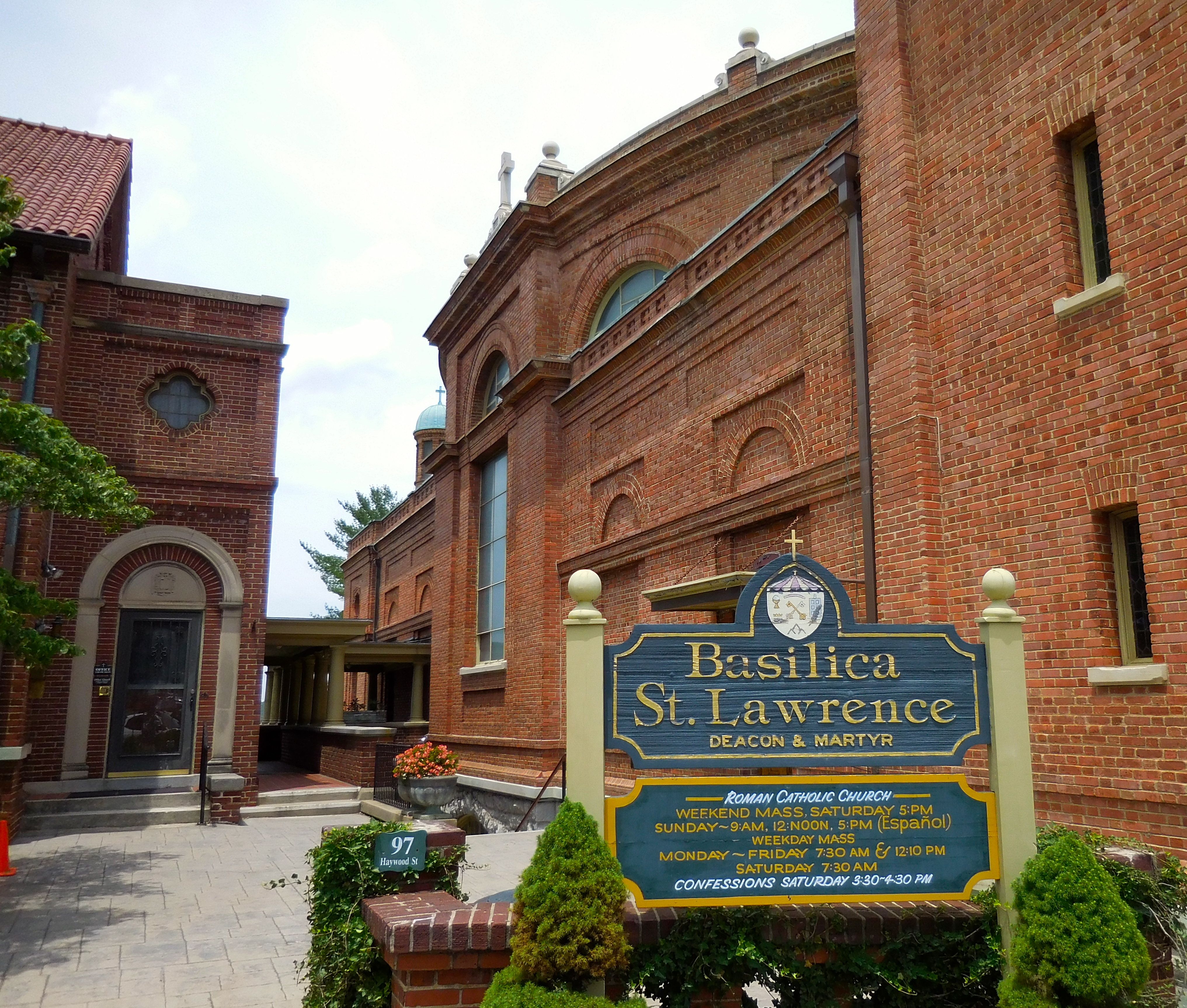
I had visited Asheville once before when living in NC a couple decades ago and remembered it as a lovely little city up in the Blue Ridge Mountains. I checked in with TripAdvisor, my go-to site, and was surprised to see that listed amid the Biltmore and beer tastings, there was something called the Basilica of Saint Lawrence. Who knew? And since my friend J is an intrepid soul and a curious traveler like me, she was game to add it to our itinerary.

Serving the faithful since 1909

Basilica

The published information is a bit modest on the reason that this piece of Spanish Renaissance architecture came to be standing in the middle of the the Appalachians, but to my recollection, there were two determined priests, named appropriately enough Peter and Paul, who managed to commission the then-famous architect Rafael Guastavino to build the church in order to serve the Catholics of the region. Guastavino had immigrated to the US from Barcelona where he had designed homes and factories for the industrial elite of Catalan. He brought with him a passion for tile and the secret of an ancient building technique that had been used on the Iberian Peninsula for centuries, possibly of Middle Eastern origin.

Arriving in the Piedmont to work on the Biltmore House in the mid-1880s, Guastavino  apparently fell in love with the lush rolling hills of Asheville and built his own house nearby. Toward the end of his life, his design was accepted for the church and it was built between 1905 and 1909. Guastavino himself died in 1908 and is buried between the church walls – his tomb is on view for parishioners and guests. In addition to the Biltmore and the Basilica, I was astonished to learn that Guastavino’s style and the influence of his tile method can be found in over a thousand buildings across the US, including Grant’s Tomb, Grand Central Station, Carnegie Hall, the Chapel at West Point, and many many others.

No wood or steel

No wood or steel

But what’s a basilica, you ask (as did I)? It is a Greco/Roman word meaning “public building,” but is now a term given by the Pope to particular churches because of their historical or other significance. There are 56 such places in the US (again, news to me). The title has to be earned through three criteria: long history with the local people; providing the possibility of more than one service celebrated at the same time (separate little chapels) and (naturally) performance of all rites “in an exemplary way with fidelity to liturgical norms.” Privileges are accorded thereto.

Busy granting plenary indulgences to the Faithful

Busy granting plenary indulgences to the Faithful

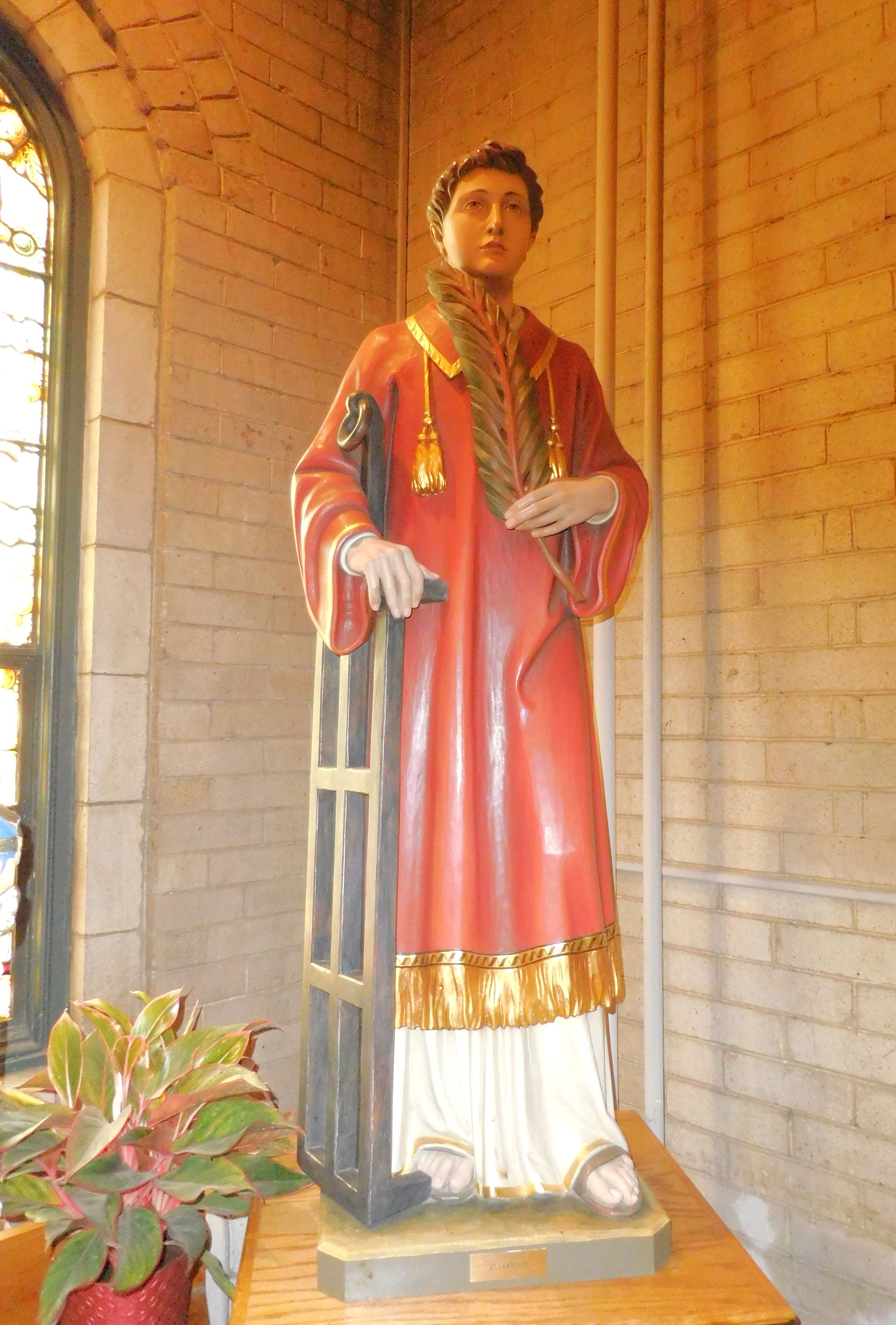
Lawrence, himself said to be born in Spain, was appointed a deacon by Pope Sixtus II in roughly 257 CE. He died a martyr’s death, it is told, because the pope after Sixtus wanted Lawrence to turn over all the Church’s material treasures to him for his personal use. Legend has it Lawrence was appalled by this crass bid for wealth and hid or gave away most of the items he could find, replying in a cheeky manner that “the poor, the crippled, the blind, and the suffering were the true treasures of the Church.” This story of course doesn’t end well for Lawrence, and no less than the Italian master Tintoretto painted his difficult end. His name graces many things around the world, including the river that separates the US and Canada.

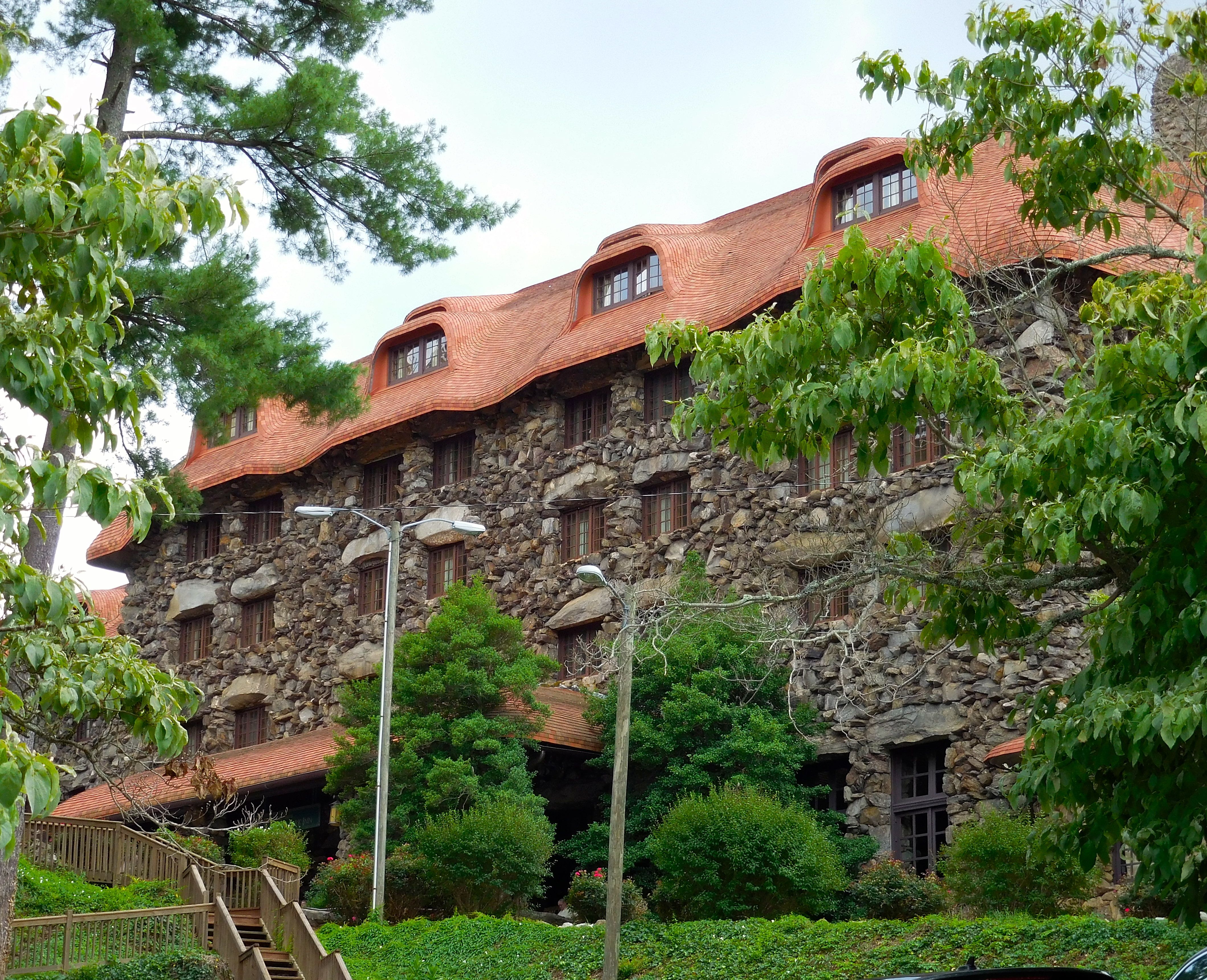
Well, all this history and architecture makes even the most die-hard traveler a might peckish, so after this enlightening visit we hied over to the Grove Park Inn for a little luncheon repast.

Quite the pile

Quite the pile

Another architectural wonder of the region, the GPI was “built from granite boulders hewn from Sunset Mountain”and opened in 1913. The hotel was envisioned by a E. W. Grove who had made his fortune selling “Grove’s Tasteless Chill Tonic,” apparently an elixir that cured enough ills to fund this enormous project. The printed propaganda tells us that Grove’s son-in-law designed the property and then “it took a crew of 400 men only 12 months to build the majestic landmark, dragging hundreds of tons of boulders up the mountainside with the aid of teams of mules, ropes and pulleys, wagons and a lone steam shovel.” (Poor mules).

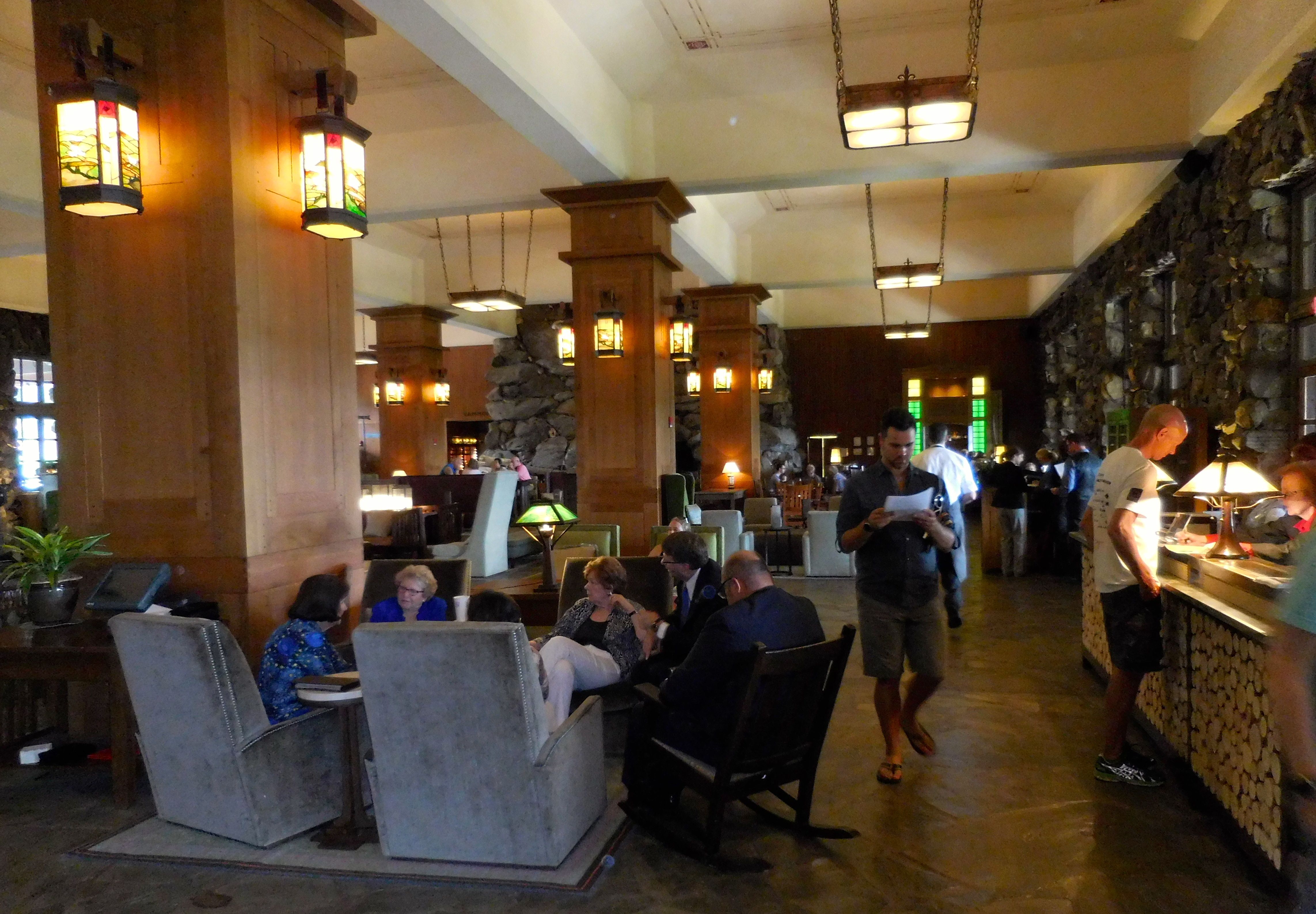
Here’s a shot of the entrance hall, which I heard is decorated in grand style for the Christmas holidays:

Where's my gimlet?

Where’s my gimlet?

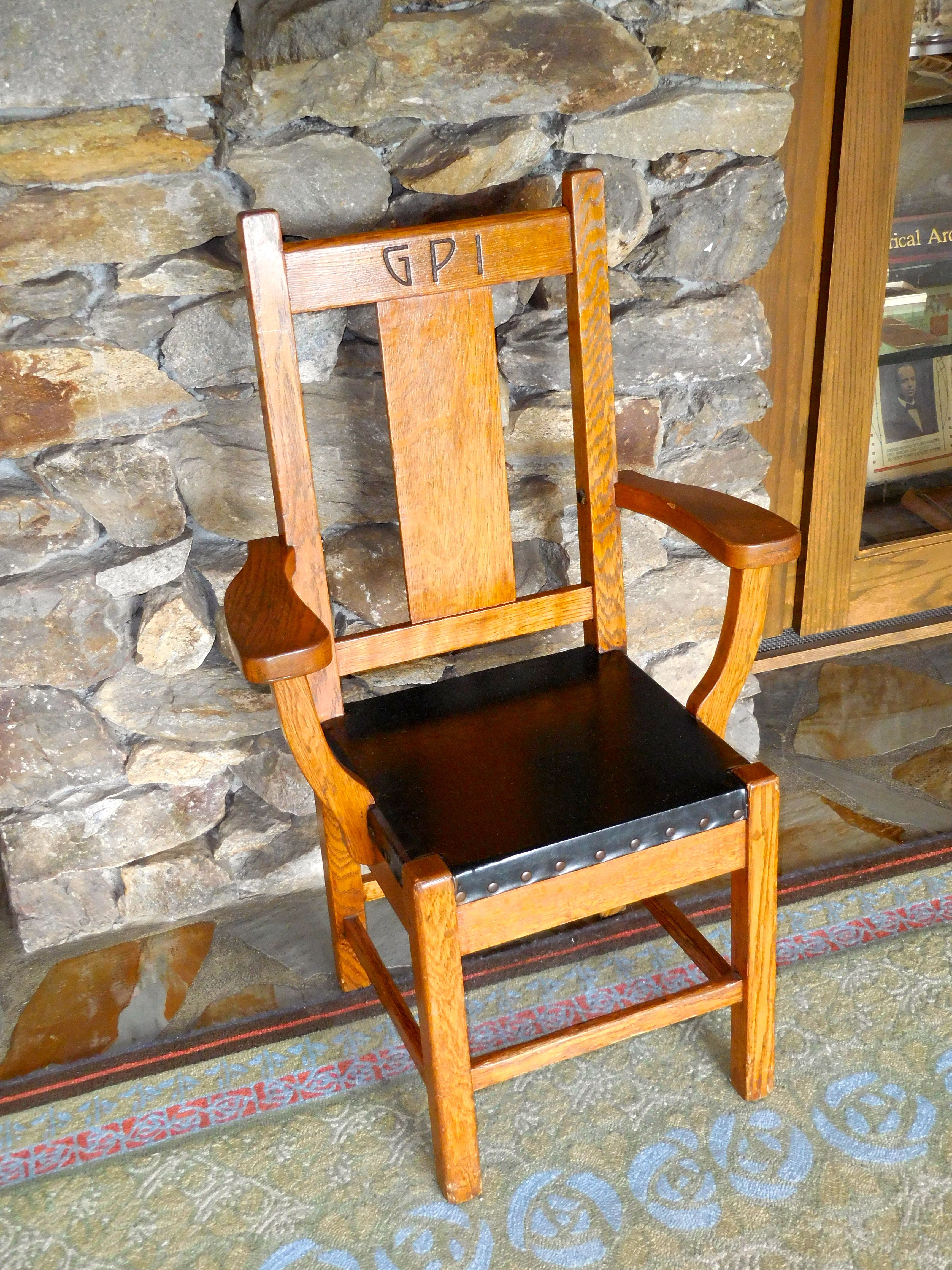
…and a chair in the design of the day…

Classic Arts and Crafts

Classic Arts and Crafts

… a view of the more modern side of the resort….

GPI View

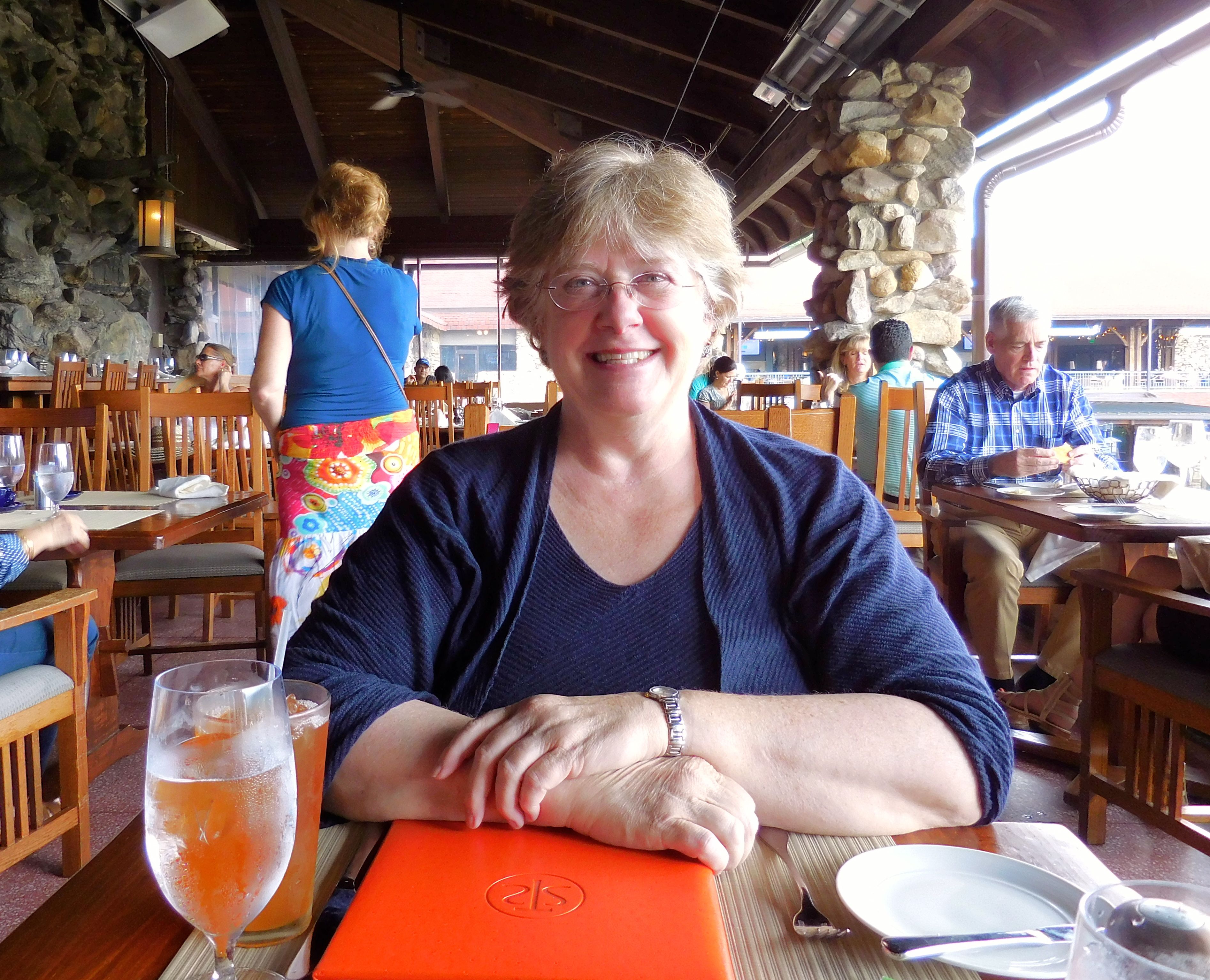
…and finally a shot of my good friend J as we enjoy a lovely meal on the veranda. Skal!

Magical moment

Magical moment

Posted in Travel - sites | Tagged | 1 Comment

The Newest Normal – PSAs and Amtrak

From here to there...

From here to there…

I was recently on a trip to New York City to visit friends and attend an alumni event. More about that perhaps later. But in truth the most impressionable part of the four days was my new appreciation of how seriously our non-airport transportation companies, particularly in this case Amtrak, is taking the threat of unspecified harm to levels I have never seen before in this country.

We’re all rather blasé these days, it seems to me, about airport security. You know the drill. Stand in a long line, get your boarding pass and ID checked a couple times, go through a brief-but-frantic strip-down and de-pack of clothing, shoes, small toiletries and electronics, and then re-assemble yourself and off you go to find Starbucks and your gate. Recent reports that the TSA misses somewhere in the neighborhood of 97% of intentionally planted bad things sheds a somewhat “Saturday Night Live,” head-shaking, shoulder-shrugging light on the entire proceedings.

Many young people I’ve met recently don’t even know why we take off our shoes in the security line. They are astonished when I tell them that yes, shortly after 9/11 a young man named Richard Reid actually did attempt to light two bombs made of 10 total ounces of plastic explosive hidden in both his sneakers on a flight from Paris to Miami. Fortunately, the sweat from his feet kept the gunpowder from detonating. Hence from then on an entire nation of folks in stocking feet heads through the metal detectors. Like the Maginot Line in France, we’re always preparing for the last attack. The best intelligence out today is that home-grown right-wing extremists are the biggest threat to security by orders of magnitude.

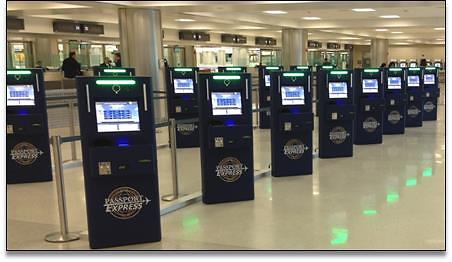
All that being said, it had been a while since I had traveled on an American train, Amtrak to be specific, and even longer since I had spent two and a half hours waiting for one, this time in South Station, Boston. My hyper-caution got me there so early in the morning that Starbucks hadn’t even opened yet (thank God for Au Bon Pan, ten feet away, which was doing a land-office business at 6:45 am). After a couple quick strolls around to enjoy the massive ads for T-Mobile and check out all the fast food options, I had a lot of time to sit and wait and people-watch and then really pay attention to the Public Service Announcements (PSAs) that were playing pretty consistently on big screens on the wall facing the trains (not yet installed in the above borrowed image).

Keeping in mind I am at this moment in Boston, Massachusetts, here’s a list of the topics I learned about that morning, all calmly and cheerfully narrated by Amtrak employees (or people who really did look like Amtrak employees, maybe with just a little cosmetic assistance):

  • Transportation security (“Don’t pet the dogs; they’re working”)
  • Txt-a-tip on your mobile (“See something, say something”)
  • Trespassing on railroad tracks
  • Trolley safety
  • Subway and train evacuation in case of an (unspecified) emergency
  • Suggestions on how the hearing impaired can submit tips to the police
  • Human trafficking
  • Earthquake preparedness

Well, this is certainly interesting, I thought, and clearly a thoughtful effort to bring a number of important issues to public attention, particularly with a transportation medium where we still aren’t physically checked, nor is our luggage. I was impressed by the tag line of every PSA, spoken clearly to the camera, by the announcement narrator:

We are all in this together. Literally.

All aboarrrrrrrrrd!

All aboarrrrrrrrrd!

Yes, indeed, we are – all together on a large fast-moving vehicle with nowhere to go if the going gets tough. I can see that the collective brain trust of public transportation, perhaps privy to information spared the rest of us, has been spending many of sleepless nights trying to figure out how to inform with scaring, remind without harping, suggest in the most community-spirited way while not driving down ridership. A tall order.

But those useful and informative tips did not prepare me for what I saw when I was waiting at Penn Station in NYC for my return trip home several days later. This time there were a lot of obvious uniformed and non-uniformed security personnel, never intrusive, but clearly On Guard. Once again, I settled in for a wait of some duration (a ticket snafu this time).  Again, I watched the unavoidable PSAs hosted by similar Amtrak personnel, and again there were the short focused messages for passengers. But this time there were grimmer texts amid the mix:

  • Where and how to hide in the waiting areas if and when you hear shots
  • What text address to have pre-programmed into your mobile in order to alert law enforcement to the fact that there is a terrorist event in progress
  • And, most chilling, the one that suggested one should “only respond directly to the threat if you are in eminent physical danger” followed by a clip of two worried passengers sharing a quick conversation and then focusing on the man on the right making a split second decision, picking up his duffel bag, and then giving it his best “Hail Mary” pass off-stage, suggestively at the baddy who might be disarmed or at least briefly distracted by such an action.

Now that, ladies and gentleman, was sobering indeed to me. And this from a girl who started her educational life with “duck and cover” in elementary school during the height of the Cold War. Do we really live in a time when the people in charge believe that one good use of our pre-departure minutes is helpful advice as to when to try to be a hero and when not? I guess so, ‘cuz that’s what’s out there these days. It makes it just a little harder to sit back, relax, and enjoy the ride.

Posted in Travel - train | Tagged | 1 Comment

Brave New World, yet again.

Written March 28th; edited April 4th

I’m sitting at the Pearson Toronto Airport, waiting for my flight to Boston (and Concord Coach thence to Portland, Maine). Every time, yes, every time I go to an airport and make my way through the various security checkpoints, Something Has Changed, and something that makes me feel less and less attached to the world as it is currently configured. Since I’ve been flying a good bit recently, this is perhaps less remarkable than it sounds.

First of all, there was a significant security upgrade at the Boston Logan airport between the time I flew to Berlin in December of 2014 and when I flew to Berlin in March of 2015. In Canada, preparing to return to the US, there is another one. If you haven’t been through an airport to fly internationally for a while, there is at least one extra step in the arrival process from the last time you flew. Now at some point in the interminable process of trying to get from plane to curb, you go to a kiosk, enter your passport number and flight information, and are photographed, without any headgear or glasses. (I’m really good at being photographed in the blurry process of trying to remove my glasses. This hasn’t hindered my progress…so far, at least). This piece of documentation is collected at some point in the journey, as is the immigration card that you are handed on the US-inbound flight as well as one having to endure multiple passport checks, occasionally drug sniffing dogs, and, if you do this, the luggage collection process. (I’m a carry-on only gal, which saves me one small level of aggravation.)

Big Brother is watching more closely

Big Brother is watching more closely

Today I experienced the mirror side of that experience on my way through the gates to catch my Toronto-Boston flight. In addition to the usual security tap dance, there is a now a kiosk that requests your passport number and flight information and photographs you, prior to being released to the departure area, home of gleaming duty free bottles and cartons, high thrones of shoe shining, and assorted ethnic comestible carts. (Important note: I didn’t realize we were clearing US customs in Toronto prior to flying  to Boston; but the feelings are the same.) I guess the theology is that they (whoever they even are these days) want to make sure that the Carla that steps onto the plane is exactly the same Carla who steps off. What horrible scenarios produce this level of paranoid and inconvenience? The mind boggles. I do write this acknowledging that only days ago a German co-pilot performed an act of cruelty and mass-murder on a scale that is hard to fathom when he locked his colleague out of the cockpit and, to the sound of 150 screaming fellow human beings, drove his plane into a mountain, but it is continues to be a challenge to imagine whatever misdeeds the current security environment is trying to prevent on a minute-to minute basis that affects each and every person that passes through the system.

Okay, so that’s security. I get it somehow, somewhere in the deep recesses of my brain. But today, the world of all-knowing, all-seeing electronic devices entered a new level with the twin installations of the Apropos cafes in the Air Canada departure area, where I am now sitting. They are cafes, yes. They have tables and chairs, counters and barstools and food and drink. But at every single spot, counter and tabletop, there is an I-pad. On this device, you can…check your flight information, order your snack and bev, and surf the web. You can even charge your device with the conveniently located plugs. Kindly enough, this service is offered to every single departing customer choosing to sit in the area, whether or not you decide to order anything to eat or drink. As I sit here today, I am surrounded by a sea of humanity, nearly every single one of whom is focused solely on a communicative device, either phone, an I-pad, or a laptop. Even the kleiner kinder, lovely young beings of the multi-cultural variety that populate this most diverse of Western Hemisphere cities, to a rug rat they are all fully engaged with their devices. There is one older American gentleman, sitting near me, dozing with his passport and boarding ticket clutched firmly held in his gnarled hands, waiting patiently for his flight number to be called. He is, I believe, one of the few holdouts.

I-pads a go-go

I-pads a go-go

So I tried, dear readers, I really tried, to join this brave new world. I ordered my beverage on line, but because our American credit cards do not (yet) contain whatever enhanced security device (“the chip”) is now common in Canadian credit cards, I couldn’t pay by myself with the conveniently provided credit card swiper that is also installed on the counter or table. That did require human interaction, and a human actually brought my beverage. I’m so glad that the gratuity was automatically added to my bill, because I’m not sure how you reward non-service service, but apparently the percentage levied is on par with the ordinary service service that I’ve grown accustomed to in my un-cyber life.

I am reminded once again of the cynical remark of one friend a year or so ago. Referring to that cultural icon of cinematic genius starring the former governor of California, she muttered under her breath, “The machines have won.” Me thinks she may be reading this correctly. We are entering a world of planes without pilots, degrees without teachers, restaurants without servers, post offices without mailmen, purchases without clerks, you catch my drift, all of us having our “customized experience” delivered directly to our electronic portal. I wonder if this is what it felt like to sit and watch electricity, automobiles, and airplanes enter the world, watching the transformation with an wary eye, akin to the noble-but-change-resistant Robert Crowley of Downtown Abbey, the Earl of Grantham, or his below-stairs counterpart, Mr. Carson. Like them, I sit and watch and shake my head, not sure if I’m amazed or saddened or just feeling pushed to the side in the race for the ever-more hands-free, human-free future. Only time, it seems, will tell.

Boldly resisting

Boldly resisting

Posted in Travel - Airport | Tagged , | Leave a comment

Liminal Lublin

“Liminal,” according to the online Free Dictionary, is “intermediate between two states, conditions, or regions; transitional or indeterminate.” This is a perfect reflection for me of the lovely little town of Lublin in southeastern Poland. Over its history it has been many things. In the 11th and 12th centuries, “it was a target of attacks by Tatars,  Ruthenes, Yotvingians and Lithuanians.”  In the second half of the 16th century, one of the most important yeshivas (Orthodox Jewish college or seminary) in Europe was established, “leading the city to be called the ‘Jewish Oxford’.” It belonged to Russia after the 18th century partition and then hosted the first independent Polish government after the First World War. And finally it became the headquarters for Operation Reinhardt, the main German effort to exterminate the Jews in occupied Poland, and the nearby site of the Majdanek concentration and death camp.

My visit to Lublin, not yet aware of all of the above, was occasioned by the fact of Poor Trip Planning. I had booked myself in Krakow until the 7th of March and had reservations in Warsaw starting the 8th of March and suddenly realized I had a night of No Housing Whatsover on the night of the 7th. I looked at the Polskibus schedule and realized it was a long trip from Krakow to Warsaw and that I should probably break it up, so looked around for an interesting spot. I learned that Lublin had a beautiful medieval market square (a theme of this trip, you’re beginning to see), relatively unscathed by World War II, and that there was a concentration camp nearby – another goal of mine – that was less “touristy” than the one near Krakow. So off I went.

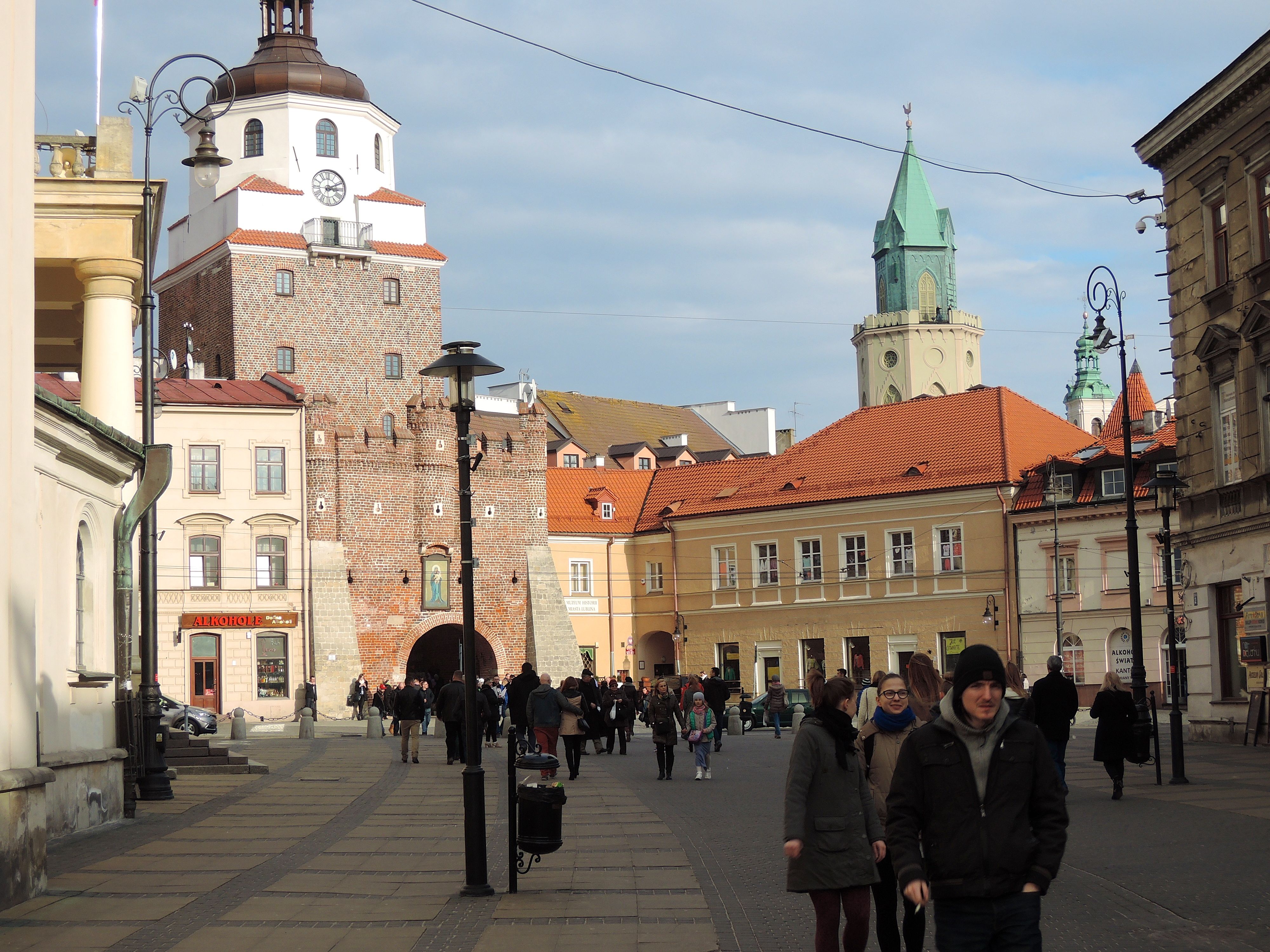
Here’s a shot of the main gate to the medieval city:

Watching for Yotvingians

Watching for Yotvingians

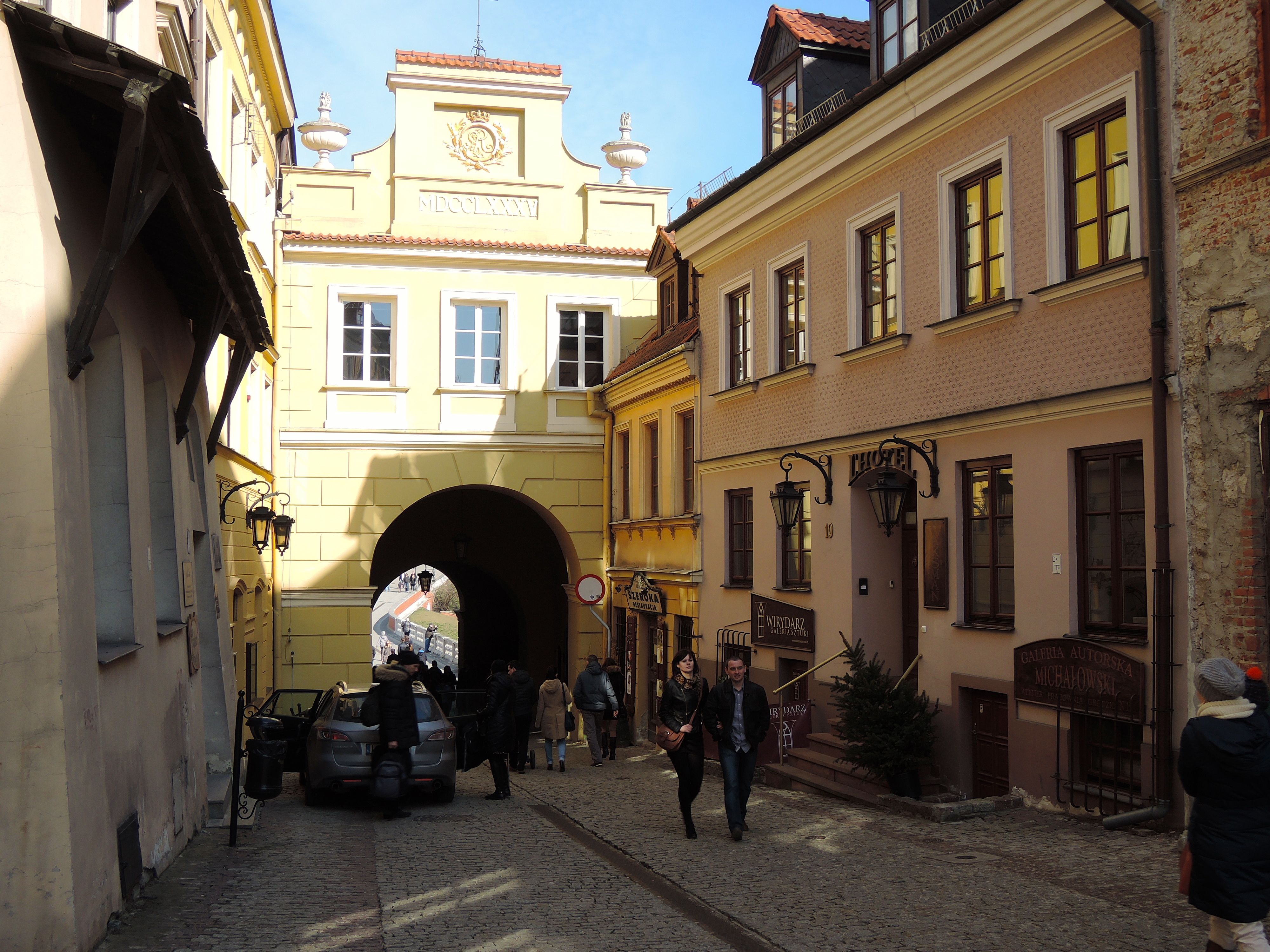
Stroll through that brick arch, as many folks do on the evening corso, and the old city opens before you:

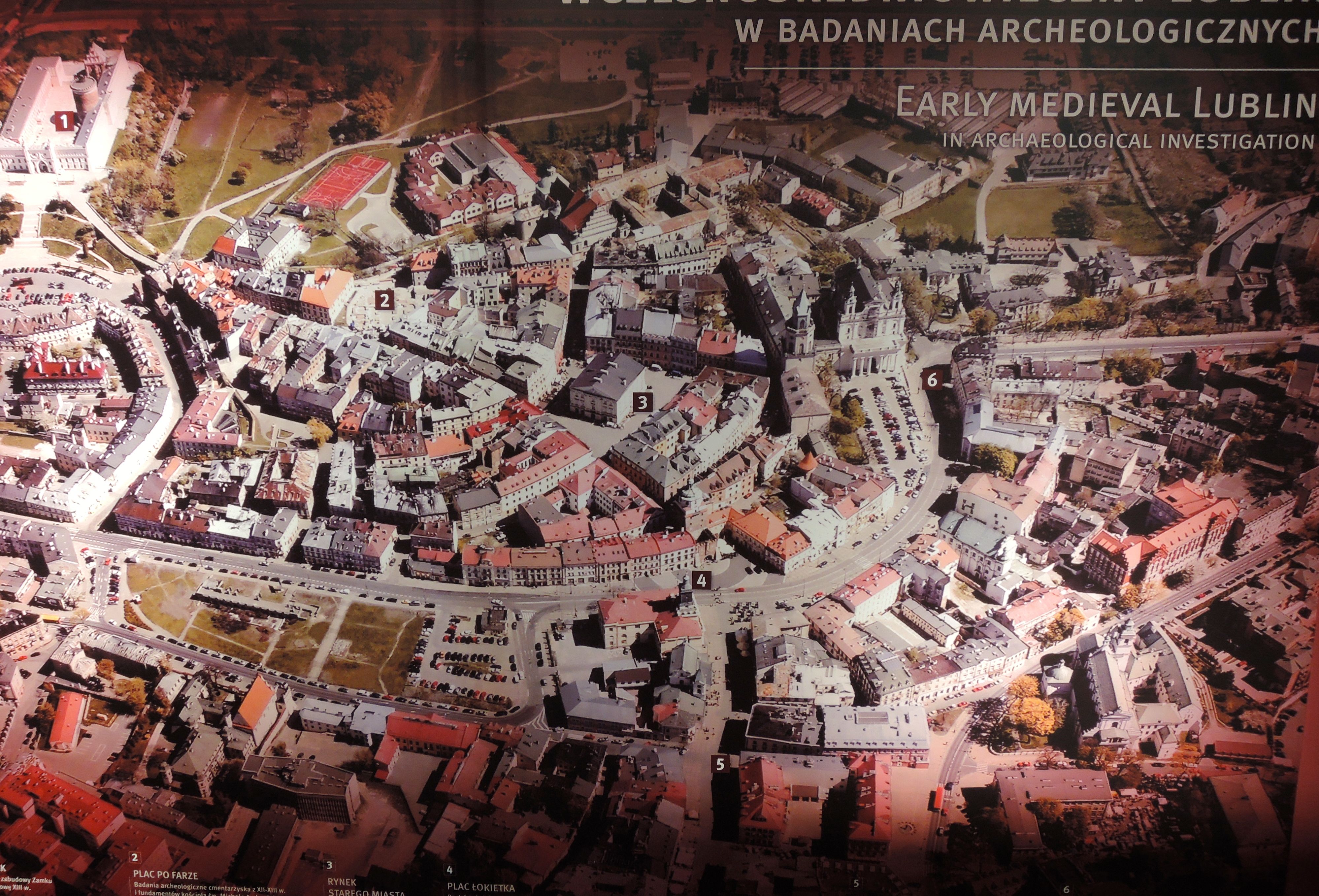
You just walked through #4

You just walked through #4

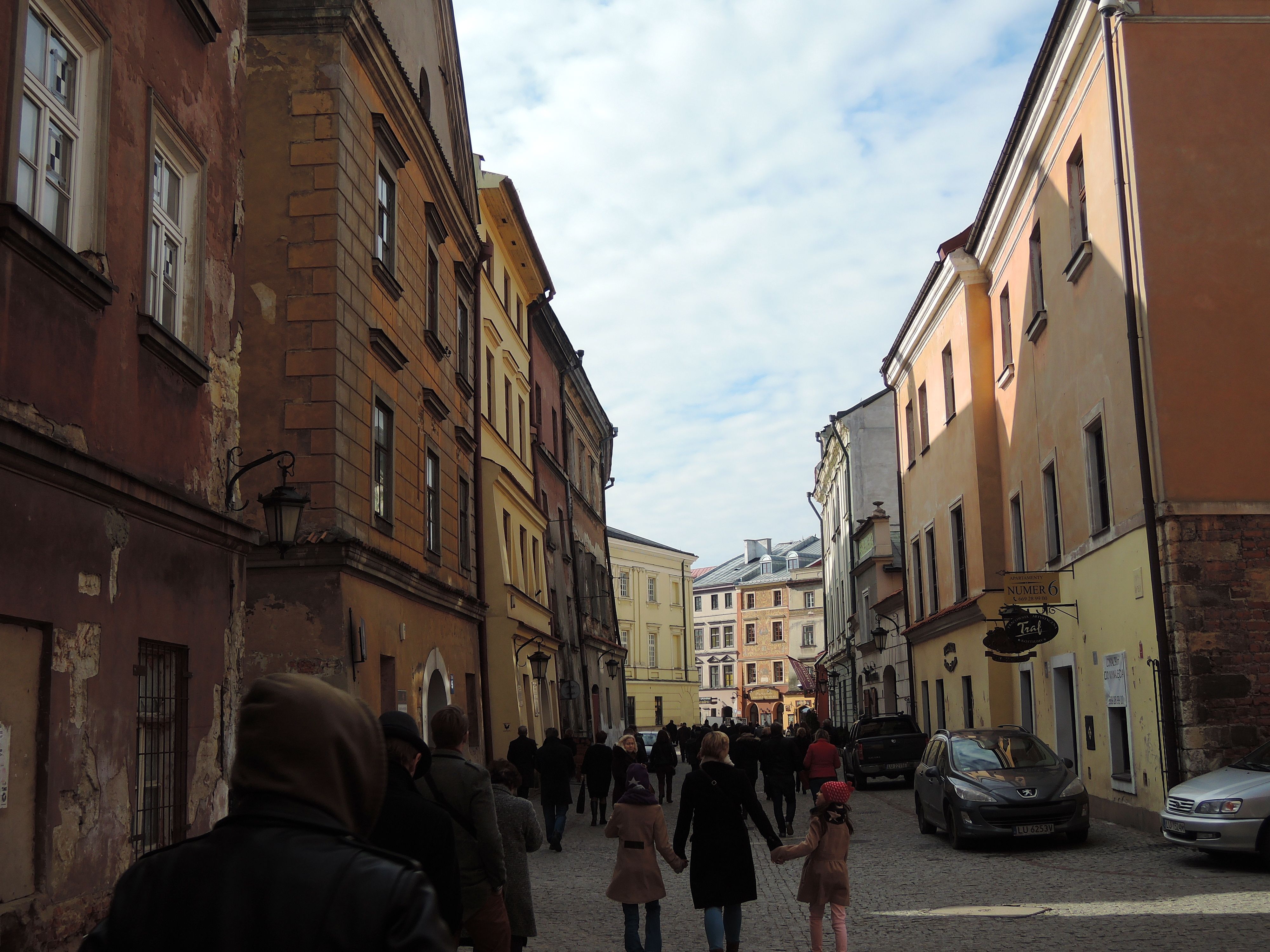
And here’s what you see…

Strolling like it's 1457

Strolling like it’s 1457

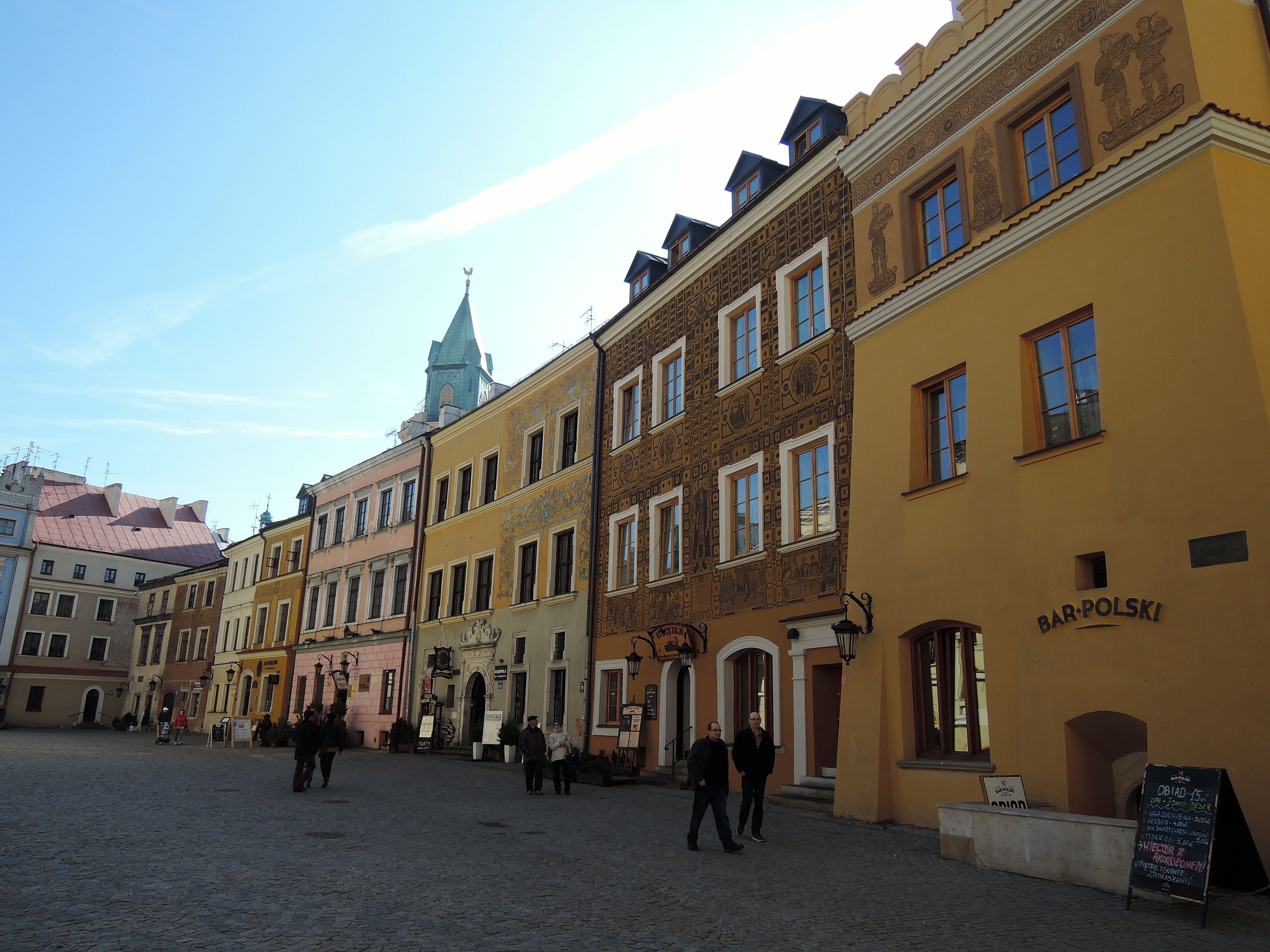
…and into the square:

Always somewhere to whet your whistle

Always somewhere to whet your whistle

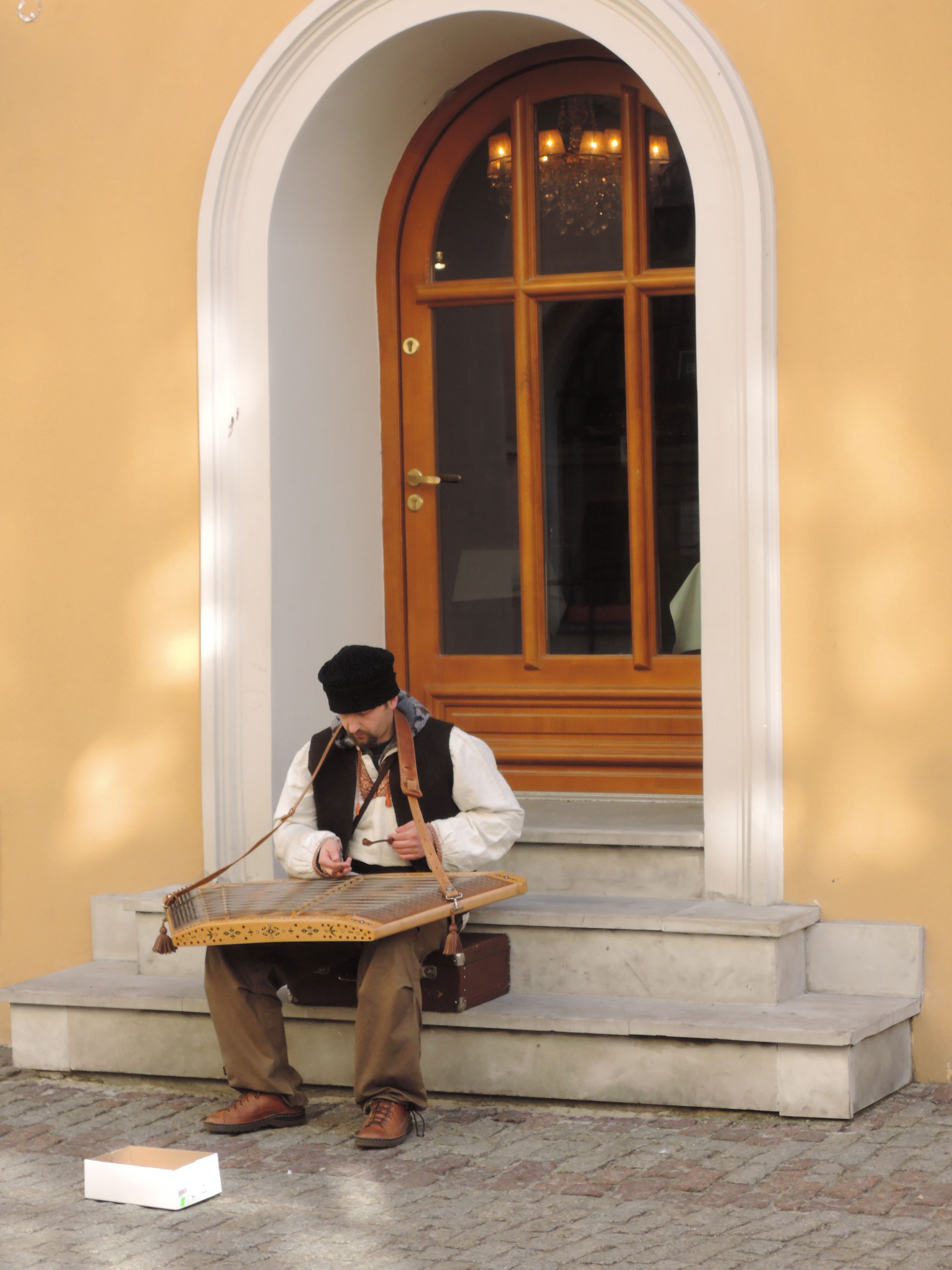
…accompanied by period music…

Music to my ears

Zither to my ears

Here’s something I had trouble deciphering…what the heck was Hans Christian Andersen doing….in Lublin?

Hard to fathom

Hard to fathom

Wiki tells me that “the Hans Christian Andersen Theatre in Lublin has staged H.C. Andersen performances since 1954 and is still going strong,” but not why, precisely. Me thinks that Andersen’s characters have not had it easy, and neither has Poland, but that’s just idle peculation.

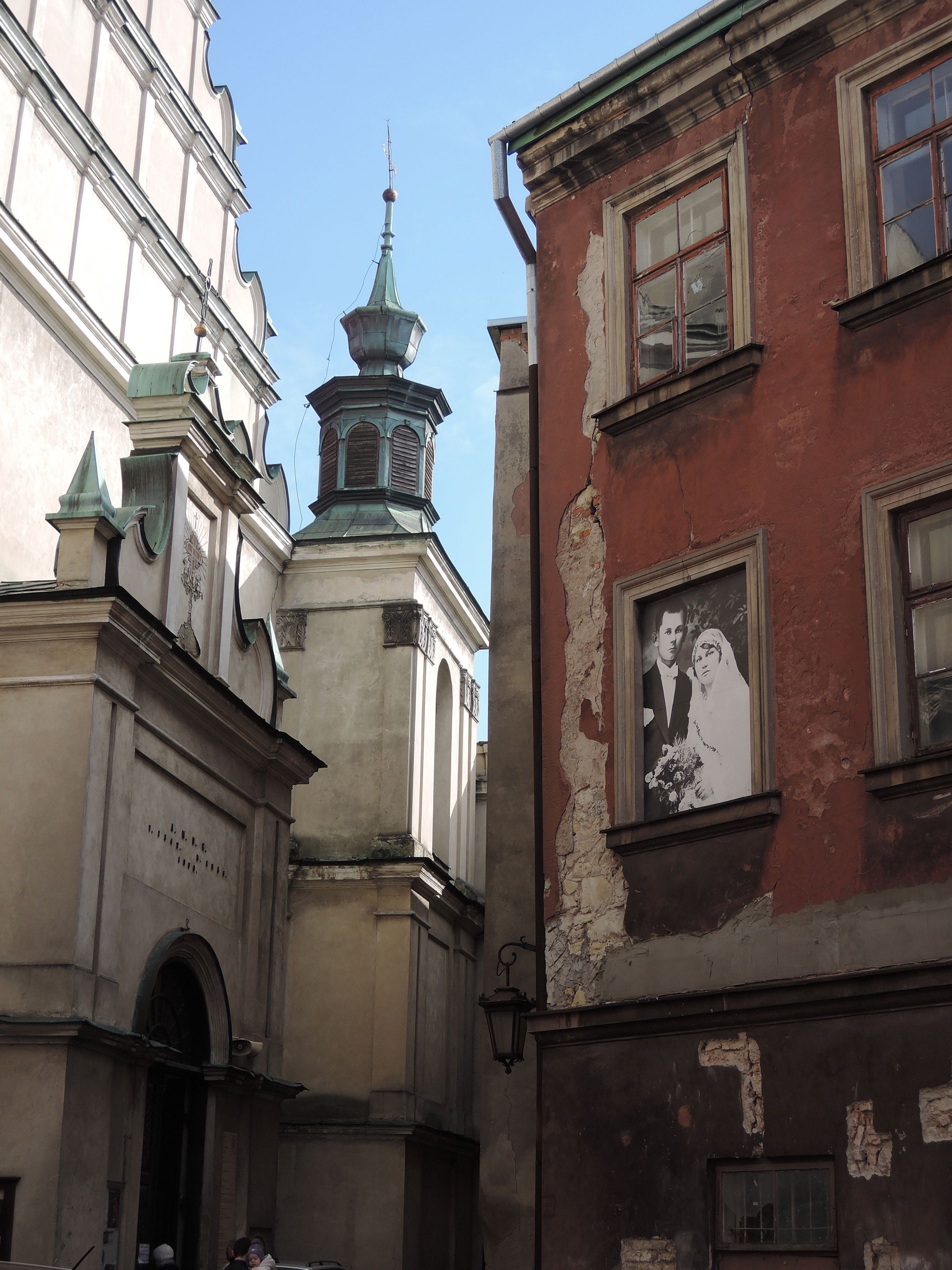
A turn around a corner shows this view which…

Eternal love

Eternal love

…begins to address liminality. The Jewish Virtual Library tells us, as I suggested earlier, that “Lublin once served as one the most important centers of Jewish life, commerce, culture and scholarship in Europe. It had the world’s largest Talmudic school, Yeshybot. Lublin was also well known for its fairs and market days. Little remains today of its past splendor.” Is this a picture of  a Jewish couple or a Christian one? Why the remembrance at all in that window, if not to commemorate….something?  And just to the left of the church you see there (dark arch), the post-communion book sale had a little something for everyone:

Among friends

Among friends

Rather big and bold of them, I’d say, Abraham Heschel with the priests.  Sadly, as in so many places in Poland, “Very little remains of the former Jewish quarter of Lublin. There is a monument to the victims of the Holocaust in the square between ul Rady Delegatow and ul. Hanki Sawickiej. One small synagogue remains on the upper floor of the building on ul. Lubartowska 8/10…Today, there are only 20 individuals associated with the Jewish community of Lublin and all of them over the age of 55.”

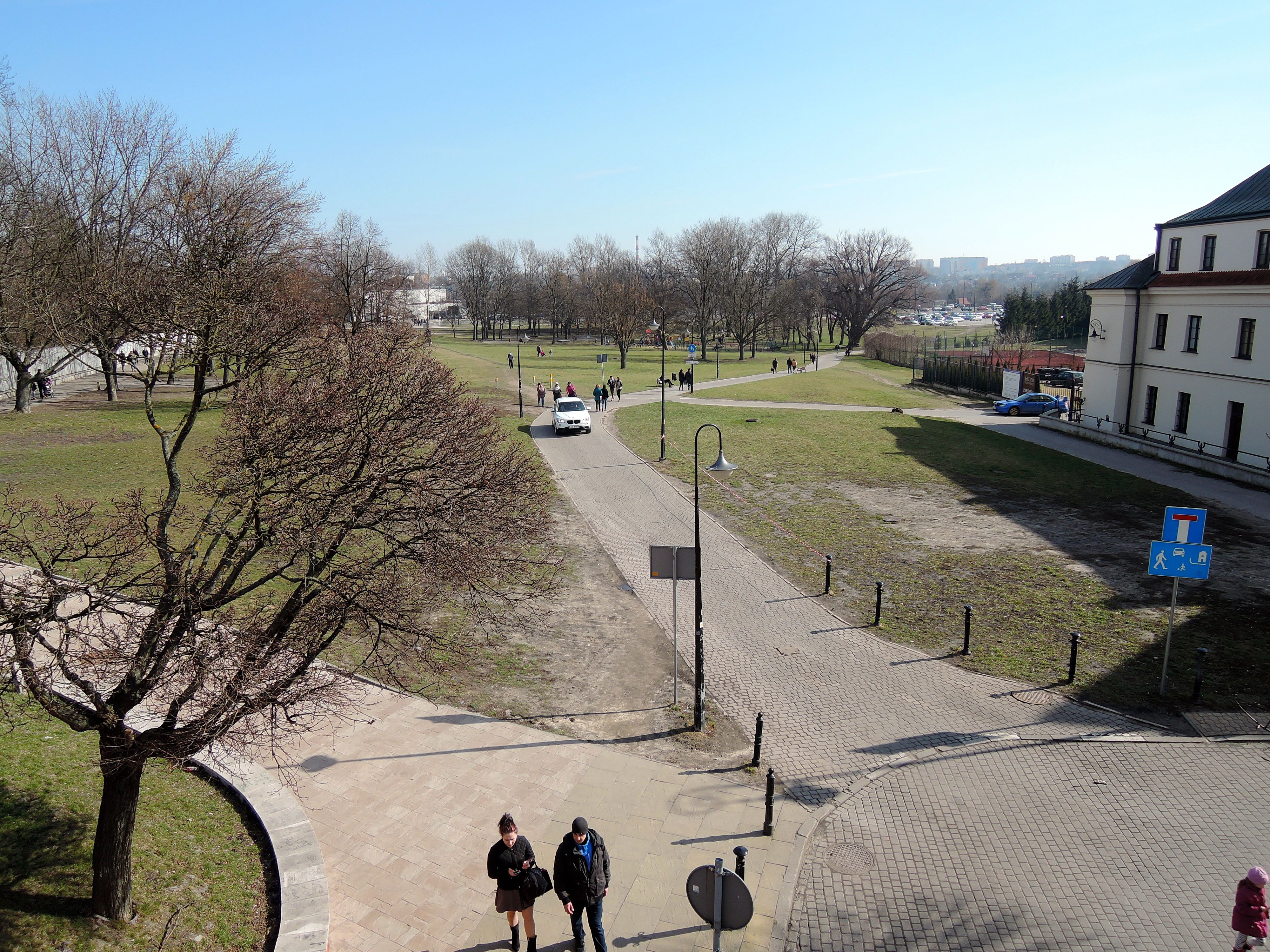
Here is a shot of the gate that the Jews (when they were roughly half the town’s population) had to pass through in order to reach the market square from their neighborhood:

Jewish gate 2

…and once one walks through it, here’s what one one sees of the remainder of the Jewish quarter. Yup, just a park.

No words

No words

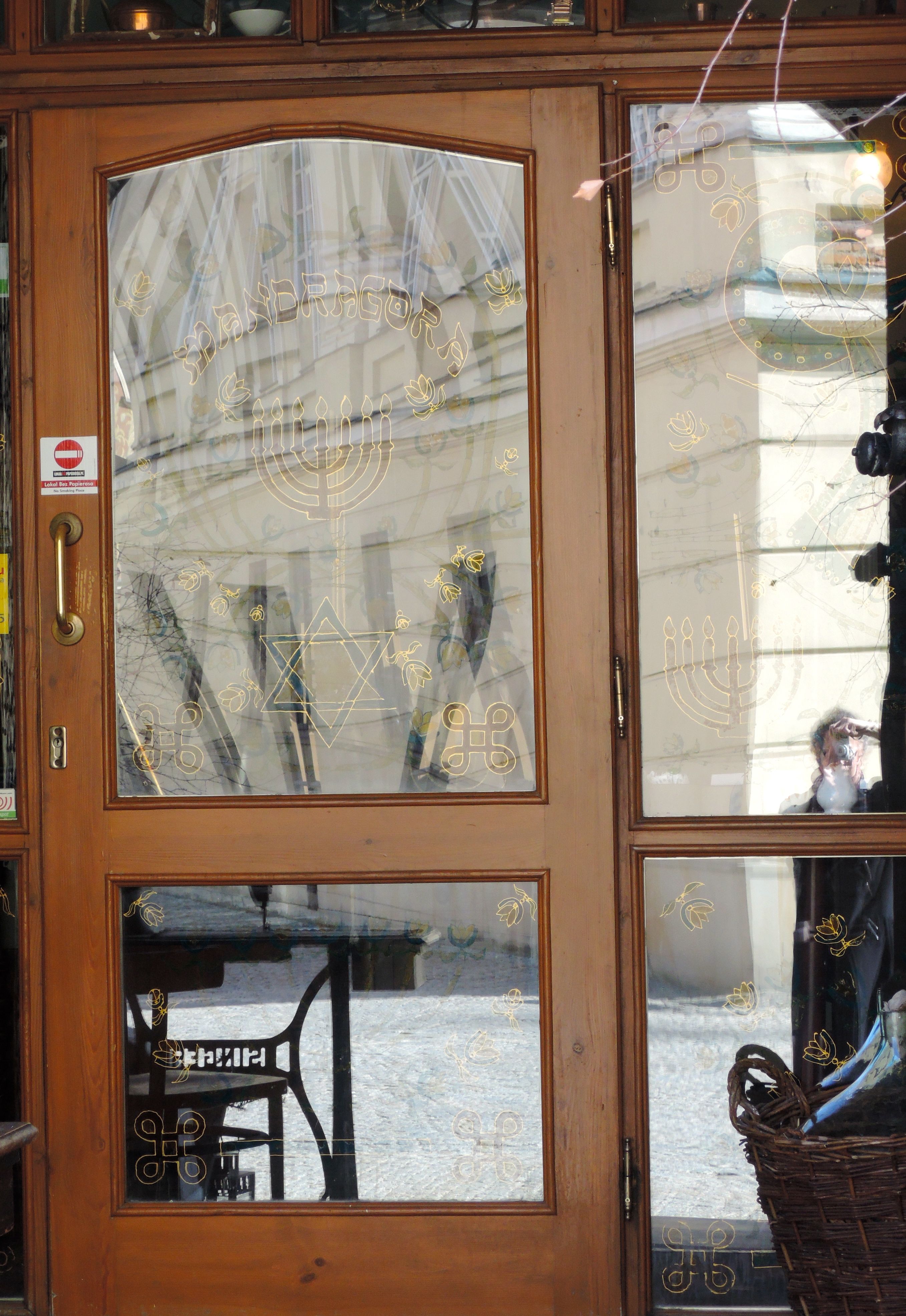
One must look carefully to see signs of Jewish life in Lublin. Here is a restaurant (see the markings on the door, and note my photographic self on the right):

Jewish door selfie

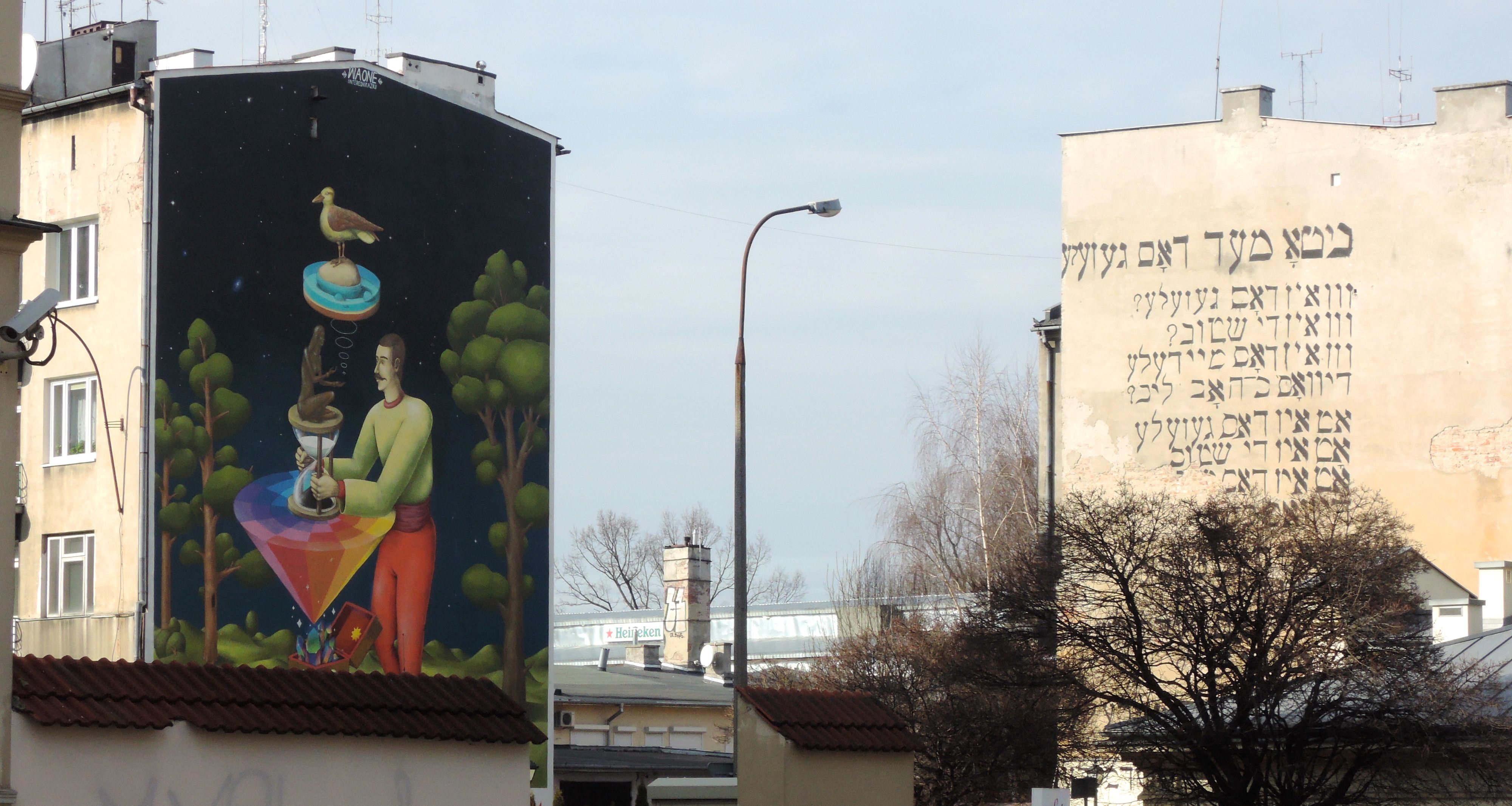
Back closer to my hotel, I saw the following words written on a building. I wish I knew what they said:

Speaking out

Speaking out

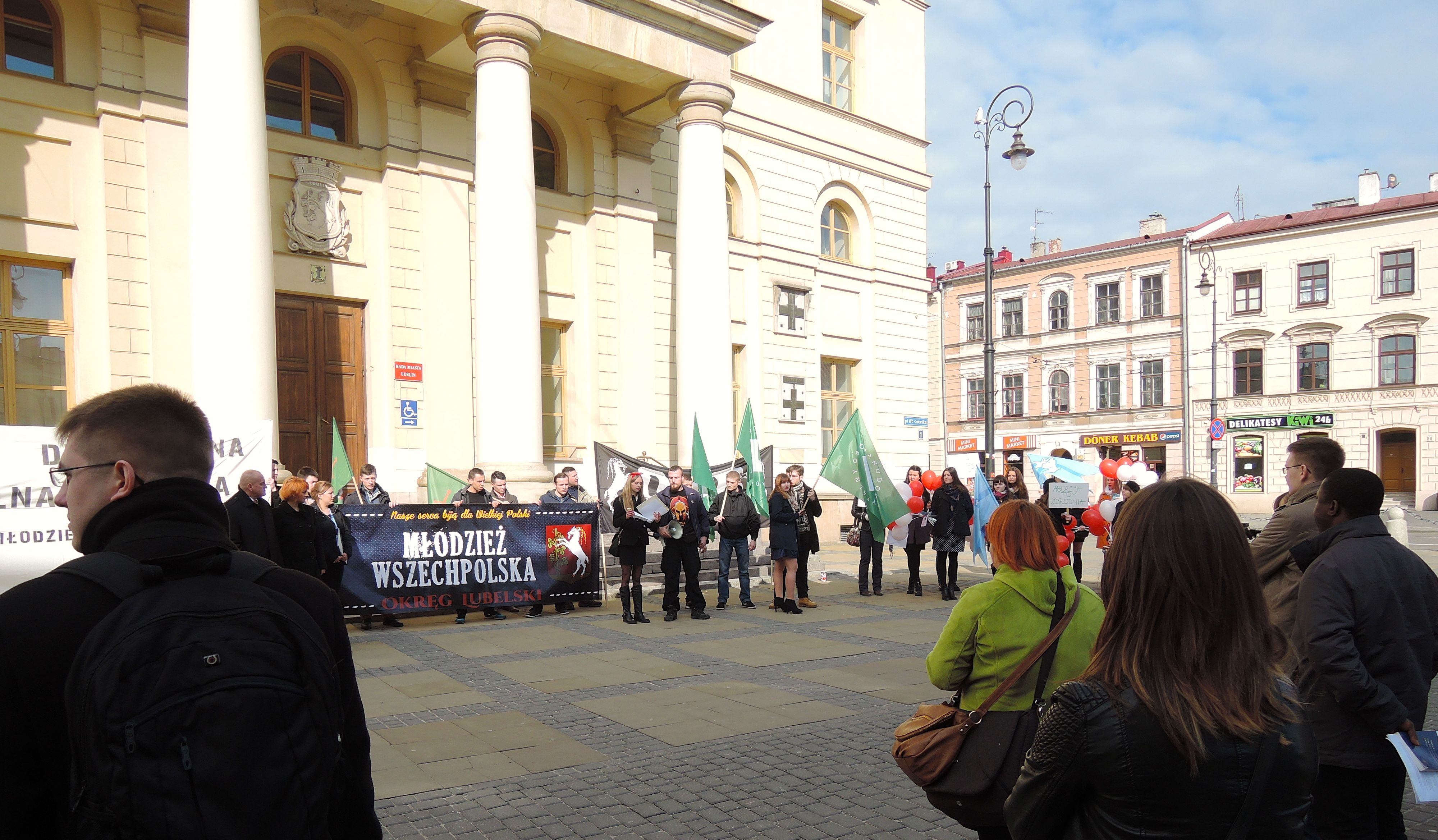
…and as I am trying to understand and reconcile all of this in my head at the end of the day, I stumble across the following demonstration on the steps of City Hall on this past Sunday, International Women’s Day. It’s a group from a conservative party in Poland (don’t know translation of the name) that wants a “return to traditional family life, women at home, fulfilling their natural destiny, raising children. Oh, and we don’t want any of those Muslims, either.” Sigh.

Kinder, küche kirche

Kinder, küche kirche

So, I hope you can see and feel the spaces that I saw – what was, what is, what isn’t. There’s been a lot of that in this country, and it continues to Warsaw, where the emptiness is not even that pretty. “The quality of ambiguity or disorientation,” indeed. Stay tuned.

Posted in Poland, Uncategorized | Tagged , | Leave a comment

Kraków (KRA-koof) rocks

I’d heard for many years that I should see Krakow “soon, before it’s ruined.” Well, maybe I got there in time, or maybe I didn’t, but I’m here to say Krakow is not ruined and it will (inshallah) never be. This is a world-class city, folks, a city worth a major detour to go and see and inhale for all its worth. My piddly little two-and-a-half-day visit did not do it justice, and I’m already jonesin’ to go back. The surrounding region itself deserves some time and attention; in addition to the city itself, there are amazing UNESCO salt mines, the Auschwitz-Birkenau complex, and not too far away, the Polish alpine complex around Zakopane. Lots to see and do.

Krakow is the second largest city in Poland and one of its oldest. Importantly, it wasn’t bombed back to the stone age like many of Poland’s metropolitan areas so what you see is really what’s been there since forever, no loving reconstructions necessary. It has been a major commercial, intellectual, political, and artistic center for centuries, and most recently, was the home of Pope John Paul II for many years while he was Bishop there.

Any self-respecting trip to Krakow starts with a pilgrimage to the Old Town, (Stare Miasto in Polish) which Wiki tells us was “drawn up in 1257 after the destruction of the city during the Tatar Invasions of 1241 followed by raids of 1259 and repelled in 1287.  The district features the centrally located Rynek Glowny, or Main Square, the largest medieval town square of any European city.” Got it? The Italian influences are clear; you feel you might be in Tuscany somewhere. Tellingly, the name of one of the streets that runs to the Main Square is “Sienna.” Around 1518 the Italian noblewoman Bona Sforza married the then recently widowed Polish King Sisigmund I the Old and brought her passion and aesthetic to Krakow. It still shows.

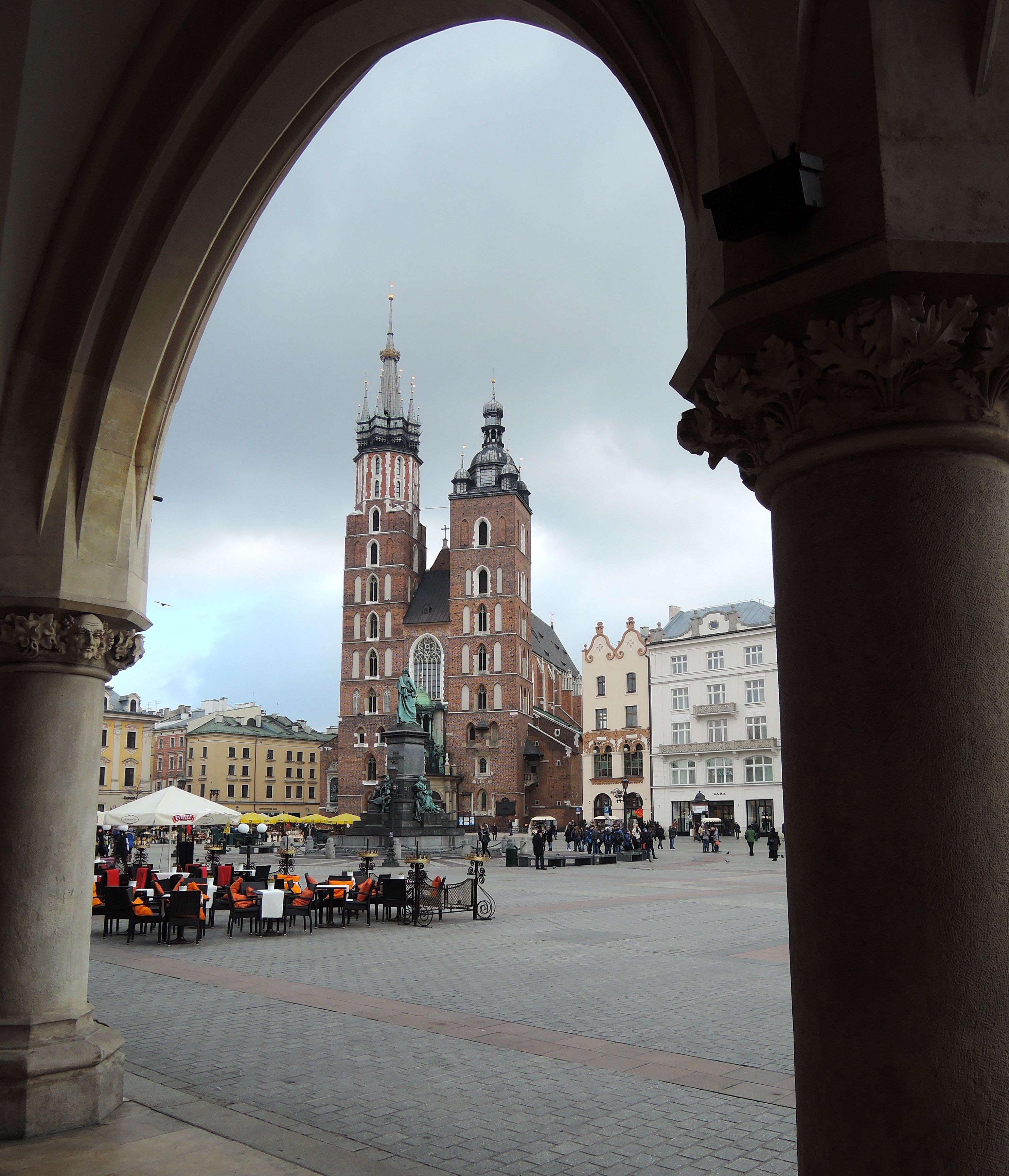
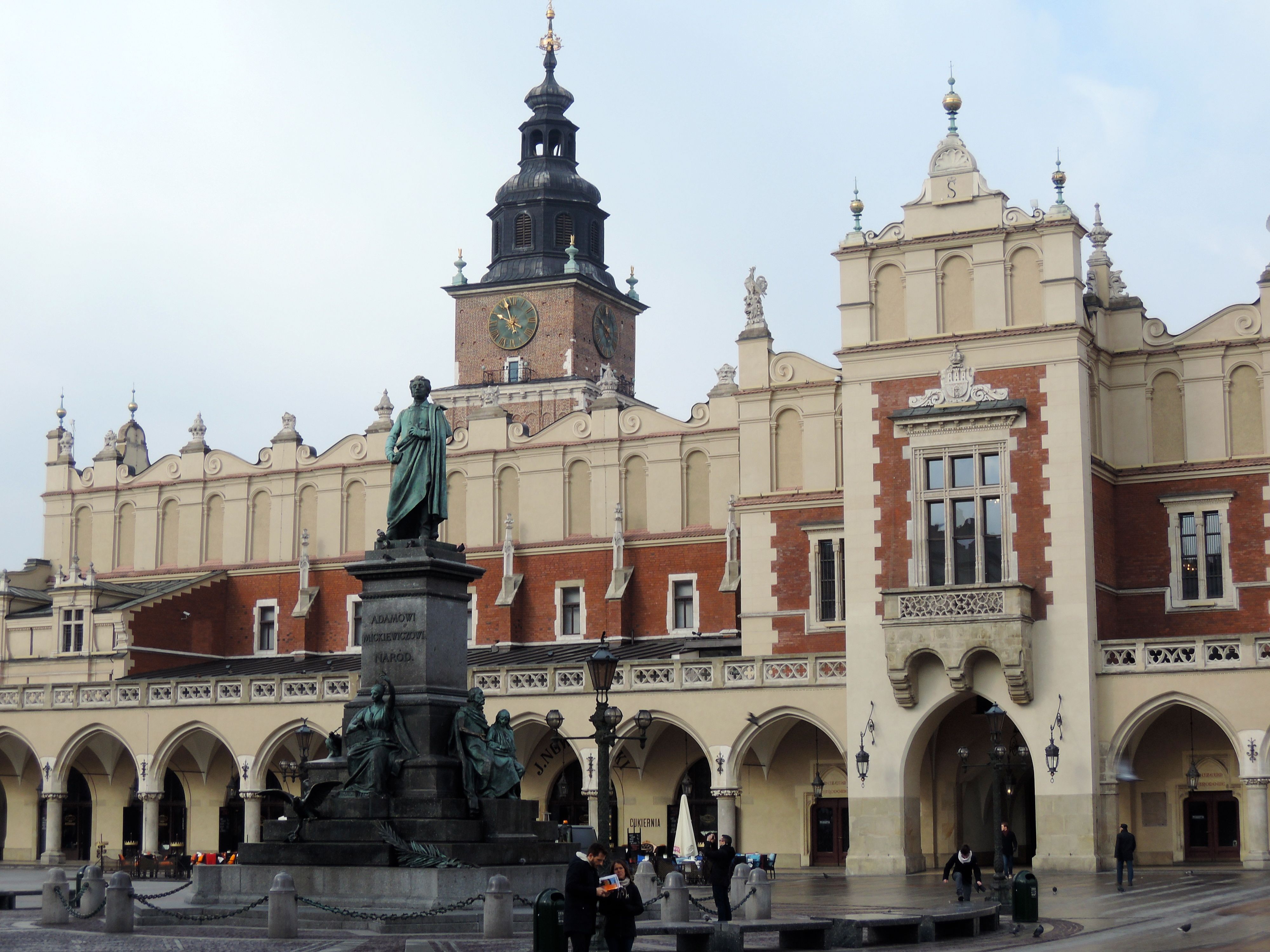
The Market Square, facing St. Mary’s Basilica:

What's with the towers?

What’s with the towers?

Heading out just to those umbrellas and turning back around, one sees:

Me thinks I is in Venice

Me thinks I is in Venice

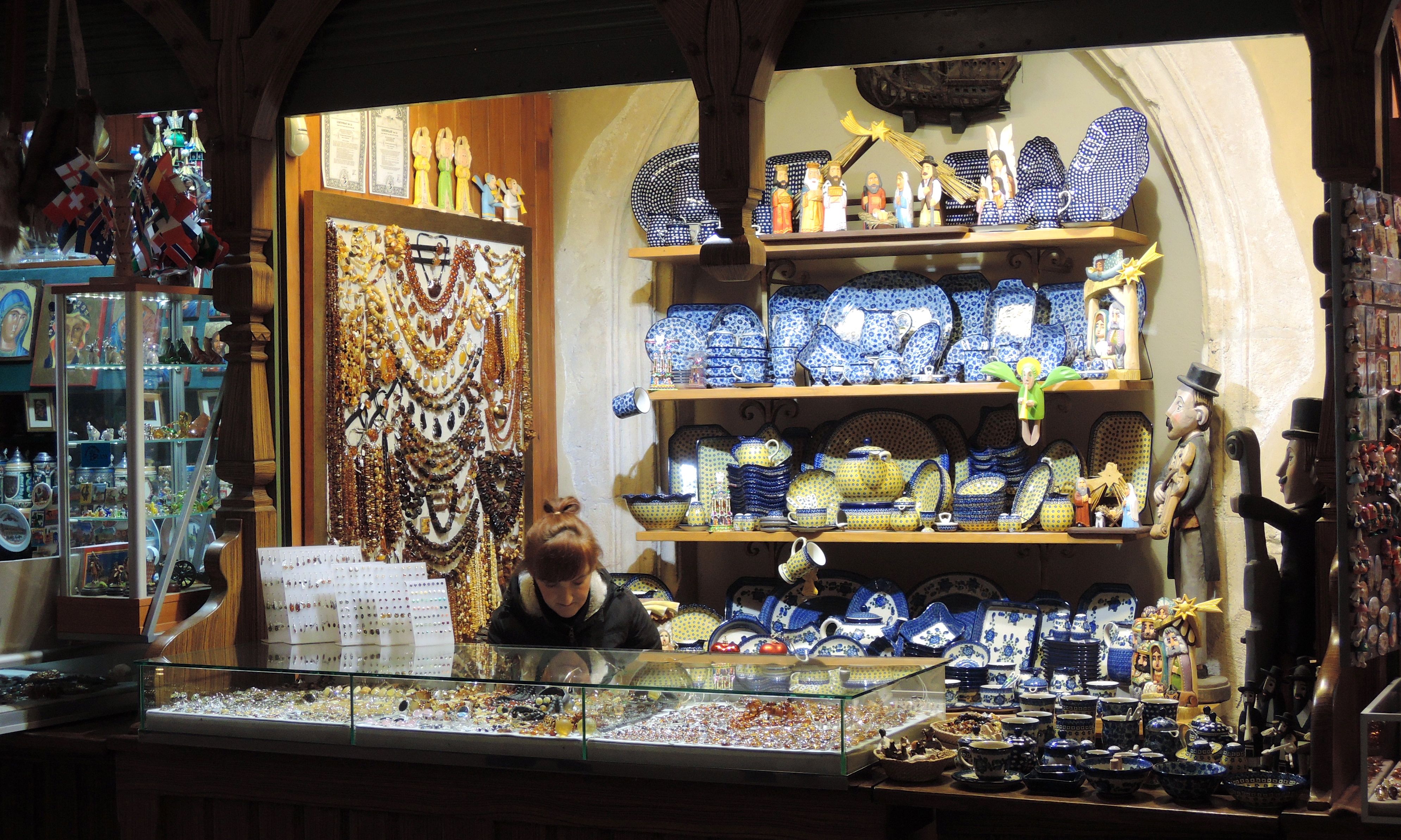
Inside this building (the cloth hall) merchants having been selling their wares for over five hundred years. At the moment, you’ll find a lot of lovely but very overpriced tourist souvenirs, predominantly amber and silver jewelry (national specialty) and some traditional Polish ceramics. One saleswoman is either inspecting her wares or checking her Facebook account:

Waiting for the unwary

Waiting for the unwary

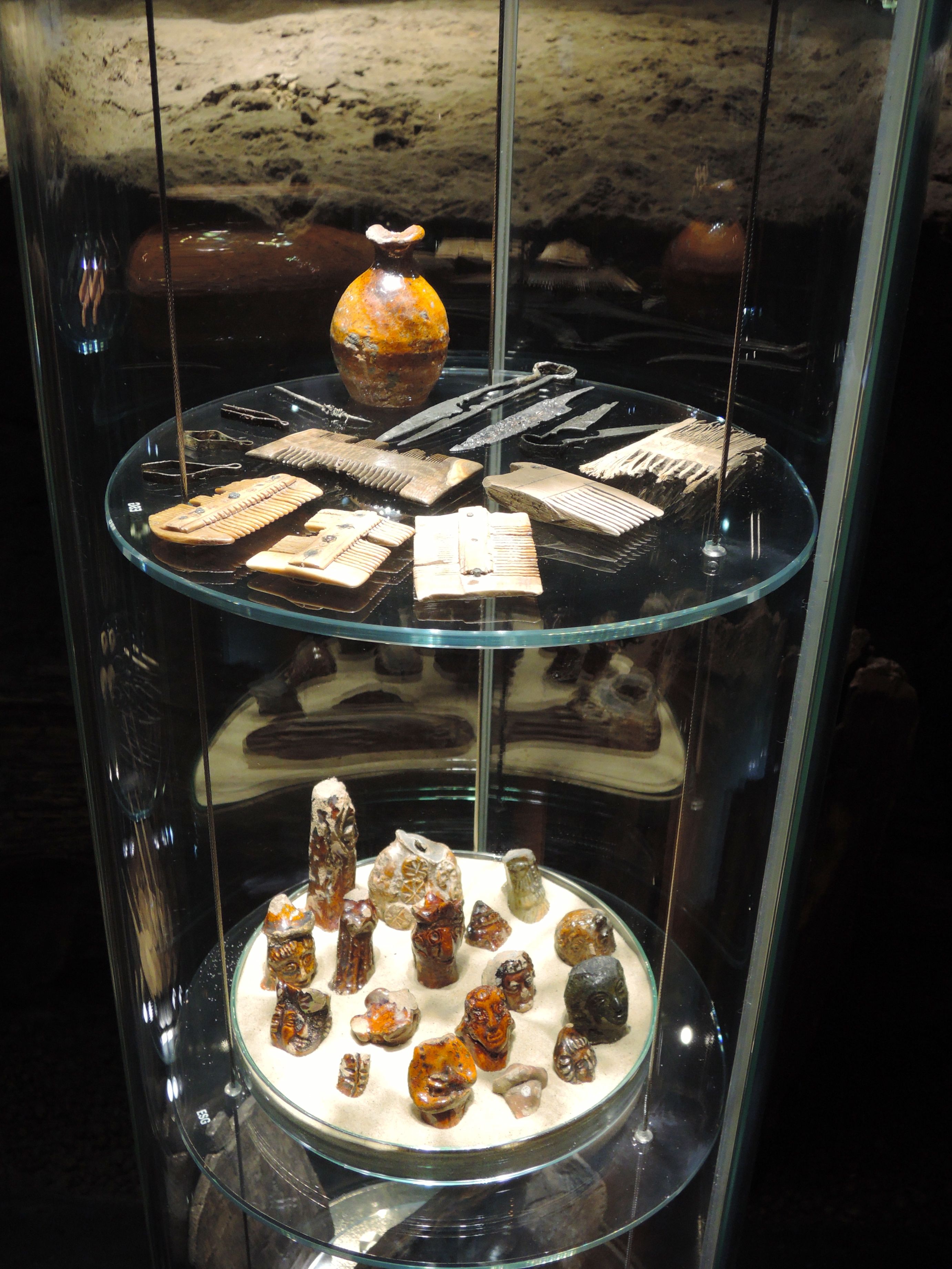
Finally, even more incredibly, this market square was recently and thoroughly excavated and turned into a museum (known as the Rynek Underground). You can walk through a huge section of the city immediately below the market square and see not only the remnants of the medieval city but loads and load of artifacts and exhibits and fascinating videos about the history of the city. I was enthralled for hours. For most of its multi-hundreds of years, the square was just composed mud with straw thrown on top of it from time to time. Junk just kept falling from the pockets and purses of the locals, making their way into an archeologist’s bonanza. Here’s just one little look at the items discovered during the dig:

Objects of everyday life

Objects of everyday life

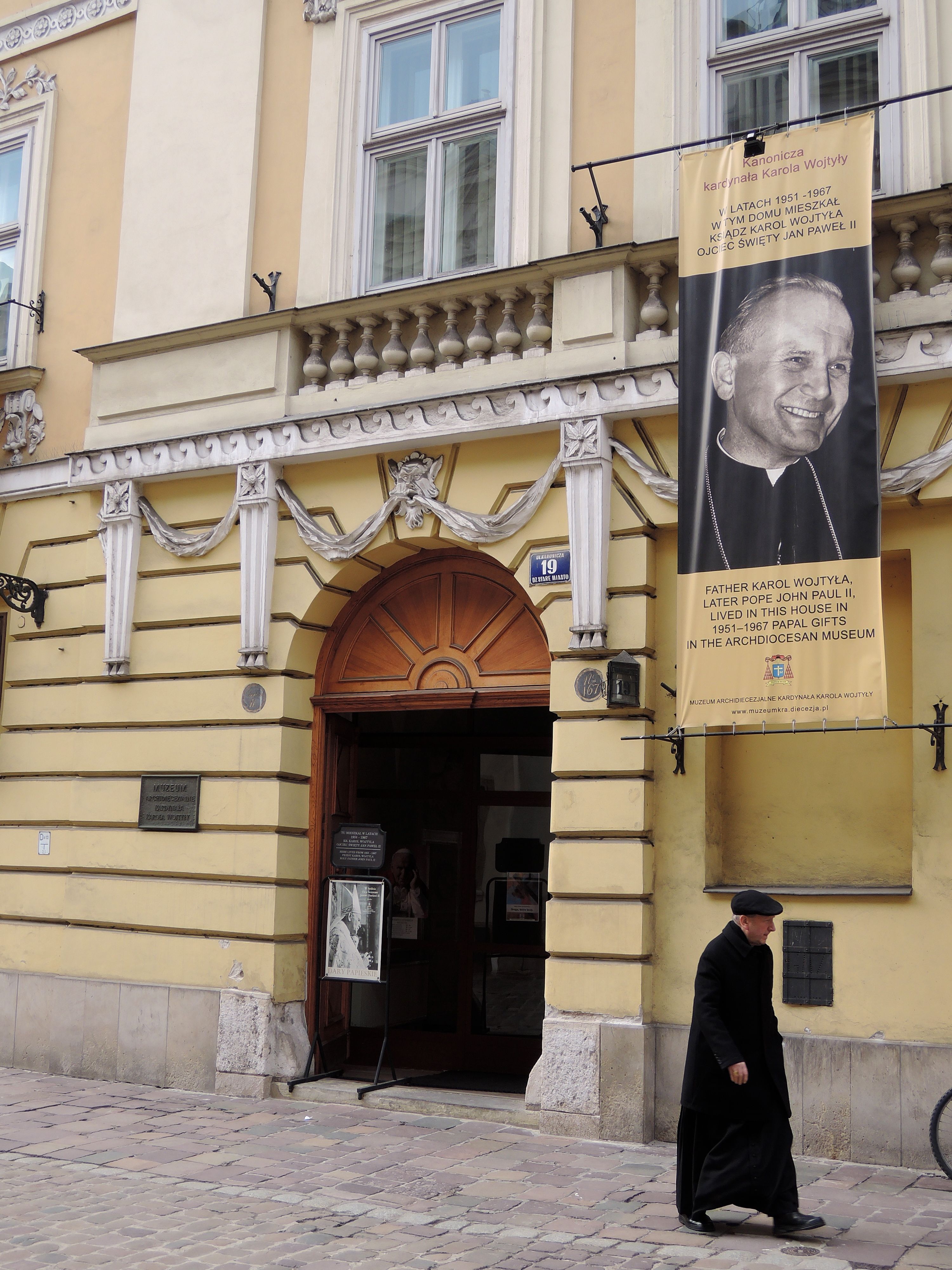
Stepping away from the main square, one walks down a long scenic pedestrian street towards the castle. I took a little byway one street off, and found this lovely building. As I mentioned earlier, John Paul II is one much loved local boy. But here’s the place where he  lived during much of his time in Krakow, including, I believe, his student days and years as a priest before becoming Bishop:

Well loved

Actually did sleep here

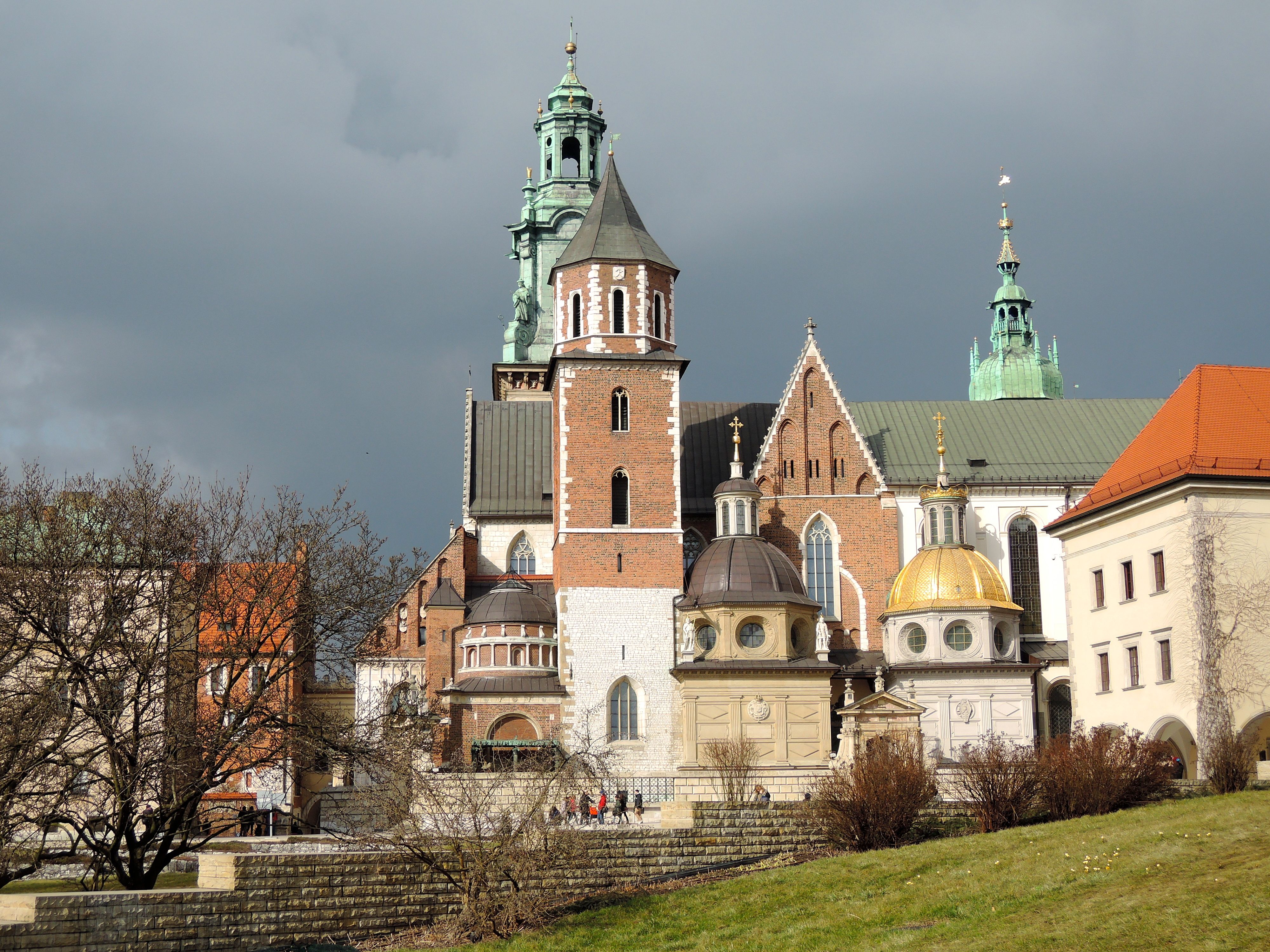
JP’s house is literally at the bottom of Wawel Hill, the site of the city’s castle and cathedral. This is an immense and beautiful complex, built originally in the 14th century at the behest of Casimir III the Great. Here’s a bronze representation of the area:

Small is beautiful

Small is beautiful

Walking to the right from this spot shows you a closer look at the cathedral:

Closer to God

Closer to God

I went through the State Rooms of the castle, but we weren’t allowed to take pictures.  So let me see if I can clue you in. Lots and lots of big rooms!  All filled with floor-to-ceiling Flemish tapestries, marble tiles, Italian furniture, British sconces, paintings of Polish kinds and nobles! Huge! Gorgeous! Imposing! Okay, you got it.

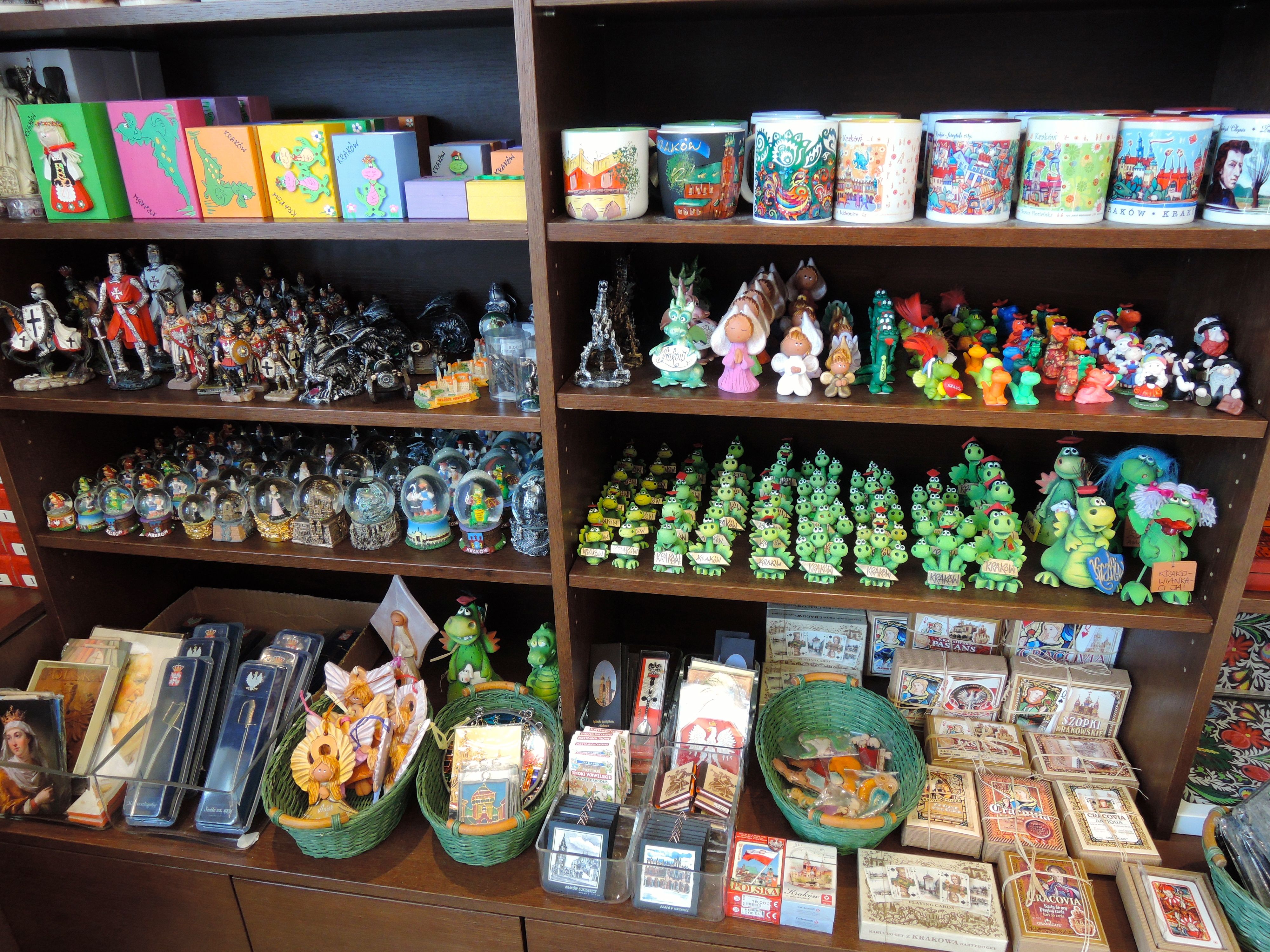
But into every castle/cathedral complex, ya gotta add a little kitsch, so here’s mine. Remember that Wroclaw had dwarves? Krakow’s got a dragon and he allegedly lived at the foot of Wawel Hill. He met his sad demise at the hands of the knight Krakus who founded the city. Happily the little guy lives on in the gift shop, as evidenced below:

Even dragons need love

Even dragons need love

By now, I was well and truly tuckered and a bit peckish. I found an amazing restaurant in the old town and was treated to a delicious lunch. I don’t photo my food often, but this time the aesthetic seemed worthy. Cheers to you, Resto Illuminati:

Best food in Poland

Best food in Poland so far

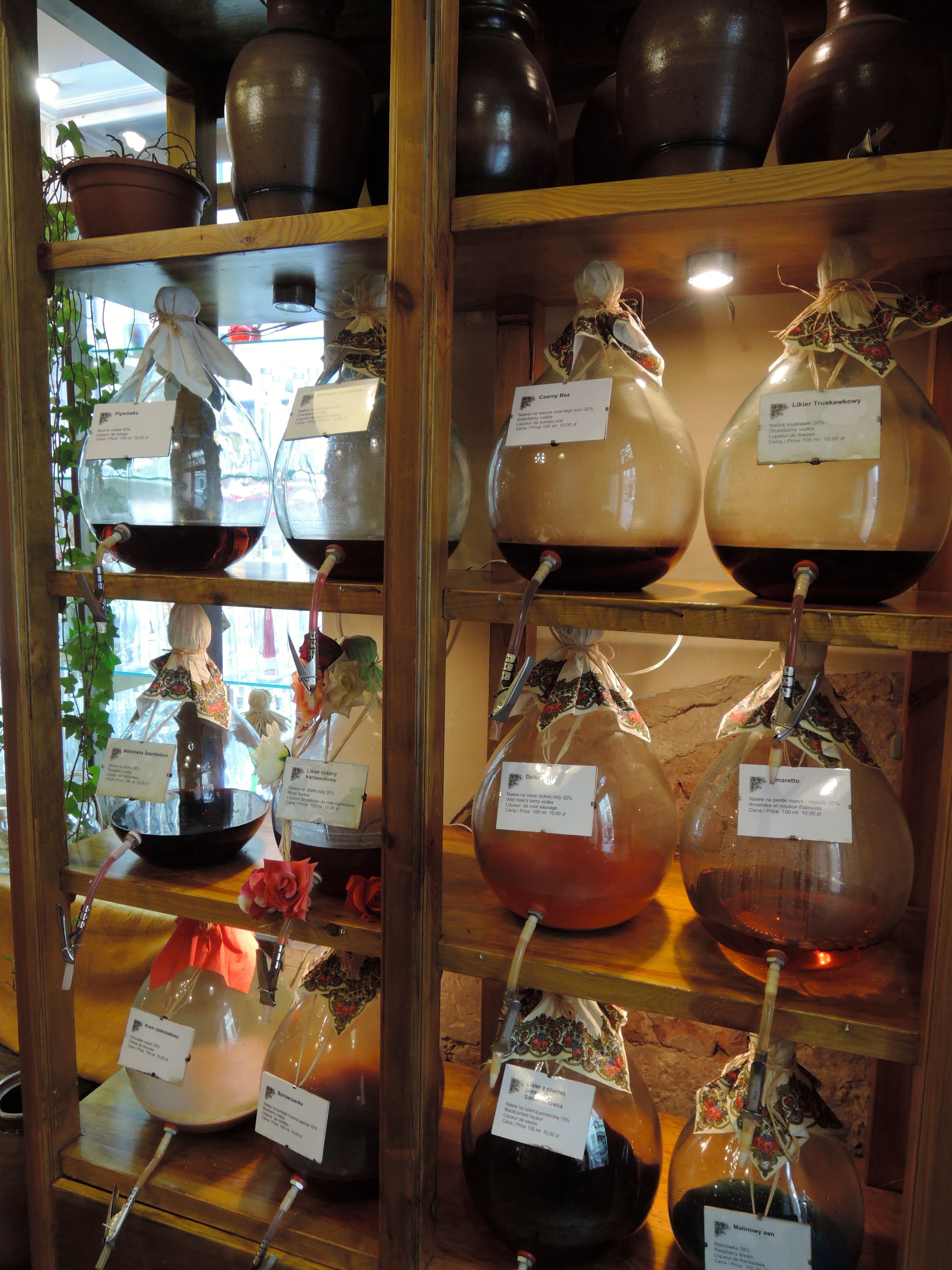
Finally, no trip to Krakow would be complete without a visit to Szambelan, a tiny little establishment where one can find “a huge selection of special vodkas, meads and Polish absinthes decanted from enormous Erlenmeyer flasks.” Since I’m a sucker as much as the next guy for sweet stuff that makes you faintly buzzed, I tried a few of the house brands and then bought 200 ml of quince liquor (upper left) to gift my host in Berlin:

Na zdrowie

Na zdrowie

So that’s a short look at Krakow; more of the Jewish side of the tale will be told at a later time. Let me repeat – if you’ve ever thought to come here, let me urge you to make a date. This is one heck of a town, and it deserves all the buzz its got.

Posted in Poland, Uncategorized | Tagged | 1 Comment