Greeting Riga

Last December I made my first trip to the Baltic nations, spending a week in Vilnius, Lithuania, a charming and quirky city that only whetted my appetite to know more about this complicated part of the world. This fall I’m taking a few days before I start language training (German again, Berlin again) to visit Riga, Latvia, the capital of the next country north on your way to Santa.

It's all relative

It’s all relative

As you can see from the shot above, Riga (the small red dot) is on a river (the Deugava) that leads to the Gulf of Riga and thence the Baltic Sea. That alone should clue you in that most of what has happened to the region and the city over its history was directly or indirectly a result of its maritime placement and prospects. But before we get too carried away with that story…here’s a map of Riga itself:
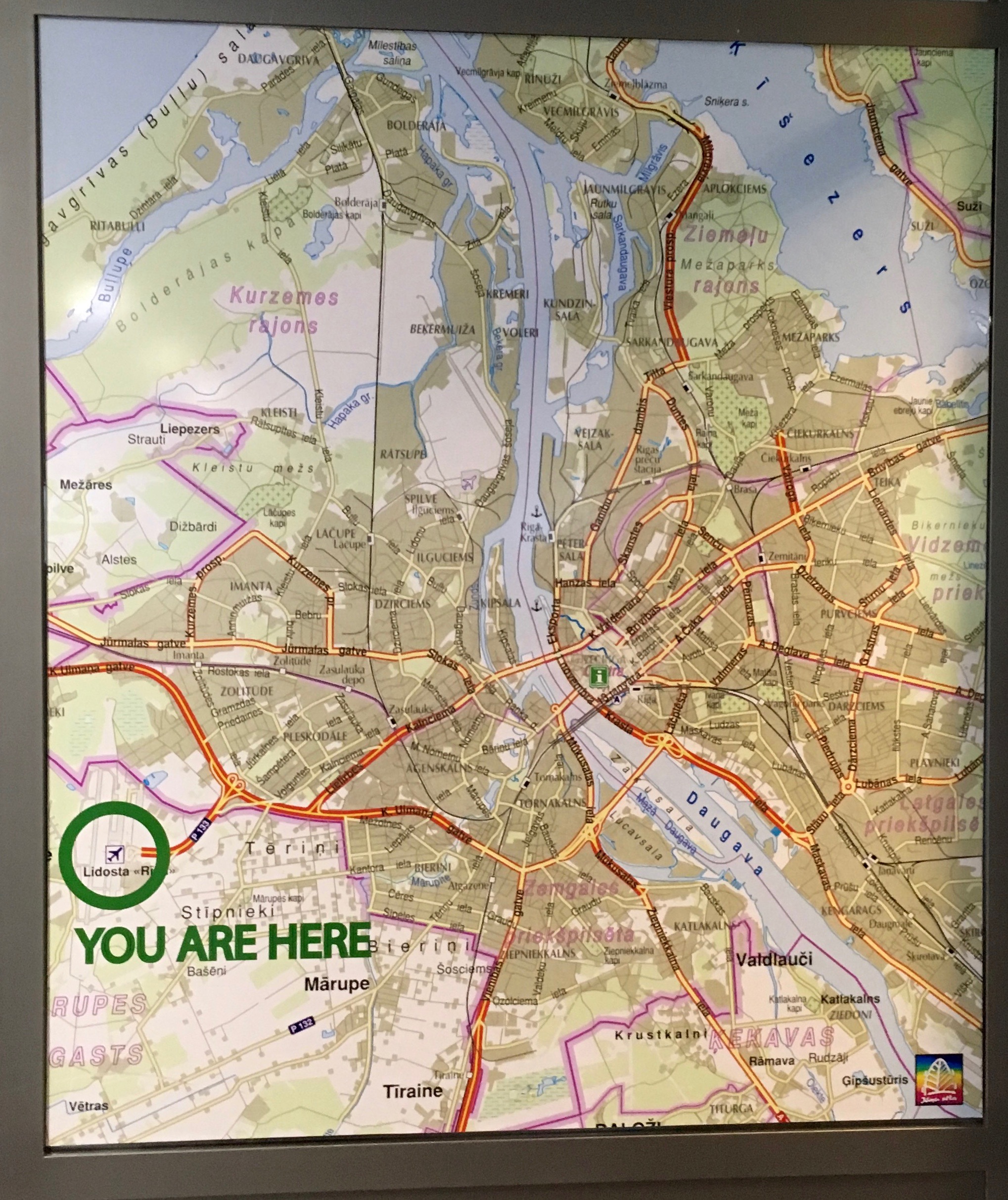
Another city on a river

Another city on a river

No, you are not at the airport (the green circle). The little green “i” for information on the right side of the river is basically smack dab in the middle of the Old Town or Vecrīga, a UNESCO World Heritage Site that used to be surrounded by walls. The blue stream lies roughly where the city ended before it expanded in the 19th century. Here’s a painting of the city skyline from a few hundreds back (sadly the red tower is no longer extent):
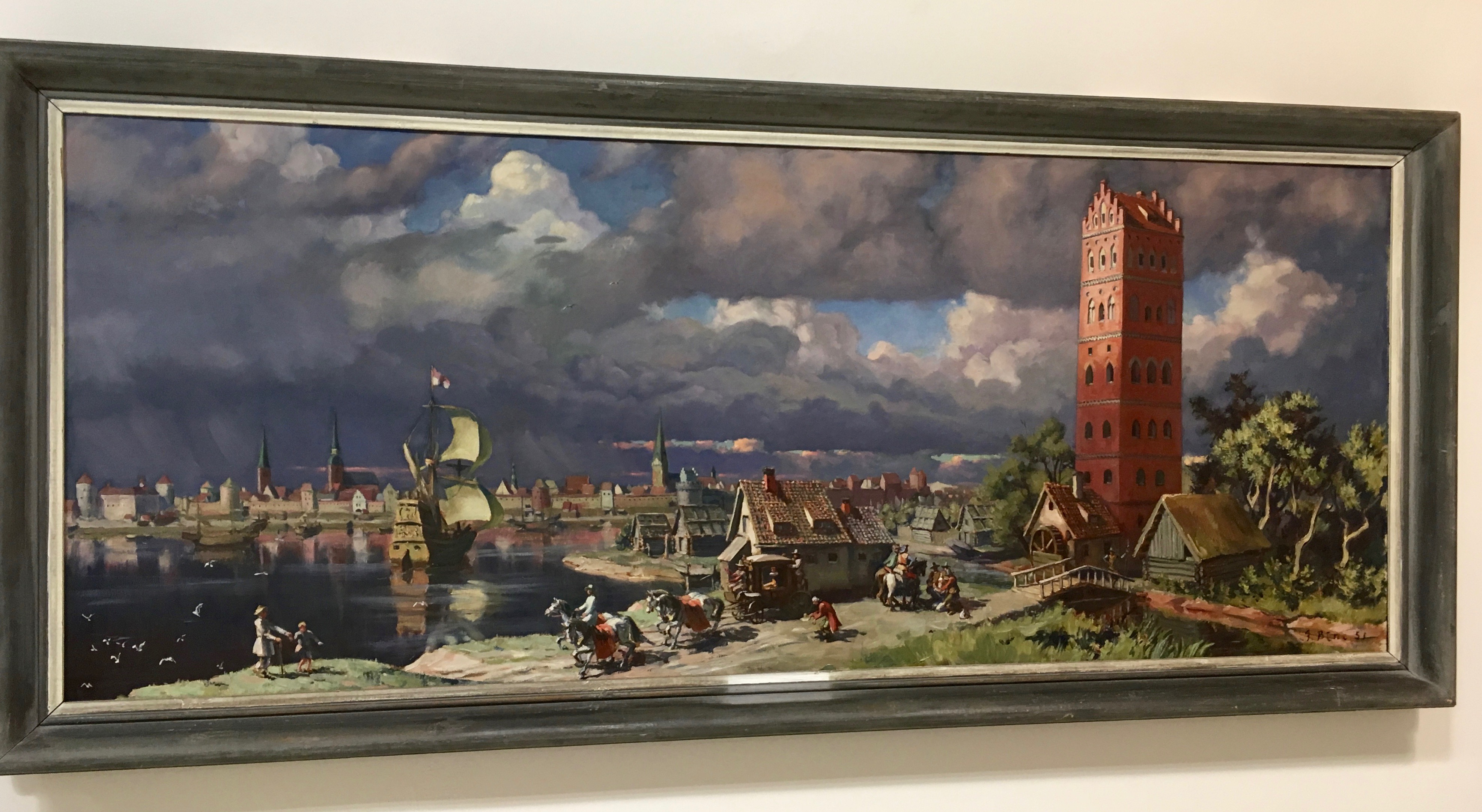
riga-old-panorama

Just your basic low flat gorgeous Hanseatic town

As mentioned above, from the earliest times to the Vikings and the plague and guild wars and endless political occupations through to today, the lives of the city and its inhabitants have been shaped by the competing maritime interests of the major and minor powers in the neighborhood. So as is my want, I started my visit with some museum visits to get me clued into the main chronology, but I’ll only hit you with the highlights.

Known for producing amber (like Poland and Lithuania), wood, woolens, and linens, the most interesting thing for me about the early Livonian history (pre-Christian; up to about the 12th century) was the emphasis on women’s shawls and jewelry (beads and bangles), which were important ways to demonstrate tribe, caste, and status. Here’s a shot of what it took to look good and stay warm in the long dark damp winters:
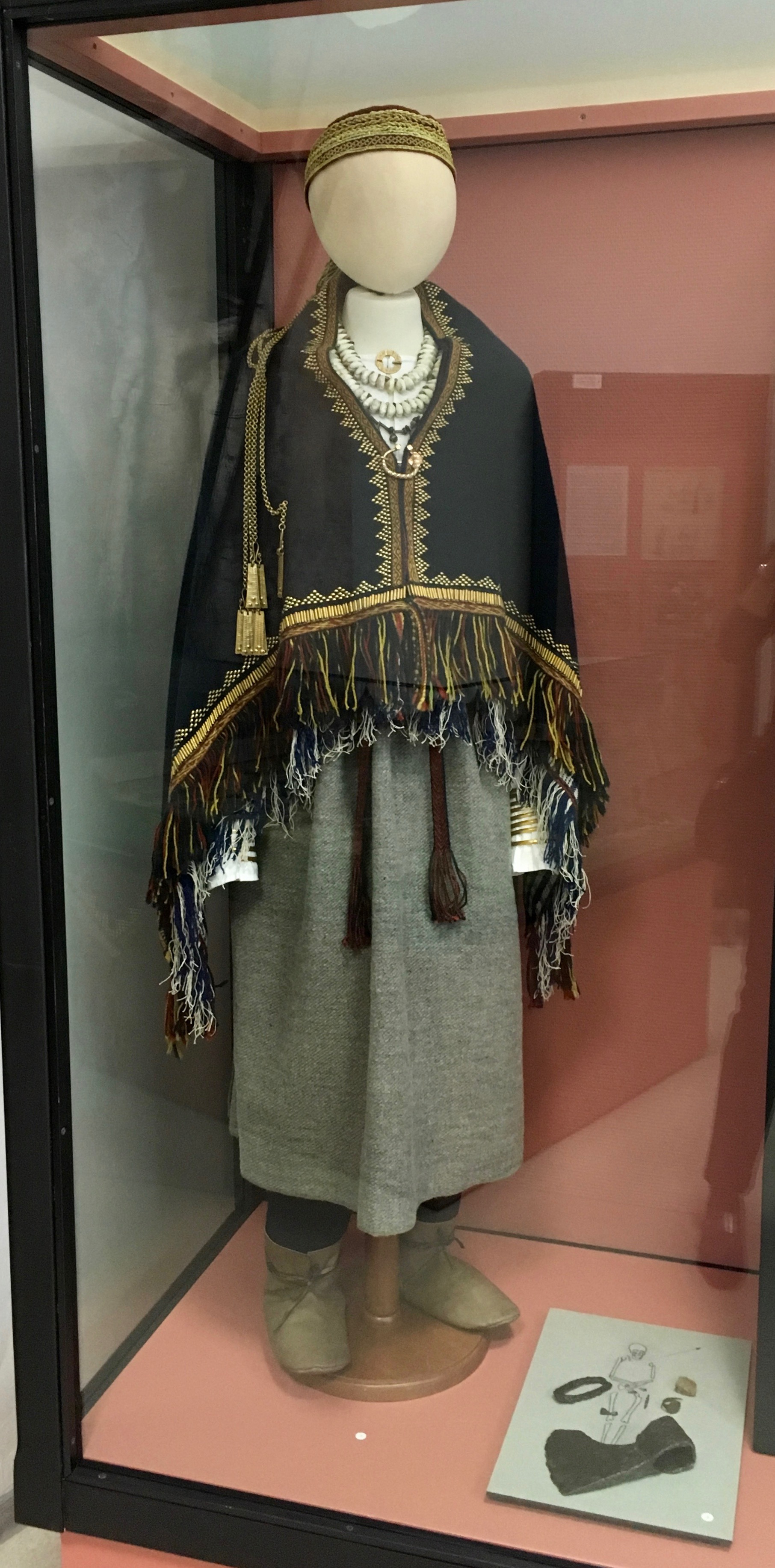
What she'd give for Polartek

What she wouldn’t haven given for Polartec

One big surprise resulting from the next stop, the Museum of History of Riga and Navigation, was learning that that the very first decorated Christmas tree is alleged to have come from Latvia around the year 1500 when some children had fun decorating a Yule log before it has the chance to be dragged into the house. the glass bauble shown below is alleged to be one of the first actual ornaments, having hung on the actual tree:
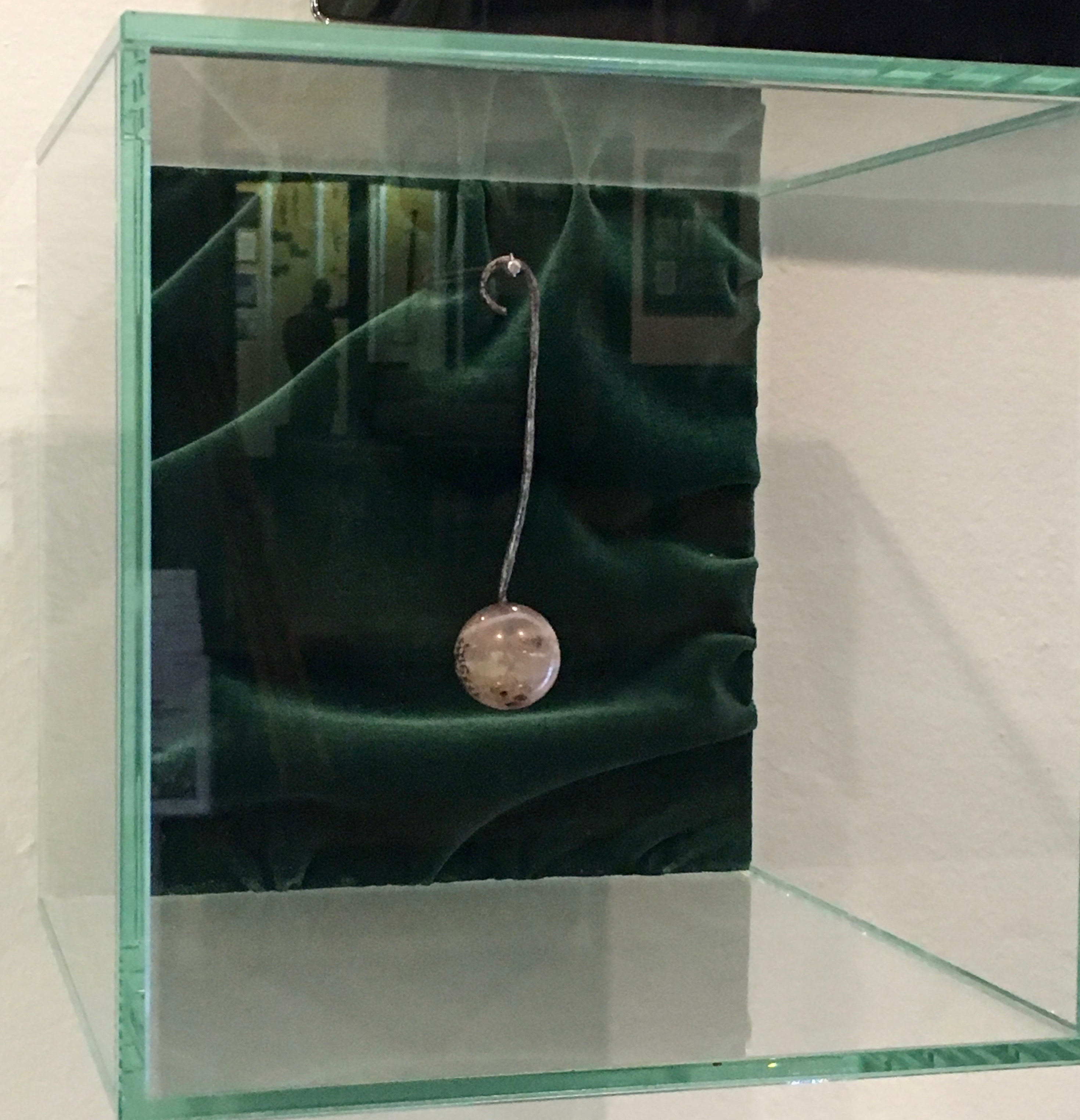
Ho ho ho

A little ho ho ho

The history of commerce and trade that makes up the background of Riga’s life story has both positive and negative sides of course. Woe be unto him, for example, who tried to profit unfairly in the Middle Ages! Below is the shot of hands (yeck) of people who tried to forge (mint) their own money and got caught:
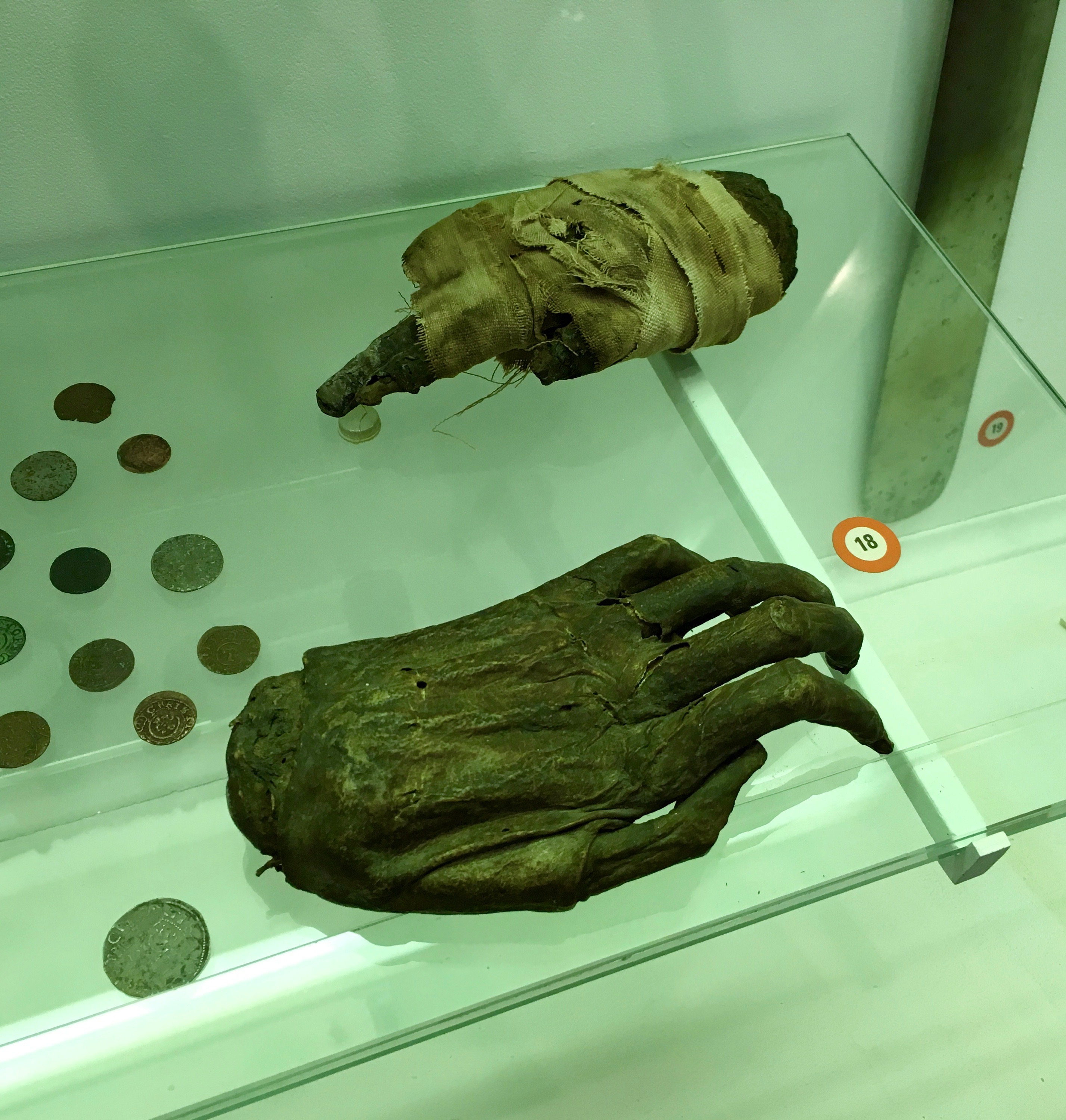
Keep 'em in your pockets

Keep ’em in your pockets, lads

During the period when coin money was for some arcane political reason outlawed, (maybe too many forgers?) people turned to hunks and chunks of silver. The shot below looks oddly reminiscent of  contemporary jewelry I saw for sale in Copenhagen during the 1980’s:
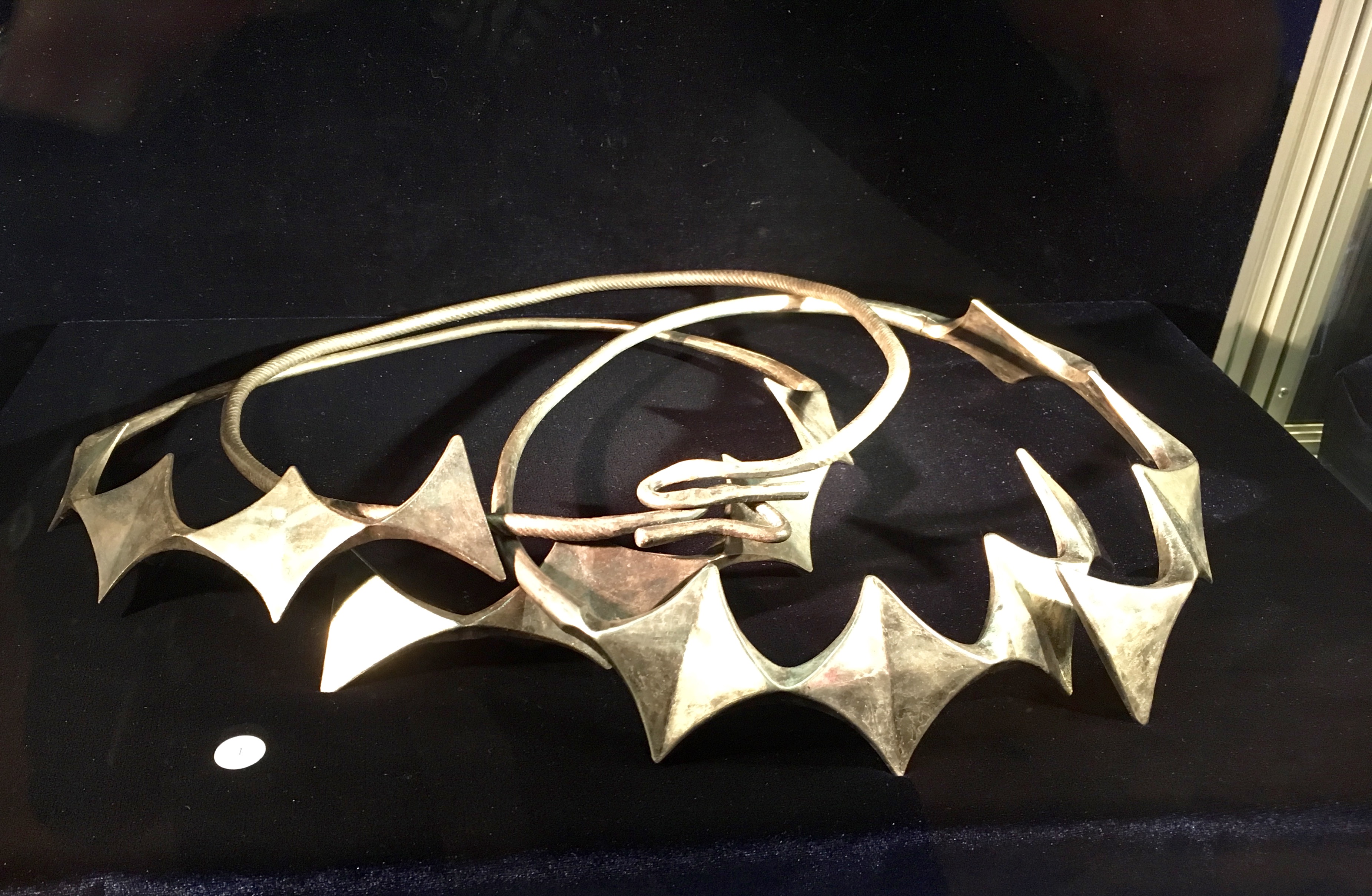
Guess you have to save this for big purchases

Hard to get the little lady to part with this for a bushel of barley

In the 16th-18th centuries, Riga and its surroundings fell under rotating occupations of Poland-Lithania, Sweden, and Russia (everyone wants a rich harbor town). Lutheranism gained prominence over Catholicism due to the large number of German inhabitants who ran the powerful guilds. But in the countryside, pagan traditions continued alongside the church and apparently are still evident today. The resulting ancient folk art features symbols that seem almost rune-like to me. Here is a shot of a 19th century living room grouping using those old historic motifs in the service of Art Nouveau furnishings:
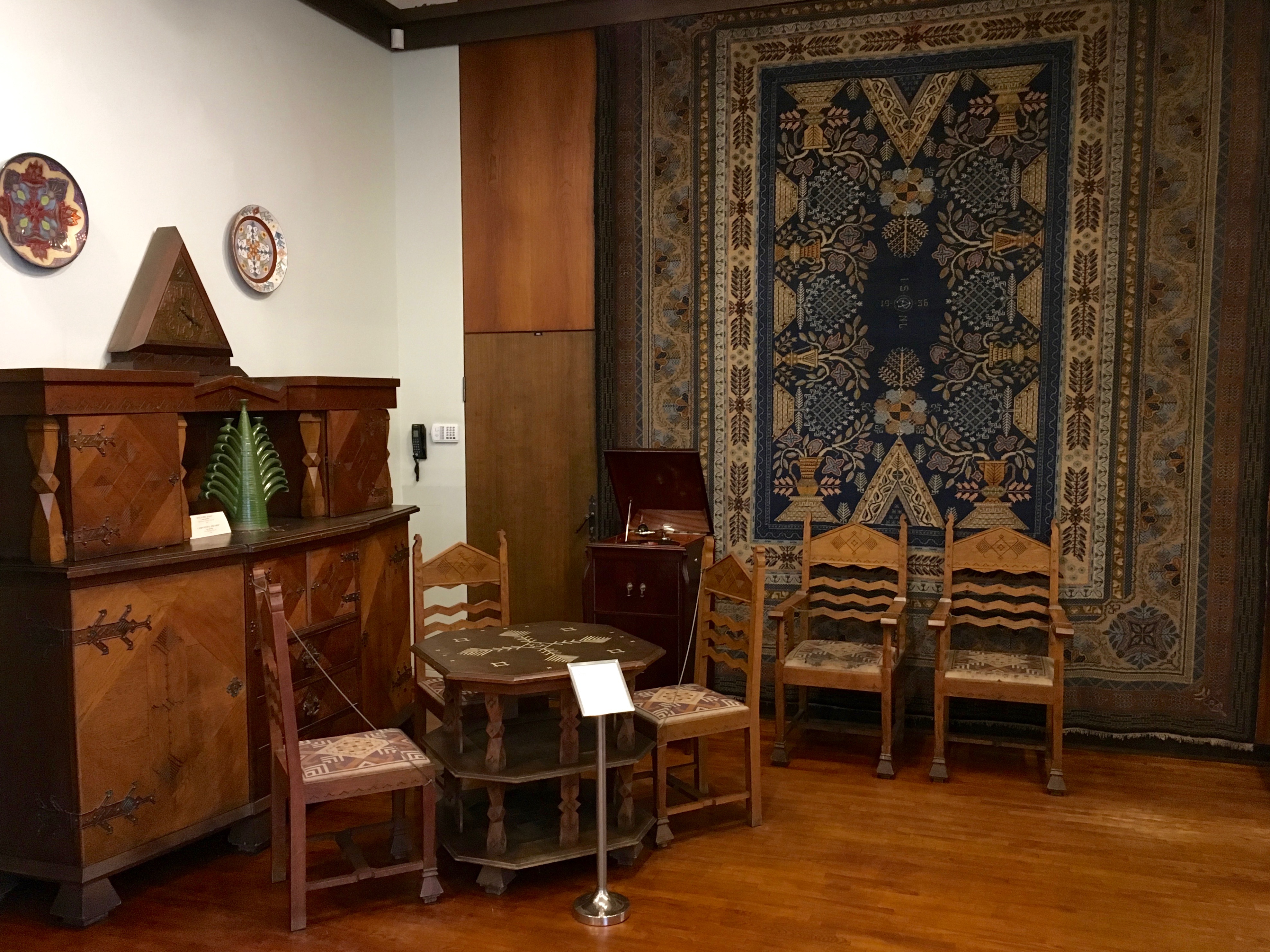
William Morris would approve

William Morris would approve

Well, this brings us up to the start of the 20th century, when sadly the screws started to tighten on this lovely little spot (not that it was a bed of roses before, by any means), so we’ll stop there for today’s history lesson. But for just a tiny bit of “You can’t escape your past, Carla,” here’s a picture of what greeted me on my walk back to the hotel:
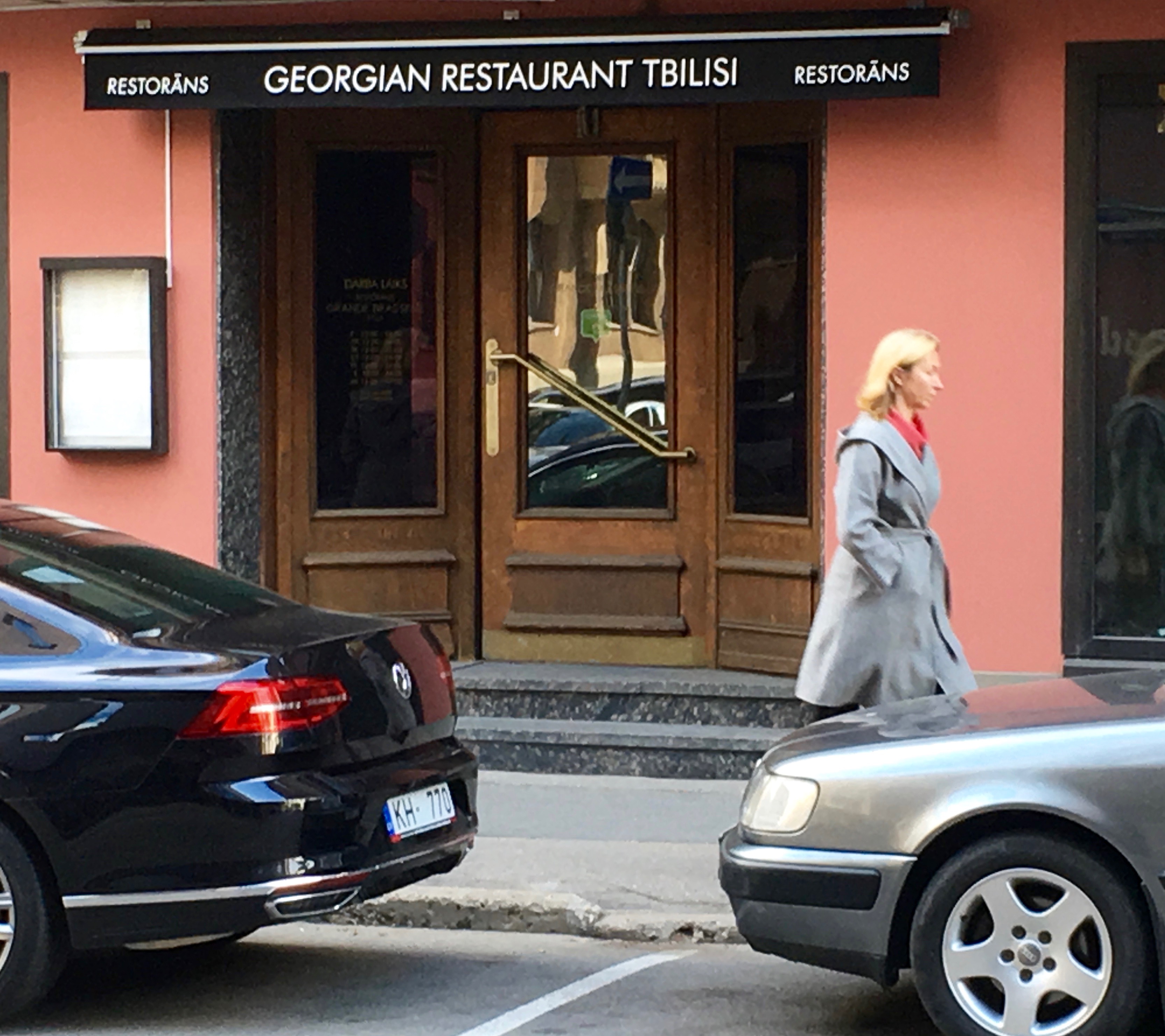
Khjapuri chases me around the globe

Arrrrrggggh…..khajapuri seems to chase me around the globe

…so as an antidote I defiantly went to the most Latvian restaurant I could find for dinner and enjoyed a lovely fish soup and one of the excellent local brews. (So there.) More to come.
Posted in Riga | 3 Comments

Zippin’ through the Zurich Airport

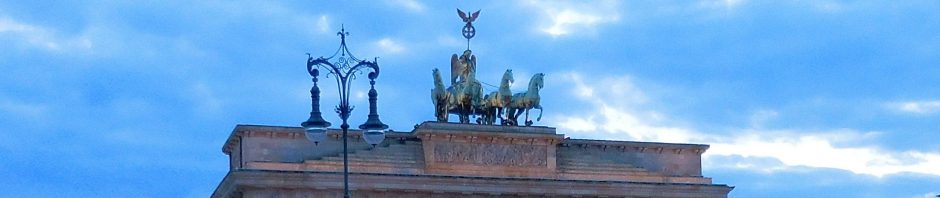
If you can see the header above (I’m told some can and some cannot), you would be correct in your assumption that Japan is over and done for the year and we’re off to somewhere else. In this case, I’m headed back to Berlin (this a close-up of the top of the Brandenburg Gate, the statue known as a quadriga, a Greek chariot drawn by four horses.) The reason for this is a combination of many things. First, of course, is my deep love of that city and recent cosmic insights that it’s the site of a former life, or some such thing. Second is my Sisyphean quest to conquer the dative case in German grammar. And third and leading the charge on timing is that since the American political landscape currently resembles an abusive domestic relationship, I decided to administer some serious self-care and just get away for a while. (Don’t worry – my absentee ballot will follow me here as well.)

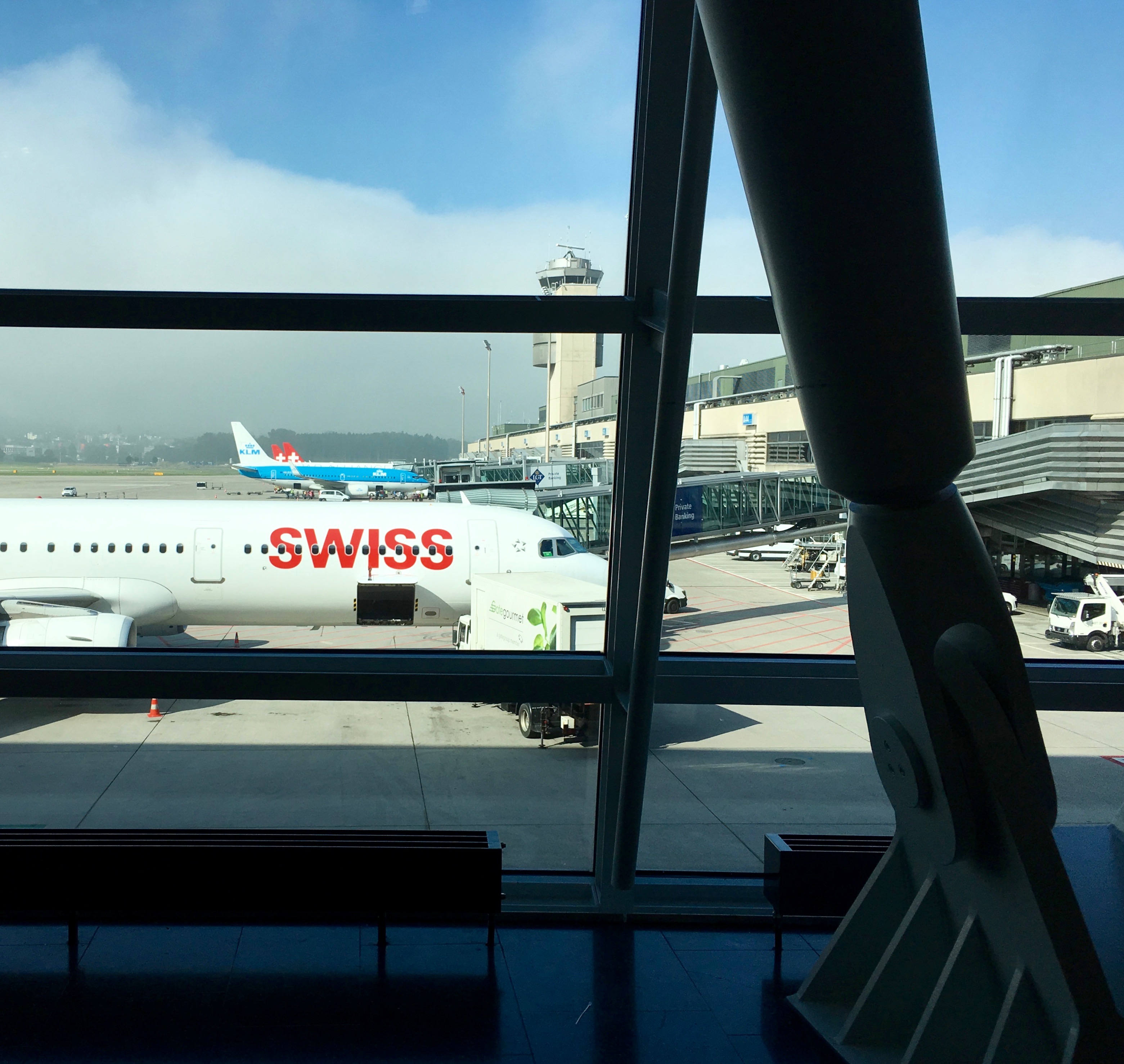
Recently most of my flights to Europe have been on either Turkish Airlines (which I thoroughly enjoy, even if the trip is many hours in duration) and WOW, the budget Icelandic airline that often gives you long lovely layovers in the Keflavik airport due to its bad on-time arrival record (you are deeded 10 Euros for munchies if the delay is more than three hours). This trip I found a good price on Swiss International Air Lines, the reconstituted heir of Swissair which dissolved in 2005. As you are aware, the Swiss are know for their tidiness, punctuality, and love of chocolate, and on none of those metrics was I disappointed. The flight departed and landed on time; the cabin was well-maintained, and we did indeed get as much (milk) chocolate as we wanted during the meal service.

But that also meant that I could add a new airport to my list, and in this case the lucky addition was Zurich. I only wish we had had more time to browse (maybe on the way back?) It’s a Rolls Royce of airports with merchandise and prices to match, but I thought you might enjoy a quick visit. First is a shot of the target airline onsite:

At the gate

Chocolate loading zone

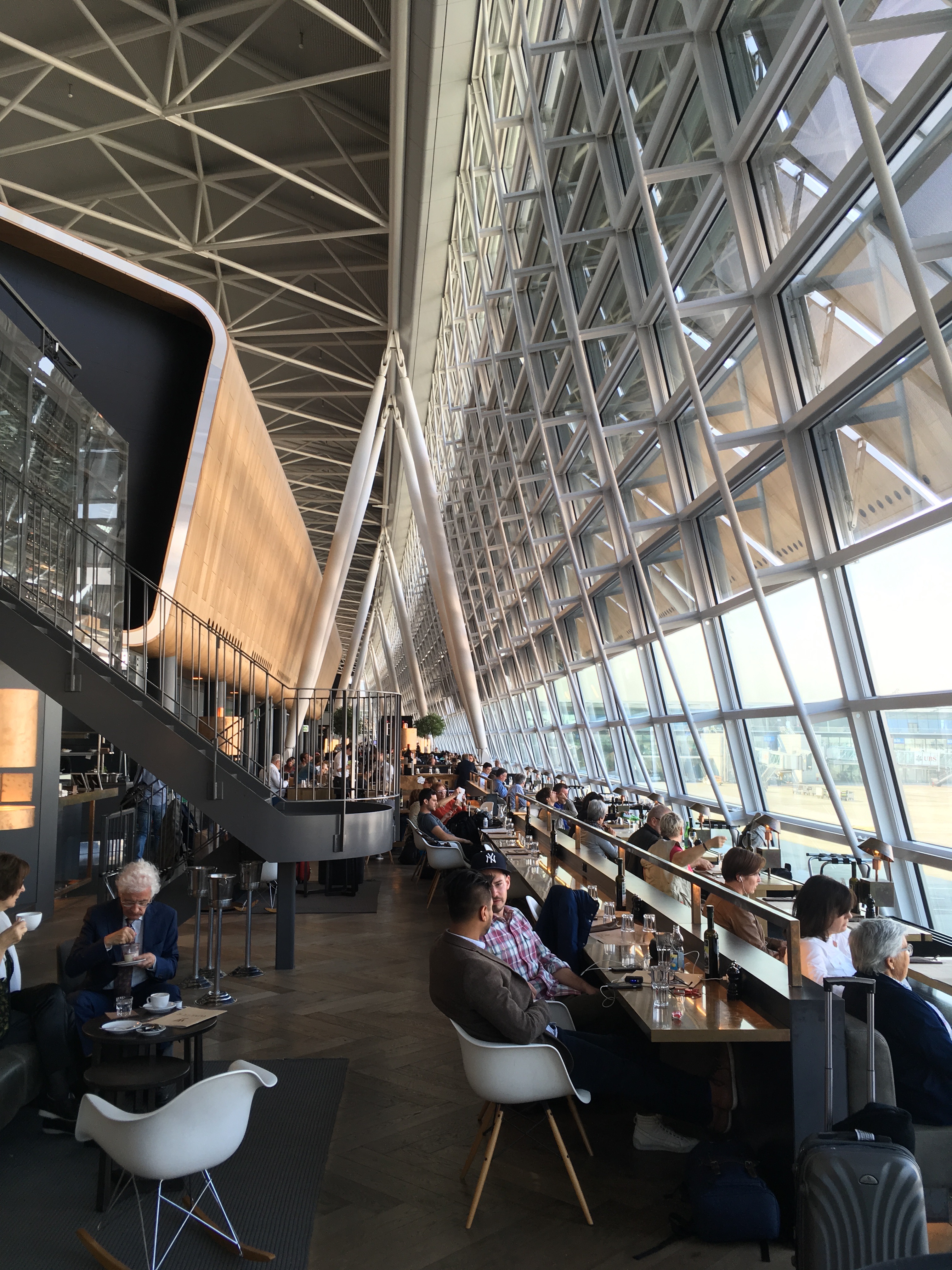
While the airport is pretty standard-looking from the outside, once on the concourse you can quickly see that there was some serious thought given as to how to make those transit experiences more pleasant. Here’s a shot of a cafe/bar for the world-weary:

Nice digs

I’ll have a latte with that view

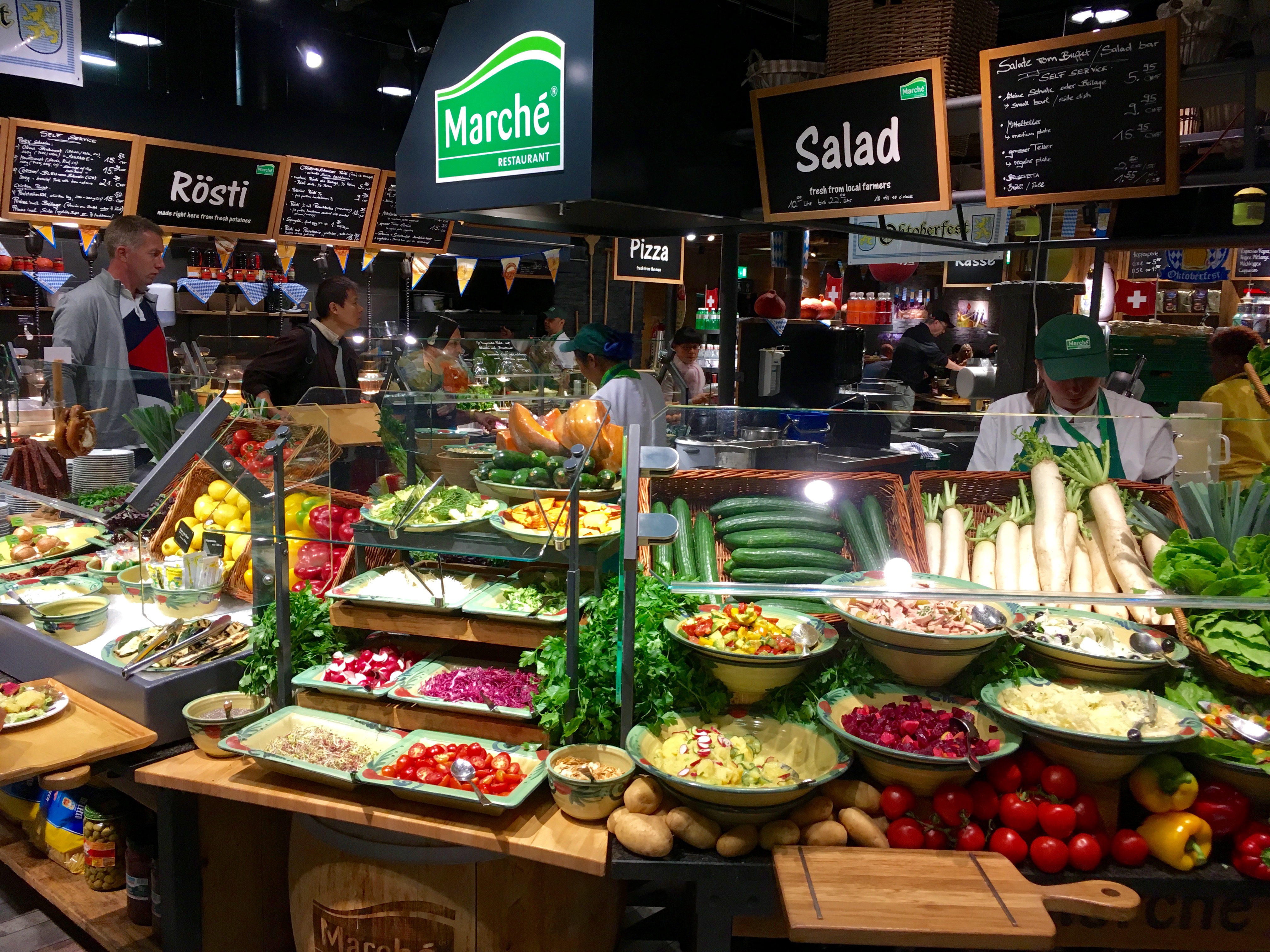
One of the impressive things about European airports is the delightfully healthy offerings by some of the restaurant purveyors. (You may recall a shot from my visit to O’Hare in Chicago a cart selling hot dogs rolled in dough with the choice of “to bacon or not to bacon?”) Well, Zurich (and others) strikes back with what is for me a much more appealing set of options:

Nutritious and delicious

Nutritious and delicious

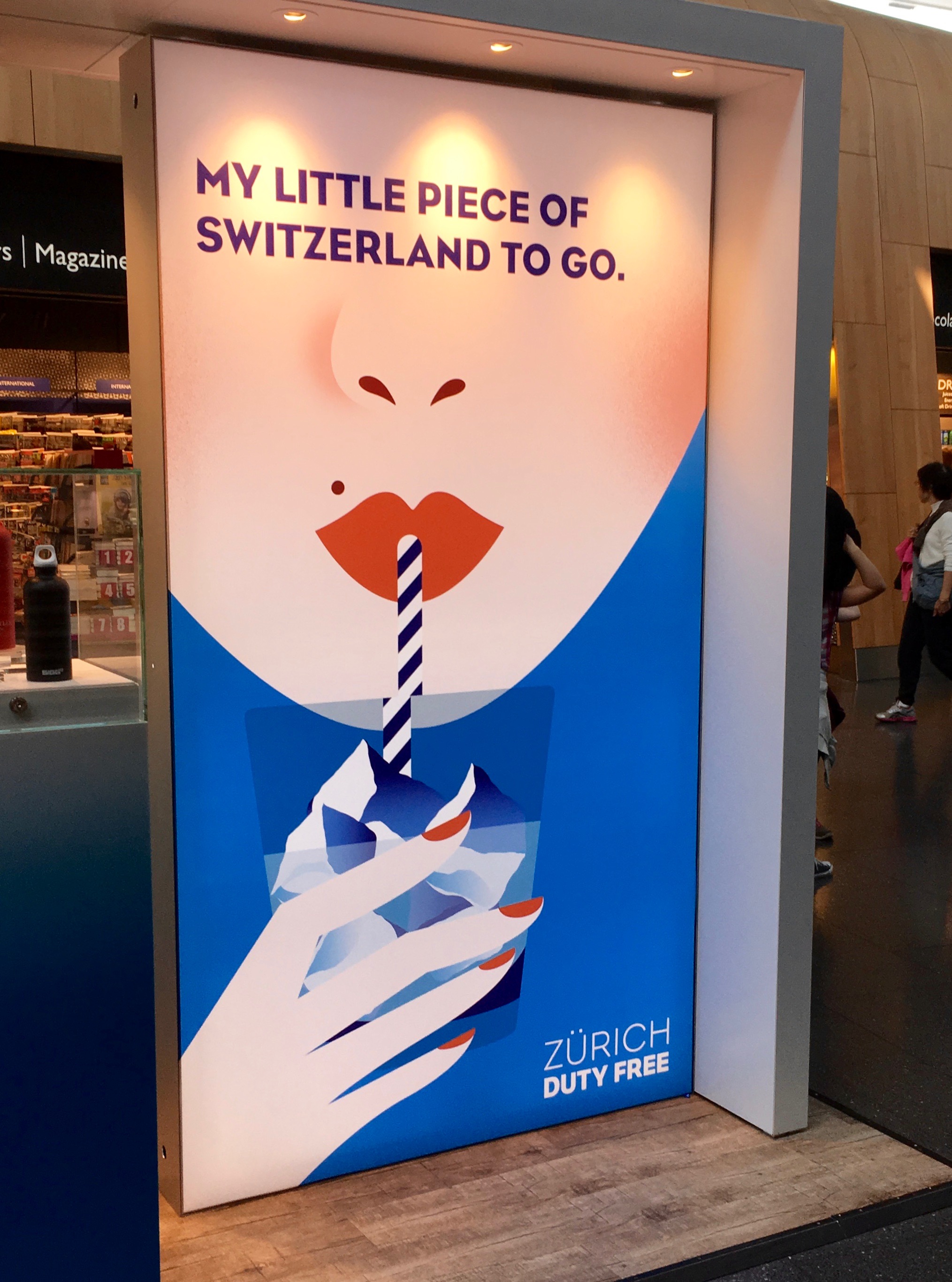
But not all is chic bar life and quinoa with lentils. Much of the airport is taken up by various forms of retail establishments maintaining their existence with the sole aim of separating you from your recently obtained Euros:

Slurping up the cash

Slurping up the cash

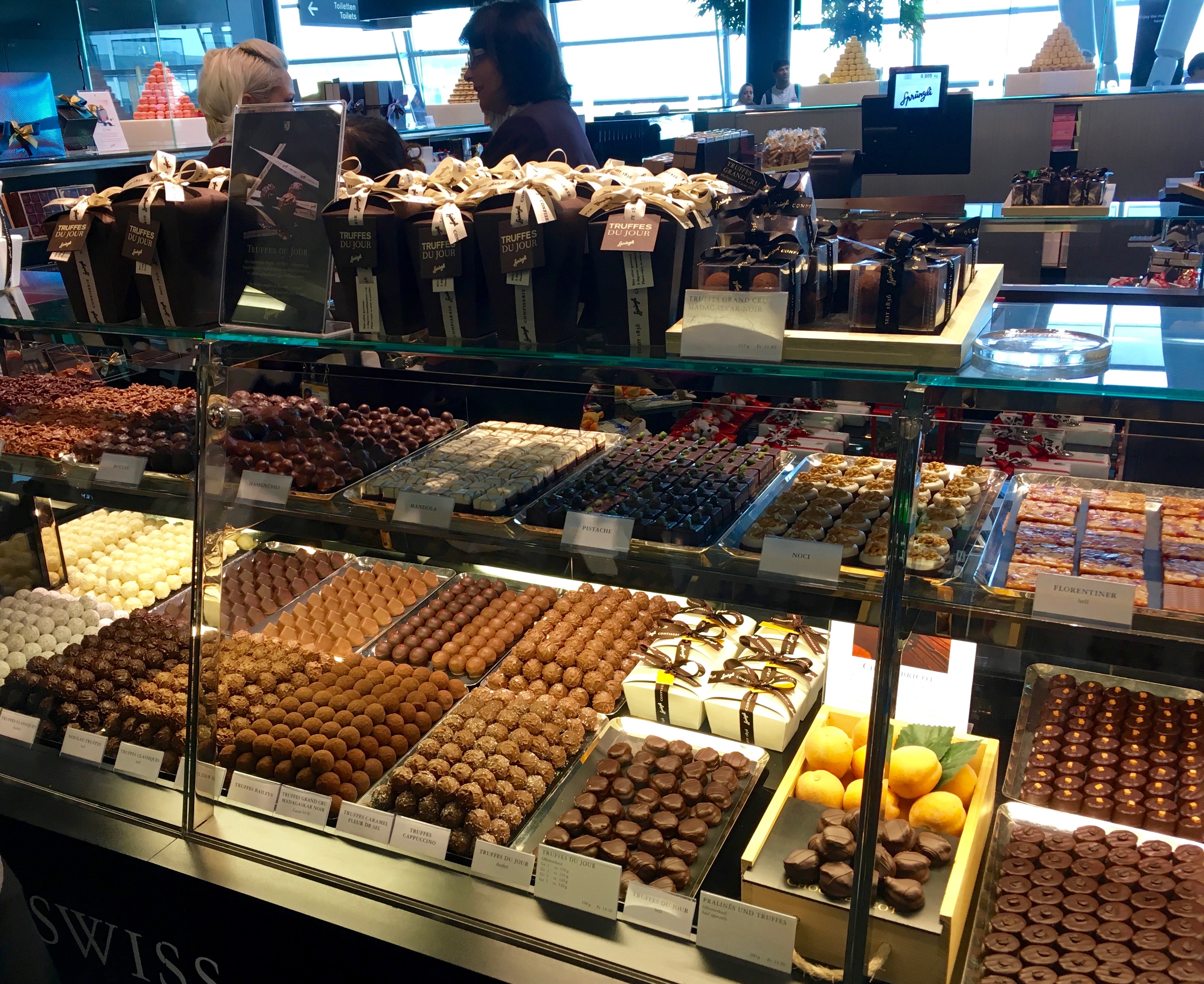
There were of course the ubiquitous Duty Free stores with their acres of liquor and cigarettes and miles of cosmetics and perfumes, but there were a number of unique Swiss offerings as well. First, of course, chocolate (seeing a theme here?)…

By the gross

By the gross

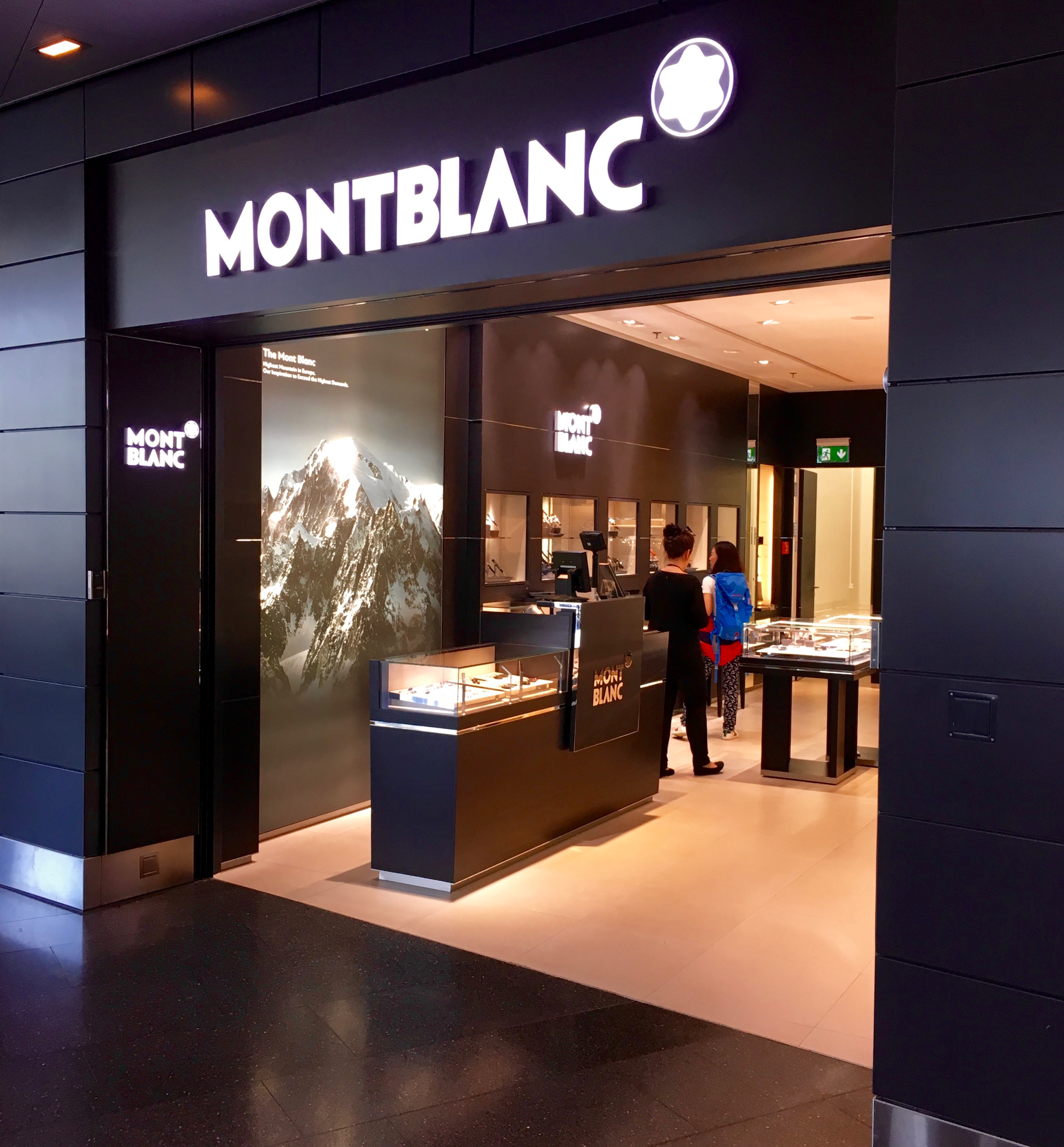
… and a number of local luxury items including climbing gear, fancy watches and over-priced writing instruments. I was, of course, charmed by the twin Montblancs…

The height of extravagance

The height of extravagance

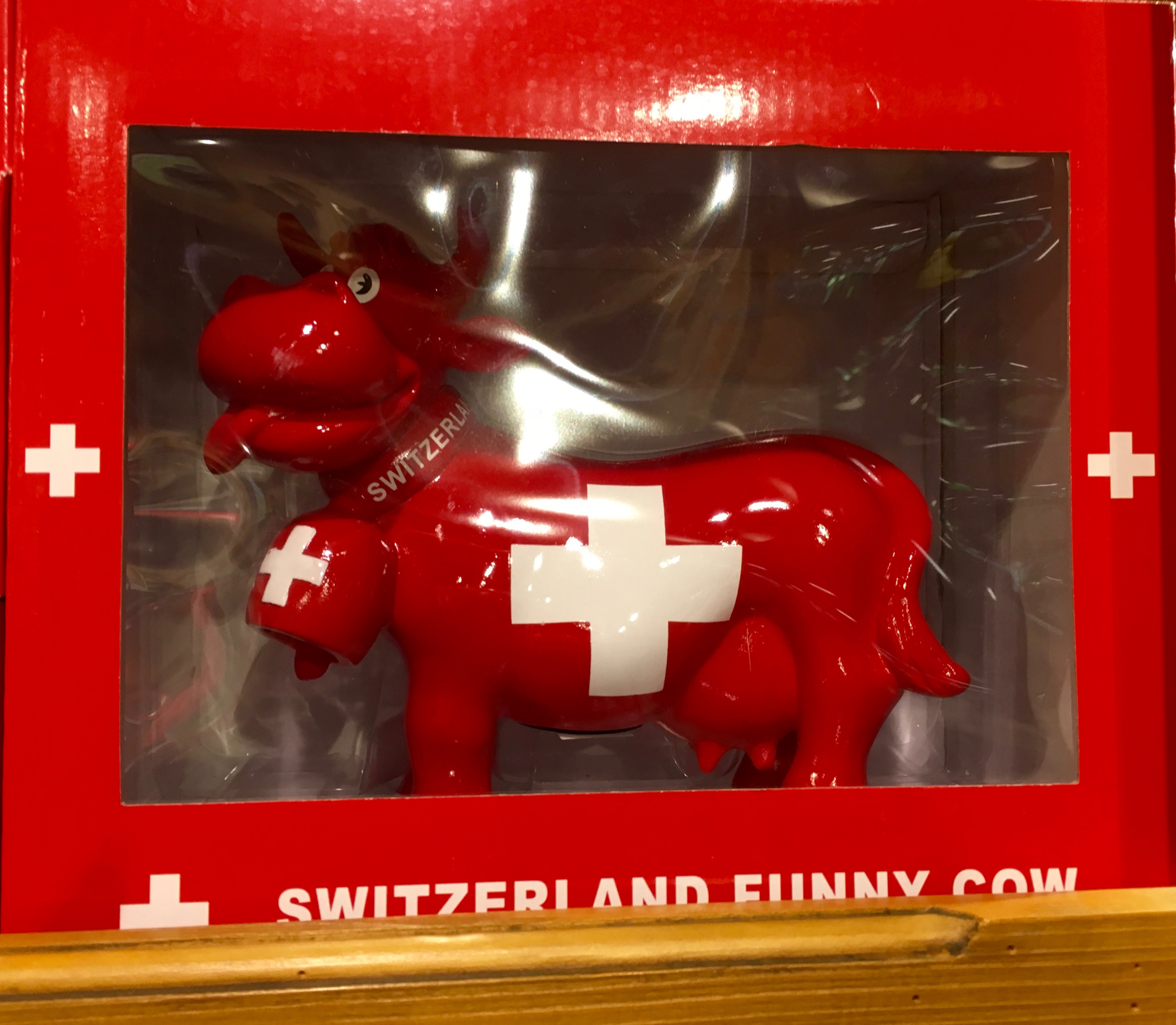
…but perhaps what was most endearing was the Swiss cow kitsch that was frequently featured. You have, of course, the Swiss flag cow…

White Cross?

White Cross?

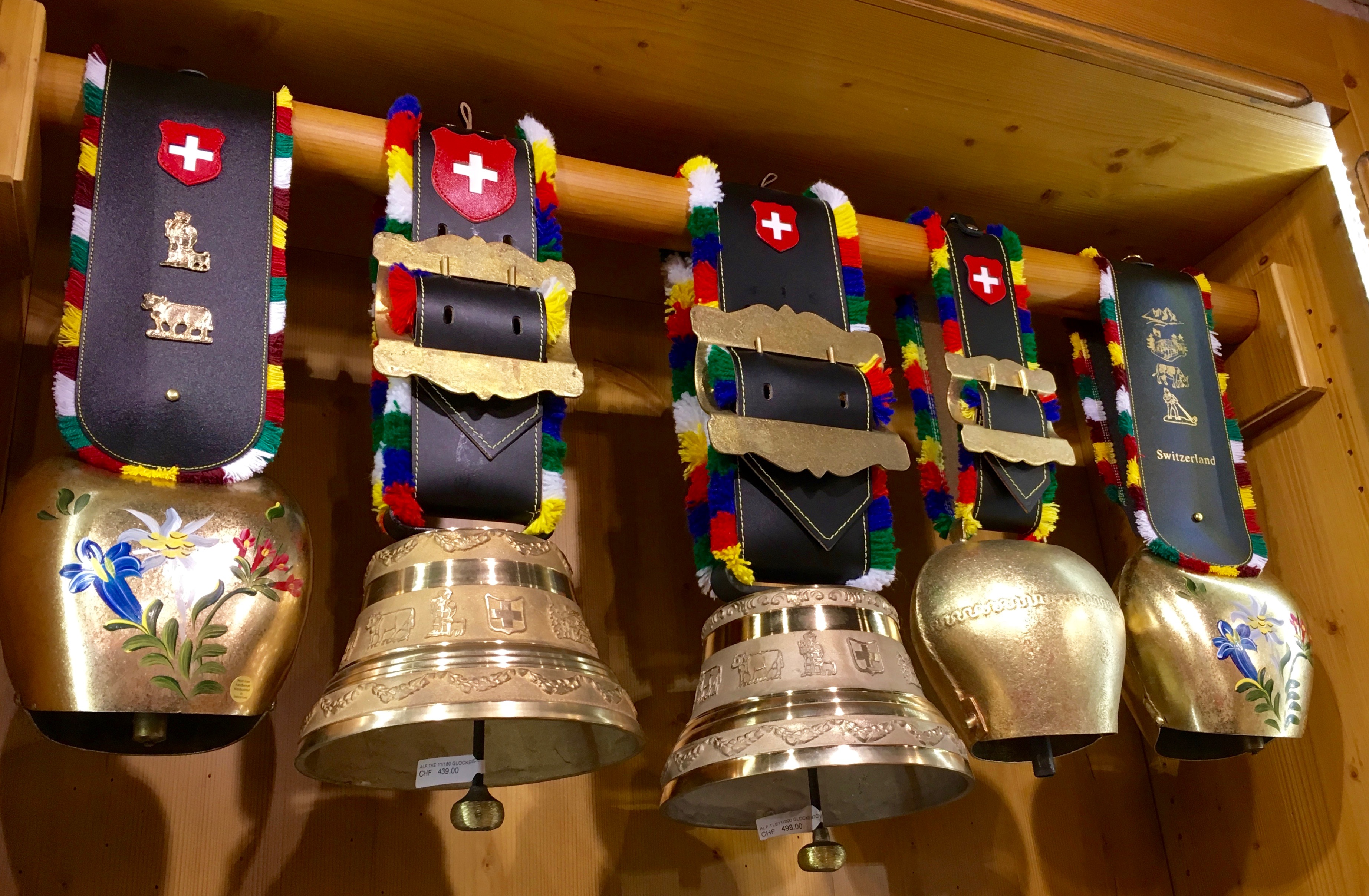
…and cow bells in various shapes and sizes:

One for every occasion

One for every occasion

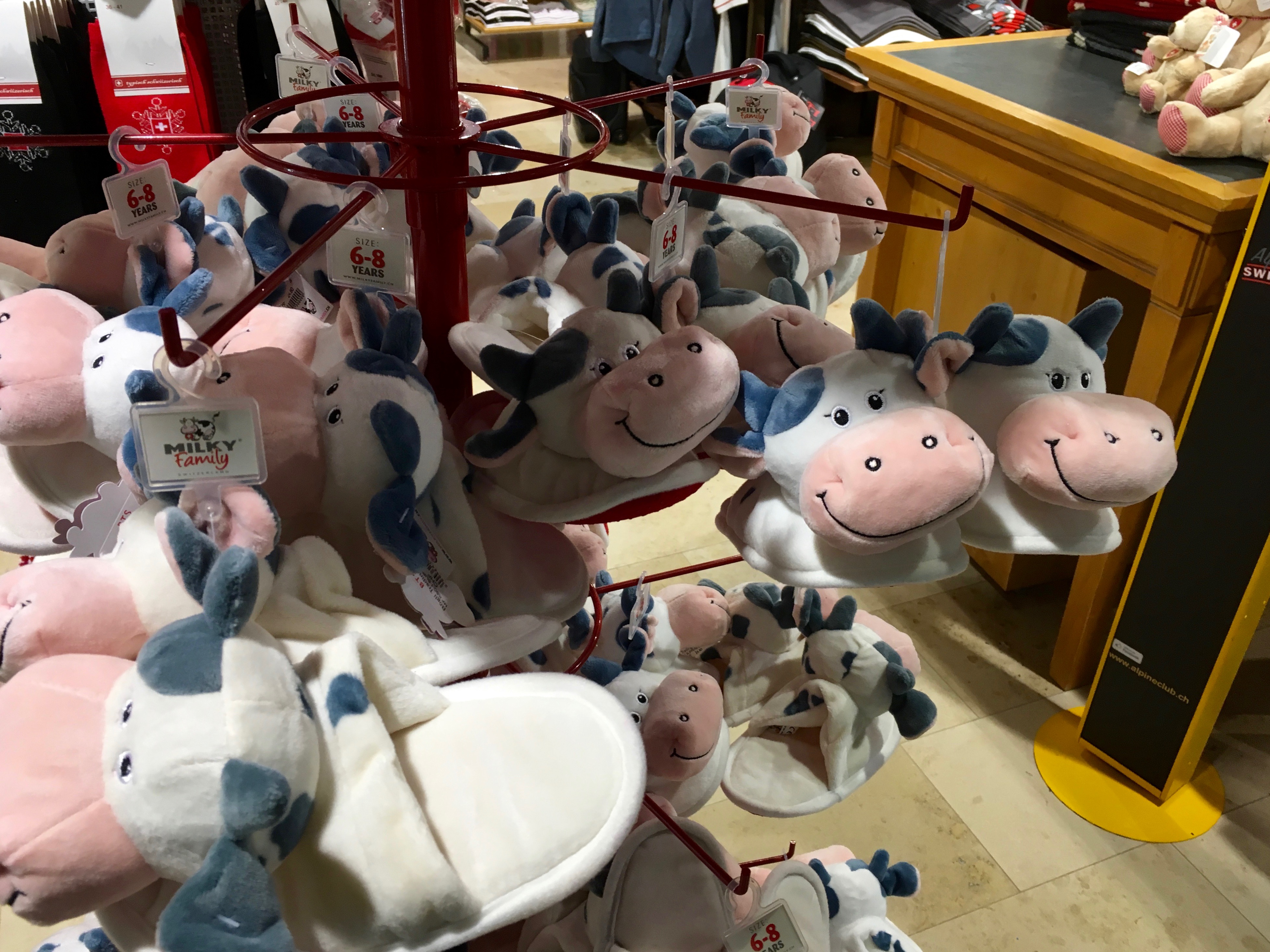
…but the best were the cow slippers for the wee ones in your family. Maddie Paris, this one’s for you:

We've got you covered

Mooooving along

…but thankfully before I could get too much in trouble, it was time to walk nearly the length of Zurich to get to my departure gate and off to Tegel. Now this is one airport I’m looking forward to visiting again.

Posted in Travel - Airport | Tagged | 3 Comments

A visit to the White House

David, a dear friend of very long standing, wrote me a while back to say he would be in Washington DC during September in order to spend time with his infant grandchild. Should I happen to be in the area, he would love to see me (after many decades). At first this struck me as a delightful if somewhat frivolous option, but I assured him I would keep it in mind.  As I mused on this invitation, I reflected that it could also be helpful to meet in person with my Georgetown boss and then I could also take advantage of the opportunity to catch up with a pen friend who I hadn’t seen in some time as well. So with the somewhat zany concept of of three short-but-wonderful visits in two days, I booked tickets for our nation’s capital.

In the meantime, David managed to secure access for us to visit the White House. If you’ve never done this, or if it’s been a while, let me assure you it’s no easy task, requiring levels of bureaucracy and online clearance. Since David and I had toured DC umteen years ago as part of a group of 16-year-old speech contest winners, it seemed a perfect “ribbon on the bow” experience, connecting us both with our ambitious past and our fully realized present.

On the early am ride down from Portland to Washington Reagan, I managed to sit on the left side of the plane which turned into the “right” side of the plane from a viewing perspective and shot this view of the Lincoln Memorial and the Reflecting Pool bathed in the rising sunlight:

Illumination of the natural variety

Illumination of the natural variety

After a lovely long chewy breakfast at the Old Ebbitt Grill, one of my favorite hangouts from my days living there in the 1980s, David and I headed over the the White House visitor center to ground ourselves in what we would be seeing as well as to escape from the heat and humidity. If you’ve not been there, I highly recommend it. Filling the space that used to serve as the Patent Office, it’s a wonderful resource for learning about the site AND it hosts a much more extensive gift shop than the tiny kiosk that operates at 1600 Pennsylvania Avenue. There’s a lovely video featuring Barak and Michelle who welcome you personally but ask that you not feed the dog if he begs for treats.

"The People's House"

“The People’s House”

Then it was time to face the music and the security gauntlet to get into the White House. The fact that we were visiting *the day before 9/11* probably didn’t make it any easier. Let me warn you now. You are allowed to bring 1.) your wallet 2.) a cell phone 3.) a non-metal-pointed umbrella and 4.) any necessary medical supplies into the venue *and nothing else.* Oh, and there are no storage options. For that, head over to Union Station and pay highly inflated fees for the privilege of leaving your bag for a few hours. Ah, the big city.

Back at Security Central. First, rangers let you into the park (the area around the WH). Then you stand in one long hot line and have your “boarding pass” and ID checked. Then you stand in another long hot line and have your “boarding pass” and ID checked again. Then you stand in yet another long hot line and finally enter a small room to wait on a mat while a large ferocious dog on the other side of a low wall checks you out. Then and only then do you walk into the WH itself, a little shaken by the sight of all those automatic rifles strapped across the chests of all those very buff and unsmiling security personnel.

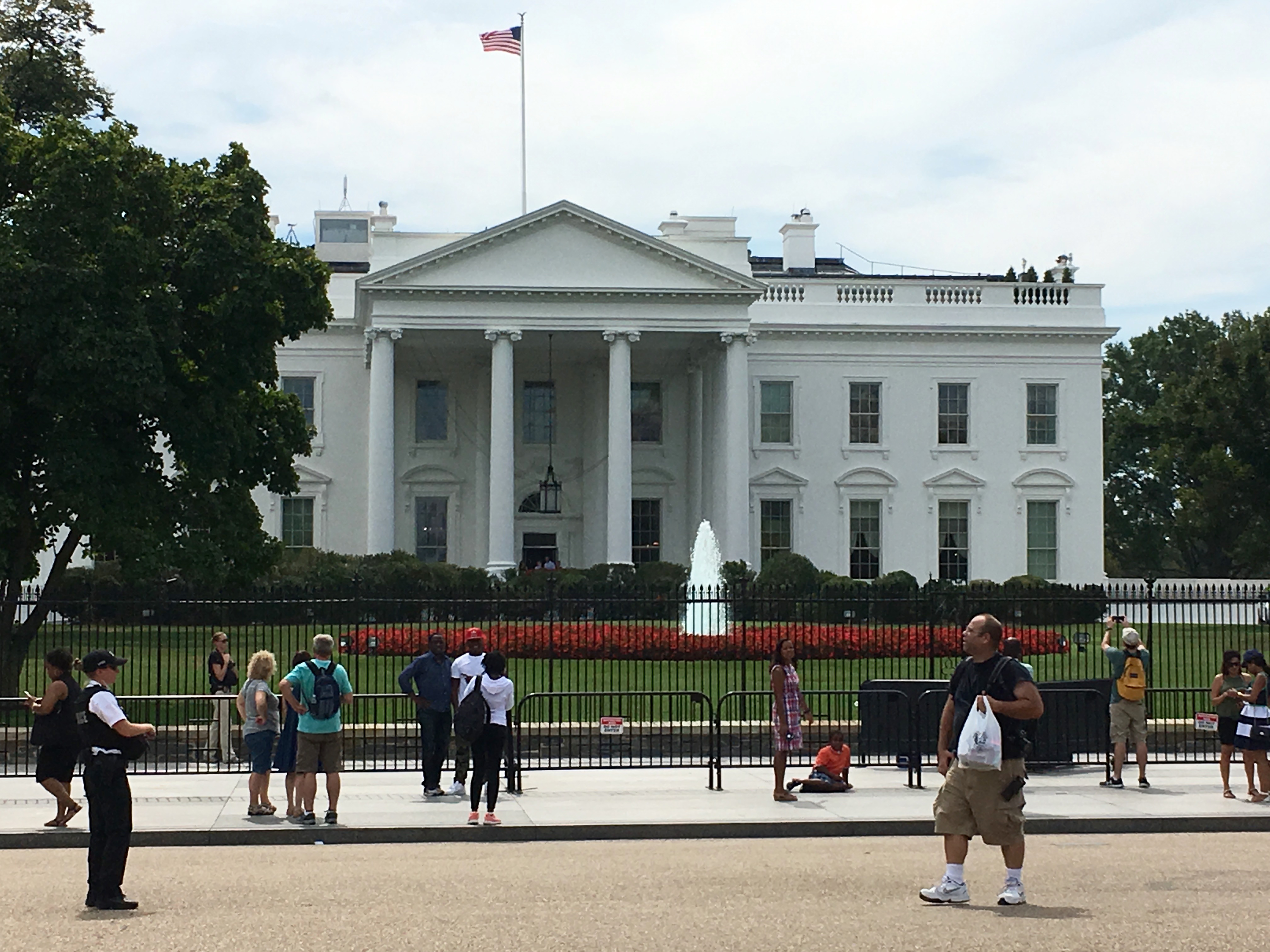
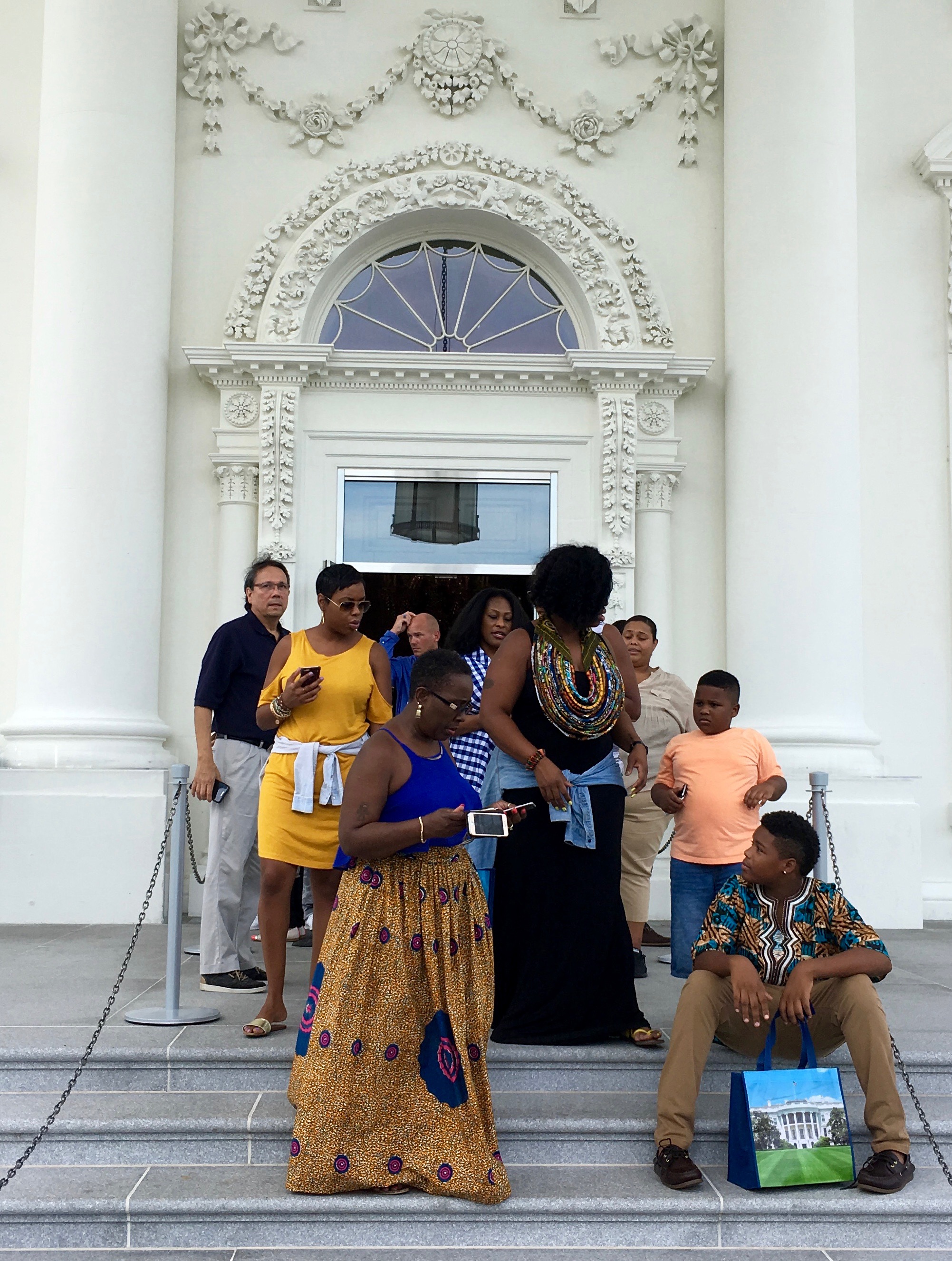
But once inside, things become very lovely and gracious. My pictures will be in reverse order of how I saw the WH, because we went through it basically backwards and I want to share it forwards.  Here’s the front entrance:

wh-front-entrance

Originally built in 1800 and rebuilt between 1815-1817 due to the destruction of the War of 1812, the White House has been altered and adapted over the years for many reasons and by many presidents. Amazingly, it retains the same look and feel as it did in its early days. One has the sense of a thoughtful and historic integrity in everything one sees throughout the building.

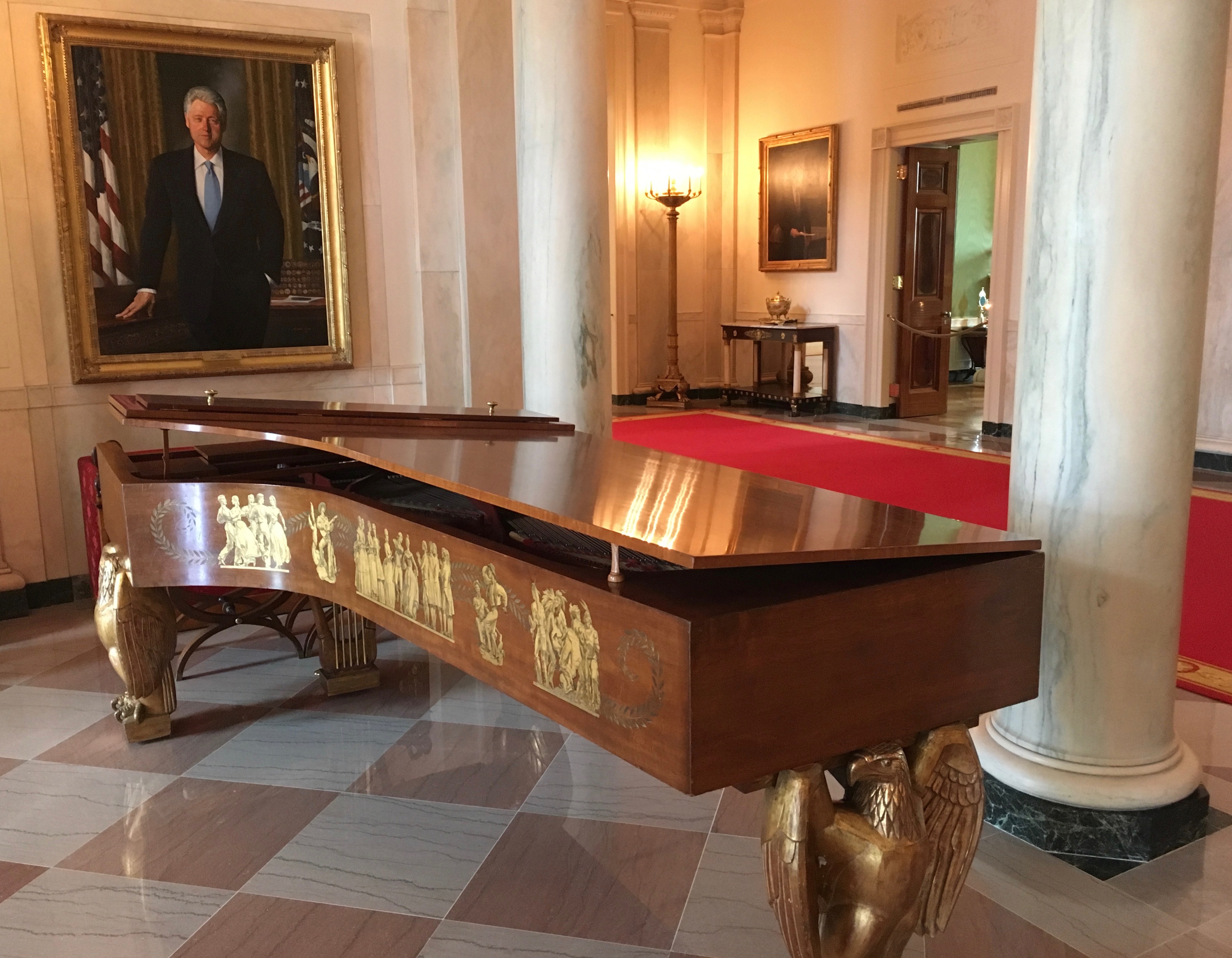
In through the door seen above, one arrives in a spaciously large foyer featuring a lovely harpsichord and a picture of Bill:

I thought he played the sax...

Didn’t he play the sax…?

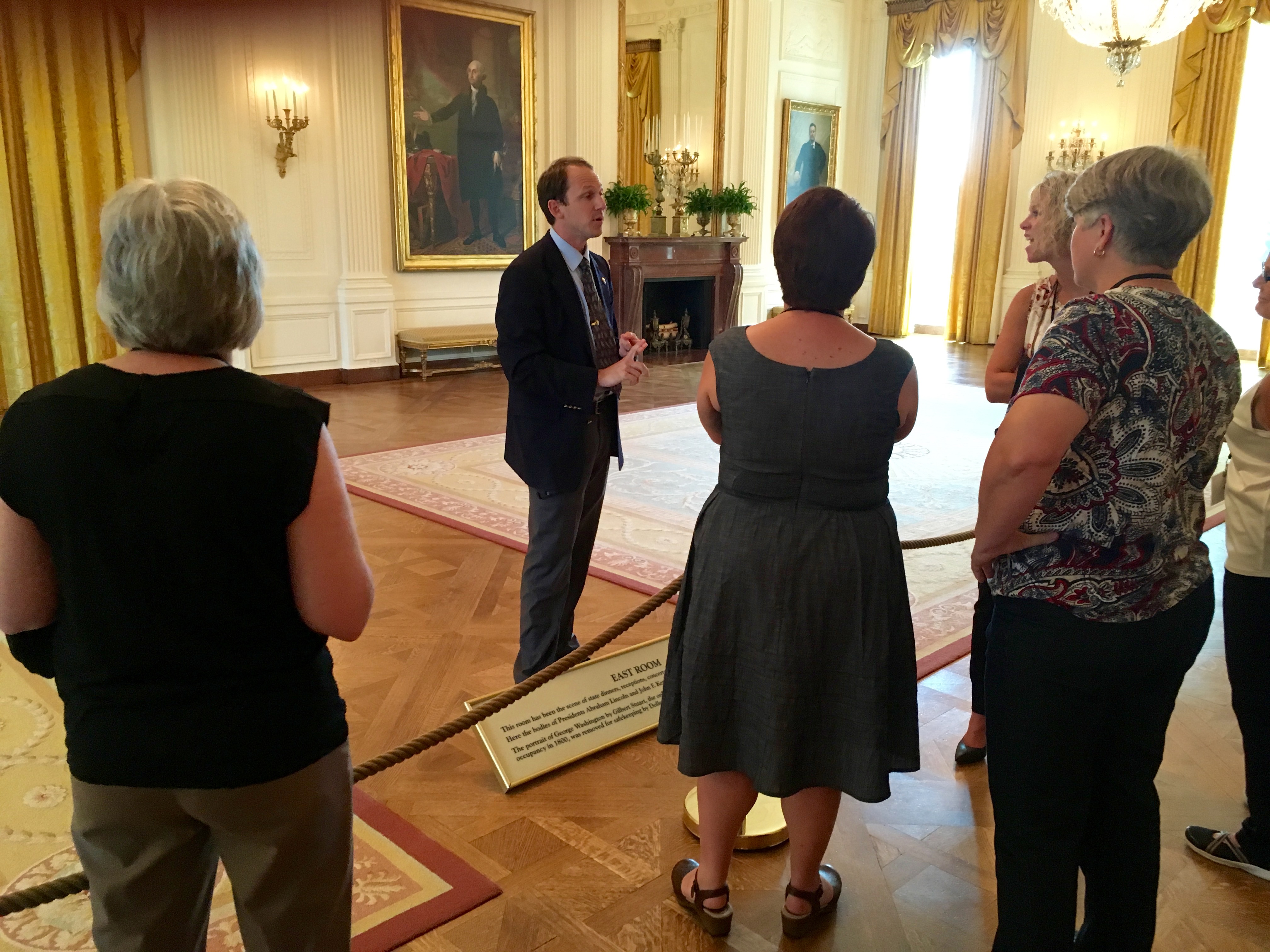
Down the hall to your left, if you followed the red carpet above, you would find yourself in the East Room, the scene of big dinners, receptions, and concerts over the centuries. Here both Abraham Lincoln and John F. Kennedy lay in state, and it’s also where the famous picture of Washington by Gilbert Stuart hangs as seen over the guide’s right shoulder:

wh-east-room

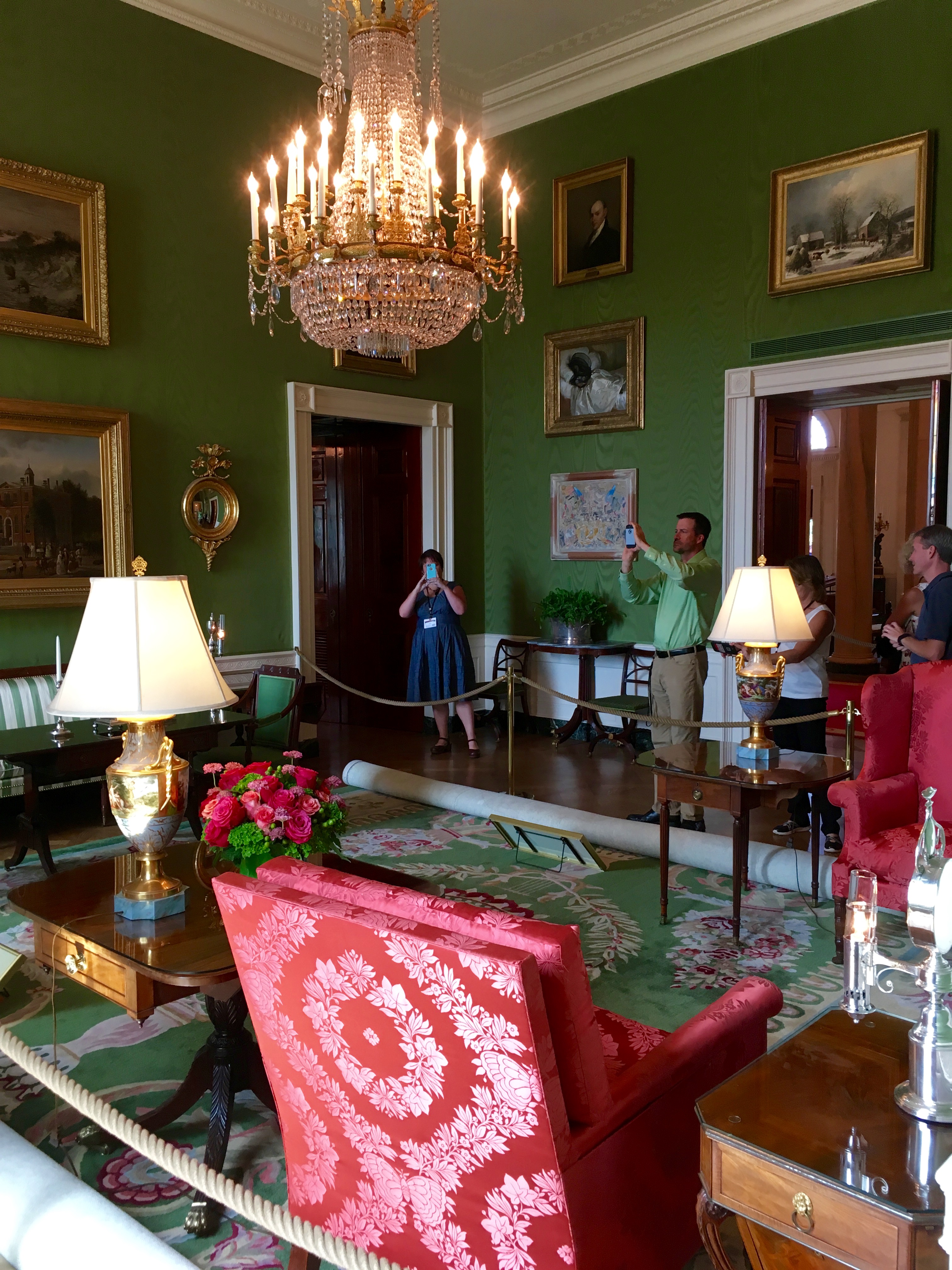
Heading out of this room to the upper right, one finds oneself in the first of the “color” rooms , all of which have also been used for entertaining, albeit on a smaller scale. The first one in line is the Green Room:

wh-green-room

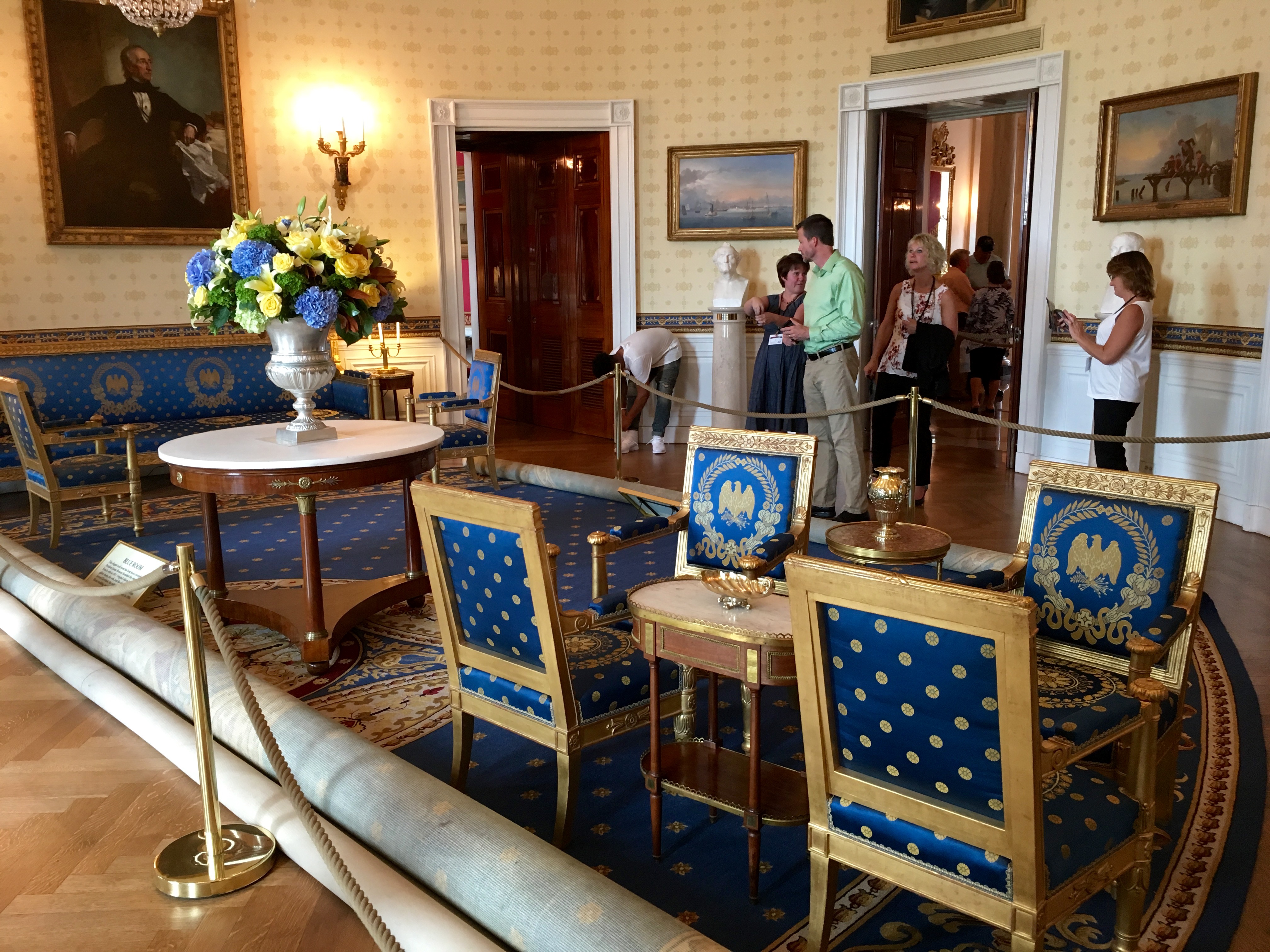
This was Thomas Jefferson’s preferred room for official dinners – smaller and more intimate than the bigger room you’ll see later hence its transition into a parlor only. Next up is the Blue Room:

wh-blue-room

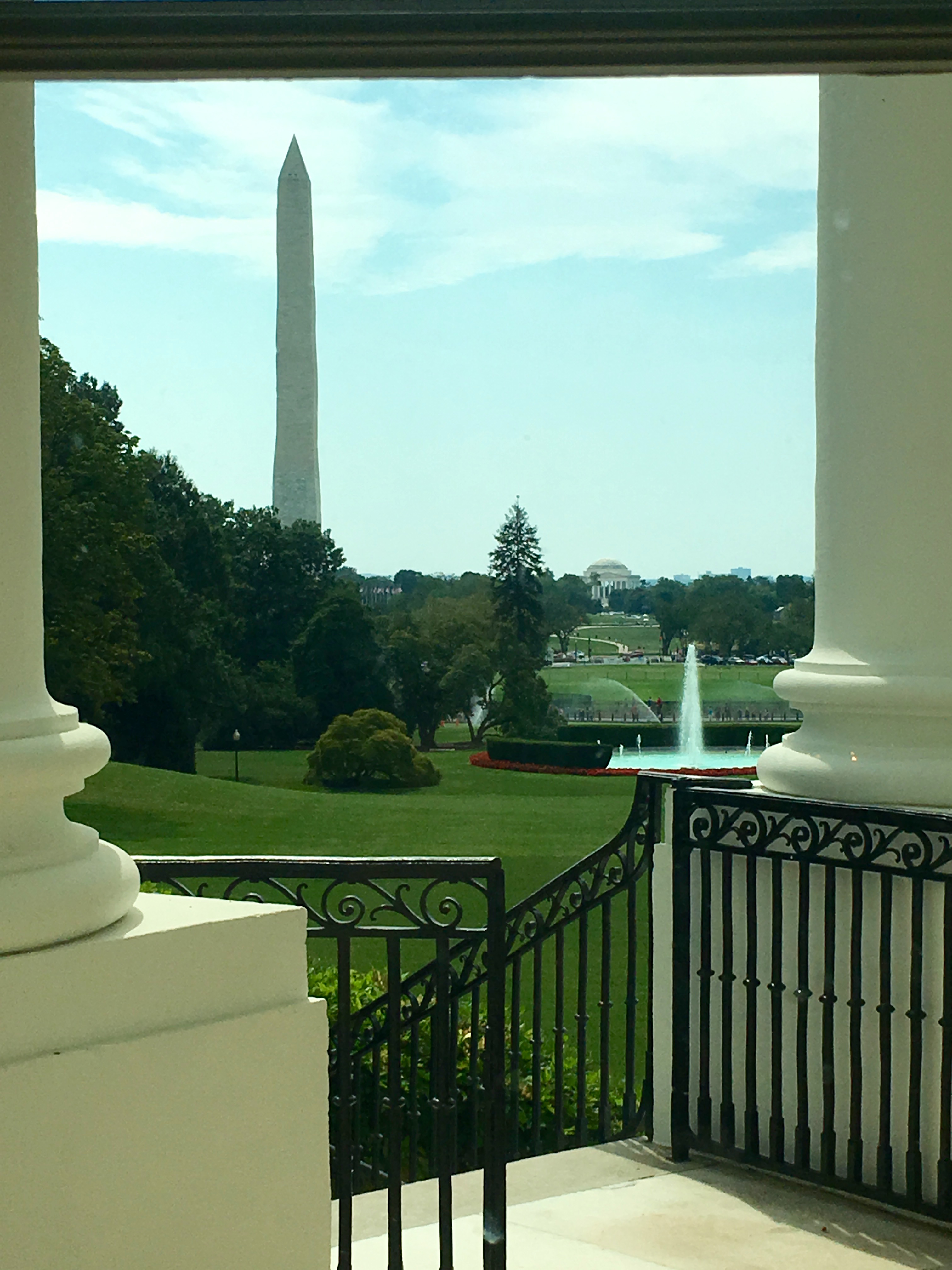
Used frequent for receptions these days, this was also the favorite of James Madison. (The flowers in all the rooms were most lovely and fragrant.) By turning around 180 degrees, I was able to snap this picture out the window, out and over to the Washington and Jefferson Memorials:

wh-view

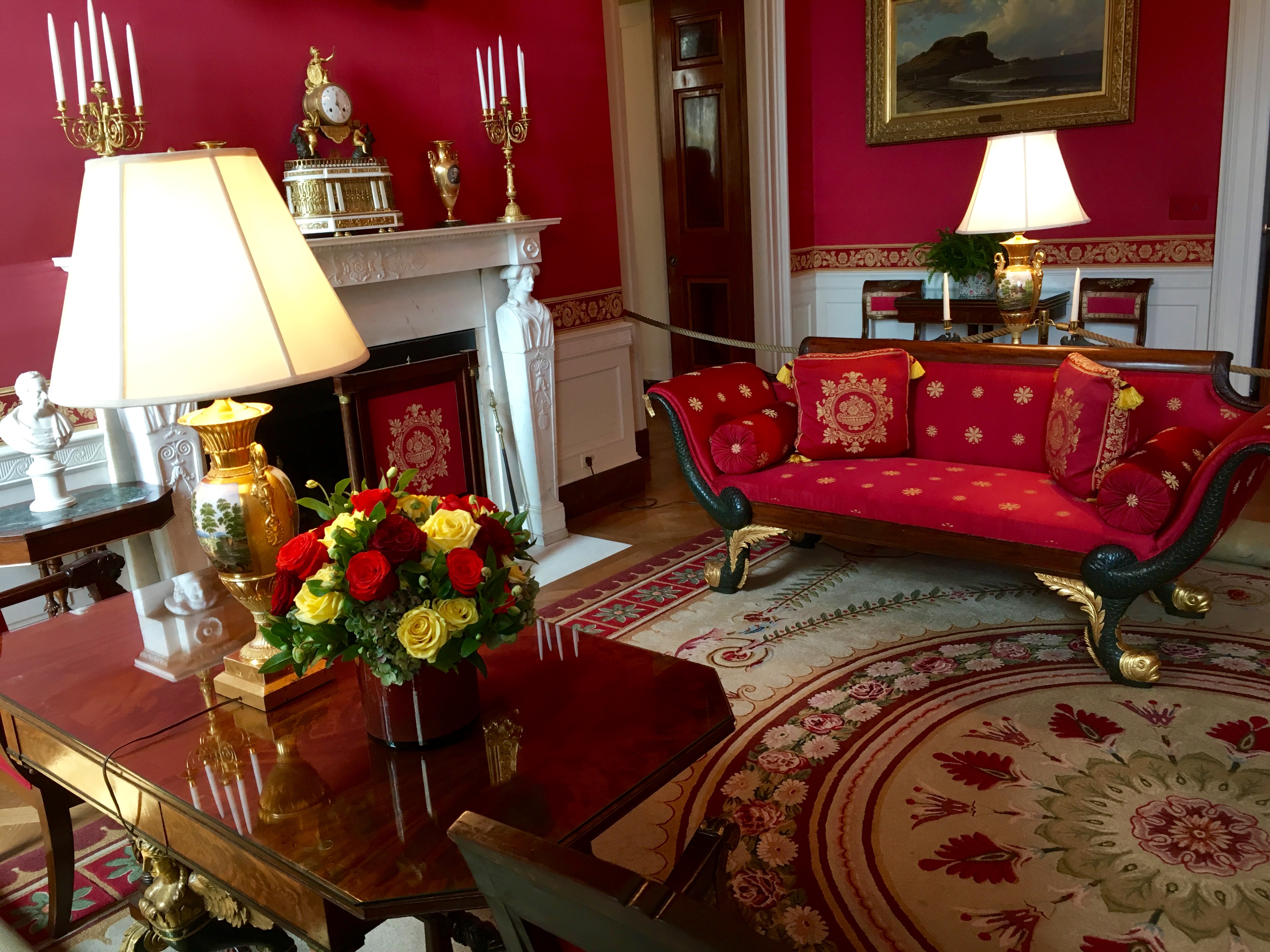
Finally, the most dramatic of the color rooms, the Red Room. My favorite of the three, it was also used as a parlor, most often by the president’s wives and their guests:

wh-red-room

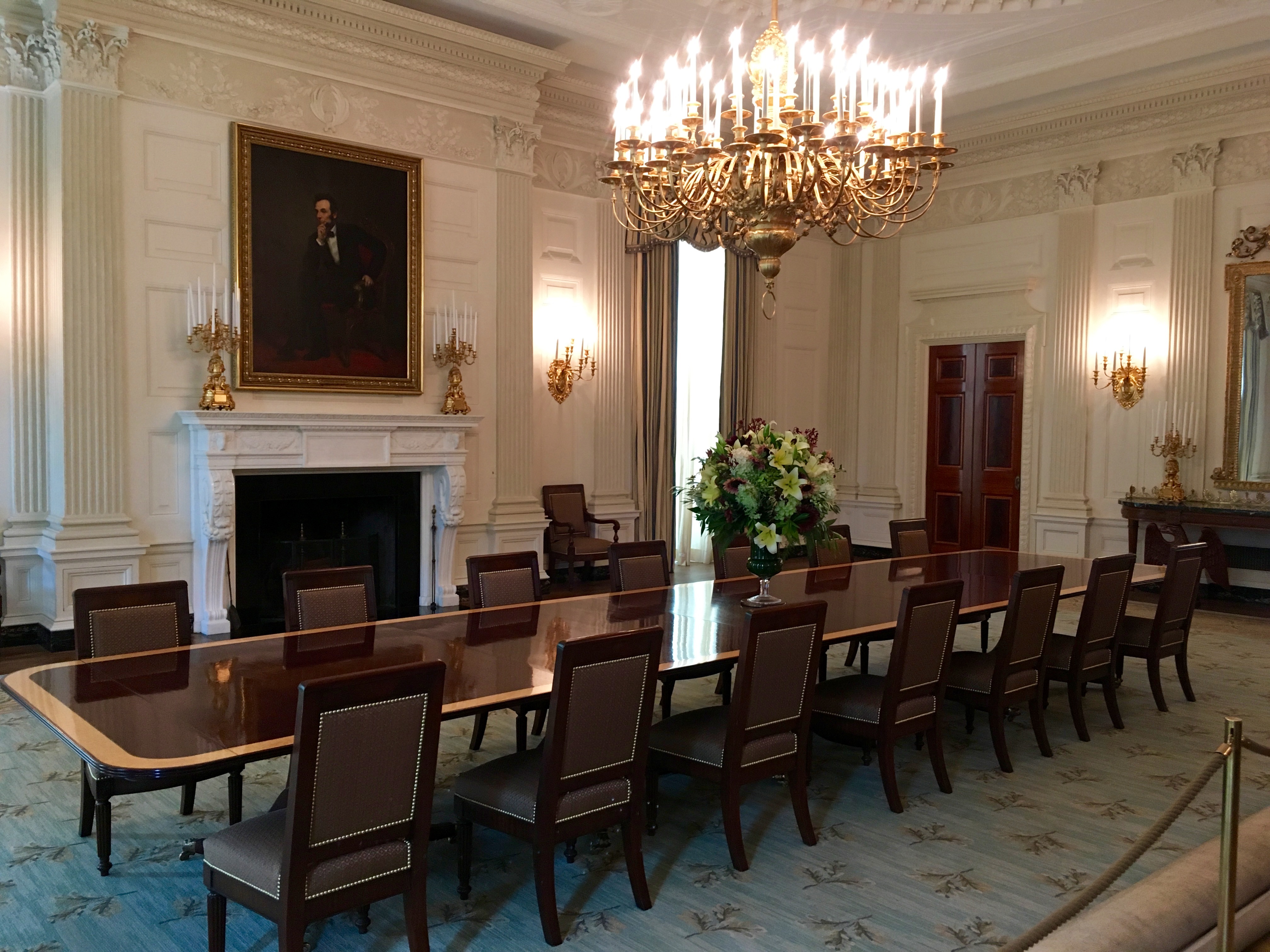
Here’s a shot of the formal dining room which seats 130 at a time. I can see why some of the smaller rooms might be more appealing:
Abe sez "Eat your peas"

Abe sez “Eat your peas”

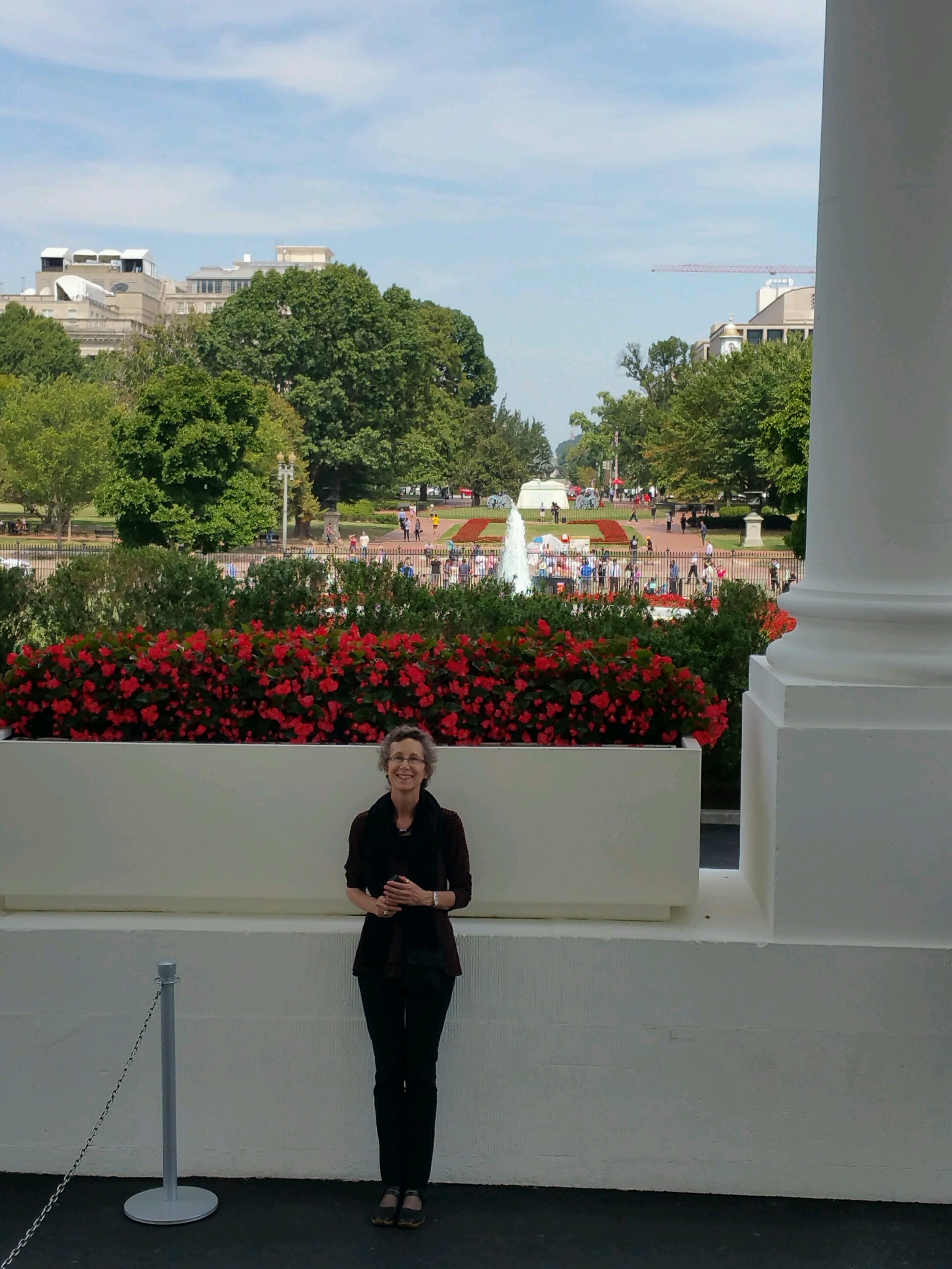
And, just so you know I was really there, here’s a shot of me once we had exited the building and were still buzzing a bit from the experience:

carla-wh

Holding one of the approved items

…and, while it’s not the White House, I couldn’t leave this post without sharing one of the most endearing things I saw during my brief-but-wonderful weekend. It appears that a San Francisco Bay Area organization had sent a group of World War II veterans and members of their family to Washington for a few days to see the town and a number of the monuments (many built since the war) as a way of showing appreciation for their service. The group of vets (not their family members) ranged in age from 89 to 98. They had been entertained at stops along their visits by all manner of different groups of of musicians and performers, but I was lucky enough to see the last group, this of dancers doing their best to shuffle a little soft shoe to the tune of “Boogie Woogie Bugle Boy of Company B:”
Cuttin' a rug at DCA

Cuttin’ a rug at DCA

…and so on that note, back I flew to Portland, Maine, feeling as true blue as I ever do. God bless us everyone.

Posted in Uncategorized, USA | Tagged | 5 Comments

Museum Mania

As a last posting on Japan and Tokyo for the season, I thought I’d give you some highlights from the museums I visited during my recent visit. I’ve already covered the National Museum complex in an entry below, so this chapter will just touch on most the others I managed to squeeze in. [I like museums. A lot. But you had probably figured that out.]

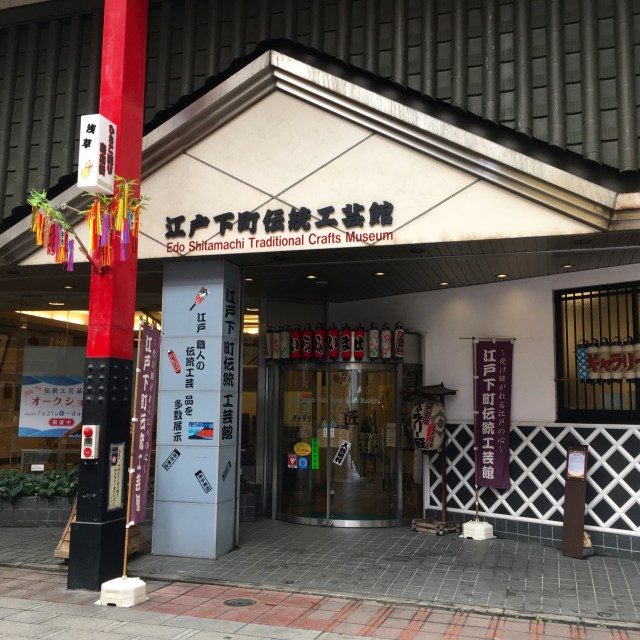
Taking them as chronologically seen during my week, first up is the Traditional Crafts Museum in Asakusa:

Traditional crafts sign

Humble but loveable

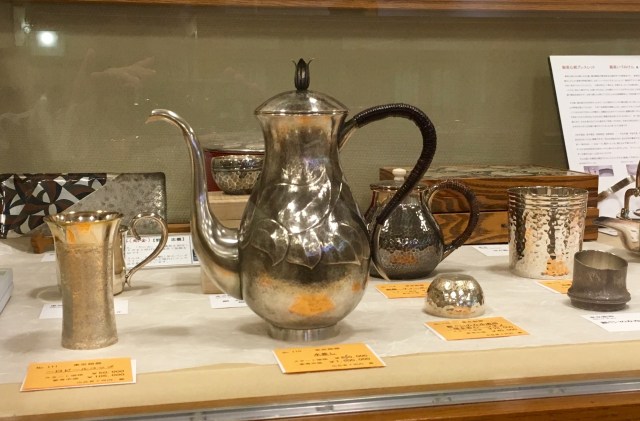
I had high hopes for this exhibit which were, alas, not quite met. The most interesting thing I learned in my visit is that Japan had (and may still have; my Japanese isn’t good enough to confirm or deny) a vibrant sterling silver crafts tradition. I am particularly fond of the Arts and Crafts movement of the 1880s-1910s in Europe and the US which finally managed to migrate to Japan in the 1920s. Here are some lovely examples of the period:

Crafts Silver

Accompaniments to a gracious life

The next venue deserves a whole blog of its own, but I don’t have the time or mojo to manage that today. Instead, I’m just going to suggest that if you *ever* get to Tokyo, you really can’t miss the Edo-Tokyo Museum, dedicated to the Edo period (1603-1868) but including some very interesting exhibits on the 20th century including some truly poignant material on World War II and its aftermath. The building itself is pretty show-stopping:

Edo Tokyo exterior

Keeping a sharp eye peeled for Darth Vader

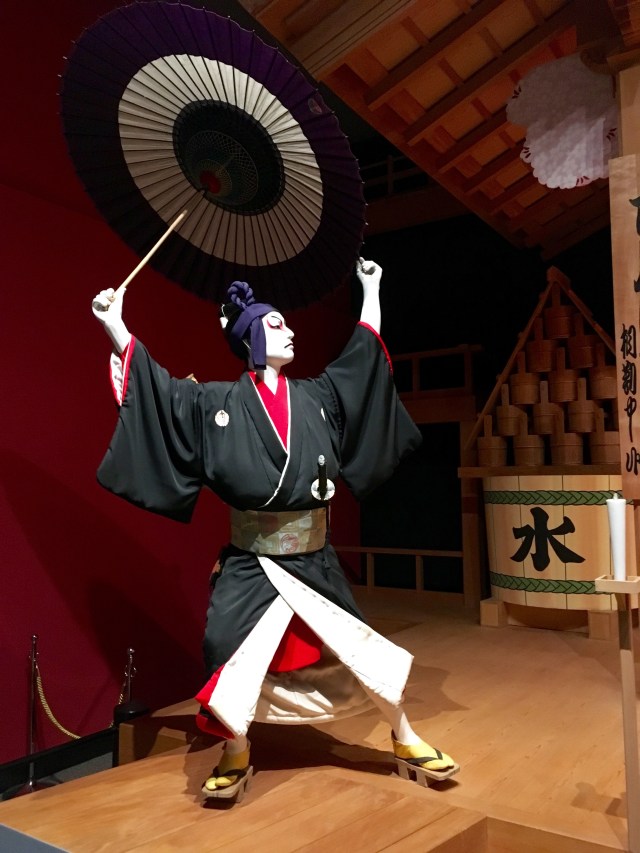
Floating five and six stories above the ground, the enormous structure allows the life-size recreation of multiple large structures including buildings, ships, even the entire Nihonbashi bridge as well as numerous sprawling urban dioramas. I’m going to give you the executive summary of this amazing place with a couple views. First up is a beautiful shot of a Kabuki actor (mannequin) in full regalia:

Edo Tokyo Kabuki

Singing in the rain…

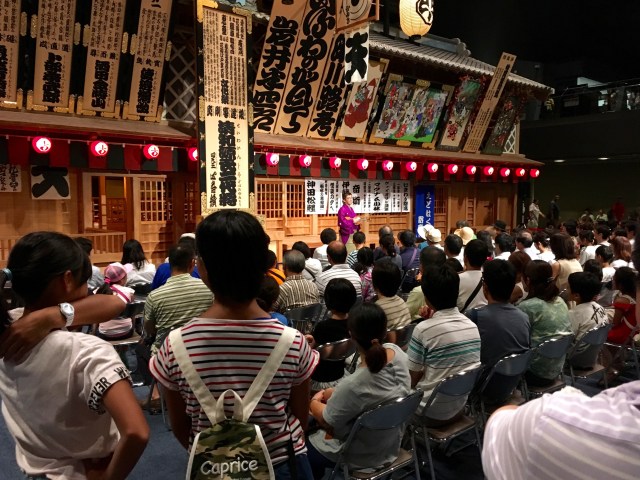
…and then a look at a live musical presentation to an appreciative audience played in front a a full-size replica of a popular theater of the day:

Edo-Tokyo violin

Musical interlude

If you have the chance, just.go. “Nuff said.

So after homage is paid to national treasures, I’m a great fan of museums that celebrate the small and unsung. This trip I stumbled across a couple of these that came as a complete surprise and ended up being absolutely fascinating. The first is the Tobacco and Salt Museum:

Tobacco sign

Best ingested separately

Since neither of these substances were indigenous to Japan, I found this focus quite remarkable. Salt worldwide, I learned, is relatively easy to harvest as either a mined product (as in Europe) or collected by the seaside (as in extremely warm countries such as Israel and India). Japan was not so lucky.  “Since ancient times in Japan salt has been produced using a unique method: by making salt concentrate (about 20% salt) from seawater as the first step, then by boiling down the concentrate to crystallize the salt. This method is necessary because there are no salt lakes or rock salt in Japan and because salt production using natural solar evaporation is not suitable in the Japanese climate of heavy rainfall and high humidity.” If you haven’t browsed “Salt: A World History” by Mark Kurlansky, you really should.

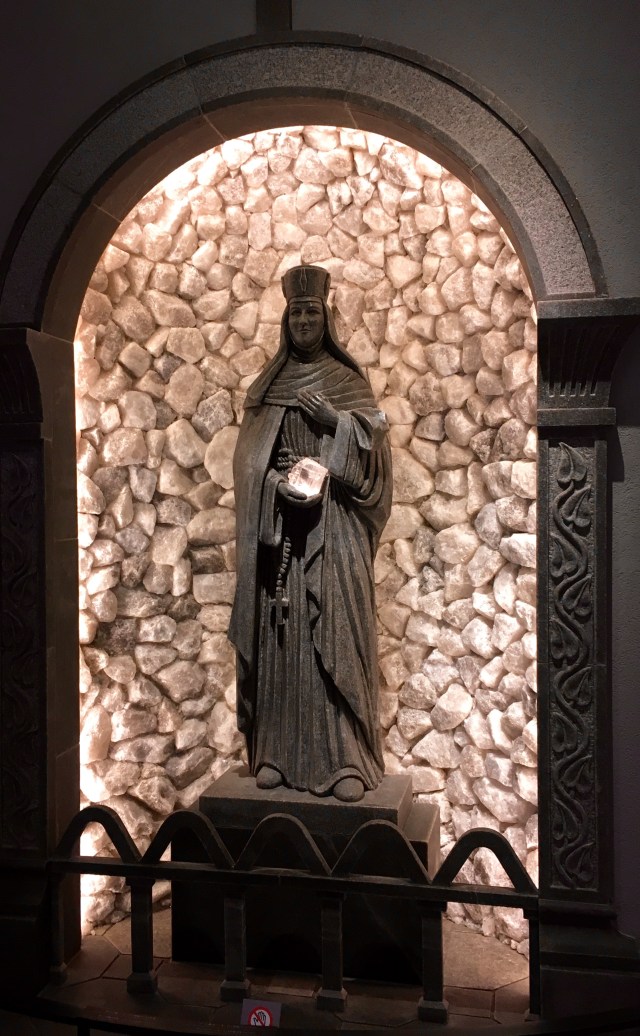
This museum, however, celebrated one of the European centers of salt production, Wieliczka, Poland. It did so by showcasing a life-size statue of St. Kinga, the Hungarian princess who married a Polish prince in the 13th century and became the patron saint of miners when she insisted her dowry consist of salt rather than gold since it was more critically needed by the people.  Here’s herself made, of course, entirely from a block of Polish salt:

St. Kinga

Praying for popcorn

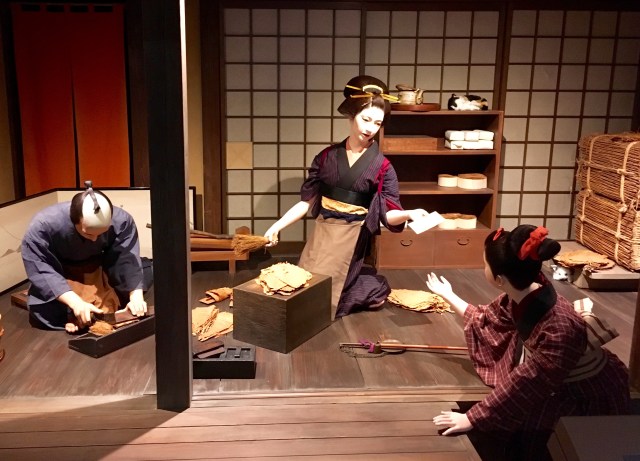
Tobacco, of course, came initially from the Western Hemisphere, making its way to Japan as part of the global exploration and trade that occurred from the 16th-18th centuries. Once it arrived in the East, however, it quickly became widespread and popular. Here’s a scene from a tobacconist’s shop:

Tobacco in Japan

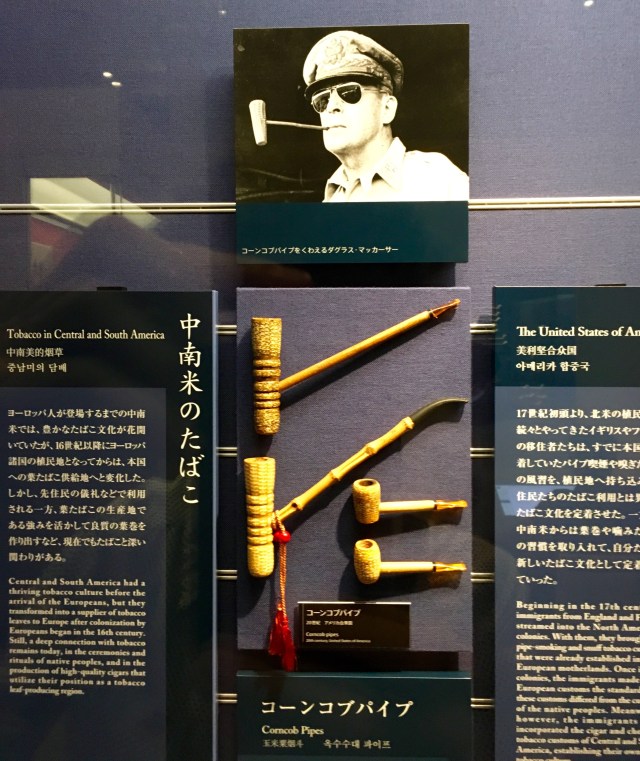
…and in what seems like a slightly ironic twist, here’s a picture of General McArthur, the Supreme Commander of Allied Forces who oversaw the postwar occupation of Japan, with his pipe collection…

Tobacco McArthur

But he’s *our* occupier.

Here’s one final curious museum which I simply could not pass up, being the life-long leather addict that I am:

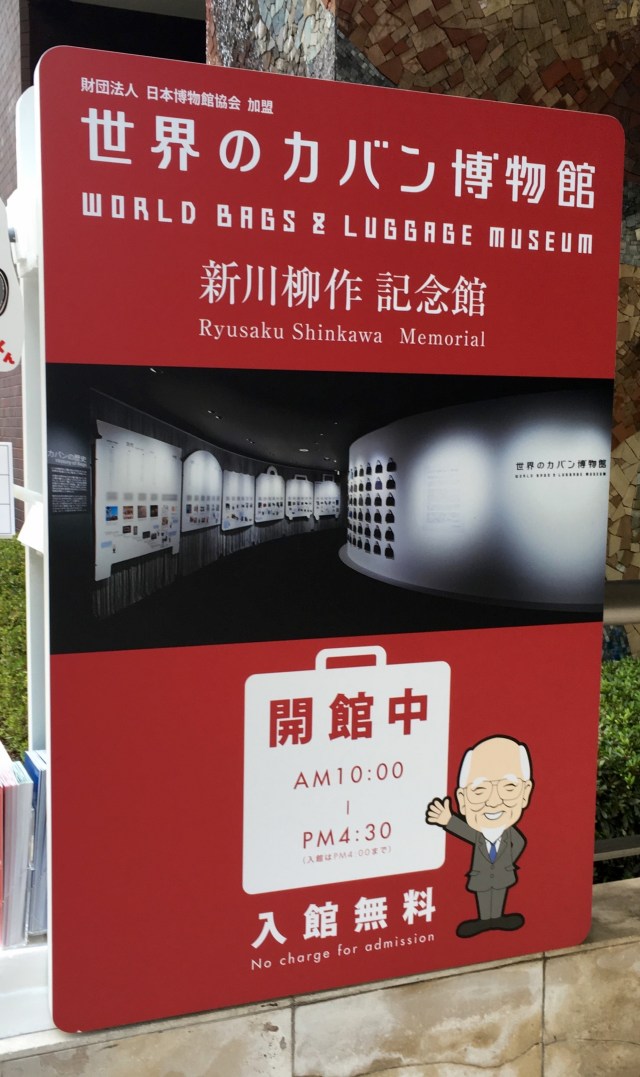
Bags sign

Let me get this right. A *museum* dedicated to bags and luggage *from around the world?* Be still my beating heart. And in addition, it’s free? Actually, it was two exhibits in one. The first floor described the evolution of carrying containers, luggage, and women’s handbags over the centuries and then included some of the global superstars of luggage, briefcases, and handbags from around the world. The second floor was a display in commemoration of the founder of ACE luggage, Mr. Shinkawa, whose life and career spanned most of the 20th century and mirrored Japan’s economic and political ups and downs. But first, a shot that will raise the pulse of every inveterate traveler:

Bags travel trunks

Ready for the Grand Tour

…and then, as an exemplar, a shot of a lovely leather product with a keen reminder of where and how those beautiful objects come to be:

Bag crock

Accept no imitations

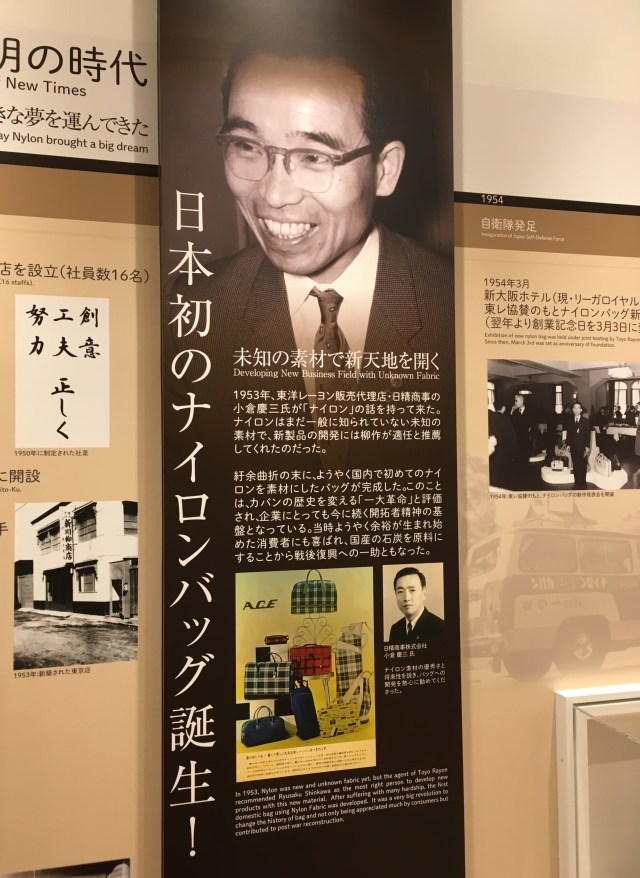
…and finally, a shot of the man himself, the hardworking founder and visionary who brought this company and its products to life and who contributed to Japan’s economic  rise:

IMG_0583

Thanks for the memories

So, surfeit with myriad impressions from the Land of the Rising Sun, I will close the chapter on this expedition. Stay tuned for the next installment….probably back to Europe before too long. Thanks for sharing these wonderful images and adventures with me.

Posted in Travel - Japan | Tagged | 1 Comment

A stroll through Asakusa

Quite by accident, after the end of IUJ and before I headed back to Maine, I booked my Tokyo hotel in an area known as Taito. Once there, I realized I had landed on the edge of one of the more interesting (to my mind) areas of the city. It’s roughly a square kilometer of temple complex + pedestrian walking zone + “low” neighborhood and is characterized by charming historic elements and an interesting tendency of the locals to don traditional clothing and walk around looking like geishas and warlords. This, my friends, is the district of Asakusa. Tokyo Travel tells us that “during the Edo Period (1603-1867), when the district was still located outside the city limits, Asakusa was the site of kabuki theaters and a large red light district.”

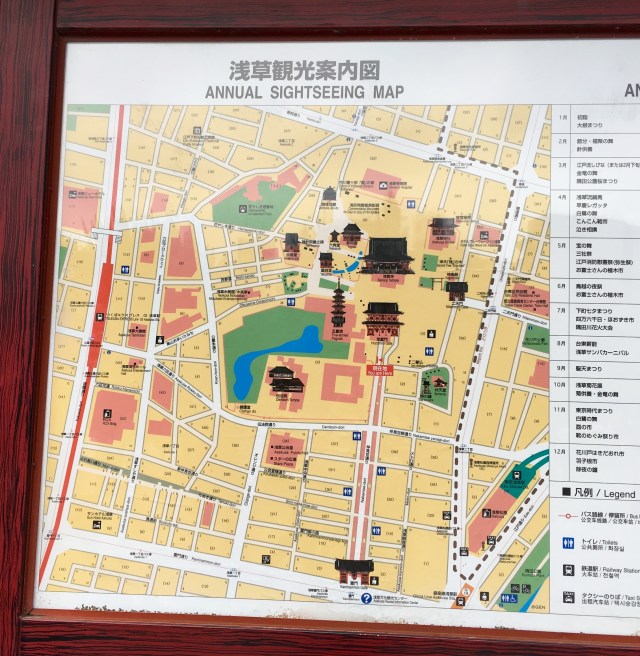
Asakusa map

The only red that I saw was on the buildings (*annual* map?)

As you can see, this is quite an extensive area. Happily, many of the streets have only foot traffic and several are covered against the elements as well. Most importantly, the area surrounds the Senso-ji, a popular Buddhist temple. Here’s a shot of the temple’s main entrance gate, the Kaminarimon or “Thunder Gate,” located just above the tiny blue question mark seen at the bottom of the map:
Asakusa gate

“Say ‘Sensoji’!”

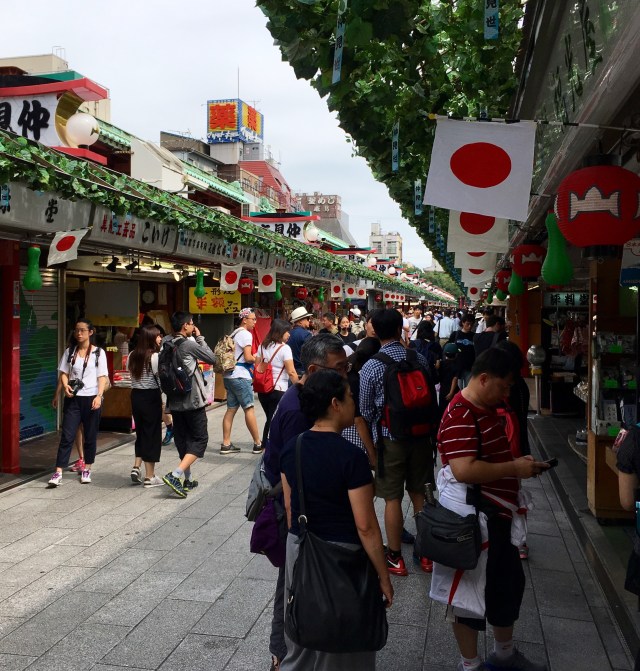
Popular with locals as well as tourists, this whole area place stays pretty busy all day long, even in the steamy August heat and humidity. Directly through the gate above, one finds oneself at the beginning of the Nakamise-Dori, a shopping “street” filled with 89 shops which looks, in a Colonial Williamsburg-type way, a good bit as it must have looked during its heyday, rebuilt and updated for the 21st century…
Asakusa shopping

Really nice kitsch

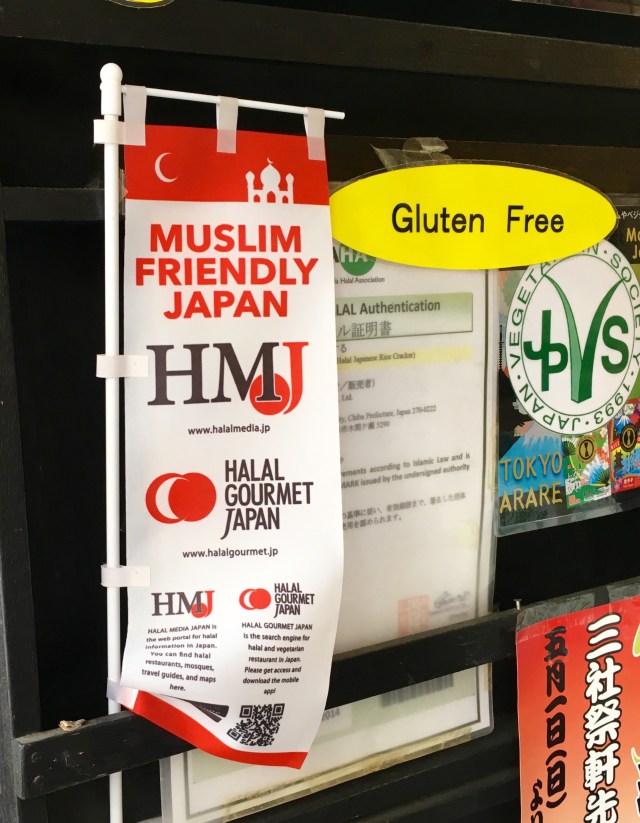
…but with a couple tourist marketing strategies the warlords probably never considered:

Muslim friendly shopping

Not what I expected to see here

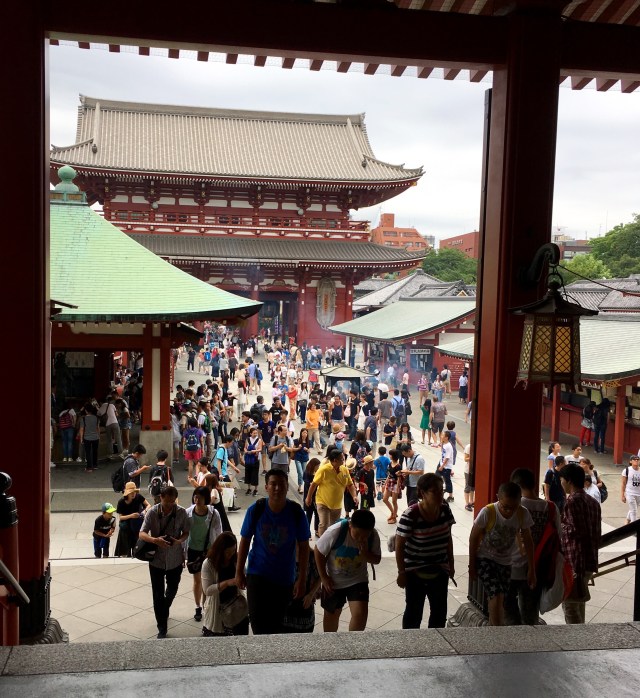
At the end of the Nakamise-Dori, one meets the second gate, announcing that one is leaving the world of mammon and entering the area of worship and devotion:

View back

Temple groupees

The temple, as I mentioned above, named Sensō-ji, is dedicated to the Buddhist bodhisattva Kannon. It is Tokyo’s oldest temple, initially founded in 645 CE  and continuing to be one of the most architecturally significant in the country, although much of the complex was rebuilt after the bombings of World War II.

Lots to do here for the faithful. “Within the temple itself, and also at many places on its approach, there are o-mikuji stalls. For a suggested donation of 100 yen, visitors may consult the oracle and divine answers to their questions. Querents (those who query) shake labelled sticks from enclosed metal containers and read the corresponding answers they retrieve from one of 100 possible drawers.”

She loves me, she loves me not...

She loves me, she loves me not…

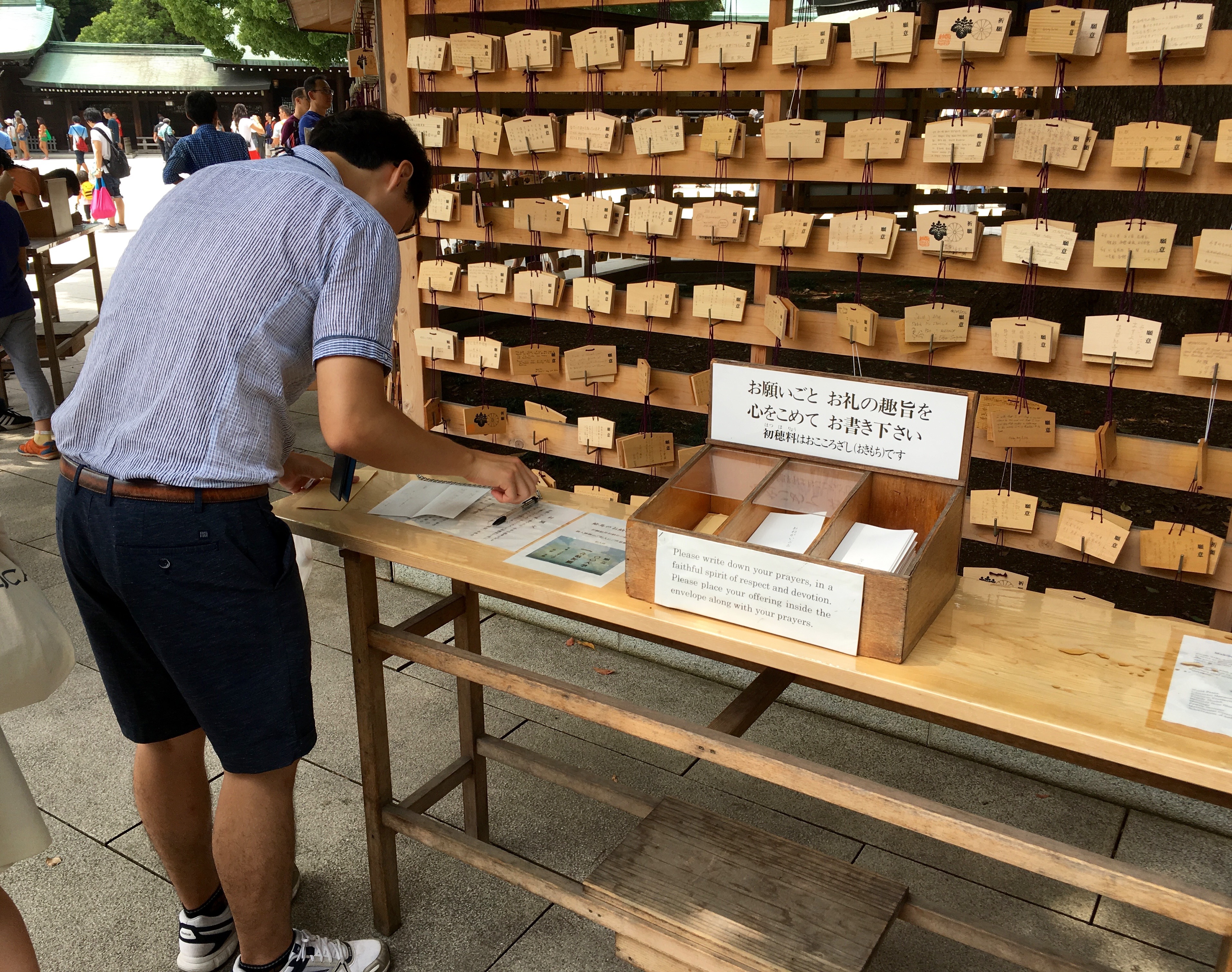
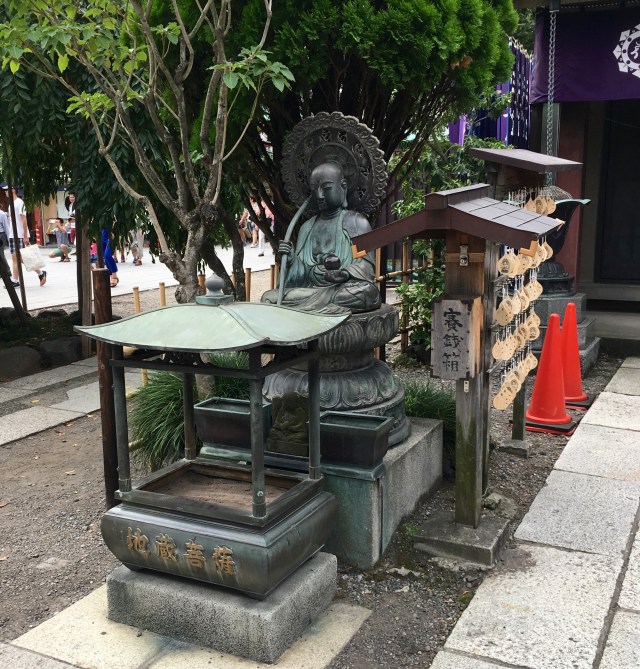
In addition, one can offer wishes directly to the bodhisattva:

Beg the Buddha

Taken under consideration

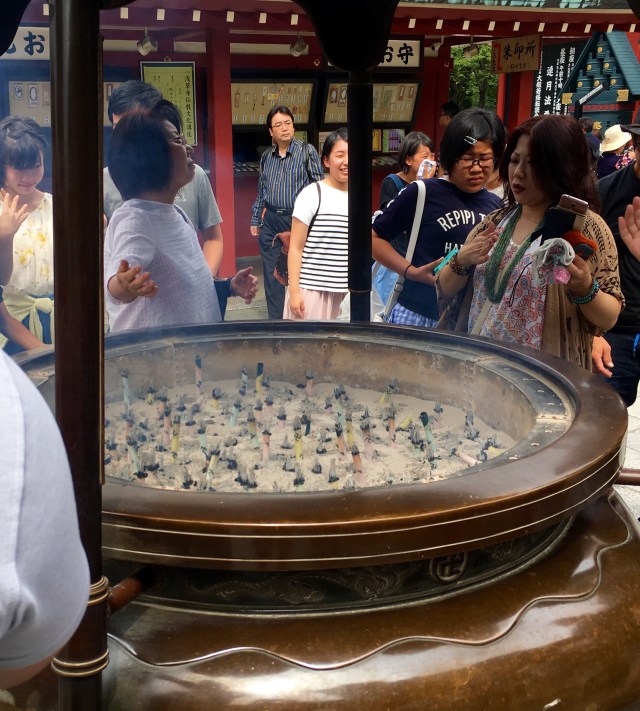
…and stop for a moment to inhale the incense…

Incense

The sweet smell of the spirit

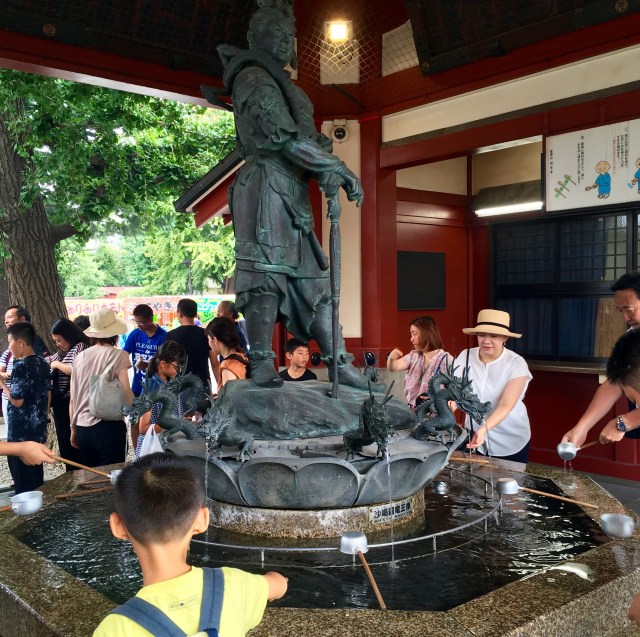
…and finally to drink and rinse one’s hands in the fountain…

Fountain

Wash away your troubles

We were not allowed to take pictures of the inner sanctum of the nearby temple, but it had lots of gold and was lovely. (I resisted the impulse to acquire one of the myriad semi-precious stone bracelets that had been blessed and were available for purchase.)

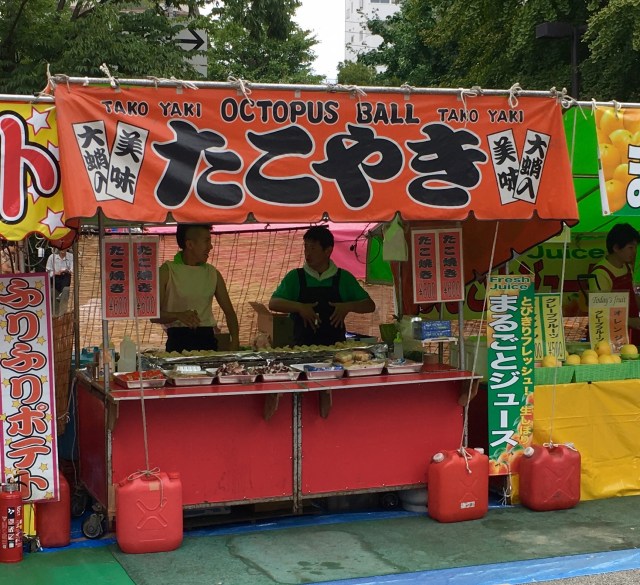
Just outside the central temple complex, hungry pilgrims could pick from a number of comestible delights available. Tempting as they were, I resisted the options shown below:

Octopus Ball

Only one?

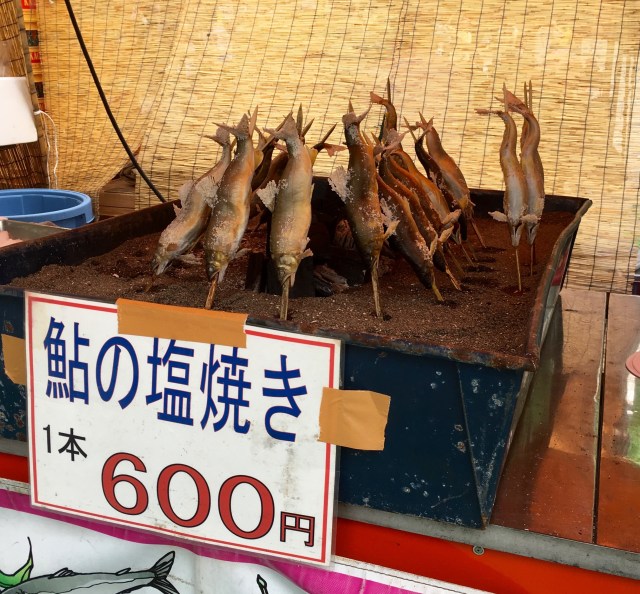
Fish on a stick

Fish on a stick

…and to wet your whistle, one of my favorite Japanese beverages (at least from the name; I have actually never tried it, for obvious reasons):

In bottles?

In bottles?


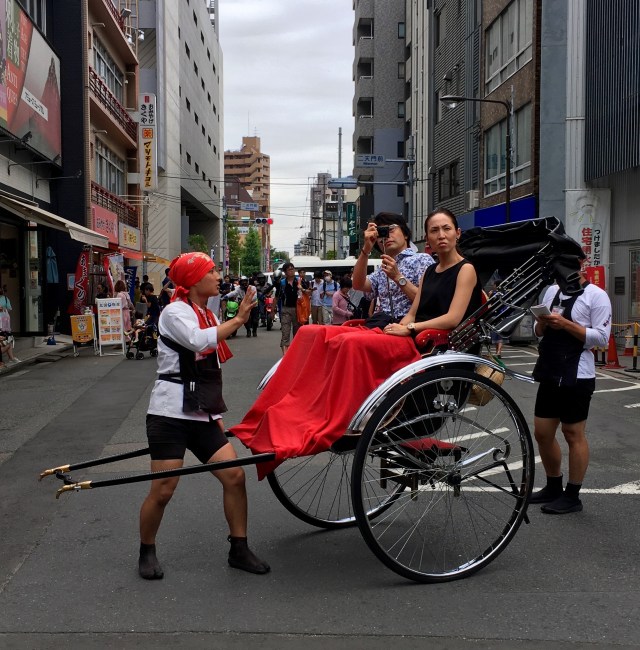
Once finished temple-exploring, there were even era-appropriate modes of transport that would take you off to your next Asakusa destination:

Travel in style

I am not amused

…and with that, we leave this lovely oasis in the city and move along to the next adventure.

Posted in Travel - accommodations, Travel - Japan, Travel - religious sites | Tagged , | 2 Comments

A Garden for John

Let it never be said that I am not responsive to my readers. It thrills me no end that you join my on my journeys, and when one faithful follower asked for a garden expose, I set out to see what I could do.

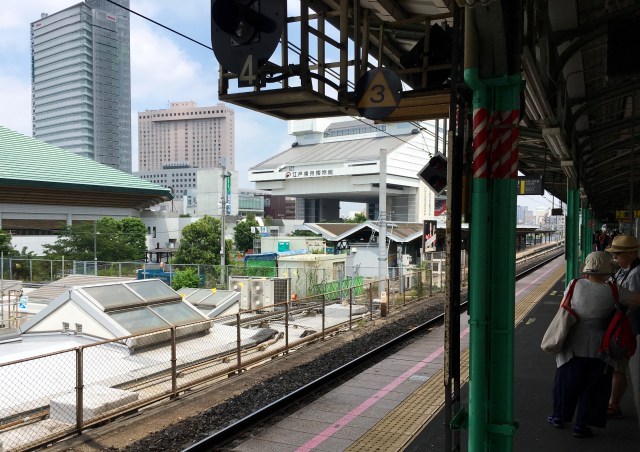
As you are probably aware, much of the time, Tokyo looks a good bit like this:

Cityscape Tokyo

The Edo-Tokyo Museum as seen from a JR platform at the Ryogoku Station

It’s a big big city with lots and lots of tall gray and white and mirrored building and miles and miles of transit systems and countless stores and restaurants and cars, to say nothing of millions of people. So when one finds a quiet green spot in the middle of all that, it’s nothing short of miraculous.

Enter Meiji Jingu. One of the largest parks in Tokyo, located in the Shibuya area and home to some athletic facilities of the former (and future) Olympics, it is also the location of a popular Shinto shrine dedicated to “the divine souls of Emperor Meiji and his consort Empress Shoken.” Apparently 100,000 trees from all over Japan and the world were donated to create a forest in their honor after their respective deaths in 1912 and 1914, and this shrine and the park around it opened to the public in 1920.

Hidden *within* this park is a a slightly different green space, the Meiji Jingu Inner Garden (Gyoen), which significantly predates the 1920 park, having existed  in some form since the Edo period of the 17th century. With its own entrance and a modest entrance fee, this space of roughly one square kilometer with a (reconstructed) tea house, iris garden, azalea garden, fishing hole, and year-round well casts a bit of a magic spell on anyone who takes the extra time to enter.

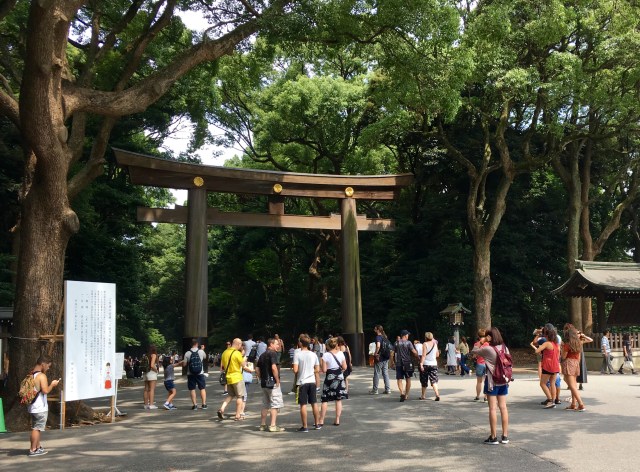
Here’s a shot of one of the entrances to the “big” park:

Meiji Jinju entrance

The southern Torii (shrine gate), one of four in the park

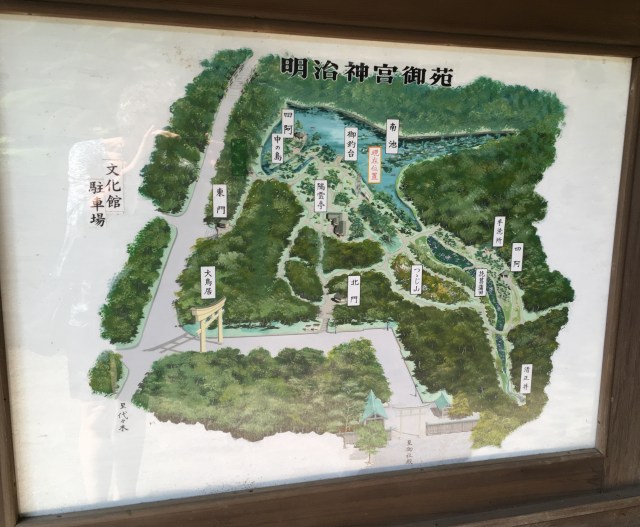
Head up this path a block or so, and on the left you’ll see the entrance to the Gyoen. Here’s a map of what’s contained within the “park inside the park”:

MJ Inner Garden map

Once past the ticket hut, one heads down a flight of stairs away (and north in this picture) from the wide horizontal path seen above. This physical descent serves not only to lead one into the inner park’s distinct space, but also to muffle all sounds from the happy weekend visitors seen in the torii gate shot above. One feels as if one is entering, as the brochure suggests, the “traditional rural landscape of the Musashino,” a region which is now mostly a bedroom community to the west of the city proper.

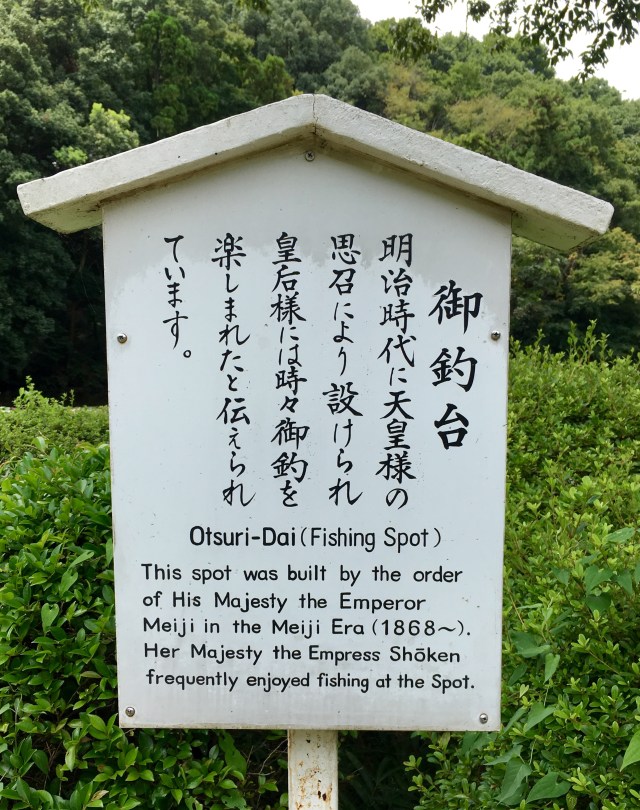
In addition to being a labor of love for the 122nd Emperor and his consort (admirable individuals in their own right), this inner garden appears to be also an homage to the high esteem that the Emperor held personally for his wife. One of the first sights one sees is the fishing hole, “a quiet pond where swim carps, crucian carps, and killifishes, offsprings of fishes released to the pond by Emperor Mieji to please Empress Shoken:”

MJ fishing spot sign

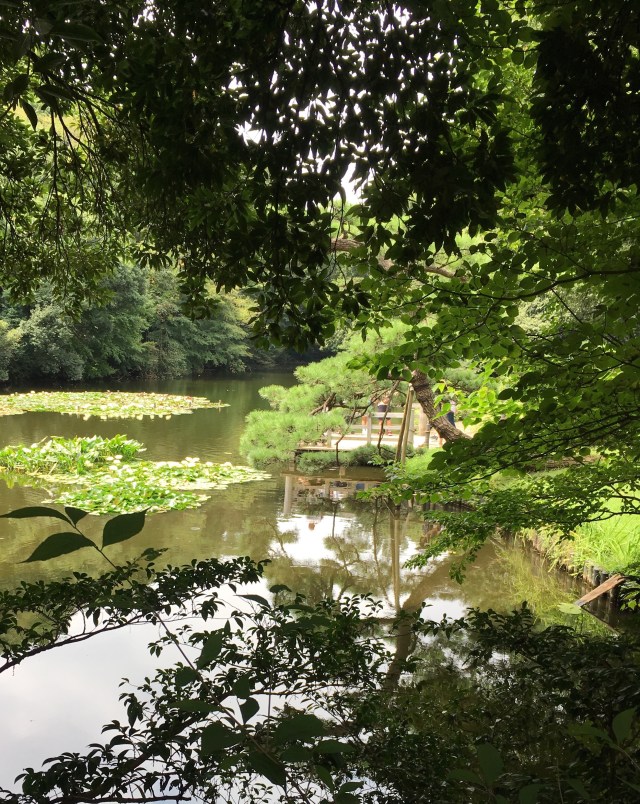
Portraits show Shoken as a thin, reserved and somewhat severe woman, although she is considered to be the founder of the Japanese Red Cross and was dedicated to other worthy causes.  I love the image of her gleefully kicking off multiple layers of ceremonial robes and sneaking down to this little pond with pole in hand, ready for an afternoon of communion with nature:

MJ fishing spot

Carpe Carp

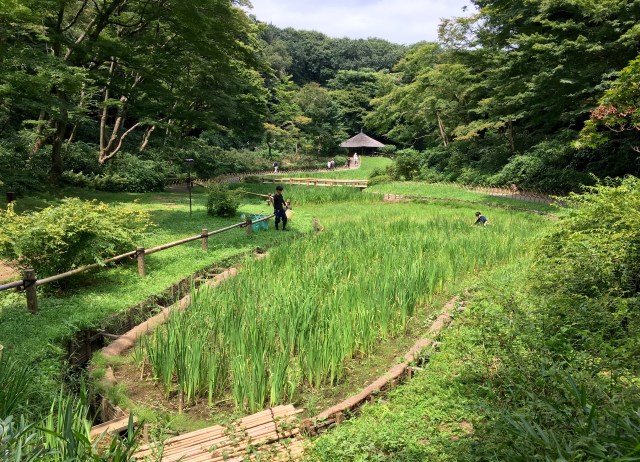
Further along the path, one finds the iris garden, whose glories I have clearly missed this trip:

MJ Iris garden

Sic transic gloria iridium

This patch of ground had been  training paddy field for the children of samurai families during the Edo period “to learn of the importance and the hardships involved in rice cultivation.” But again the Emperor’s care and concern for his wife led him in 1893 to propose that the field”be turned into a garden of irises for the pleasure of the Empress.” And so it was.

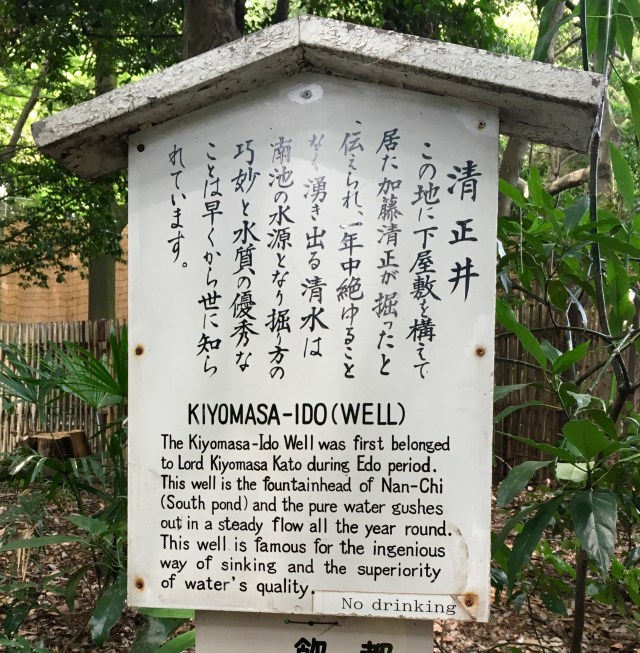
On the far side of the gazebo seen in the back of the picture above is found the Kiyomasa no Ido, or Kiyomasa’s Well. Interestingly, we’re told the water from the well maintains a constant temperature of around 15 C (60 Farenheit) year round “feeling warm in the winter and cool in the summer.”  Until recently, the water was used for tea ceremonies. Are you ready for this? Are you sitting down?

MJ well sign

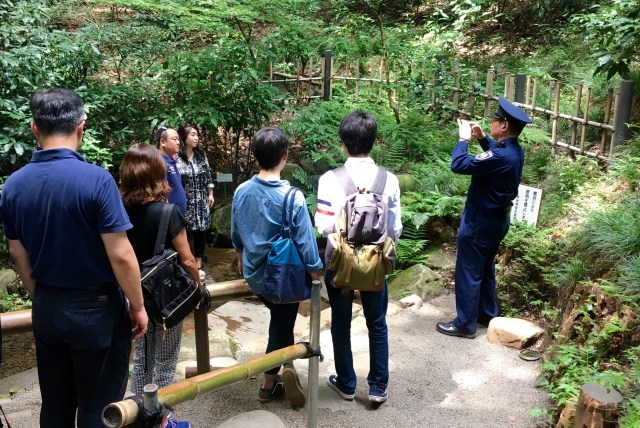
In proper Japanese fashion, we all quietly and respectfully queued up for our chance to see and be seen at the well. Here’s the patient guard, documenting one couple’s visit:

MJ well documented

Say “chizu!”

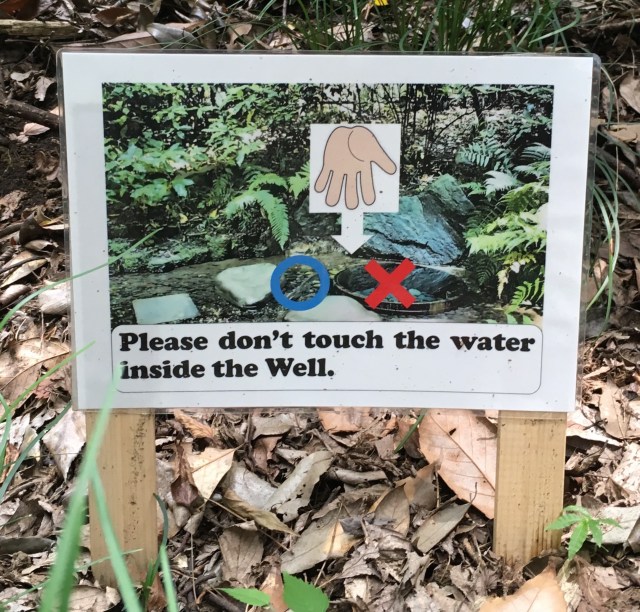
But before you get any wild ideas, here’s the usual Japanese caveat:

MJ well verbotten

…because those irises can’t be too careful…

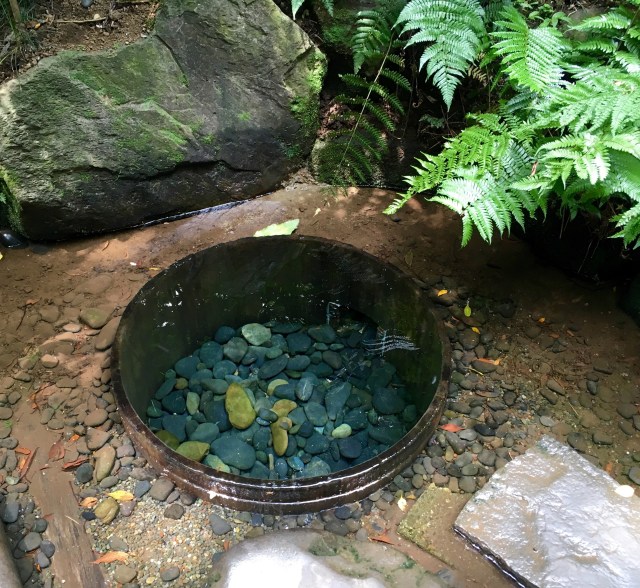
Okay, are you ready? Set? Here you go….ta DA! The well:

MJ well itself

My first well in Japan

The bucket is roughly 18 inches (half meter) across and less than that deep. We all looked at it gravely and started back up the path.

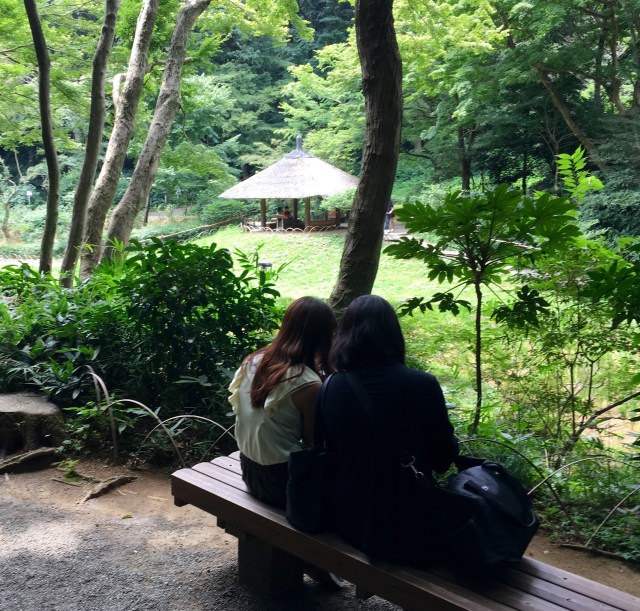
If you know me at all well you’ll know I’m not much of a nature girl. That being said, I really felt the sense of place that inhabits this spot. There is a very different feel here than in the rest of the park, clearly a strong effort on generations of caretakers from nobility on down to maintain the soul of this special little space. If you have the chance, I do recommend it. On the way back out of the Gyoen, here’s a last look at the gazebo seen in the iris garden shot above:

MJ gazebo

Checking the selfies

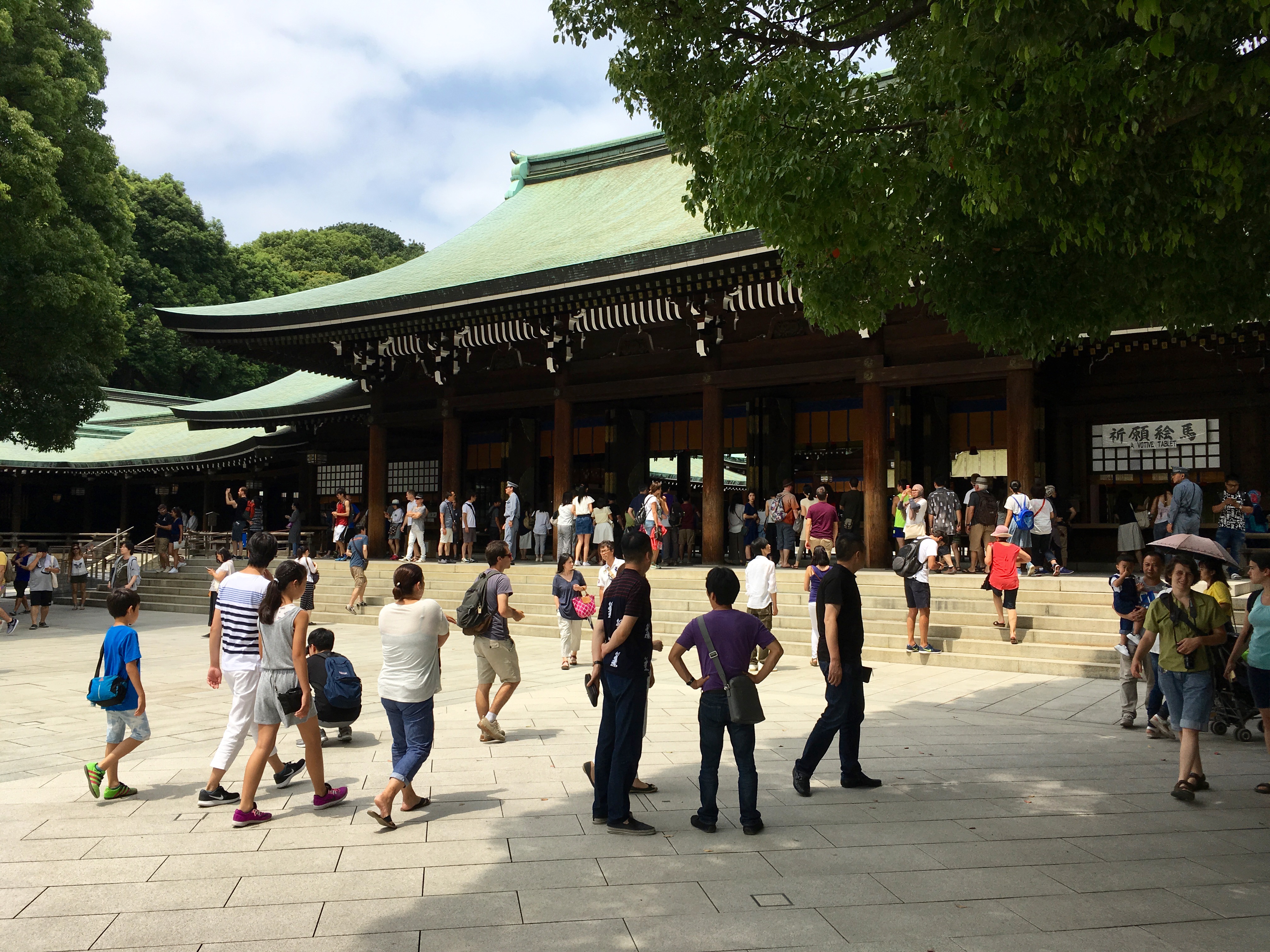
Leaving this “garden within a garden,” I headed further north in the complex to take a view of the Meiji Jingu shrine itself, dedicated to the deified spirits of the Emperor and Empress who spent so many happy hours, one hopes, in the garden I just visited. The graves themselves are not here; rather they are near Kyoto, but this shine was built in commemoration of their reigns and hard work, opening to the public in 1926. Although the original building was destroyed in World War II, this  newer version was in place by 1958.

A fitting memorial to a reign of service

A fitting memorial to a reign of service

All in all, a lovely park in which to spend an afternoon, a peaceful antidote to a busy city.

Posted in Travel - Japan | Tagged | 2 Comments

History on the hoof

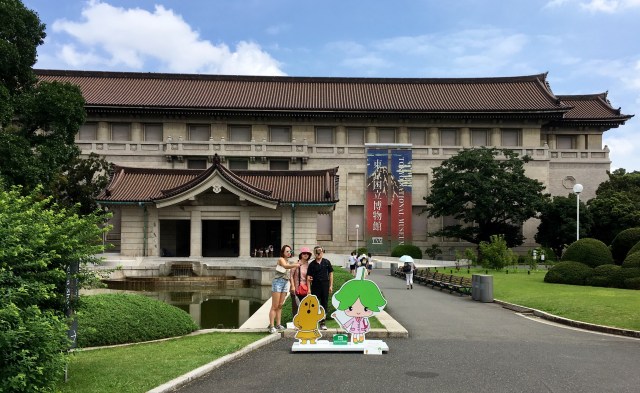
By now, you know that I like to anchor myself in a new city by touching base with key historic and cultural antecedents. This usually means a museum or two, and I have found this is a great way to understand the place and the people a little bit better. Here in Japan, tourist shops selling owl key chains make more sense, for example, if you have seen an early terracotta owl in the museum and thus learned that owls are both considered protection from suffering as well as a symbol of education and wisdom. In addition, the fact that Japan was considerably shaped over its history by influence from both China and Korea puts a nuanced slant on the political events of the 20th and 21st centuries. (Plus, well, I just like museums because they usually have cool gift shops, reasonably priced cafes, and clean restrooms.) So early in my Tokyo stay, off I went to the Tokyo National Museum (TNM).

Tokyo National Museum

Selfie spot

From its brochure, I learned that the TNM has been open since 1872 and has the longest history of all museums in the country, comprised of over 116,000 objects. It is also not just the building pictured above, but rather is a complex of seven buildings and one gate (which is only open on weekends). The pictures in this post are a combination of the exhibits in the building seen above, the Honkan (which focuses on art) and a connected building, the Heiseikan (which features archeology.

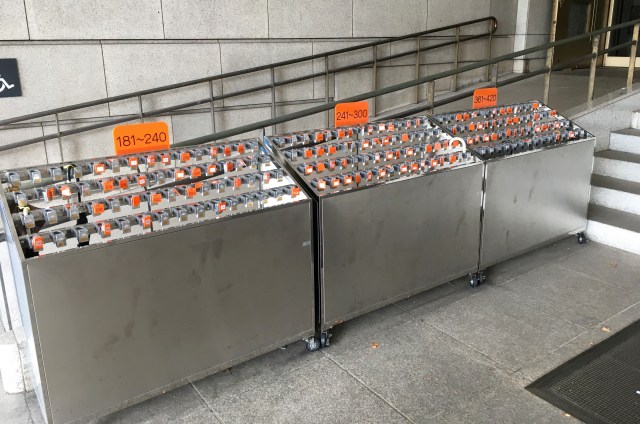
On the way in, though, I spotted something I haven’t seen at any other of the multitude of museums I’ve visited, and that’s a parking lot for umbrellas. Says something pretty definitive about the weather in these parts (and a desire to keep the floors dry):

Museum umbrella stand

Not a dry eye in the house

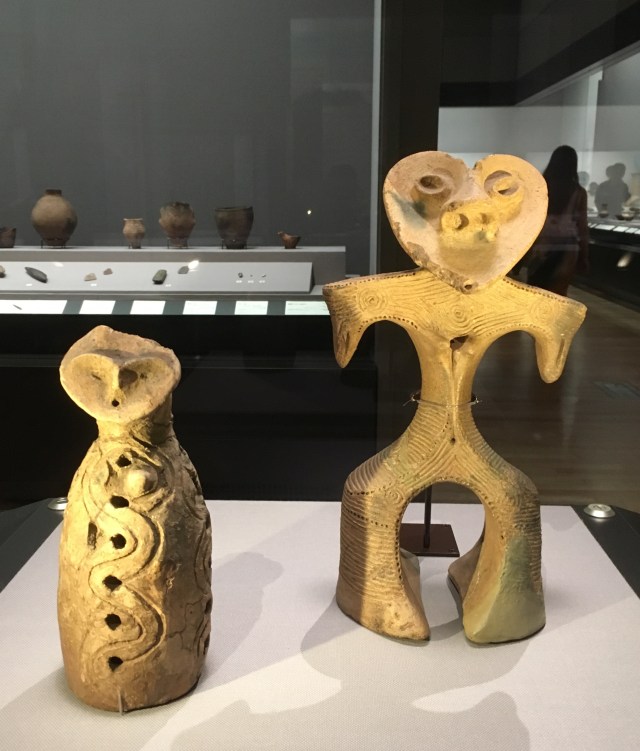
So speaking of owls, here’s a clay figurine of one (on the left) and his friend, dating from sometime between 2000-1000 BCE:

Early figures - owl

“Whoooo’s on first?”

In my dotage, I have become much more interested in, and fascinated by, the artistry of peoples living the the bronze ages, which (depending on region) could be anywhere from 3000 BCE to 1000 BCE. The level of charm and sophistication of dozens of objects that I’ve seen over the past few years has been astonishing, and these are no exception. A little bit later in the game, now well into the CE, here is a variety of terracotta tomb figures, both human and not:

Later terra cotta figures Japan

Designed to go the distance

Like in China, there was a long tradition of terracotta warrior guardians in Japan. (The Chinese warriors, I just learned, may actually have been inspired by the Greeks – see below):

http://www.livescience.com/41828-terracotta-warriors-inspired-by-greek-art.html

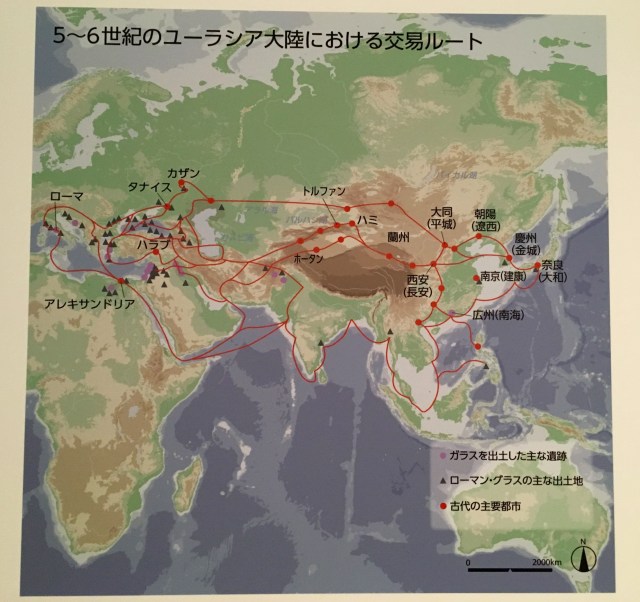
…which brings us to a newly revised version of one of my favorite historic motifs – the Silk Road (really a number of roads), but now extended *to Japan*:

Silk route w:Japan

You are here

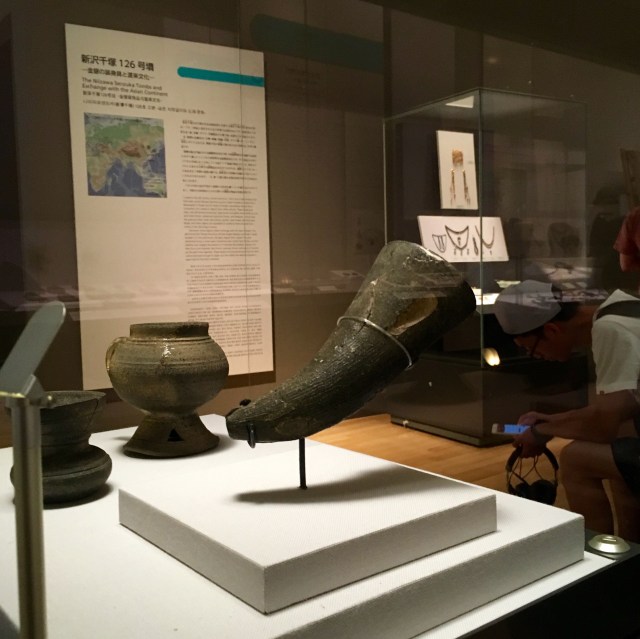
…and with that in mind, here’s a shot of a drinking horn…that looks like a dead ringer for the ones I saw….in Georgia, which *I* can find in the map above between the Black and Caspian Seas. (Might not be so easy for you. Look due north of Saudi Arabia.)

Drinking horn

“Gaumarjos!” er, “Kampai!”

No visit to a historical museum in Japan would be complete without acknowledgement of the role played by the samurai warrior class who ruled Japan for the better part of 700 years from the 12th through the 19th centuries. Here’s some armor from the 14th century:

Samurai dress

Yikes

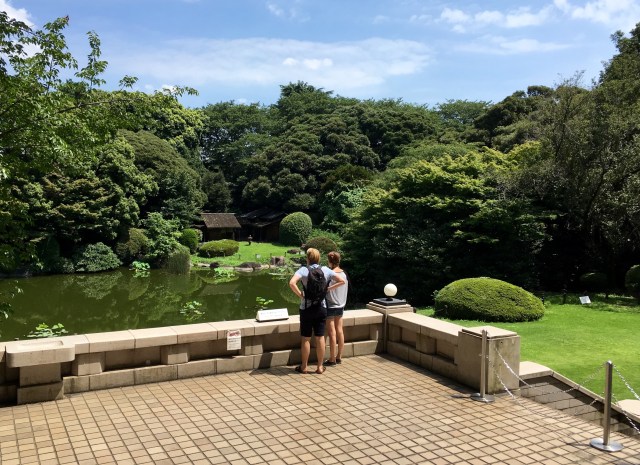
But before I scare you too much, I want to share that the museum has a beautiful garden behind it, open only for special occasions, although the rest of the time,we plebs can steal a peek. On a warm summer afternoon in the world’s largest metropolitan city, here’s a shot of peace and tranquility:

Museum garden

…and with that switch to a more peaceful setting, here’s a Buddha from the 13th century or so, Buddhism having arrived in the 6th century CE:

Buddha

His “mudras,” or hand gesures, signal “harmony” in this sculpture.

That’s probably about enough history and culture for one day – I’ll bring you up closer to the present tomorrow with a story about my stroll around the Asakusa neighborhood, a charming reminiscence of the Edo period (17th-19th centuries). Until then, mata neh! (See you!)

Posted in Travel - Japan, Uncategorized | Tagged | 4 Comments

A Taste of Tokyo

If you’ve been paying attention, you will have noticed that although I had the best intentions of trying to squeeze some fresh juice from last year’s IUJ lime wedge, I was spectacularly unsuccessful. That is not to say that I didn’t have a lovely five weeks teaching with two inspiring sets of students and a delightful posse of colleagues, just that this summer was, in form and content, remarkably similar to last (albeit with slightly cooler temps). Just to prove, though, that I wasn’t just sitting in one of the locally famous sulpher-scented onsens (hot tub spas); here’s a shot of my wonderful academic writing students:

IMG_0207

Taken at our mid-term bash a couple weeks back, this photo shows a beautiful group of young women and men hailing from (upper left to lower right) Uzbekistan, Indonesia, Bangladesh, Japan, Japan, Cambodia, (me) Japan, Thailand, Japan, and Japan (the wild guy). The non-sequitur samurai in the lower right hand corner is Ron, a fellow faculty member. My students all wrote heartfelt messages on the back of this postcard – I will treasure this warm momento of our time together.

So over the past two or three days I have written, peer-proofed, printed and handed in all the grade reports; cleaned out my stall, did laundry, packed my bags, returned my bike, bike lock, id badge and photocopy card, keys, sheets and towels, and said fond farewells to the good folks in Urasa. Hopefully I will see them again next year.

It was good fortune today that another faculty member, Corey, was leaving on the same train as I, and we were able to chat during the ride down to Toyko and then toast the summer over a quick brew at a Victorian Pub (!) in Ueno Station. It’s always nice to taper down with one of the gang – an easier detachment.

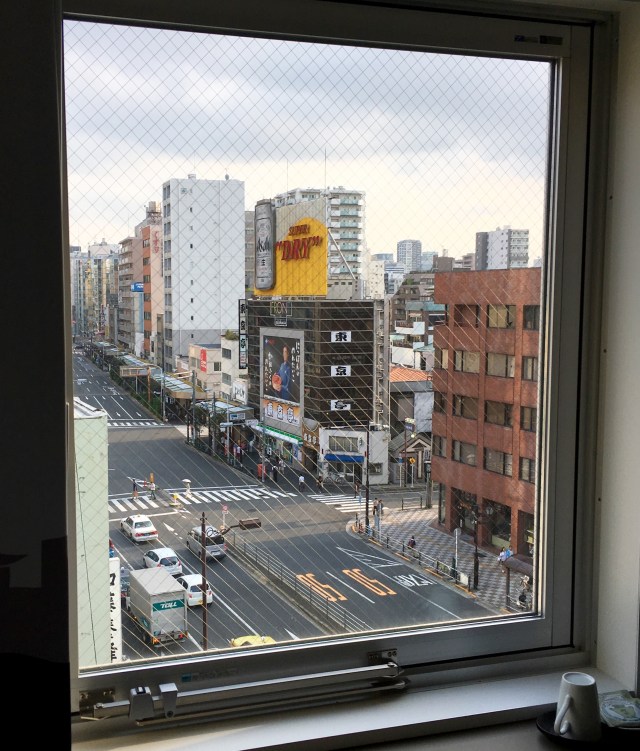
But now, here’s proof that I’m not in Kansas, er, Urasa, any more:

IMG_0205

This is the view from my sixth floor hotel room in the Taito City area of Tokyo. I’m going to spend the next few days exploring the city in depth before meeting my junior high school pen pal (!!) on Monday and then flying back to Portland on Tuesday. In just my preliminary stroll around the neighborhood this evening I can see that there are all sorts of adventures to be had and stories to be told in this amazing megalopolis of a city. J will know what I mean when I say Beryl has reawakened. For the rest of you, just stay tuned. More soon.


Posted in Travel - Japan, Uncategorized | Tagged , | 2 Comments

En route to IUJ

Getting to my summer school, the International University of Japan, requires a lot of moving parts. First, I head to the airport in Portland, Maine. From there I hub through Chicago before climbing on the long flight to Narita Airport, where I overnight. Then, it’s time to navigate the  50 miles (nearly 80 km) to the Tokyo city center to catch the shinkansen (bullet train) – imagine, if you will, that  the Boston airport was in Providence, Rhode Island, for example. There are numerous ways to get to downtown Tokyo from the airport, but so far I have opted for the quickest (and most expensive) method *because the kind folks at IUJ cover our round-trip transport costs.* Then it’s onto the shinkansen and about an hour and a half later, 140 miles at bullet speed (although other lines go faster, I’m told), out we pop into a waiting car or van and over to school. Today I’m going to share a little of that journey with you, together with toe-dipping side visit to Ueno Park in Tokyo.

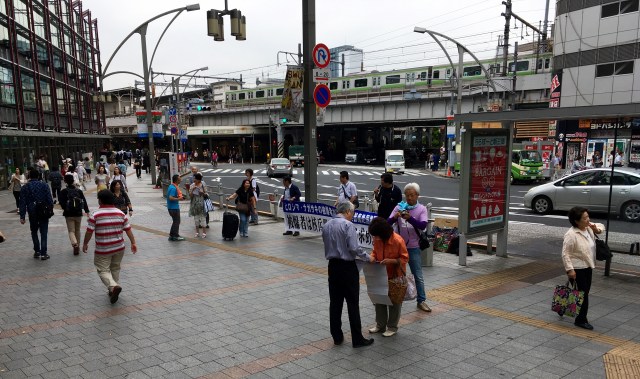
One can catch the shinkansen in “downtown” Tokyo, but I opt for a more northern station, Ueno, because it is easy to reach from Narita and the prices/distances are slightly less. When one leaves the Skyliner at Ueno station, one is greeted by the following typical Tokyo street scene:

Ueno station

Always on the move

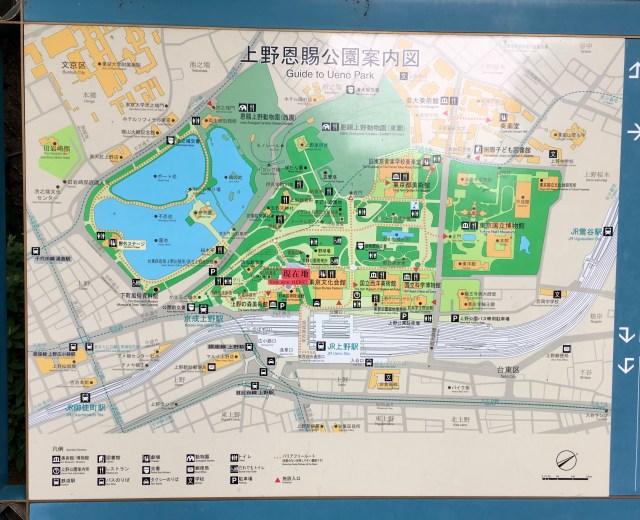
Ueno, an inner district of Tokyo, used to be a modest agricultural region but its main claim to fame is as home to the Kaneiji Temple, a Buddhist complex established in 1625 to rival the great temples of Kyoto. The surrounding area has been turned into a huge city park, filled with temples, museums, statues, a zoo, and even a couple lakes, all located immediately behind me in the above picture, reached by climbing a long broad stairway. At the top, one sees a map of what’s available to explore:

Ueno park map

Red marks the spot

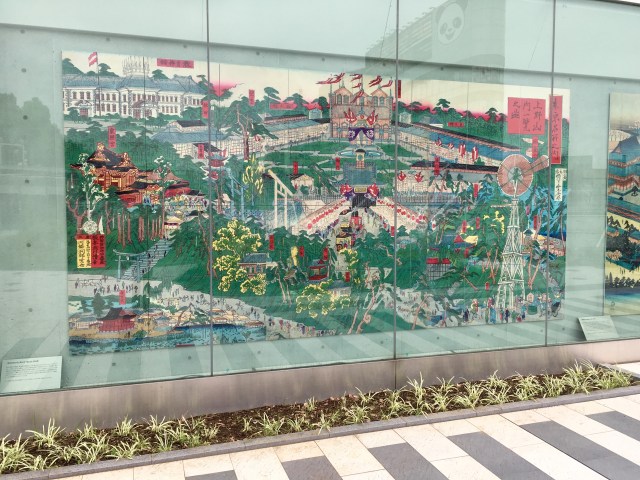
You can see the huge railroad presence immediately below the park – happy placement for me. Here’s a shot of what the park might have looked like back in its glory days:

Ueno good old days

All hail the Tokugawa shogunate

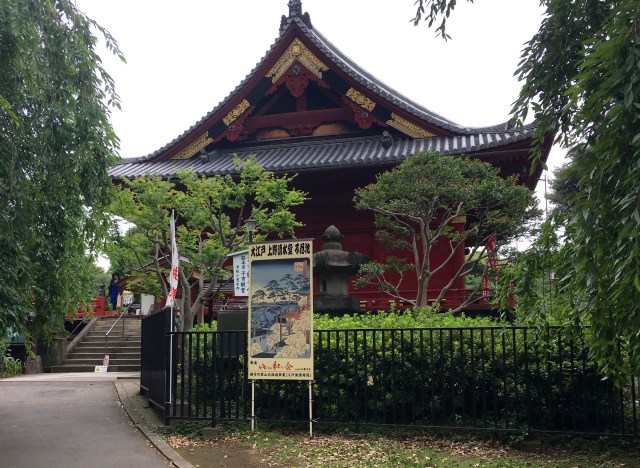
Today it looks less like imperial tournament grounds and more like, well, a park, which is because it was one of the first in Japan to try and emulate the traditioal European park layouts. After paying my respects to the Peruvian musicians who were strumming away in the entrance (!!), I strolled around to pick up some of the local vib. Here’s one of the most famous temples in the park, the Kiyomizu Kannon Temple (if I am correct), dating from 1631. It is surrounded by cherry trees, this park being famous for one of the best places to view those national treasures during the blossom season:

Ueno Kiyomizu Kannon Temple

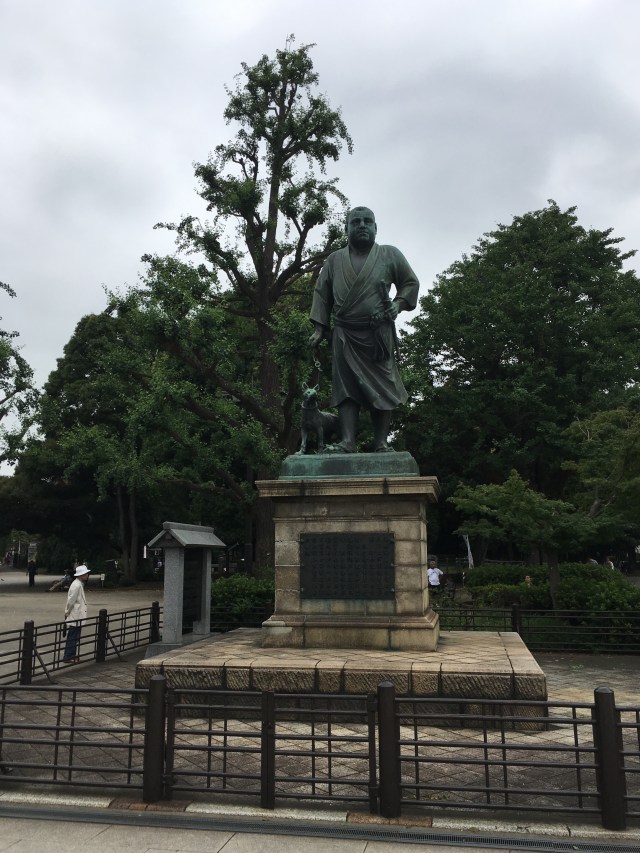
Not far from this temple stands a statue of Saigo Takamore, a famous general in the Battle of Ueno (1868?) and his faithful companion:

Ueno General Saigo Takamori

Always a sucker for dogs on statues

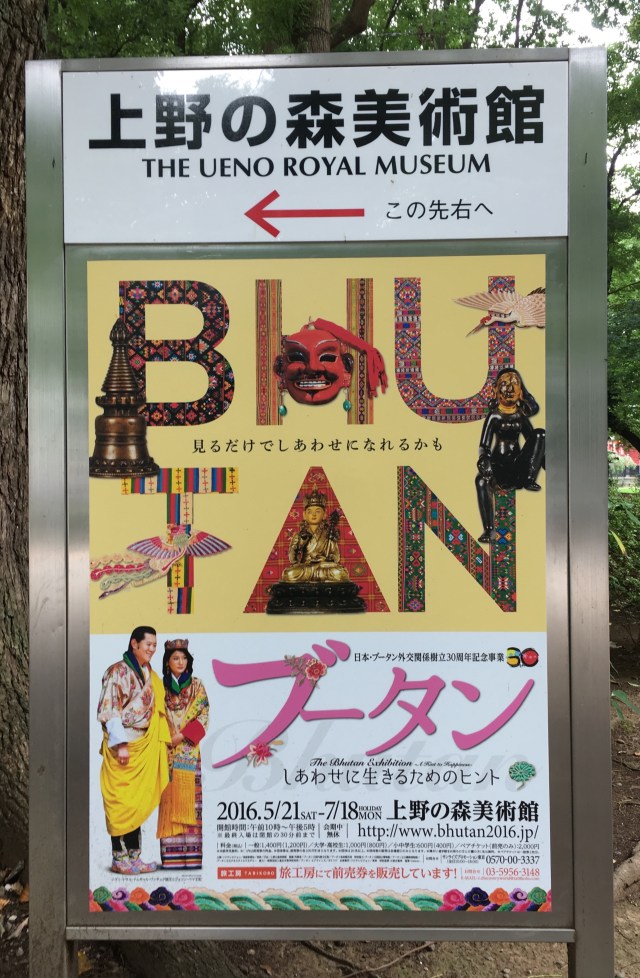
About that moment, I walked by a small museum (there are several much larger and more comprehensive) featuring an exhibit from…Bhutan! What had I ever seen from Bhutan, I asked myself, and when the answer was “Absolutely nothing ever,” of course I had to go.

Bhutan exhibit poster

Leaving no stone unturned

Bhutan and Japan have warm ties of long standing, and this exhibit is capitalizing on that good relationship by this traveling exhibit which contains a lot of handicraft (baskets, swords, cloth), religious items (Buddhist figurines, prayer wheels, scrolls) and a couple videos about the country, featuring individual people talking (translated into Japanese) and information about the monarchy. More about that in a moment. Overall, it was a very gentle, insightful, and charming view into this most fascinating country. I was quite touched.

You know you won’t escape without a little schoolin’ here. A landlocked Buddhist kingdom in the Himalayan range, Bhutan was on the Silk Road between China and India. It developed friendly ties with Britain in the early 20th century, at a time when the monarchy was reconstituted in 1907 after centuries of warlord-ism. The five kings since then have worked extremely hard to bring the better bits of civilization to the country but to maintain its deep rich cultural and religious traditions at the same time. Bhutan originated the concept of “gross national happiness,” and currently sustains its citizens through carefully monitored hydro power exports and limited tourism, in addition to agriculture.

Here’s an example of typical upper-class women’s dress from Bhutan:

Bhutan woman

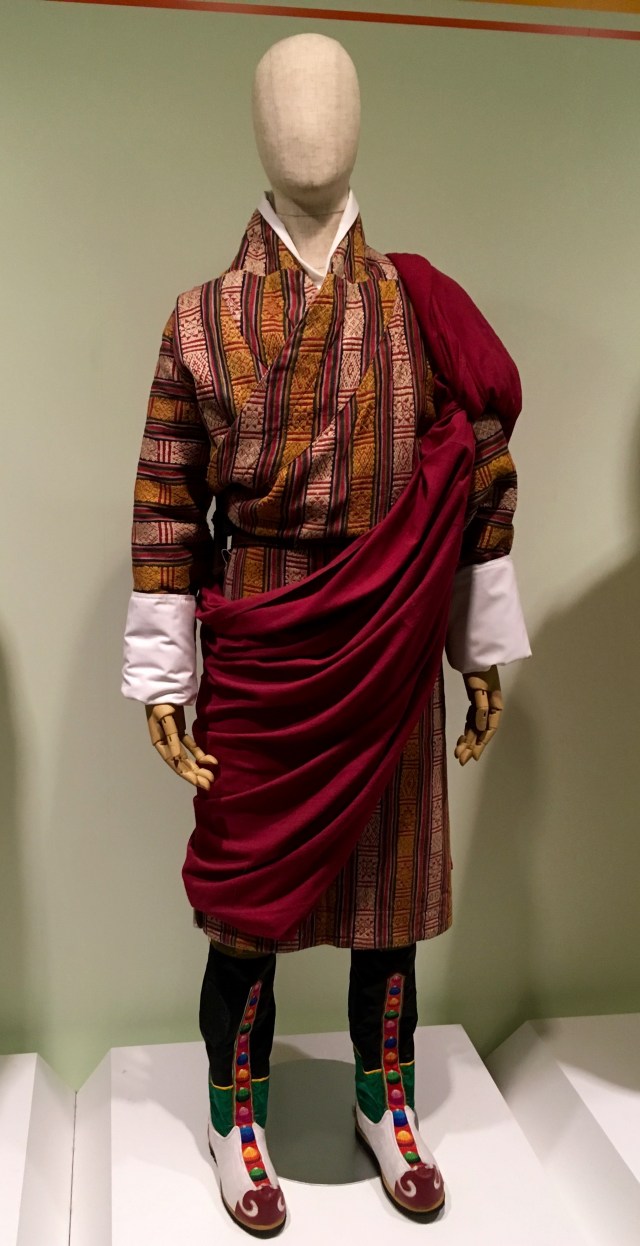
Her consort might look like this:

Bhutan man

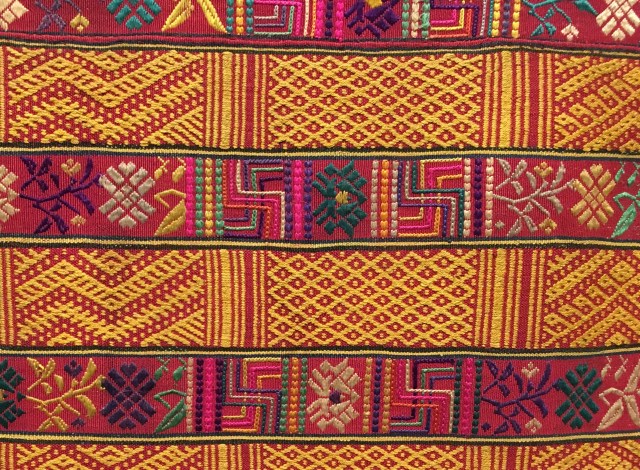
A closer look at the cloth reveals an interesting repeated motif:

Bhutan cloth

Have I been reading too much about WWII or is that…?

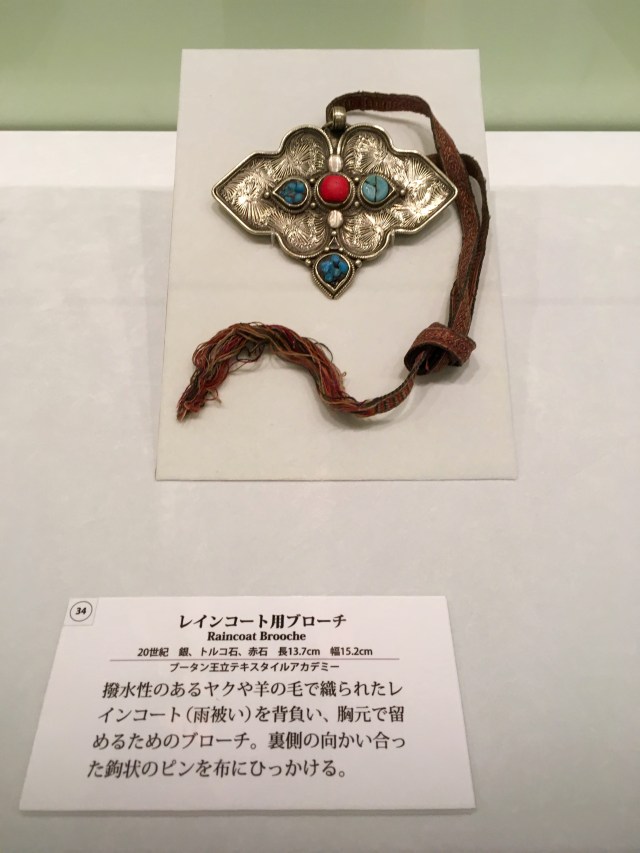
The clothing is held together with beautiful brooches, set with local stones:

Bhutan brooch

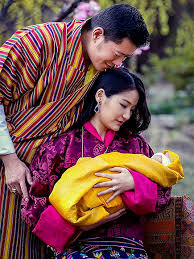
…and pulling it all together, a lovely shot of the King and Queen, shown with their new son, born this year. Known as the “Will and Kate of the Himalaya,” they did indeed host the photogenic British pair on their recent trip (April 2016) to the country:

Bhutan royal couple

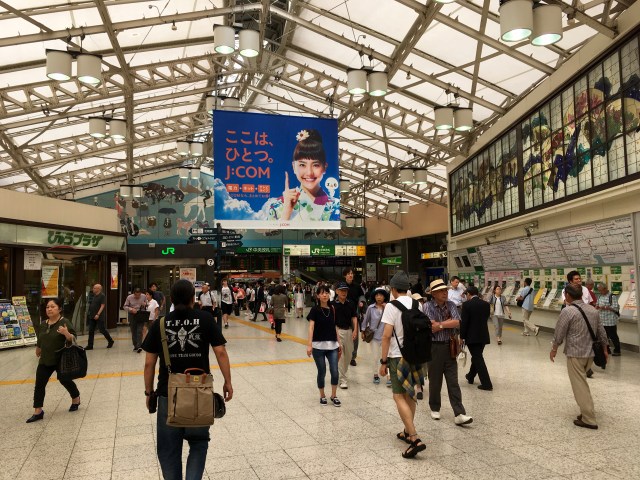
All too soon I had to leave the lovely space of this exhibit and make my way over to the Ueno Station. Here’s a shot of that multi-level, multi-purpose space:

Ueno station interior

Know where you’re going?

Since this is my second year teaching at IUJ, navigating all these venues was a slightly less daunting task than it was last year. Out this door, in this door, down this passage, through these double gates, down the LONG escalator to the platform, find the spot for my car, stand in the right lane, catch the right train (they come every four minutes on each side of the platform; every two minutes a train pulls up), climb aboard, find my seat. Whew.

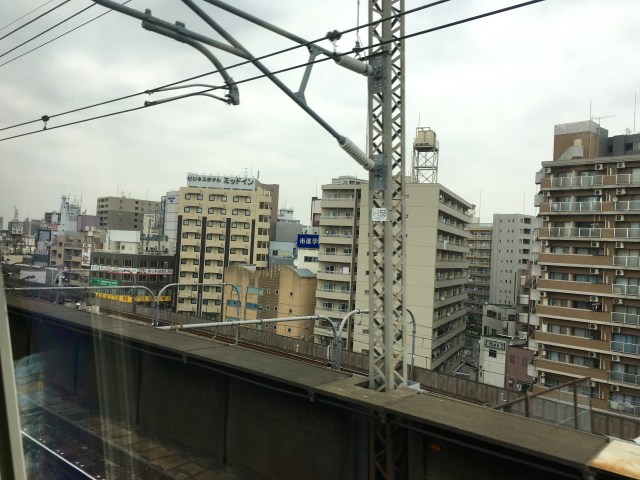
Once moving, one is treated to three main sets of scenery on the way to IUJ. First is the seemingly endless Tokyo urban sprawl:

Tokyo urban

Miles and miles of this

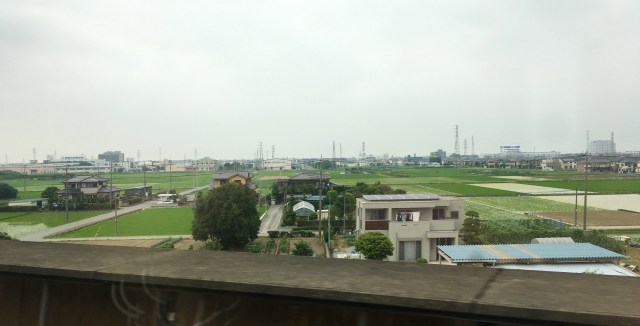
Then, after about 45 minutes and maybe 60 miles, it morphs into this:

Japan suburban

Miles and miles of this as well

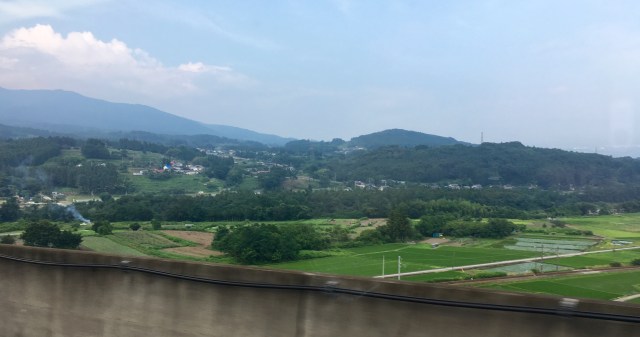
Suddenly, one WHOOSHES through a series of long tunnels and before too long, one has left the gray flatland behind for the rolling and mist-covered series of “Japanese Alps” that signal the arrival into Niigata Prefecture:

Niigata prefecture

(Relative) peace and tranquility

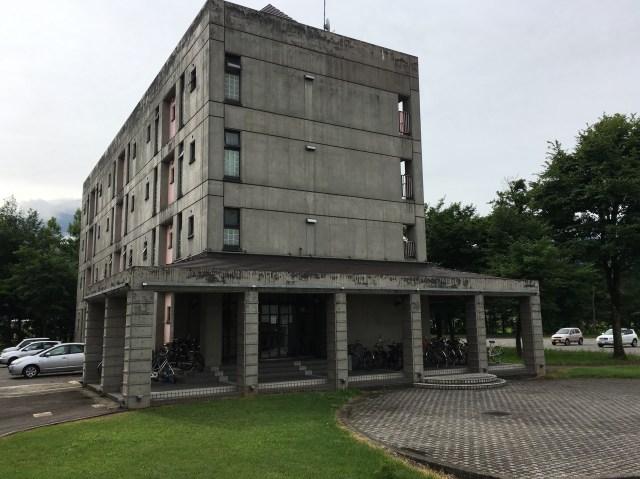
So I’ve arrived back in Urasa, we’re nearly done with faculty orientation (three full days *and we’re all veterans of this program; can’t be too thorough.*) As a parting shot, here are my digs for the summer – the venerable Married Students Apartment building. While it looks as if it could use a good power wash, it is actually quite pleasant inside:

IUJ MSA

Home sweet home on the range

Well, I’ve brought you safely to the end of this journey – stay tuned as the adventures unfold. As always, thanks for reading.

Posted in Travel - Japan, Uncategorized | Tagged | 5 Comments

An Ode to O’Hare

As (perhaps, hopefully –  I have heard there are problems) you can see from the picture above, I have swapped the scenery of urban metropolis for that of rural tranquility, the role of student for that of professor. As I write, I have returned to Niigata Prefecture, teaching for the second year in the Intensive English Program at the International University of Japan.

But first I wanted to share some images and impressions from my time spent in the O’Hare Airport Monday last, en route from Portland, Maine to Urasa, Japan. You may recall I spent some time there last year…

https://portlanddispatches.wordpress.com/2015/07/09/heros-and-good-wishes-in-ohare/

…but as I contemplated a three-hour layover or so, I asked myself the question of how I could make this visit different than the last, extending the question to my time at IUJ as well. I have been accused of being somewhat of a novelty “slut,” craving the input of the new and untested over the old and familiar. So I have challenged myself to see somewhat familiar things with new eyes this summer, to look for stories hitherto untold. And what better way to begin than with a leisurely tour around this aeronautical behemoth?

Wiki tells us that O’Hare was the busiest airport in the world by number of takeoffs and landings in 2014, in 2015 the fourth busiest by passenger traffic.  It has the most number of runways (nine) of any major airport, covering 7200 acres and employing nearly 40,000 people. Any way you slice it, it’s a big operation.

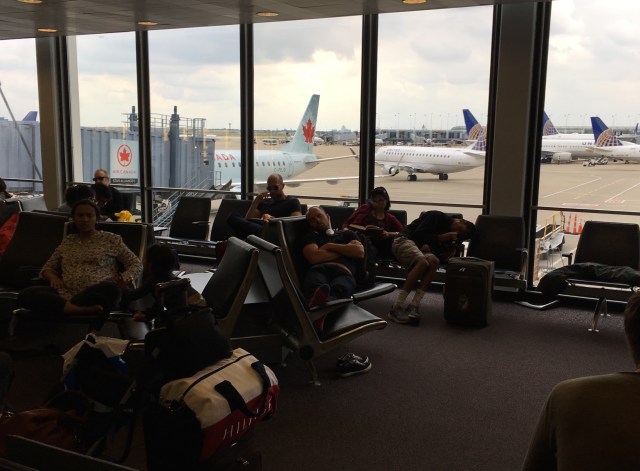
That being said, he easiest course of action for a layover, of course, would be to do what many people do with a few free and relatively unencumbered hours in an enclosed space, and that is to catch 40 winks…

OH - dozers

Sweet dreams

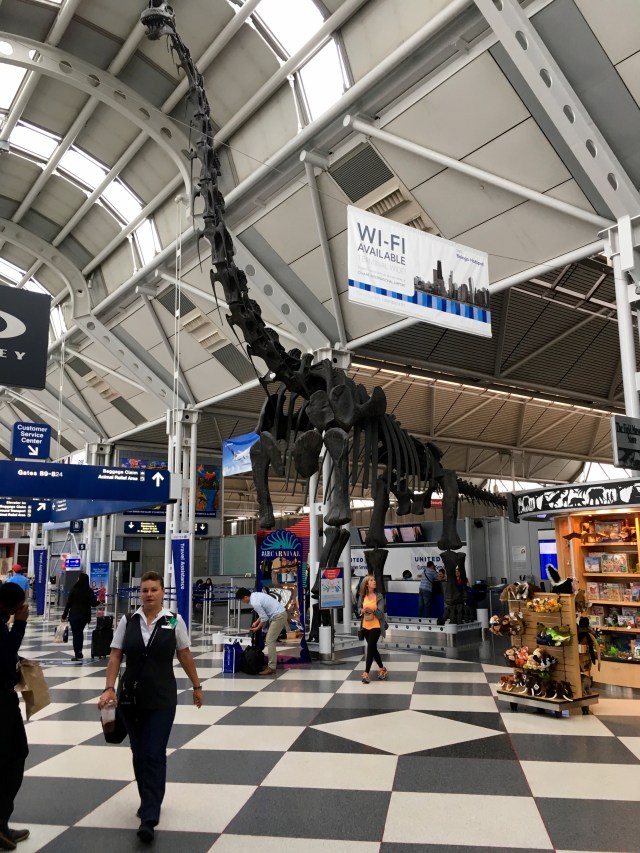
…but as you have probably guessed, I’m too much of a wiggle-bug for any such doin’s, so I left the relative comfort and safety of Terminal 1, Concourse C and headed out. There are four terminals at O’Hare, 1,2,3, and 5, similar to Logan, and most have multiple levels. Getting from C to B requires using the lovely subterranean walkway you may remember from my previous post; but my adventure truly began when I greeted this fellow on the other side, standing guard over the Field Museum (natural history) gift store:

Dino

Little wonder the ceiling is so high

I can’t believe I hadn’t seen this big boy before, but usually one is a bit preoccupied when motoring through these halls; hence my determined efforts to slow down a bit this visit. As I walked through Concourse B on my way to Terminals 2 and 3, I saw the usual airport street scene – customer service desks, fast food outlets, places to buy headphones and rechargeable batteries. So when an interesting mirror caught my eye, I wondered if the nature of the stroll would undergo a similar transformation:

OH - Air Carnival

My version of a “selfie” with my (ahem) new iPhone…

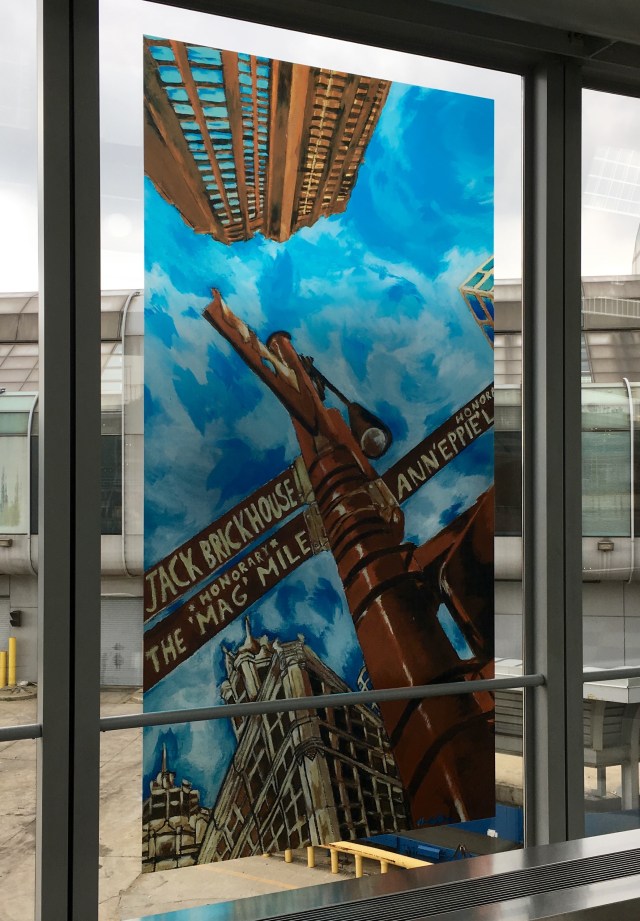
And indeed it did. There’s a lovely curved corridor, lined with glass, that moves one from the relative banality of T1 to T2. Embedded in the glass windows are a set of lovely murals commissioned by the airport and Department of Aviation and painted by teen apprentice painters in 2008 thanks to a program called “After School Matters:”

OH art

“Mag” in more ways than one

But then it truly was as if after leaving this hallway the whole place…became more interesting, more local, more personal. This section, after the glass hallway, on the way to Terminal 2, had some features I had never seen at an airport before, certainly not at O’Hare, but of course that begs the question of whether or not I was looking.

The first interesting feature was a billboard promoting a wonderful new program to support the men and women of our military forces:

Vet tix

No one more deserving

Their website (http://www.vettix.org/) explains what they do: “Vet Tix provides tickets to events which reduce stress, strengthen family bonds, build life-long memories and encourage service members and veterans to stay engaged with local communities and American life…Vet Tix secures tickets to sporting events, concerts, performing arts and family activities across the nation.” Pretty cool idea.

Speaking of folks who are leaning in to the hard issues, here’s another group I had never heard of but which is clearly trying to make a difference:

Alzheimers

A lovely way to address a devastating illness

From their website, we learn that as a member of the UsAgainstAlzheimer’s Network, WomenAgainstAlzheimer’s unites women across the globe to find a cure for Alzheimer’s. “Our growing network of women is impatient with the slow progress being made in the Alzheimer’s fight.” You go, girls. http://www.usagainstalzheimers.org/networks/women

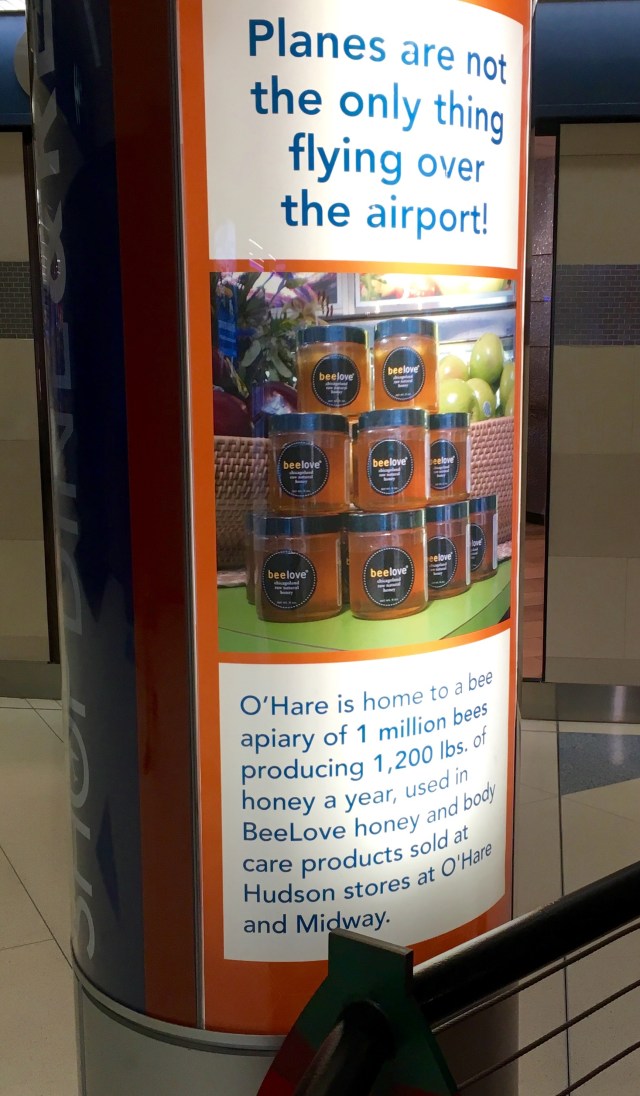
My Air Carnival can’t just be about sober realities – there has to be a little whimsy as well. Somewhere in the depths of the myriad hallways, I spied this little fun factoid:

Birds

Don’t bee alarmed…

What I began to notice, in this stretch of terminal just before hitting T3, was an delightful focus on health and wellness, starting with this wonderful little space where smalls could get out of their strollers and blow off some travel frustration along with their doting parents:

OH playground

PeeWee Pilot Playground

Nearby, there was a small satellite urgent care center, for the little maladies on the road, and then all of a sudden I saw something I can honestly say Ihave never seen anywhere else before…

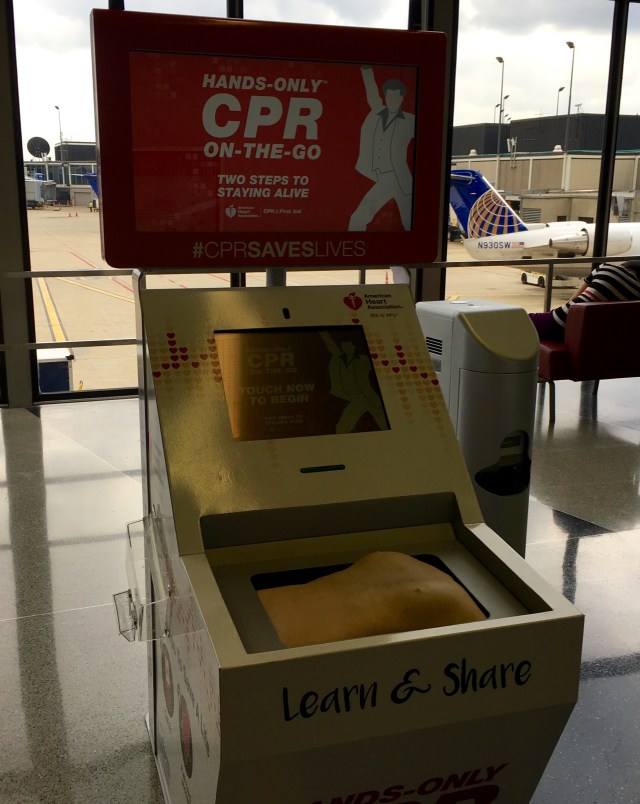
OH CPR

“Stayin’ alive!”

Yes, folks, it’s a genuine CPR training module, where you can, er, lay your hands upon the needy nethers of the soon-to-be resuscitated torso. Well I never.

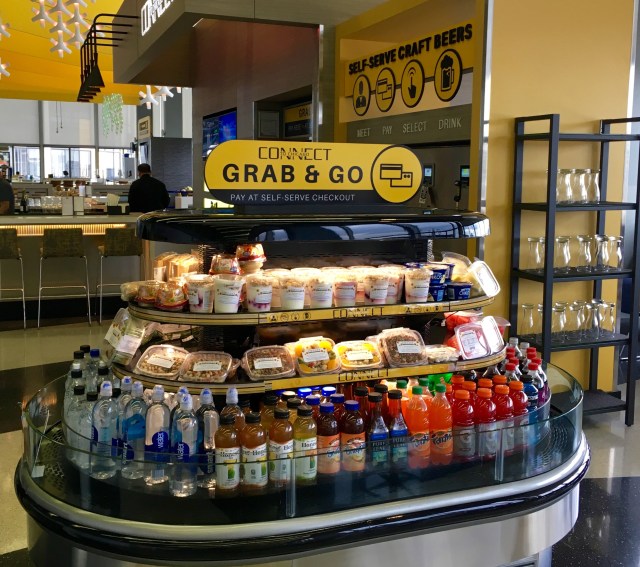
If such exertions have made you feel a bit peckish, the good news is that healthy food is only a few steps away. I was astonished and delighted at the offerings that belonged to a comfy cybercafe:

OH healthy food

Quinoa on the hoof

….whereas in the more traveled thoroughfares, the following offerings were far more common (this IS Chicago, after all):

OH not so healthy food

Show your aorta who’s boss

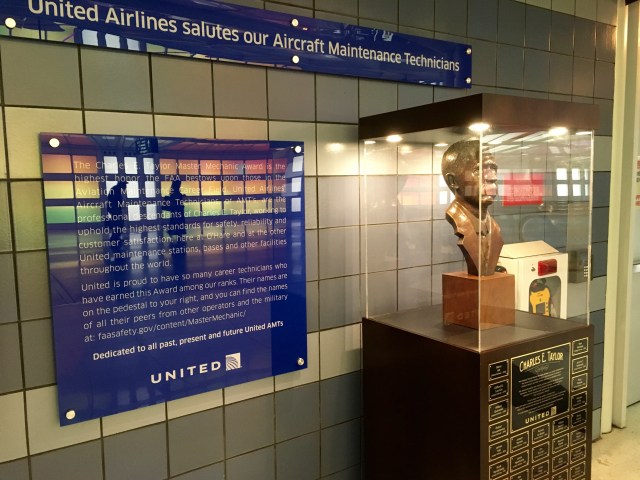
But far too soon it was time to head back to T1 Gate C-10 to climb aboard the big silver bird and start the ~13 hour trek to Narita. On my way back, winding through through the colored underpass, I espied something I had never noticed before but upon inspection was truly glad existed:

Maintenance 1

A very well deserved salute indeed

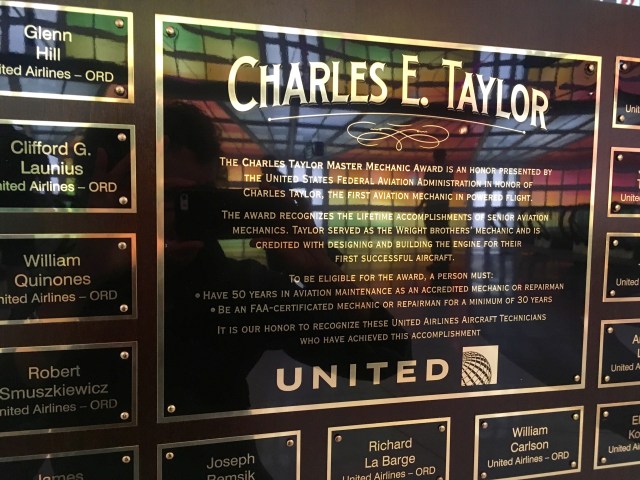
If there’s anyone we airline travelers are thankful for (besides the pilots, naturlich), it’s the mechanics, normally an unsung brotherhood. But here’s United honoring its master mechanics. A closer inspection of the plaque in the lower right above reveals the following:

Maintenance 2

A “United Nations,” all of its own

I was struck by the range of surnames, reflecting the diversity of Chicago: Launius (Lithuanian), Quinones (Hispanic), Smuszkiewicz (Polish), Romsik (Czech), La Barge (French), and Carlson (Swedish), only to name a few. In a season when I feel this country is more divided than it’s been in a long time, this brotherhood was a warm reminder of who we have been and who we can be again.

Safe travels, and more soon from the Land of the Rising Sun.

Posted in Travel - Japan, Uncategorized | Tagged | 2 Comments